Master Pumpkin Drawing in Minutes
Learn how to draw a pumpkin effortlessly with this comprehensive, step-by-step tutorial. This easy pumpkin drawing guide is designed for artists of all skill levels, from children to adults, making it a perfect creative activity for the autumn season.
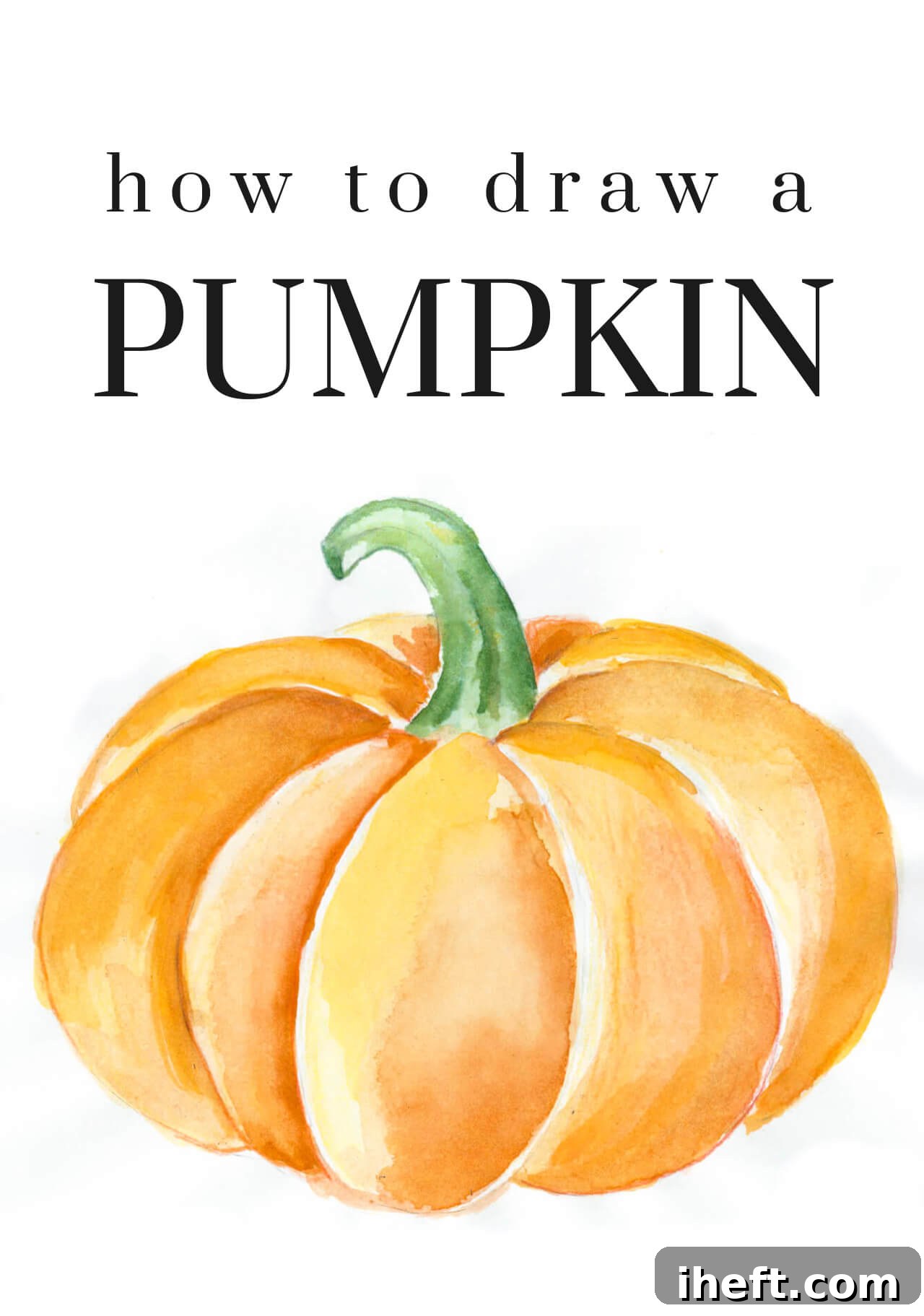
How to Draw a Pumpkin: Your Complete Step-by-Step Guide
Before diving into the world of recipes and food photography over a decade ago, my creative journey began as an elementary school art teacher. With an education major and an art emphasis, I fostered a passion for visual arts that continues to thrive. Today, I still find immense joy in painting and drawing alongside my children, embracing the belief that cooking itself is a beautiful art form.
Friends often admire the charming pumpkin drawings adorning the chalkboards in my home, frequently asking about my technique. Today, I’m thrilled to share how surprisingly simple it is to draw a pumpkin. You don’t need to be an expert artist to create a delightful piece! These easy pumpkin drawings are not only a rewarding creative endeavor but also make fantastic homemade autumn decorations, adding a personal touch to your home for Halloween, fall, and Thanksgiving.
Furthermore, an easy pumpkin drawing can be a wonderfully engaging activity for children during the Thanksgiving holidays or any chilly autumn afternoon. It encourages creativity, develops fine motor skills, and provides a tangible sense of accomplishment.
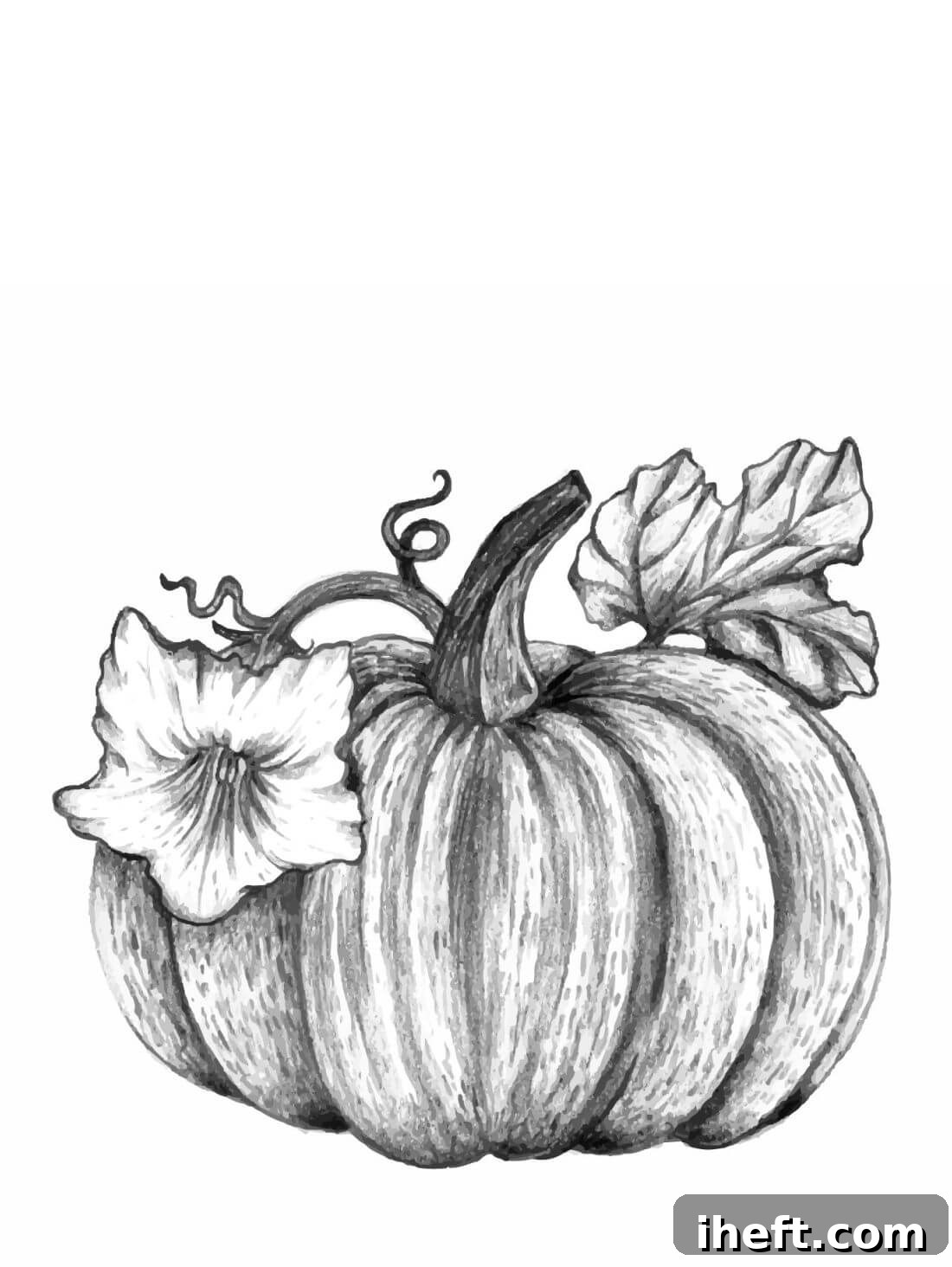
Image: Shutterstock
Why Drawing Pumpkins is a Perfect Art Project
Pumpkins are an iconic symbol of the fall season, representing everything from Halloween fun to Thanksgiving feasts. Their unique, often imperfect shapes make them incredibly forgiving to draw, which is fantastic news for beginners and seasoned artists alike. No two pumpkins are exactly the same, allowing for endless creative freedom. This tutorial breaks down the process into simple, manageable steps, ensuring that anyone can achieve a beautiful result.
This project is suitable for a wide range of purposes: creating festive decorations, designing custom greeting cards, or simply enjoying a relaxing artistic moment. It’s an ideal way to celebrate the vibrant colors and cozy atmosphere of autumn, bringing a touch of handmade charm into your life.
Materials You’ll Need for Your Easy Pumpkin Drawing
One of the best aspects of this pumpkin drawing tutorial is that it doesn’t require any specialized or expensive art supplies. You likely have most of what you need already at home. Whether you prefer traditional pen and paper or exploring digital art on a tablet, the fundamental techniques remain the same. The key is to select materials that you are comfortable with and that suit your desired final look.
Before gathering your supplies, consider if you plan to add paint, pastels, or other wet mediums, as this will influence your choice of drawing paper. For instance, watercolor paper is essential if you intend to use watercolors to prevent the paper from buckling.
- Drawing Paper: Any paper will do for practice, but for a finished piece, consider heavier stock or watercolor paper if adding wet colors.
- Pencil: A standard graphite pencil (HB or 2B are good choices) for light sketching.
- Eraser: A good quality eraser (kneaded or vinyl) is crucial for making corrections and refining lines without damaging the paper.
- Colored Pencils, Crayons, Markers, or Paint (Optional): Choose your preferred medium if you wish to add vibrant color to your pumpkin. Watercolors, acrylics, oil pastels, or even simple crayons work wonderfully.
- A Fresh Pumpkin for Reference (Optional but Recommended): Observing a real pumpkin can provide invaluable insights into its natural curves, textures, and shadows, helping you create a more realistic drawing.
Approximate Project Time and Difficulty:
- Prep Time: Approximately 3 minutes (gathering materials).
- Active Drawing Time: Around 30 minutes (focused drawing).
- Total Time: Roughly 33 minutes (from start to finish).
- Difficulty: Medium (easy to learn, but allows for detail and refinement).
- Estimated Cost: $15 (if purchasing basic supplies from scratch; significantly less if you have supplies already).
How to Draw a Pumpkin – Easy Step-by-Step Tutorial
You absolutely do not need to be a confident or experienced artist to create a beautiful pumpkin drawing. The beauty of pumpkins lies in their natural imperfections; they are never perfectly symmetrical, and each one possesses a unique charm. This makes them incredibly forgiving subjects for drawing, allowing for artistic freedom and expression without the pressure of perfection. Let’s begin!
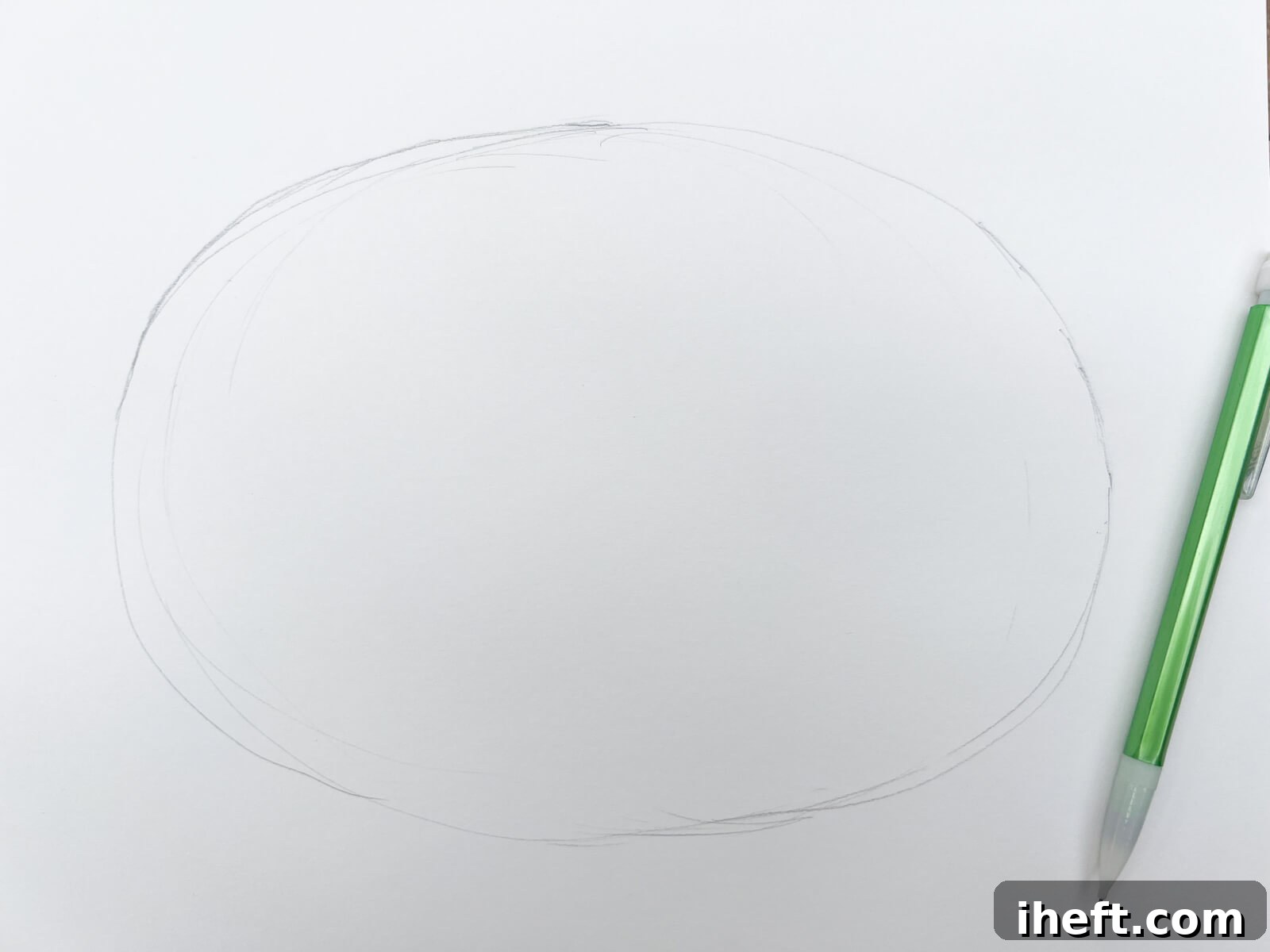
STEP 1: Sketch a Horizontal Oval for the Pumpkin’s Body
Begin by lightly sketching a horizontal oval on your drawing paper. This oval will serve as the fundamental shape and guideline for your pumpkin’s body. Remember, pumpkins come in an incredible variety of shapes and sizes – some are rounder, some flatter, some more elongated. Don’t feel pressured to draw a perfect oval; embracing slight irregularities from the start can actually make your pumpkin look more natural and organic. The key here is to sketch lightly, as these initial lines are merely guides that you may erase or refine later.
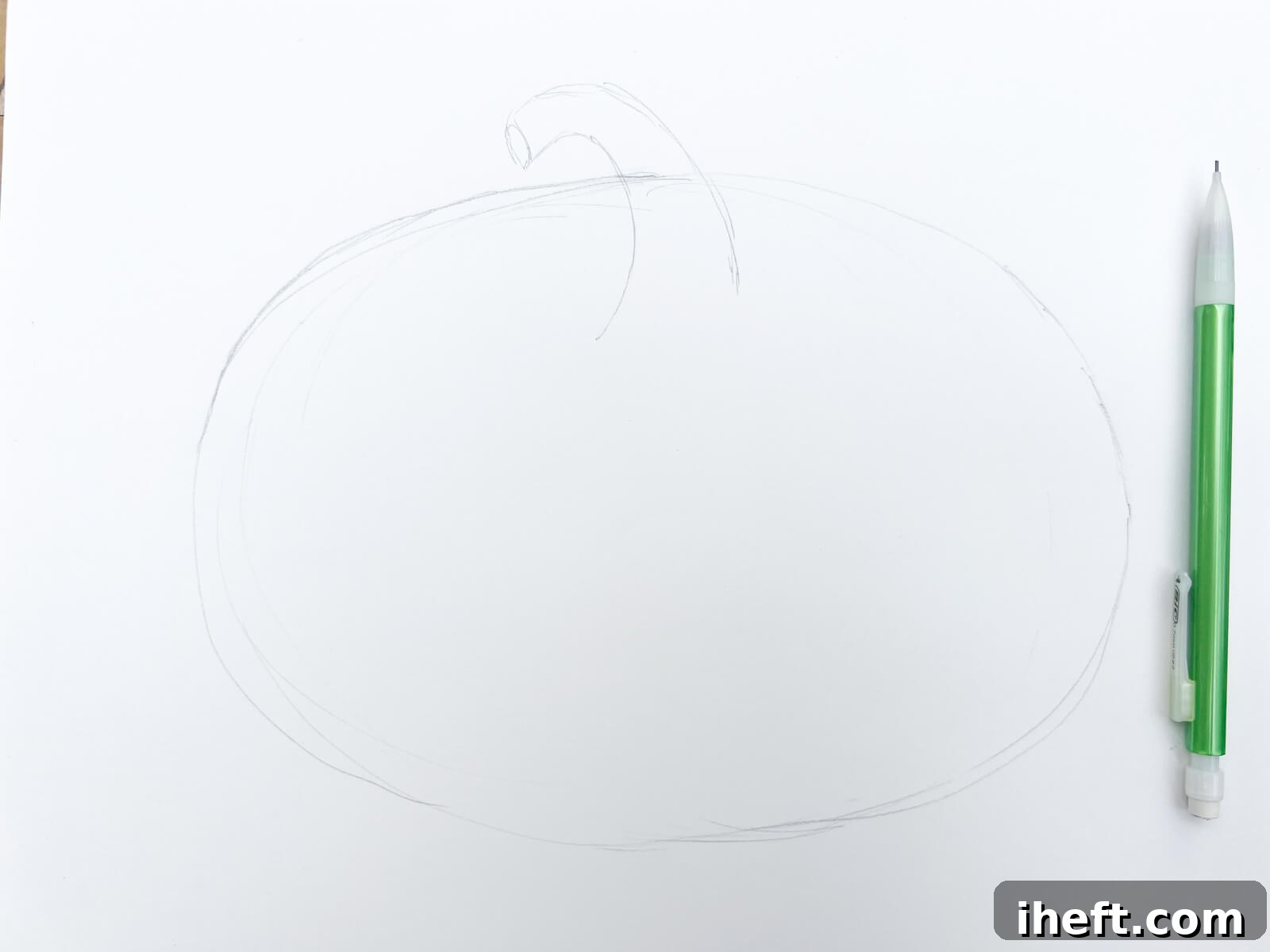
STEP 2: Attach the Stem
Next, lightly sketch a stem for your pumpkin. The stem adds character and a natural touch to your drawing. Stems can vary greatly in appearance: they can be short and stubby, long and slender, perfectly straight, or delightfully curved. Feel free to experiment with its shape and orientation. To give your pumpkin a more three-dimensional appearance, consider placing the base of your stem approximately one-quarter of the way down from the top edge of your initial oval. However, this can vary based on the perspective you’re aiming for. If you imagine looking up at the pumpkin from below, you might only see the very top of the stem emerging. For added detail and realism, you could also sketch some delicate, curly vines and a few small leaves around the stem.
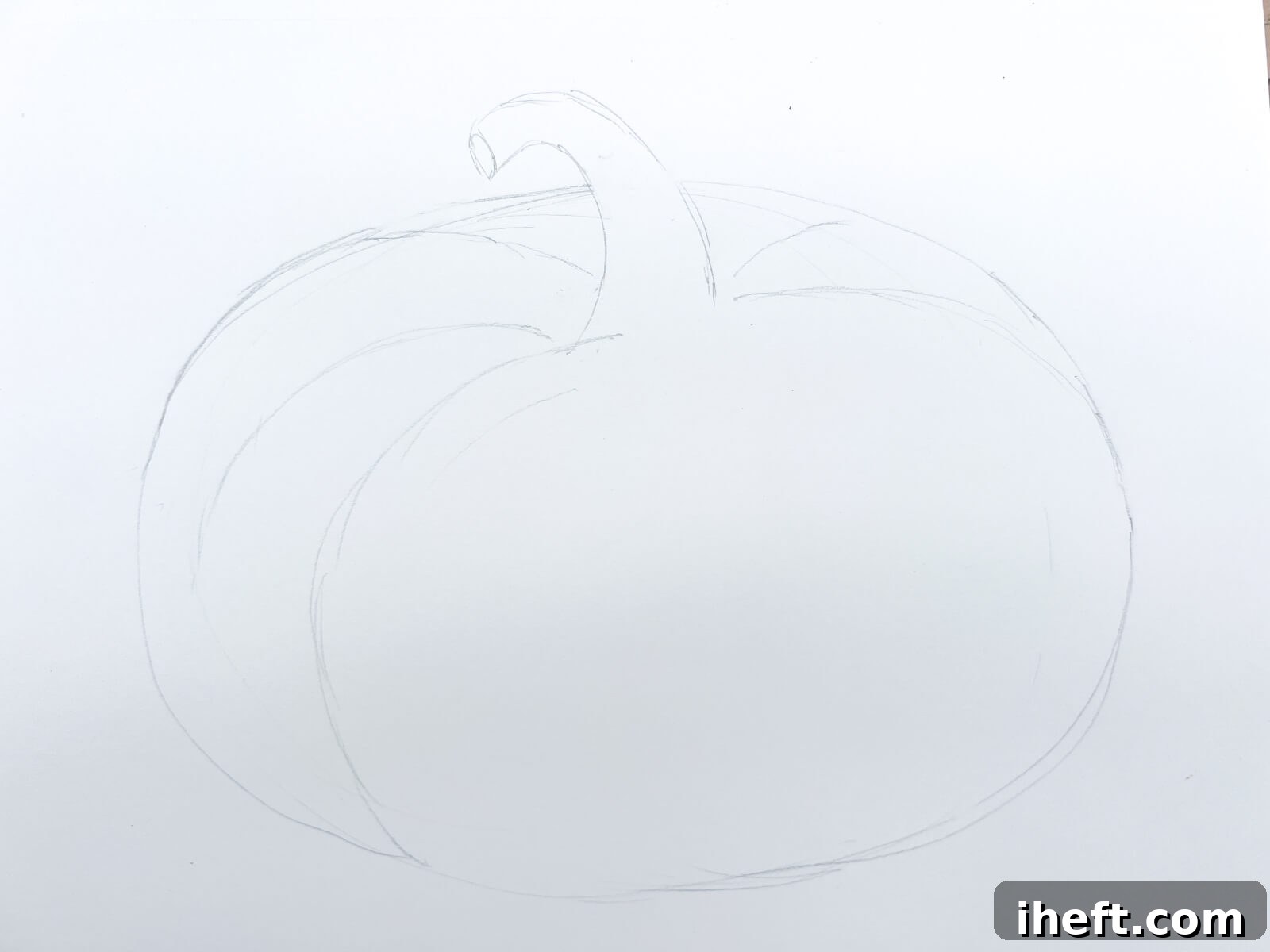
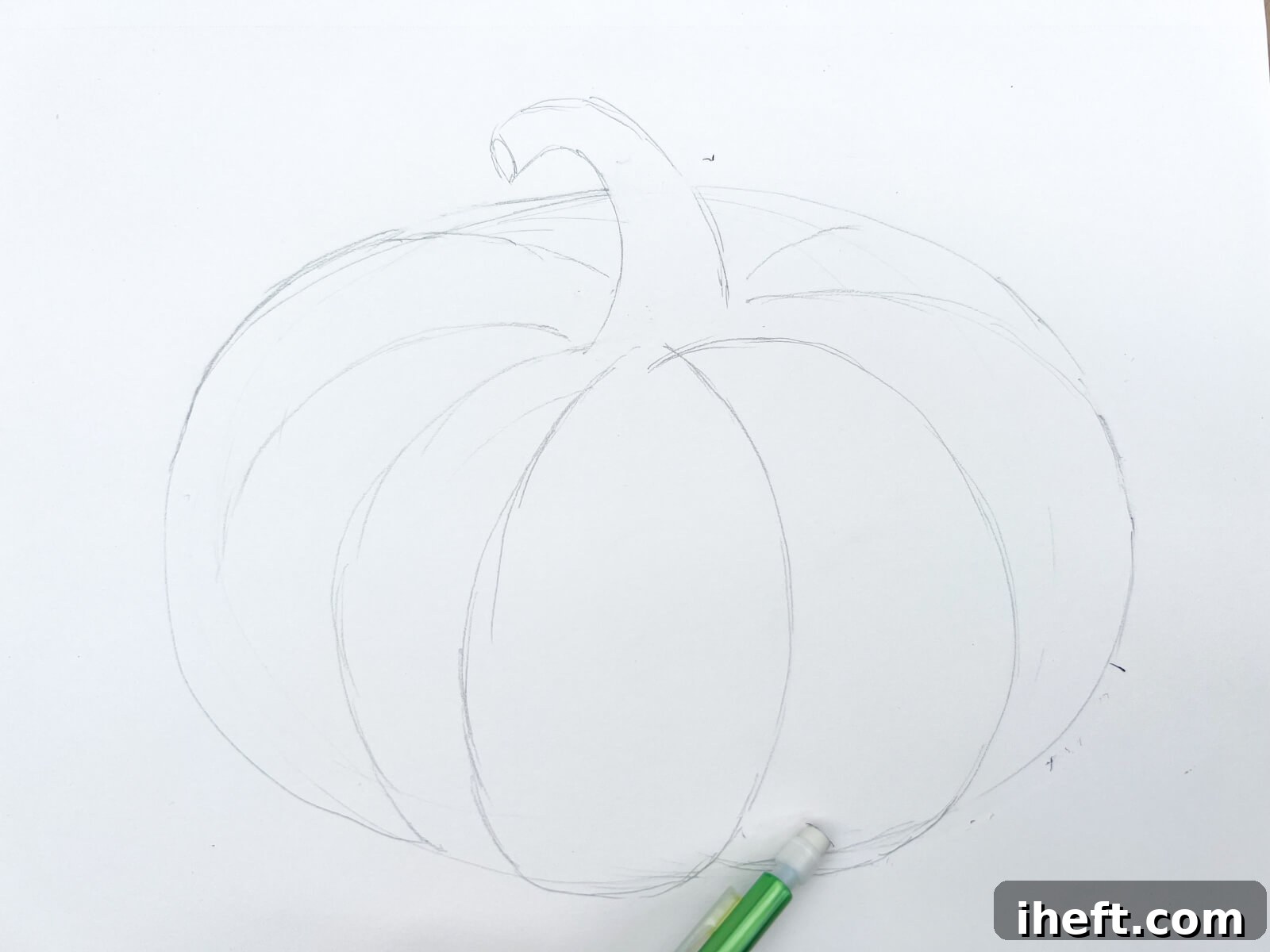
STEP 3: Introduce the Characteristic Ridges
Now, it’s time to give your pumpkin its iconic, segmented appearance. Begin adding dimension by drawing vertical, curved lines that extend outward from the central stem area, following the general curve of your initial oval. Imagine these lines wrapping around the pumpkin’s form. These ridges are what make a pumpkin look robust and rounded. Don’t worry about perfect symmetry; natural pumpkins have varying ridge patterns. Aim for a few prominent ridges, perhaps two or three on each side, ensuring they curve gently rather than being perfectly straight. This curvature is key to conveying the pumpkin’s spherical shape.
STEP 4: Define the Pumpkin’s Organic Shape and Erase Guide Lines
With the ridges in place, it’s time to truly bring your pumpkin to life. Continue to refine the overall dimension and shape of your pumpkin using your pencil. Gently adjust the outer edges of the pumpkin, making them slightly bumpy and less perfectly oval. This will give it a more organic, natural appearance. Use your eraser to carefully remove any visible parts of the original light oval guideline that are no longer needed. Focus on blending the ridges into the main body, ensuring smooth transitions and a cohesive form. This step allows you to sculpt your pumpkin, making it uniquely yours.
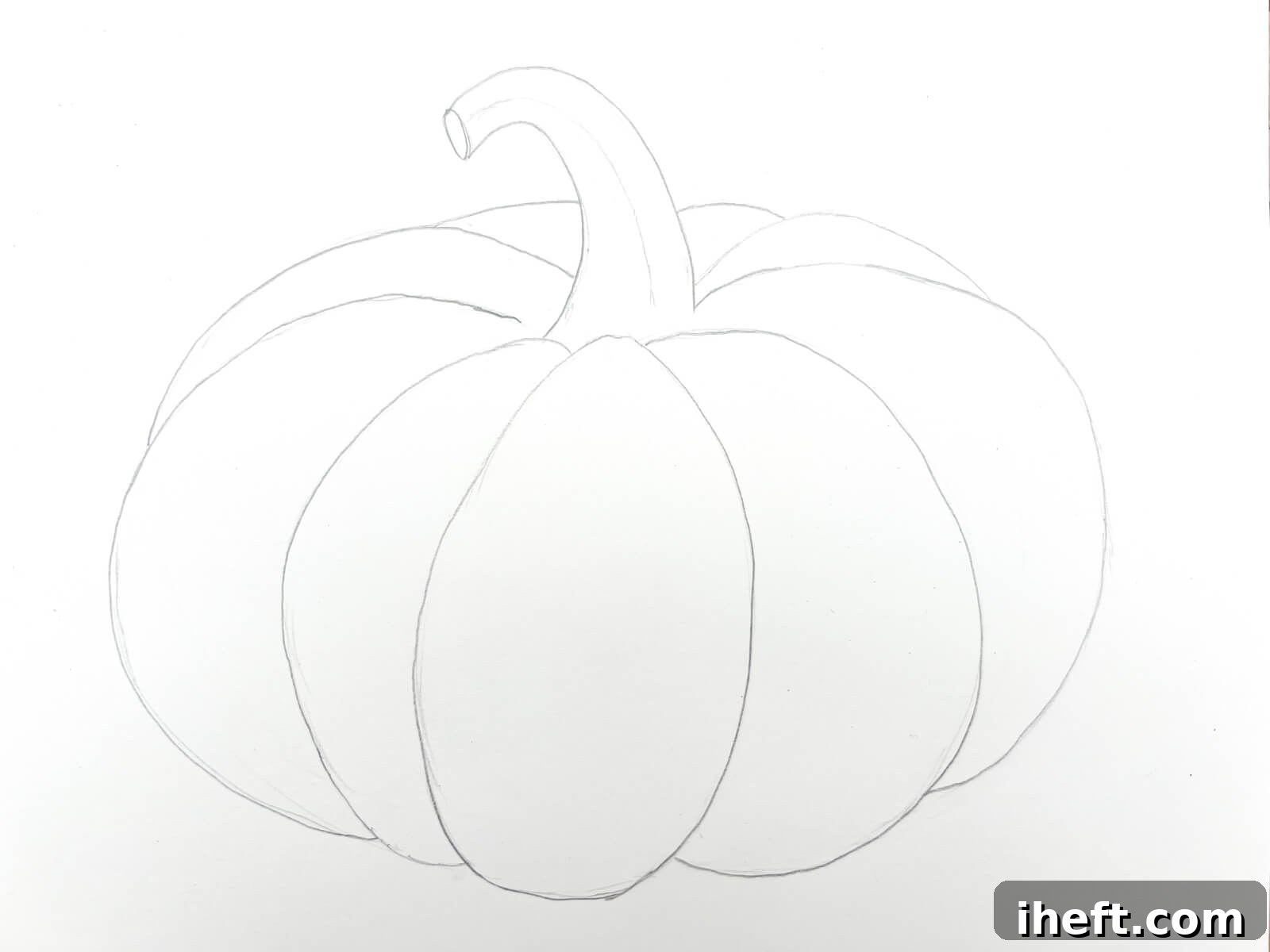
STEP 5: Clean Up and Add Final Details
Your easy pumpkin drawing is now largely complete in its outline form! Take a moment to review your drawing. Make any desired changes by gently erasing unwanted sketch lines, adding subtle details, or enhancing the definition of your existing lines. You can leave your pumpkin drawing as a clean black and white line drawing, or you might choose to go over your pencil lines with a fine-point black ink pen for a bolder, more permanent outline. This is also the stage where you might consider adding very subtle shading with your pencil to suggest depth before moving on to color.
Adding Color to Your Easy Pumpkin Drawing
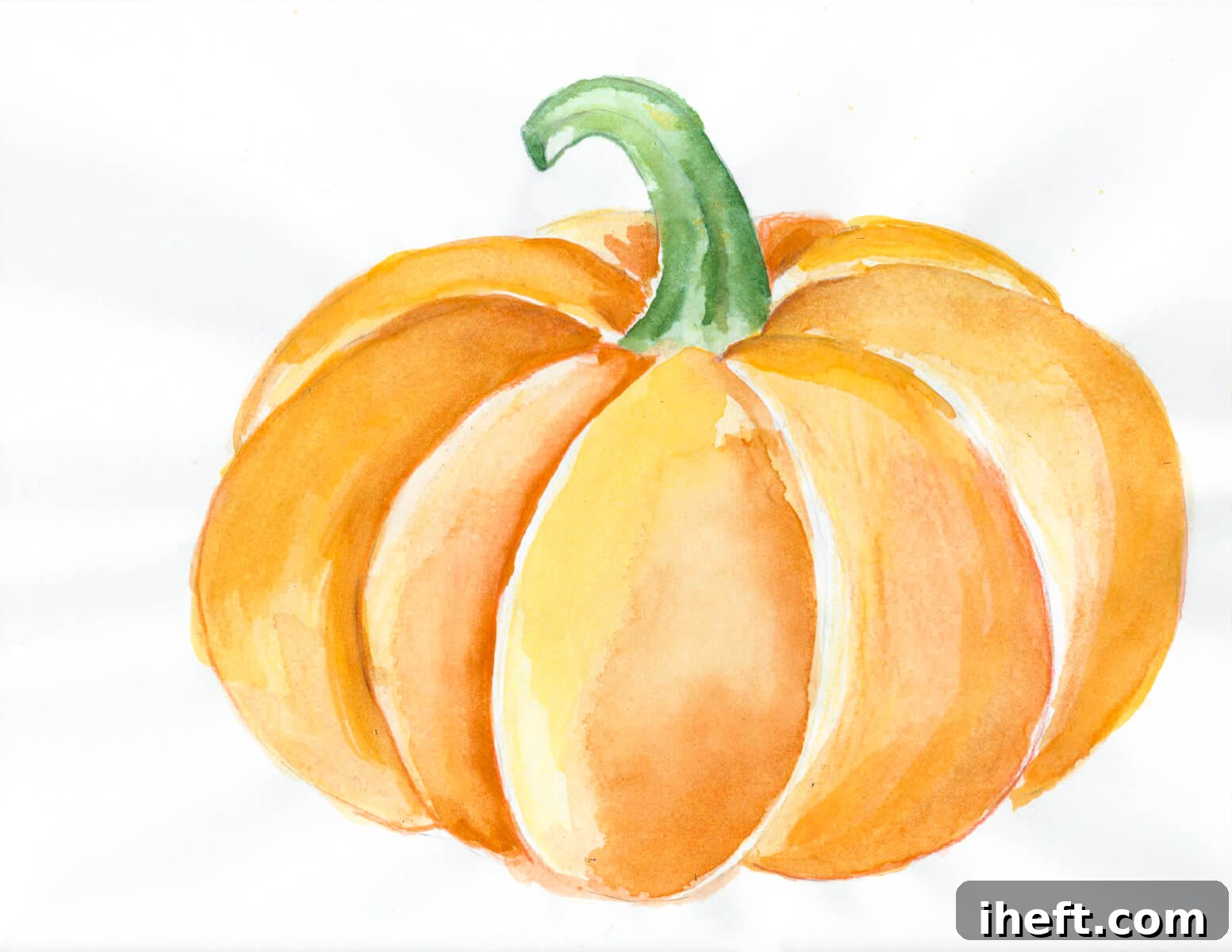
Once you’ve mastered the outline, you might be eager to bring your pumpkin drawing to life with color! Adding color is a fantastic way to personalize your artwork and make it pop. We chose watercolors for our example, but there are many wonderful mediums you can use, each offering a unique effect. Consider chalk pastels, oil pastels, colored pencils, or even markers.
Tips for Coloring Your Pumpkin:
- Watercolors: Start with light washes and build up layers for depth. Remember to use appropriate watercolor paper to prevent warping. Traditional pumpkin colors include vibrant oranges, yellows, and even greens for different varieties.
- Colored Pencils: These offer great control for shading and texture. Layer different shades of orange, brown, and yellow to create a rich, realistic effect. Don’t forget to add hints of green or brown to the stem.
- Pastels (Chalk or Oil): Pastels provide a soft, blended look. Use your fingers or a blending stump to smooth out colors and create gentle gradients, especially for the curved surfaces of the pumpkin.
- Markers: For bold and vibrant results, markers are excellent. They offer crisp lines and consistent color. Experiment with different shades of orange to create a sense of light and shadow.
- Shading Techniques: Whether you choose to color or leave your drawing black and white, adding shading can dramatically enhance its realism. Observe a real pumpkin (if you have one) or reference photos to understand how light falls on its surfaces, creating highlights and shadows. Shadows typically appear in the crevices of the ridges and on the underside of the pumpkin.
You can certainly leave your pumpkin as a beautiful black and white line drawing, or enhance it with pencil or charcoal shading for a more classic, artistic feel. If you decide to add shading or color, consulting a real pumpkin or high-quality reference photos can be incredibly helpful for understanding natural light and shadow play.
Creative Ways to Use Your Pumpkin Art
Now that you’ve created a fantastic pumpkin drawing, what can you do with it? The possibilities are endless!
- Autumn Home Decor: Frame your drawing and display it as seasonal decor. It adds a personal and artistic touch to your fall aesthetic.
- Greeting Cards: Scan or photocopy your drawing to create unique, handmade cards for friends and family during Halloween or Thanksgiving.
- Thanksgiving Place Cards: Print smaller versions of your pumpkin drawing and use them as charming place cards for your Thanksgiving dinner table.
- Halloween Decorations: Turn your pumpkin drawing into a spooky or friendly jack-o’-lantern design, or incorporate it into other Halloween crafts.
- Kids’ Art Projects: This tutorial is perfect for engaging children in creative activities, helping them develop their artistic skills while celebrating the season.
- Gift Tags: Create small tags with your pumpkin drawing to tie onto fall-themed gifts or baked goods.
- Notebook Covers: Affix your drawing to the cover of a plain notebook for a custom, autumnal look.
Tips for Drawing Success
To help you on your artistic journey, here are a few general tips:
- Practice Makes Perfect: Don’t be discouraged if your first attempt isn’t exactly what you envisioned. Art is a skill that improves with practice.
- Use References: Real pumpkins, photographs, or even other pumpkin drawings can provide inspiration and help you observe details you might otherwise miss.
- Embrace Imperfections: The beauty of hand-drawn art lies in its unique character. Don’t strive for photographic perfection; instead, enjoy the process and the individuality of your creation.
- Experiment with Tools: Try different pencils, erasers, and coloring mediums to see what you enjoy working with most.
- Draw Lightly First: Always start with very light lines. This makes it easy to erase mistakes and refine your drawing as you go.
- Take Breaks: Step away from your drawing for a few minutes and come back with fresh eyes. You might spot areas for improvement more easily.
Recommended Products for Your Art Journey
As an Amazon Associate and member of other affiliate programs, I earn from qualifying purchases. Here are a couple of products that can enhance your drawing experience:
- Mr. Pen Eraser SetMr. Pen Eraser Set with Kneaded Erasers, Gum Erasers and Pencil Erasers, Pack of 9
- Prismacolor Graphite PencilsPrismacolor Ebony Graphite Pencils, Black Drawing Pencil Set | 12 Count Sketching Pencils