Ripening Avocados and Knowing When They’re Just Right
Master the Avocado: Your Complete Guide to Ripeness, Ripening, and Storage
As a California local and a passionate avocado grower, avocados are truly the most invaluable ingredient in both my kitchen and garden. It’s a question I frequently encounter: “How do you ripen avocados?” and “How can you tell if an avocado is ripe?” This comprehensive guide will equip you with all the knowledge you need to master the art of the avocado.
The history of human interaction with avocados dates back an astonishing 10,000 years ago in Central America. These versatile fruits have been cherished for millennia, evolving from a staple food to a modern culinary sensation. From being spread on toast, whipped into creamy guacamole, or even subtly incorporated into baked goods and refreshing smoothies, the avocado’s appeal is undeniable. However, despite its widespread popularity, there remains one persistent challenge: determining precisely when an avocado is perfectly ripe.
Imagine planning a delicious meal, only to discover your avocado is too hard to slice or, even worse, a brown, mushy disappointment. This common predicament can be incredibly frustrating and inconvenient. So, what is the secret to answering the age-old question, “How do you tell if an avocado is ripe?”
There’s a unique satisfaction in cutting open an avocado to reveal vibrant green, tender, and unblemished flesh—a true testament to its perfect ripeness. This article will guide you through the various reliable methods to assess an avocado’s readiness for consumption. Furthermore, should you find yourself with an unripe avocado, we will reveal proven techniques to expedite its ripening process, ensuring you can enjoy this extraordinary fruit when you need it most.
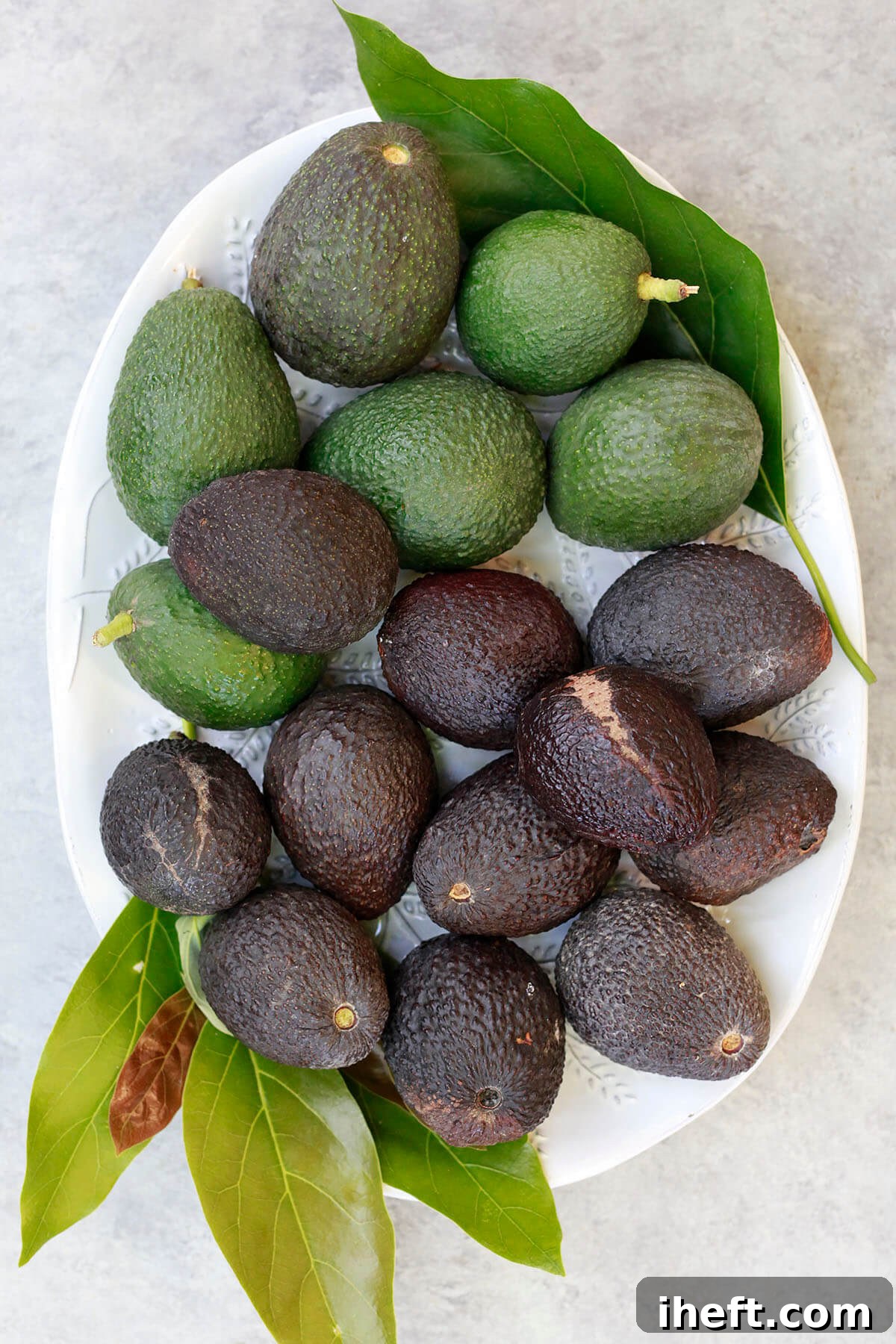
How to Tell If an Avocado Is Perfectly Ripe: Your Essential Checklist
The quest for a perfectly ripe avocado is a common culinary challenge. Many of us have experienced the disappointment of selecting avocados at the market, carefully examining their firmness, only to discover a day or two later that they are either stubbornly hard or disappointingly overripe and brown inside. It’s easy to feel as though you’re cursed in your pursuit of ripe avocados, but rest assured, with the right tips, you can consistently choose and achieve optimal ripeness. Let’s delve into the key indicators that signal an avocado is ready for your enjoyment.
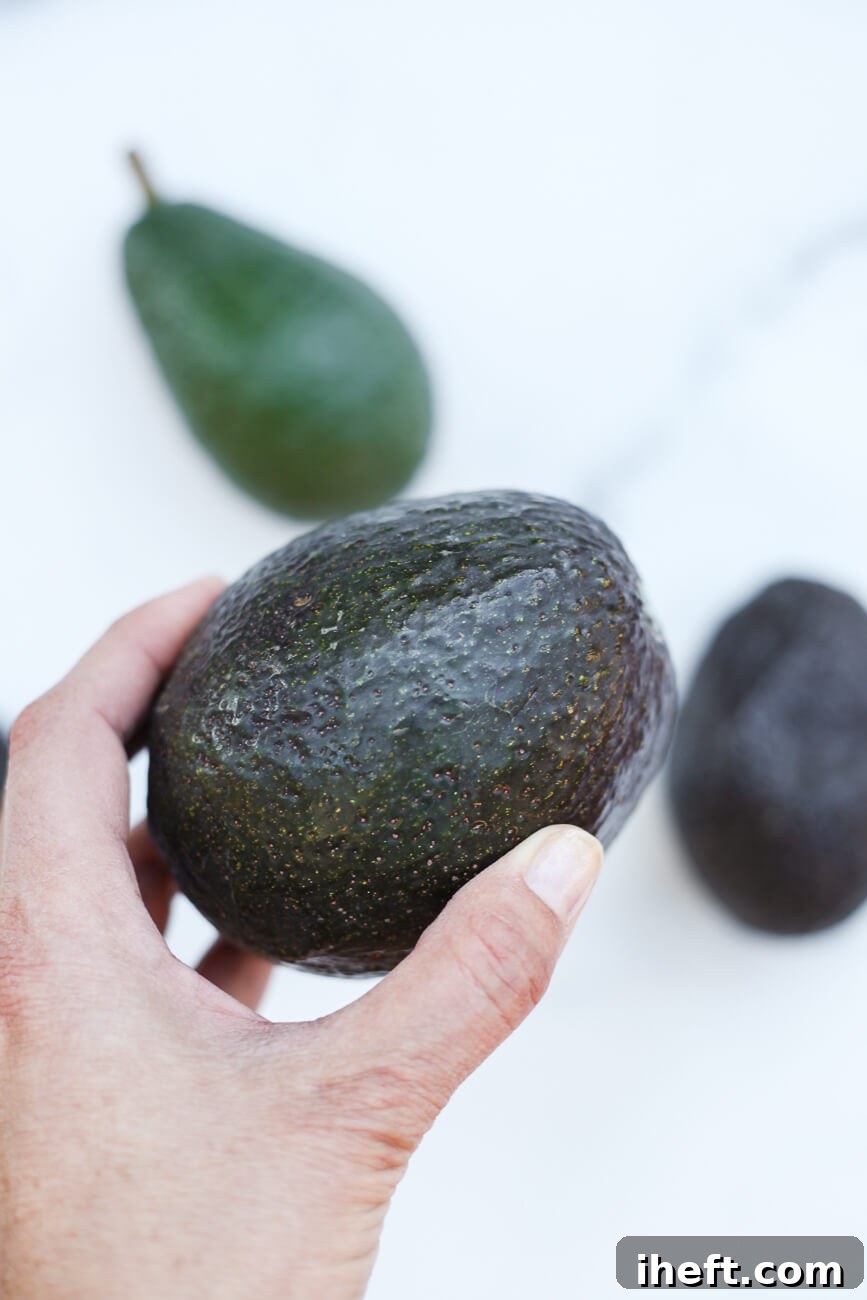
1. The Gentle Squeeze: Mastering Firmness
One of the most intuitive ways people assess avocado ripeness is by checking its firmness. While this is a crucial step, it should not be the sole determinant, especially when dealing with varieties like the Haas avocado, whose thick skin can sometimes mask its true internal state. Avoid avocados that feel overly soft and pliable, as these are almost always past their prime, signaling a mushy and overripe interior. Similarly, a rock-hard avocado is definitely not ready to eat, as it will lack the creamy texture you desire.
The ideal avocado will yield to gentle pressure with your fingertips, much like a ripe peach or a tennis ball. It should have a slight “give” but not feel squishy, and there should be no noticeable air pockets between the skin and the flesh. This subtle bounce indicates that the fruit’s oils have properly developed, resulting in that coveted buttery texture. The exact level of softness you prefer can also depend on your culinary plans. For creamy guacamole, smooth baby food, or luxurious avocado toast, a slightly softer avocado works beautifully. However, if you’re planning to slice it for dishes like Spring Rolls, vibrant salads, or elegant sushi, you’ll want one that is on the firmer side of ripe, allowing for clean, intact slices.
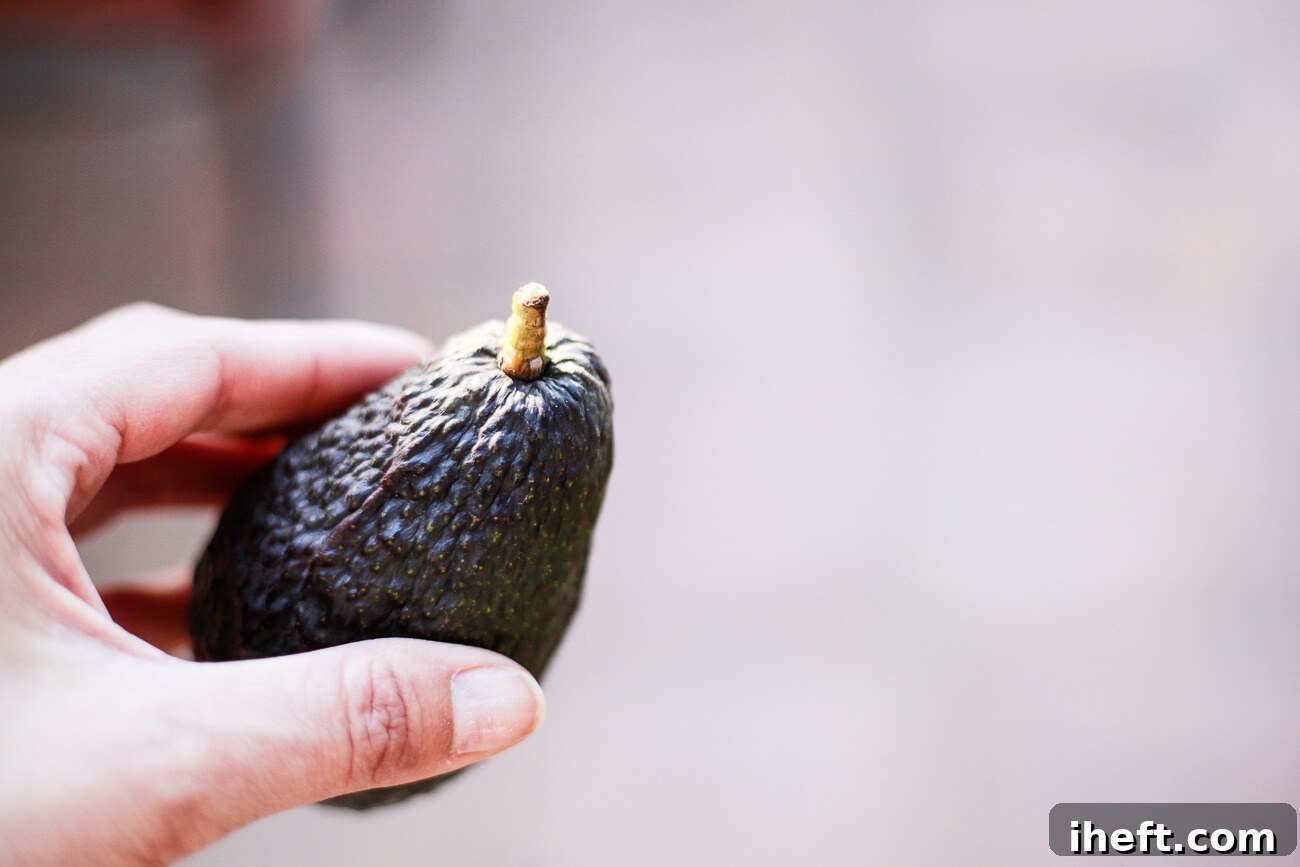
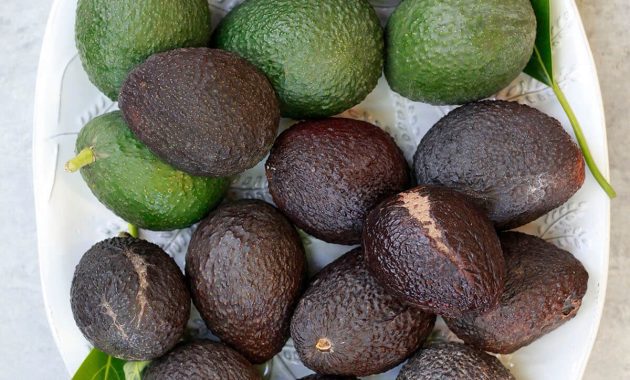
A perfectly ripe Haas avocado with almost-black skin, tan stem, and barely-soft flesh.
2. The Stem Cap Test: A Peek Underneath
When you’re trying to pinpoint the perfect moment an avocado is ready to eat, pay close attention to the small details, particularly the “cap” or button at the top of the fruit. This is where the avocado was originally attached to its stem. Instead of just looking at it, gently peel this small, grayish nub off the avocado. What you discover underneath is a tell-tale sign of its ripeness.
Beneath the cap, there will be a small indentation. If this indentation reveals a bright green or yellowish color, congratulations—your avocado is perfectly ripe and ready to enjoy! This vibrant hue signifies fresh, unblemished flesh. However, if the indentation is brown or has noticeable brown specks, it’s a clear indicator that the avocado is likely past its peak and may be overripe, leading to brown, fibrous, or mushy spots internally. Conversely, if the stem cap is difficult to remove, or won’t come off at all, it’s a sign that the avocado is still unripe and needs more time to mature. This simple yet effective “cap test” is an excellent way to quickly assess internal ripeness without cutting into the fruit.
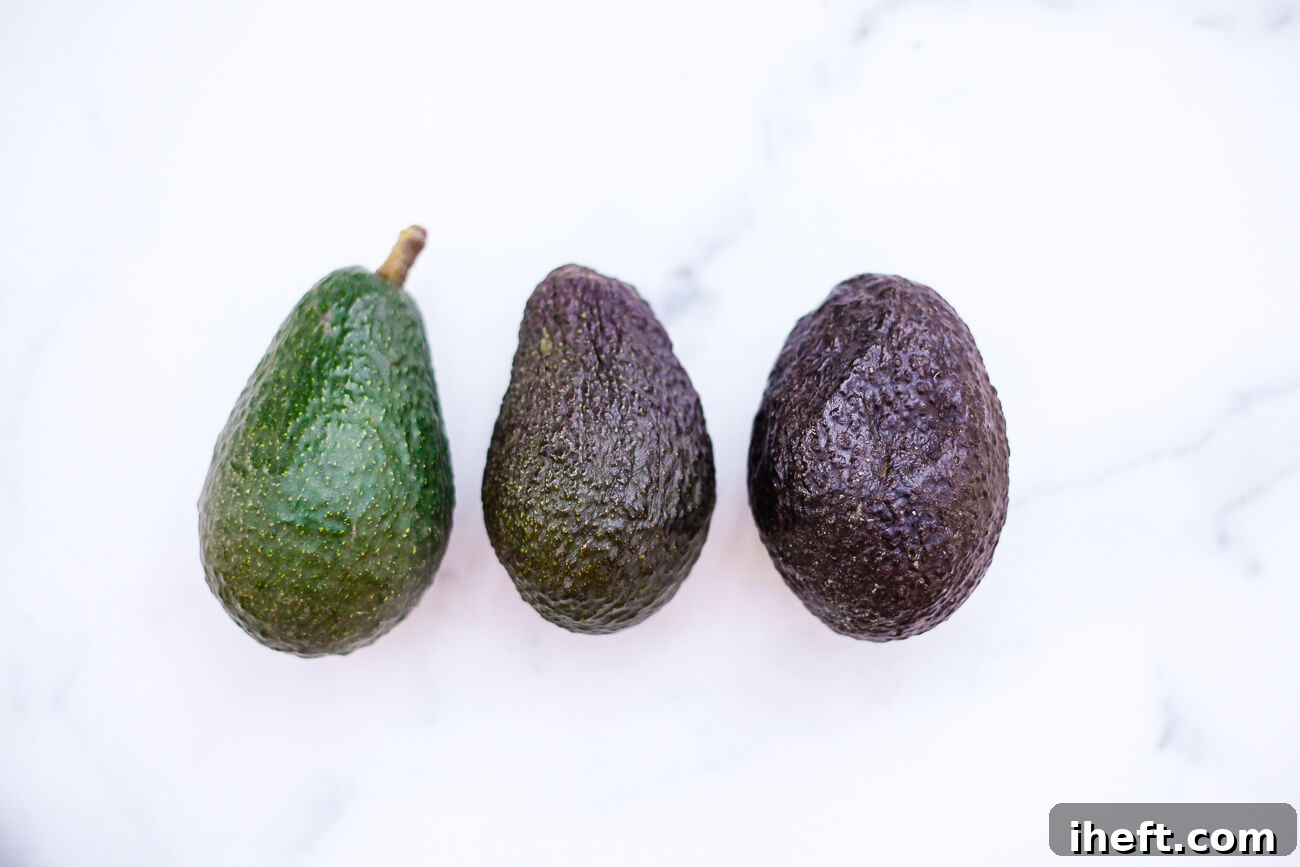
Haas avocado ripeness from left to right: underripe, ripe, and overripe.
3. Decoding the Hue: Avocado Skin Color
While the firmness and cap test are highly reliable methods for checking avocado ripeness, observing its skin color offers another valuable clue, particularly useful when you’re in the grocery store and can’t perform the cap test on every fruit. The perception that all avocados should be uniformly green can be misleading, as skin color varies significantly by variety and ripeness stage.
For Haas avocados, the most ubiquitous variety found in supermarkets, skin color is a key indicator. A bright, vibrant green Haas avocado is generally unripe and will require several days to soften. If you’re planning to use avocados soon, avoid these unless you’re stocking up for the distant future. Instead, look for Haas avocados that exhibit a darker green hue. These are usually nearly ripe or ready to eat within a day or two. The ultimate sign of a perfectly ripe Haas avocado is its shift to a deep, almost black color. While black skin often signifies optimal ripeness, exercise caution: avocados that are jet black and feel very soft could be overripe. Always combine color assessment with a gentle firmness test to confirm its readiness.
It’s important to remember that not all avocado varieties change color dramatically as they ripen. For instance, varieties such as Bacon and Reed avocados often retain their green skin even when they are perfectly ripe and ready to be enjoyed. For these varieties, firmness and the cap test become even more critical indicators of ripeness.
Picking Your Perfect Avocado: From Tree to Store Shelf
Understanding how to select the best avocados, whether directly from a tree or a grocery store bin, is crucial for consistent culinary success. The journey of an avocado from harvest to your kitchen can significantly impact its ripening potential and flavor.
On the Tree: The Grower’s Secret
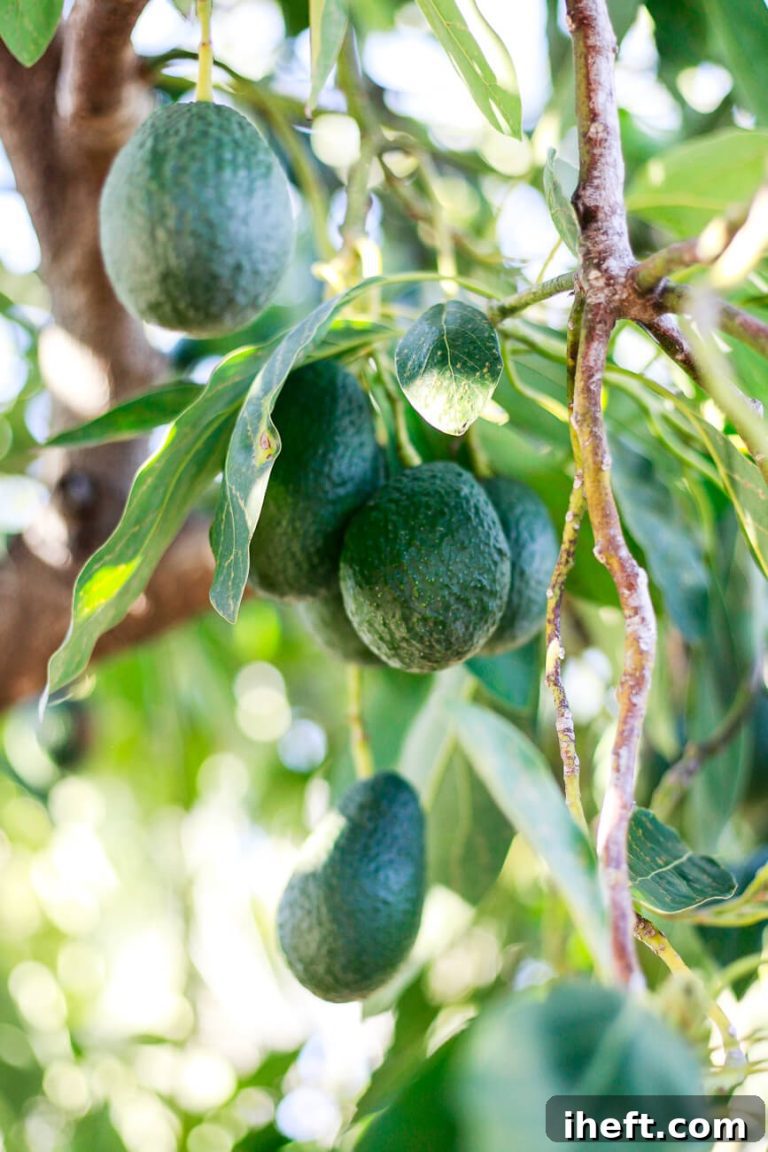
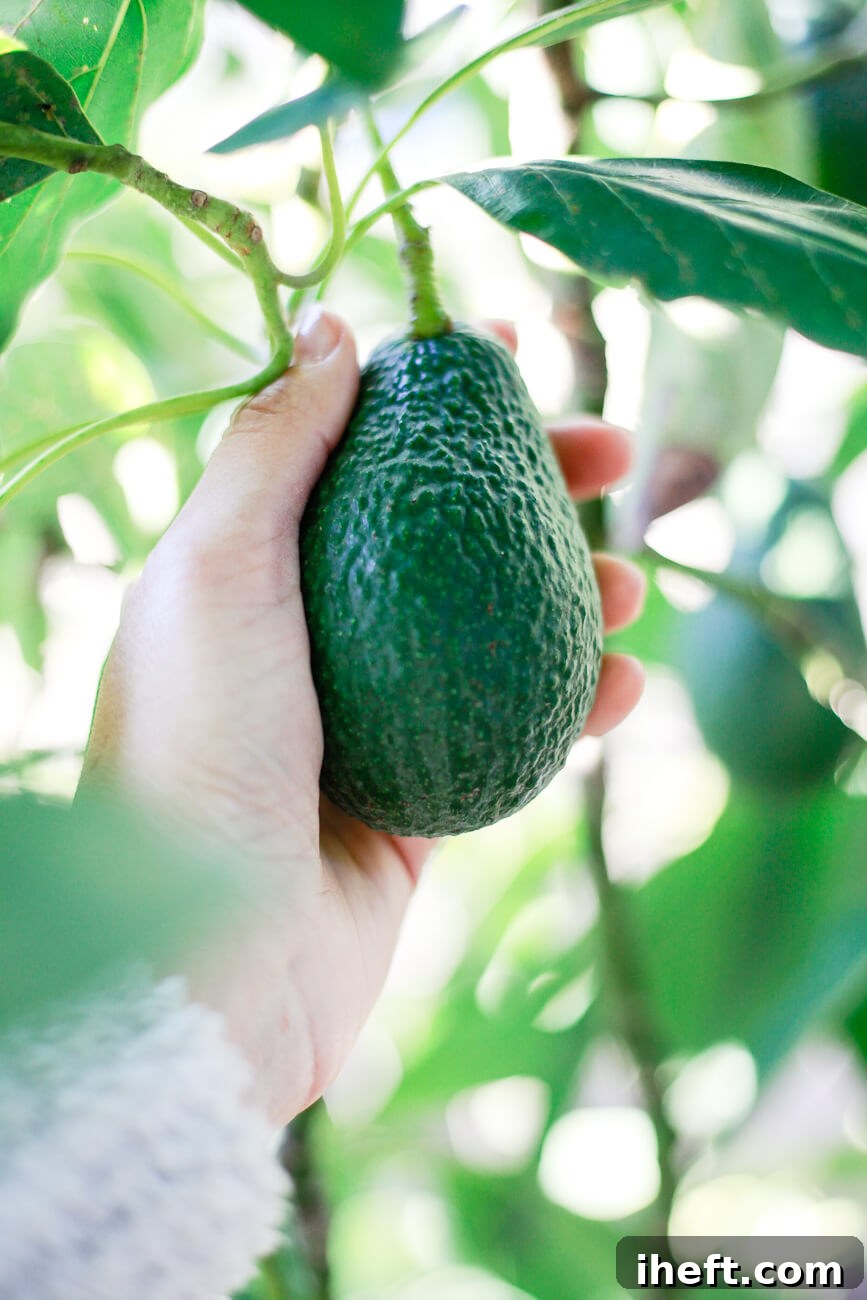
For those fortunate enough to have an avocado tree, the harvesting process is a bit different from other fruits. Avocados do not ripen while still attached to the tree; instead, they mature and soften only after being picked. You can begin to harvest your avocados once they have reached their maximum size and stopped growing larger. Don’t be alarmed if they are rock-hard at this stage – this is entirely normal. The timing for picking will depend on the specific variety you’re growing. I typically pick ours just above the “cap,” where there’s a natural joint, allowing for a clean break. One of the great advantages of avocados is their longevity on the tree; unlike many other fruits that spoil quickly, avocados can often remain on the tree for several months, giving you a prolonged harvesting window and a continuous supply.
At the Grocery Store: Smart Shopping Tips
When navigating the produce aisle, your approach to selecting avocados should align with your immediate needs. If you require an avocado for same-day use, focus on stores known for reliably stocking ripe fruit. In Southern California, for instance, upscale markets like Gelson’s often have a better selection of ready-to-eat avocados compared to general grocers. Apply the methods discussed above – gently pressing for a slight give and performing the cap test (if permissible without damaging the fruit) – to identify those that are perfectly ripe.
However, if your plans for avocado consumption are a few days away, purchasing slightly underripe avocados is an excellent strategy. They will ripen at home on your counter. You might also encounter avocados treated with Apeel technology, which creates an extra layer to extend their shelf life and maintain ripeness longer once mature. As a Californian, I generally recommend choosing California Avocados whenever possible, supporting local growers and often enjoying superior freshness.
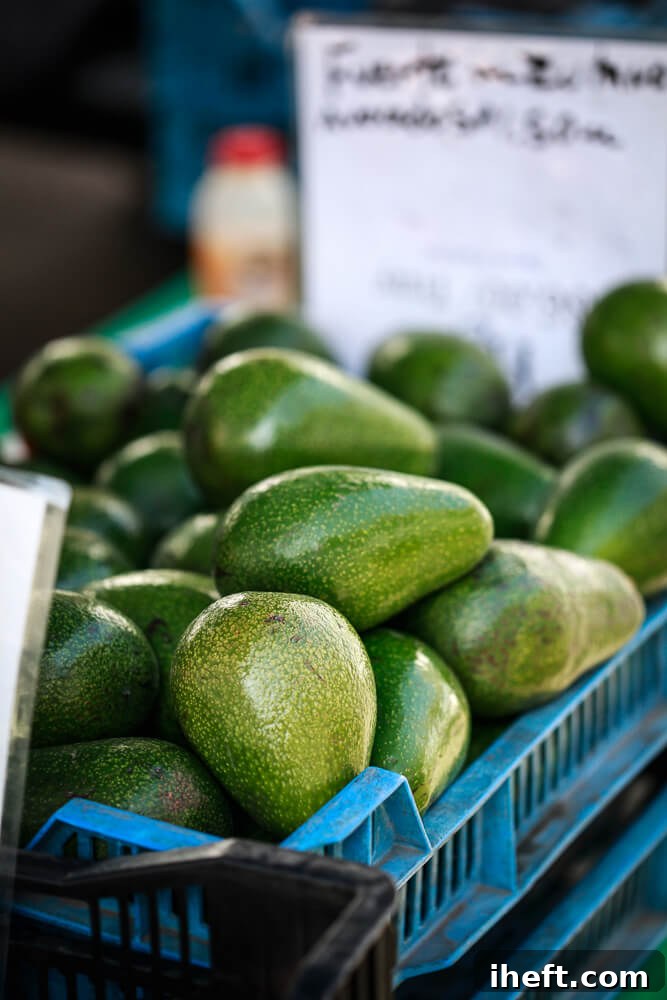
Bacon avocados at the Santa Barbara farmers market. The skin on this variety does not change color as it ripens.
The Waiting Game: How Long Do Avocados Take to Ripen?
The ripening timeline for avocados, particularly the popular Haas variety, is a common query. As previously mentioned, Haas avocados only begin to ripen once they are picked from the tree. This process can take a couple of weeks to transform a just-picked, rock-hard fruit into a creamy, ready-to-eat delicacy. When you buy avocados from the store, it’s impossible to know their exact harvest date.
However, you can estimate their readiness based on their current firmness: if an avocado feels rock-hard and shows no give, expect it to take at least 5 to 7 days to ripen on your counter. If it already has a slight give when gently pressed, it will likely be ready within a day or two. Factors like room temperature can also influence this process; warmer environments generally accelerate ripening, while cooler temperatures will slow it down.
Maximizing Freshness: How Long Do Avocados Last?
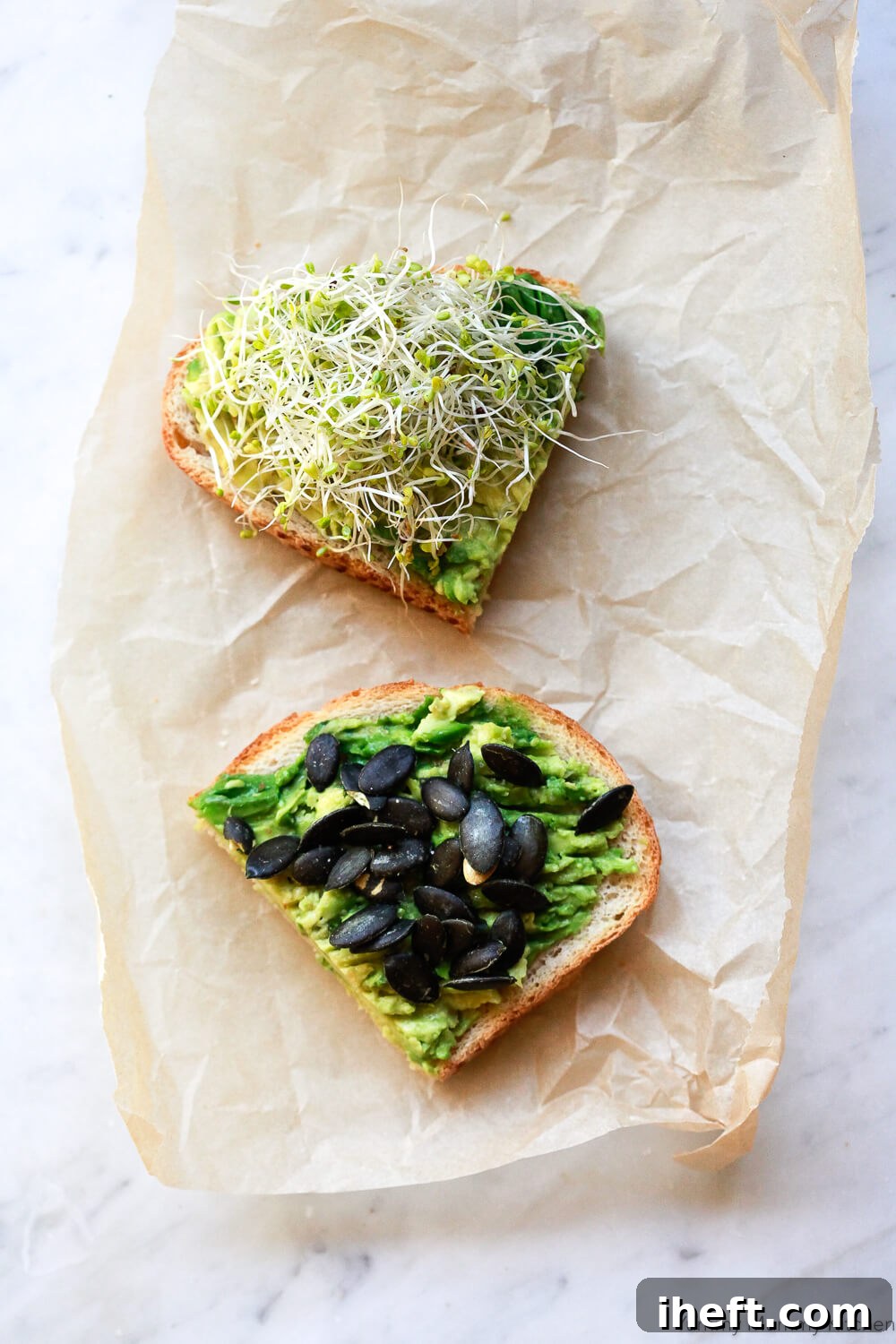
Once an avocado reaches its peak ripeness, its shelf life becomes a critical consideration. A perfectly ripe avocado, if left on the counter at room temperature, can quickly become overripe. To extend its freshness, immediate refrigeration is key. Stored in the produce drawer of your refrigerator, a ripe avocado can last for up to 5 days, significantly slowing down the aging process. If you find yourself with an abundance of perfectly ripe avocados and can’t consume them all within this window, remember that they are excellent for smoothies or can be frozen for later use, preventing waste and ensuring you always have some on hand.
Accelerating Ripeness: Effective Methods for Avocados
Now that you’re an expert at discerning a ripe avocado, let’s explore the most effective and recommended methods for ripening those stubborn, unripe fruits. While several techniques are often suggested, some are far more reliable and beneficial than others for achieving that perfect, creamy texture.
1. The Natural Way: Room Temperature Ripening
Surprisingly, one of the simplest and most effective ways to ripen an avocado is by simply allowing nature to take its course. Leave unripe avocados on your kitchen counter, ideally in a warm spot, away from direct sunlight. Avocados, like many fruits, release ethylene gas, a natural plant hormone that triggers the ripening process. Once picked, the avocado continues to break down its internal starches into sugars, softening its flesh. By checking the avocado daily using the firmness and cap test methods, you can monitor its progress and catch it at its optimal ripeness. While this method requires patience, it consistently yields the best results in terms of flavor and texture.
2. The Brown Paper Bag Trick: Harnessing Ethylene
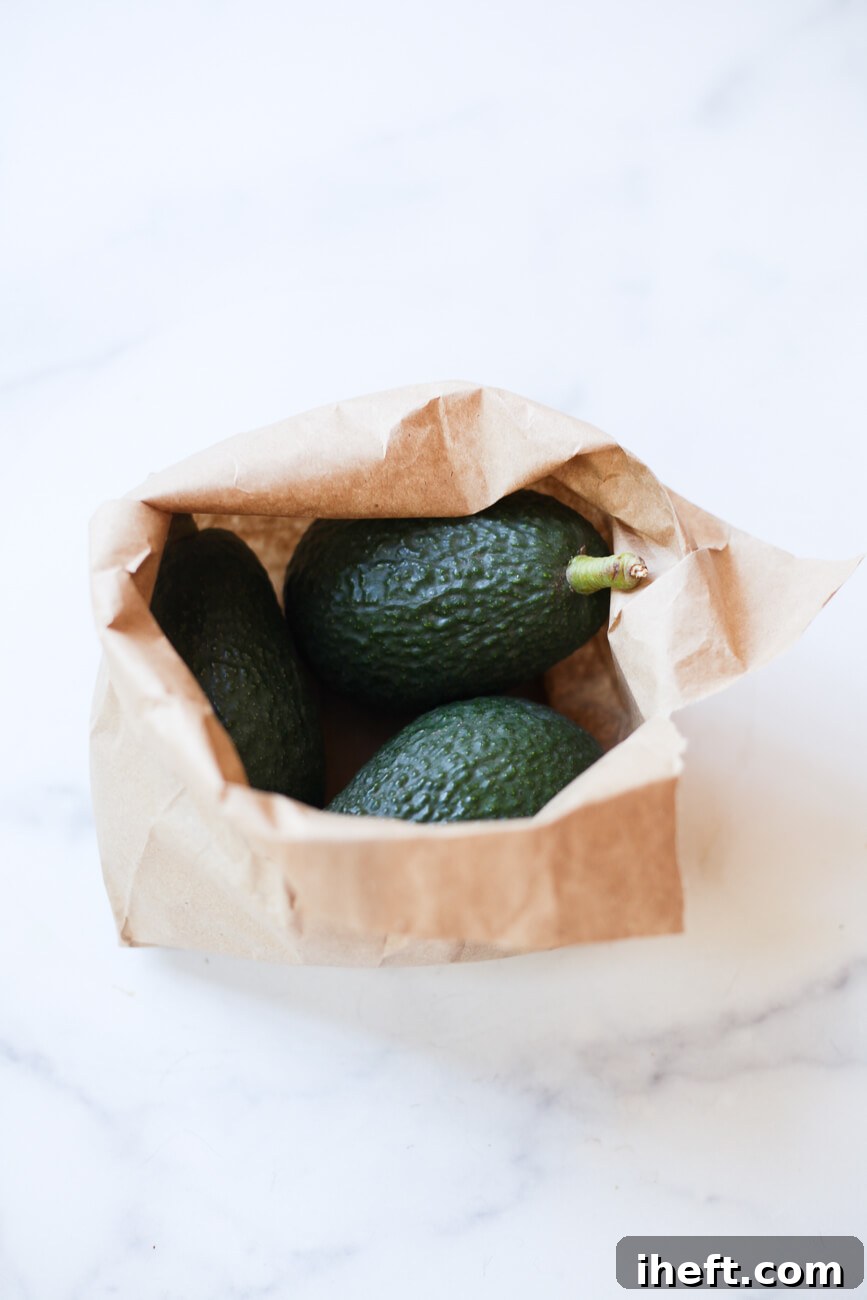
To speed up the natural ripening process, the brown paper bag method is a widely endorsed and highly effective technique. When an avocado is placed inside a closed paper bag, the ethylene gas it naturally emits becomes trapped within the bag. This concentrated environment of ethylene gas accelerates the ripening process, causing the avocado to soften more quickly than if left exposed on the counter. For an even faster result, consider placing another ethylene-producing fruit, such as a ripe banana or apple, into the same bag with your avocado. These fruits release additional ethylene, further boosting the ripening effect. Depending on how unripe your avocado was to begin with, this method can cut down ripening time significantly, often bringing a rock-hard avocado to readiness in 2 to 4 days, while one with a slight give might be perfect in just one day.
3. Debunking Quick Fixes: Microwave and Oven Methods (Not Recommended)
In the age of instant gratification, various “quick fix” methods for ripening avocados have gained traction, often involving microwaves or ovens. These methods typically instruct users to cut an avocado in half, wrap it in cling wrap, and microwave it for short intervals (e.g., 30 seconds), sometimes followed by an ice water bath. Another common suggestion is to wrap a whole avocado in foil and bake it at a low temperature for a few minutes. However, it’s crucial to understand that these techniques do not truly “ripen” the avocado. Instead, they primarily cook or soften the flesh through heat exposure. The resulting texture is often mushy and gelatinous, lacking the creamy, buttery consistency of a naturally ripened avocado. Furthermore, the flavor can become undesirable, as the nuanced, rich taste of a perfectly ripe avocado is lost. For culinary applications where taste and texture are paramount, these methods are strongly discouraged. True ripeness involves a complex biochemical transformation, and while patience can be challenging, it remains the ultimate ingredient for a delicious avocado.
Storing Ripe Avocados for Extended Enjoyment
By now, you should be well-versed in the best techniques for identifying a ripe avocado and even accelerating its journey to ripeness. From the tactile firmness test and the revealing cap test to discerning skin color, you have a full arsenal of knowledge. But what happens once your avocados are perfectly ripe? Proper storage is essential to maximize their longevity and prevent them from quickly turning brown or mushy.
- Once an avocado reaches ideal ripeness, transfer it to your refrigerator’s produce drawer. The cooler temperatures will significantly slow down the enzymatic processes that lead to overripening, extending its shelf life by an additional 3 to 5 days.
- For cut avocados, preventing oxidation is key. Store the cut halves submerged in a dish of cold water, flesh-side down. Change the water daily to maintain freshness, and the avocado should remain vibrant for up to 24 hours. Alternatively, sprinkle the cut surface with a little lemon or lime juice and wrap tightly in plastic wrap before refrigerating.
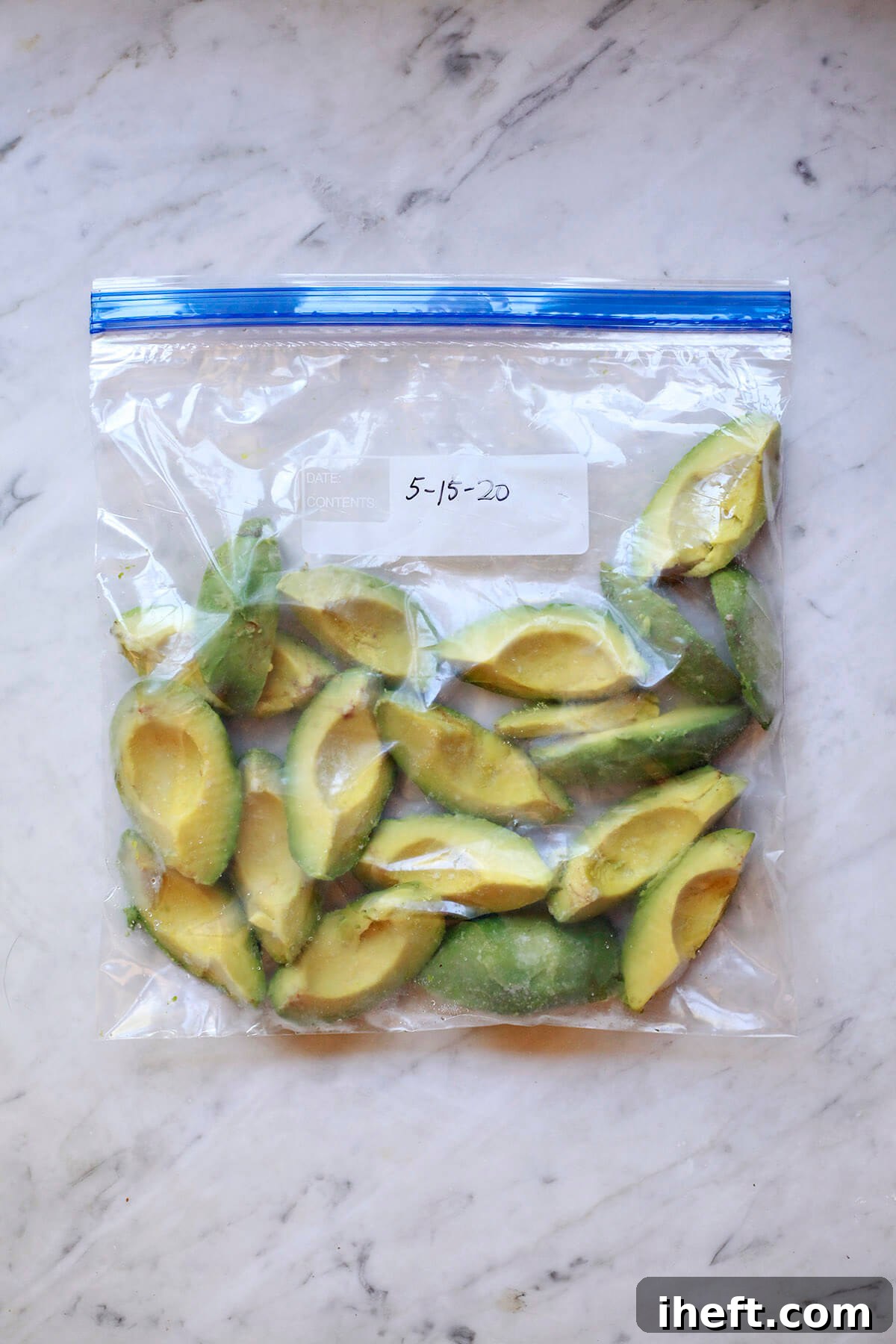
- If you find yourself with a surplus of ripe avocados, don’t let them go to waste! Avocados can be successfully frozen for future use in smoothies, dips, or even some baked goods. Learn all the details on How to Freeze Avocados to preserve their goodness.
- Mastering the art of preparation is just as important as selecting and ripening. Ensure you get the most out of your perfectly ripe fruit by learning How to Cut and Peel Avocados Perfectly.
With these expert tips, you can confidently navigate the world of avocados, from selection to storage, ensuring every bite is as delicious as nature intended.