
Reimagining Your Bench Space
Transforming Treasures: An Antique Bench Makeover for Stylish, Budget-Friendly Seating
In every vibrant home, there comes a time when extra seating becomes an absolute necessity. Whether it’s for lively “Mommy Happy Hours,” an impromptu gathering of friends, or simply accommodating a larger family during holidays, the demand for versatile and comfortable places to sit invariably increases. This perennial need for more seating has long been a consideration in our living room, prompting me to actively seek out unique and charming additions that could not only serve a functional purpose but also inject a dose of fun and personality into our space.
My initial vision leaned towards the bohemian chic of Moroccan poufs. Their distinctive texture and relaxed elegance seemed like a perfect fit for a cozy yet stylish aesthetic. However, the enthusiasm was quickly tempered by the reality of their price tag. Authentic, well-made Moroccan poufs often retail for hundreds of dollars each, and while undeniably beautiful, investing in two of them would significantly deplete my budget—funds I was keen to reserve for other exciting home improvement projects. This financial consideration spurred me to explore more cost-effective alternatives, shifting my focus from purchasing new to discovering the potential in pre-loved pieces.
It was during one of my regular browsing sessions on Craigslist.org that fate intervened. Amidst a sea of everyday listings, a photograph of an antique bench caught my eye. It possessed a certain charm, an undeniable character that hinted at stories from a bygone era, even in its somewhat neglected state. The moment I saw it, a wave of creative inspiration washed over me. I instantly recognized its potential, envisioning it not as just an old piece of furniture, but as the perfect canvas for a delightful and rewarding DIY project. The idea of transforming this forgotten treasure into a vibrant, functional piece of seating, perfectly tailored to our home’s evolving style, was simply too exciting to pass up. This bench wasn’t just a solution to our seating dilemma; it was an opportunity to infuse our living room with handmade love and a touch of unique flair, all while staying well within budget.
The Allure of Antique Finds: Unearthing a Hidden Gem
The beauty of sourcing furniture from platforms like Craigslist, local thrift stores, or estate sales lies in the discovery of truly unique items that carry a history and character often absent in mass-produced pieces. While a brand new, contemporary bench might offer sleek lines, it rarely tells a story or presents the opportunity for personal customization quite like an antique. This particular bench, though requiring a significant amount of TLC, immediately spoke to me. Its robust wooden frame, classic lines, and sturdy construction promised a durable foundation for a refreshed design.
Opting for a DIY furniture flip is more than just a budget-conscious decision; it’s an embrace of creativity, sustainability, and personal expression. Instead of contributing to disposable consumption, we give new life to existing objects, reducing waste and fostering a sense of accomplishment. Moreover, a DIY project allows for unparalleled personalization. Every stroke of paint, every choice of fabric, and every detail reflects the homeowner’s unique taste and style, resulting in a piece that feels deeply integrated into the home’s narrative. This antique bench, with its faded glory, was simply waiting for a new chapter, and I was eager to be the one to write it.
Before the Transformation: A Glimpse into its Former Life
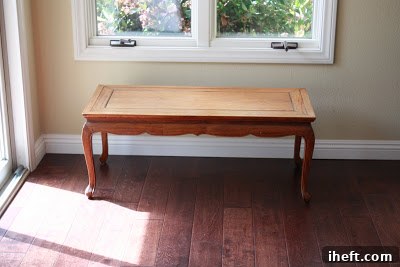
Below, you can see the bench in its “before” state. It’s a classic example of a piece that has seen many years of use, acquiring a patina that, while charming in its own right, no longer aligned with our home’s brighter, more contemporary aesthetic. The wood finish was tired, and the existing upholstery was, to put it mildly, past its prime.
|
| before |
The original cushion, likely decades old, had seen better days. It was grimy and offered little in terms of comfort or visual appeal. The frame, though sturdy, needed a fresh coat of paint to truly shine. This was a classic case of an item with excellent bones, just waiting for a creative vision and a little elbow grease to bring it back to life. The vision was clear: transform this forgotten piece into a stylish, inviting bench that would enhance our living room, providing that much-needed extra seating with a touch of curated charm.
The Art of the Furniture Flip: A Step-by-Step Guide to Bench Restoration
Embarking on a furniture makeover project can seem daunting at first, but with a clear plan and the right tools, it’s an incredibly rewarding experience. Our antique bench project involved a straightforward process that anyone can tackle. Here’s a detailed breakdown of how we transformed it from a tired old piece into a vibrant centerpiece.
1. Preparation and Painting: Giving the Frame a Fresh Start
- Sanding: Begin by thoroughly sanding the entire wooden frame. This step is essential for removing any old, loose paint or varnish, smoothing out imperfections, and creating a surface that the new paint can grip onto. For older, flaking finishes, start with a coarser grit sandpaper (e.g., 80-120 grit) to remove the bulk, then move to a medium grit (150-180 grit), and finally finish with a fine grit (220 grit) for a super smooth finish. Always sand in the direction of the wood grain to avoid unsightly scratches. After sanding, meticulously wipe down the bench with a tack cloth or a damp cloth to remove all dust and debris. A clean surface is paramount for a professional-looking paint job.
- Priming: Once sanded and cleaned, apply a high-quality primer. Priming is a vital step often overlooked, but it serves multiple purposes: it seals the wood, prevents stains or tannins from bleeding through the new paint (especially important for older furniture), and provides an even base for your chosen color. For antique pieces, an oil-based primer or a good quality stain-blocking primer is highly recommended. Apply one to two thin, even coats, allowing adequate drying time between each coat as per the manufacturer’s instructions.
- Painting: With the primer dry, it’s time for the fun part: painting! Choose a durable paint suitable for furniture. Options include chalk paint (for a distressed, matte look with minimal prep), latex paint (versatile and easy to clean, often requiring a topcoat for durability), or enamel paint (for a hard, chip-resistant finish). For our bench, we opted for a crisp, clean white to brighten its appearance and provide a neutral backdrop for the new fabric. Apply several thin coats rather than one thick one to prevent drips and ensure a smooth, even finish. Lightly sand with a very fine-grit sanding sponge (e.g., 400 grit) between coats for an ultra-smooth result, wiping away dust each time. Finish with a protective topcoat or sealer if using chalk paint or a lower-durability latex paint, particularly for a high-traffic item like a bench.
2. Upholstery Update: Stretching New Life into the Cushion
- Remove Grimy Old Cushion: Carefully remove the existing cushion from the bench frame. This usually involves unscrewing it from the bottom or sides. Once detached, remove the old, grimy fabric. You might need a staple remover or a flathead screwdriver to pry out the old staples. Inspect the foam or padding underneath. If it’s deteriorated, crumbly, or significantly flattened, this is an excellent opportunity to replace it with new high-density foam for improved comfort and longevity. If the existing foam is in good condition, you can simply keep it.
- Prepare New Fabric: Lay your chosen new fabric face down on a clean, flat surface. Place the cushion, foam side down, centered on the fabric. Ensure you have enough fabric to wrap around all sides of the cushion with an overlap of at least 2-3 inches for stapling. Trim excess fabric if needed, but leave ample margin.
- Stretch New Fabric and Attach: Starting from the middle of one long side, pull the fabric taut over the cushion and staple it to the underside of the wooden base using a heavy-duty staple gun. Work your way outwards from the center to each corner, alternating between opposite sides (e.g., staple the center of one long side, then the center of the opposite long side, then the center of a short side, then the opposite short side). This technique ensures even tension and prevents warping or crooked fabric. For the corners, carefully fold the fabric as neatly as possible, creating crisp pleats or folds, and secure them with several staples. The key is to stretch the fabric tightly to avoid wrinkles and a saggy appearance.
- Place Cushion Back on Bench: Once the new fabric is securely stapled all around, trim any excess fabric close to the staples. Now, carefully place the newly upholstered cushion back onto the bench frame and reattach it using the original screws or new ones if necessary. Ensure it’s firmly secured and doesn’t wobble.
That’s it! With just these few steps, your antique bench will be completely revitalized, ready to serve as a stylish and comfortable addition to your home.
The Stunning “After”: A Vision Realized
The transformation is truly remarkable. From its humble origins as a forgotten antique, the bench now stands as a testament to the power of a little imagination and DIY effort.
| after |
The fresh coat of white paint dramatically brightens the frame, instantly modernizing its classic lines. The chosen fabric, a vibrant Ikat-ish print, provides a striking contrast and infuses the entire piece with a contemporary, playful energy. This bench now seamlessly blends functionality with style, offering comfortable extra seating while acting as a beautiful focal point in our living room. It’s a perfect example of how a modest investment of time and resources can yield a high-impact design result, creating a piece that looks custom-made for our home.
The Beauty of Flexible Design: Fabric Choices and Evolving Tastes
Embracing DIY: Inspiration, Resources, and Community
The world of DIY home decor is rich with inspiration, creative ideas, and a supportive community eager to share tips and successes. Discovering and transforming pieces like this antique bench is not just about saving money; it’s about the joy of creation, the satisfaction of personalizing your living space, and contributing to a more sustainable lifestyle.
Speaking of fabulous resources and inspiration, I always turn to blogs like Centsational Girl. Her ideas are consistently brilliant, offering a wealth of practical advice and stunning design projects that empower DIY enthusiasts at all skill levels. Websites like hers are invaluable for anyone looking to embark on their own furniture flips or home decor updates. They provide not just tutorials, but also a sense of community and the encouragement to take on seemingly challenging projects.
Such platforms are also excellent places to discover new trends, learn about different materials, and even participate in exciting opportunities. For instance, in the past, Centsational Girl has hosted incredible giveaways, like her collaboration with Waverly fabrics, offering stacks of beautiful yardage to lucky readers. These kinds of events are a fantastic way for DIYers to get their hands on high-quality materials to kickstart their own projects. Waverly, known for its diverse range of patterns and colors, always introduces really cool new prints, making it a go-to for many home decor projects. Keeping an eye on these blogs and their social media channels can open up doors to amazing resources and inspiration, helping you find the perfect fabric or tool for your next creation.
Conclusion: Your Next DIY Adventure Awaits!
Our antique bench makeover serves as a prime example of how a bit of vision, a willingness to get hands-on, and smart material choices can completely transform a forgotten piece into a functional and stylish asset for your home. This project not only solved our need for additional seating but also added a unique, personalized touch to our living room, all while respecting our budget. The satisfaction of looking at a piece you’ve personally restored is unparalleled, offering a constant reminder of your creativity and effort.
We hope this detailed journey inspires you to look beyond the superficial imperfections of old furniture and see the immense potential within. Whether it’s an antique bench, a vintage dresser, or a simple chair, there’s a world of furniture flips waiting to happen. Embrace the challenge, enjoy the process, and create something truly unique that reflects your style and story. Happy DIYing!