Build Your Own Sandcastle Cake
Mastering the Magical Sandcastle Cake: An Easy DIY Guide to Beach-Themed Delights
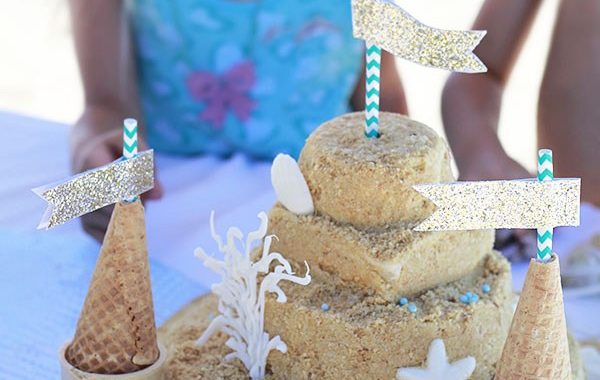
Imagine the unbridled joy on a child’s face when they discover a magnificent, towering sandcastle, not built on the beach, but standing proudly as the centerpiece of their birthday celebration! A sandcastle cake might initially appear to be a formidable project, seemingly reserved for professional patissiers with years of experience. However, we’re here to reveal a delightful secret: creating this show-stopping, beach-themed masterpiece is surprisingly straightforward, achievable using common kitchen items and a generous sprinkle of creativity. This comprehensive guide is designed to empower aspiring bakers of all skill levels, meticulously walking you through every enchanting step – from baking and precise stacking to flawless frosting and imaginative decorating. Prepare to craft a sandcastle cake that is not only visually stunning but also a testament to your newfound baking prowess, making any special occasion truly unforgettable.
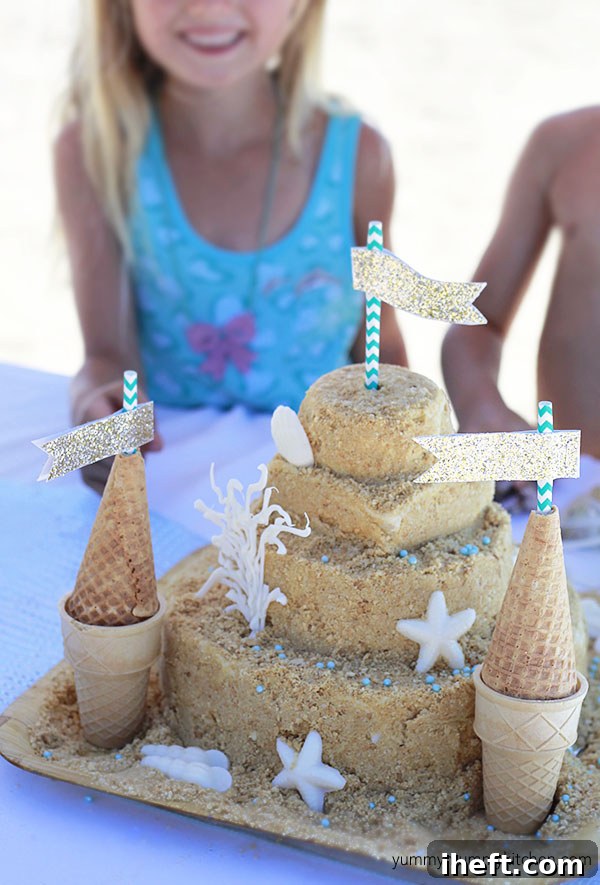
The journey to creating this edible marvel began, for me, with a considerable amount of apprehension and a healthy dose of skepticism. The mere thought of constructing a multi-tiered dessert that faithfully mimicked a sandy fortress filled me with an almost palpable dread. Honestly, right up until the eleventh hour before the party – as I was meticulously assembling, generously frosting, and carefully coating each layer in ground cookie crumbs – I was absolutely convinced that my backup plan of a frantic dash to the grocery store for plain cupcakes would become a reality. My contingency involved simply tossing my pre-made white chocolate seashells onto a store-bought confection, a stark contrast to the vision I held. Visions of a collapsing structure and frosting mishaps loomed large in my mind, reminiscent of the challenges I’d encountered with a previous ambitious bake, the Girly Sock Monkey Cake, which had proven quite complex just six months prior.
Yet, to my profound relief and utter delight, my initial fears were wonderfully unfounded! This sandcastle cake turned out to be significantly simpler to execute than I had ever dared to hope. And the final reveal? It looked even more magnificent than I could have possibly imagined. The true secret to mitigating stress and ensuring a smooth, enjoyable process lay in strategic forward-planning: I baked all the individual cake layers a full week in advance, allowing them to cool completely before meticulously wrapping each one in plastic wrap, then an additional layer of aluminum foil, and finally storing them in the freezer. This simple, yet incredibly effective, preparatory step liberated immense amounts of time and mental energy on the day before the celebration, enabling me to focus solely on the joyful aspects of assembly and creative decoration, rather than juggling baking tasks.
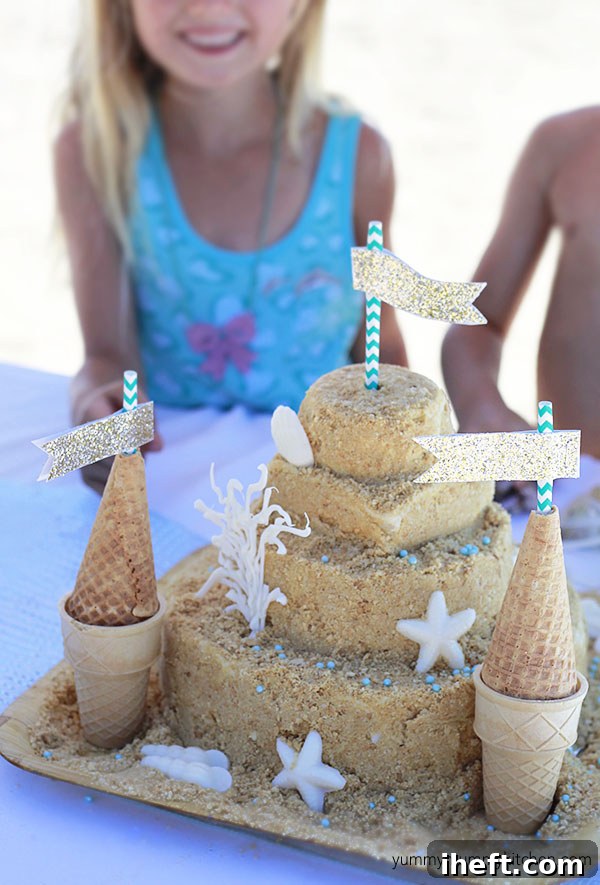
The ultimate reward, however, arrived the following morning. Witnessing the pure, unadulterated joy radiating from my birthday girl’s face was an experience truly beyond words. Her eyes widened with a mixture of disbelief and utter wonder as she took in the sight of her custom-made, fantastical sandcastle cake. Her exact words, delivered with an unforgettable sparkle and beaming smile, were, “Mom, I knew it was going to be good, but I didn’t know it was going to be THIS amazing!” That singular moment, overflowing with happiness and genuine pride, rendered every minute of preparation, every moment of doubt, utterly priceless. It served as a powerful reminder that a homemade cake, lovingly crafted and presented, possesses the magical ability to transform an already special day into an extraordinary, cherished memory for years to come.
Laying the Foundation: Gathering Your Creative Construction Materials
Before embarking on the deliciously rewarding journey of cake construction, let’s begin by discussing the most fundamental aspect of your sandcastle: the cake pans. Here’s an encouraging tip: there is absolutely no need to rush out and purchase specialized, expensive equipment. Chances are, your very own kitchen cabinets are already brimming with a diverse array of potential castle components! My initial approach was wonderfully pragmatic and purely experimental – I simply delved into my collection, playfully stacking various baking pans, oven-safe bowls, and even heat-proof dishes on top of each other. I continued this process until I achieved a visually pleasing, stable, and interestingly contoured “castle” silhouette that sparked my imagination.
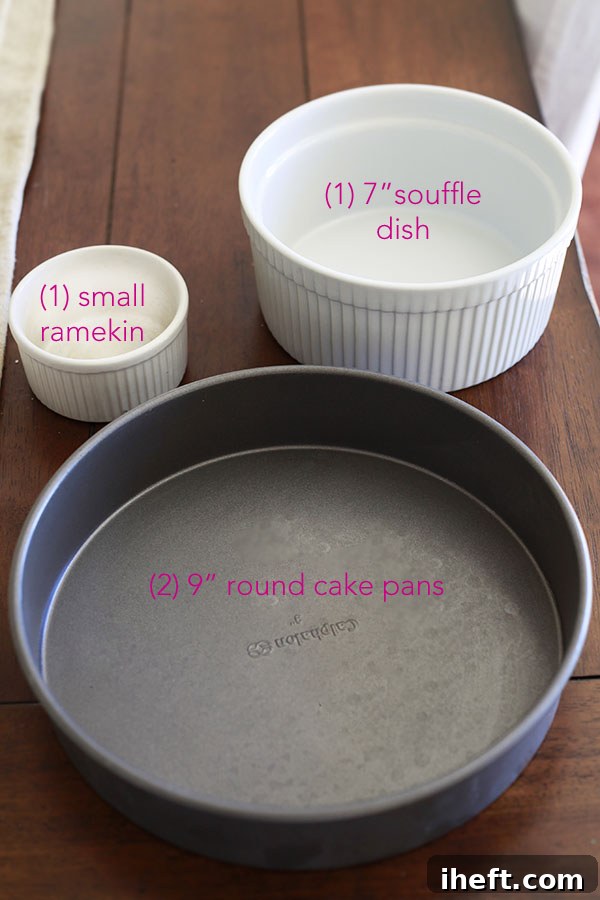
The inherent charm of a sandcastle cake lies in its wonderfully rustic, often imperfect, and entirely organic appeal – much like real sandcastles sculpted by playful hands on the beach, no two are ever truly identical. This beautiful characteristic grants you an incredible degree of freedom and flexibility in selecting your molds and shaping your design. The specific pans and dishes depicted in the image above worked perfectly for my particular vision, but it’s important to remember that countless other combinations would yield equally effective and captivating results. Don’t hesitate to incorporate a diverse range of shapes and sizes to infuse your creation with compelling architectural interest: imagine using a small, round cake tin as the base for a delicate turret, a sturdy square baking dish for the robust foundational layer, or even individual cupcakes to crown your tallest, most majestic spires. Embrace the spirit of improvisation; mugs, heat-safe glass bowls, or even mini loaf pans can all be ingeniously repurposed. The crucial considerations are ensuring that your chosen vessels are reliably oven-safe and possess sufficient structural integrity to comfortably hold your cake batter. Ultimately, the objective is to craft a visually appealing, varied, and delightfully whimsical structure that perfectly evokes the playful, sun-kissed essence of a genuine beach sandcastle.
Strategic Preparation: The Art of Baking, Freezing, and Seamless Stacking
The Night Before (or Even Earlier for Optimal Results!)
One of the most invaluable pieces of advice for successfully tackling any ambitious baking project, especially one that involves multiple layers and intricate assembly, is to prepare your cake layers well in advance. As previously highlighted, I opted to bake my cake components a full week ahead of time. This proactive step allowed them to cool completely before I meticulously wrapped each layer, first in a snug layer of plastic wrap, followed by a protective layer of aluminum foil, and then carefully transferred them to the freezer. This method offers a myriad of benefits: it not only dramatically conserves precious time on the main assembly day but also renders the cake layers firmer and significantly easier to handle, facilitating cleaner, more precise cuts and ultimately leading to a more stable and resilient stacked structure. When you’re finally ready to embark on the assembly phase, simply retrieve your wrapped cake layers from the freezer and allow them to thaw gradually – either overnight in the refrigerator or for a few hours at room temperature, ensuring they remain securely wrapped to preserve their essential moisture and prevent drying.
Once your cake layers are perfectly thawed and ready for their transformation, the initial, crucial step involves leveling them. Most cakes, by their very nature, tend to bake with a slight dome or crown on top. To ensure that your sandcastle stands impressively tall and perfectly straight, it’s imperative to use a long, sharp serrated knife to carefully slice off any domed tops, thereby creating impeccably flat and even surfaces. This precision is absolutely key for achieving uniform stacking and lending your finished cake a more professional and polished appearance. And here’s a delightful insider’s secret: those freshly cut cake scraps are not waste; they are your well-deserved reward for a job impeccably done! Savor them alongside a comforting cup of coffee, or perhaps, as I thoroughly enjoyed doing, with a relaxing glass of Pinot Grigio – a truly significant, albeit unconventional, step for any baker’s well-being and to foster an uninhibited creative spirit. Never underestimate the restorative power of a small, delicious indulgence amidst a demanding project!
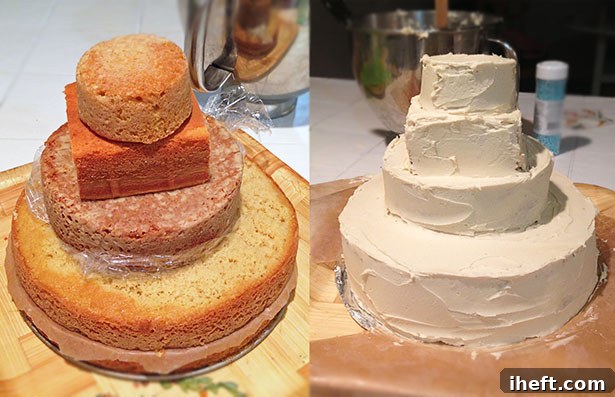
As I embarked on the exciting process of stacking my various cake layers, I distinctly noticed that my initial “castle” design felt a little too modest in height. This is where the beauty of creative improvisation truly comes into play – never be afraid to make on-the-fly adjustments to your vision! Fortuitously, I happened to have a small pound cake tucked away in my freezer from a previous baking endeavor. A swift and precise trim quickly transformed it into a perfectly sized square layer, which seamlessly integrated into my design, providing that much-desired additional height and an engaging new visual dimension. This anecdote vividly underscores the inherent flexibility and adaptability of a sandcastle cake design: you are always empowered to adapt and improvise with the ingredients and components you have readily available, or even to bake an extra small layer if your vision calls for it. The fundamental takeaway here is to remember that absolute perfection isn’t the ultimate objective; rather, it’s the charming, whimsical imperfection and unique character that constitute an integral part of the irresistible allure of a truly authentic sandcastle.
The Art of Frosting: Embracing the Rustic Imperfections
Now, let’s delve into the art of frosting – and this is precisely where the sandcastle cake truly distinguishes itself as an exceptionally beginner-friendly and low-stress baking project. Unlike cakes that demand the most flawlessly smooth, pristine, and perfectly executed frosting work, a sandcastle cake is incredibly forgiving. Since the entire exterior surface will be generously enrobed in a protective coating of fine cookie crumbs, any minor imperfections, bumps, or unevenness in your frosting application will be completely obscured from view. This inherent forgiving nature makes it an absolutely ideal project for anyone who might feel intimidated by the precision required for pastry bags, intricate decorating tips, or the often-elusive goal of achieving that glass-smooth, bakery-quality finish.
If you possess the fundamental skill to spread butter smoothly across a slice of toast, then you are already equipped with all the essential capabilities required for expertly frosting this cake! The most effective tool for achieving a consistently even, albeit charmingly rustic, coat of frosting is an offset spatula. Its uniquely angled blade design allows you to effortlessly spread frosting smoothly across all the cake surfaces and gracefully between each layer without the frustration of dragging your knuckles or fingers through the pristine frosting. Begin by applying a substantial, generous layer of frosting to your very first, bottom cake tier. Then, carefully place the subsequent layer directly on top, pressing down ever so gently to ensure a secure adhesion, and proceed to generously frost that layer. Continue this systematic process, patiently building your cake in your chosen sandcastle configuration. Importantly, remember not to neglect the sides of the cake; apply a liberal amount of frosting to them as well. This layer of frosting serves a dual purpose: it acts as the essential adhesive for your “sand” – the finely ground cookie crumbs – so it’s paramount to ensure that every visible inch of the cake’s exterior is thoroughly and completely covered. For an even firmer cake structure and to facilitate an easier frosting process, you can employ a classic baking technique: briefly chill your stacked, unfrosted cake in the freezer for approximately 10-15 minutes before proceeding to apply the final, generous coat of frosting. This initial “crumb coat” step is invaluable, as it helps to lock in any stray cake crumbs and simultaneously creates a more stable, impeccably smooth surface for the subsequent application of your “sand” layer.
Decorating Your Masterpiece: From Edible Crumbs to Charming Creative Details
Crafting the Authentic “Sand” Effect
The true enchantment of a sandcastle cake unequivocally springs to life with the application of its signature edible sand coating. This delightfully realistic effect is skillfully achieved by finely grinding down dry cookies. While the accompanying recipe thoughtfully suggests using wafer cookies, you have a wealth of creative alternatives at your disposal. Consider experimenting with Trader Joe’s toasted coconut cookie thins, classic animal crackers, traditional vanilla wafers, or wholesome graham crackers – all of which work remarkably well for this purpose. The pivotal secret to success here is to consistently achieve a very fine, granular, sand-like consistency using the power of a food processor. Continue pulsing the cookies until there are absolutely no discernible large chunks remaining, ensuring an exquisitely even and uniform texture that perfectly mimics the fine grains of real beach sand.
Timing plays a crucial role in this stage: if your frosting is particularly soft, prone to melting, or has a very wet consistency, it is highly advisable to postpone the application of the cookie crumbs until just moments before the party. This strategic delay will effectively prevent the crumbs from becoming soggy and losing their delightful, authentic sandy texture. However, if your chosen frosting quickly develops a slight “crust” on its surface (a common characteristic of certain buttercreams, as mine often does), you can confidently proceed with applying the crumbs immediately after frosting the cake. The technique is simple yet effective: gently, yet firmly, press the finely ground cookie crumbs onto every single frosted surface of your magnificent cake. You can accomplish this by cupping generous handfuls of crumbs and carefully pressing them onto the sides of the cake, or by placing the entire cake on a large, clean tray and liberally spooning crumbs over the top, then using your hands to thoroughly cover the sides. Do not be hesitant or shy; a thick, even, and complete coating is absolutely essential for creating the most convincingly realistic and visually striking sand effect.
Adding Charming Castle Accents and Lively Beachy Details
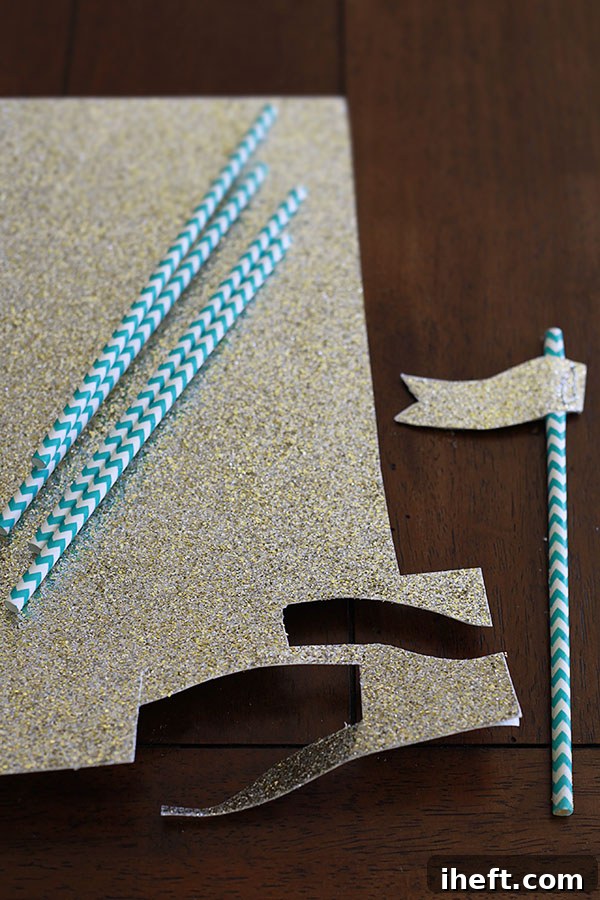
No truly spectacular sandcastle is ever complete without its signature, fluttering flags and a whimsical assortment of beach-inspired treasures! Crafting your own charmingly whimsical flags is an incredibly straightforward and enjoyable process. You’ll need a selection of decorative paper straws – chevron patterns or any fun design work beautifully – and a vibrant piece of scrapbook paper that complements your theme. Begin by cutting two identical flag shapes from your chosen paper. Carefully position the paper straw precisely between the two paper flags, then secure them together around the straw using a small dab of adhesive and a couple of discreet staples. The staples, especially if you opt for metallic or intricately patterned paper, will be barely noticeable and provide exceptional stability. Now, proudly insert these handmade flags into the very top of your cake towers. For added height and architectural flourish, you might consider utilizing inverted sugar cones as sturdy bases for your flagpoles. Simply snip off about half an inch from the pointed tips of the sugar cones, then insert the wider, open end into the top of your cake towers (or even strategically place them onto cake cones positioned adjacent to your main structure), and gently slide your flags into the newly created opening of the cone.
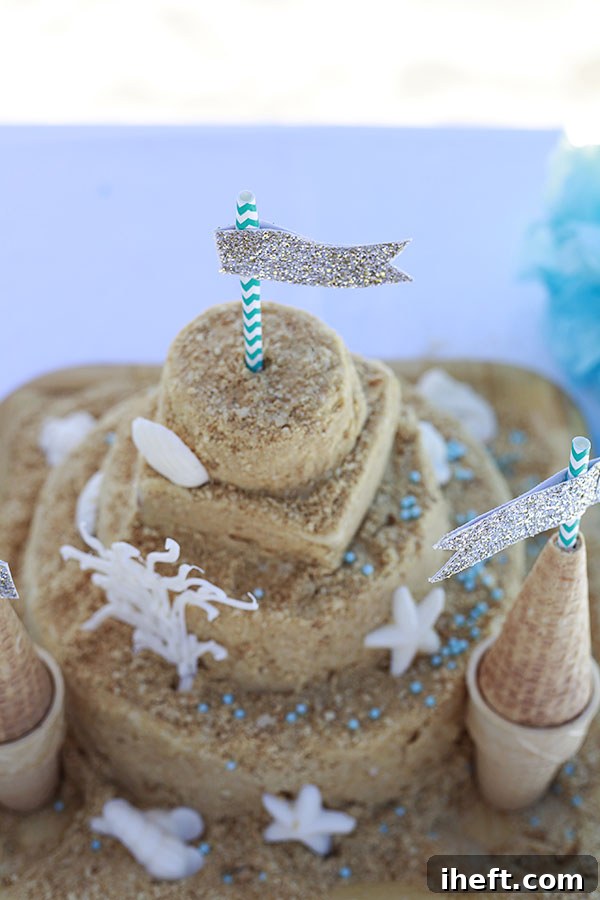
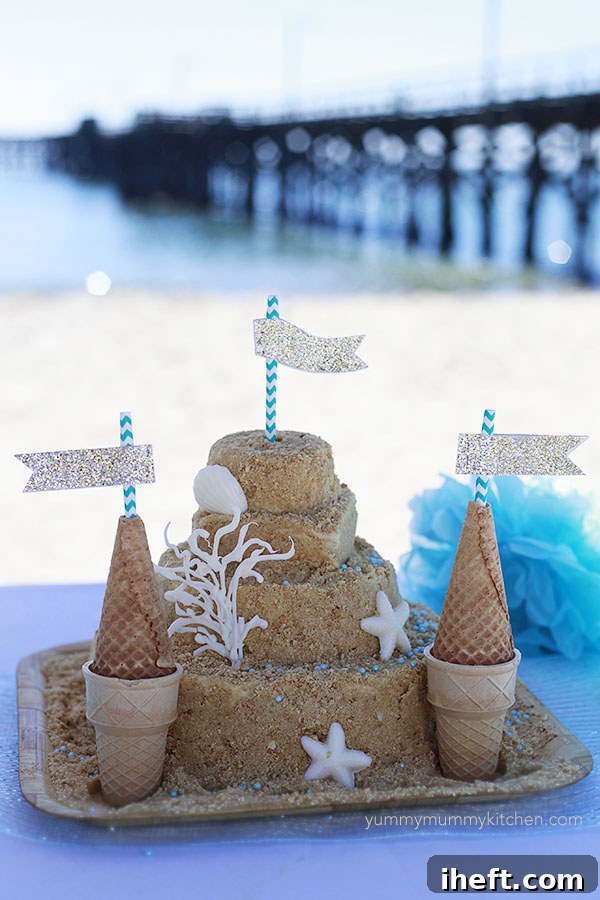
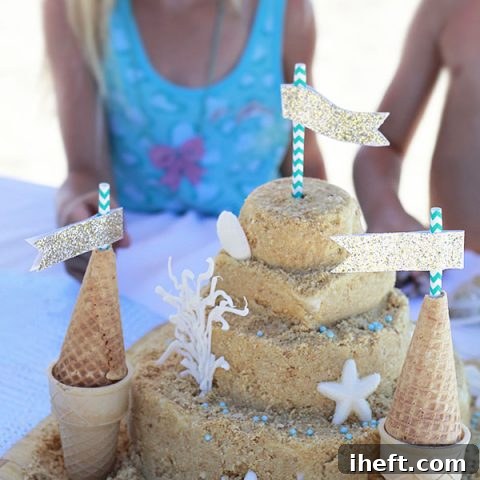
Beyond the delightful flags, this is your moment to unleash your boundless creativity with a myriad of other enchanting beach-themed decorations. I personally opted for delicate white chocolate seashells, which are surprisingly easy to craft using a simple candy mold. (Refer to the detailed recipe instructions for specific guidance on preparing these edible treasures well in advance.) These exquisite shells lend an undeniably elegant and authentically edible touch to the overall design. However, the decorative possibilities are truly endless! Envision scattering vibrant sprinkles around the base of your castle, creating a lively burst of color that mimics tiny sea glass or coral. Introduce playful toy mermaids or small plastic fish, strategically placing them to inhabit your edible ocean scene, bringing a sense of animated wonder. Or, for an extra element of delightful surprise, consider hiding edible “treasure” coins within crevices or around the base. Swedish fish, gummy sharks, sparkling rock candy, or even a few real, thoroughly cleaned and sanitized seashells (always ensure they are meticulously washed and positioned to not come into direct contact with edible surfaces) can significantly enhance the beach theme. The more imaginative and intricate details you lovingly incorporate, the more profoundly magical and captivating your sandcastle cake will undoubtedly become!
Sandcastle Cake Recipe: Your Comprehensive Blueprint for Success
Ready to meticulously construct your very own dream sandcastle cake? Here is a detailed, easy-to-follow recipe designed to guide you through each enchanting step, ensuring the entire process is both smooth and immensely enjoyable.
Yield: Approximately 24 servings
Prep Time: 30 minutes
Cook Time: 40 minutes
Additional Time: 2 hours (recommended for chilling and/or freezing cake layers)
Total Time: 3 hours 10 minutes
Ingredients You’ll Need:
- 1 cup of white chocolate chips, accompanied by a suitable candy mold for creating shells (optional, but highly recommended for an authentic, charming beach aesthetic)
- 2 boxes of your preferred cake mix (alternatively, an equivalent scratch cake recipe; for a richer flavor and texture, consider organic brands often found in natural foods stores)
- Frosting sufficient for two standard multi-layer cakes (whether homemade buttercream for a personalized touch or a quality store-bought option to save time and effort)
- 1 box of wafer cookies (Trader Joe’s toasted coconut cookie thins, classic animal crackers, traditional vanilla wafers, or graham crackers all function exceptionally well for creating the realistic “sand” texture)
- 2 to 4 sugar ice cream cones (these will serve as impressive turrets and other decorative architectural elements)
- 2 to 4 cake ice cream cones (providing stable and sturdy bases for your turrets)
- An assortment of sprinkles or other imaginative decorations (playful plastic mermaids, miniature toy fish, vibrant Swedish fish, whimsical gummy sharks, or edible treasure coins would all be incredibly delightful and fun additions)
Step-by-Step Instructions:
-
Prepare White Chocolate Shells (Optional but Recommended for Visual Impact)
Begin by making your white chocolate shells well in advance of the main cake assembly. This crucial preparatory step ensures they are fully hardened and readily available when you need them, effectively minimizing any last-minute stress. Melt the white chocolate chips in a microwave-safe bowl, heating them in precise 20-second intervals and stirring thoroughly after each interval until the chocolate achieves a perfectly smooth, completely melted consistency. Exercise caution to avoid overheating. Allow the melted chocolate to cool slightly to a manageable temperature, then carefully pour it into a pastry bag or a sturdy plastic zipper bag. Snip a tiny tip off one corner of the bag. Gently and precisely pipe the white chocolate into your chosen candy mold, ensuring that all intricate crevices are completely filled. Tap the mold firmly on your counter several times; this action is essential for releasing any trapped air bubbles – you will observe small bubbles visibly rising to the surface. Place the filled mold in the refrigerator to allow the chocolate to harden completely. Once fully set, carefully pop the hardened shells out of the mold and store them securely in the refrigerator until you are ready to use them. As an optional creative flourish, you can also pipe charming sea fan shapes directly onto a piece of wax paper for additional decorative elements.
-
Bake Your Diverse Cake Layers
Carefully follow the instructions provided by your chosen cake mix or scratch recipe to meticulously prepare the cake batter. Preheat your oven to the exact temperature specified in the recipe. Thoroughly butter and lightly flour all of your selected cake pans and dishes to reliably prevent sticking and ensure easy release. Evenly pour the prepared batter into the buttered and floured pans, smoothing the tops with a spatula for an even bake. Bake according to the recipe’s directions, but be mindful that smaller baking dishes may cook significantly more quickly than larger ones; therefore, monitor them frequently for doneness. The cakes are perfectly baked when a clean toothpick inserted into the center emerges free of wet batter. Remove the cakes from the oven and allow them to cool on a wire rack for approximately 10-15 minutes before carefully inverting and removing them from their pans. If you intend to bake early and freeze, ensure the cakes are entirely cool, then meticulously wrap each layer tightly in plastic wrap, followed by a layer of aluminum foil, and then freeze them. Otherwise, unfrosted and uncut cakes can be stored, loosely covered, at room temperature for one to two days.
-
Assemble and Frost Your Sandcastle Base with Care
Prepare your frosting diligently according to the package directions or your chosen recipe. Using a long, sharp serrated knife, carefully level any domed tops on your cooled cake layers. This crucial step creates perfectly flat, stable surfaces, which are paramount for a straight and sturdy sandcastle structure. With an offset spatula, apply a generous layer of frosting to your bottom cake layer. Place the next cake layer squarely on top, pressing down gently to ensure secure adhesion, then proceed to generously frost that layer. Continue this systematic process of frosting and building, meticulously stacking your cake layers in your desired sandcastle configuration. Crucially, do not fret over achieving absolute perfection in your frosting application at this stage; the forthcoming cookie crumbs will expertly conceal any minor unevenness! Should you find that the cake layers are excessively soft or prone to crumbling during frosting, a smart technique is to briefly chill the stacked, unfrosted cake in the freezer for about 10-15 minutes. This firms up the cake, making the subsequent frosting process significantly smoother and more manageable, essentially creating a foundational crumb coat.
-
Expertly Create and Apply the Edible Sand
Place your chosen wafer cookies (or any other dry, suitable cookies) into the bowl of a food processor. Pulse the cookies thoroughly until they are finely ground, achieving a consistency that strikingly resembles fine beach sand. Ensure that no large chunks remain to maintain the authentic texture. Now, it’s time for the magical transformation – applying your “sand.” If your frosting is particularly soft, has a high moisture content, or tends to melt quickly, it is highly advisable to delay the application of the crumbs until just prior to your event. This prevents them from becoming soggy and losing their delightful sandy texture. However, if your frosting has formed a slight “crust” on its surface (a common characteristic with many buttercreams), you can confidently proceed to apply the crumbs immediately after frosting the cake. Gently, yet firmly, press the finely ground cookie crumbs onto all frosted surfaces of the cake. This can be achieved by cupping generous handfuls of crumbs and carefully pressing them onto the sides, or by sprinkling them liberally over the top and then working your way down the sides. Ensure every visible part of the cake is thoroughly coated with the sandy crumbs to achieve the most convincing and realistic sandcastle effect.
-
Add the Final, Charming Decorative Touches
For your impressive flag towers, carefully cut approximately a 1/2-inch off the pointed tips of your sugar cones. Insert the wider, open end of the sugar cones onto the tops of your cake cones, or directly onto the cake tiers where you envision your turrets standing. Ensure they are stable and securely placed. Insert your thoughtfully homemade paper flags into the small holes created by snipping the sugar cone tips. Now, let your creative imagination soar with additional decorations! Artfully arrange your beautiful white chocolate shells around the base, on strategic ledges, or nestled into the “sand” of your castle. Scatter colorful sprinkles for a festive touch, strategically place playful toy mermaids or miniature fish to bring your edible ocean scene to life, or even embed edible “treasure” coins for an extra element of surprise and delight. This is the moment where your sandcastle truly blossoms into a vibrant, personalized masterpiece, reflecting the magical world of the beach. Step back and proudly admire your stunning, homemade sandcastle cake – a true testament to your creativity and dedication!
Cuisine: American
Category: Cake
Ultimately, making a sandcastle cake transcends mere baking; it is a profound act of love, creativity, and boundless imagination. It’s about transforming simple, everyday ingredients into a fantastical, edible centerpiece that is guaranteed to ignite immense joy and wonder. Do not allow its impressive appearance to intimidate you; with these comprehensive, step-by-step instructions and a touch of patience and enthusiasm, you will be truly astonished at the magnificent creation you are capable of bringing to life. Happy baking, and may you thoroughly savor every magical moment of your very own sandcastle masterpiece!