Mastering the Art of Coconut Opening
How to Easily Open a Fresh Coconut: Your Ultimate No-Machete Guide
The allure of fresh coconut is truly captivating. Whether you crave its hydrating water or its versatile, delicious meat, a perfectly ripe coconut offers an authentic taste of the tropics. Yet, for many, the idea of opening one can feel like an insurmountable challenge, often conjuring images of specialized tools or even dangerous machetes. What if we told you that unlocking this tropical treasure can be surprisingly simple, achievable with everyday kitchen items and a clever technique? This comprehensive guide aims to transform the daunting task of coconut opening into a delightful and straightforward experience.
Just last week, while marveling at the vibrant landscapes of Kauai, my daughters were utterly fascinated by the abundant coconuts swaying majestically atop the palm trees. Their earnest request to try a fresh one sparked a personal quest to find the most effective and accessible method for cracking these hard-shelled fruits without needing a professional arsenal. My initial “research” involved a rather comical series of attempts—from vigorous hammerings to treating them like oversized medicine balls, all yielding more laughter and exertion than actual progress. However, persistence paid off! I ultimately discovered a remarkably simple and effective technique that eliminates the need for any specialized tools, empowering anyone to enjoy the incredible bounty of a fresh coconut right in their own home.
Why Embrace Fresh Coconut? Beyond the Tropical Charm
Beyond its iconic status as a symbol of sun-drenched beaches, fresh coconut offers a remarkable array of nutritional benefits and exciting culinary possibilities. The crystal-clear coconut water is a natural, electrolyte-rich beverage, making it an ideal choice for superior hydration after a workout or on a hot day. The tender, creamy white meat, on the other hand, is a powerhouse of healthy fats, dietary fiber, and essential minerals such as manganese, copper, and iron. Incorporating fresh coconut into your diet can contribute positively to various aspects of health, from aiding digestion and boosting energy levels to supporting healthy skin and hair, truly making it a valuable superfood.
Learning how to open a coconut yourself ensures that you receive the freshest, purest form of these benefits, completely free from the preservatives, added sugars, or processing often found in commercially packaged coconut products. This hands-on approach allows you to savor the unadulterated flavor and full nutritional punch that only a truly fresh coconut can provide, making your culinary creations or simple snacking moments exceptionally wholesome and delicious.
Selecting the Perfect Coconut for Your Kitchen Adventure
The first crucial step on your journey to enjoying fresh coconut is selecting the right one from your local grocery store or market. For the oven-assisted method detailed in this guide, you’ll specifically want a mature, brown coconut, rather than a young green one (which is primarily harvested for its abundant water and tender jelly-like meat). When choosing your brown coconut, pay close attention to these key indicators to ensure you pick a prime specimen:
- Weight Test: Gently lift a few coconuts. Opt for one that feels noticeably heavy for its size. A heavier coconut typically signifies a greater volume of coconut water inside, which is a refreshing bonus you definitely won’t want to miss.
- Sound Check: Hold the coconut close to your ear and give it a gentle shake. You should hear the water sloshing distinctly inside. If you hear little to no sloshing, it might indicate that the coconut is dry, old, or has internal cracks, making it less ideal for consumption.
- Appearance and Feel: Carefully inspect the exterior. Look for a coconut that is uniformly brown, firm to the touch, and free from any soft spots, mold, or visible cracks. While a few superficial blemishes are normal, deep cracks or widespread discoloration can be signs of spoilage. Also, check the three “eyes” at one end; they should appear intact and relatively dry.
A high-quality, heavy coconut will not only provide a generous amount of pure water but will also yield a thicker, richer, and more flavorful meat, significantly enhancing your overall fresh coconut experience.
Essential Tools You’ll Need: Your Kitchen Arsenal
Before you begin, gathering all the necessary tools will ensure a smooth, safe, and enjoyable coconut-opening process. The good news is that you likely already have most of these items readily available in your kitchen:
- One fresh, mature brown coconut
- An oven (preheated to 450°F / 230°C)
- A sturdy baking sheet
- A paring knife, a clean, sharp screwdriver, or a robust corkscrew (essential for piercing the “eyes”)
- A durable cup or bowl (to efficiently collect the precious coconut water)
- A stable cutting board (for a safe working surface)
- A meat mallet, hammer, or rolling pin (optional, but highly effective for the final cracking)
- A regular butter knife or a small, dull-edged knife (perfect for carefully extracting the coconut meat)
- A vegetable peeler (optional, for those who prefer to remove the brown skin from the meat)
Step-by-Step Guide: How to Master Coconut Opening with Ease
Step 1: Preheat Your Oven to the Optimal Temperature
Your journey begins by setting your oven. Preheat it to a brisk 450 degrees Fahrenheit (230 degrees Celsius). While applying heat to a fruit might seem unconventional, this high temperature plays a pivotal role in weakening the coconut’s incredibly tough shell. The rapid expansion and contraction caused by this heat, followed by subsequent cooling, are key to effectively loosening the coconut meat from its fibrous casing, thereby preparing it for a much easier crack.
Step 2: Locate and Carefully Puncture the “Eyes” of the Coconut
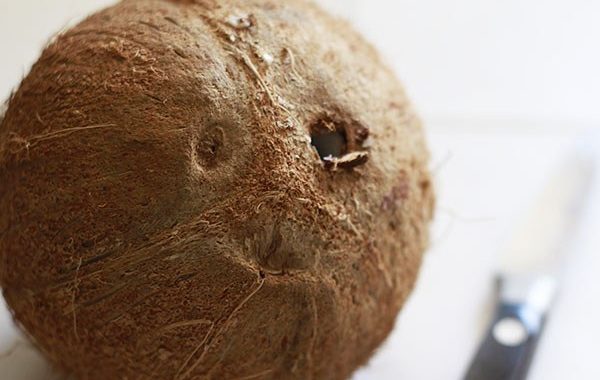
Observe one end of your coconut carefully; you will notice three small, circular indentations. These are often referred to as the coconut’s “eyes” or “germination pores,” and they represent the softer points on the shell. Select a paring knife, a clean screwdriver, or even a sturdy corkscrew, and carefully attempt to pierce one of these dots. You’ll quickly discover that one of the three eyes is typically much softer and more yielding than the others. Apply firm, steady pressure, twisting gently if using a knife or screwdriver, until you successfully puncture through the shell. The objective is to create a hole wide enough to allow the coconut water to drain freely and efficiently. A slightly wider hole will facilitate quicker and more complete drainage, saving you time in the next step.

Safety Precaution: Always exercise extreme caution during this step. Ensure you direct the piercing tool away from your body at all times. Securely hold the coconut on a stable, flat surface, such as a sturdy cutting board, to prevent it from rolling or slipping unexpectedly.
Step 3: Drain the Precious Coconut Water
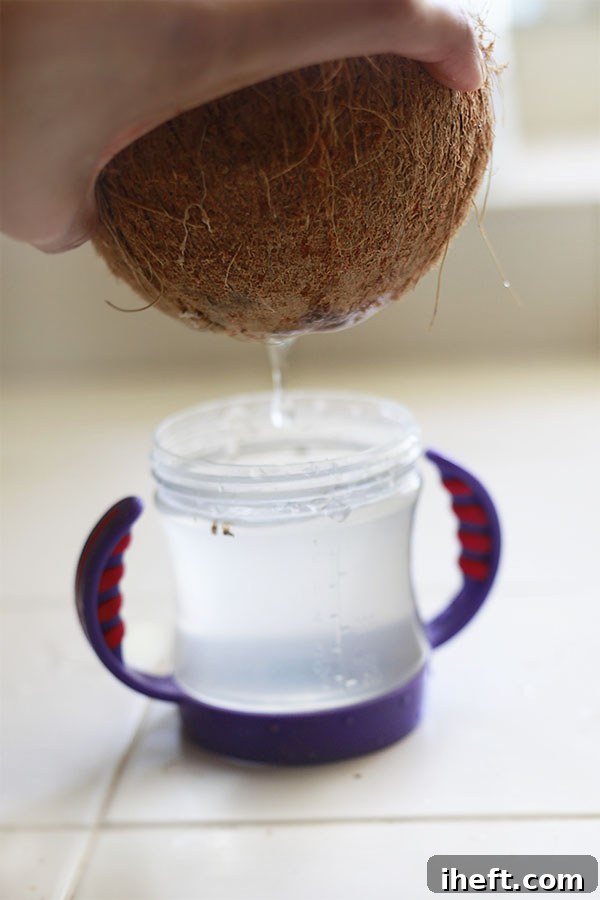
Once you have successfully created a suitable hole in one of the eyes, invert the coconut directly over a sturdy cup or bowl. Allow ample time for all the coconut water to drain completely. This process may take a few minutes, so patience is key. The water should flow out easily and steadily once the hole is sufficiently sized. Fresh coconut water is an incredibly refreshing and naturally nutritious beverage; you can enjoy it immediately as a thirst quencher, incorporate it into your morning smoothies for a delightful tropical flavor, or even utilize it as a unique, flavorful liquid in your cooking. It works exceptionally well for adding a subtle sweetness and natural moisture to dishes like fluffy scrambled eggs, savory rice, or even in exotic soups.
Step 4: Bake to Facilitate Cracking
Carefully place the now-drained coconut directly onto a baking sheet. Transfer the baking sheet with the coconut into your preheated 450°F (230°C) oven. Allow it to bake for approximately 7 to 10 minutes. During this critical period, the intense heat will cause the coconut shell to expand slightly and then contract as it cools, a process that significantly helps to separate the internal meat from the tough outer shell. You will know this step is working effectively when you begin to observe small, distinct cracks forming on the coconut’s surface. Monitor it closely to prevent any scorching or burning of the shell.
Step 5: Rapid Cooling for Effortless Meat Release
Immediately after removing the hot coconut from the oven, swiftly transfer it into the freezer. Allowing the coconut to cool rapidly in the freezer is a crucial and often overlooked step in this method. This sudden and drastic temperature drop forces the shell to contract further, and more importantly, it causes the coconut meat to completely pull away and detach from the hardened shell. This ingenious technique dramatically simplifies the subsequent meat extraction process, making it far less strenuous. Ensure you let it cool completely in the freezer, ideally for at least 15 to 20 minutes, or until the entire coconut is cool to the touch.
Step 6: The Final Crack – Unveiling the Treasure
By this stage, your coconut should exhibit visible cracks, a testament to the effectiveness of the heating and cooling process. If it hasn’t completely split open on its own, it’s now time for the final, satisfying crack. Place a very sturdy cutting board on the ground or on an exceptionally stable, low surface. You can then carefully but firmly drop the coconut onto the board. Alternatively, use a hammer, a meat mallet, or even a robust rolling pin to firmly tap along the existing cracks or around the entire circumference of the coconut. Be extremely mindful of your fingers and aim for a clean, decisive split. The clever combination of baking and freezing makes this final cracking step surprisingly effortless and much safer compared to attempting to crack a raw, unconditioned coconut.
Step 7: Expertly Extracting the Delicious Coconut Meat
Once the coconut has been successfully cracked open, the moment has arrived to retrieve the delectable treasure contained within. Use a regular butter knife or a small, dull-edged knife to carefully pry the pristine white coconut meat away from the interior of the shell. Begin by gently sliding the knife between the meat and the shell at the edge of one of the cracks. The meat should typically come away in relatively large, satisfying pieces, largely thanks to the preparatory baking and freezing steps. If you encounter any particularly stubborn sections, gently wiggle the knife or apply steady, even pressure to loosen the meat. This method ensures you can maximize your yield of tender, fresh coconut meat with minimal effort.
Step 8: To Peel or Not to Peel the Brown Skin – A Matter of Preference
After successfully extracting the pristine white meat, you will likely notice a thin, brownish skin still adhering to one side of each piece. This skin is, in fact, entirely edible, and many people, myself included, find it contributes a pleasant, slightly earthy, and nutty flavor to the coconut meat. However, some individuals prefer to remove it, often for digestive reasons or simply for a more aesthetically uniform appearance. If you choose to remove this skin, a standard vegetable peeler works perfectly. Simply hold a piece of coconut meat firmly and carefully peel away the brown layer until only the white meat remains. The decision to keep or remove the skin is entirely yours, as both options offer a delightful and wholesome coconut experience.
Enjoying Your Fresh Coconut: Storage and Versatile Culinary Uses
Congratulations! You have mastered the art of opening a fresh coconut. Now, you’ve arrived at the most rewarding part: savoring your hard-earned bounty. Fresh coconut meat is an incredibly versatile ingredient, lending itself beautifully to a wide array of culinary applications:
- Healthy Snack: Enjoy it chilled, straight from the shell, for an incredibly refreshing, satisfying, and naturally healthy snack.
- Smoothie Enhancer: Add generous chunks of fresh coconut to your favorite smoothie recipes to impart an irresistible creaminess, a delightful tropical flavor, and an extra boost of nutrients.
- Dessert Delight: Incorporate it into an array of tropical desserts, puddings, homemade ice cream, or even a classic coconut cream pie for an authentic taste.
- Savory Dish Accent: Grate it finely and add it to your curries, stir-fries, vibrant salads, or even savory rice dishes for a unique texture, depth of flavor, and exotic flair.
- Baked Goods Booster: Use shredded or chopped fresh coconut in muffins, breads, cookies, or cakes for a naturally sweet, moist, and aromatic addition that truly elevates your baking.
Storage Tips: To maintain the peak freshness and flavor of your newly opened coconut meat, store it in an airtight container or a resealable bag in the refrigerator. When stored properly, it will remain fresh and delicious for up to 4 to 5 days. For extended storage, you have the option to freeze grated or chopped coconut meat for several months. Simply ensure it’s fully thawed before incorporating it into your recipes to preserve its texture and taste.
Troubleshooting & FAQs: Addressing Common Coconut Challenges
Even with the most precise instructions, sometimes things don’t go exactly as planned, especially when working with natural products. Here are answers to some frequently asked questions and solutions for common challenges you might encounter:
- My coconut didn’t crack sufficiently in the oven! What should I do next? Don’t fret. Some coconuts naturally possess thicker or tougher shells. If yours hasn’t cracked much after 10 minutes, simply extend the baking time by another 3-5 minutes, then proceed directly to the freezer step. The rapid cooling after heating is often the ultimate key to loosening stubborn meat. If it still doesn’t fully crack, the hammer or drop method described in Step 6 will almost certainly do the trick after the shell has been softened by the heat.
- The coconut meat is still stubbornly stuck to the shell. Any specific tips? First, ensure the coconut cooled completely in the freezer. Sometimes a slightly longer cooling period, perhaps up to 30 minutes, can make a significant difference. For particularly stubborn pieces, try re-inserting your butter knife along the edge and gently twisting it to create leverage. You can also try carefully tapping the back of the shell with a hammer while maintaining light pressure with the knife, which can help dislodge resistant sections.
- How can I tell if the coconut water is safe and good to drink? Fresh, healthy coconut water should always be perfectly clear, with a refreshing, slightly sweet, and subtly nutty aroma. If the water appears cloudy, discolored (yellowish or pinkish), or emits a sour, fermented, or off-putting odor, it is best to err on the side of caution and discard it.
- Can I use a microwave instead of an oven for this method? While some anecdotal methods suggest microwaving, the oven provides a much more even and controlled heat distribution, which is crucial for effectively and consistently loosening the meat from the shell. For optimal and reliable results, we strongly recommend adhering to the oven-assisted method outlined in this guide.
- What if I don’t have a specific tool mentioned, like a paring knife? Many tools are interchangeable in a pinch. A sturdy butter knife, a clean nail, or even a robust key can often be used to puncture the eyes if a paring knife or screwdriver isn’t readily available. For the final cracking, any heavy kitchen implement like a rolling pin, a clean brick, or even a heavy-bottomed frying pan can serve as an effective substitute for a hammer or meat mallet. Always prioritize safety, choosing a tool you feel comfortable and secure using.
Conclusion: Embrace the Freshness and Unlock Tropical Flavors!
Opening a fresh coconut no longer needs to be an intimidating or elusive ordeal. With this simple, oven-assisted method, you are now equipped to effortlessly access both the incredibly refreshing coconut water and the delicious, versatile meat, all from the comfort of your own kitchen. It’s an immensely rewarding process that directly connects you to the pure, natural goodness of this incredible tropical fruit, completely bypassing the need for expensive, processed, and often sugar-laden alternatives.
So, the next time you encounter a beautiful, weighty brown coconut at the market, do not hesitate! Confidently give this proven method a try and prepare to impress both yourself and your loved ones with your newfound coconut-opening prowess. Get ready to elevate your smoothies, enhance your desserts, and infuse your savory dishes with the unparalleled flavor and freshness that only truly fresh coconut can provide. We’ll be sharing a fantastic recipe that perfectly utilizes fresh coconut very soon – so make sure to stay tuned for more delightful tropical inspiration!