The Ultimate British Food Guide: Cook at Home or Order Out
Are you ready to embark on a culinary journey through the heart of Britain? Beyond the stereotypes, British cuisine offers a rich tapestry of flavors, traditions, and comfort foods that have evolved over centuries. From hearty breakfast staples to comforting dinners and delightful desserts, the United Kingdom boasts an impressive array of dishes waiting to be discovered. Join us as we explore the most popular and iconic British foods, showcasing the true essence of English culinary heritage.

For passionate food lovers and travel enthusiasts, there’s an unparalleled joy in experiencing the authentic flavors of a different culture. The good news is that you don’t necessarily need a passport to savor traditional English food. Thanks to the accessibility of global ingredients and recipes online, you can recreate the essence of British cuisine right in your own kitchen, complete with traditional servings and, if you wish, even an accent to match the experience!
The United Kingdom’s food culture is far more diverse and fascinating than just its famous tea. British food traditions span centuries, encompassing a vast collection of English recipes, cooking styles, and deeply ingrained customs. Many of these culinary staples have fascinating histories, some even becoming popular due to historical events like wars and the influence of invading forces such as the Vikings, Romans, and French, who each left their indelible mark on the island’s gastronomic landscape.
Despite these diverse influences, classic English meals often remain delightfully simple, wholesome, and incredibly delicious. As someone with British heritage, I’ve had the pleasure of growing up with many of these dishes. Here is a curated list of some of the finest British foods, perfect for you to enjoy at home or to seek out if you ever find yourself traversing the charming lands of the British Isles.
Sourcing British Food Staples in the U.S.
You might be wondering, “Where can I find authentic British food ingredients near me in the United States?” While it might seem challenging if your town doesn’t boast an English pub, a dedicated British shop, or a classic fish and chips takeaway, accessing genuine English ingredients is often easier than you think.
Many larger grocery store chains are increasingly expanding their international food sections. Stores like Bristol Farms, for instance, often carry a small but significant selection of foods directly from the U.K., including essentials like proper baked beans and even mushy peas. For an even wider variety, retailers such as World Market are consistently stocked with a broad range of English food products, from biscuits and teas to sauces and confectionery, making it a reliable destination for your British culinary adventures. Online specialty stores also offer a vast selection, delivering authentic British goods right to your doorstep, ensuring you can find everything you need to recreate these classic dishes.
Unveiling the National Dish of England
It might come as a delightful surprise to many that one of the most beloved and popular foods in England is not a traditional British creation but rather a vibrant Indian dish. Chicken Tikka Masala holds the esteemed title of England’s most popular dish and is frequently referred to as the unofficial national dish. This perfectly exemplifies Britain’s rich multicultural palate. Following closely behind in popularity and cultural significance, of course, is the iconic fish and chips, a true emblem of British seaside tradition.
The Enduring Popularity of Indian Cuisine in the UK
The deep affection for Indian food, particularly curries and Chicken Tikka Masala, in the UK dates back as far as the 18th century. British traders and colonial administrators, during their travels and postings abroad, discovered the rich and aromatic flavors of Indian cuisine and brought these culinary influences back home. This early exposure sparked a growing interest in the exotic spices and complex dishes.
Queen Victoria’s well-documented love for Indian food further propelled the cuisine into mainstream popularity, solidifying its place among the top beloved British foods. Her enthusiasm helped to introduce and normalize Indian flavors within the upper echelons of society, which then filtered down to broader public interest.
A significant turning point occurred after World War II when a wave of South Asian immigrants arrived in the UK, many of whom opened restaurants and takeaways. These establishments introduced a wider array of regional Indian dishes and made curry a readily accessible and affordable meal for everyone. Today, Indian food remains immensely popular across the UK, with curry houses being a staple in every town and city. The integration is so complete that you can even find my own British grandmother’s famous curry recipe proudly featured in the Yummy Mummy Kitchen cookbook, a testament to how deeply Indian flavors have woven themselves into the fabric of British home cooking.
A Comprehensive Guide to Top English Foods
While modern Britain celebrates a globalized food scene, offering everything from fantastic sushi to authentic Indian delicacies, traditional English foods continue to hold a special and cherished place in the national diet. These classic dishes are not just meals; they are often imbued with history, comfort, and a sense of shared heritage. Here, we present an extended list of over 20 quintessential British foods that every food enthusiast should know and, ideally, experience.
1. Full English Breakfast
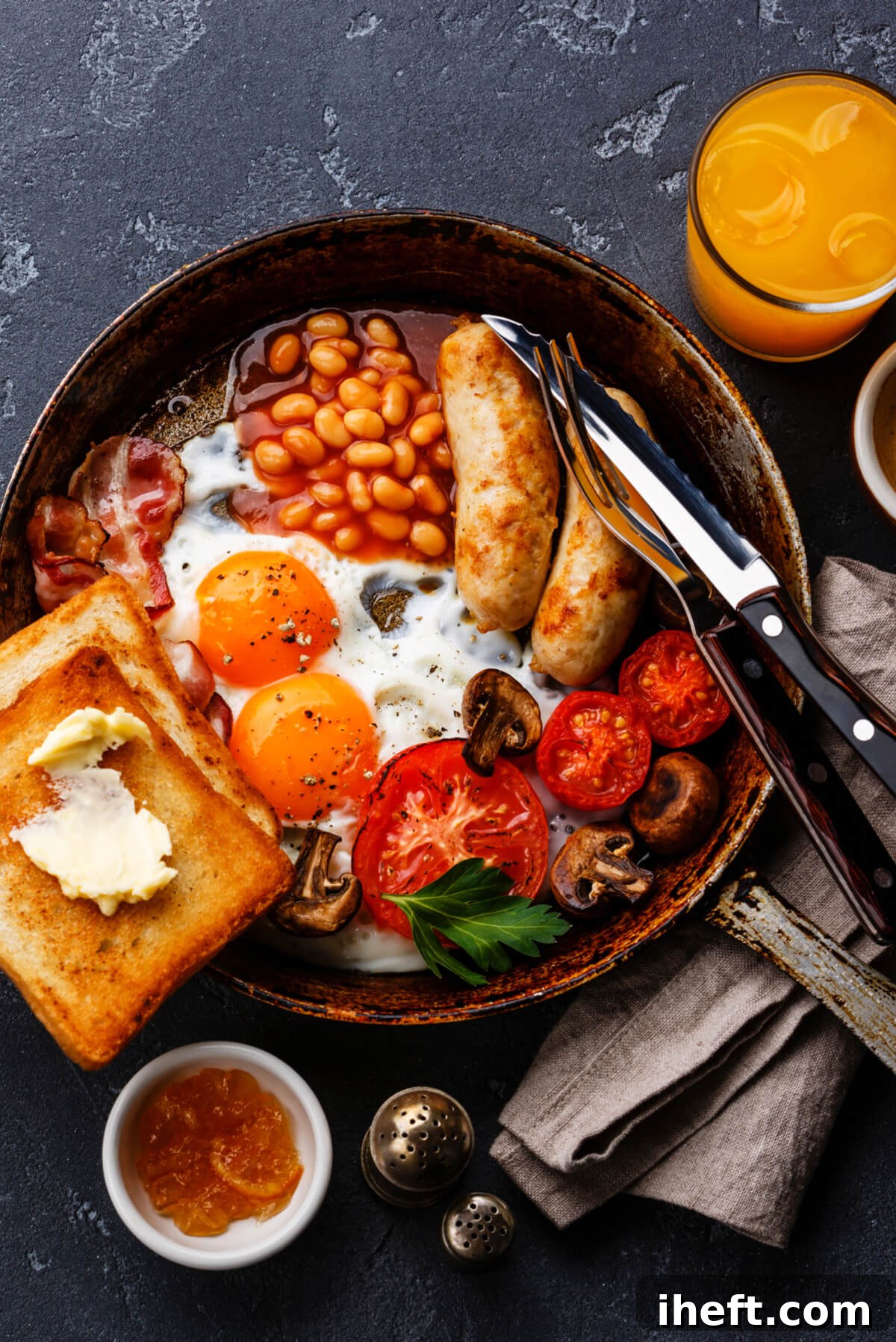
Leading our list is the legendary Full English Breakfast, a long-preserved and deeply cherished culinary institution. This robust national dish dates back to the thirteenth century, originating with the gentry who would host elaborate breakfast spreads. It was later popularized by the Victorians and Edwardians, who refined and standardized the ingredients that comprise the modern English breakfast, affectionately known colloquially as the “fry-up” due to its numerous fried components. This comprehensive meal offers a hearty start to any day, particularly popular on weekends or after a night out.
A traditional Full English Breakfast typically includes:
- Back Bacon: Distinct from American streaky bacon, back bacon is cut from the loin with a small portion of pork belly attached. It’s leaner and doesn’t crisp up in the same way, offering a tender, savory bite.
- Eggs: Usually fried sunny-side-up, but poached or scrambled eggs are also popular alternatives, catering to individual preferences.
- Fried or Grilled Tomatoes: Classic field tomatoes, halved and briefly seared or grilled with a sprinkle of salt and pepper. The aim is to warm them through and add a touch of acidity, not to cook them until soft.
- Baked Beans: A staple, almost always canned, with Heinz being the quintessential brand for many. They provide a sweet and tangy counterpoint to the savory elements.
- Fried Mushrooms: Sautéed until nicely browned and caramelized, adding an earthy depth to the plate.
- Fried Bread or Buttered Toast: Slices of bread fried in oil or butter, not merely toasted. This gives it a rich, golden, and slightly crisp texture, perfect for soaking up egg yolk or bean sauce.
- British Sausages: Often pork sausages, which are typically meatier and less seasoned than some continental varieties. Some plates might include two or three different types, while others feature the distinctive black pudding, a traditional blood sausage, for an authentic touch.
Ingredients can vary slightly from one region of the UK to another, reflecting local tastes and produce. However, this collection generally represents an exhaustive and satisfying traditional breakfast, most commonly served with a steaming cup of tea or coffee. It’s more than just a meal; it’s a cultural experience.
2. Sunday Roast
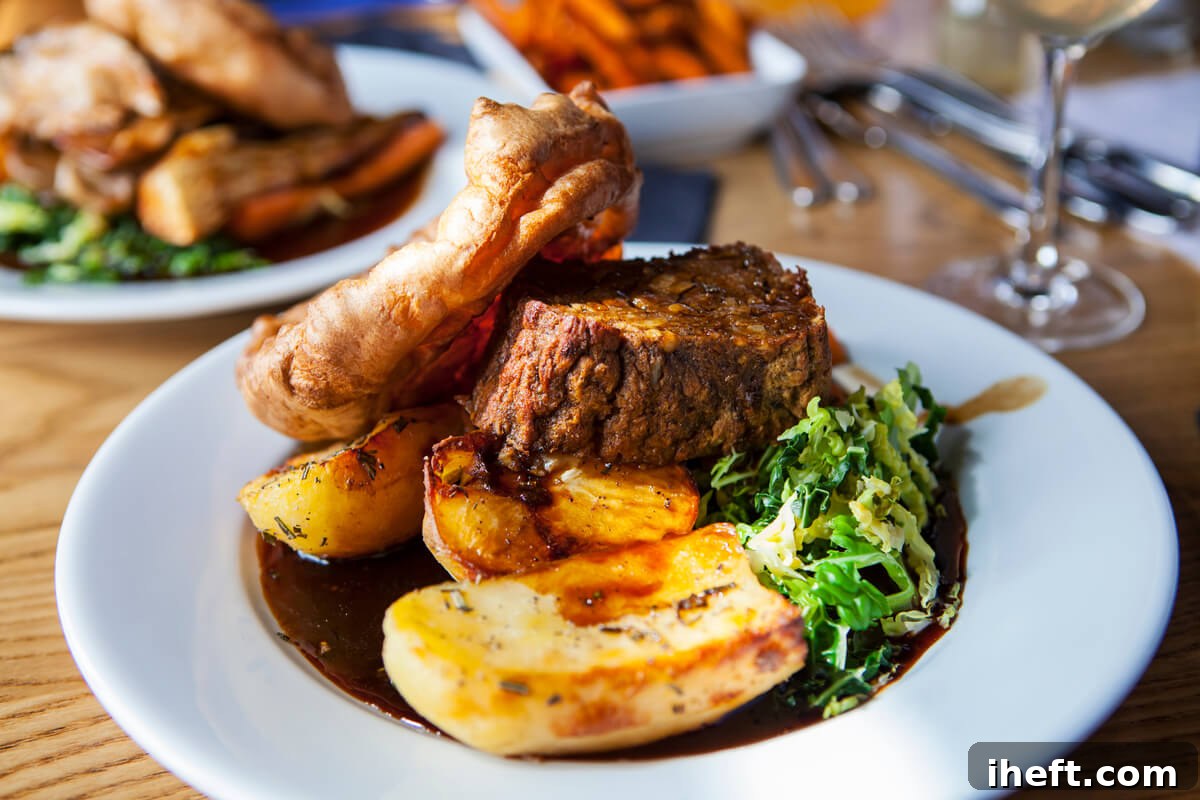
The Sunday Roast is a deeply ingrained British tradition, a meal typically served as a celebratory Sunday lunch. Its origins are steeped in history, tracing back to King Henry VII’s reign in the 15th century, when the royal guards were famously known for feasting on roasted beef, earning them the enduring nickname “Beefeaters.”
The tradition evolved further during the Industrial Revolution. Families would prepare their beef and vegetables for slow cooking in the oven before heading to church. The long, slow cook time allowed the juices from the roasting ingredients to meld and create a rich, flavorful gravy that would be generously poured over the meal. Even those who couldn’t afford their own ovens would take their roasts to local bakeries, collecting their perfectly cooked meals after Sunday service, as baking typically didn’t occur on Sundays. This communal aspect cemented the Sunday Roast as a cherished weekly ritual.
A complete Sunday Roast typically includes:
- Roast Meat: While roast beef (prime rib, sirloin, or fillet) is the classic choice, pork, chicken, or lamb are also popular alternatives. For vegetarians like myself, a hearty nut roast or a delicious Lentil Loaf, as pictured, makes for an equally satisfying centerpiece.
- Roast Potatoes: Essential for a truly authentic experience. Low-starch varieties like round white, red potatoes, or Yukon Gold are ideal, as are starchy Russets or baking potatoes. Cut into 1-inch chunks, tossed with oil, salt, pepper, garlic, and parsley, then baked at 400°F (200°C) for 50-60 minutes until beautifully golden brown and crispy.
- Accompanying Vegetables: A vibrant selection typically includes roast parsnips, Brussels sprouts, peas, carrots, green beans, cabbage, broccoli, and cauliflower. Traditional preparation often involves baking them alongside the meat. For parsnips, a quick boil before roasting enhances their sweetness and texture.
- Gravy: The soul of the roast. Traditionally made from the rich pan juices of the roasted meat, often enhanced with a little red wine or port for beef roasts. My favorite Mushroom Gravy is a fantastic vegetarian option that delivers incredible depth of flavor.
- Yorkshire Pudding: A light, airy, and crisp savory batter pudding. Historically, it was served as an appetizer with plenty of gravy to fill you up before the more expensive meat course. Made from a simple batter of eggs, milk, and flour, and baked in sizzling hot beef drippings, bacon fat, or lard until golden brown, crispy, and dramatically puffed up.
The Sunday Roast is more than just a meal; it’s a comforting ritual that brings families together, a true taste of British home life.
3. Fish and Chips
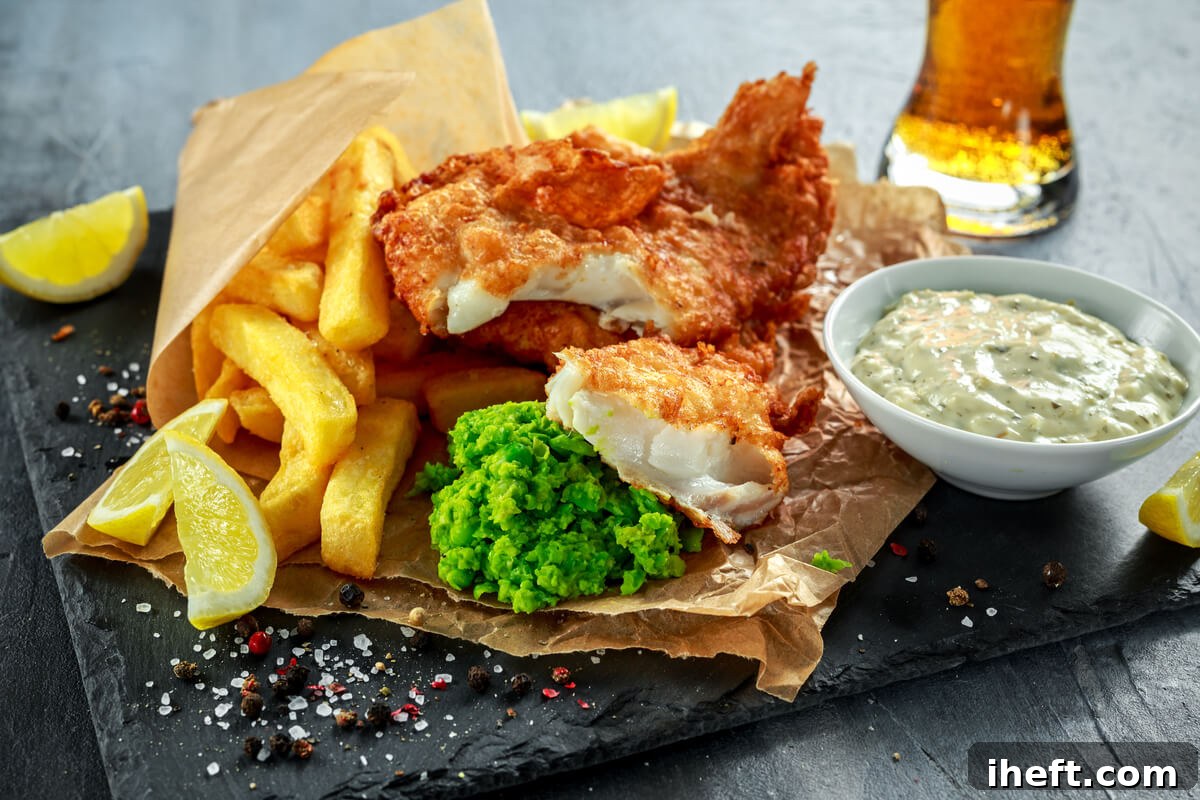
Few dishes are as quintessentially British as fish and chips. This beloved staple made its way to England in the 16th century, introduced by Jewish and Portuguese immigrants, and quickly became a national favorite. Its origins trace back to a need for convenience and preservation rather than pure culinary innovation, but it has since evolved into an iconic dish enjoyed by millions.
Fish and chips is not only one of the most famous English foods but has also gained significant popularity in the U.S. You can find it in casual seafood restaurants, dedicated “chip shops,” or easily prepare a healthier version at home, perhaps even in an air fryer for convenience.
For this classic British recipe, the most common choices for white, thick, flaky fish include cod, haddock, and pollock. The fish is typically battered and deep-fried to a golden crisp, creating a perfect contrast with the tender, moist interior. The “chips” are thick-cut fries, traditionally fried twice for extra crispiness.
Fish and chips are traditionally served simply, dressed with just a splash of malt vinegar and a sprinkle of coarse sea salt, which enhances the flavors beautifully. Tartar sauce, with its creamy tang, is another popular and widely enjoyed accompaniment. And, for an authentic British experience, a side of bright green mushy peas is almost always present, adding a comforting, earthy element to the meal. This simple yet satisfying dish remains a cornerstone of British comfort food.
4. Shepherd’s Pie
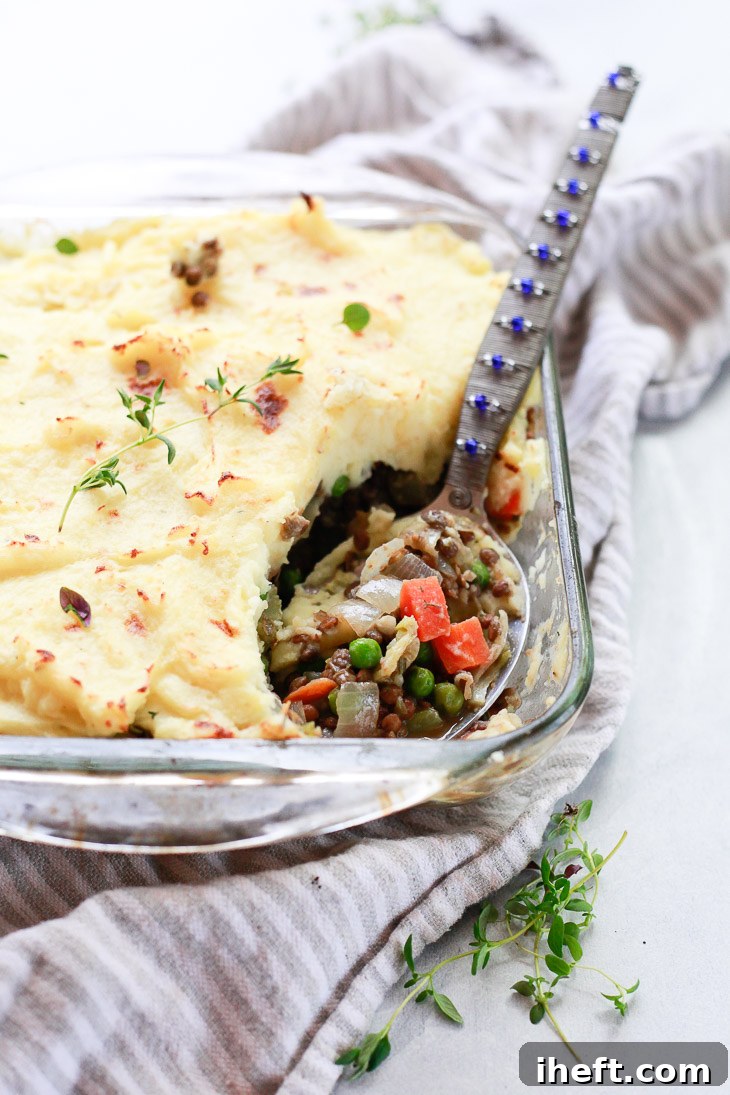
Contrary to what its name might suggest, Shepherd’s Pie is not a pastry in the conventional sense. Instead, it’s a hearty and deeply satisfying meal composed of minced meat, vegetables, and a creamy potato topping, gaining widespread popularity in the eighteenth century as a convenient and economical dish. Its origins are often linked to the impoverished Irish peasantry under British rule, who, living in cottages, ingeniously used leftover roast beef, readily available vegetables, and mashed potato toppings to create what was then known as “cottage pie.”
The key distinction between cottage pie and shepherd’s pie lies solely in the type of meat used. While cottage pie traditionally features minced beef, shepherd’s pie is, by definition, an “upgrade” that incorporates minced lamb (or mutton), reflecting the shepherd’s care for his flock. Both versions offer incredible comfort and flavor, a true celebration of simple, wholesome ingredients transformed into a complete meal.
This classic British cuisine stands as an excellent example of comforting, easy-to-make home cooking. As a vegetarian, I frequently prepare my own delicious Lentil Shepherd’s Pie, which replaces the meat with a rich, savory lentil and vegetable base, proving that this timeless dish can be enjoyed by everyone. It’s perfect for a cozy evening, delivering warmth and flavor in every spoonful.
5. Beef Wellington
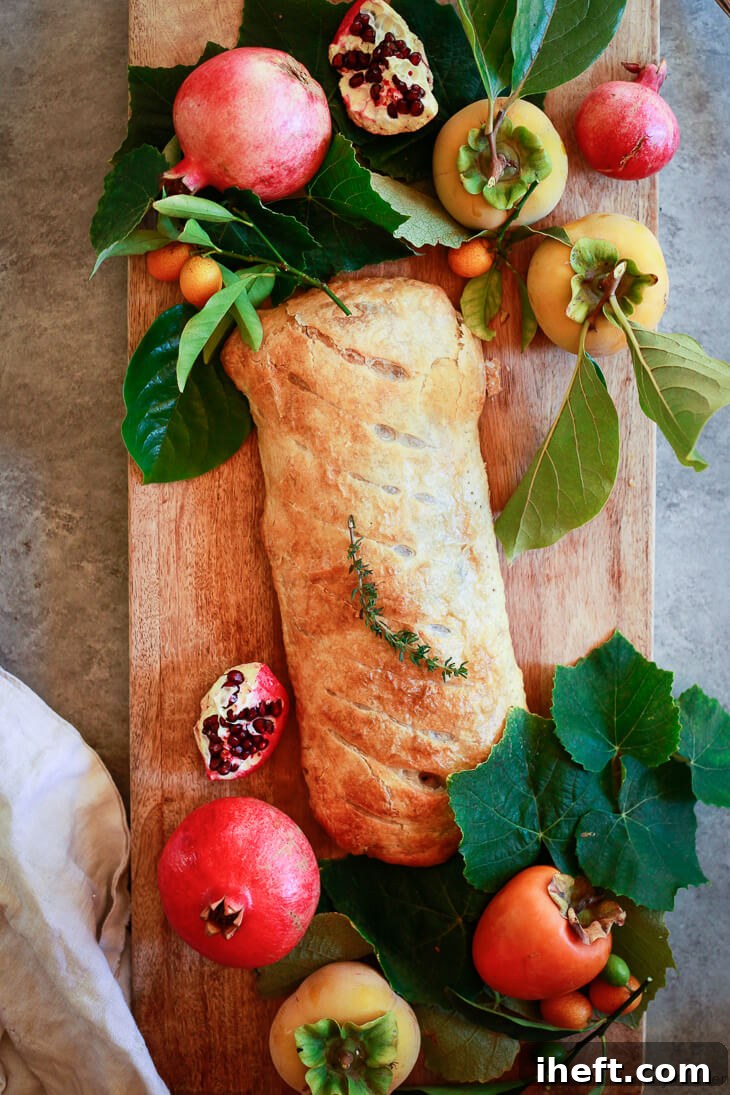
While beef has been a culinary staple on the English menu for centuries, Beef Wellington is not one of Britain’s original indigenous dishes. This impressive main course, despite being named after an Irish-born Duke of Wellington, surprisingly traces its culinary roots back to France. It’s an elaborate and visually stunning dish, often reserved for special occasions and celebrations, showcasing a sophisticated blend of flavors and textures.
At the heart of the Wellington lies a premium cut of beef fillet steak, beef tenderloin, or filet mignon, meticulously seared to perfection. This tender meat is then enveloped in a flavorful coating, traditionally a rich mushroom duxelles (finely chopped mushrooms sautéed with herbs), or sometimes a decadent pâté de foie gras. The entire ensemble is then carefully wrapped in a delicate, flaky, or puffy pastry casing, which bakes to a glorious golden brown, creating a magnificent presentation.
In my opinion, some of the most delicious Wellingtons are entirely meatless. For your next special occasion meal, I highly recommend trying this exquisite Portobello Mushroom and Vegetable Wellington. It offers all the grandeur and savory depth of the classic version, but with a rich, earthy, and equally satisfying vegetarian twist that is sure to impress.
6. Steak and Kidney Pie
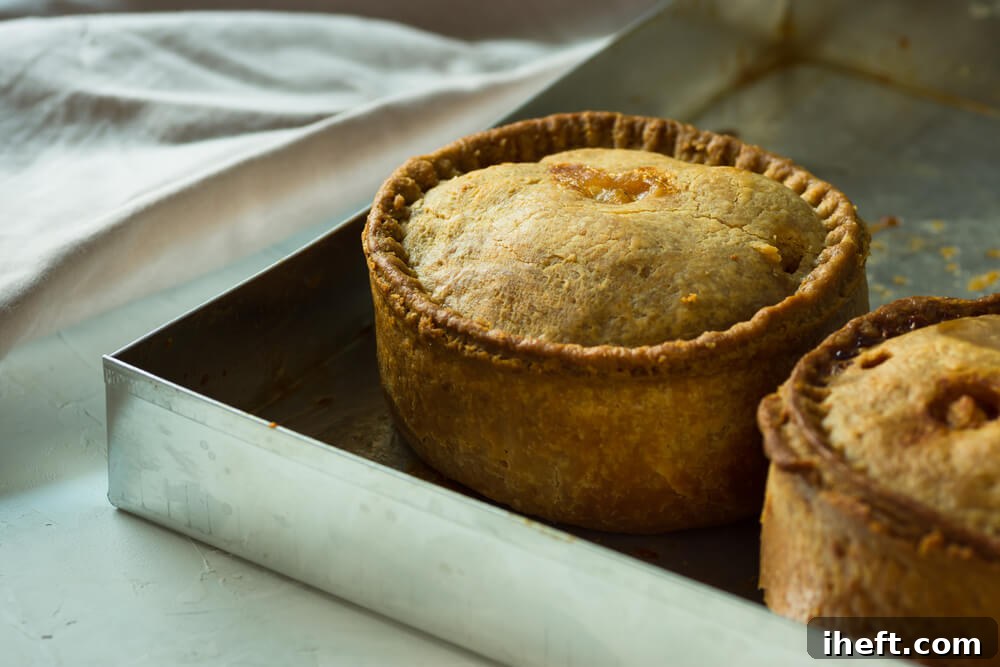
Steak and Kidney Pie is a much-loved and deeply traditional British comfort food, embodying the essence of hearty, savory home cooking. It’s a ubiquitous presence on the menus of many traditional eateries, pubs, and even street food stalls across the country, cherished for its rich flavor and satisfying texture. The recipe is surprisingly simple, making it a rewarding dish to prepare at home.
The entire dish consists of a succulent mixture of diced beef steak and lamb or ox kidney, often gently fried with onions, then simmered in a rich, savory gravy. This delectable filling is then encased in a comforting pastry crust – often a flaky puff pastry or a more robust shortcrust. People traditionally enjoy this robust meal with a side of chips (fries), or perhaps mashed potatoes and green vegetables, making it a complete and fulfilling experience.
If you’re looking to explore a lighter or vegetarian rendition of this classic, a Vegetable Pot Pie offers a wonderful alternative. Filled with a medley of vegetables in a creamy, flavorful sauce and topped with a golden crust, it captures the comforting spirit of the traditional pie without the meat.
7. Toad in the Hole

The delightfully named Toad in the Hole is a quintessential British cuisine, featuring sausages baked directly into a light and airy Yorkshire pudding batter. It’s an excellent choice for a quick, comforting, and hearty lunch or dinner that appeals to all ages.
To prepare this classic, begin by oven-baking your choice of sausages until they are slightly browned and release some of their flavorful juices. For a delicious vegetarian version, plant-based options like Beyond Brats work exceptionally well. While the sausages are cooking, whisk together flour, eggs, and milk to create the smooth, runny Yorkshire pudding batter, ensuring it’s well-aerated for maximum rise.
Once the sausages are partially cooked, carefully pour the prepared batter into the hot baking dish, surrounding the sausages. Return the dish to a preheated oven for approximately 25 to 30 minutes, or until the batter dramatically rises, becomes beautifully golden brown, and turns wonderfully crisp. Serve this baked dish immediately with a generous portion of seasonal vegetables and a rich, savory gravy, making for a truly satisfying and traditional British meal.
8. Bangers and Mash
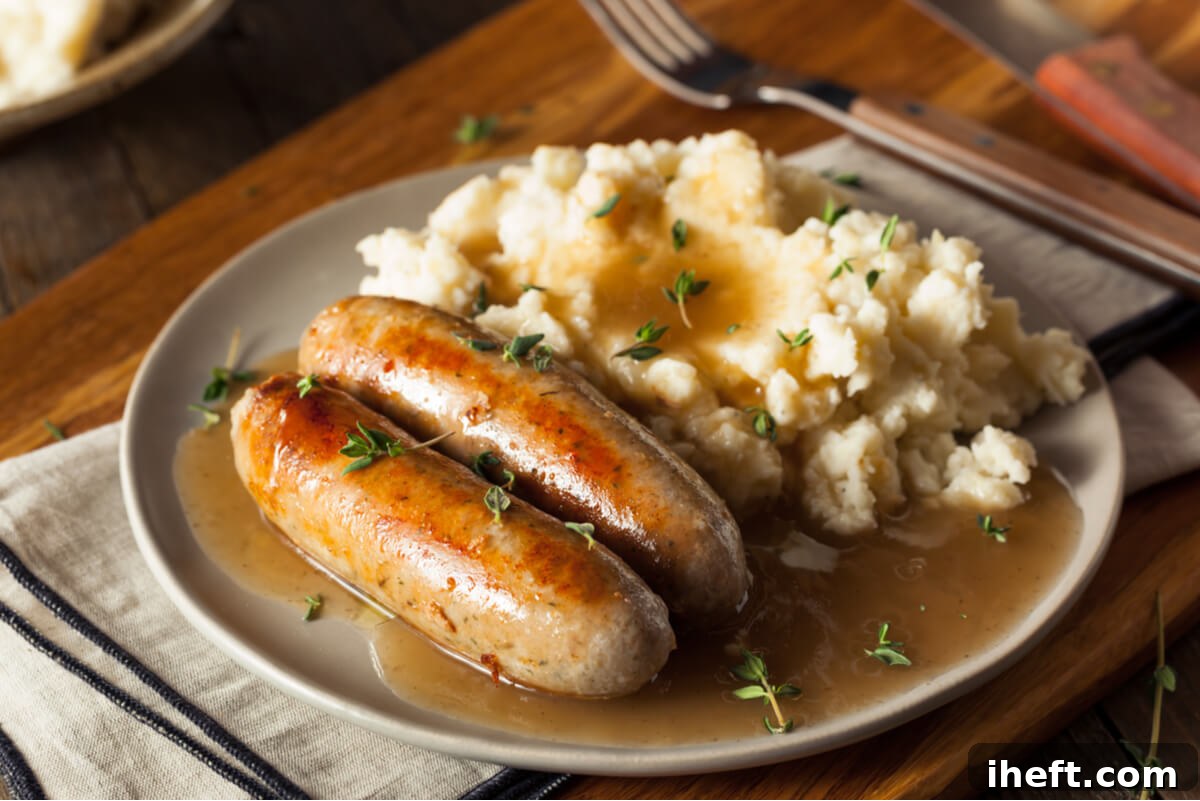
Bangers and Mash, affectionately known as sausages and mashed potatoes, stands as one of the most beloved and popular English comfort foods. This classic dish is a staple on pub menus across the UK, almost always served with a rich onion gravy and often accompanied by a side of garden peas. Its simple yet deeply satisfying nature has cemented its status as a top choice among the English for a warming and fulfilling meal.
To prepare a traditional Bangers and Mash, start by pan-frying your chosen sausages until they are nicely browned and cooked through, typically around 10 minutes. Once cooked, remove the sausages from the pan. Using the same pan, which will be infused with the sausage flavors, add a knob of butter and roast finely chopped onions until they are soft and caramelized. Enhance the flavor profile by adding herbs like thyme and bay, and a pinch of sugar to aid caramelization. Return the sausages to the pan with the onions and bake everything together for about 20 minutes to allow the flavors to meld beautifully.
Simultaneously, prepare the creamy mashed potatoes. Peel, cut, wash, and lightly salt your potatoes before boiling them until perfectly tender. Once cooked, drain thoroughly and mash them with a generous amount of milk and butter until the mixture becomes wonderfully fluffy, smooth, and soft.
I particularly enjoy creating a vegetarian version of bangers and mash, utilizing high-quality plant-based sausages. For the mash, I often turn to my favorite Instant Pot Mashed Potatoes for ultimate creaminess or a lighter, flavorful alternative like Garlic Mashed Cauliflower, ensuring everyone can enjoy this classic British meal.
9. Scones
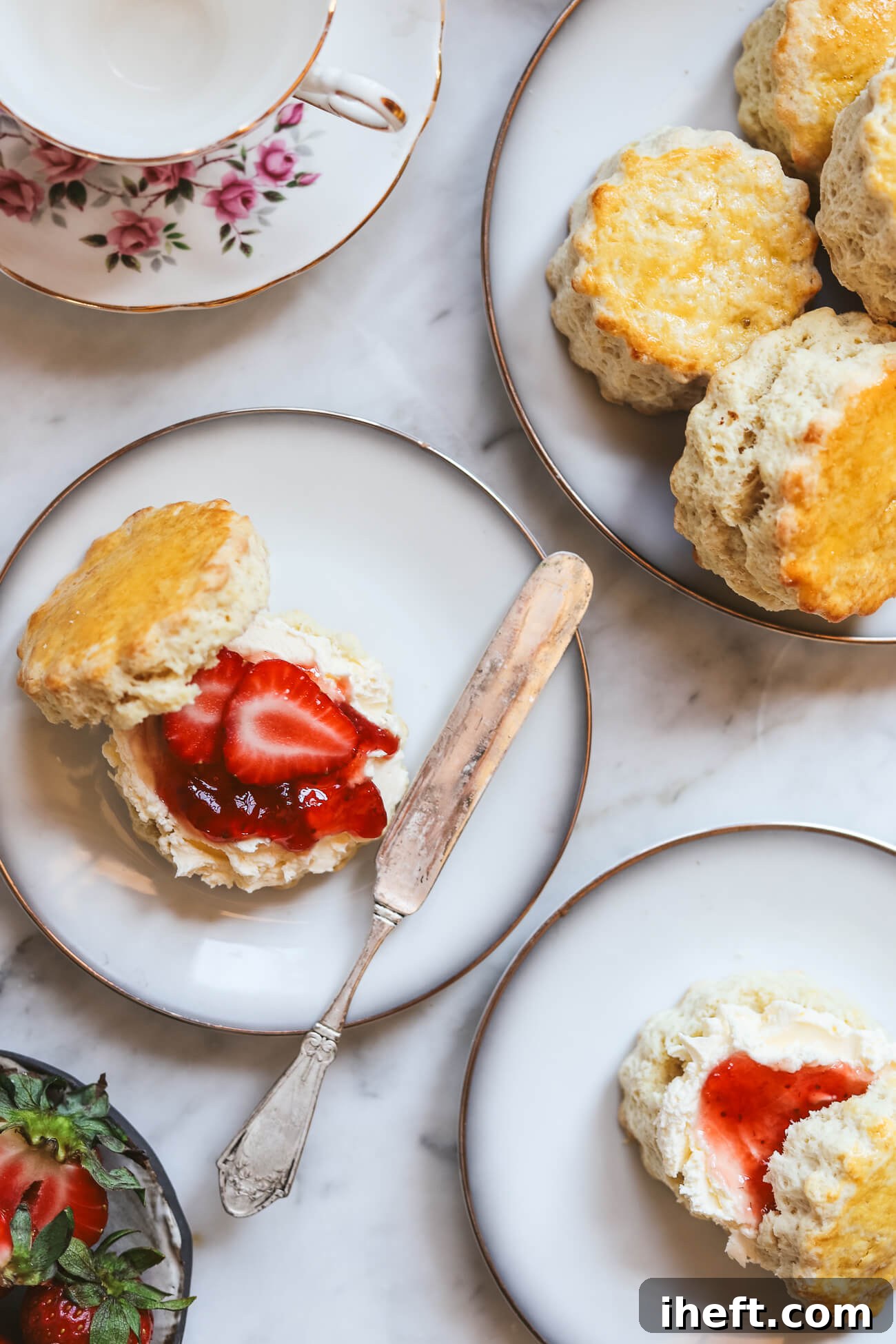
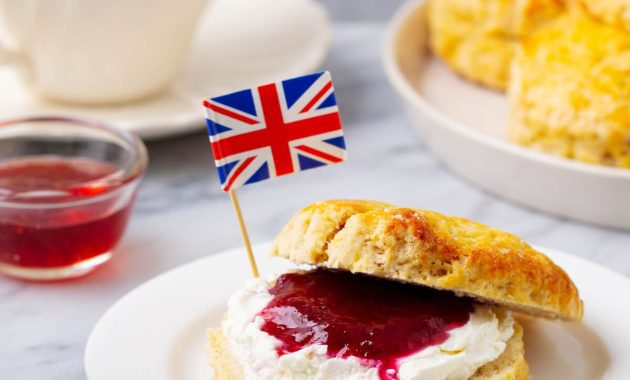
Scones are a quintessential British quick bread, deeply embedded in the tradition of afternoon tea. These delightful baked goods typically feature a simple yet effective blend of flour, butter, baking powder, and milk, resulting in a tender, slightly crumbly texture. Plain scones are the most classic variety and are almost always served warm, split in half, and generously adorned with two essential accompaniments: luxurious clotted cream and a dollop of sweet jam, or sometimes tangy lemon curd.
The way scones are assembled is often a topic of friendly debate in Britain – cream first or jam first? Regardless of preference, the combination is undeniably delicious. While plain scones are timeless, there’s a world of flavor variations to explore. I particularly love making Blueberry Oatmeal Scones, which add a lovely fruity twist and wholesome texture.
Beyond these, you’ll find a wide array of scone flavors, including:
- Fruit Scones: Often containing raisins or currants.
- Cheese Scones: A savory option, perfect with butter.
- Chocolate Chip Scones: A sweet treat for chocolate lovers.
- Cinnamon Scones: Fragrant and comforting, ideal with a cup of tea.
- Blueberry Scones: Bursting with fruity sweetness.
Scones are more than just a baked good; they are a symbol of British hospitality and the elegant ritual of afternoon tea, offering a moment of delightful indulgence.
10. Crumpets
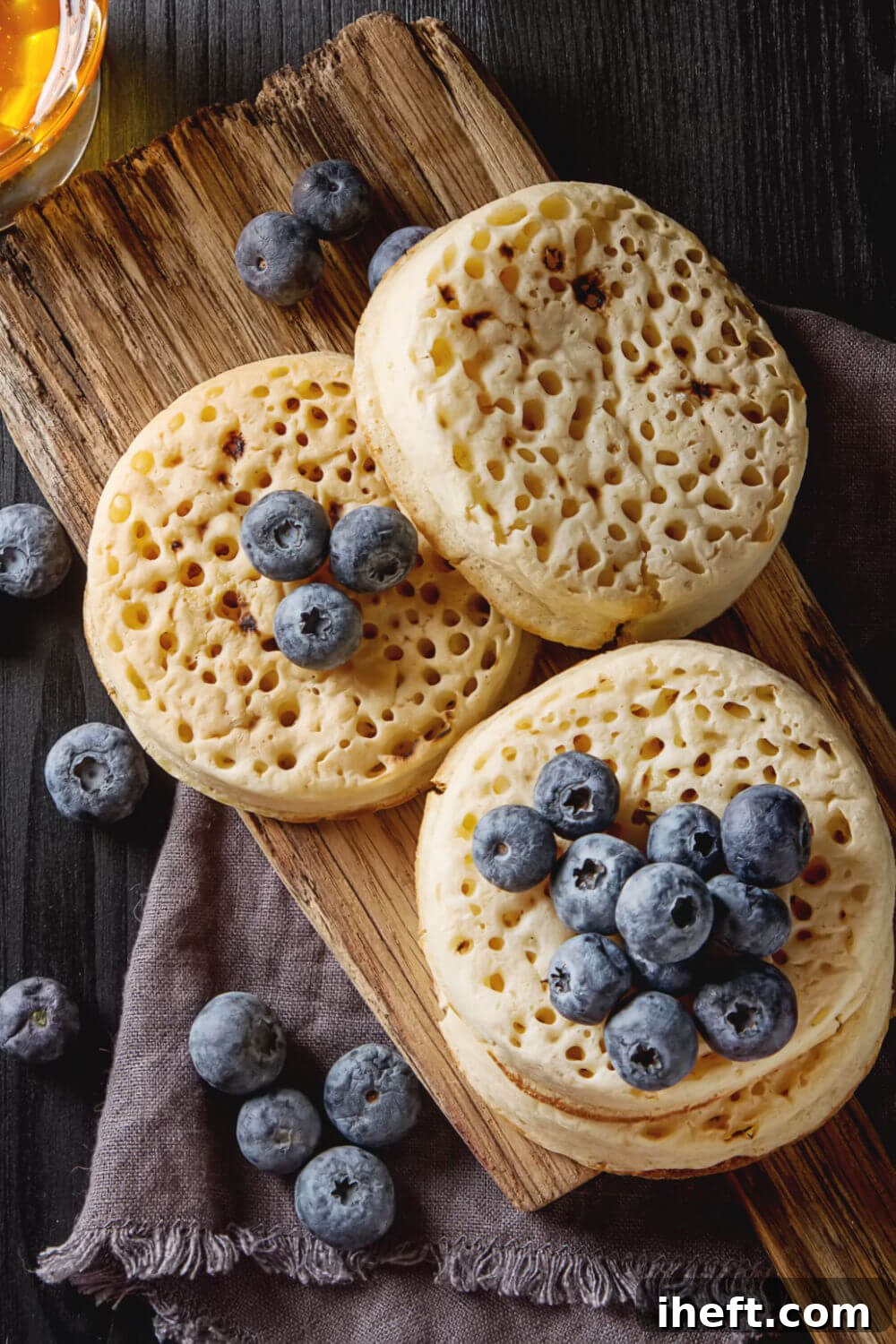
Crumpets are a distinctive British delicacy, often mistaken for pancakes or English muffins but possessing their own unique characteristics. Visually, a crumpet may resemble a thick pancake, but its texture and leavening agent set it apart. Unlike pancakes, which typically use baking powder, crumpets are leavened with yeast. This yeast-driven rising agent is crucial, as it causes the batter to produce numerous small bubbles that rise to the surface during cooking, creating the signature porous texture that crumpets are famous for. This process also thickens the dough and makes it wonderfully fluffy.
A key distinguishing feature is their cooking method: crumpets are traditionally cooked on only one side, usually on a griddle or in a frying pan, until the top sets and the distinctive holes appear, while the bottom becomes golden. The resulting pastry is chewier and more elastic than a soft English muffin, offering a truly unique mouthfeel. Crumpets are best served warm, generously slathered with butter or jam (known as jelly in the US), allowing the toppings to melt into their intricate holes. They also pair wonderfully with savory additions like crispy bacon and fried eggs for a hearty breakfast or snack.
While we often enjoy the excellent English crumpets available at Trader Joe’s, you can also effortlessly make them at home, ensuring a fresh and authentic experience.
11. Beans on Toast
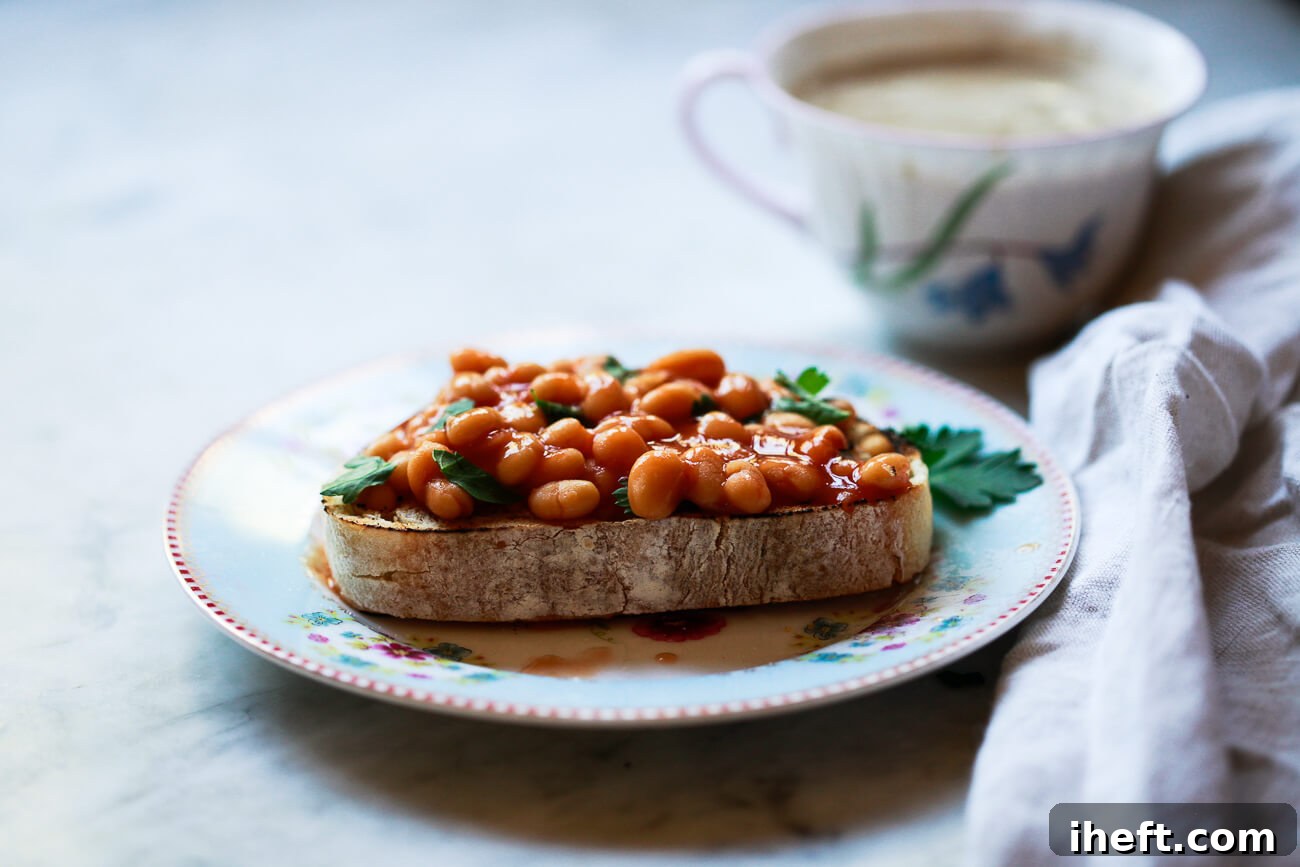
Beans on Toast is far more than just a simple meal; it’s a beloved British institution, a classic quick and easy snack or light meal that embodies comfort and affordability. This deceptively straightforward dish features hot, savory baked beans (traditionally Heinz) piled high on a slice of perfectly toasted bread. It’s a nostalgic staple for many Britons, a go-to for breakfast, lunch, or even a late-night supper. The warmth of the beans, often slightly sweet and tangy, creates a delightful contrast with the crunchy texture of the toast. You can learn how to master this simple yet satisfying dish and prepare Beans on Toast the authentic British way, ensuring a taste of genuine UK home comfort.
12. Cucumber Sandwiches
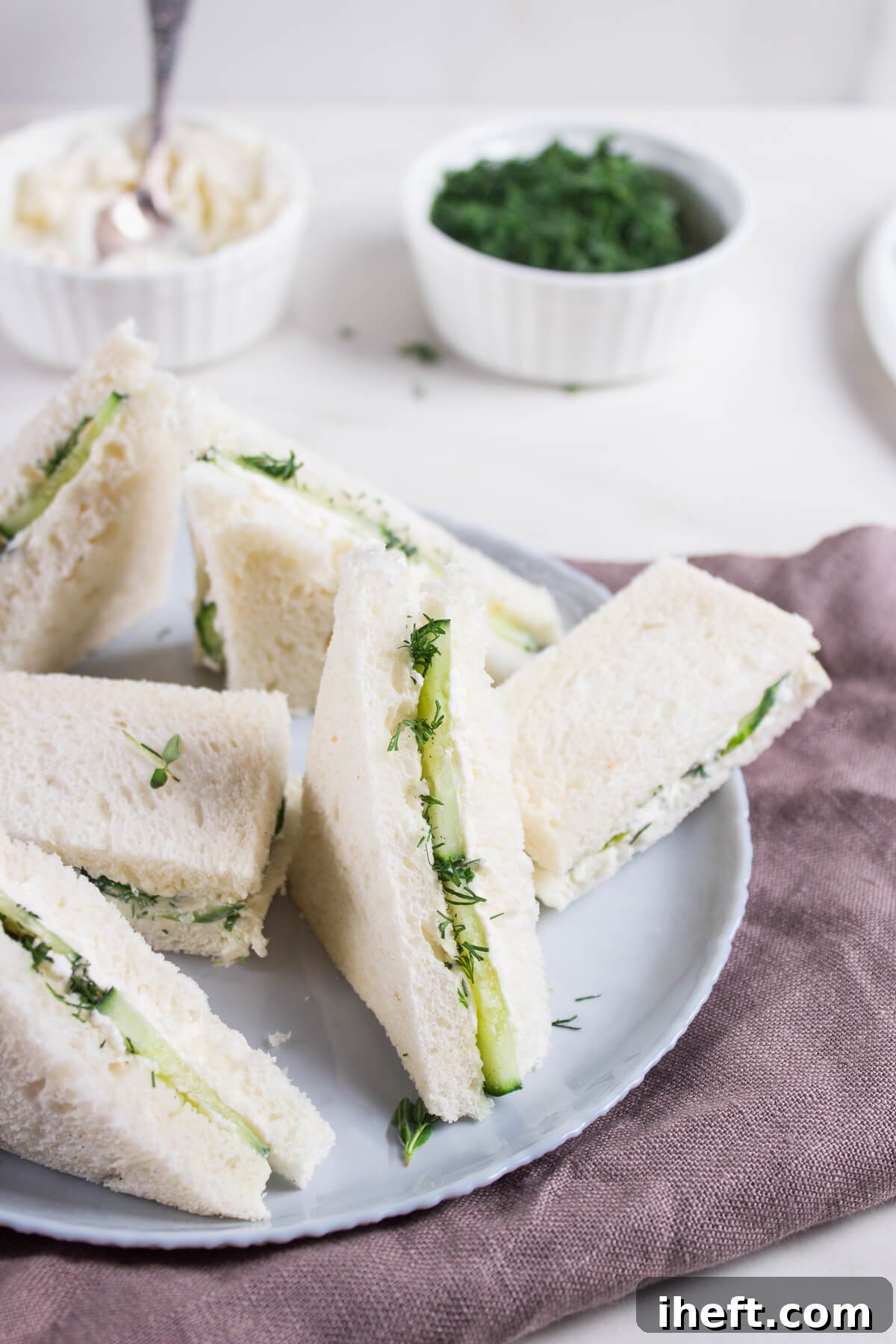
Cucumber sandwiches are an iconic and elegantly simple British food, inextricably linked with the refined tradition of afternoon tea. These delicate sandwiches are a testament to subtle flavors and meticulous presentation. They are crafted using very thin slices of fresh cucumber, which are often lightly salted to draw out excess moisture, ensuring the sandwiches don’t become soggy. These are layered between thinly sliced bread, typically white, that has been spread with a delicate layer of butter, sometimes mixed with cream cheese and fresh herbs like mint or dill for added freshness.
A crucial element of their traditional preparation is the removal of the bread crusts, and the sandwiches are then cut into small, neat shapes, often triangles or rectangles, making them perfect finger foods for a formal tea setting. The refreshing crunch of the cucumber, combined with the soft bread and creamy spread, offers a light and palate-cleansing experience, making them a timeless favorite for any elegant occasion.
13. Welsh Rarebit
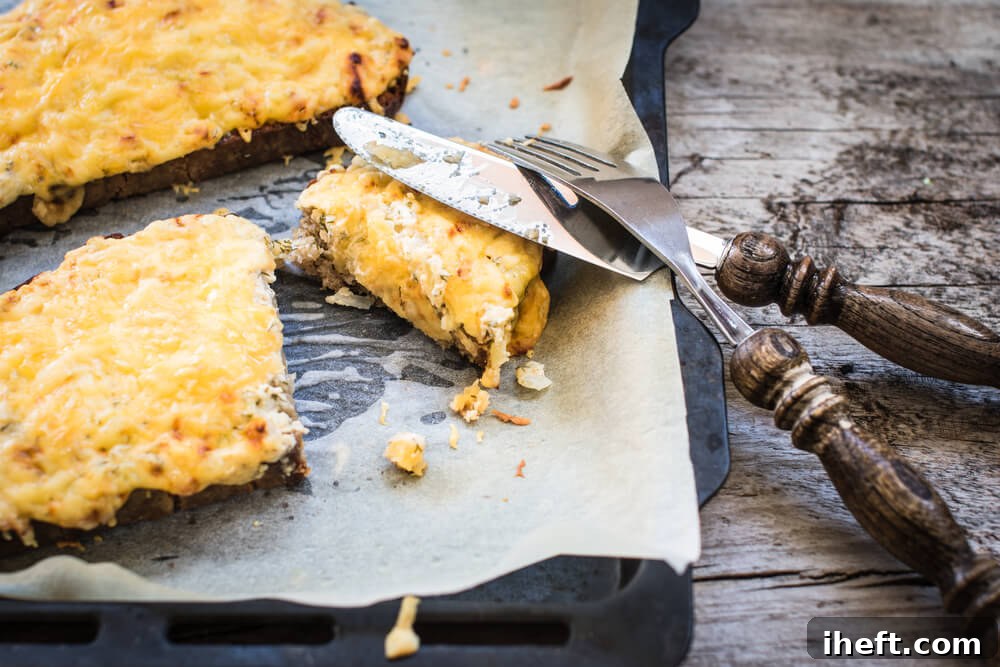
Welsh Rarebit is a sophisticated and savory British dish, essentially an elevated form of cheese on toast. It’s a far cry from a simple grilled cheese, boasting a rich and complex flavor profile that makes it a popular choice for a light main course or a substantial snack. The dish features a luxurious, thick sauce made primarily from a flavorful Welsh cheese (such as Caerphilly or Cheddar), often blended with a host of other ingredients to enhance its depth.
Key components of the rarebit sauce typically include a touch of Worcestershire sauce for umami, a hint of mustard (Dijon or English mustard) for a gentle kick, and often ale or milk to create a smooth, creamy consistency. This delectable cheese mixture is then poured over slices of toasted bread and grilled until bubbly and golden brown. The result is a wonderfully rich, tangy, and deeply satisfying open-faced sandwich that showcases the best of British cheese-making. You can easily prepare this comforting classic at home using this authentic recipe.
14. Scotch Eggs
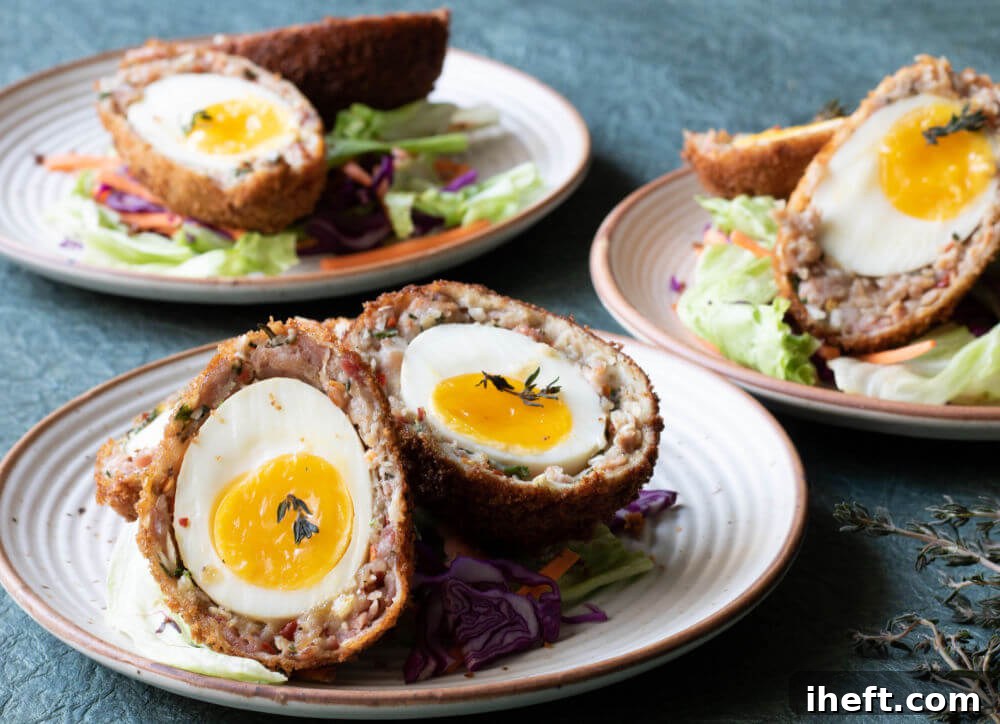
A Scotch egg is a highly distinctive and much-loved British snack or picnic item, celebrated for its unique combination of textures and flavors. It consists of a hard-boiled egg, which is then carefully peeled and encased in a savory layer of seasoned sausage meat. This meat-wrapped egg is subsequently breaded with crisp breadcrumbs and then deep-fried or baked until golden brown and cooked through.
The result is a portable, self-contained meal that offers a delightful contrast: a firm, perfectly cooked egg yolk (sometimes slightly jammy in modern versions), surrounded by flavorful sausage, all enclosed within a crunchy, golden exterior. While often associated with picnics and pub lunches, the original Scotch egg is believed to have been created by the prestigious London department store Fortnum & Mason in 1738, intended as a luxurious, ready-to-eat delicacy for travelers. Today, it remains a popular and versatile snack across the UK.
15. Mushy Peas
Mushy peas are a quintessential traditional British side dish, an indispensable accompaniment to many classic meals, most famously fish and chips. This vibrant green puree is made from dried marrowfat peas that have been meticulously soaked overnight and then gently boiled until they achieve their characteristic soft, thick, and “mushy” consistency. The process results in a texture that is simultaneously creamy and slightly chunky, with a distinct, earthy pea flavor.
Often seasoned simply with a pinch of salt and sometimes a hint of mint, mushy peas provide a comforting and wholesome counterpoint to the crispy, savory flavors of fried fish and chips. While this traditional side can be conveniently found canned alongside other British staples like Heinz beans in some specialty stores, I highly recommend the superior taste and texture of making them yourself from dried peas. The homemade version truly captures the authentic essence of this beloved British accompaniment.
16. Bubble and Squeak
Bubble and Squeak is a wonderfully resourceful and beloved British dish, ingeniously crafted from leftover cooked vegetables, making it a sustainable and delicious way to prevent food waste. Typically, it features ingredients from a traditional Sunday roast, with potatoes and cabbage being the primary components, often joined by carrots, Brussels sprouts, or other root vegetables.
The cooked vegetables are roughly mashed or chopped together, then pressed into a patty or cake and fried in a pan until they develop a beautiful golden-brown crust and become crispy on the outside, while remaining tender and flavorful within. The name “Bubble and Squeak” is believed to refer to the sounds the vegetables make as they cook in the hot pan. This comforting and savory dish is most frequently served as part of a hearty breakfast, often alongside fried eggs and sometimes bacon, creating a truly satisfying and quintessential British morning meal. It’s a testament to the British knack for transforming simple leftovers into something truly delightful.
17. British Pasty
A pasty (pronounced “pass-tee”) is a classic and highly versatile type of baked pastry, recognized for its distinctive crimped edge and portable shape. Originating from Cornwall, England, the pasty was traditionally designed as a convenient and nourishing meal for miners to carry into the mines. Its thick, crimped crust served as a natural handle, which could be discarded after eating the savory filling, keeping their hands clean.
The traditional Cornish Pasty is famously filled with a hearty mixture of beef, sliced potato, swede (rutabaga), and onion, all seasoned with salt and pepper. However, pasties can come with a wide array of fillings, from other meats and vegetables to sweet variations. They are incredibly popular throughout Cornwall and the wider UK, frequently enjoyed as a quick lunch, a satisfying snack, or a warm, comforting meal on the go. My kids, for instance, love getting creative by making Harry Potter-inspired Pumpkin Pasties, showcasing the adaptability of this iconic British culinary form.
18. Sticky Toffee Pudding
Sticky Toffee Pudding is one of the UK’s most celebrated and indulgent desserts, a true comfort food masterpiece. This rich, moist, and wonderfully dense sponge cake is typically made with finely chopped dates, which give it a deep, caramel-like flavor and a wonderfully sticky texture.
The magic of Sticky Toffee Pudding lies in its decadent topping: a warm, luscious toffee sauce that is generously poured over the cake just before serving. The sauce seeps into the sponge, making it incredibly moist and intensely flavorful. This divine pudding is almost always served warm, and its traditional accompaniments include a scoop of rich vanilla ice cream, a dollop of clotted cream, or a generous serving of creamy custard, adding another layer of luxury and creating a perfect balance of temperatures and textures. It’s the ultimate sweet ending to any British meal, promising pure comfort and satisfaction.
19. Spotted Dick
Spotted Dick is a truly traditional and distinctively named British dessert, cherished for its comforting, wholesome qualities. This classic steamed pudding is made with suet pastry, which gives it a unique, slightly dense yet tender texture, and is generously studded with dried fruits, typically currants or raisins – the “spots” from which it derives its charming name.
The pudding is traditionally steamed for a prolonged period, resulting in a beautifully moist and rich dessert. It is almost invariably served warm, often sliced and smothered with creamy custard, which complements its sweet, fruity, and subtly savory suet base perfectly. Spotted Dick is so ingrained in British culinary culture that you can even find a convenient canned version produced by Heinz, readily available in both the UK and, increasingly, in specialty British food sections in the US, making this popular dessert accessible for a quick and comforting treat.
20. Afternoon Tea
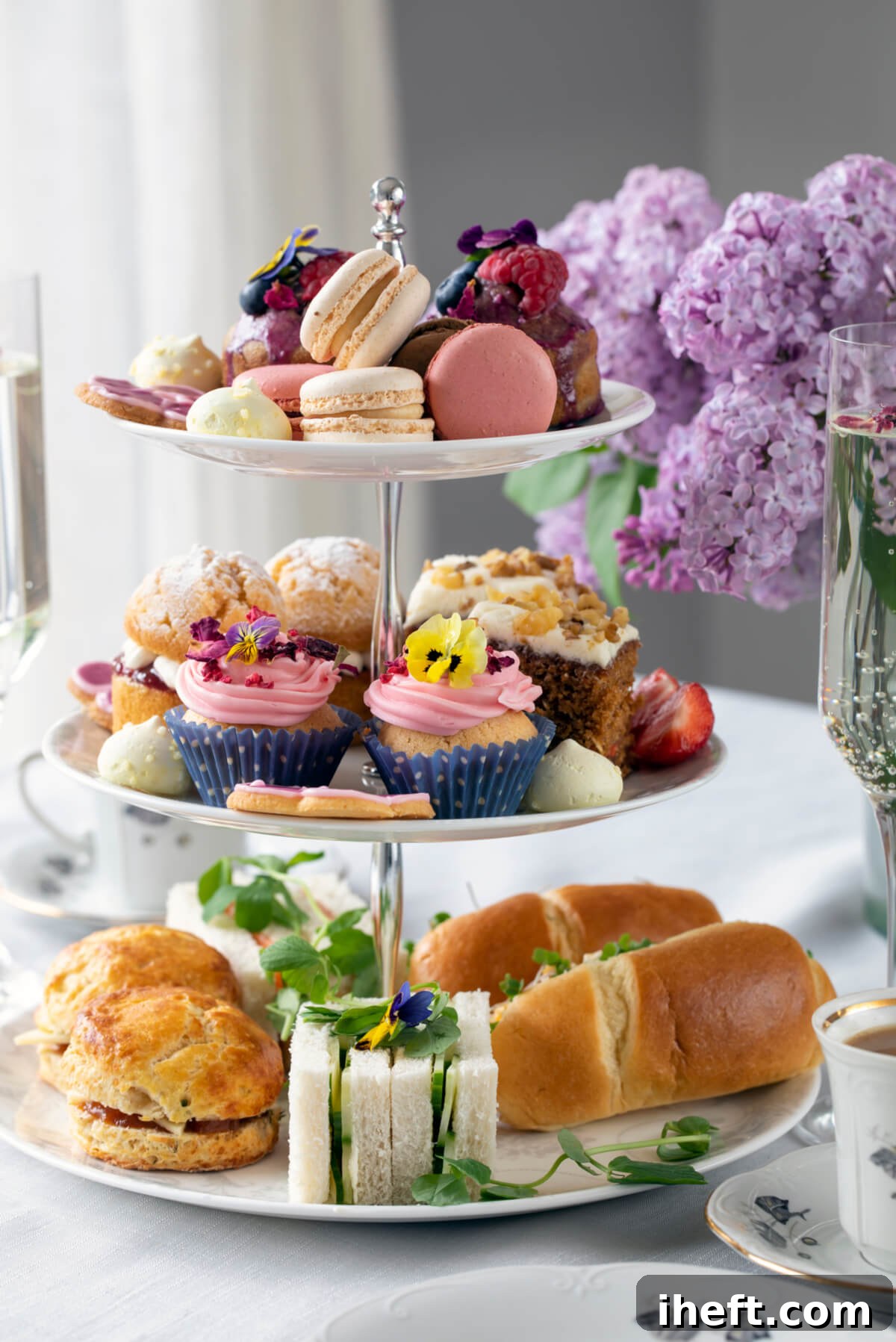
No exploration of traditional British foods and culinary traditions would be truly complete without a dedicated mention of Afternoon Tea. More than just a meal, afternoon tea is a cherished British ritual, a refined social occasion that combines delightful refreshments with a moment of relaxation. It typically takes place in the late afternoon, between lunch and dinner, and is an experience rather than just a snack.
The centerpiece of English afternoon tea is, of course, a pot of hot tea, usually a robust black tea like English Breakfast or Earl Grey, served with milk and sugar to taste. Accompanying the tea is an exquisite array of tasty finger foods, elegantly presented on a tiered stand. This spread traditionally includes delicate, crustless sandwiches with various fillings (like cucumber, smoked salmon, or egg mayonnaise), freshly baked scones served with clotted cream and jam, and an assortment of small, exquisite pastries and cakes. It’s a beautifully orchestrated culinary experience that offers a glimpse into British elegance and hospitality.
21. Lemon Posset
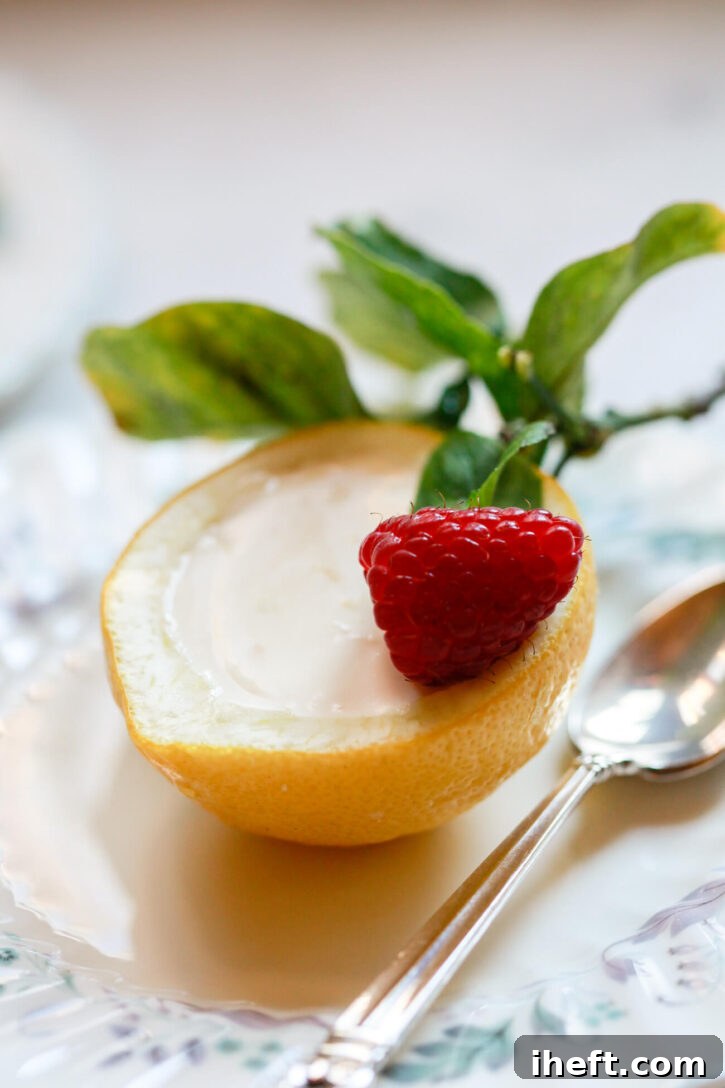
If you appreciate simple, elegant, and intensely refreshing lemon desserts, then Lemon Posset is an absolute must-try! This classic British dessert is a marvel of culinary simplicity, requiring just three core ingredients: fresh lemons (juice and zest), heavy cream, and sugar. The magic happens through a gentle heating and chilling process, where the acidity of the lemon juice curdles the cream ever so slightly, creating a wonderfully smooth, thick, and surprisingly light dessert with a vibrant citrus tang.
Lemon Posset boasts a silky, custardy texture that melts in your mouth, leaving a clean, zesty finish. It’s often served in small ramekins or elegant glasses, sometimes garnished with fresh berries or a sprig of mint, adding a touch of color and extra freshness. Despite its effortless preparation, it presents as a sophisticated and impressive dessert, perfect for ending any meal with a refreshing flourish.
Embracing the Flavors of Traditional British Foods
While British food may have historically suffered from an unfair reputation worldwide, this comprehensive exploration reveals a delicious truth: the UK is home to an incredible variety of beloved and popular dishes that are both rich in history and bursting with flavor. From the unexpected embrace of Indian curries like Chicken Tikka Masala to the heartwarming indulgence of Sticky Toffee Pudding, and the timeless elegance of Afternoon Tea, there truly is something within British cuisine to delight every palate.
If you’re unsure where to begin your culinary journey into British fare, start with something wonderfully simple yet iconic, like the comforting Beans on Toast. Alternatively, elevate your experience by inviting friends over for a sophisticated English afternoon tea, complete with freshly baked scones and perhaps some homemade Shortbread. Embracing these traditional dishes offers more than just a meal; it’s an opportunity to connect with a rich cultural heritage and discover the heartwarming appeal of authentic British flavors. Don’t let misconceptions deter you; dive in and savor the delicious diversity that British food has to offer.