Tangy Dill Pickle Sourdough Loaf Recipe
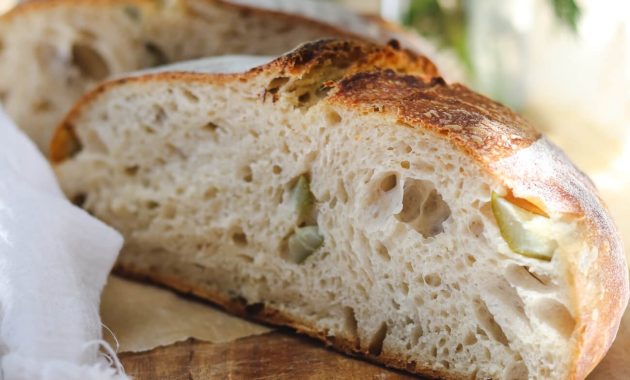
Dill pickle sourdough bread made with chopped pickles, fresh dill, and a splash of pickle brine. This savory loaf is a tasty choice for pickle lovers and pairs beautifully with sandwiches and snack boards.

My daughter loves pickles, so she asked me to bake a loaf of dill pickle sourdough bread. This kitchen experiment turned out delicious: chopped dill pickles, fresh dill, and a small amount of pickle brine add a bright, savory note to a classic higher-hydration sourdough loaf without making it overwhelmingly vinegary.
The loaf is particularly good for turkey, tuna, or vegetable sandwiches, and it’s a welcome addition to a snack board with hummus, crudités, cheese, and — of course — more pickles.

Why You’ll Love This Pickle Sourdough Bread
This savory sourdough loaf is:
- Filled with little bites of dill pickle
- Flavored with fresh dill and a touch of pickle brine
- Tangy and savory without being overly sour
- Based on a higher-hydration sourdough method for a crusty exterior and soft, open crumb
- Fantastic for sandwiches, avocado toast, and snack boards
- A fun, homemade treat for anyone who loves pickles

Ingredients You’ll Need
Active sourdough starter
Use an active, bubbly starter that has been recently fed and is near its peak. A strong starter helps this heavier, add-in-filled dough develop good rise and structure.
Water and pickle brine
Replace a small portion of the water called for in your usual sourdough formula with dill pickle brine. For example, substitute about 30 grams of the water with pickle brine to introduce a balanced pickle flavor without overwhelming the dough or interfering with fermentation. Use brine from pickles you enjoy, since the flavor will come through.
Bread flour
Bread flour provides the protein needed for strength in a high-hydration dough, especially when you add chopped pickles. It helps the loaf hold shape and develop a good crumb.
Dill pickles
Choose a crisp refrigerated dill pickle with a flavor you like. Chop the pickles into roughly ½ to ¾-inch pieces so they remain visible in the loaf. Blot the chopped pickles very well with a clean towel or paper towels before adding them to the dough — excess brine can make the dough too wet and difficult to shape.
Fresh dill
Fresh dill reinforces the pickle flavor and creates pretty green flecks throughout the bread. About 2 tablespoons of chopped fresh dill works well, though you can adjust to taste. Fresh dill keeps the flavor bright and herbal.
Fine sea salt
Salt strengthens the dough and balances sour and herbal flavors. Because pickle brine contributes salt, keep the salt amount moderate to maintain a balanced loaf.

How to Make Dill Pickle Sourdough Bread
1. Mix the starter, water, and pickle brine
Combine active starter, lukewarm water, and the measured pickle brine in a large mixing bowl. Stir until the starter disperses into the liquid.
2. Add the flour and salt
Add bread flour and salt, mixing until no dry patches remain. The dough will be wet, rough, and shaggy. Use your hands to bring it together, then cover and rest 30–60 minutes for autolyse to hydrate the flour.
3. Add the pickles
Thoroughly blot the chopped pickles, then fold them into the dough with damp hands until reasonably distributed. The dough may feel looser after adding pickles; resist the urge to add extra flour. You can also laminate the pickles in just before shaping if preferred.
4. Bulk fermentation
Cover and let the dough rise in a warm, draft-free spot until it looks puffy and nearly doubled in volume. Depending on kitchen temperature and starter strength, this may take several hours at around 70°F. Perform a few stretch-and-fold sets during the first hour if desired to build strength.

When Should I Add the Pickles and Dill?
There are two effective approaches:
Option 1: Add pickles before bulk fermentation
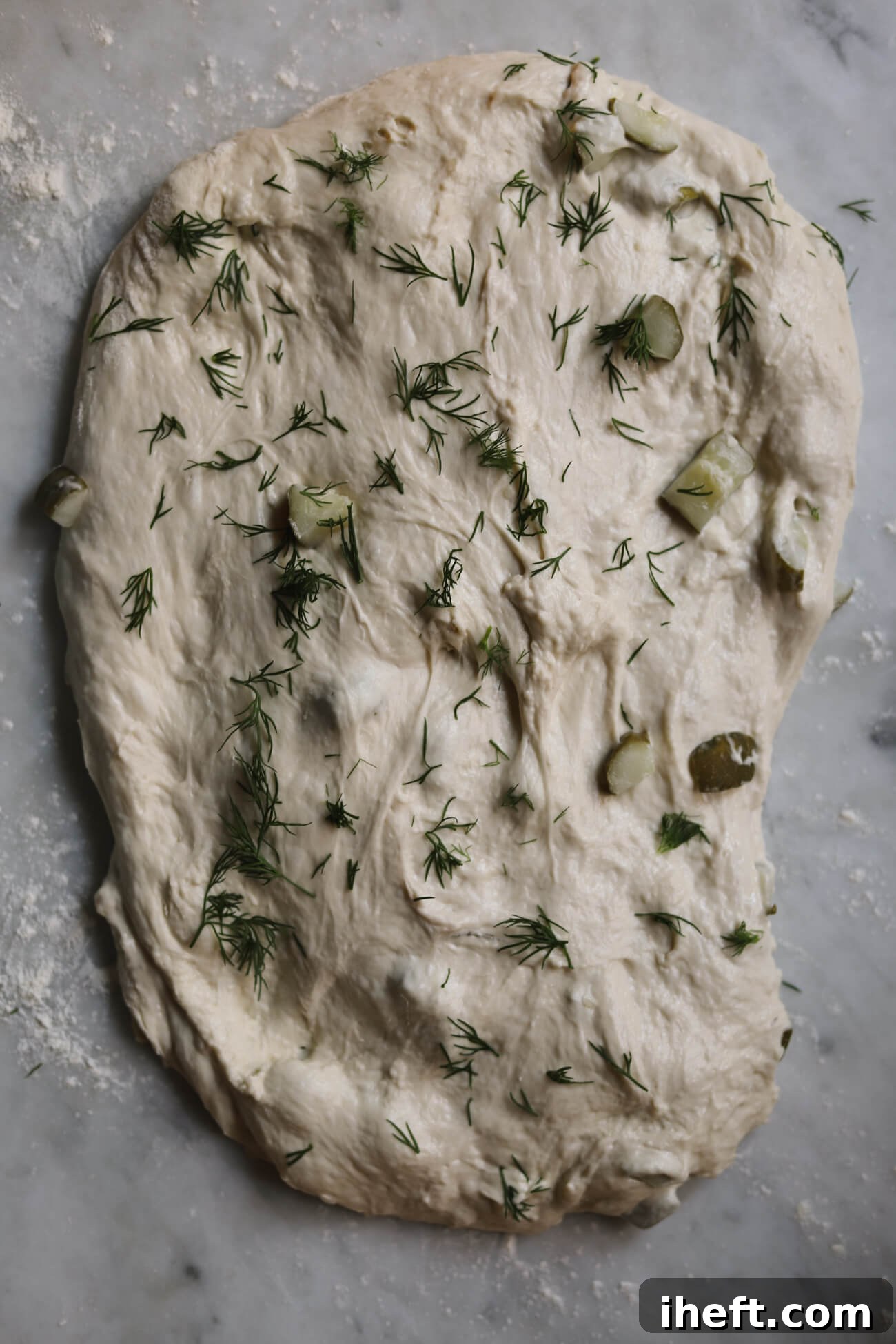
Add the well-blotted pickles after the initial rest so they ferment with the dough during bulk rise. Laminate in fresh dill just before shaping. This distributes pickle flavor throughout the loaf and creates visible dill ribbons.
Option 2: Laminate pickles and dill before shaping
Complete bulk fermentation without add-ins, then laminate both pickles and fresh dill into the dough before shaping. This reduces the chance of extra moisture affecting gluten development and gives distinct pockets of pickle and dill in slices.
Either method works; the critical step is blotting the pickles thoroughly.
Tips for the Best Dill Pickle Sourdough Bread
Blot the pickles thoroughly
Pickle pieces hold a lot of liquid even after draining. Spread them on a clean towel or paper towels and press gently to remove excess moisture.
Don’t add extra flour
The dough will often feel wetter after adding pickles; use stretch-and-folds to build strength instead of adding flour. High hydration produces a lighter, airier crumb.
Use pickles you love
The final loaf will reflect the character of the pickles and brine used. A crisp, refrigerated dill pickle typically yields the best result.
Let the loaf cool completely
The pickles add moisture to the crumb, so allow the loaf to cool fully before slicing to let the interior set properly.

Suggested Sourdough-Baking Timeline
This timeline is flexible but effective: mix in the morning, allow bulk fermentation during the day, refrigerate overnight, and bake the following day when convenient.
The night before: If your starter needs feeding, feed it so it’s active in the morning. A refrigerator-kept starter can sometimes be used directly if it’s strong.
8–9 a.m.: Mix starter, water, pickle brine, flour, and salt. Rest 30–60 minutes.
9–11 a.m.: Add blotted pickles and perform stretch-and-folds every 30 minutes if possible.
Late morning to afternoon: Bulk rise until bubbly and nearly doubled.
Late afternoon/evening: Laminate in fresh dill, shape, place in the proofing basket, and refrigerate overnight.
Next day: Bake straight from the refrigerator. Preheat a Dutch oven, score the cold dough, and bake as you usually would for a high-hydration loaf.
What Does Pickle Sourdough Bread Taste Like?
The bread tastes like rustic sourdough with a distinct, savory dill-pickle character. The pickle brine seasons the entire loaf while chopped pickles create bright, tangy bites. Fresh dill adds a clean herbal note so the overall flavor remains fresh rather than overly salty or vinegary. It’s noticeably pickle-flavored without tasting like an entire jar of pickles baked into bread.

How to Serve Dill Pickle Sourdough Bread
This loaf excels with savory toppings. Try it with avocado toast, turkey and cheddar with mustard, tuna or chickpea salad, hummus with cucumber and sprouts, grilled cheese, egg salad, smoked salmon and cream cheese, or simply avocado and sliced tomato. It also makes a welcome addition to snack boards alongside hummus and fresh vegetables.
How to Store Pickle Sourdough Bread
Allow the loaf to cool completely before storing. Keep it cut-side down on a cutting board for the first day or place it in a bread bag or loosely closed container; the crust will soften if stored airtight. Because pickles add moisture, enjoy the bread within two days at room temperature for best texture. For longer storage, slice and freeze completely cooled bread in an airtight container; toast slices directly from frozen.

Frequently Asked Questions
Can I make sourdough bread with pickle juice?
Yes. Replace a small portion of the water with pickle brine — for example, about 30 grams — to impart pickle flavor without adding excessive salt or acidity that could hamper fermentation. Do not replace all the water with brine.
What type of pickles are best for pickle bread?
Refrigerated dill pickles with a crisp texture and fresh flavor work best. Avoid very sweet bread-and-butter pickles unless you want a sweet-savory result.
Can I use dried dill instead of fresh?
Fresh dill gives the brightest flavor and best appearance. If needed, use 1–2 teaspoons of dried dill added with the salt, but expect a slightly different, more concentrated flavor.
Is dill pickle sourdough bread very sour?
It’s tangier than plain sourdough because of the pickles, but it shouldn’t be unpleasantly sour. A longer cold proof will increase acidity; shorten fermentation for a milder loaf.
Can I add cheese?
Yes. Cheddar pairs especially well with pickles and dill. Add about 100–150 grams of small cheddar cubes during lamination, and blot the pickles extra well because additional inclusions make the dough heavier.