Parisian Pastry Perfection
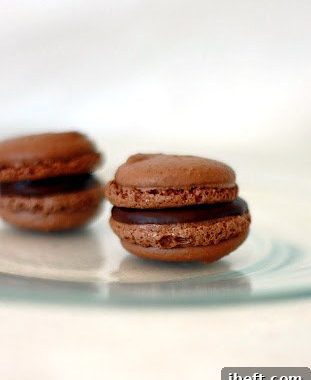
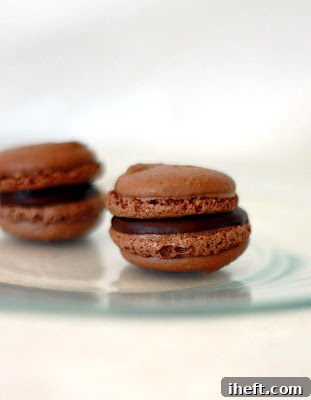 |
| Chocolate Ganache Macarons |
| Chocolate Macarons filled with Fleur de Sel Caramel |
Mastering French Macarons at Home: A Guide to Perfect Parisian Treats
The delicate, often elusive French macaron has long held a mystique for home bakers. With their perfectly smooth, colorful shells, characteristic “feet,” and irresistible chewy centers, these Parisian delights often seem reserved for the windows of high-end patisseries. For years, I, too, was intimidated by the sheer perfection displayed in French bakeries, believing that crafting these exquisite confections was beyond my reach. However, after stumbling upon a captivating post on Slim Paley that showcased these “Morsels of Deliciousness,” my curiosity was piqued, and I knew it was time to conquer my fear.
I’m thrilled to report that making French macarons is far less daunting than it appears. My daughter, Bella, and I recently embarked on our first macaron-making adventure, and to our delightful surprise, they are a snap to create! This experience completely transformed my perception, proving that with a little patience and the right guidance, anyone can produce beautiful, delicious macarons right in their own kitchen. Forget the intimidation; prepare to be amazed at how achievable these elegant desserts truly are.
The Allure of the French Macaron: More Than Just a Cookie
French macarons are not merely cookies; they are an experience. Originating in Italy and refined in France, particularly during the Belle Époque era, these almond meringue confections have evolved into a symbol of refined pastry artistry. Their crisp exterior gives way to a soft, slightly chewy interior, often contrasting beautifully with a rich, creamy filling. The beauty of macarons lies not only in their taste and texture but also in their vibrant colors and endless flavor possibilities, making them a feast for both the eyes and the palate.
What makes a macaron truly special is the delicate balance of ingredients and precise technique. At its core, a French macaron consists of just a few simple components: stiffly beaten egg whites and sugar, combined with a mixture of finely ground almond flour and confectioners’ sugar. This simple formula, when executed correctly, yields the iconic shell. Understanding the role of each ingredient and mastering the technique, known as “macaronage,” is the key to achieving those coveted “feet” and a smooth, elegant finish.
Demystifying the Macaron: A Step-by-Step Visual Journey
Let’s break down the basic process that transforms simple ingredients into these delicate masterpieces. The journey begins with the meticulous preparation of your dry ingredients and the perfect meringue.
Once the almond flour and confectioners’ sugar are finely pulsed and sifted, they are carefully folded into a stable, glossy meringue. This crucial step, known as macaronage, determines the final texture of your shells. The batter should reach a consistency often described as “lava-like,” flowing slowly from your spatula in a continuous ribbon.
With your batter perfectly mixed, the next step involves transferring it to a pastry bag fitted with a plain round tip. Precision is key here; aim to pipe consistent 1-inch circles onto parchment-lined baking sheets. You can use a template underneath the parchment paper to ensure uniformity, which is vital for matching pairs later on. After piping, a gentle tap of the baking sheet on your work surface helps release any trapped air bubbles, preventing cracks during baking and encouraging a smoother shell.
After piping, the macaron shells need to “rest” or “dry” at room temperature for about 15 minutes, or until a light skin forms on the surface. This step is critical for the development of the characteristic “feet” – the ruffled base that elevates the macaron shell. The skin prevents the macaron from expanding too rapidly in the oven, forcing the air to escape from the bottom and creating that desirable lift.
Once rested, the macarons are ready for their brief but transformative bake. They typically bake for about 10 minutes, developing their delicate crispness and internal chewiness. The precise oven temperature and baking time can vary, so it’s essential to watch them closely. You’ll know they’re done when the “feet” have fully formed, and the shells are firm to the touch and can be gently lifted from the parchment without sticking.
Creative Fillings: The Heart of Your Macaron Masterpiece
Once your beautiful macaron shells have cooled, it’s time for the most exciting part: filling them! The filling not only adds another layer of flavor and texture but also brings the two shells together to create the complete macaron experience. While I opted for classic caramel and rich chocolate ganache, the possibilities are truly endless.
- Caramel: A classic choice, especially a Fleur de Sel caramel, offers a delightful balance of sweet and salty, creating an incredibly sophisticated flavor profile.
- Chocolate Ganache: Rich, smooth, and utterly decadent, chocolate ganache is a staple for a reason. It pairs beautifully with almost any macaron shell flavor.
- Buttercream Frosting: From vanilla bean to espresso or fruit-flavored buttercreams, this creamy filling allows for endless customization.
- Jams and Preserves: Bright, fruity jams like raspberry, strawberry, or apricot add a burst of fresh flavor and a pleasant tartness that cuts through the sweetness of the shells.
- Curds: Lemon curd or passion fruit curd provide a tangy, vibrant contrast, perfect for a refreshing macaron.
- Cream Cheese Frosting: A slightly tangy and sweet option, ideal for red velvet or carrot cake-inspired macarons.
For inspiration, one needs only to look at the legendary Ladurée in Paris, the undisputed master of macarons. Their menu is a veritable symphony of flavors, a testament to the versatility and artistry of this pastry. Just gazing at their elaborate window displays, featuring towering pyramids of perfectly crafted macarons, is enough to ignite any baker’s imagination. Imagine crafting your own macaron towers for a Parisian-themed Valentine’s Day party or any special celebration!
If a trip to Paris isn’t in your immediate future, the next best thing is to bring the magic of Parisian patisseries into your home by making your own delightful French macarons. Trust me, the journey is as rewarding as the destination!
The Tried-and-True Recipe: Martha Stewart’s French Macarons
For our first successful attempt, I followed Martha Stewart’s recipe, which I found to be exceptionally well-written and easy to understand for beginners. This recipe consistently yields beautiful, delicious macarons. It’s a fantastic starting point for anyone looking to master this art.
This recipe makes approximately 35 individual macaron shells (enough for 17-18 filled macarons).
Ingredients
- 1 cup confectioners’ sugar (also known as powdered sugar or icing sugar)
- 3/4 cup almond flour (ensure it is finely ground for the smoothest shells)
- 2 large egg whites, at room temperature (this is crucial for proper meringue formation)
- Pinch of cream of tartar (helps stabilize the egg whites)
- 1/4 cup superfine sugar (also known as caster sugar, dissolves easily into the meringue)
Directions for Perfect French Macarons
- Prepare Dry Ingredients: In a food processor, pulse the confectioners’ sugar and almond flour together until thoroughly combined and very fine. This step is essential to prevent lumps in your macaron batter. Once pulsed, sift the mixture at least two times through a fine-mesh sieve into a bowl. Discard any large bits that remain in the sieve. This ensures an ultra-smooth macaron shell.
- Make the Meringue: Preheat your oven to 375 degrees Fahrenheit (190°C). In a clean, dry bowl of a stand mixer fitted with a whisk attachment, whisk the room-temperature egg whites on medium speed until they become foamy. Add the pinch of cream of tartar and continue whisking until soft peaks form. This means when you lift the whisk, the peaks gently fold over. Reduce the mixer speed to low and gradually add the superfine sugar, a little at a time, allowing it to incorporate fully. Once all the sugar is added, increase the speed to high and whisk until stiff, glossy peaks form, which typically takes about 8 minutes. The meringue should be firm and hold its shape, and when you rub a little between your fingers, you shouldn’t feel any sugar granules.
- The Macaronage: Sift the prepared almond flour mixture over the stiff meringue. Using a rubber spatula, carefully begin to fold the dry ingredients into the meringue. This delicate process is called “macaronage.” Fold gently, scraping down the sides of the bowl, until the mixture is smooth, shiny, and has a lava-like consistency. When you lift the spatula, the batter should fall in a slow, continuous ribbon. Be careful not to overmix, as this will result in runny batter and flat macarons.
- Pipe and Rest: Transfer the macaron batter to a pastry bag fitted with a 1/2-inch plain round tip. Line baking sheets with parchment paper (you can place a macaron template underneath for uniform sizing). Pipe 3/4-inch rounds onto the parchment-lined sheets, spacing them about 1 inch apart. To finish each round, drag the pastry tip to the side rather than forming a peak at the top. Once piped, firmly tap the bottom of each baking sheet on your work surface 2-3 times to release any trapped air bubbles. Let the piped macaron shells stand at room temperature for 15 minutes, or until a light skin forms on the surface (they should be dry to the touch). Reduce your oven temperature to 325 degrees Fahrenheit (160°C).
- Bake the Macarons: Bake one sheet at a time, rotating it halfway through, until the macarons are crisp and firm, typically about 10 minutes. The “feet” should be clearly visible and the shells should not jiggle when gently nudged. After each batch, increase the oven temperature back to 375 degrees Fahrenheit (190°C) for 5 minutes to reheat, then reduce it to 325 degrees Fahrenheit (160°C) before baking the next batch. This helps maintain consistent oven temperature.
- Cool and Assemble: Allow the baked macarons to cool on the baking sheets for 2 to 3 minutes, then carefully transfer them to a wire rack to cool completely. If any macarons stick, you can spray a little water underneath the parchment paper on the hot sheet; the steam will help them release. Once completely cool, pair same-sized macaron shells and sandwich them together with about 1 teaspoon of your chosen filling, whether it’s jam, ganache, buttercream, or another delightful option. Serve immediately, or for best results, stack between layers of parchment paper, wrap tightly in plastic, and freeze for up to 3 months. Macarons often taste even better the next day as the filling softens the shell slightly.
Cook’s Note: Tips for Perfect Piping
Piping macaron shells can take a little practice to achieve consistent, perfectly round shapes without peaks. Think of it as piping a rosette: apply steady pressure to the pastry bag, pipe a circle, then release pressure and quickly drag the tip to the side of the circle to finish. This technique helps ensure a smooth, flat top on your macaron shells.
Delightful Macaron Variations: Unleash Your Creativity
Once you’ve mastered the basic French macaron, a world of flavor possibilities opens up. Here are some popular variations to inspire your next baking adventure:
- Chocolate Macarons: For a decadent twist, substitute 3 tablespoons of unsweetened Dutch-process cocoa powder for 1/4 cup of the almond flour in the dry ingredients mixture. This yields beautiful, rich chocolate shells perfect for pairing with chocolate ganache or a raspberry filling.
- Coconut Macarons: Infuse a tropical flavor by substituting 2 tablespoons of desiccated unsweetened coconut for 2 tablespoons of the almond flour. For an extra touch, add 1/2 teaspoon of rum to the wet ingredients and sprinkle the piped shells with additional coconut before baking.
- Peanut Macarons: Create a unique savory-sweet macaron by substituting an equal amount of finely ground unsalted peanuts (often available as peanut flour) for the almond flour. These pair wonderfully with a chocolate or jelly filling.
- Pistachio Macarons: For a vibrant green and nutty flavor, substitute 1/2 cup of finely ground unsalted pistachios (pistachio flour) for 1/2 cup of the almond flour. Enhance the color and visual appeal with 2 to 3 drops of forest-green gel-paste food coloring added to the meringue.
- Raspberry Macarons: Add a fruity note by incorporating 1 tablespoon of strained fresh raspberry puree into the wet ingredients (adjusting slightly for liquid content if necessary). For a beautiful hue, add 3 to 4 drops of dusty-rose gel-paste food coloring to the meringue.
- Vanilla Bean Macarons: For a classic, aromatic flavor, add 1/2 teaspoon of pure vanilla extract to the meringue, or for a more intense flavor, scrape the seeds from 1/2 a vanilla bean (reserving the pod for another use, like making vanilla sugar).
Suggested Fillings for Your Macaron Creations
- Classic Chocolate Ganache: A rich, creamy, and versatile filling that complements almost any macaron flavor. You can find a reliable chocolate ganache recipe here.
- Fleur de Sel Caramel: A sophisticated blend of sweet and salty, perfect for chocolate or vanilla shells.
- Fruit Curds: Lemon, passion fruit, or lime curd adds a bright, tangy contrast.
- Berry Jams: Raspberry, strawberry, or blueberry preserves offer a sweet and slightly tart burst of fruitiness.
- Nutella or Other Spreads: For an easy and delicious option, use your favorite chocolate-hazelnut spread or a gourmet almond butter.
- Espresso Buttercream: A coffee-flavored buttercream is a fantastic choice for chocolate or vanilla bean macarons.
Embarking on the journey of making French macarons is a rewarding experience that will elevate your baking skills and impress anyone lucky enough to taste your creations. Don’t let their elegant appearance fool you; with a good recipe, careful attention to detail, and a little practice, you’ll be piping perfect macarons with confidence. So, gather your ingredients, set aside an afternoon, and prepare to bring a slice of Parisian culinary magic into your home!