Your Go-To Homemade Pizza Dough
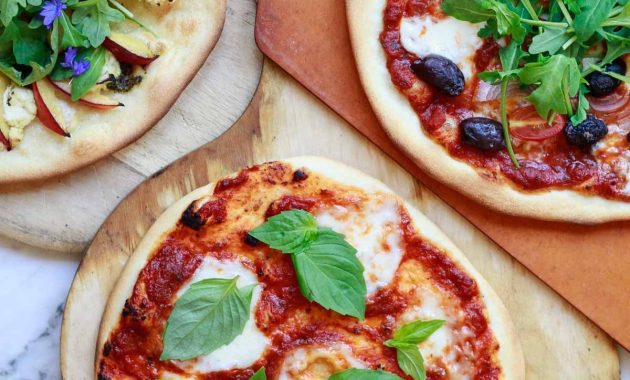
Welcome to the ultimate guide to crafting the perfect classic pizza dough, the essential foundation for a homemade pizza that rivals your favorite pizzeria. Imagine a crust that’s exquisitely crispy on the bottom, yet wonderfully tender and airy inside – that’s precisely what you’ll achieve with this tried-and-true recipe and technique. Prepare to transform your kitchen into an Italian trattoria and elevate your pizza night to an art form.
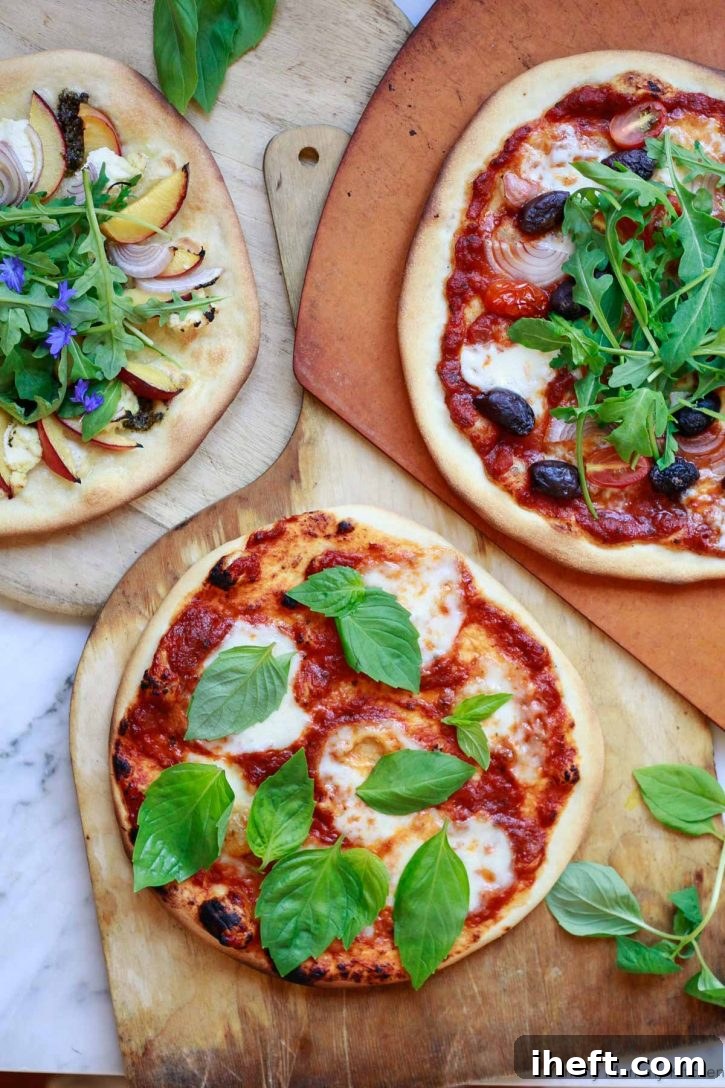
For many years, homemade pizza has been a cherished tradition in my family. My dad always pursued the perfect dough, tirelessly experimenting until he achieved that ideal balance of texture and flavor. Alongside this, my family delights in inventing creative and unique topping combinations, making each pizza night an exciting culinary adventure. This classic pizza dough recipe performs exceptionally well, especially when baked in a high-temperature oven like our Ooni Pizza Oven, yielding restaurant-quality results right at home.
Our recent culinary journey through Italy provided invaluable inspiration and hands-on experience. I dedicated my time there to refining my pizza dough, sauce, and baking techniques, eager to bring these authentic insights back to share with you. Pizza, much like in other parts of the world, exhibits delightful regional variations across Italy. In Tuscany, for instance, we discovered La Cantina, a beloved pizzeria renowned for its cracker-thin crusts. Conversely, Gusta Pizza in Florence, another personal favorite, offers a distinctly thicker and chewier experience. This guide will focus entirely on mastering that versatile, classic homemade pizza dough, suitable for a range of styles. If your love for Italian cuisine extends beyond pizza, you’ll also adore my recipes for homemade Pomodoro Sauce, refreshing Tomato Bruschetta, rich Vegan Eggplant Parmesan, wholesome Farro Salad, a vibrant Aperol Spritz, and the delightful Affogato.
Mastering Homemade Pizza Dough: A Step-by-Step Guide
Crafting pizza dough at home is a deeply satisfying and surprisingly straightforward process. While it demands a bit of foresight due to necessary rising and resting times for the dough (typically around an hour) and sufficient preheating time for your oven (also about an hour), the actual hands-on work is minimal and incredibly rewarding. With just a few staple ingredients, you’re well on your way to exceptional homemade pizza.
You’ll need these fundamental ingredients:
- **Yeast:** The magical leavening agent that gives pizza its signature airy texture.
- **Water:** Crucial for activating the yeast and hydrating the flour.
- **Sugar:** A vital food source for the yeast, aiding in its activation and dough development.
- **Flour:** The structural backbone of your pizza crust, chosen for its gluten content.
- **Salt:** Enhances flavor and helps regulate yeast activity, strengthening the gluten network.
- **Extra Virgin Olive Oil (Optional but Recommended):** Adds richness, tenderness, and a beautiful aroma to the dough.
Step 1: Proofing Your Yeast for Active Dough
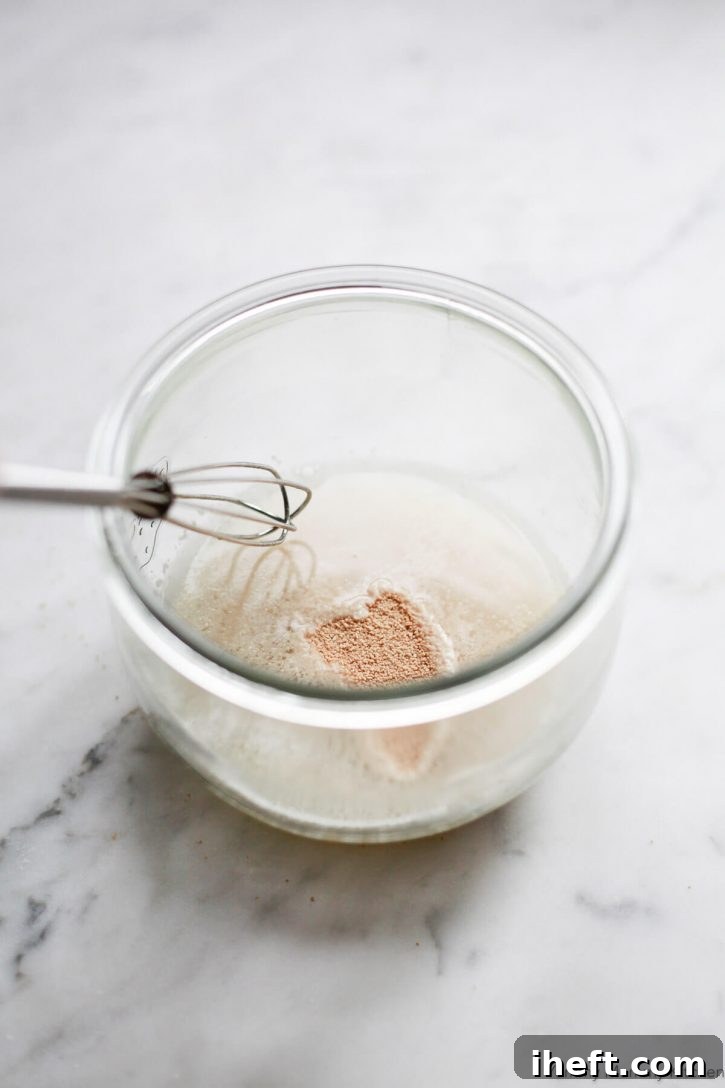
The first crucial step to ensure your pizza dough rises perfectly is to proof your yeast. This process verifies that your yeast is alive and active. To do this, simply stir your chosen yeast with warm water and a small amount of sugar. The sugar isn’t for sweetening the dough; it acts as a primary food source for the yeast, helping it to wake up and become active. Aim for water temperature between 105°F and 115°F (40°C and 46°C); water that’s too hot will kill the yeast, while water that’s too cold won’t activate it properly.
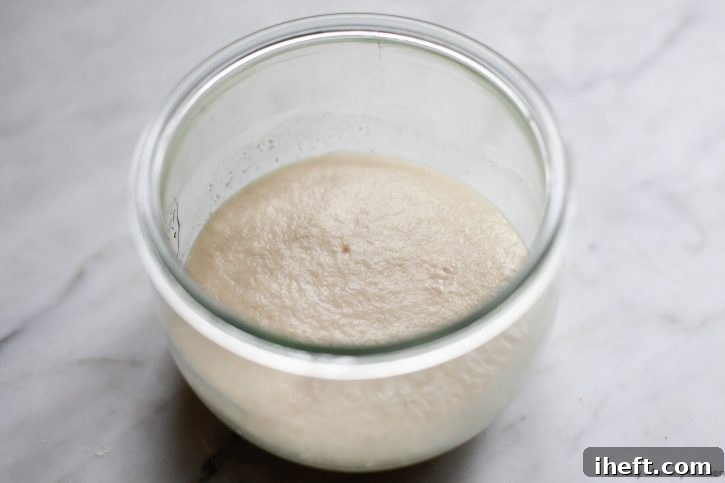
After just 5 to 10 minutes, you should observe a noticeable change: the yeast mixture will have expanded, becoming foamy and bubbly on the surface. This bubbly activity is your clear indicator that the yeast is alive and ready to perform its leavening magic. If, however, there’s no visible foaming or bubbling, it means your yeast is likely inactive, and you’ll need to use a fresh packet. Without active yeast, your pizza dough simply won’t rise, resulting in a dense, flat crust—a disappointment we certainly want to avoid!
Understanding Different Types of Yeast for Pizza Dough
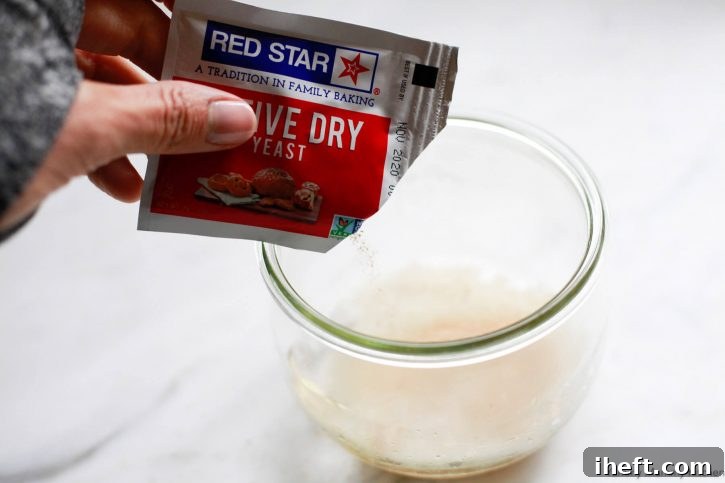
The type of yeast you choose can subtly influence your pizza dough’s characteristics and the overall process. While I primarily use and recommend active dry yeast for this recipe due to its reliability and widespread availability, it’s beneficial to understand other common types:
- Active Dry Yeast: This is arguably the most common and versatile yeast for home baking. It comes in granular form and typically requires proofing in warm water before being incorporated into dry ingredients, as outlined in our recipe. It provides a steady, reliable rise, allowing for good flavor development.
- Instant Yeast (RapidRise or Fast-Acting Yeast): As its name suggests, instant yeast is designed for a quicker rise. Its finer granules mean it doesn’t strictly need to be dissolved in water first; you can often mix it directly with your dry ingredients. If you opt for instant yeast, be aware that your dough may be ready for shaping sooner, potentially reducing the initial rise time. While convenient, some bakers feel it offers slightly less complex flavor development compared to active dry.
- Pizza Yeast (Quick-Rise Pizza Dough Yeast): This is a newer category of yeast often marketed specifically for pizza. It typically contains dough conditioners that allow you to shape your pizza immediately after mixing, bypassing the traditional rise time entirely. While this offers incredible speed, I generally prefer to avoid unnecessary added chemicals and appreciate the flavor development that comes with a proper rise.
- Fresh Yeast (Cake Yeast): Sold in small, moist blocks in the refrigerated section of some specialty markets or bakeries, fresh yeast is highly perishable. It has a mild flavor and requires dissolving in a small amount of liquid before use. While excellent for baking, its limited shelf life and availability make it less common for the average home baker.
For this classic homemade pizza dough, active dry yeast provides the best balance of ease, reliability, and flavor, making it our top recommendation.
Step 2: Precisely Measure Your Flour and Salt
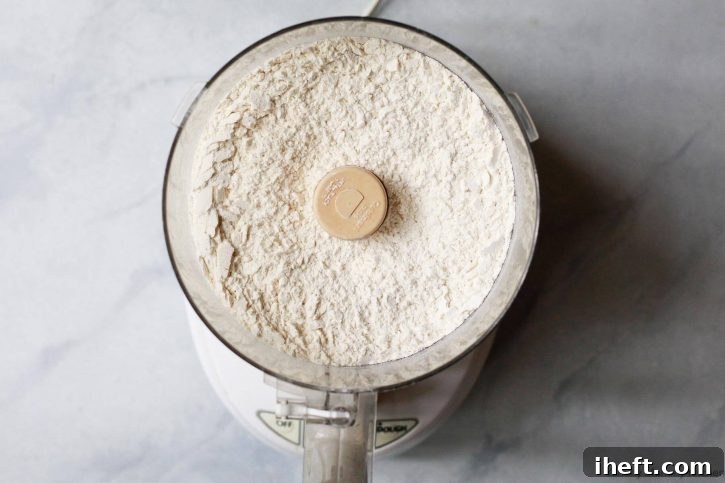
While your yeast is busy proofing and awakening, take the opportunity to accurately measure out your flour and a precise amount of salt. Accuracy here is important, as too much or too little can impact the final texture of your dough. This step sets the stage for combining ingredients. You have several convenient options for mixing your pizza dough: you can use an electric stand mixer equipped with a dough hook attachment, as demonstrated in many videos; a food processor, which quickly brings the dough together; or, if you prefer a more traditional, hands-on approach (much like we experienced in Italy), you can mix it in a large bowl with a sturdy wooden spoon and your hands.
Choosing the Right Flour for Your Perfect Pizza Dough
The type of flour you select plays a pivotal role in determining the final texture of your pizza crust. Each variety offers distinct characteristics:
- All-Purpose Flour: A great all-rounder for a chewy crust. It has a moderate protein content, providing enough gluten for a good rise and a satisfying bite without being overly dense or too crisp. This is an excellent choice for everyday homemade pizza.
- Bread Flour: For those who desire a decidedly crispy crust with a substantial chew. Bread flour boasts a higher protein content than all-purpose flour, leading to stronger gluten development. This results in a more structured dough that can achieve a chewier interior and a fantastic crispness when baked at high temperatures.
- Type 00 Flour (Doppio Zero): This is the revered, finely ground Italian flour, the gold standard for authentic Neapolitan pizza. Its exceptionally fine texture and unique protein structure (despite often having a similar protein content to all-purpose, the way the proteins behave is different) result in a dough that is incredibly smooth, elastic, and capable of producing a tender, airy, and beautifully blistered crust with a delightful chew. If you’re aiming for true Italian authenticity, this is your go-to.
- Whole Wheat Flour: While it can add a rustic flavor and nutritional benefits, be aware that whole wheat flour will produce a denser, less elastic dough. It absorbs more liquid and its bran particles can cut gluten strands, so you may need to adjust hydration and expect a different texture.
- Gluten-Free All-Purpose Flour: A crucial note here: I do not recommend substituting standard gluten-free all-purpose flour blends directly into this recipe. We’ve tested it extensively, and the results were consistently poor, yielding a dough that simply did not work. Gluten is essential for the structure and elasticity of traditional pizza dough. If you require gluten-free pizza, it’s best to seek out recipes specifically formulated for gluten-free flours, which often incorporate binders like xanthan gum to mimic gluten’s properties.
Step 3: Combining Your Yeast and Flour Mixtures
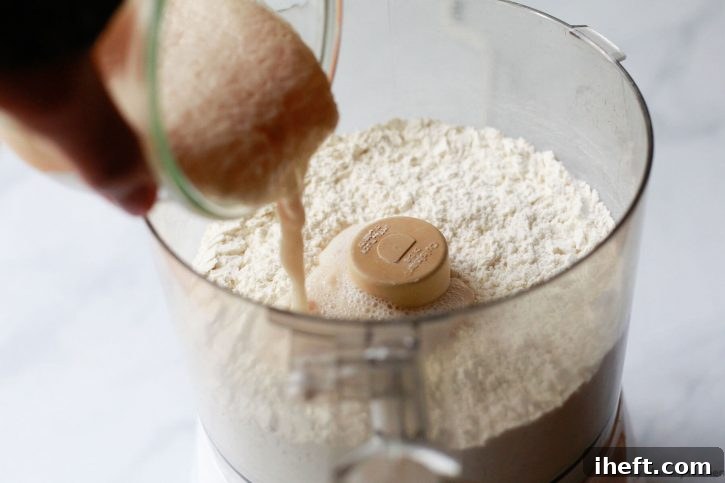
The beauty of this step is its flexibility—the order of combining ingredients isn’t rigidly strict. You can either begin by proofing your yeast directly in a large mixing bowl and then gradually incorporating the flour and salt, or you can start with the dry ingredients in your mixer or food processor and then pour in the activated yeast mixture, as I’ve done here. The key is to ensure everything is thoroughly combined to form a cohesive dough.
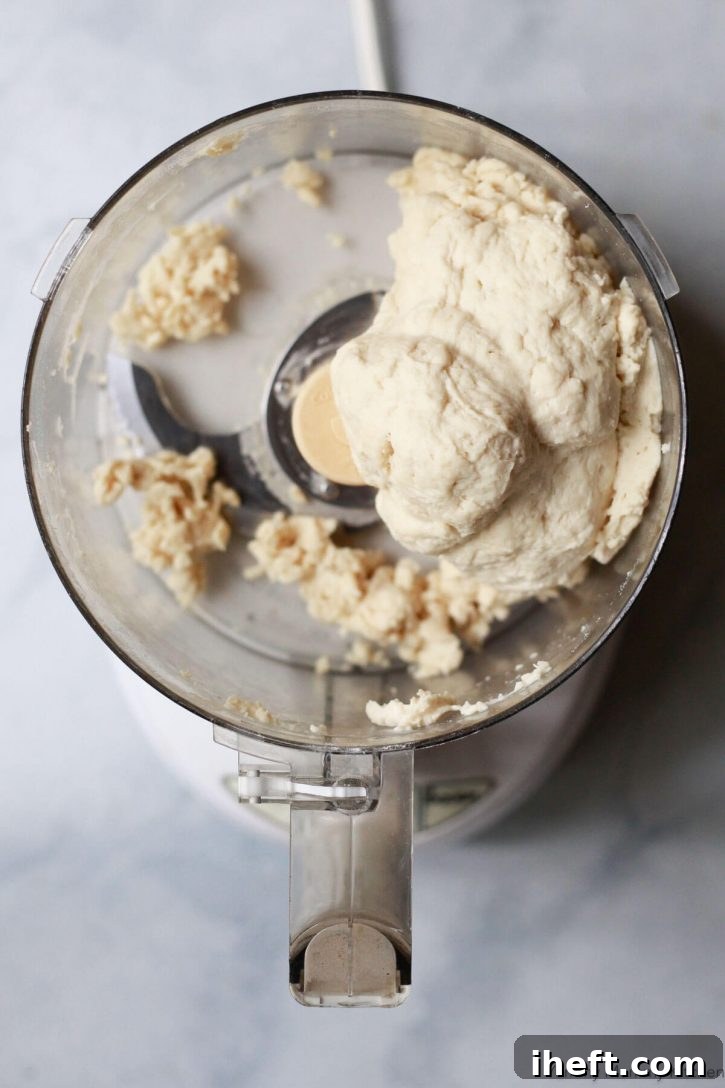
After just a few minutes of mixing, whether by hand, with a food processor, or using a stand mixer, you’ll witness the transformation: the water and flour will unite to form an elastic, pliable dough. This stage is where you fine-tune the hydration. If your dough appears too dry or crumbly, incorporate additional water, one tablespoon at a time, until it reaches the desired consistency. Conversely, if the dough feels too wet or sticky, add more flour, also one tablespoon at a time, until it’s just right—a soft, slightly tacky but manageable ball.
Step 4: The Art of Kneading the Dough
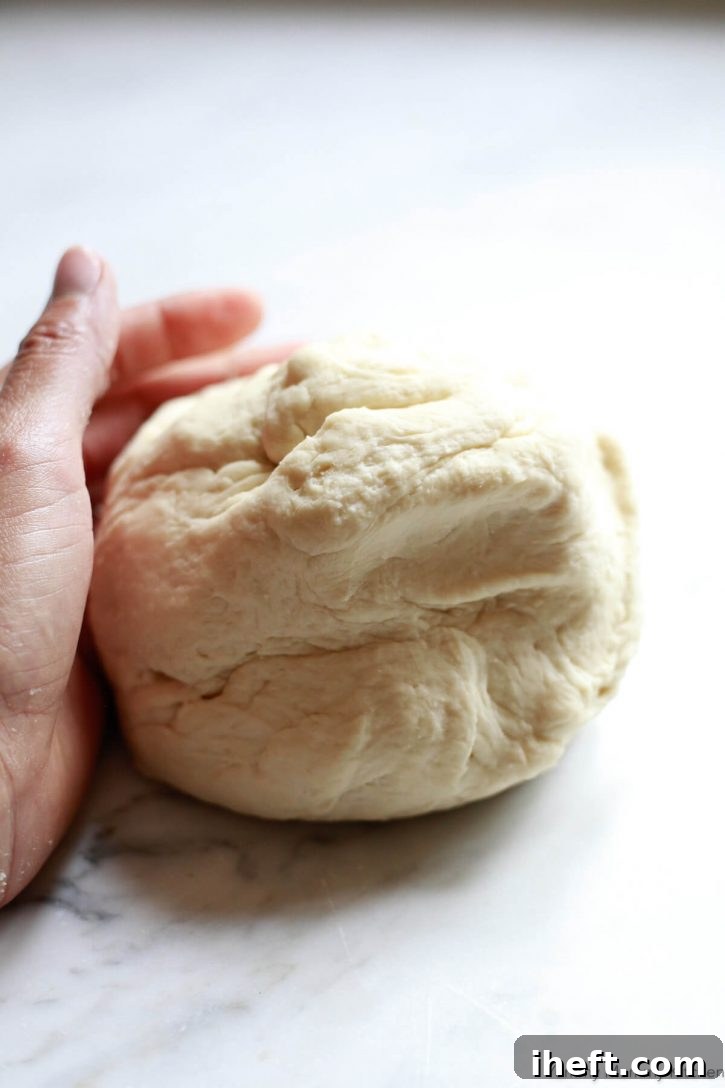
Kneading is a fundamental step in pizza dough preparation, as it develops the gluten strands within the flour. This gluten network is what gives the dough its elasticity, structure, and chewy texture. Turn the dough out onto a lightly floured surface, such as a clean countertop or a large cutting board. If you’re kneading by hand, push the dough away from you with the heels of your hands, fold it back over itself, turn it a quarter turn, and repeat this motion. Continue kneading for 5 to 7 minutes (or until smooth and elastic if using a machine), until the dough transforms into a smooth, supple, and elastic ball that springs back when gently pressed. This process is crucial for achieving that desirable light and airy crust.
Step 5: Allowing Your Pizza Dough to Rise (First Rise)
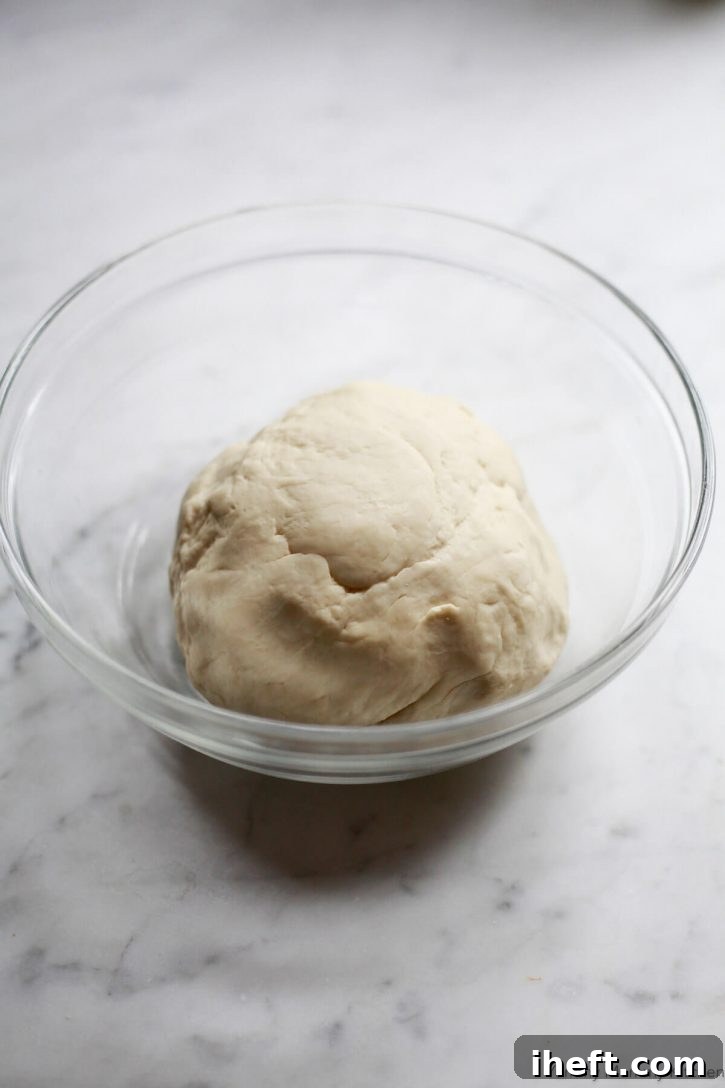
Once your dough is beautifully kneaded, it’s time for its first rise, also known as bulk fermentation. This period allows the yeast to work its magic, fermenting the sugars and producing carbon dioxide, which creates air pockets and develops complex flavors. Lightly coat a large glass bowl with a drizzle of olive oil; this not only adds a subtle richness to the dough but also prevents it from sticking to the bowl as it expands. Place the dough ball into the oiled bowl, ensuring there’s ample space for it to double in size. Cover the bowl snugly with a damp kitchen towel or plastic wrap to maintain a humid environment and prevent the dough from drying out. Let it rest undisturbed in a warm, draft-free spot for approximately one hour. A slightly warm oven (turned off, with just the pilot light on if applicable), or even placing it near a sunny window, can provide ideal conditions.
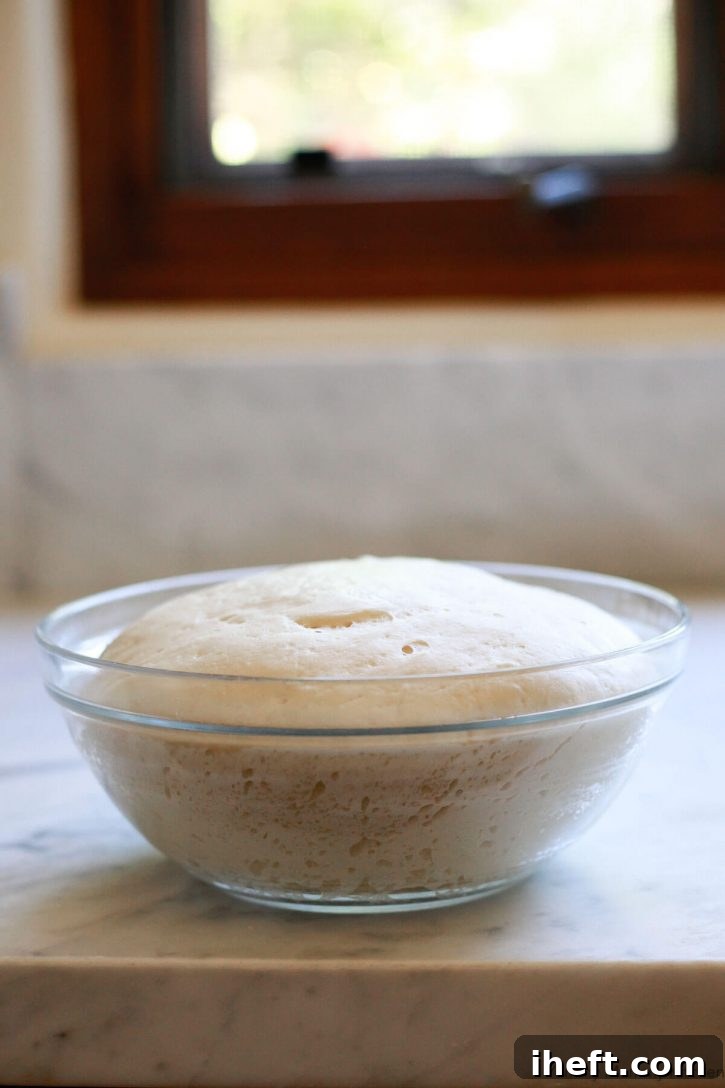
After an hour, prepare to be amazed by the transformation! The dough will have visibly expanded, often doubling in size, into a soft, pillowy, and wonderfully airy mass. This is a clear indicator that your yeast is active and the gluten has properly developed. It will be light to the touch and ready for the next stage of preparation.
Step 6: Dividing and Resting the Dough
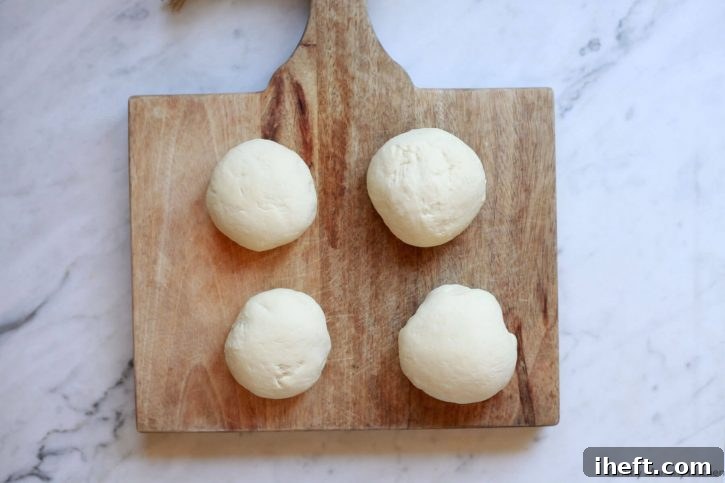
After the first rise, gently punch down the dough to release the accumulated gases. Then, transfer it to a lightly floured surface. I find it convenient to divide the dough into four individual balls, which are perfect for personal-sized pizzas. Alternatively, if you prefer making two larger, standard-sized pizzas, simply split the dough in half. Once divided, gently knead each piece lightly into a smooth, round ball. This helps to create a more even structure for shaping. Arrange these dough balls on a cutting board or clean counter surface, cover them again with your damp kitchen towel, and allow them to rest for another 15 to 45 minutes. This crucial second rest period allows the gluten to relax, making the dough much easier to stretch or roll into your desired pizza shape without resistance or tearing.
Step 7: Shaping Your Pizza Dough – Rolling or Stretching
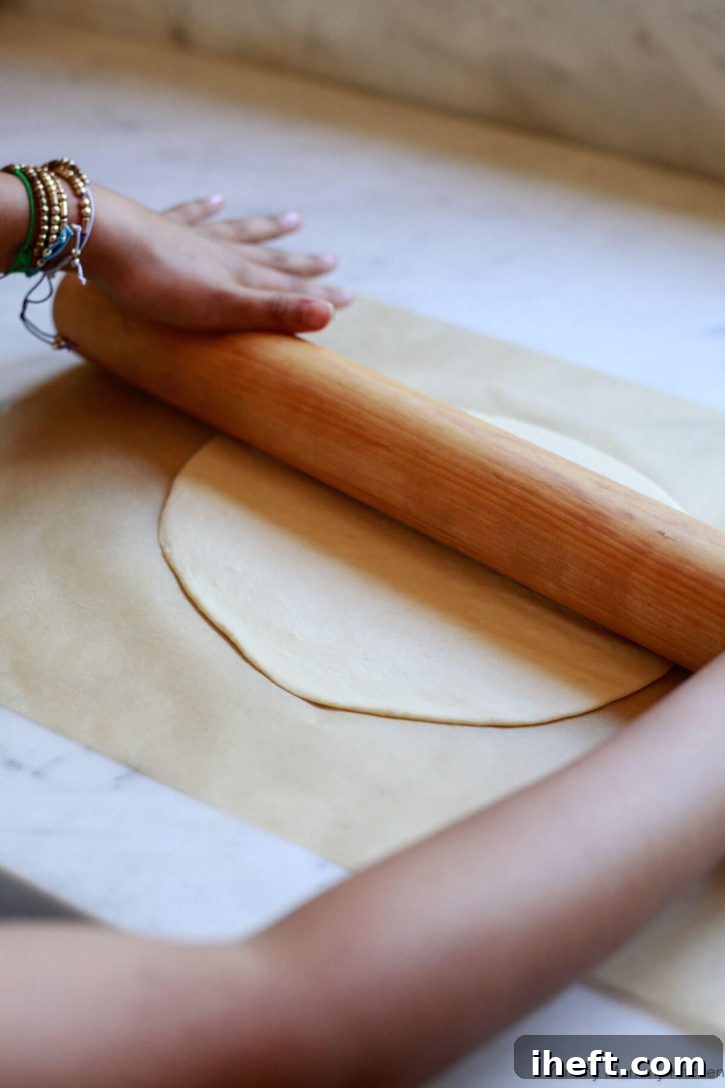
Now comes the exciting part: shaping your pizza dough! You have two primary methods, each yielding slightly different results. Here, my daughter demonstrates rolling her pizza dough quite thin with a wooden rolling pin, which is ideal for achieving a uniformly thin and crispy crust. Personally, I prefer a more traditional approach: gently stretching the dough with my fingers. This technique allows for a more rustic, irregular shape and helps create a beautiful, airy crust edge. When stretching, I aim to leave a roughly 1-inch border around the edges slightly thicker, forming a natural ‘cornicione’ or rim, which puffs up gorgeously in a hot oven, as you might observe in professional pizzerias. For a very thin and crispy crust, roll or stretch the dough as thinly as possible. If you prefer a more substantial, chewier crust, leave it a bit thicker, perhaps around 1/2 inch in the center, always preserving that slightly thicker rim. Remember to work on a lightly floured surface to prevent sticking, and be patient – the relaxed dough will cooperate more readily.
Achieving the Perfect Bake: Tips for the Best Homemade Pizza
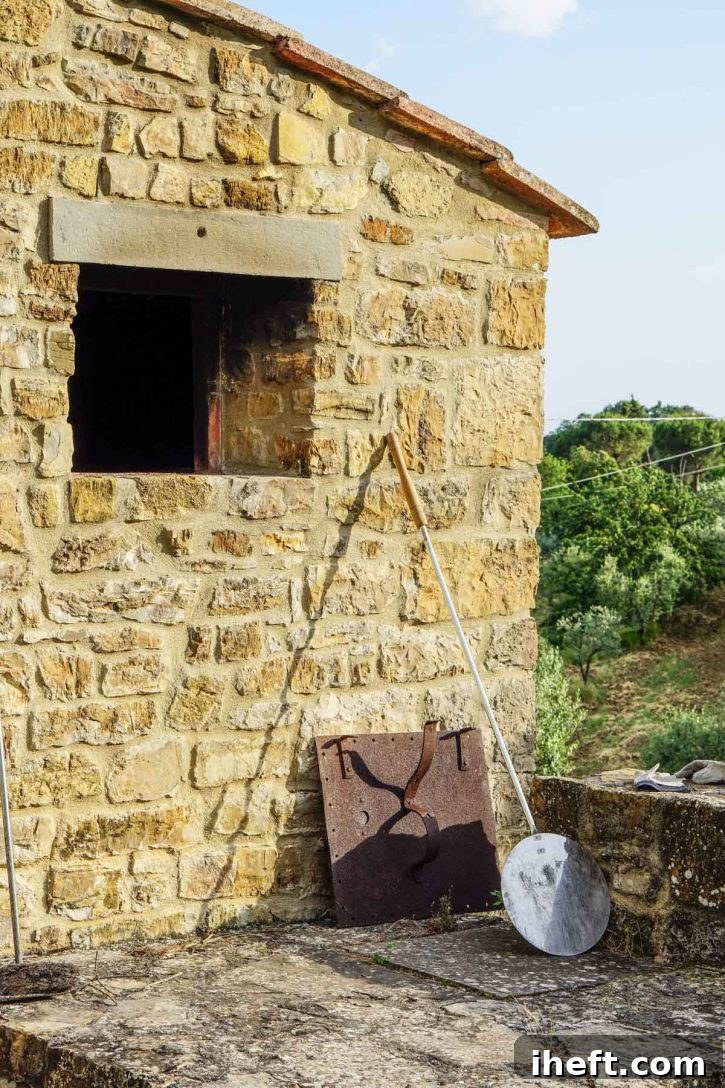
Baking pizza is as much an art as making the dough. The goal is a fast, high-heat bake that mimics traditional wood-fired ovens. Here’s how to achieve that perfect crust:
- Preheat Your Baking Surface to Max Temperature: The absolute key to a crispy bottom crust is a blazing hot baking surface. Whether you’re using a pizza stone, a pizza steel, or an Ooni oven, it needs to be preheated as hot as your oven can possibly go – typically 500-550 degrees F (260-290 degrees C) for conventional ovens. This preheating process may take over an hour to ensure the stone or steel is thoroughly saturated with heat. Remember, traditional pizza ovens can reach upwards of 900-1000 degrees F (480-540 degrees C), which is how they achieve those gorgeous, perfectly charred, and crisp edges. If you’re truly serious about pizza making, investing in a dedicated outdoor pizza oven is a game-changer.
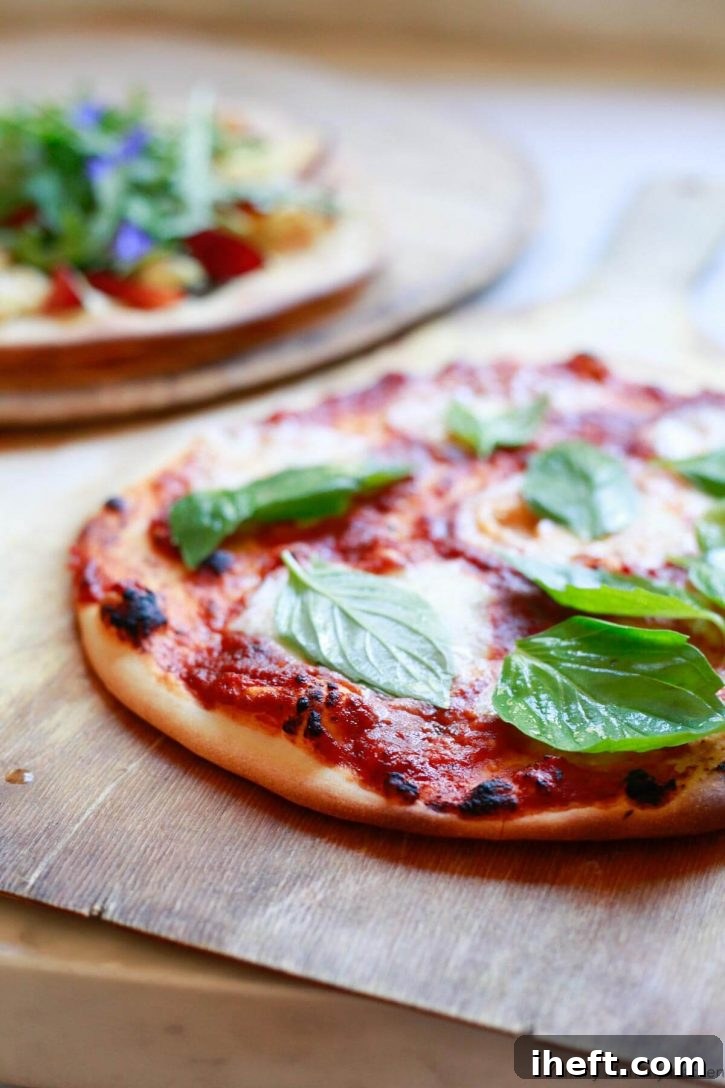
- Embrace Simple, High-Quality Sauces: The best pizza often relies on a simple, fresh sauce that complements rather than overpowers the crust and toppings. A classic pizza sauce made from quality tomatoes is always a winner. Alternatively, Pesto or even a Vegan Pesto makes an excellent and flavorful base. We particularly love using pesto in this vibrant Vegan Pesto Pizza with Heirloom Tomatoes.
- Adjust Dough Thickness for Desired Crust: Your shaping technique directly impacts the final crust texture. For an ultra-crispy pizza, aim to roll or stretch the dough as thin as possible across the entire surface. If you prefer a more substantial crust with a satisfying chew, leave the dough slightly thicker, particularly in the center, and perhaps bake it for a minute or two longer to ensure it cooks through without burning the edges.
- Master the Transfer: Getting your assembled pizza onto that scorching hot stone can be the most daunting part. A well-floured metal pizza peel is your best friend here. Generously dust your peel with flour or semolina to create a non-stick surface. If you’re not yet confident in your pizza-launching skills, a fantastic trick is to assemble your pizza directly on a piece of parchment paper. Simply roll out your dough onto the parchment, add your sauce and toppings, then slide the entire parchment-backed pizza onto your hot stone or into your oven. The parchment can usually withstand high oven temperatures for the duration of a pizza bake, and it eliminates the sticky transfer challenge. You can even trim the excess parchment for neater results.
- Don’t Overload Toppings: While tempting, too many toppings can weigh down your pizza, making it soggy and difficult to cook evenly. Keep toppings relatively light, especially on thin-crust pizzas, to allow the dough to crisp up beautifully.
Common Questions About Pizza Dough
Can I Freeze Pizza Dough for Later Use?
Absolutely! Freezing pizza dough is a fantastic way to prepare ahead and enjoy homemade pizza whenever the craving strikes. In Italy, we even spotted frozen balls of fresh pizza dough (“bocce di pizza”) readily available in markets. To freeze your dough, simply follow the recipe up to Step 5 – that is, through the first rise, before rolling it out. Once your dough has risen, gently deflate it, shape it into individual balls, and place them into plastic freezer bags or an airtight glass freezer container. Ensure as much air as possible is removed from the bag. Frozen pizza dough can be stored for up to 3 months. When you’re ready to use it, transfer the frozen dough to the refrigerator overnight to thaw slowly, then allow it to come to room temperature for about 1-2 hours on the counter before proceeding with rolling or stretching and topping.
Is Classic Pizza Dough Vegan?
Yes, most traditional pizza dough, including this classic recipe, is inherently vegan. The fundamental ingredients – flour, water, yeast, and salt – are all plant-based. The optional addition of olive oil is also vegan. The primary exception where pizza dough might not be vegan is if a specific recipe calls for honey instead of sugar as a yeast food source, as honey is an animal product. Always double-check ingredient lists if you’re strictly adhering to a vegan diet, especially when purchasing pre-made dough.
Can You Make Pizza Dough Without Yeast?
While traditional pizza relies on yeast for its characteristic rise and texture, it is certainly possible to make pizza dough without yeast, which is a great alternative for those with yeast allergies or when you’re simply short on time. Yeast-free pizza dough typically uses baking powder and/or baking soda combined with an acid (like buttermilk or yogurt) as leavening agents. This results in a quicker dough that doesn’t require rising time, though the texture will be denser and less airy than a yeast-leavened crust. Here’s a highly-rated recipe for yeast-free pizza dough that many find successful.
What Else Can I Make with Pizza Dough?
While pizza is the obvious and most beloved answer, homemade pizza dough is incredibly versatile and can be transformed into a variety of other delicious dishes. Its pliable nature makes it perfect for creative baking projects. A few popular favorites include:
- Calzones: Fold the dough over your favorite fillings (cheese, vegetables, meats) to create a delicious, savory turnover.
- Breadstick Twists: Cut the dough into strips, twist them, brush with garlic butter, and bake for a delightful appetizer.
- Focaccia: Press the dough into an oiled pan, dimple it, top with herbs and coarse salt, and bake for a chewy, aromatic bread.
- Cinnamon Rolls: Roll out the dough, spread with cinnamon sugar and butter, roll up, slice, and bake for a sweet treat.
- Garlic Knots: Tie strips of dough into knots, bake, and toss with garlic butter and parsley.
- Stromboli: Similar to a calzone, but typically rolled up and sliced to reveal fillings.
Where Can I Buy Pre-Made Pizza Dough?
While making homemade pizza dough from scratch offers the freshest taste and a truly rewarding experience, there are many excellent store-bought options available for those times when convenience is key. My personal favorite fresh pizza dough comes from Gelson’s Market, which often uses a recipe similar to Wolfgang Puck’s – just ask for a ball of dough at their pizza counter. Another reliable option I appreciate is the refrigerated whole grain pizza dough found at Whole Foods. Many grocery stores, especially those with in-store bakeries, now offer fresh, ready-to-use pizza dough in their deli or refrigerated sections. Look for dough that feels soft and pliable, not stiff or dry, and check the expiration date for freshness. Purchasing pre-made dough can save significant time on busy weeknights, allowing you to focus on creative toppings and the joy of baking.

Classic Homemade Pizza Dough
15 minutes
12 minutes
1 hour 25 minutes
1 hour 52 minutes
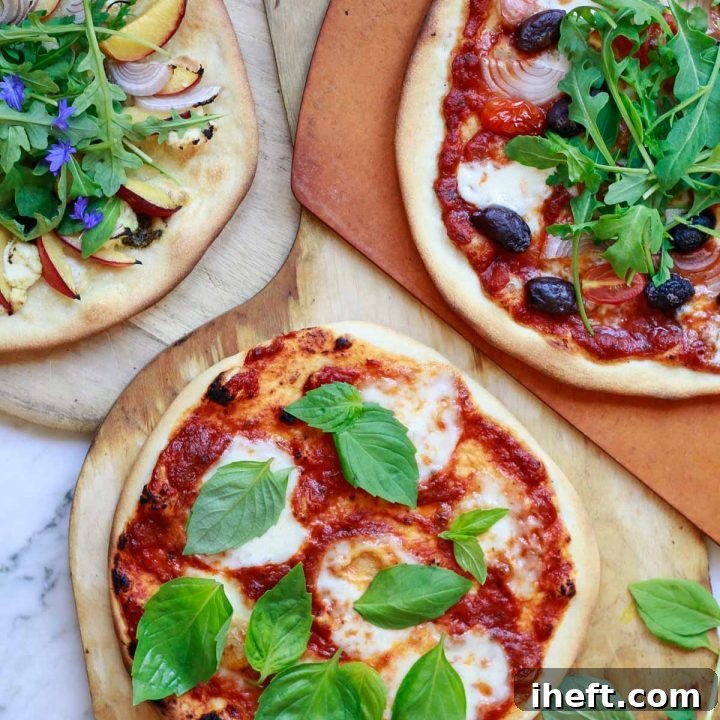
Discover how to make the BEST homemade pizza dough. This classic Italian pizza dough recipe yields a perfect, versatile crust that’s crispy on the bottom and tender inside, ideal for thin-crust New York style or vegan pizzas.
Ingredients
- 1 cup warm water (105-115°F / 40-46°C)
- 1 packet (2 1/4 teaspoons) active dry yeast
- 1 teaspoon granulated sugar
- 3 cups all-purpose or bread flour (plus more for dusting)
- 1 teaspoon sea salt
- 1 teaspoon extra virgin olive oil (plus more for bowl)
Instructions
- In a small bowl, whisk together the warm water, active dry yeast, and sugar. Let it sit for 10 minutes to proof. The mixture should become foamy and bubbly, indicating the yeast is active. If it doesn’t foam, discard and start again with fresh yeast.
- Meanwhile, in the bowl of a food processor or a stand mixer fitted with a dough hook attachment, combine the flour and sea salt.
- Pour the proofed yeast mixture into the flour. If using a food processor, pulse until the dough comes together in a ball. If using a stand mixer, mix on low speed, then increase to medium until the dough forms a cohesive ball (about 3-5 minutes). Scrape down the sides of the bowl as needed. If the dough is too dry, add water one tablespoon at a time; if too wet, add flour one tablespoon at a time, until the dough is soft and slightly tacky, but not overly sticky.
- Remove the dough from the mixer/food processor and place it on a lightly floured surface. Knead the dough for 5-7 minutes until it is smooth, elastic, and springs back when lightly poked.
- Lightly coat a large glass bowl with the extra virgin olive oil. Place the kneaded dough in the bowl, turning to coat all sides. Cover the bowl with a damp kitchen towel or plastic wrap and let it rise in a warm, draft-free place for 1 hour, or until doubled in size.
- While the dough is rising, preheat your oven with a pizza stone or steel in the middle rack to its highest possible temperature (usually 500-550°F / 260-290°C). Allow it to preheat for at least 1 hour to ensure the stone is thoroughly heated.
- Once doubled in size, gently punch down the dough to release the air. Transfer it to a lightly floured surface and divide it into 4 equal pieces for individual pizzas, or 2 for larger ones.
- Gently shape each piece of dough into a smooth ball by tucking the edges underneath. Cover the dough balls with the damp towel and let them rest for another 15-20 minutes. This allows the gluten to relax, making shaping easier.
- The dough is now ready for shaping. On a lightly floured surface, use your fingers and/or a rolling pin to stretch or roll each ball into a circular disk of your desired thickness. For a very thin and crispy crust, roll as thinly as possible. For a chewier crust, leave it about 1/2-inch thick, always leaving a slightly thicker 1-inch border around the edge for a good crust.
- Carefully transfer the shaped dough to a generously floured pizza peel (or onto a piece of parchment paper on the peel for easier transfer). Quickly add your favorite toppings, such as classic tomato sauce or pesto, vegetables, and cheese. Avoid overloading the pizza.
- Using the pizza peel, carefully slide the pizza onto the preheated pizza stone in the oven. If using parchment paper, slide the pizza with the parchment directly onto the stone.
- Bake for 8-15 minutes, or until the crust is golden brown, crisp, and the cheese is bubbly and slightly charred in spots. Baking time will vary depending on your oven’s temperature and your desired crispness. Carefully remove the pizza with the peel, slice, and serve immediately.
Notes
If you don’t have a food processor or a stand mixer with a dough hook, you can still make this delicious dough by hand. Follow the same steps in a large bowl, mixing with a sturdy wooden spoon until a shaggy dough forms, then turn it out onto a lightly floured surface and knead by hand for 8-10 minutes until smooth and elastic. This method takes a bit longer but is equally effective.
Transferring raw pizza to a hot oven stone can be a bit challenging. To simplify, make your pizza directly on a piece of parchment paper, trimming any excess. You can then slide the parchment and pizza together onto the hot stone. This prevents sticking and makes the transfer seamless. Another trick is to pre-bake the crust with just the sauce for 2-3 minutes, then add your cheese and other toppings before returning it to the oven. This helps ensure a crispier crust and reduces the risk of toppings making the dough soggy during the initial transfer. Using fewer, lighter toppings also aids in easier transfer.
Recommended Products
As an Amazon Associate and member of other affiliate programs, I earn from qualifying purchases.
- UNICOOK Heavy Duty Ceramic Pizza Grilling Stone, Baking Stone, Pizza Pan, Perfect for Oven, BBQ and Grill, Thermal Shock Resistant, Durable and Safe, 15×12 Inch Rectangular, 6.6Lbs
- Red Star Active Dry Yeast, 0.75 oz, 3 ct, 3 pk
- Molino Grassi USDA Organic Italian Soft Wheat Flour, 2.2 lbs (Pack of 2)
- Kitchen Supply 14-Inch x 16-Inch Aluminum Pizza Peel with Wood Handle
Nutrition Information:
Yield: 4
Serving Size: 1
Amount Per Serving:
Calories: 361Total Fat: 2gSaturated Fat: 0gTrans Fat: 0gUnsaturated Fat: 1gCholesterol: 0mgSodium: 534mgCarbohydrates: 73gFiber: 3gSugar: 1gProtein: 10g
Nutrition information is automatically calculated by Nutritionix. I am not a nutritionist and cannot guarantee accuracy. If your health depends on nutrition information, please calculate again with your favorite calculator.