Vintage Tea-Dyed Easter Eggs
Embrace Nature’s Palette: How to Dye Easter Eggs Naturally with Tea, Spices, and Veggies
There’s a special kind of joy that comes with preparing for Easter, and for our family, that often revolves around the timeless tradition of dyeing eggs. Just yesterday, as my daughters and I noticed our egg basket overflowing from our happy hens, a spontaneous decision was made: it was time to transform those humble eggs into vibrant, naturally colored masterpieces. Instead of a hurried trip to the grocery store for artificial dyes, we embarked on a delightful pantry raid, searching for nature’s own pigments.
While bright, neon Easter eggs certainly have their charm, there’s an undeniable beauty in the softer, more organic hues achieved through natural dyes. This year, we were particularly drawn to the rustic elegance and unique character that natural methods impart. The process itself became an exciting adventure, a delightful experiment where each dip promised a surprise. We had no idea what beautiful shades each tea, spice, or vegetable brew would bestow upon our eggs, making every reveal a moment of pure wonder and anticipation.
Why Choose Natural Egg Dyes?
Opting for natural dyes is more than just a creative choice; it’s a step towards a more sustainable and wholesome Easter celebration. Here’s why going natural is a fantastic idea:
- Eco-Friendly and Sustainable: By using ingredients from your pantry or garden, you reduce reliance on synthetic chemicals and single-use plastic dye kits, making your Easter traditions greener.
- Kid-Safe and Non-Toxic: When using edible ingredients like tea, coffee, fruits, and vegetables, you eliminate concerns about harsh chemicals, making the activity safer for little hands (and mouths, should an accidental taste occur!).
- Unique and Rustic Aesthetics: Natural dyes produce eggs with earthy, muted, and beautifully varied tones that synthetic dyes simply can’t replicate. Each egg becomes a unique piece of art, often resembling antique ceramics or nature’s own palette.
- Educational Fun: It’s a fantastic science lesson for children, demonstrating how colors are extracted from plants and how pH levels (with the addition of vinegar) can influence the final shade.
- Pantry Raid Adventure: It encourages creativity and resourcefulness, turning everyday kitchen staples into magical colorants.
Gathering Your Natural Dye Arsenal
The beauty of natural dyeing lies in its simplicity and accessibility. You likely have many of these powerful colorants already in your kitchen!
Teas for Timeless Hues
- Black Tea: Brewed strongly, black tea yields beautiful sepia tones, rich browns, and antique golds. The longer the soak, the deeper the hue.
- Green Tea: While often subtle, strong green tea can impart light yellow-green shades or a faint, warm beige. It’s often best combined with other dyes for more noticeable effects.
- Hibiscus Tea: This vibrant herbal tea is a showstopper. It can produce stunning shades ranging from bright pink to lavender, and even a unique grey-blue, depending on the pH of the water and the egg shell. Our girls’ favorite, Republic of Tea Hibiscus, consistently delivers delightful results.
Spices for Golden Glows and Earthy Tones
- Turmeric Powder: Our absolute favorite for its astonishing vibrancy! Just a couple of tablespoons of turmeric simmered in water creates a brilliant, sunny yellow that’s impossible to resist.
- Paprika: Can lend subtle orange or reddish-brown tints.
- Cumin: Often provides a yellowish-brown hue.
Fruits and Vegetables for a Rainbow of Colors
- Red Cabbage: The undisputed champion for blues and greens! Chopped red cabbage simmered in water produces an incredible blue dye. The addition of vinegar can shift it towards purple or even green. It’s truly magical to watch.
- Beets: Fresh beets, chopped and simmered, are perfect for achieving lovely shades of pink and deep reddish-purple.
- Onion Skins: Yellow and red onion skins, simmered, can create a spectrum from golden yellow to rustic orange and reddish-brown.
- Coffee: Brewed very strongly, coffee produces a range of beautiful chocolate browns, from light mocha to deep espresso. We loved the rich, warm color it gave our brown eggs.
- Red Wine: Yes, a splash of red wine can yield gorgeous purple and deep burgundy shades.
- Blueberries (frozen): Crushed and steeped, blueberries can create a lovely blue-purple.
- Spinach: While not as strong, spinach can give very subtle light green hues.
The Art of Egg Dyeing: A Step-by-Step Guide
Preparing naturally dyed Easter eggs is a rewarding activity that can easily become a cherished family tradition. You can even make it a “tea party” event, as we sometimes do, complete with caffeine-free pink tea for the little ones! (I’ll share that biscotti recipe another time!).
Ingredients You’ll Need:
- 6-12 hard-boiled eggs (white or brown)
- 1 tablespoon white vinegar per color of dye
- Approximately 1-2 cups of water per color
- Your chosen natural coloring agents:
- Very strong black, green, or hibiscus tea (2-4 bags per cup of water)
- Very strong brewed coffee (or instant coffee dissolved for a rich brew)
- 2-4 tablespoons dried turmeric for brilliant yellow
- 1-2 cups raw, chopped beets, simmered in water for pink/red
- 1/2 head raw red cabbage, chopped and simmered in water for blue/purple
- Skins from 6-8 yellow or red onions for orange/brown
- Other options: Frozen blueberries, spinach, red wine, etc.
- Pots or saucepans for simmering dyes
- Heat-safe bowls or jars for the dye baths
- Slotted spoon or tongs for handling eggs
- Rack for drying eggs (optional)
Step-by-Step Instructions:
1. Prepare Your Hard-Boiled Eggs
Start with perfectly hard-boiled eggs. For best results, place eggs in a single layer in a saucepan and cover with about an inch of cold water. Bring to a rolling boil, then immediately turn off the heat, cover, and let sit for 10-12 minutes. Transfer eggs to an ice bath to cool completely. This prevents the yolks from turning green and makes them easier to handle. Gently wash and dry your cooled eggs.
Tip: Brown eggs from our chickens yield deeper, more rustic tones, while white eggs provide a brighter canvas for the dyes. Both work beautifully!
2. Create Your Natural Dye Baths
Concentration is key for vibrant colors. For each color:
- For Teas: Place 2-4 tea bags in 1-2 cups of water. Simmer gently for 15-20 minutes, or microwave until the water is very darkly colored. Let steep until completely cool and intensely pigmented. Remove tea bags.
- For Coffee: Brew a very strong cup of coffee. If using instant, dissolve several tablespoons in 1-2 cups of hot water until the mixture is deeply concentrated. Let cool.
- For Spices (Turmeric): In a small saucepan, combine 2-4 tablespoons of turmeric powder with 1-2 cups of water. Simmer for 10-15 minutes, stirring occasionally, until the powder is fully dissolved and the liquid is a rich, vibrant yellow. Strain through a fine-mesh sieve if you prefer a perfectly clear dye, though the flecks can add character. Let cool.
- For Vegetables (Beets, Red Cabbage, Onion Skins): Chop your chosen vegetable into small pieces. Place in a saucepan with 2 cups of water. Bring to a boil, then reduce heat and simmer for 20-30 minutes, or until the liquid has reached a deep, rich color. Strain the liquid, pressing the solids to extract all the color. Let cool completely.
Once your dye liquids are prepared and cooled, pour each into a separate heat-safe bowl or jar. For each dye bath, stir in 1 tablespoon of white vinegar. The vinegar helps the color adhere to the eggshell, acting as a mordant.
3. Dyeing the Eggs
Carefully place your hard-boiled eggs into the dye baths, ensuring they are fully submerged. For deeper, more saturated colors, you’ll need to let them soak longer. Refrigerate the bowls of dye with the eggs to ensure food safety if soaking for extended periods. We typically left ours in for at least 2 hours, and often overnight for the most intense hues.
Experimentation is key! Check your eggs periodically to monitor their progress. You can remove them at any point when they’ve reached your desired shade.
4. Drying and Finishing Touches
Once the eggs have achieved their desired color, carefully remove them from the dye baths using a slotted spoon or tongs. Place them on a wire rack with paper towels underneath to air dry completely. For a beautiful, subtle sheen, gently rub a tiny bit of vegetable oil or coconut oil onto the dried eggs with a paper towel.
Our Family’s Dyeing Adventure & Surprising Results
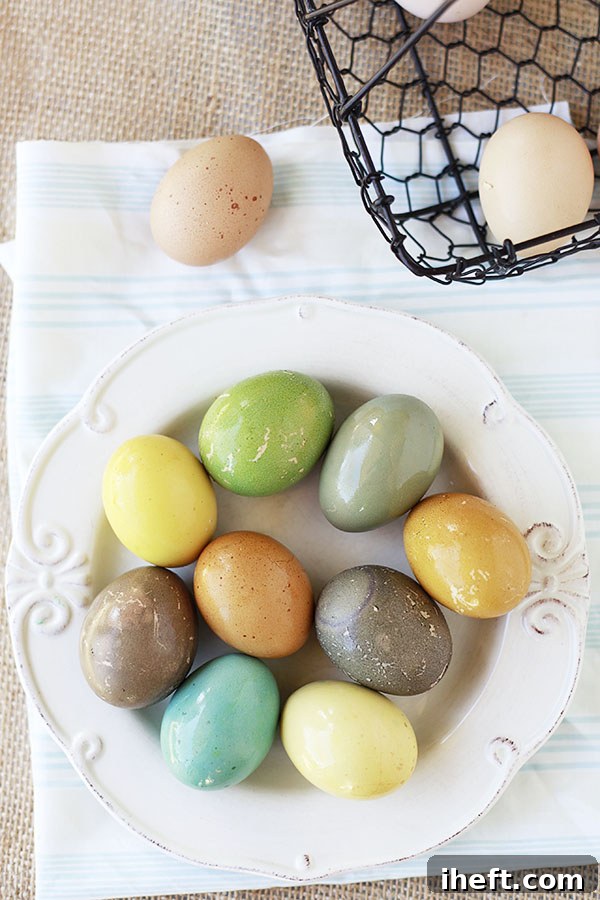
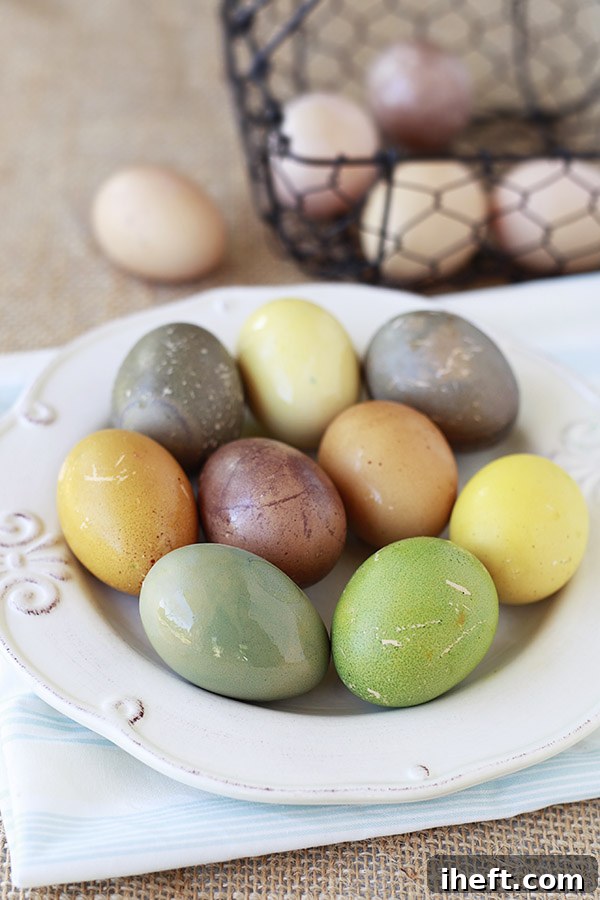
Our recent egg dyeing session was filled with delightful surprises and a few valuable lessons. As mentioned, our egg basket was overflowing with beautiful brown eggs from our hens, so we opted to dye those rather than store-bought white ones. This meant our colors would be a bit deeper and more muted, which we actually preferred for that rustic, natural look.
Among our experiments:
- Turmeric: This was our absolute favorite! It produced the most radiant, sunny yellow eggs. The color was consistently bright and cheerful, a true winner for adding a pop of warmth to our Easter display.
- Coffee: Brewing a very strong cup of coffee yielded lovely chocolate-colored eggs. The depth varied from a light mocha to a rich, dark brown, creating an elegant, sophisticated feel.
- Pink Hibiscus Tea: This one was the most intriguing! While we expected a vibrant pink, our hibiscus tea bath, steeped from Republic of Tea’s hibiscus blend, ended up making a range of beautiful grey-blue eggs. It’s a fascinating example of how natural dyes react to different variables, often yielding unexpected, yet stunning, results.
- Green Tea: We found the green tea to be less impressive on its own, producing only a very faint yellow-green tint that was barely noticeable on our brown eggs. The vibrant green egg pictured in our collection was actually the result of a creative double-dip – first in a turmeric bath for yellow, followed by a quick dip in the blue dye created from red cabbage (which we initially struggled with, leading to a brief “cheat” with a few drops of blue food coloring in a cup of water, but quickly reverted to natural methods for true blue success). This experience underscored the importance of concentration and experimentation with natural ingredients.
The trick, we discovered, to achieving truly deep and satisfying colors with natural dyes, is to create a very dark and concentrated dye solution. This means either simmering your chosen ingredients down to reduce the water content, or simply using a higher ratio of coloring agent (tea, coffee, turmeric, etc.) to water. Patience is also a virtue; longer soaking times almost always result in more intense hues.
Troubleshooting & Tips for Natural Egg Dyeing
- For Richer Colors: If your colors are too pale, try simmering your dye solution for longer to concentrate it further, or increase the amount of the coloring agent. Pre-soaking your hard-boiled eggs in a bowl of plain white vinegar for 10-15 minutes before dyeing can also help the color adhere better.
- Embrace Imperfection: Natural dyes rarely produce perfectly uniform, solid colors like synthetic ones. Part of their charm is the subtle variations, mottling, and earthy tones. Embrace these unique characteristics!
- Storage: Always keep your naturally dyed eggs refrigerated, especially if they’ve been soaking for a long time. They are still food, and proper storage is essential.
- Clean-up: While natural, some dyes (like turmeric) can stain hands and surfaces. Wear gloves and protect your workspace if you’re concerned.
- Creative Patterns: Before dyeing, try wrapping leaves or flowers around your eggs and securing them with a piece of old nylon stocking for beautiful botanical imprints. You can also use rubber bands for striped patterns or wax crayons for drawing designs that resist the dye.
Beyond Easter: Creative Uses for Naturally Dyed Eggs
Once Easter is over, don’t let those beautifully dyed eggs go to waste! If you’ve used food-safe natural dyes, they are perfectly edible and can be used in a variety of delicious ways:
- Egg Salad or Deviled Eggs: The colored whites can make for a visually stunning egg salad or deviled eggs.
- Spring Salads: Halved or quartered, they add a festive touch to any green salad.
- Table Decor: Keep them in a basket as a beautiful spring centerpiece for your dining table.
- Nature-Inspired Crafts: Once empty and cleaned, the shells can be used for mosaic crafts or other artistic projects.
Conclusion
Dyeing Easter eggs naturally is a deeply satisfying and creative endeavor. It’s an opportunity to slow down, connect with nature’s bounty, and create something truly unique and beautiful with your family. The surprise of each color, the educational aspect for the kids, and the sheer joy of transforming simple eggs into works of art make this tradition truly special.
We encourage you to raid your pantry, gather your natural ingredients, and embark on your own colorful journey this Easter. For even more natural color ideas and inspiration, you can always check out resources like Better Homes & Gardens, but remember, the most exciting part is the experimentation you do right in your own kitchen!