Peppery Garlic Spaghetti
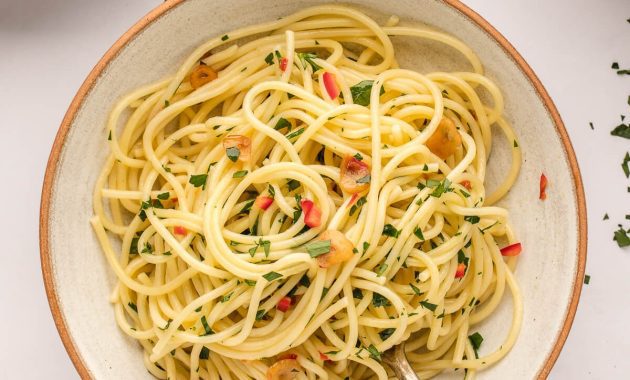
Experience the true taste of Italy with Spaghetti Aglio Olio e Peperoncino, an iconic Neapolitan pasta dish that masterfully combines simplicity with profound flavor. Learn how to create this authentic culinary delight in under 15 minutes, bringing the vibrant essence of Italian cooking directly to your kitchen.
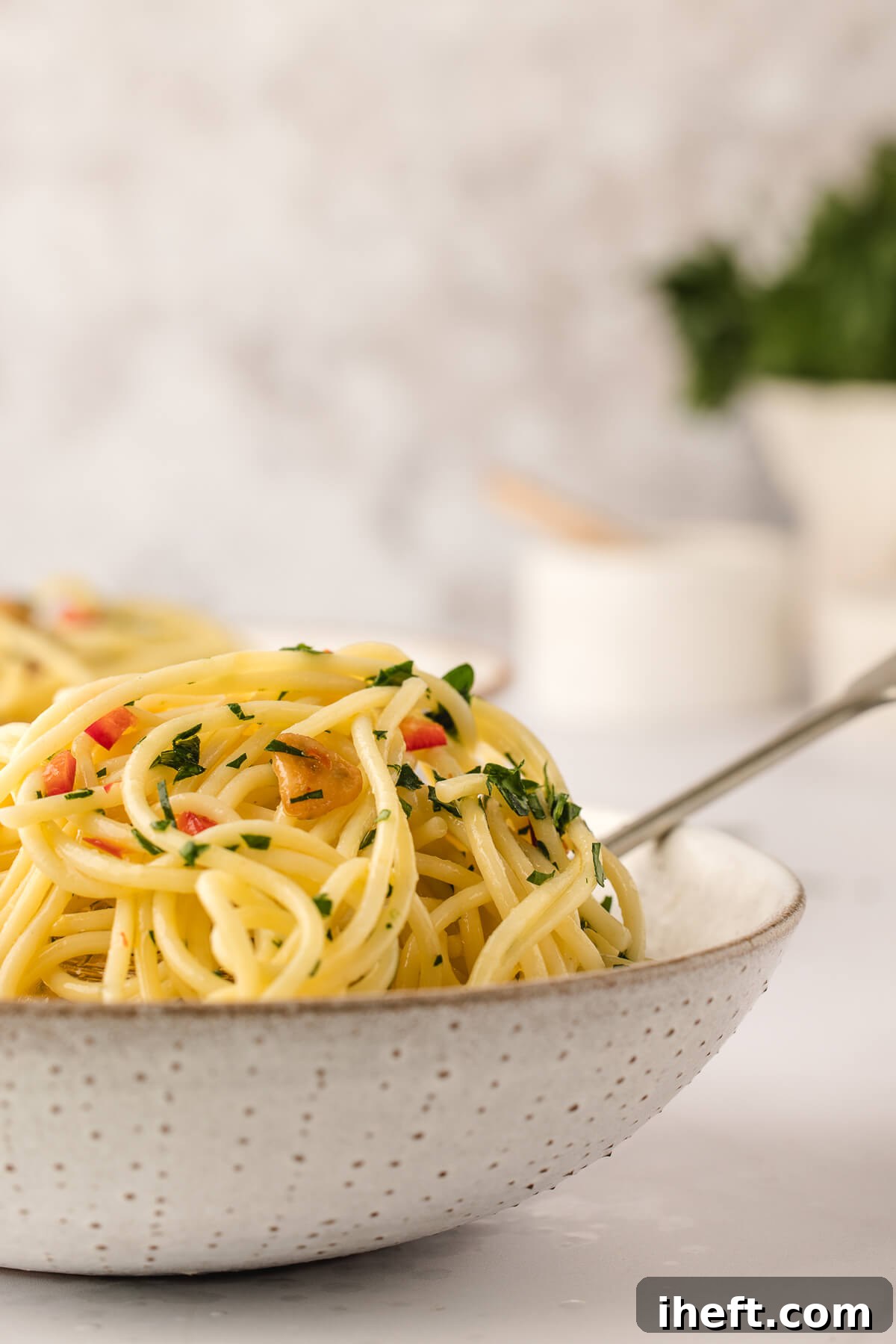
Spaghetti Aglio Olio e Peperoncino: The Essence of Neapolitan Simplicity
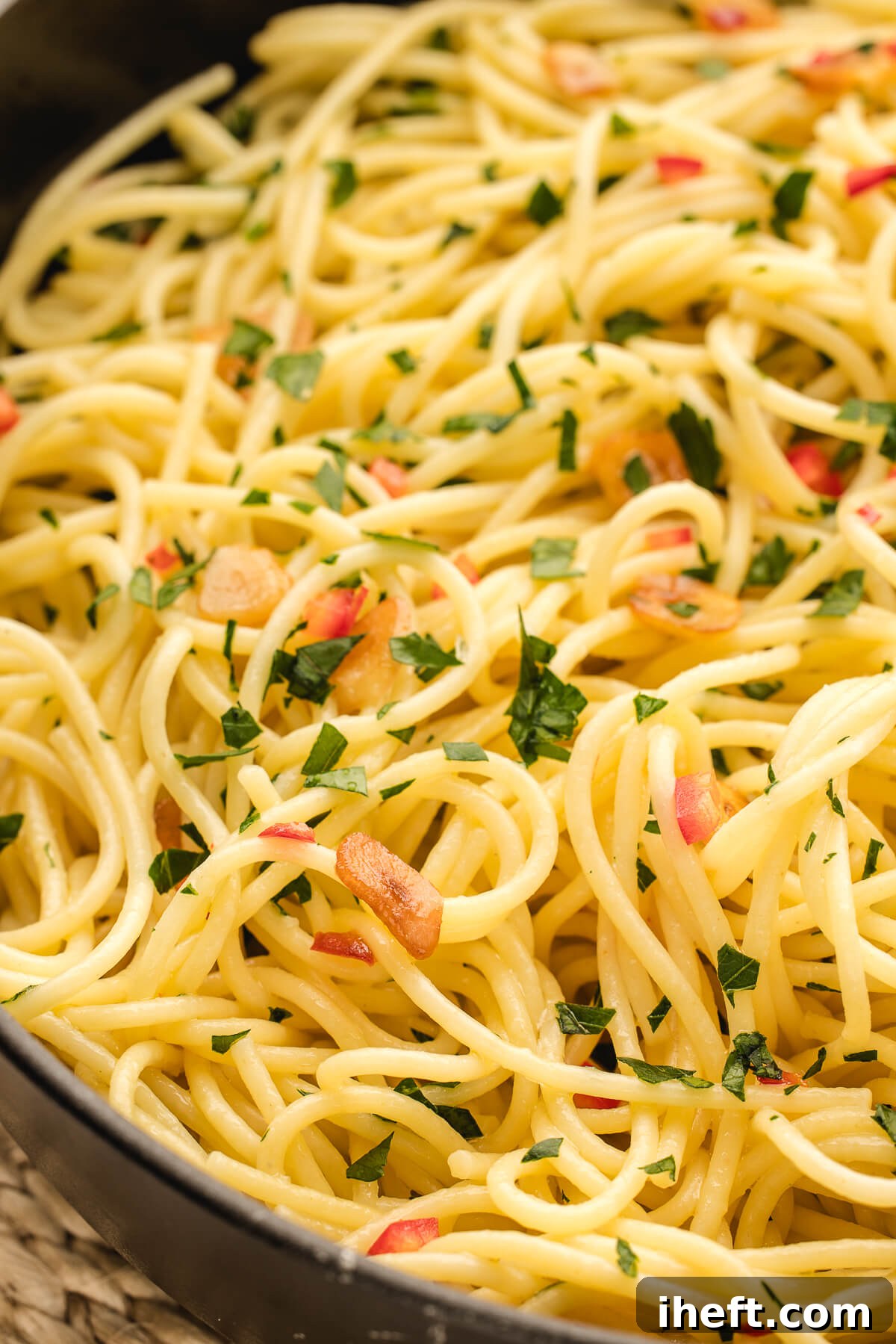
Hailing from the sun-drenched region of Naples, Spaghetti Aglio Olio e Peperoncino stands as a testament to the Italian philosophy of “cucina povera” – humble cooking that transforms a few inexpensive, high-quality ingredients into an extraordinary culinary experience. This isn’t just a pasta dish; it’s a celebration of flavor born from the harmonious pairing of pungent garlic, fruity extra virgin olive oil, and a subtle kick of chili. Often gracing tables as a Primi, or first course, it sets the stage for a delightful meal, embodying the very heart of Neapolitan tradition, much like the revered San Marzano Tomatoes, classic Pizza Dough, and rich Marinara Sauce. Its widespread popularity isn’t just due to its incredible taste, but also its remarkable ease of preparation, allowing you to whip up a truly authentic Italian meal in a mere 15 minutes.
This timeless dish proves that culinary excellence doesn’t require an extensive list of ingredients or complicated techniques. Instead, it relies on the purity and quality of its components, allowing each element to shine. Whether you’re a seasoned chef or a novice in the kitchen, mastering Spaghetti Aglio Olio e Peperoncino is a rewarding journey into the soul of Italian comfort food.
Decoding Aglio e Olio: Translation and Terminology
The name itself, “Spaghetti Aglio e Olio,” offers a direct insight into the dish’s fundamental components, translating simply to “spaghetti with garlic and oil.” The addition of “Peperoncino” introduces an optional, yet highly cherished, element: hot chili peppers. In Italian culinary lexicon, peperoncino is the generic term for these fiery little peppers, providing a delightful warmth that elevates the dish beyond its foundational garlic and oil. While some classic versions may omit the peperoncino, its inclusion is a popular choice, particularly in Southern Italy, adding a layer of exciting complexity and a gentle heat that tantalizes the palate.
Understanding these basic terms is key to appreciating the simplicity and genius behind this beloved pasta. It highlights how straightforward ingredients, expertly combined, can create a profoundly satisfying meal.
Essential Ingredients for Authentic Spaghetti Aglio Olio e Peperoncino
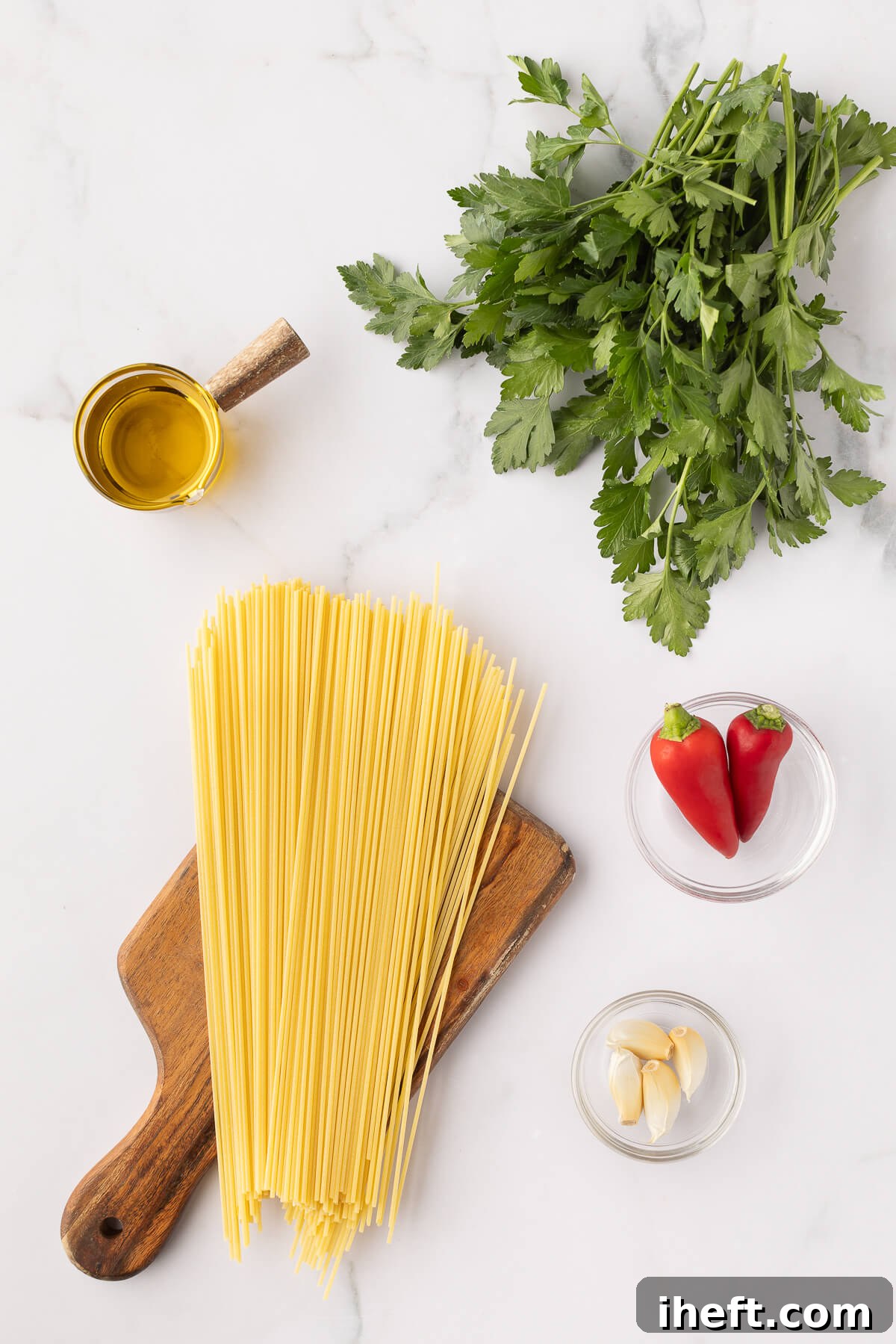
The magic of Spaghetti Aglio Olio e Peperoncino lies in its minimalist ingredient list, making the quality of each component paramount. When so few elements contribute to the final flavor, each one must be exceptional. The “sauce” for this dish is a sublime emulsion of just olive oil and starchy pasta water, meaning that choosing superior ingredients isn’t just a recommendation, it’s a necessity for truly making the dish sing.
- Dry Spaghetti: The backbone of this classic dish, providing a firm, satisfying texture known as “al dente.” While fresh pasta has its place, dry spaghetti offers the perfect bite and starch content crucial for emulsifying the sauce. Opt for a high-quality brand made from durum wheat for the best results. For dietary needs, gluten-free pasta can be an excellent substitute without compromising much on the dish’s integrity.
- Extra Virgin Olive Oil: This isn’t just any oil; it’s the liquid gold that forms the soul of Aglio Olio. Choose a high-quality, cold-pressed Italian extra virgin olive oil for its robust, fruity, and slightly peppery notes. Its distinctive flavor is what truly binds all the elements together, infusing the entire dish with an authentic Mediterranean essence.
- Garlic: The star of the show, garlic adds an indispensable aromatic punch. We recommend using a generous amount of fresh garlic, sliced rather than minced. Slicing prevents it from burning too quickly and allows for a more gradual infusion of its pungent, sweet flavor into the olive oil. The quantity can be adjusted to your preference – from a subtle hint to a bold, garlicky explosion.
- Peperoncino: This is where the dish gets its delightful warmth and a hint of excitement. Peperoncino introduces a subtle, yet invigorating, heat that elevates the entire flavor profile. The amount used is entirely up to your personal spice tolerance, allowing for a customized experience from a gentle warmth to a fiery kick.
- Fresh Parsley: More than just a garnish, finely chopped fresh Italian parsley brings a vibrant burst of color and a crucial element of freshness. Its herbaceous notes provide a beautiful counterpoint to the richness of the olive oil and the intensity of the garlic, brightening the overall taste.
- Sea Salt: Essential for seasoning, salt enhances and balances all the other flavors. Use sea salt, preferably Italian, to season the pasta water generously and to adjust the final dish to your taste.
- Reserved Pasta Water: Often overlooked as an ingredient, the starchy water from cooking the spaghetti is critical. It acts as the emulsifier, transforming the olive oil and garlic infusion into a light, glossy, and cohesive sauce that clings beautifully to the pasta.
Understanding Peperoncino: The Spicy Heart of the Dish
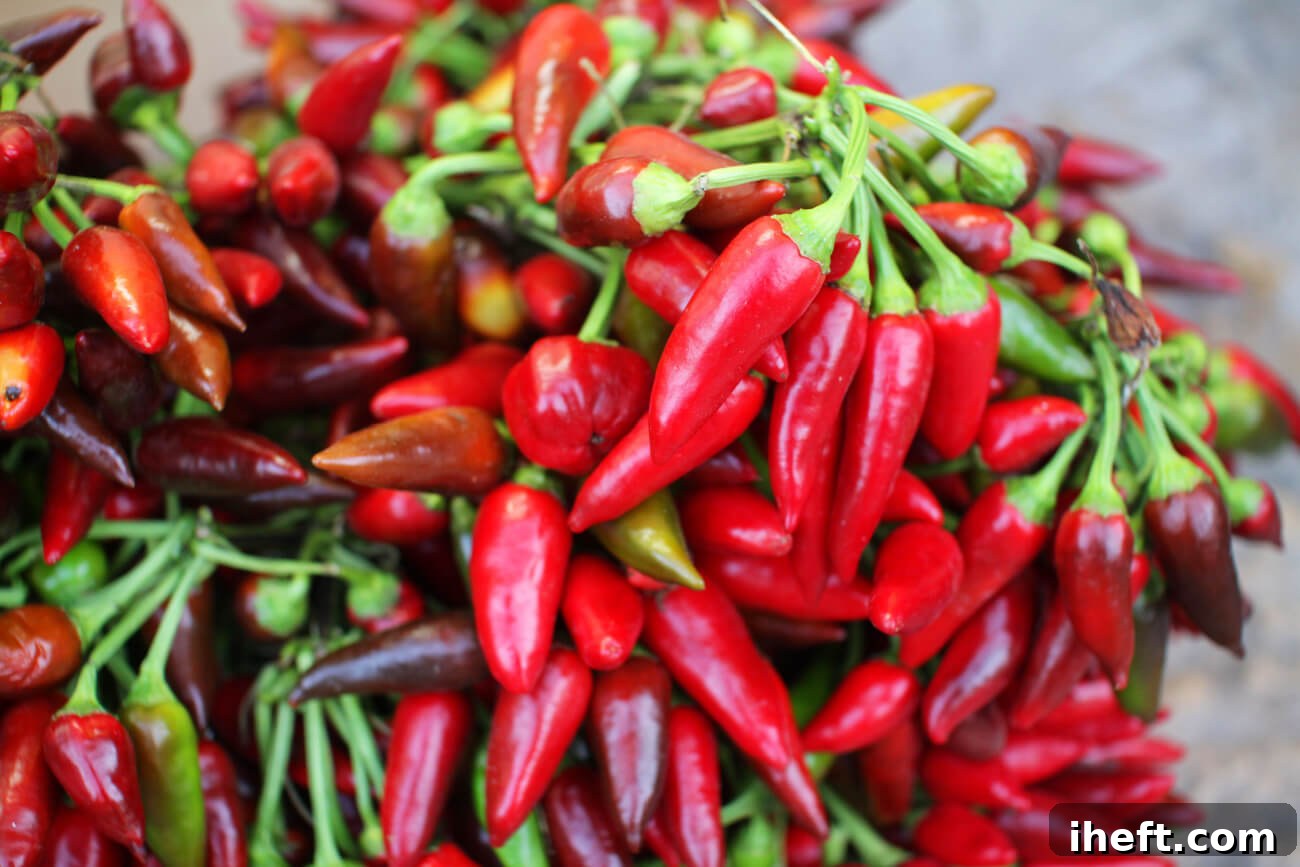
Before embarking on your Aglio Olio e Peperoncino journey, it’s vital to clarify what Italian peperoncino truly is and why it’s distinct from other chili peppers you might encounter. In Italy, peperoncino refers specifically to hot chili peppers, a staple in Southern Italian cuisine, particularly in the region of Calabria. It’s the secret ingredient that injects a lively kick of spice, transforming a simple garlic and olive oil pasta into something far more dynamic and memorable.
Crucially, Italian peperoncino should not be confused with “pepperoncini” (with two ‘p’s), which are typically mild, pickled green peppers often found in jars in North American supermarkets. These two are entirely different; Italian peperoncino brings a raw, vibrant heat, while jarred pepperoncini offer a tangy, pickled flavor. The authentic Italian peperoncino varieties, especially those from Calabria, are often small, bright red, and intensely flavorful, ranging from 2 to 3 inches in length. They are revered for their ability to add depth and warmth without overpowering the delicate flavors of other ingredients.
Can You Use Dried Peperoncino if Fresh Isn’t Available?
Absolutely! While fresh Italian peperoncino offers a vibrant, immediate heat, dried peperoncino is a perfectly acceptable and widely used alternative for your Spaghetti Aglio Olio e Peperoncino recipe. Dried chili peppers, whether whole or in flakes, provide a concentrated flavor that can infuse your dish with a delightful, sustained kick. The amount you use will depend on your personal spice preference, but starting cautiously is always a good practice.
- Dried Whole Peperoncino: If you have whole dried peperoncino, consider adding one or two to the olive oil and garlic mixture as you sauté. Allow the dried peppers to gently infuse their flavor into the oil over low heat alongside the garlic. This method extracts their essence beautifully, creating a deep, consistent warmth.
- Dried Red Pepper Flakes: Red pepper flakes are a convenient and widely available substitute. Simply sprinkle the desired amount directly into the olive oil and garlic mixture during the infusion process. Start with a small pinch (e.g., 1/2 to 1 teaspoon) and adjust according to your spice preference. Remember that dried flakes can be quite potent, so it’s always easier to add more later if needed rather than trying to mitigate excessive heat.
The intensity of spiciness can vary significantly between different types and amounts of dried peperoncino. Since dried peppers generally possess a more concentrated flavor than their fresh counterparts, it’s wise to taste the dish as you go and fine-tune the spice level accordingly. This flexibility ensures that your Aglio Olio e Peperoncino is perfectly tailored to your palate.
Crafting Your Aglio Olio: Step-by-Step Mastery
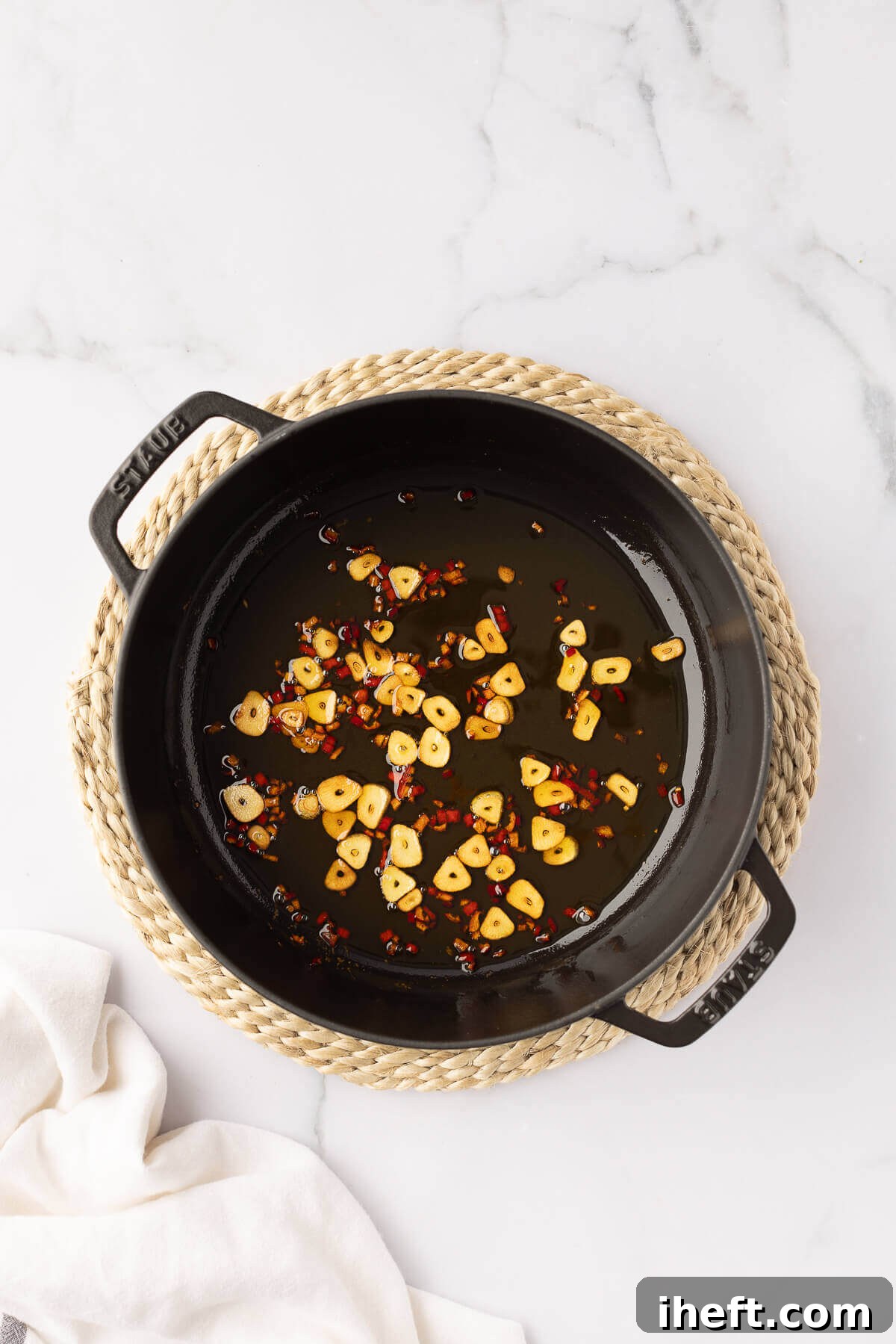
Creating this seemingly simple dish is an art form that requires attention to detail. Follow these steps to achieve a perfectly balanced and flavorful Spaghetti Aglio Olio e Peperoncino:
- Cook the Spaghetti to Al Dente: Begin by cooking your dry spaghetti according to the package instructions. The goal is “al dente” – firm to the bite, not mushy. This texture is crucial for the final dish. Before draining, make sure to reserve at least one cup of the starchy cooking water. This water is the secret ingredient for creating the rich, emulsified sauce.
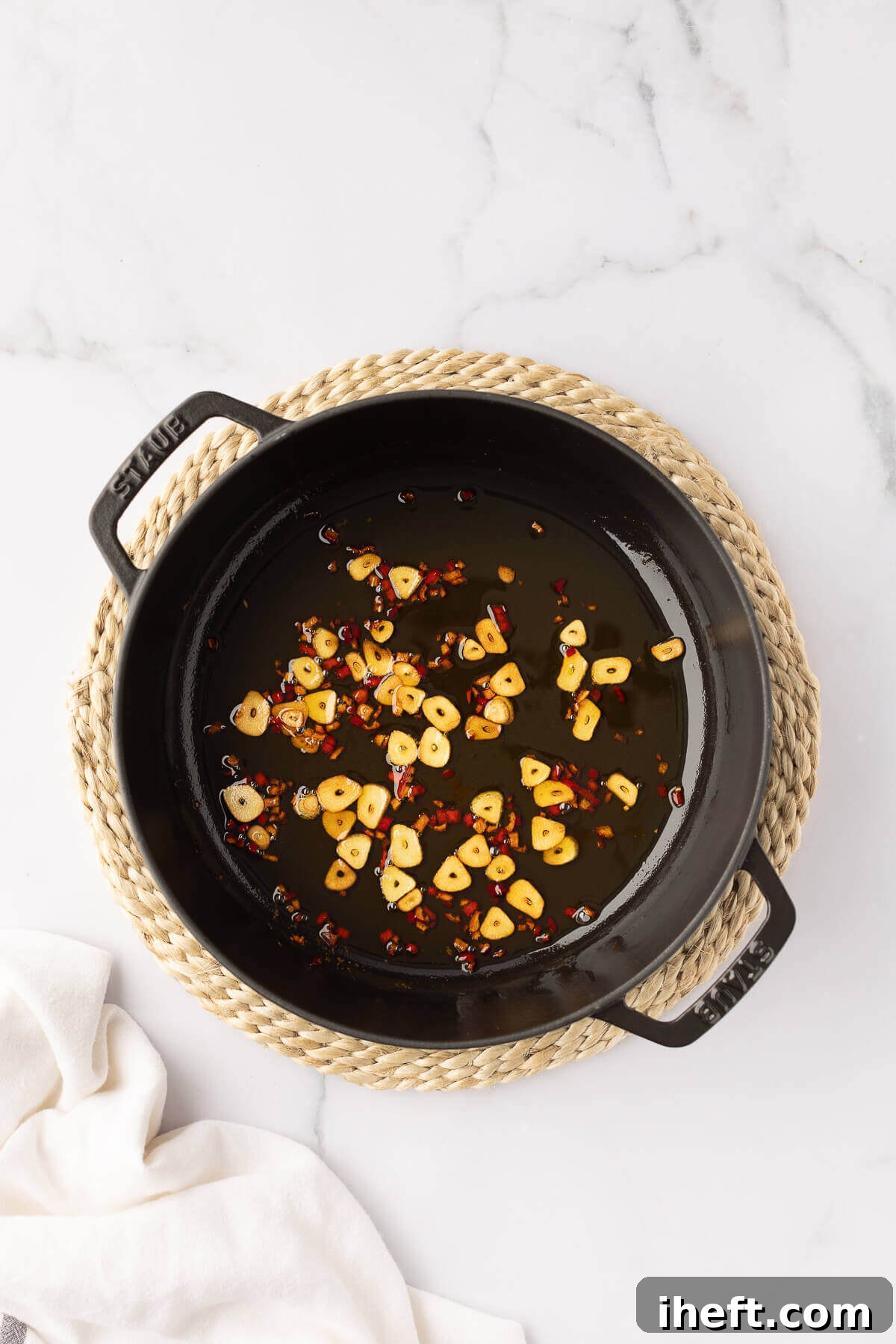
- Infuse the Olive Oil with Aromatics: In a large, heavy-bottomed pan or skillet (large enough to hold all the pasta later), pour your generous amount of extra virgin olive oil. Place the pan over very low heat. Add the thinly sliced garlic and the finely chopped peperoncino (or dried chili flakes/whole dried peperoncino). The key here is patience and low heat. You want the garlic to gently sizzle and slowly release its flavor into the oil, turning a pale golden color. Stir frequently to prevent any burning, as burnt garlic will impart a bitter taste to the entire dish. As soon as the garlic reaches that beautiful pale golden hue, remove the pan from the heat. This step is critical for developing the foundational flavor of your “sauce.”
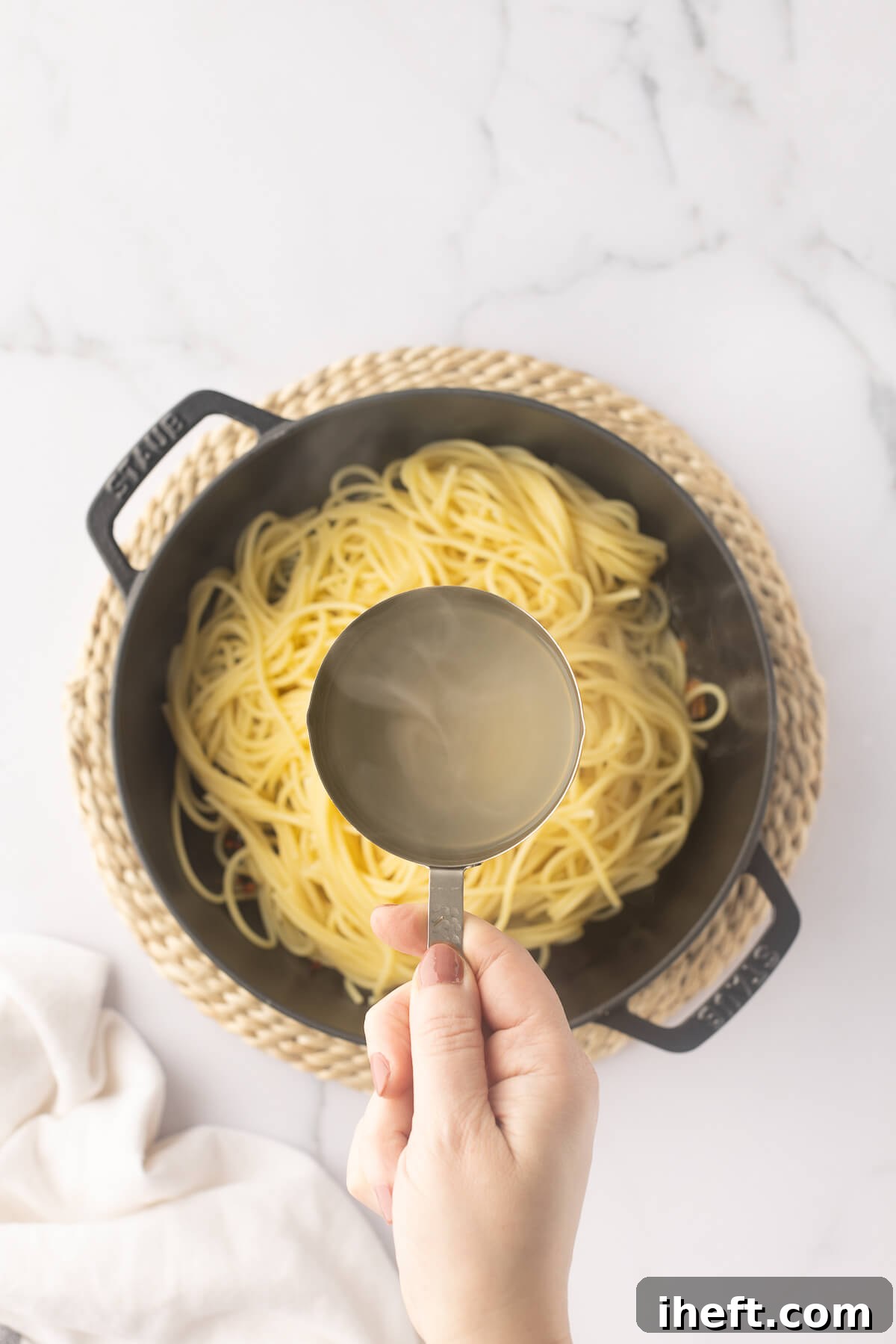
- Combine and Emulsify: Immediately add the cooked, drained spaghetti directly into the pan with the infused oil, garlic, and chili. Pour in about 1/2 cup of your reserved starchy pasta water. Using tongs, toss the spaghetti vigorously and continuously. The starch from the pasta water will combine with the olive oil to create a light, glossy, and flavorful emulsion that beautifully coats each strand of spaghetti. Assess the consistency; if the pasta seems too dry or the sauce isn’t sufficiently coating, add a little more pasta water, a tablespoon at a time, continuing to toss until you achieve the desired creamy texture.
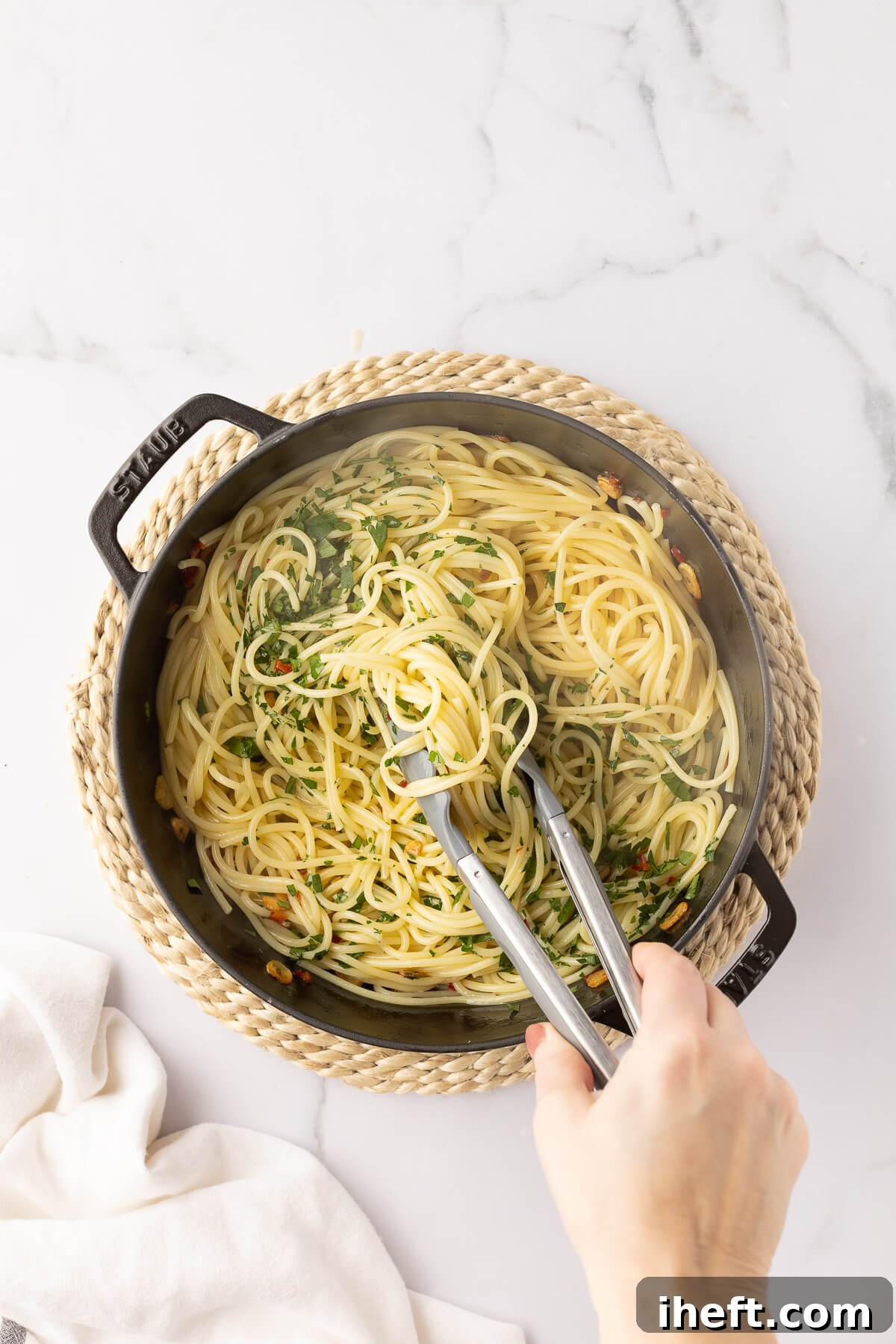
- Add the Finishing Touch: Once the pasta is perfectly coated, sprinkle in the finely chopped fresh parsley. Toss again to evenly distribute the vibrant green herbs, which add a crucial element of freshness and a burst of color. Taste the dish and adjust the seasoning with sea salt as needed. The flavors should be bright, garlicky, and subtly spicy.
- Serve and Savor: Transfer the Spaghetti Aglio Olio e Peperoncino to warm plates or bowls immediately. This dish is best enjoyed fresh, allowing you to fully appreciate its intoxicating aromas and delicate textures. Serve it hot and enjoy the simple pleasure of authentic Italian cooking.
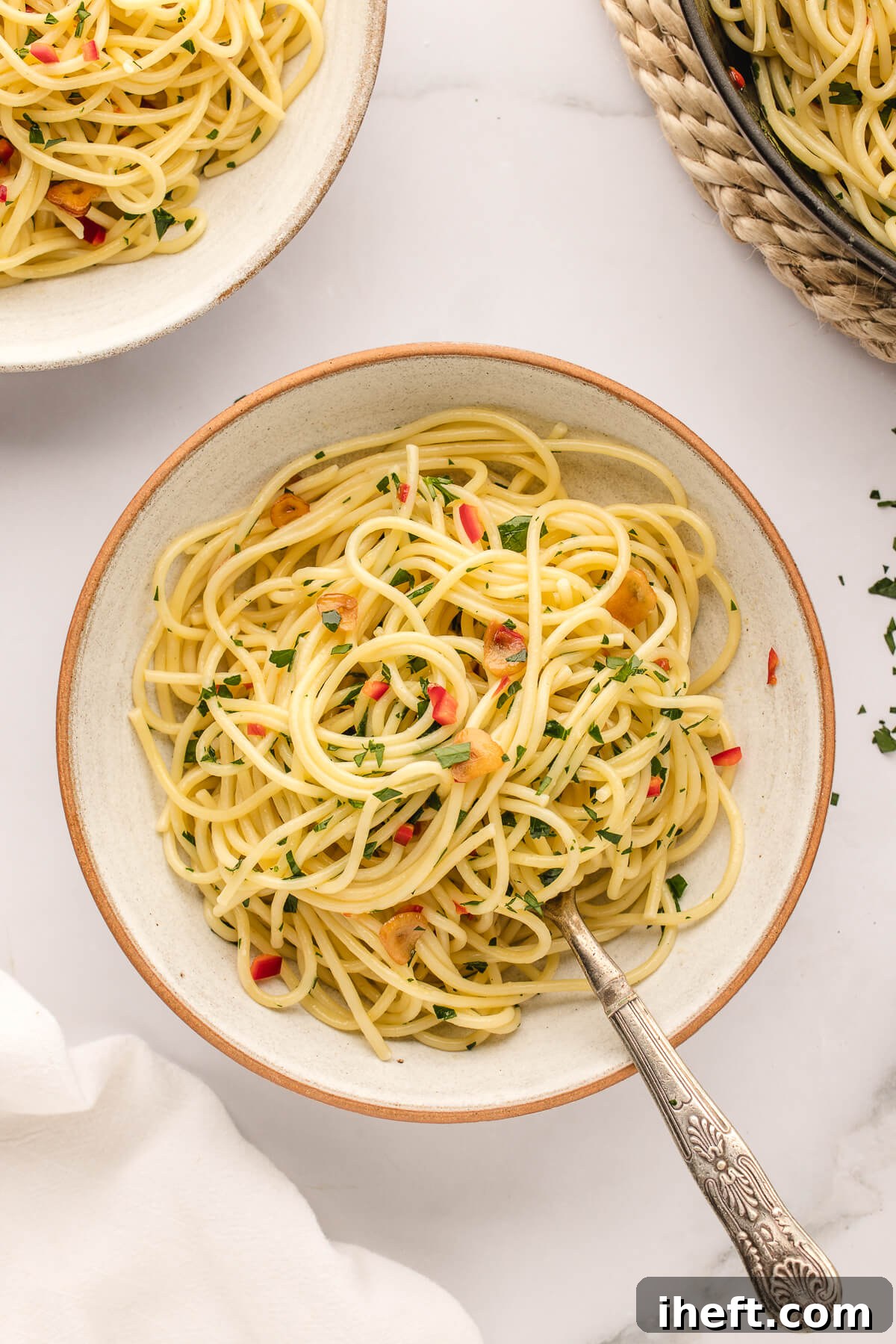
What to Serve Alongside Spaghetti Aglio Olio e Peperoncino: Completing Your Italian Feast
In Italy, Spaghetti Aglio Olio e Peperoncino is traditionally served as a Primi (first course), often before or alongside lighter main dishes. Its simple yet bold flavors make it incredibly versatile, pairing beautifully with a variety of accompaniments. Here are some delightful suggestions to complete your Italian dining experience:
- Crusty Italian Bread or Fettunta: A quintessential pairing! A good, crusty bread is perfect for soaking up every last drop of the delectable garlic-infused olive oil at the bottom of your bowl. Its textural contrast and neutral flavor perfectly complement the pasta.
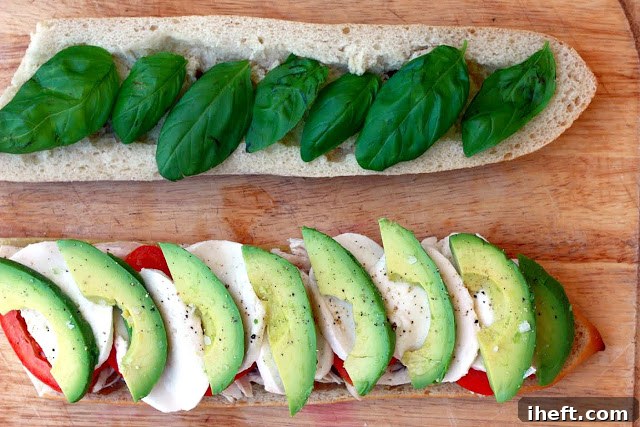
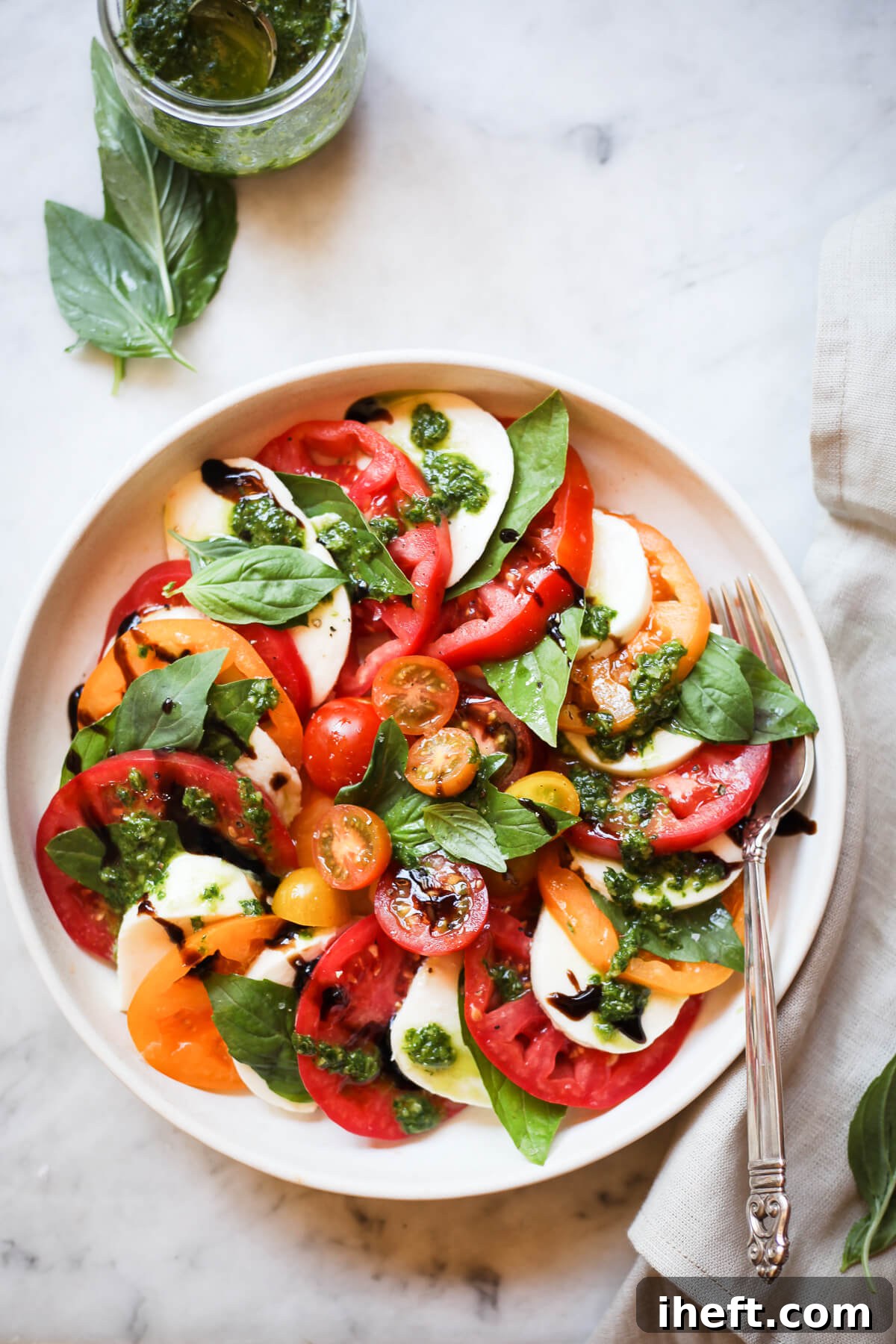
- Caprese Salad: The freshness of a Caprese salad — ripe tomatoes, creamy mozzarella, and fragrant basil, drizzled with balsamic glaze — offers a beautiful, light contrast to the robust flavors of the pasta. The vibrant colors also make it an appealing visual addition to your table.
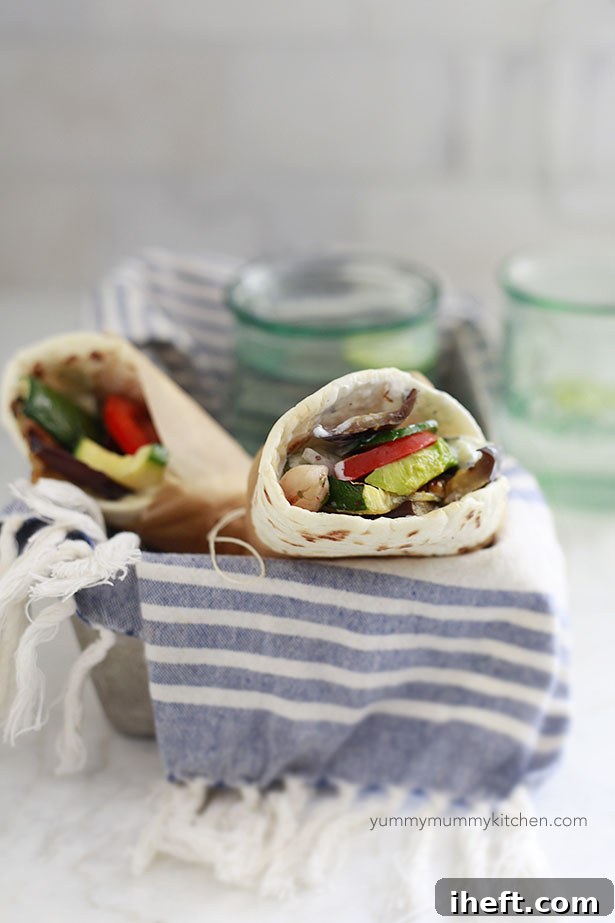
- Grilled Vegetables: A medley of grilled vegetables like zucchini, bell peppers, eggplant, or asparagus provides a wonderful smoky flavor and an additional layer of freshness. Lightly seasoned with herbs and a touch of olive oil, they offer a healthy and flavorful side.
- Antipasto Platter: For a more elaborate meal, an antipasto platter featuring an assortment of cured meats (prosciutto, salami), olives, marinated artichoke hearts, roasted red peppers, and aged cheeses offers variety and encourages shared enjoyment.
- Simple Green Salad: A crisp, refreshing green salad composed of arugula, spinach, or mixed greens dressed simply with a lemon vinaigrette or a light olive oil dressing acts as a palate cleanser, balancing the richness of the pasta.
- Light Seafood: The delicate flavors of seafood make an excellent companion. Consider grilled shrimp, sautéed mussels, or a flaky white fish like Branzino. The garlic and chili notes in the spaghetti beautifully enhance the natural sweetness of the seafood. For an exceptionally luxurious touch, some enthusiasts even add Uni (sea urchin) to their Aglio Olio, creating a rich and unique flavor profile. This also works well if you prefer a lower-carb option, serving a smaller portion of spaghetti with a more substantial seafood accompaniment.
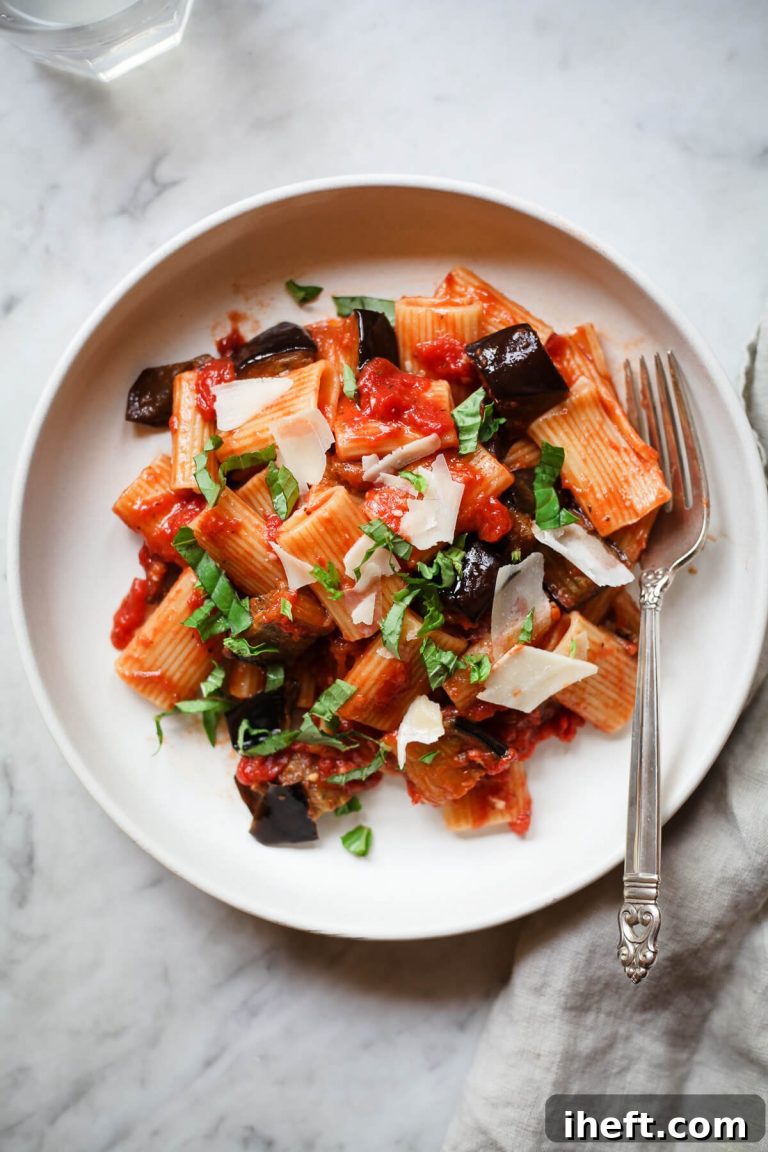
- Eggplant Parmesan: For a heartier vegetarian option, a classic Eggplant Parmesan, with its layers of tender eggplant, rich marinara sauce, and melted cheese, offers a comforting and satisfying complement to the pasta.
- Lemon Wedges: Always offer fresh lemon wedges on the side. A squeeze of fresh lemon juice over the finished dish can brighten the flavors and add a zesty, refreshing kick, enhancing the overall experience.
Wine Pairings
To truly elevate your meal, consider pairing your Aglio Olio e Peperoncino with the right wine. A crisp, chilled white wine is an excellent choice. Look for varietals like a light-bodied Vermentino, a vibrant Pinot Grigio, or a zesty Sauvignon Blanc. For those who prefer bubbles, a dry Prosecco offers a refreshing contrast that cuts through the richness of the olive oil and complements the spicy notes beautifully.
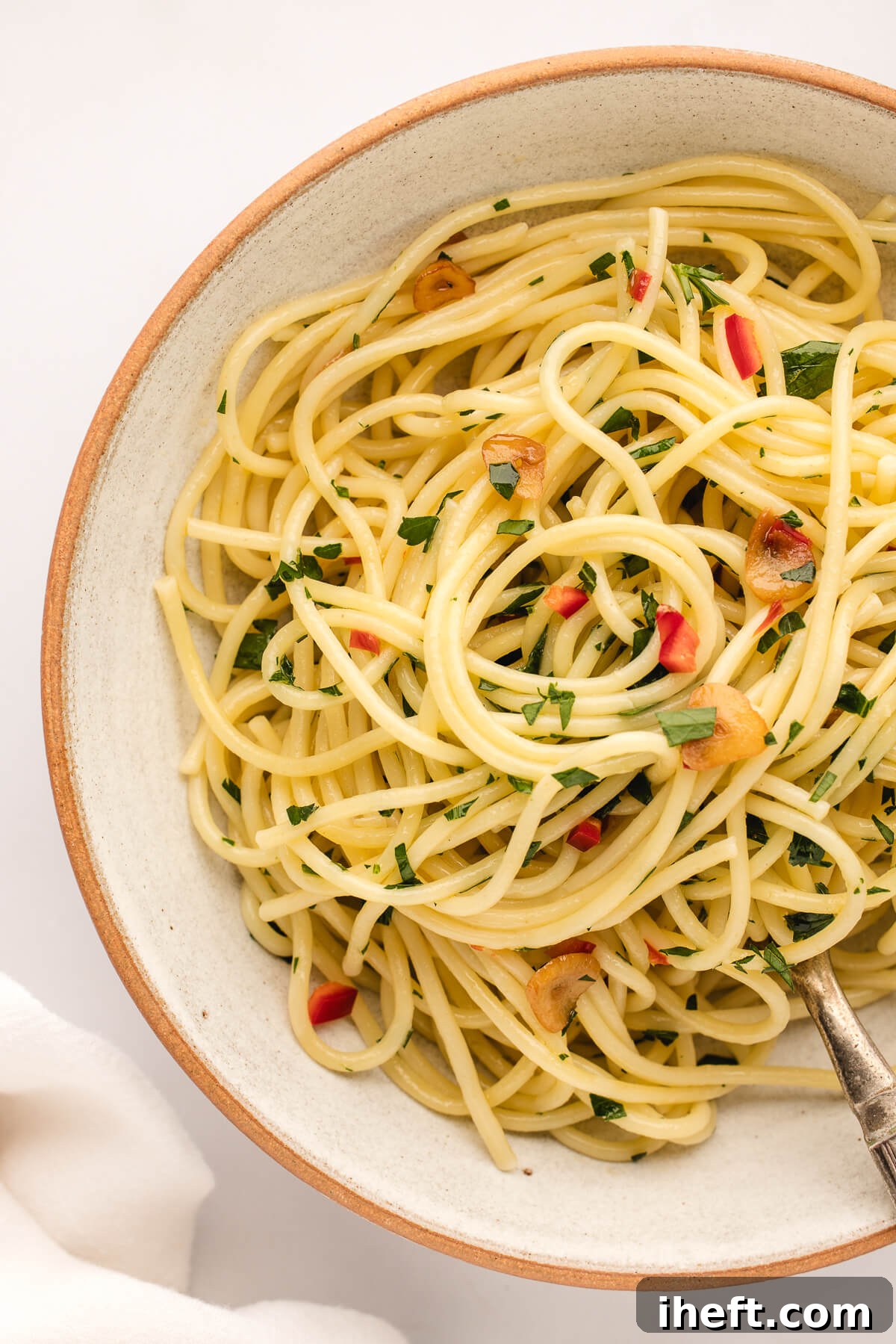
Storing and Reheating Your Aglio Olio
Spaghetti Aglio Olio e Peperoncino is always best enjoyed fresh, right after preparation, when the pasta is perfectly al dente and the sauce is a freshly emulsified delight. However, if you anticipate having leftovers, a little foresight can ensure they remain delicious upon reheating.
Storage: To store leftovers, transfer the pasta to an airtight container. It can be kept in the refrigerator for up to 3 days. It is highly recommended to reserve an additional cup of the starchy cooking water specifically for reheating purposes. This reserved water, however, is best used within 24 hours.
Reheating: When ready to reheat, transfer the desired portion of pasta to a skillet or pot over medium-low heat. Add a splash or two of your reserved pasta water (or a little fresh water if you don’t have any left) to re-moisten the spaghetti and help create a fresh emulsion. Toss frequently until the spaghetti is heated through and regains some of its original glossiness. Ensure the pasta is piping hot all the way through before serving again. Avoid microwaving, as it can make the pasta gummy and lose its texture.
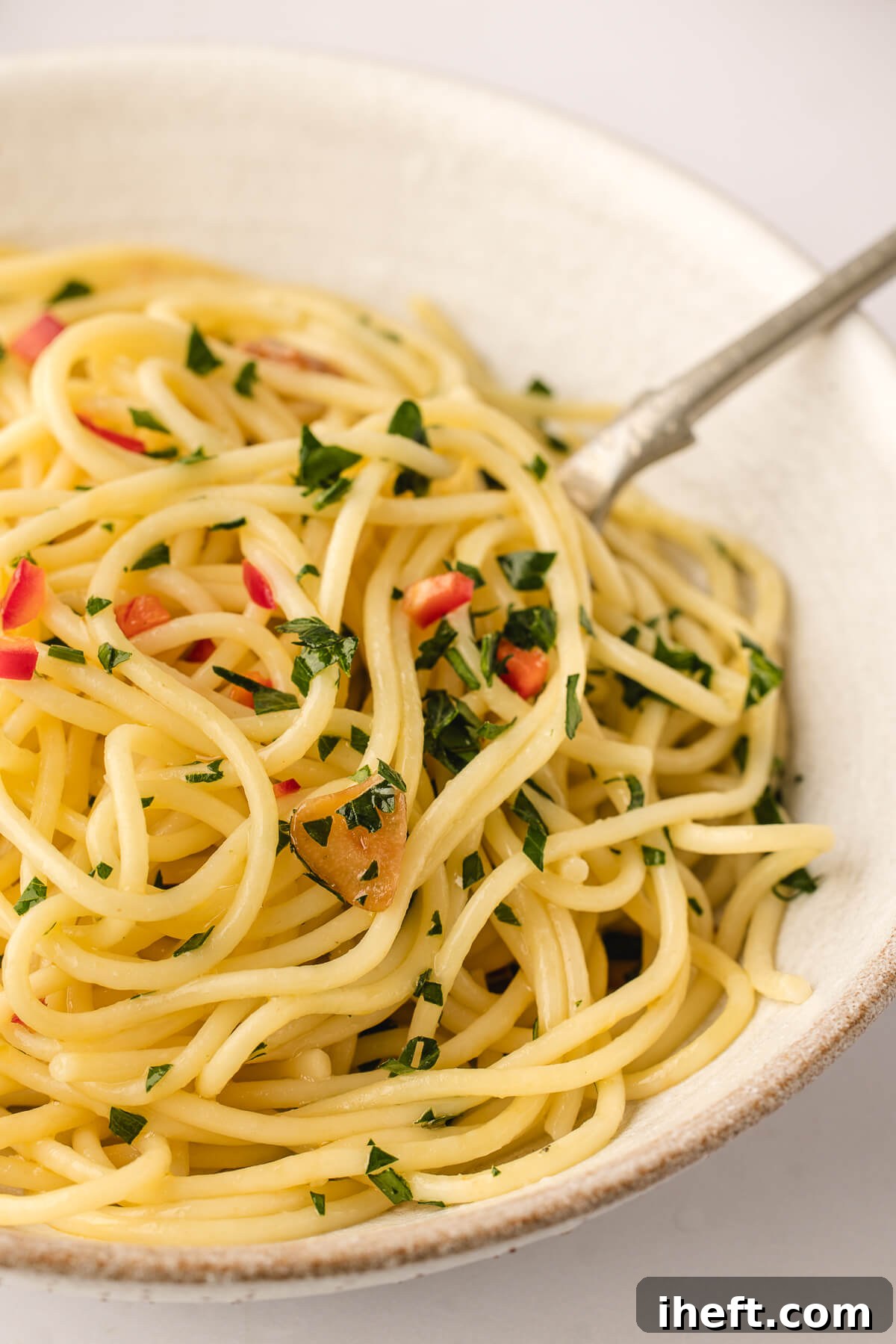
Spaghetti Aglio Olio e Peperoncino
5 minutes
9 minutes
9 minutes
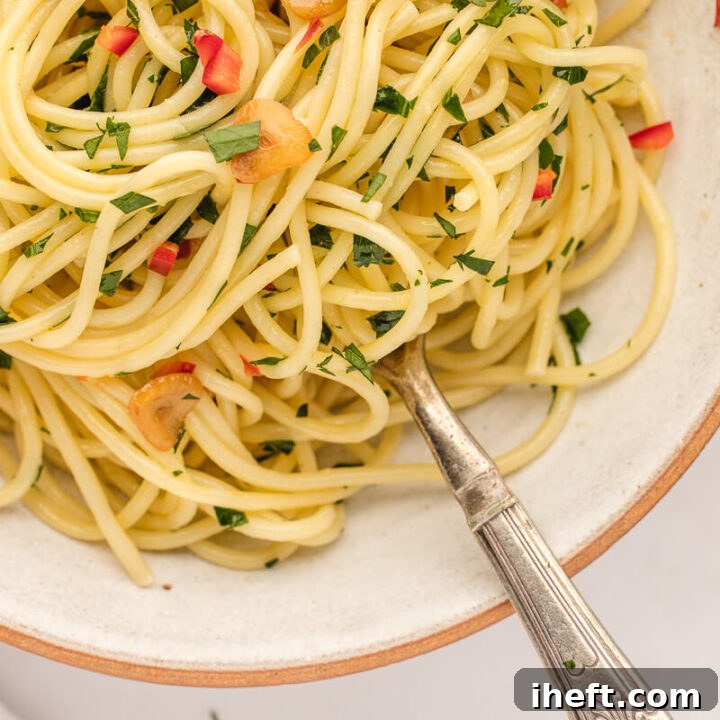
Spaghetti Aglio Olio e Peperoncino is an authentic Italian pasta dish from Naples, renowned for its incredible flavor delivered in under 15 minutes using simple, everyday ingredients. This easy-to-make classic is perfect for a quick and satisfying weeknight meal or a delightful starter to an Italian feast.
Ingredients
- 1 pound dry spaghetti (reserve 1 cup cooking water)
- 1/2 cup extra virgin olive oil
- 6 cloves garlic, sliced fairly thick (see notes)
- 1 red chili pepper, deseeded and finely chopped or 1 teaspoon red pepper flakes
- 1/2 cup fresh parsley, finely chopped
- sea salt, to taste
Instructions
- Cook the spaghetti to al dente according to the package instructions, ensuring you reserve a cup of the starchy water it is cooked in.
- Meanwhile, in a large heavy pan set over low heat, add the extra virgin olive oil, sliced garlic, and chopped chili. Let it gently sizzle, stirring frequently to prevent the garlic from burning. When the garlic turns a pale golden color, remove the pan from the heat. At this point, the spaghetti should be cooked.

- Add the spaghetti directly to the pan with the chili and garlic. Incorporate about 1/2 cup of the reserved starchy cooking water. Toss the spaghetti thoroughly in the flavorful sauce and add more liquid if necessary to achieve a creamy consistency.
- Finally, scatter the chopped parsley over the dish and toss to combine. Season with salt to taste before serving.
Notes
Garlic
You can adjust the garlic flavor to your preference. Three cloves will provide a mild taste, while six will give a more pronounced garlicky punch. Slicing the garlic thickly helps prevent it from burning. It’s crucial not to leave the garlic unattended while cooking, as burnt garlic will make the entire dish bitter. If you prefer not to eat large pieces of garlic, you can lightly crush whole cloves, infuse them in the oil, and then remove them before adding the spaghetti.
Peperoncino Options
If fresh chili peppers are unavailable, a single dried peperoncino or a pinch of dried red pepper flakes can be used effectively. Sauté them along with the garlic to allow their heat and flavor to infuse into the olive oil. Add gradually and taste to achieve your desired level of spiciness.
Cheese
While most authentic recipes for Aglio Olio do not include cheese, a light scattering of freshly grated Parmesan or Pecorino Romano can add a delicious savory depth if desired.
Recommended Products
As an Amazon Associate and member of other affiliate programs, I earn from qualifying purchases.
- Carapelli – Unfiltered Organic Extra Virgin Olive Oil: First Cold-Pressed EVOO
- Calabrian Diavoletti Rossi, Small Dried Spicy Hot Chili Peppers
Nutrition Information:
Yield: 6
Serving Size: 1 bowl
Amount Per Serving:
Calories: 451Total Fat: 19gSaturated Fat: 3gTrans Fat: 0gUnsaturated Fat: 16gCholesterol: 0mgSodium: 106mgCarbohydrates: 59gFiber: 3gSugar: 3gProtein: 10g
Nutrition information is automatically calculated by Nutritionix. I am not a nutritionist and cannot guarantee accuracy. If your health depends on nutrition information, please calculate again with your favorite calculator.