Sicilian Pasta Alla Norma
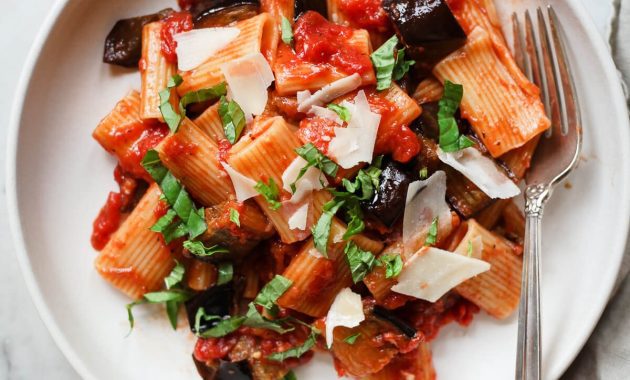
Welcome to a culinary journey through the heart of Sicily, where vibrant flavors and rich traditions converge in a dish as captivating as the island itself. Pasta alla Norma is not just a meal; it’s a testament to the simplicity and intensity of Mediterranean cuisine, a vegetarian masterpiece that has charmed palates for generations. Originating from the bustling city of Catania, this classic Sicilian pasta dish is built upon a foundation of succulent eggplant ragu, ripe tomatoes, fragrant basil, and the unique tang of ricotta salata. It’s a comforting, inexpensive, and naturally meatless meal that brings the warmth of the Sicilian sun directly to your table.
In a world often seeking complex gastronomy, Pasta alla Norma stands out for its elegant simplicity. It requires only a handful of good-quality ingredients – think sun-kissed DOP San Marzano tomatoes, aromatic extra virgin olive oil, tender eggplants, and fresh basil – to create an unforgettable symphony of tastes and textures. Whether you’re a seasoned chef or a home cook exploring new horizons, preparing this delightful dish is an accessible and rewarding experience. Join us as we uncover the history, ingredients, and techniques behind making an authentic and utterly delicious Pasta alla Norma.
What is Pasta alla Norma? A Culinary Masterpiece from Catania
At its core, Pasta alla Norma is a celebration of Sicilian produce and culinary ingenuity. This iconic pasta dish hails from Catania, a vibrant city nestled at the foot of Mount Etna on Sicily’s eastern coast. What makes this dish truly special, beyond its incredible taste, is its evocative name. It is said to have been christened “Norma” in homage to Vincenzo Bellini’s opera of the same name. Bellini, a native of Catania, composed this renowned opera, and legend has it that upon tasting this exquisite pasta dish for the first time, a local playwright exclaimed, “This is a ‘Norma’!”, implying it was a perfect work of art, just like Bellini’s opera. This delightful anecdote perfectly encapsulates the dish’s standing in Sicilian culture – a truly operatic experience for the senses.
Pasta alla Norma embodies the very spirit of the Mediterranean diet, focusing on fresh, seasonal ingredients and simple preparations that allow their natural flavors to shine. It is a testament to the island’s rich agricultural heritage, where eggplants thrive under the intense sun, and tomatoes ripen to unparalleled sweetness. The dish typically features a robust tomato sauce (ragu) infused with fried or roasted eggplant, often served with short pasta shapes like rigatoni or penne, and generously topped with grated ricotta salata – a firm, salted, and aged sheep’s milk ricotta cheese that provides a distinctive savory finish.
While the Bellini opera origin story is widely accepted, another fascinating theory suggests the dish was created in the 19th century by a chef named Nino Bergese, who worked for the Prince of Salina. Bergese, originally from Naples, is believed to have crafted this dish for the Prince, a devoted admirer of Bellini’s opera. Regardless of its precise origins, Pasta alla Norma has become synonymous with Sicilian identity, a beloved staple found in trattorias and homes across the island and beyond.
Exploring the Rich Tapestry of Sicilian Cuisine
When we talk about “Italian food,” it’s crucial to understand that Italy boasts a myriad of distinct regional cuisines, each with its unique history, ingredients, and cooking methods. Sicilian cuisine, in particular, stands out due to the island’s strategic location in the heart of the Mediterranean, which has led to a fascinating blend of culinary influences from ancient Greek, Roman, Arab, Norman, and Spanish cultures. This historical melting pot has resulted in a vibrant and diverse food culture unlike any other in Italy.
Eggplant, for instance, is a quintessential ingredient in Sicilian cooking, playing a starring role in numerous beloved dishes. Its versatility allows it to be fried, baked, grilled, or stewed, absorbing flavors beautifully. Beyond Pasta alla Norma, you’ll find eggplant prominently featured in:
- Pasta con le Sarde: A truly unique and complex dish combining fresh sardines, wild fennel, pine nuts, raisins, and saffron – a legacy of Arab influence.
- Ricotta and Pistachio Pasta: Highlighting Sicily’s famed pistachios, especially those from Bronte, in a creamy, rich pasta sauce.
- Caponata: A sweet and sour eggplant relish, often including capers, olives, celery, and tomatoes, served as an appetizer or side dish.
- Arancini: Deep-fried rice balls, usually filled with ragu, peas, and caciocavallo cheese, or sometimes with butter and mozzarella. These golden spheres are a popular street food.
This rich culinary heritage ensures that every bite of Sicilian food tells a story, a narrative of conquest, trade, and adaptation that has shaped one of the world’s most fascinating gastronomic traditions. Pasta alla Norma, with its humble yet powerful ingredients, perfectly embodies this spirit.
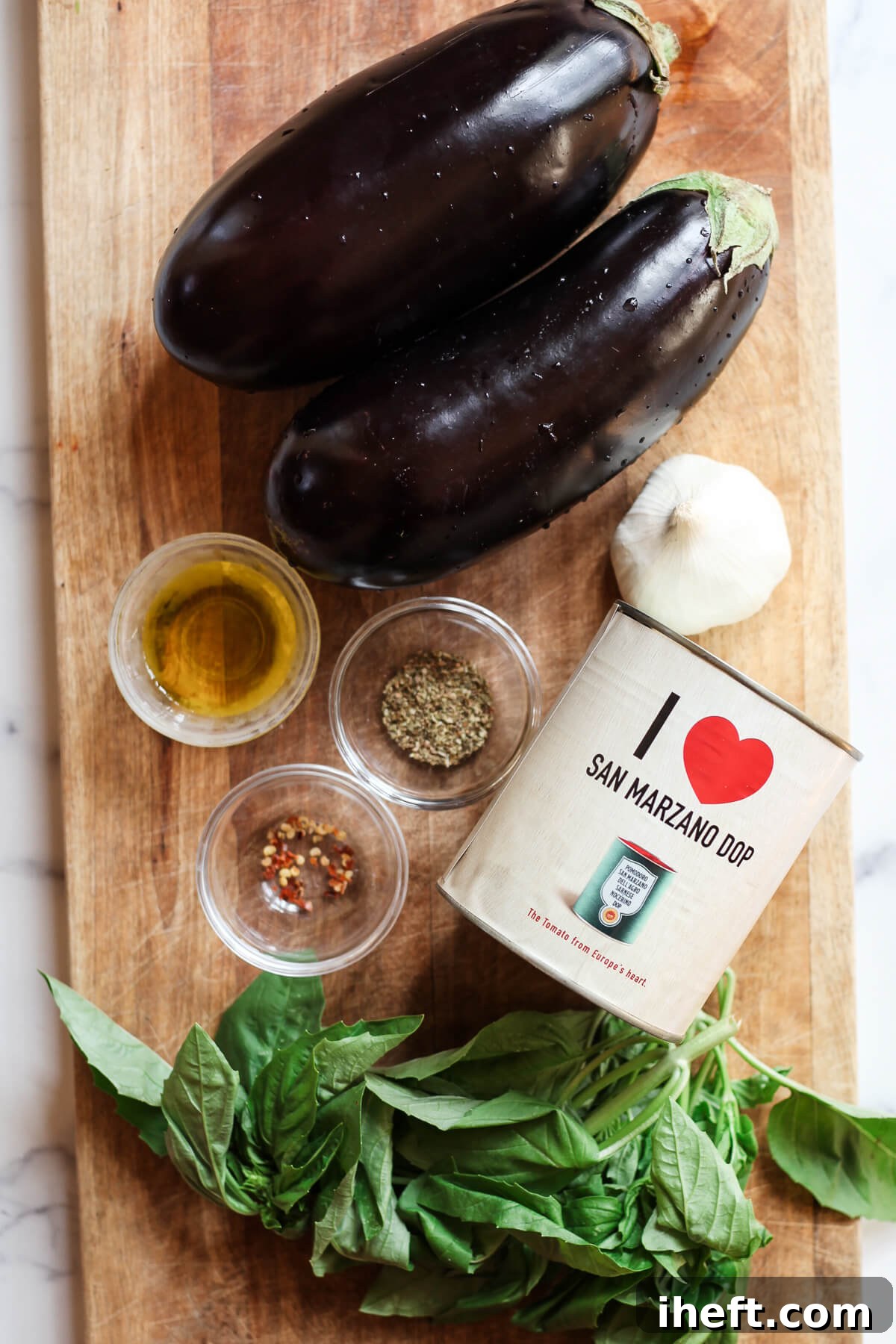
Essential Ingredients for Authentic Pasta alla Norma
The beauty of Pasta alla Norma lies in its reliance on simple, high-quality ingredients. Each component plays a crucial role in creating the dish’s distinct flavor profile. To achieve an authentic taste that transports you straight to the heart of Sicily, pay attention to the selection of these key elements:
- Extra Virgin Olive Oil: The foundation of almost all Mediterranean cooking. Opt for a good quality extra virgin olive oil, preferably Italian, for its fruity notes and rich aroma. It’s used for both roasting the eggplant and building the tomato sauce.
- Garlic: Freshly minced garlic provides a fragrant and essential aromatic base for the sauce. Be careful not to burn it, as this can turn it bitter.
- Dried Oregano: A staple herb in Italian cooking, oregano adds a warm, earthy depth to the tomato sauce.
- Red Pepper Flakes: For those who appreciate a subtle kick, a pinch of red pepper flakes (peperoncino) adds a touch of heat that complements the sweetness of the tomatoes and eggplant. Adjust the quantity to your preference.
- Eggplant: The star of the show! Globe eggplants are most commonly used for their meaty texture. Look for firm, shiny eggplants without blemishes. You’ll cube them for roasting or frying. Some recipes suggest salting eggplant before cooking to draw out bitterness, but modern eggplants are often less bitter, making this step optional, especially when roasting.
- Tomatoes: The soul of the sauce. For the most authentic and deeply flavorful ragu, DOP San Marzano tomatoes are highly recommended. These plum tomatoes, grown in the Agro Sarnese-Nocerino region of Italy, are known for their sweet, balanced flavor and low acidity. When fresh, ripe, in-season tomatoes aren’t available, canned DOP San Marzanos are the superior choice. If you have access to vibrant, summer-ripe fresh tomatoes, feel free to use them, roughly chopped.
- Fresh Herbs: Fresh basil is non-negotiable for its aromatic fragrance and peppery sweetness, added at the end to preserve its delicate flavor. Italian parsley can also be used as a garnish or mixed in for a fresh note.
- Cheese: Traditionally, ricotta salata is the cheese of choice for Pasta alla Norma. This unique Sicilian cheese is made from sheep’s milk, pressed, salted, and aged, resulting in a firm, white cheese perfect for grating. It offers a salty, slightly nutty flavor that beautifully cuts through the richness of the eggplant and tomato. While traditionalists insist on ricotta salata, many cooks substitute with grated Pecorino Romano (for a sharper, saltier kick) or Parmigiano-Reggiano (for a milder, nuttier profile). For a truly authentic experience, seek out ricotta salata.
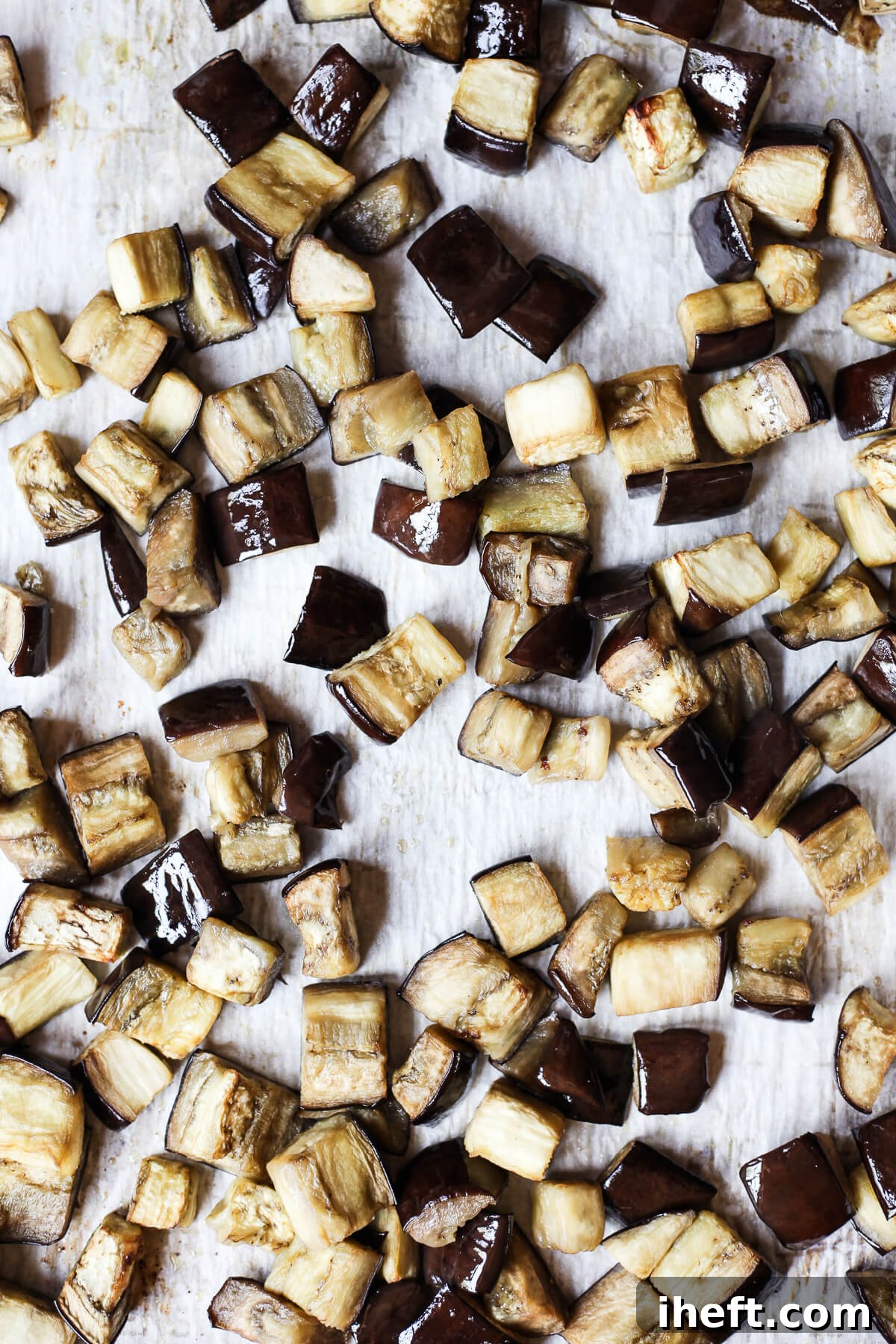
Crafting the Perfect Eggplant Ragu: A Step-by-Step Guide
The eggplant ragu is the heart and soul of Pasta alla Norma. Traditionally, the eggplant is sliced and then fried until golden and tender, a method that imparts a rich, deep flavor. However, to simplify the process, reduce oil, and save time, many contemporary cooks, including myself, opt for baking or roasting the eggplant. This method yields wonderfully tender eggplant cubes with a slightly caramelized exterior, perfectly suited for the ragu, while making the dish much lighter and easier to prepare.
My preferred approach is to roast the cubed eggplant in the oven while simultaneously preparing the tomato sauce on the stovetop. This efficient method ensures everything is ready around the same time, allowing you to quickly combine the components for a fresh and flavorful meal. The tomato sauce itself is a close cousin to a classic San Marzano marinara, elevated by the addition of the roasted eggplant.
Here’s a general overview of the process:
- Prepare the Eggplant: Begin by cutting your eggplant into uniform 1-inch cubes. Toss them with a generous drizzle of olive oil, salt, and pepper. Spread them in a single layer on a parchment-lined baking sheet. Roasting at a high temperature (around 400°F or 200°C) for 25-30 minutes, turning halfway, will render them beautifully tender and slightly browned.
- Start the Tomato Sauce: While the eggplant roasts, heat a few tablespoons of olive oil in a large skillet or saucepan over medium-low heat. Add minced garlic and red pepper flakes, sautéing gently for about one minute until fragrant. It’s crucial not to let the garlic brown, as it can become bitter. Stir in the dried oregano.
- Add the Tomatoes: Pour in the entire can of DOP San Marzano tomatoes, including their juices. Use a wooden spoon to break up the whole tomatoes into smaller pieces.
- Simmer the Sauce: Allow the sauce to simmer gently for at least 15-20 minutes, or longer if you have time, stirring occasionally. This simmering period allows the flavors to meld and the sauce to thicken slightly. Season with salt and pepper to taste.
- Combine and Finish: Once the eggplant is roasted and the sauce has reduced, add the tender eggplant cubes directly into the tomato sauce. Stir gently to combine, allowing the eggplant to absorb the rich flavors of the ragu.
This method ensures a deeply flavorful eggplant ragu that is both comforting and authentically Sicilian, without the fuss of deep frying.
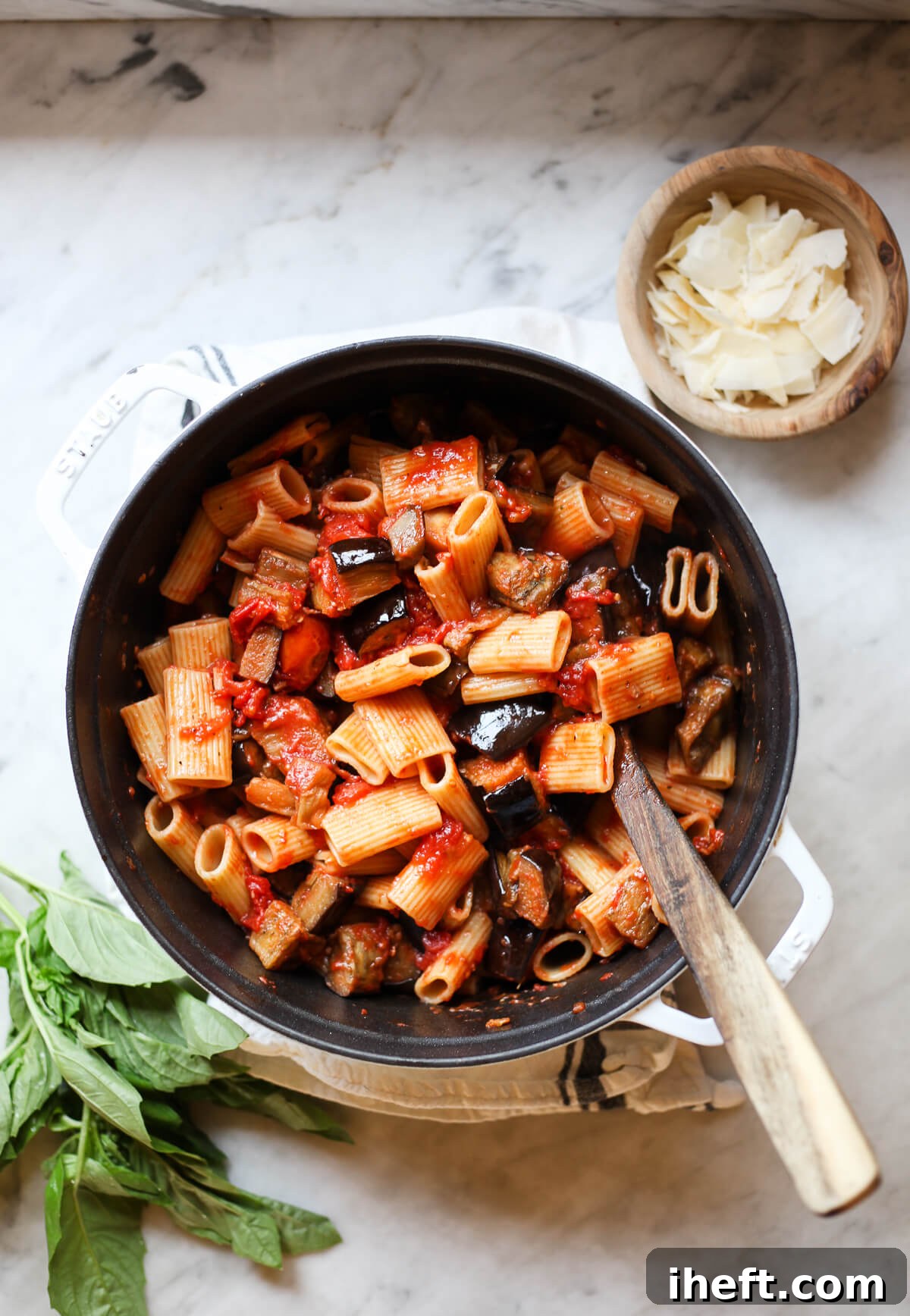
Choosing Your Pasta: The Perfect Companion
The choice of pasta shape in Italian cuisine is rarely arbitrary; it’s carefully considered to complement the sauce it’s paired with. For Pasta alla Norma, certain shapes are traditionally preferred because their structure is ideal for capturing the luscious eggplant ragu.
Historically, Pasta alla Norma is most often served with:
- Penne: These short, tube-shaped pasta pieces with ridged surfaces are excellent at trapping the chunky tomato and eggplant sauce both inside and outside.
- Spaghetti: The long, slender strands of spaghetti offer a different experience, allowing the sauce to coat each noodle, creating a harmonious blend in every twirl.
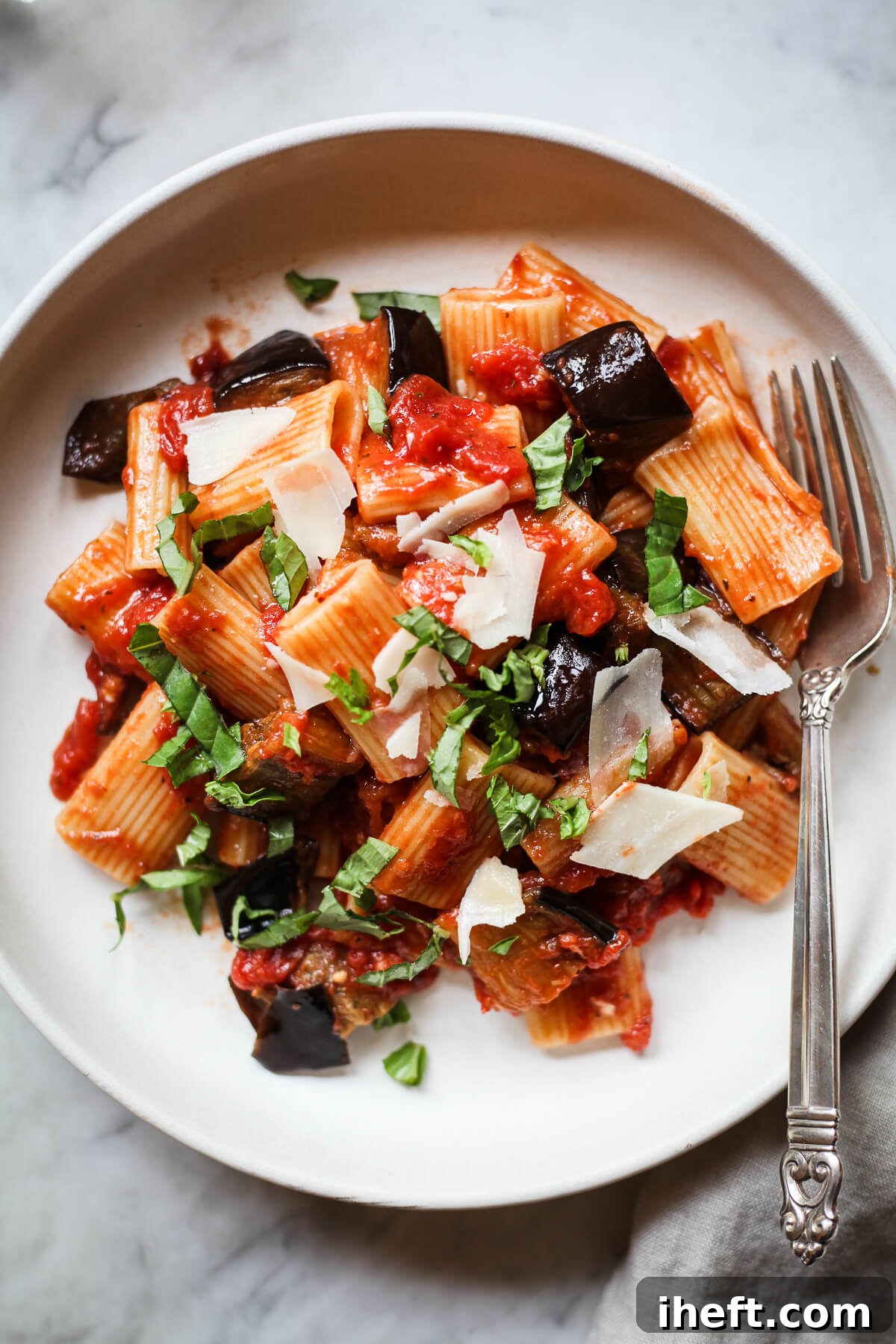
However, the beauty of this eggplant sauce is its versatility. It’s wonderfully robust and clings well to various pasta shapes. Rigatoni, as depicted in some preparations, is another fantastic choice. Its wider tubes and ridged exterior provide ample surface area for the rich ragu to adhere, ensuring a burst of flavor with every bite. Other short, sturdy pasta shapes like paccheri, mezzemaniche, or even cavatappi would also be delightful. The key is to choose a pasta that can stand up to the hearty sauce and effectively deliver its flavors.
Regardless of the shape, remember the golden rule of Italian pasta cooking: always cook your pasta al dente. This means cooking it until it is firm to the bite, not soft or mushy. Al dente pasta provides a pleasant texture and holds up better when tossed with the sauce, preventing it from becoming soggy. Cook your pasta in generously salted boiling water according to package directions, then drain and immediately combine with the warm eggplant ragu to finish cooking for a minute or two, allowing the pasta to absorb some of the sauce’s flavor.
Creative Variations and Customizations
While the classic Pasta alla Norma is perfect in its traditional form, it also lends itself beautifully to creative variations and personal customizations. These adaptations can cater to different dietary needs, flavor preferences, or simply incorporate ingredients you have on hand.
- Adding Protein: For those seeking a heartier meal, cooked Italian sausage (sweet or spicy, depending on your preference) can be crumbled and added to the sauce during the simmering stage. Alternatively, white beans (such as cannellini or great northern beans) provide a plant-based protein boost, offering a creamy texture and nutty flavor that complements the eggplant beautifully. Add them along with the roasted eggplant for a satisfying twist.
- Extra Boost of Flavor: My family, for example, enjoys the addition of capers at the end. Their briny, salty pop adds an unexpected layer of complexity that brightens the entire dish. A handful of pitted Kalamata olives or sun-dried tomatoes (chopped) could also introduce new dimensions of flavor.
- Spicier Kick: If you love heat, increase the amount of red pepper flakes or add a fresh finely chopped chili pepper when sautéing the garlic.
- Herbs beyond Basil: While basil is traditional, fresh oregano, marjoram, or a touch of rosemary could introduce different aromatic notes, though always use fresh basil as the primary herb.
- Vegan Adaptation: To make this dish entirely vegan, simply ensure your pasta is egg-free and substitute ricotta salata with a good quality vegan Parmesan alternative or nutritional yeast for a cheesy umami flavor. The rest of the ingredients are already plant-based.
These variations allow you to experiment and make Pasta alla Norma your own, without straying too far from its Sicilian roots. Always taste as you go and adjust seasonings to your liking.
Storing and Reheating for Future Enjoyment
One of the many appealing aspects of Pasta alla Norma is how well it holds up as leftovers, often tasting even better the next day as the flavors have more time to meld and deepen. This makes it an ideal dish for meal prepping or enjoying over several days.
- Storing Leftovers: Once the pasta has cooled to room temperature, transfer it to an airtight container. It can be safely stored in the refrigerator for up to 3 days. For longer storage, you can freeze the eggplant ragu (without the pasta) for up to 3 months. Thaw it in the refrigerator overnight before reheating and tossing with freshly cooked pasta.
- Reheating Leftovers: When reheating the combined pasta and sauce, adding a splash of water or vegetable broth can help rehydrate the sauce and prevent the pasta from drying out.
- Stovetop: Gently reheat the pasta in a large skillet over medium-low heat, stirring occasionally until warmed through.
- Oven: For a delicious touch, transfer the leftovers to an oven-safe dish, cover it with foil, and bake at 350°F (175°C) for 15-20 minutes, or until heated through. For a crispy top, remove the foil for the last few minutes and sprinkle with a little extra cheese.
- Microwave: While convenient, the microwave can sometimes make pasta a bit rubbery. Reheat in short intervals, stirring in between, to ensure even heating without overcooking.
- Make-Ahead Tip: The eggplant ragu is an excellent component to prepare in advance. You can cook the ragu one day ahead, refrigerate it, and then simply reheat it and toss it with freshly cooked pasta just before serving. This significantly cuts down on prep time on a busy weeknight.
Enjoying this vegetarian pasta the next day offers a continuation of its comforting appeal, making it a truly versatile and practical dish.
What to Serve with Pasta alla Norma: Completing Your Sicilian Meal
Pasta alla Norma is a hearty and satisfying dish on its own, capable of serving as a complete meal. In Italy, pasta dishes often serve as a “primo piatto” or first course, followed by a main course. However, given its rich eggplant ragu and substantial nature, Pasta alla Norma is frequently served as a standalone entree, especially in home cooking.
To create a balanced and traditional Sicilian meal, consider pairing it with a fresh, light side dish:
- Fresh Green Salad: A simple mixed green salad with a light vinaigrette dressing (made with good quality olive oil, red wine vinegar, salt, and pepper) provides a refreshing contrast to the richness of the pasta.
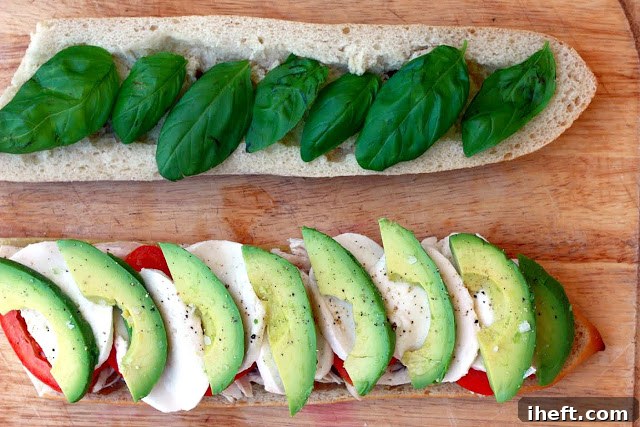
- Caprese Salad: A classic Italian choice, a Caprese salad with ripe tomatoes, fresh mozzarella, basil leaves, and a drizzle of balsamic glaze offers vibrant colors and flavors that complement the Sicilian theme beautifully.
- Crusty Bread: A warm, crusty loaf of Italian bread or focaccia is perfect for soaking up any leftover sauce on your plate, ensuring no drop of the delicious ragu goes to waste.
- Roasted Vegetables: While the dish already features eggplant, a side of simply roasted zucchini, bell peppers, or asparagus can add more vegetable goodness and a different texture.
- Wine Pairing: For those who enjoy wine, a medium-bodied red wine from Sicily, such as a Nero d’Avola or Etna Rosso, would be an excellent choice. Their fruity notes and subtle tannins complement the earthy eggplant and tomato flavors. Alternatively, a crisp, dry white wine like a Grillo or Inzolia would also pair well, especially if serving a lighter version of the dish.
Serving Pasta alla Norma with a thoughtfully chosen accompaniment elevates the dining experience, transforming a simple pasta dish into a memorable Sicilian feast.
Pasta alla Norma
10 minutes
35 minutes
45 minutes
Pasta alla Norma is a classic Sicilian pasta dish made with eggplant ragu. This comforting vegetarian pasta with roasted eggplant comes together easily with just a few simple ingredients.
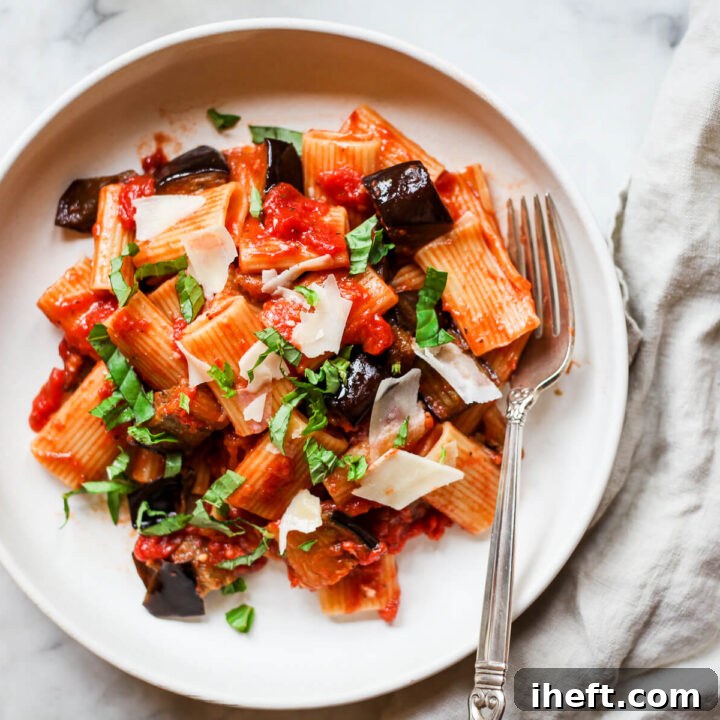
Ingredients
- 1 ½-2 pounds eggplant (about 2 globe eggplants)
- Extra virgin olive oil
- Salt and pepper to taste
- 3 cloves garlic, minced
- 1/8 teaspoon red pepper flakes (optional, adjust to taste)
- 1 teaspoon dried oregano
- 28 oz. can DOP San Marzano tomatoes
- ¾ pound pasta (such as penne, rigatoni, or spaghetti)
- 1 cup fresh basil leaves, torn or chopped
- ½ cup ricotta salata, grated (or Parmigiano-Reggiano/Pecorino Romano)
Instructions
- Preheat Oven & Prepare Eggplant: Preheat your oven to 400°F (200°C). Line a large rimmed baking sheet with parchment paper or lightly grease it with olive oil. Cut the eggplants into 1-inch cubes. Toss them with 1-2 tablespoons of olive oil (or coat with olive oil cooking spray). Season generously with salt and pepper. Spread the eggplant cubes in a single layer on the prepared baking sheet. Roast for 25-30 minutes, turning them halfway through, until they are very tender and slightly caramelized.
- Start the Tomato Sauce: While the eggplant roasts, heat 1-2 tablespoons of olive oil in a large skillet or saucepan over medium-low heat. Add the minced garlic and red pepper flakes (if using) and sauté for about one minute until fragrant. Be careful not to let the garlic burn or brown. Stir in the dried oregano.
- Add Tomatoes & Simmer: Pour the entire can of San Marzano tomatoes, including the sauce, into the skillet. Use a wooden spoon or potato masher to break up the whole tomatoes into smaller pieces. Bring the sauce to a gentle simmer and cook for 15-20 minutes, stirring occasionally, until it has thickened slightly and the flavors have melded. Season the sauce to taste with salt and pepper.
- Cook Pasta: Meanwhile, bring a large pot of generously salted water to a rolling boil. Add your chosen pasta and cook according to package directions until it is al dente (firm to the bite).
- Combine Eggplant & Sauce: Once the roasted eggplant is ready, add it directly into the tomato sauce in the skillet. Stir gently to combine the eggplant with the ragu.
- Combine Pasta & Ragu: When the pasta is al dente, drain it, reserving about ½ cup of the pasta cooking water (in case the sauce needs thinning). Immediately add the drained pasta to the skillet with the eggplant ragu. Toss everything together, adding a splash of reserved pasta water if needed, to ensure the pasta is well coated and the sauce is a good consistency. Cook for another minute, allowing the pasta to absorb some of the sauce’s flavor.
- Serve: Serve the Pasta alla Norma warm, garnished generously with fresh basil leaves and freshly grated ricotta salata (or your preferred cheese).
Notes
Ricotta Salata is the cheese traditionally used for Pasta alla Norma. It’s a Sicilian salted and aged ricotta that works well for grating. You can substitute with Pecorino Romano or Parmigiano-Reggiano, or a vegan Parmesan if needed.
This eggplant ragu sauce can be made one day in advance and stored in the refrigerator. Reheat gently before combining with freshly cooked pasta.
Fresh tomatoes can be used instead of canned. Use about 1 ½ pounds (approximately 4 cups) of ripe, chopped fresh tomatoes.
Though not traditional, a small handful of capers added at the end with the basil can provide a delightful briny counterpoint.
Nutrition Information:
Yield: 5 servings
Serving Size: 1 bowl
Amount Per Serving:
Calories: 265
Total Fat: 7g
Saturated Fat: 2g
Trans Fat: 0g
Unsaturated Fat: 4g
Sodium: 162mg
Carbohydrates: 44g
Fiber: 8g
Sugar: 11g
Protein: 9g
Nutrition information is automatically calculated and is an estimate. I am not a nutritionist and cannot guarantee accuracy. If your health depends on nutrition information, please calculate again with your favorite calculator.
Pasta alla Norma is more than just a recipe; it’s an invitation to experience the warmth, generosity, and vibrant culinary heritage of Sicily. From its fascinating operatic namesake to its simple yet profound flavors, every aspect of this dish tells a story. Whether you’re gathering friends and family around the table or simply craving a comforting, wholesome meal, this vegetarian classic promises to deliver a delightful taste of the Mediterranean. So, gather your fresh ingredients, embrace the joy of cooking, and prepare to fall in love with the timeless appeal of Pasta alla Norma.