Stovetop Popcorn Perfection
Mastering Stovetop Popcorn: Your Guide to Perfectly Popped Homemade Goodness
There’s nothing quite like the irresistible aroma and satisfying crunch of freshly popped popcorn. While microwave bags offer convenience, true popcorn connoisseurs know that the best kernels are popped right on the stovetop. This comprehensive guide will show you how to make perfect stovetop popcorn at home, easily and efficiently, transforming simple kernels into a beloved snack. Plus, we’ll explore four delectable homemade popcorn seasoning recipes to elevate your popcorn experience from simple to sensational. Forget the chemicals and artificial flavors; easy stovetop popcorn is a naturally tasty, whole-grain, and healthy snack perfect for both kids and adults.
The magic of homemade popcorn begins with a simple question. I recently found myself in a conversation with some girlfriends, and the topic of my kitchen came up. I shared that I don’t have a microwave, a choice I made simply because I’m not a big fan of them. One friend, puzzled, asked, “How do you make popcorn without a microwave?”
My answer was instant and enthusiastic: “Easy! I make popcorn on the stove, and it takes just a few minutes!” That conversation sparked the idea to finally share my go-to method for making popcorn on the stove. If you’re already a seasoned stovetop popper, don’t just leave! Stick around, because I’m also sharing some of my absolute favorite homemade popcorn seasoning ideas that will transform your snack time into a gourmet experience.
Why Choose Stovetop Popcorn Over Microwave Bags?
Before we dive into the “how-to,” let’s address the “why.” There are compelling reasons to opt for stovetop popcorn over its microwave counterpart. Many commercial microwave popcorn bags contain a list of unnecessary chemicals, artificial flavors, and preservatives. These can include diacetyl (linked to lung disease), PFOA/PFOS (per- and polyfluoroalkyl substances) in the bag linings, and various artificial butter flavorings that simply don’t compare to the real thing.
Making popcorn on the stove, however, gives you complete control over the ingredients. You choose the oil, the kernels, and the seasonings, ensuring a much healthier and more natural snack. You don’t need any special, single-purpose appliances like dedicated popcorn air poppers. All you need is a sturdy pot and a few minutes, and you’ll achieve perfect homemade popcorn every time. I personally learned this simple method during an episode of *Everyday Italian* about 15 years ago, and I haven’t looked back since. It’s a timeless technique that yields superior results.
What You’ll Need: Stovetop Popcorn Essentials
Gathering the right ingredients and equipment is the first step towards achieving popcorn perfection. The beauty of stovetop popcorn is its simplicity, requiring only a few basic items you likely already have in your kitchen.
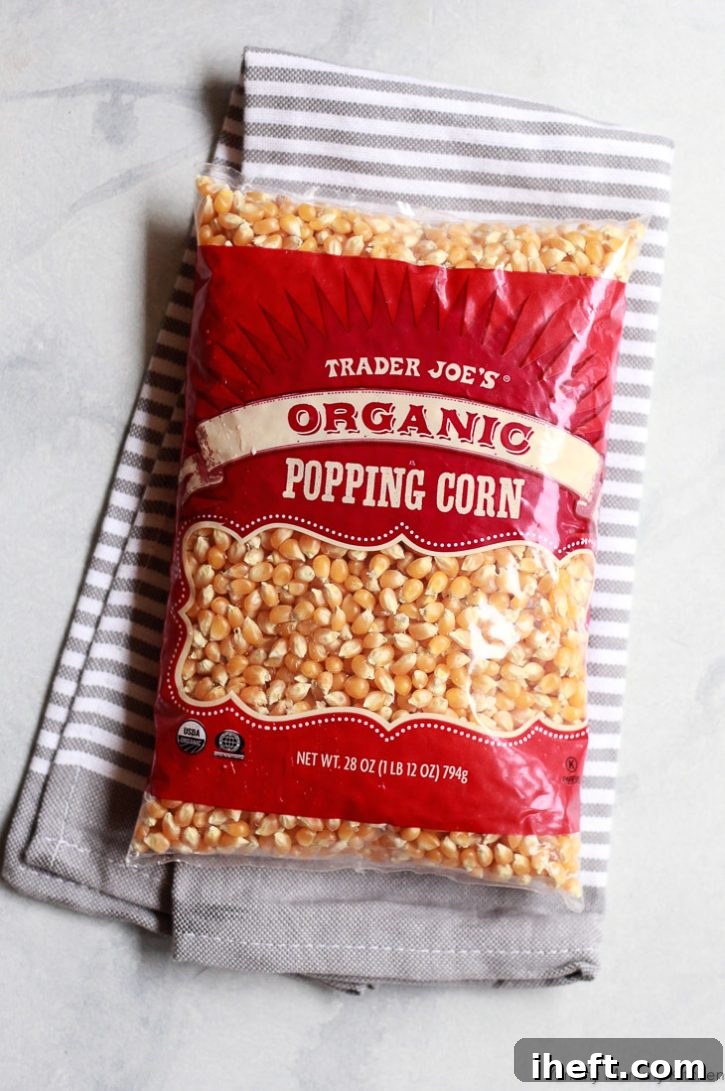
- Organic Popping Corn: Quality kernels make a difference. Opt for organic popping corn for a cleaner, purer flavor. You can often find this conveniently bagged at stores like Trader Joe’s or in bulk bins at Whole Foods, offering a cost-effective and fresh option. Look for non-GMO varieties if possible.
- 1-2 tablespoons of High-Smoke Point Oil: The type of oil you use significantly impacts the flavor and crispness of your popcorn.
- Coconut Oil: This is my top recommendation for stovetop popcorn. It has a high smoke point, imparts a subtle, pleasant sweetness, and results in wonderfully crisp popcorn.
- Olive Oil: A good alternative if you prefer a more savory, robust flavor. Ensure you use regular olive oil, not extra virgin, as extra virgin olive oil has a lower smoke point and can burn, giving your popcorn an unpleasant taste.
- Other options: Avocado oil or grapeseed oil are also great choices due to their neutral flavor and high smoke points. Avoid butter or low-smoke point oils for popping, as they can burn easily.
- A Large, Heavy, Lidded Pot: The right pot is crucial for even heat distribution and sufficient space for the kernels to expand.
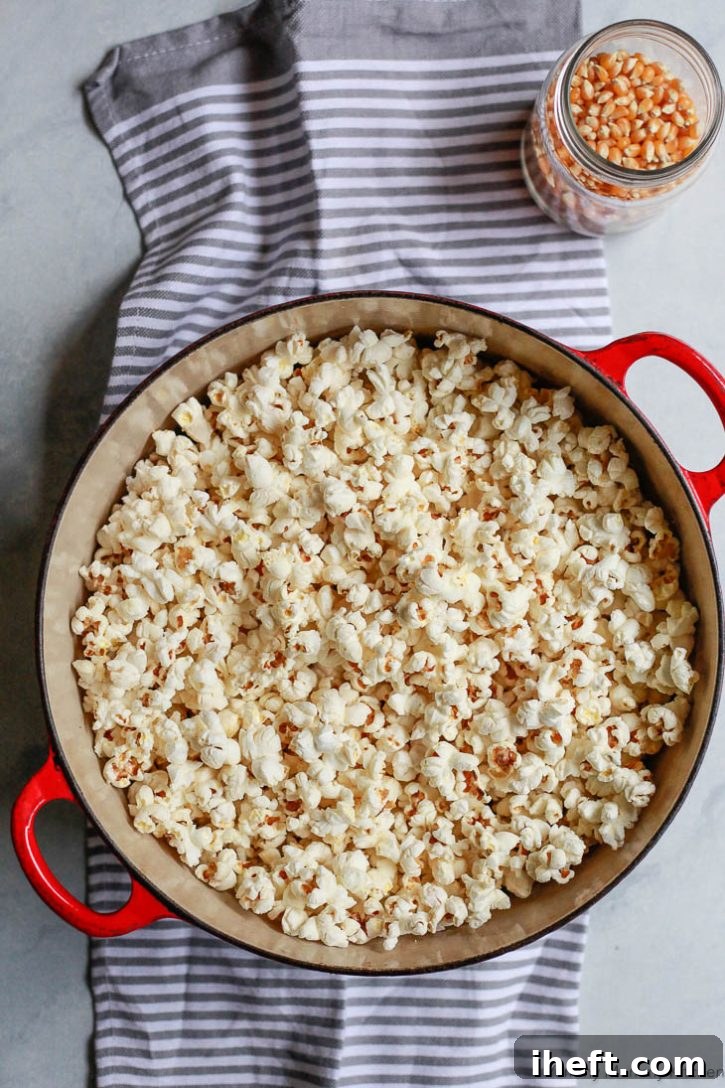
- Dutch Oven: My personal favorite. Its heavy bottom ensures even heat, preventing scorched kernels, and its tight-fitting lid keeps steam and flying kernels contained.
- Large Stockpot: Any large, heavy-bottomed stockpot with a tight-fitting lid will work. Ensure it has at least a 6-quart capacity to allow the popcorn ample room to expand without overcrowding.
- Salt (optional, but highly recommended): A good quality fine-grain sea salt or kosher salt is ideal for seasoning.
The Art of Popping Popcorn on the Stove: Step-by-Step Guide
Making popcorn on the stove is a simple process, but a few key techniques ensure consistent, fluffy results every time. Follow these steps for perfect homemade popcorn:
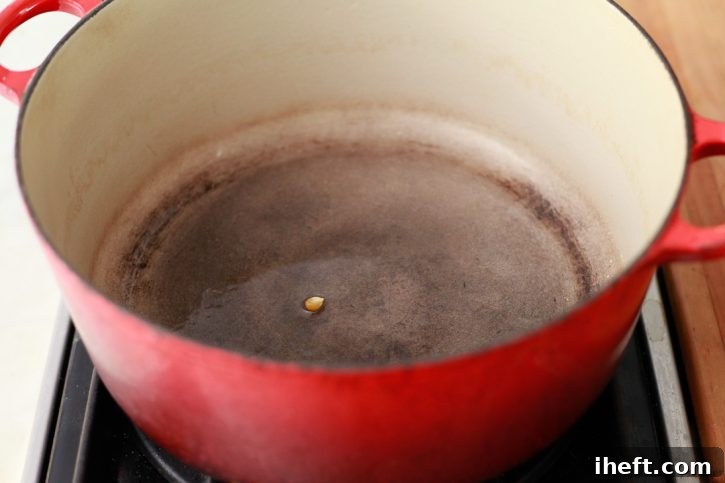
- Prepare Your Pot and Oil: Place your large, heavy, lidded pot (like a Dutch oven) over medium heat on your stovetop. Add 1-2 tablespoons of your chosen oil. Swirl the oil to ensure it coats the bottom of the pot evenly.
- The Test Kernel Method: This is the secret to perfectly timed popcorn! Add just one single kernel of popping corn to the pot. Cover the pot with its lid.
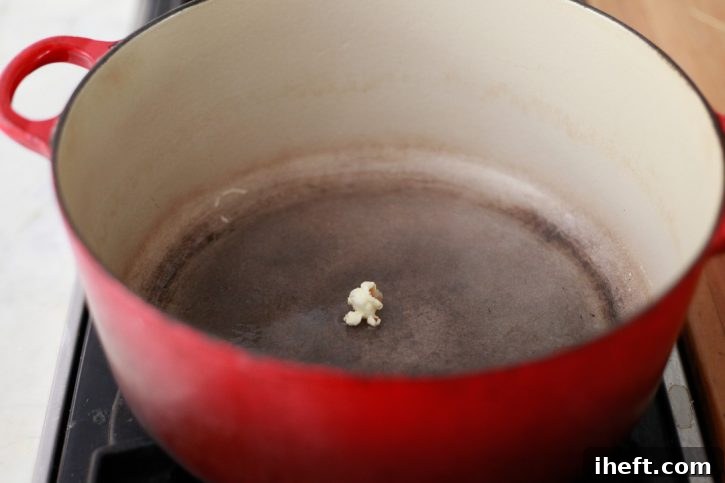
- Wait for the Signal: Listen carefully. When you hear that single kernel pop, it’s your cue! The pot has reached the ideal temperature to start popping the rest of your corn. Remove the test kernel if you wish, or leave it in.
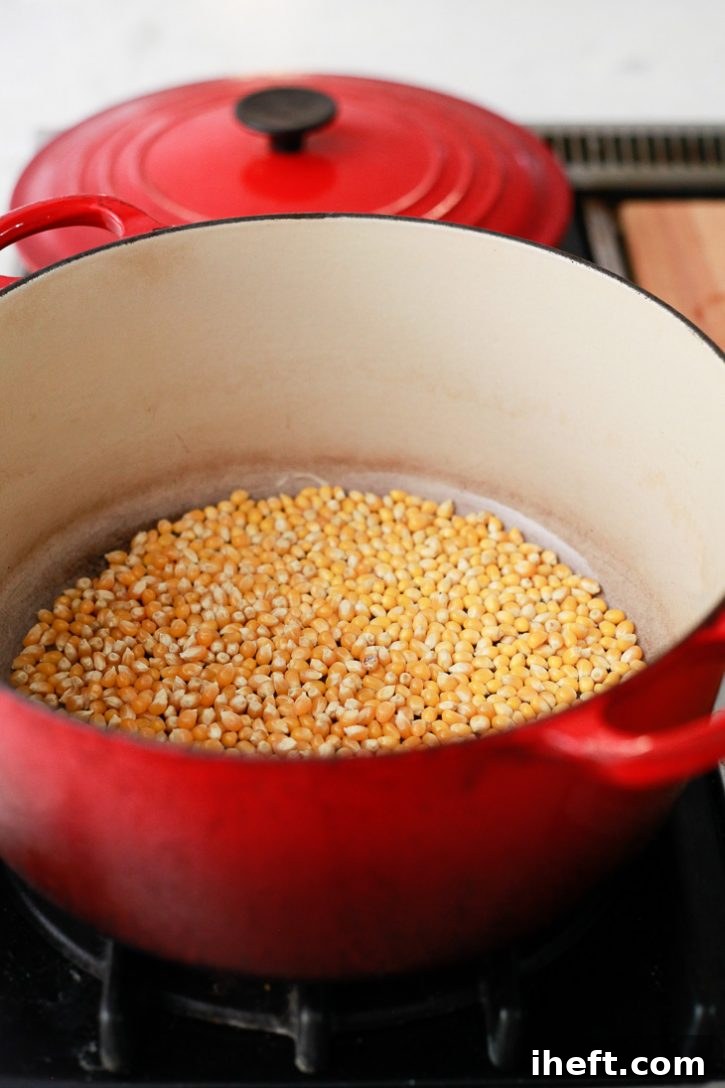
- Add the Rest of the Kernels: Promptly remove the lid and pour a single layer of popping corn kernels into the pot. For a large Dutch oven, about 2/3 cup is usually perfect, yielding a substantial amount of popped corn. Ensure the kernels are in a single layer to promote even popping. Quickly replace the lid.
- The Gentle Shake: While the kernels are popping, give the pot a gentle but firm shake every 10-15 seconds. This helps move unpopped kernels to the hotter bottom of the pot and prevents already popped kernels from burning. This whole process typically takes about 2-3 minutes, so stay by your pot!
- Listen and Remove from Heat: The popping will intensify and then gradually slow down. Once the popping sound slows to several seconds between pops (typically 2-3 seconds), immediately remove the pot from the heat. Don’t wait until the popping stops completely, as this often leads to burned popcorn.
- Careful Lid Removal: After removing from heat, wait about 10-15 seconds before carefully removing the lid. This allows any final kernels to pop and prevents a rogue, hot kernel from escaping and potentially hitting you in the eye.
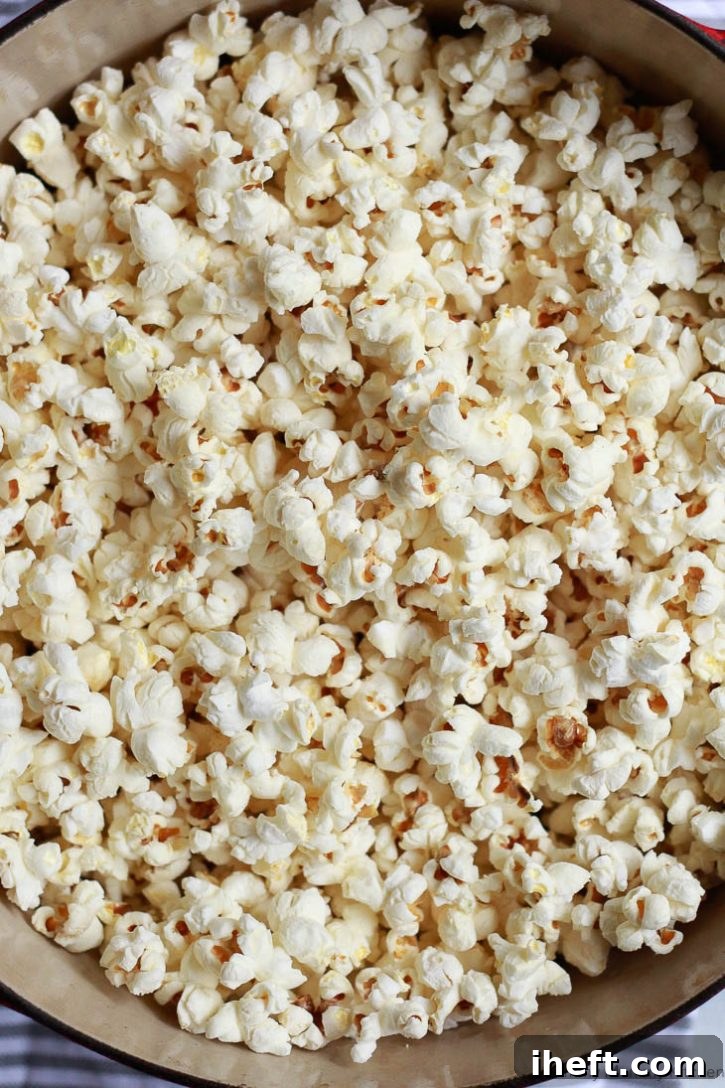
Stovetop Popcorn Seasonings: Four Flavorful Ideas
Once your popcorn is perfectly popped, the real fun begins: seasoning! While a simple sprinkle of sea salt is always a classic, why not get creative? Here are four of our favorite homemade popcorn seasoning ideas to turn your everyday snack into an extraordinary treat:
1. Nutritional Yeast Popcorn (The “Cheesy” Vegan Favorite)
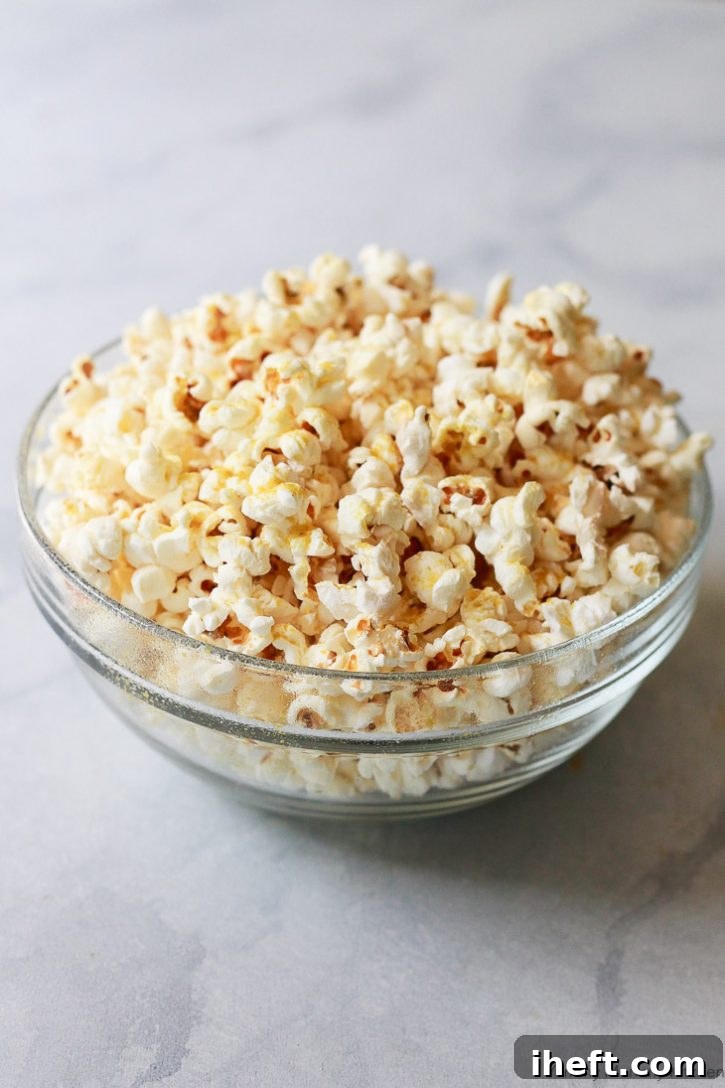
If you’re looking for a savory, “cheesy” flavor without dairy, nutritional yeast, affectionately known as “nooch,” is your secret weapon. It offers a distinctly nutty, savory, and umami flavor reminiscent of Parmesan cheese. Beyond its delicious taste, nutritional yeast is a nutritional powerhouse, packed with B vitamins and minerals. Simply sprinkle a generous amount over your hot popcorn along with a pinch of sea salt. Brands like Bragg’s or Trader Joe’s offer excellent quality nutritional yeast. Toss well to ensure even coating. This makes a wonderfully healthy and satisfying vegan snack.
2. Truffle Popcorn (Gourmet Indulgence)
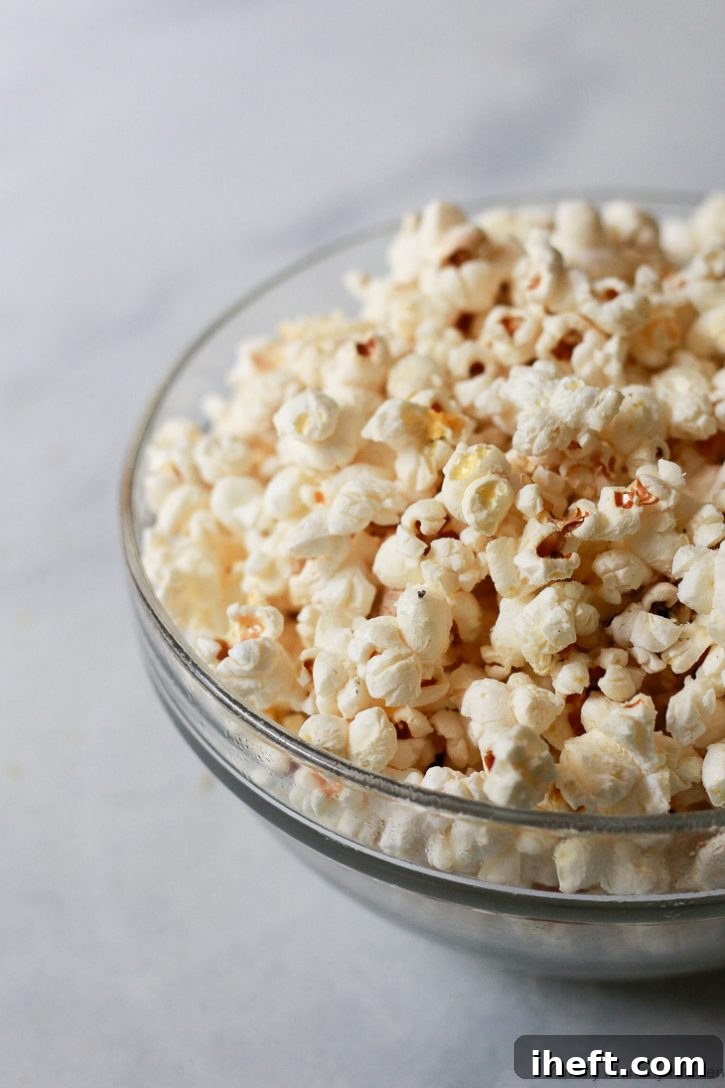
For a touch of gourmet luxury, truffle popcorn is a must-try. This one is my personal favorite! A pinch of high-quality truffle salt can transform almost any savory food, and popcorn is no exception. The earthy, aromatic notes of truffle elevate the simple popcorn to an incredibly sophisticated snack. Sprinkle truffle salt generously over your hot, freshly popped kernels and toss gently. For an extra layer of flavor, you can also drizzle a tiny bit of truffle oil before adding the salt, but be sparing as a little goes a long way!
3. Sweet & Salty Maple Nut Popcorn (Homemade Kettle Corn Delight)
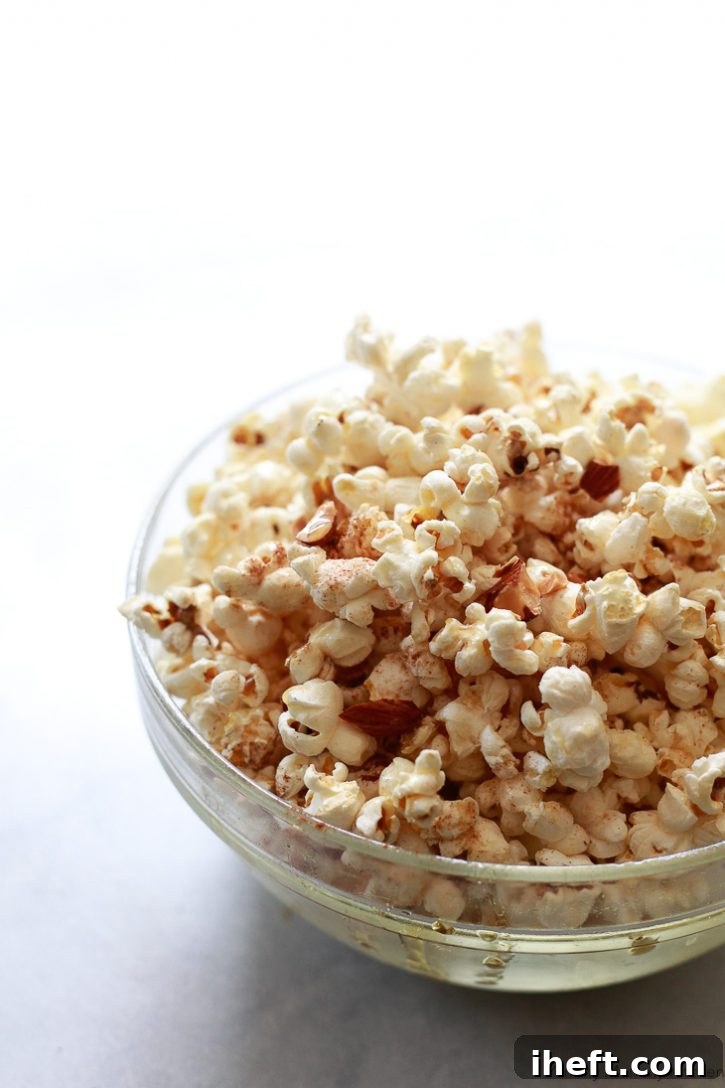
Do you adore the irresistible combination of sweet and salty, like caramel or kettle corn? This maple nut popcorn delivers a similar crave-worthy experience. To create this treat, gently warm a few tablespoons of pure maple syrup in a small saucepan until it becomes thin and pourable. Drizzle the warm maple syrup over your hot popcorn, then immediately add a pinch of sea salt and a handful of your favorite chopped nuts (pecans, walnuts, or almonds work wonderfully). Toss everything together quickly and thoroughly to coat the popcorn evenly before the syrup cools and becomes sticky. This sweet and salty snack is naturally vegan and gluten-free, making it a crowd-pleaser.
4. Dill Pickle Popcorn (Tangy and Zesty)
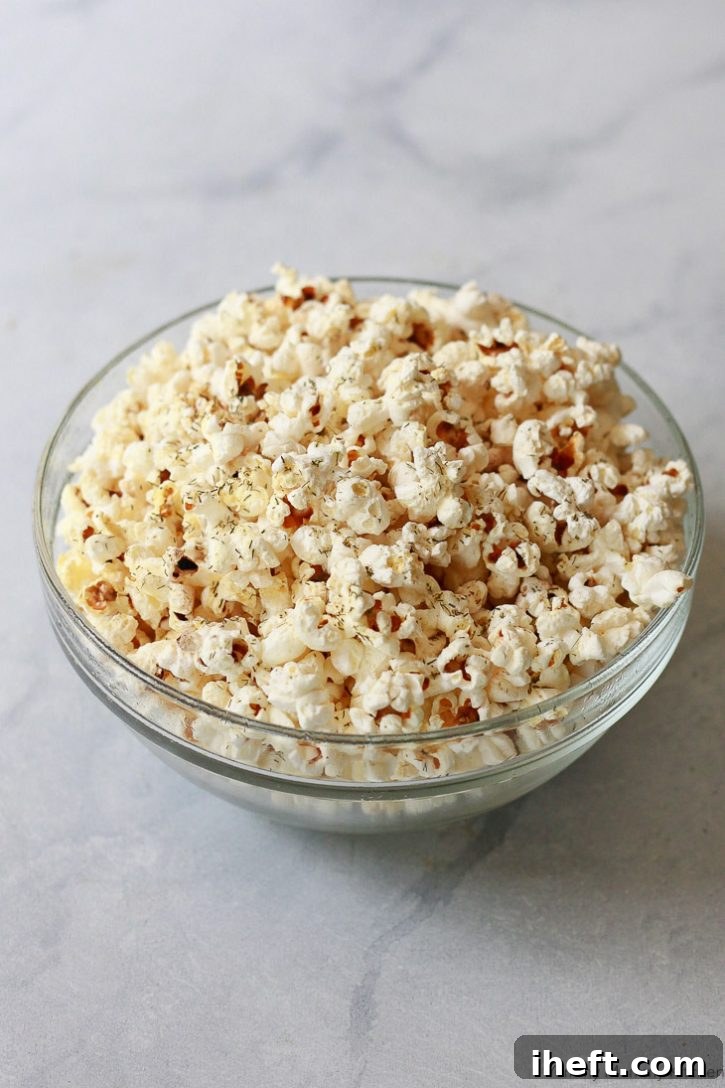
If you’re a fan of tangy, briny flavors, dill pickle popcorn is a fun and zesty option. You might have tried the pickle popcorn at Trader Joe’s – my kids certainly love it! We make a similar version at home that’s incredibly simple and delicious. After popping, lightly spritz a fine mist of pickle juice over the warm popcorn. Then, toss it with a generous amount of dried dill and a pinch of salt. While the homemade version might not have the exact intensity of some store-bought varieties, its fresh, herbaceous, and tangy profile is incredibly tasty and satisfying. Be careful not to drench the popcorn with pickle juice, as too much can make it soggy.
Stovetop Popcorn Tips and Tricks for Perfection
Achieving consistently perfect stovetop popcorn is an art that can be mastered with a few helpful tips and tricks:
- For Dry Seasonings: To help dry seasonings like nutritional yeast, garlic powder, or chili powder adhere better to the popcorn, lightly spritz the popped corn with a fine mist of olive oil, avocado oil, or even plain water before sprinkling your chosen spices. This creates a slightly tacky surface for the seasonings to stick to.
- Prevent Burning: It’s always better to err on the side of under-popping rather than over-popping. Burnt popcorn kernels can quickly ruin an entire batch. Remove the pot from the heat as soon as the popping slows significantly, even if there are a few unpopped kernels remaining. The residual heat in the pot will continue to pop a few more kernels.
- Timely Seasoning: Seasonings work best when added immediately after popping, while the popcorn is still hot and steamy. The warmth helps the flavors melt slightly and cling better to the popcorn. Transfer the hot popcorn to a large bowl and toss vigorously to ensure every piece is coated.
- Ventilation is Key: For crisper popcorn, you can slightly crack the lid (just a tiny bit!) during popping to allow some steam to escape. Too much steam trapped in the pot can lead to slightly chewier, less crisp popcorn. However, be mindful of flying kernels!
- Don’t Overfill the Pot: A single layer of kernels is crucial. Overfilling the pot will lead to uneven popping, a higher percentage of unpopped kernels (old maids), and potentially burnt popcorn because the heat won’t distribute effectively.
- Storage: If you have leftover popcorn, store it in an airtight container at room temperature. It will stay fresh and crispy for a day or two. Beyond that, it might start to get a bit stale.
- Cleanup: A heavy-bottomed pot generally makes cleanup easier. If you have any stubborn scorched bits, soak the pot in hot, soapy water for an hour before scrubbing.
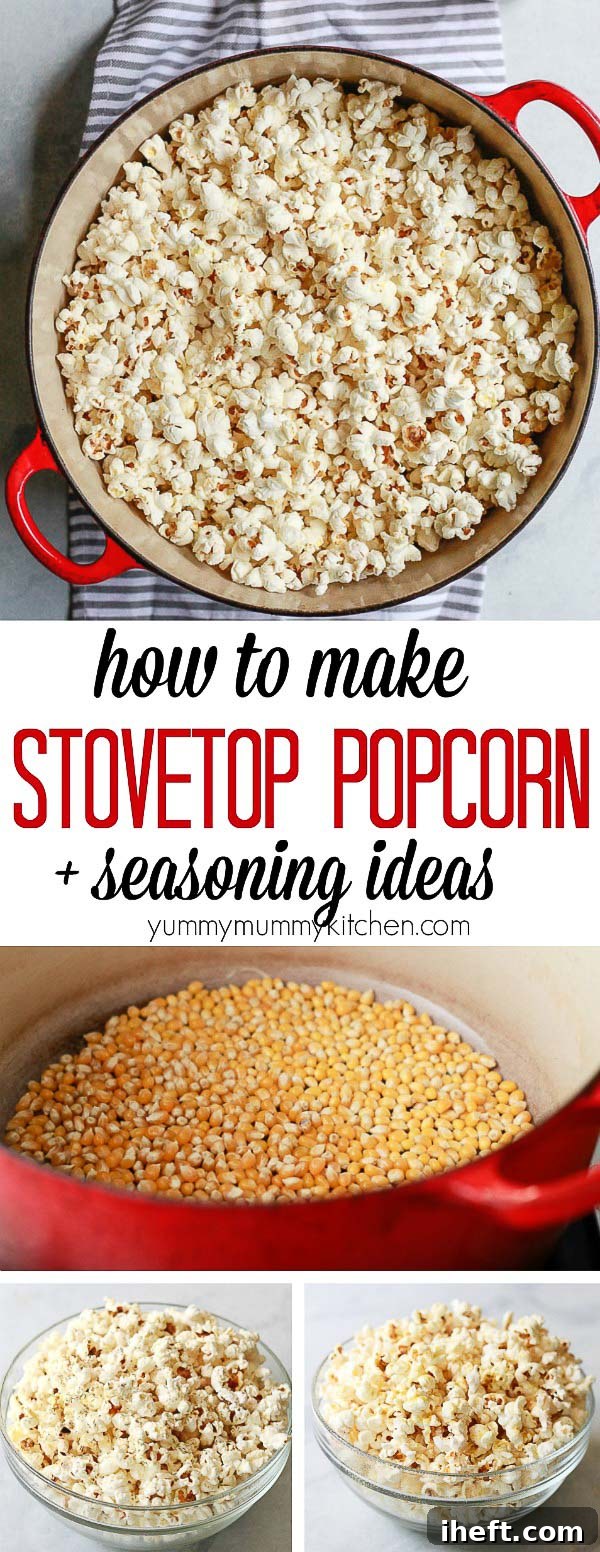
Homemade Stovetop Popcorn Recipe
Ready to make your own delicious, healthy stovetop popcorn? Here’s a quick summary of the recipe, designed for simplicity and incredible flavor.
Yield: Serves 8
Cook Time: 5 minutes
Total Time: 5 minutes
Ingredients
- 1 tablespoon coconut or olive oil
- 2/3 cup organic popping corn
- Optional Seasonings (choose one or more from below):
- Nutritional yeast + sea salt
- Garlic powder + sea salt
- Spritz pickle juice + dried dill + salt
- Truffle salt
- Warm maple syrup + chopped nuts + salt
- Ground cinnamon + coconut sugar
- Squeeze lime + chili powder
- Spray Bragg’s liquid aminos
Instructions
- In a large, heavy pot (a Dutch oven works best), heat the oil over medium-high heat. Add one test kernel of popping corn and place the lid on the pot.
- When the test kernel pops, remove the lid. Add a single layer of the remaining popping corn to the pot (approximately 2/3 cup for a large pot). Quickly replace the lid. This test kernel method ensures your pot has reached the perfect popping temperature.
- Cook with the lid on, shaking the pot occasionally (every 10-15 seconds) to ensure the popcorn cooks evenly and prevents burning. You will hear consistent popping for a few minutes, which will then slow down. Once the popping has slowed to 2-3 seconds between pops, immediately remove the pot from the heat. Be careful not to overcook, as popcorn can burn very quickly.
- Carefully transfer the hot popcorn to a large bowl. Add your desired seasonings directly to the bowl with the hot popcorn and shake or toss vigorously to combine evenly.
Notes
- Expand with Care: Be mindful that popcorn expands significantly when cooked! Approximately 3 tablespoons of un-popped kernels typically yield about 4 cups of popped corn. Always use a pot large enough to accommodate this expansion.
- Seasoning Adherence: This recipe uses minimal oil for popping. If you find your dry seasonings aren’t sticking well, a light spritz of water or cooking oil (such as olive or avocado oil) can help them adhere.
- Nutrition Information: The provided nutrition information is calculated without additional seasonings and is approximate. It is generated by a third-party application, and its accuracy is not guaranteed.
Nutrition Information:
Amount Per Serving (2 cups):
- Calories: 200
- Carbohydrates: 37g
- Fiber: 7g
- Protein: 6g
Making popcorn on the stove is a simple pleasure that connects us to a classic, wholesome snack. It’s not just about the delicious taste; it’s about the joy of creating something satisfying from scratch, controlling your ingredients, and customizing flavors to your heart’s content. With this guide, you’re now equipped to ditch the microwave bags and embrace the superior taste and quality of homemade stovetop popcorn. Experiment with seasonings, find your favorite, and enjoy this timeless, healthy treat!