How to Cut & Eat Papaya
Mastering Papaya: A Comprehensive Guide to Cutting, Eating, and Enjoying This Tropical Fruit
Are you eager to explore the delightful world of papaya? Whether you’re searching for exciting papaya recipes, wondering how to cut papaya, or simply curious about the best ways to eat papaya, you’ve landed in the perfect spot. This comprehensive guide will walk you through everything you need to know about this vibrant tropical fruit, from selection to sensational dishes. Get ready to discover the tastiest and healthiest ways to incorporate papaya into your diet, starting with an easy and delicious Hawaiian papaya boat perfect for breakfast!
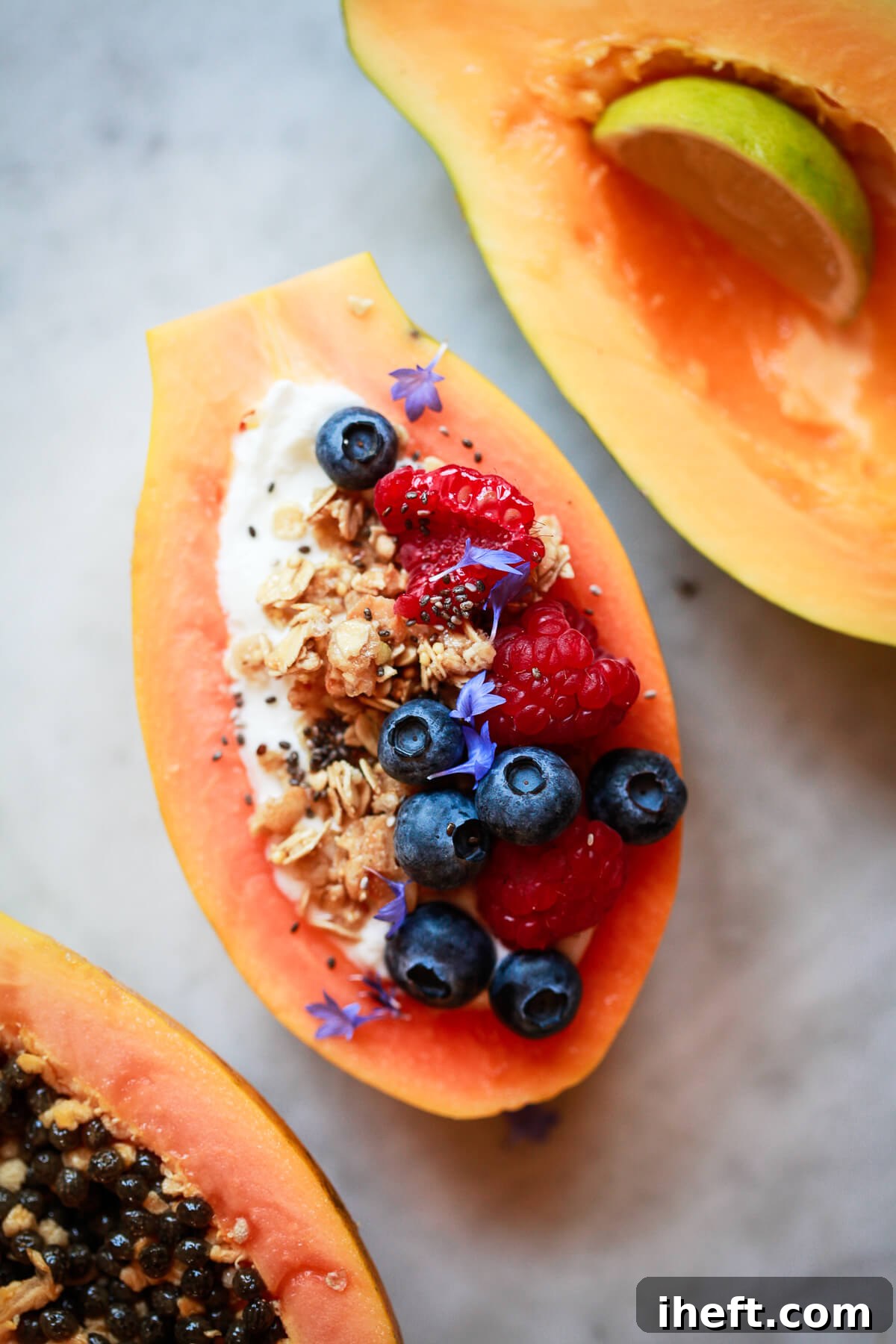
My recent stay at the exquisite Kahala Hotel in Honolulu reawakened my profound love for tropical fruits. There, I savored a refreshing papaya boat, generously filled with creamy yogurt and fresh berries – a simple yet unforgettable breakfast that truly highlighted the fruit’s natural sweetness and versatility. This experience reaffirmed my passion for exploring tropical and exotic fruits, especially when seeking a taste of paradise. Given the popularity of our guides on Pitaya (Dragon Fruit), How to Cut a Pineapple, and Avocados, it’s high time we shared our expert tips on how to properly cut and eat papaya. Today, we’ll focus specifically on the luscious Hawaiian papaya, a widely loved variety known for its vibrant flavor and tender flesh.
If you’re new to this remarkable fruit, you might be wondering about its unique seeds, how to enhance its flavor, or the myriad of culinary possibilities it offers. From its origins to its impressive nutritional profile, papaya is more than just a delicious snack; it’s a superfood waiting to be discovered. Let’s dive in and unlock the secrets of this tropical gem!
What is Papaya? A Tropical Delight
Papaya, scientifically known as Carica papaya, is a soft, fleshy fruit native to Central America and Southern Mexico. Today, it’s cultivated in many tropical regions worldwide, with significant production in Hawaii, Mexico, and other parts of Asia and South America. This pear-shaped fruit typically ranges in color from green when unripe to a beautiful golden yellow or orange when fully mature. Its flesh can vary from yellow to orange or even reddish-pink, depending on the variety.
The taste of ripe papaya is uniquely sweet and buttery, often described as a delicate blend of mango and melon, with a slightly musky undertone. Some find it to have a faint pungent aroma, which is less pronounced in Hawaiian varieties. Unripe green papaya, on the other hand, is crisp and almost vegetable-like, making it a popular ingredient in savory dishes and salads in many cuisines.
The Nutritional Powerhouse: Health Benefits of Papaya
Beyond its delectable taste, papaya is a true nutritional powerhouse, packed with vitamins, minerals, and enzymes that offer a wide array of health benefits. Incorporating this tropical fruit into your diet is an excellent way to boost your overall well-being:
- Rich in Vitamin C: Papaya is an exceptional source of Vitamin C, a powerful antioxidant that supports a healthy immune system, protects against free radical damage, and plays a crucial role in collagen production for healthy skin.
- Abundant in Vitamin A: In the form of beta-carotene, Vitamin A in papaya is essential for vision health, skin integrity, and immune function.
- Digestive Aid: One of papaya’s most renowned benefits is its high content of papain, a powerful proteolytic enzyme that aids in breaking down proteins. This makes papaya an excellent natural remedy for indigestion and can even help tenderize meat.
- High in Fiber: Dietary fiber in papaya promotes healthy digestion, prevents constipation, and contributes to a feeling of fullness, which can be beneficial for weight management.
- Antioxidant Properties: Besides Vitamin C and beta-carotene, papaya contains other antioxidants like lycopene (especially in red-fleshed varieties), which have been linked to reducing the risk of chronic diseases and promoting heart health.
- Anti-inflammatory Effects: The combination of papain and chymopapain (another enzyme) contributes to papaya’s anti-inflammatory properties, potentially helping to reduce inflammation throughout the body.
- Potassium Rich: Papaya is a good source of potassium, an essential mineral for maintaining fluid balance, nerve signals, and muscle contractions, including those of the heart.
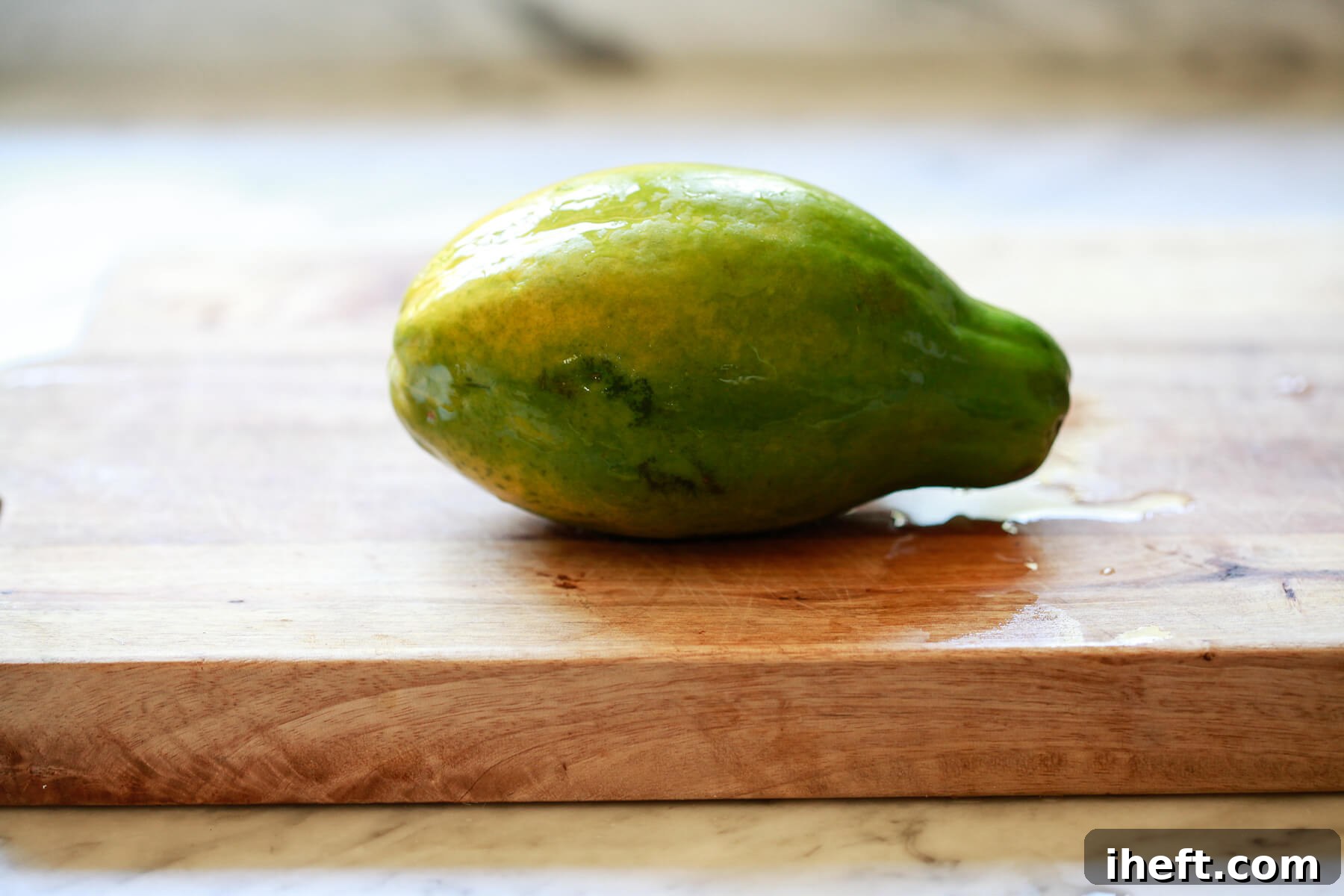
A slightly underripe Hawaiian papaya, ready for ripening.
How to Tell if a Papaya is Ripe
Knowing how to select a perfectly ripe papaya is key to enjoying its best flavor. Papayas are often harvested green to withstand the rigors of shipping, meaning you might need to ripen them at home. Think of it like an avocado or a pear – you want it ripe but not overly soft or mushy. Here’s how to ensure your papaya is ready to eat:
- Color is Key: A perfectly ripe papaya should exhibit skin that has largely transitioned from green to a vibrant golden or yellow hue. It’s normal for some green patches to remain, especially near the stem, but the predominant color should be yellow.
- Gentle Pressure Test: When you gently press the skin of the papaya, there should be a slight, noticeable give, similar to a ripe avocado or a firm peach. Avoid papayas that feel rock hard (underripe) or excessively soft and squishy (overripe).
- Aroma Check: A ripe papaya will often emit a subtle, sweet, and fragrant aroma at its stem end. If it has no smell, it’s likely underripe. If it smells overly sweet or fermented, it might be past its prime.
- Flesh Texture: Once cut, the flesh of a ripe papaya should have a consistency akin to a soft pear – tender and juicy, neither crunchy nor mushy.
If your papaya is mostly green, simply leave it on your kitchen counter at room temperature for a day or two. You can speed up the ripening process by placing it in a paper bag with a banana or apple, which release ethylene gas.
Papaya Seeds: Edible or Not?
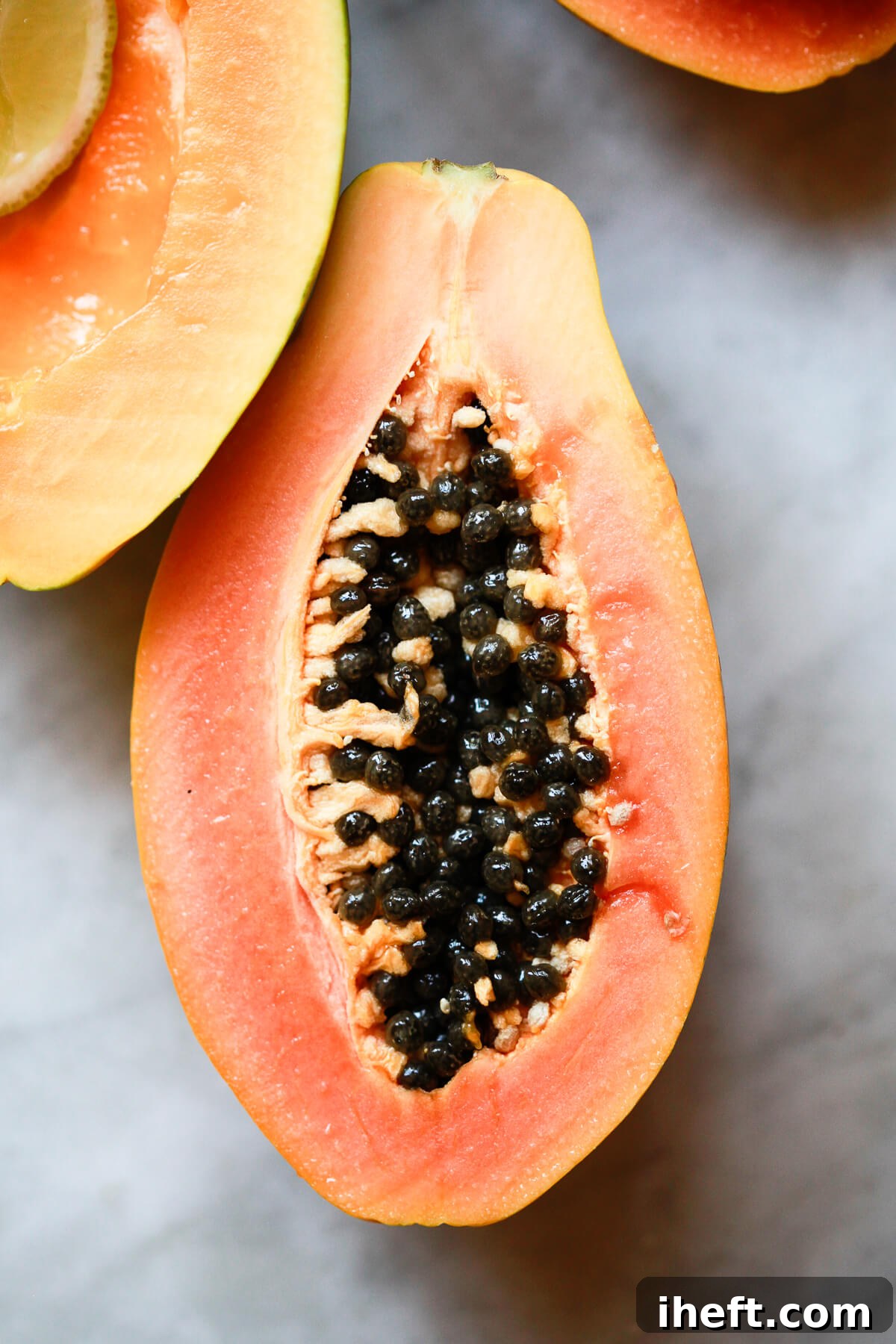
Upon cutting open a papaya, you’ll find a cavity filled with small, round, black seeds. Many people instinctively scoop these out and discard them, but here’s a little secret: papaya seeds are entirely edible! In fact, they offer their own unique flavor and health benefits.
- Taste Profile: Papaya seeds have a distinct peppery, slightly bitter, and pungent flavor, often compared to black peppercorns or mustard seeds.
- Nutritional Value: They contain various beneficial compounds, including antioxidants, fiber, and healthy fats.
- Culinary Uses:
- Dressings: You can rinse, dry, and grind papaya seeds to use as a peppery addition to salad dressings, like a Papaya Seed Vinaigrette.
- Seasoning: Crush them fresh or dried and sprinkle over salads, soups, or roasted vegetables for an intriguing kick.
- Marinades: The enzymes in the seeds can also aid in tenderizing meats, similar to the flesh of the fruit.
While some find the taste too intense, others appreciate their unique zest. Don’t hesitate to give them a try! Simply scoop them out, give them a quick rinse, and experiment with their flavor.
How to Cut Papaya 3 Ways
Preparing papaya is incredibly simple, and pre-cutting can make it an ideal healthy snack for school, work, or quick breakfasts at home. The easiest method often involves simply halving the fruit, scooping out the seeds, and enjoying it straight from the skin with a spoon. However, if you prefer a more refined presentation or need it for recipes, here are three popular ways to cut papaya:
1. Papaya Boats (The Easiest Method)
- Wash and Prepare: Gently wash the papaya under cool water. Place it on a stable cutting board.
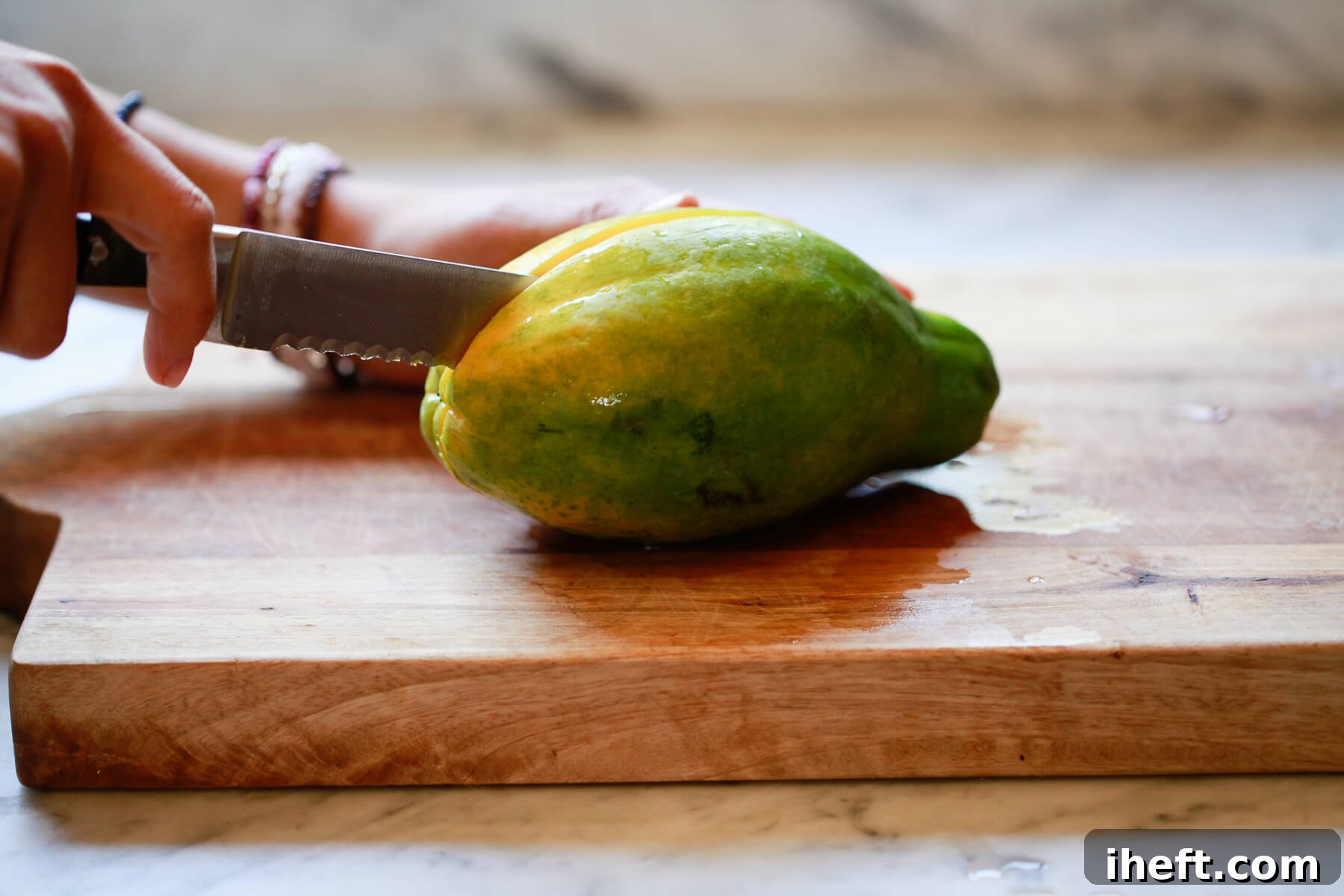
- Halve the Fruit: Carefully cut the papaya in half lengthwise, from the stem to the bottom.
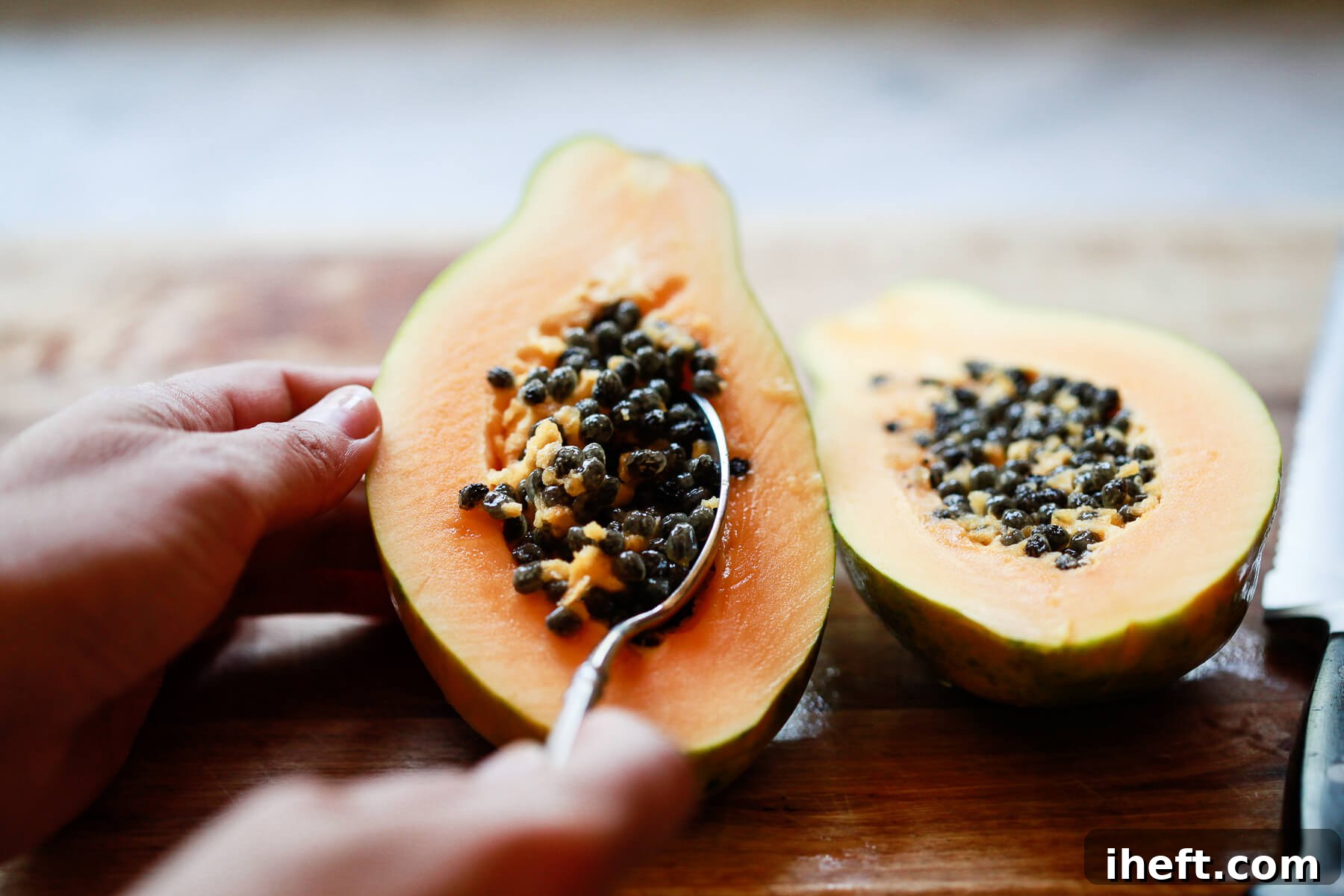
- Remove Seeds: Use a spoon to scoop out all the black seeds from the center cavity. Remember, these are edible, so you can discard them or save them for later.
- Serve: You now have two perfect papaya halves, ready to be filled or eaten as is. This method is fantastic for breakfast bowls or simple serving.
2. Papaya Slices or Cubes (Versatile for Salads and Dishes)
- Halve and Seed: Follow steps 1 and 2 from the “Papaya Boats” method – wash, cut in half lengthwise, and scoop out the seeds.
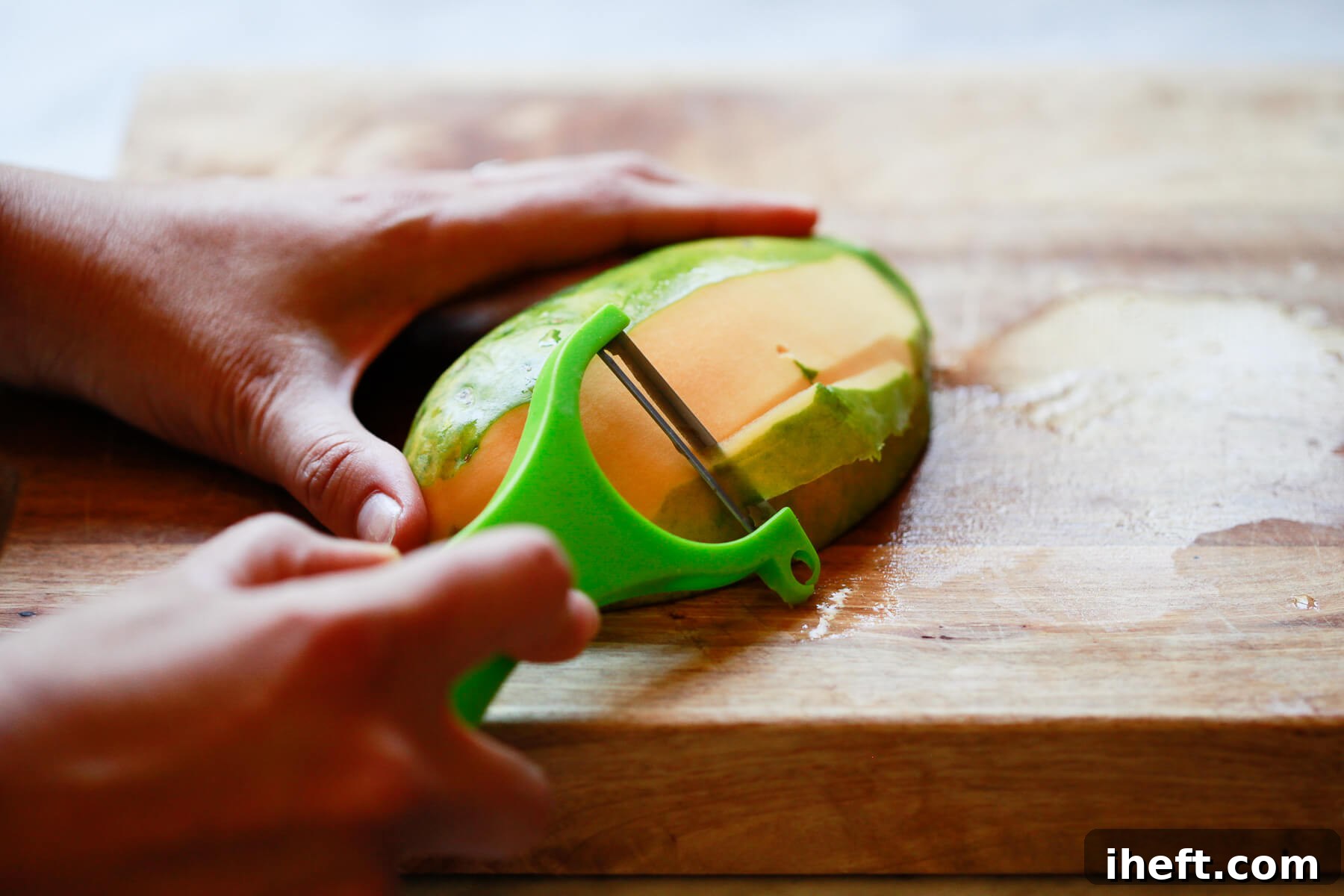
- Peel the Skin: Place each papaya half cut-side down on your cutting board. Using a vegetable peeler or a sharp knife, carefully peel away the skin from the fruit. Discard the skin.
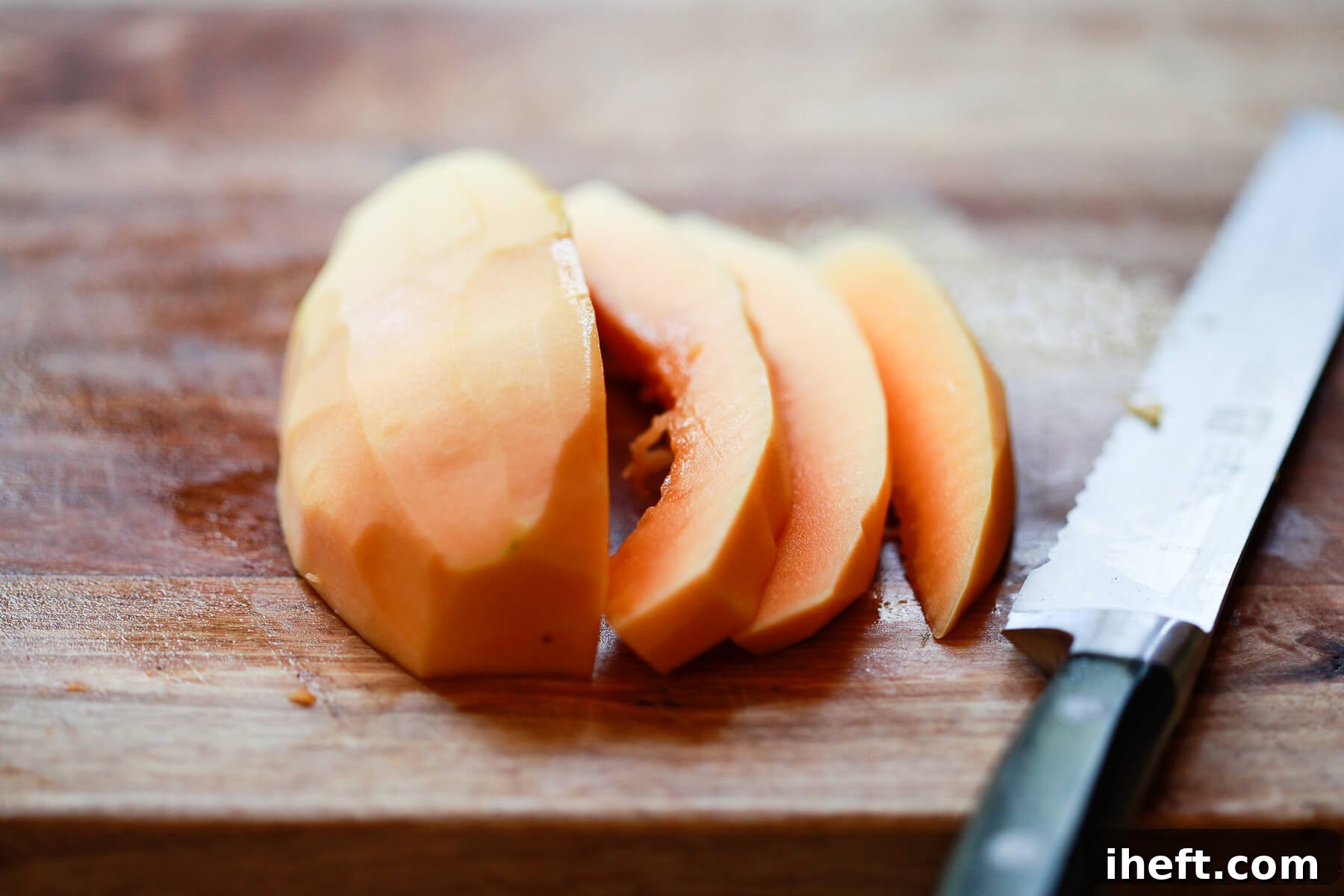
- Slice or Cube: Once peeled, cut the papaya halves into desired slices, wedges, or cubes. For cubes, it’s often easiest to cut the halves into thick strips first, then chop the strips into uniform cubes.
- Store or Serve: Arrange the slices or cubes on a plate, or store them in an airtight container in the refrigerator. A squeeze of fresh lime juice can help prevent browning and enhance flavor.
3. Papaya Balls (Elegant for Fruit Salads and Garnishes)
- Halve and Seed: Begin by washing, cutting the papaya in half lengthwise, and scooping out the seeds.
- Peel: Peel the skin from the papaya halves as described in step 2 of the “Papaya Slices or Cubes” method.
- Scoop Balls: Using a melon baller, carefully scoop out round balls of papaya flesh. This creates a visually appealing presentation.
- Serve: These delicate papaya balls are wonderful for fruit salads, garnishes, or simply eaten on their own.
Whichever method you choose, always ensure your knives are sharp and you’re working on a stable surface for safety.
How to Eat Papaya + Best Recipes & Ideas
Papaya’s mild, sweet flavor pairs beautifully with a touch of acidity. A simple squeeze of fresh lime juice can truly elevate its taste, adding a bright tanginess that cuts through its natural sweetness. This is why plain yogurt, with its subtle tartness, complements papaya so wonderfully, making those papaya boats an absolute breakfast favorite. Here are some of the best ways to enjoy papaya, from quick snacks to refreshing meals:
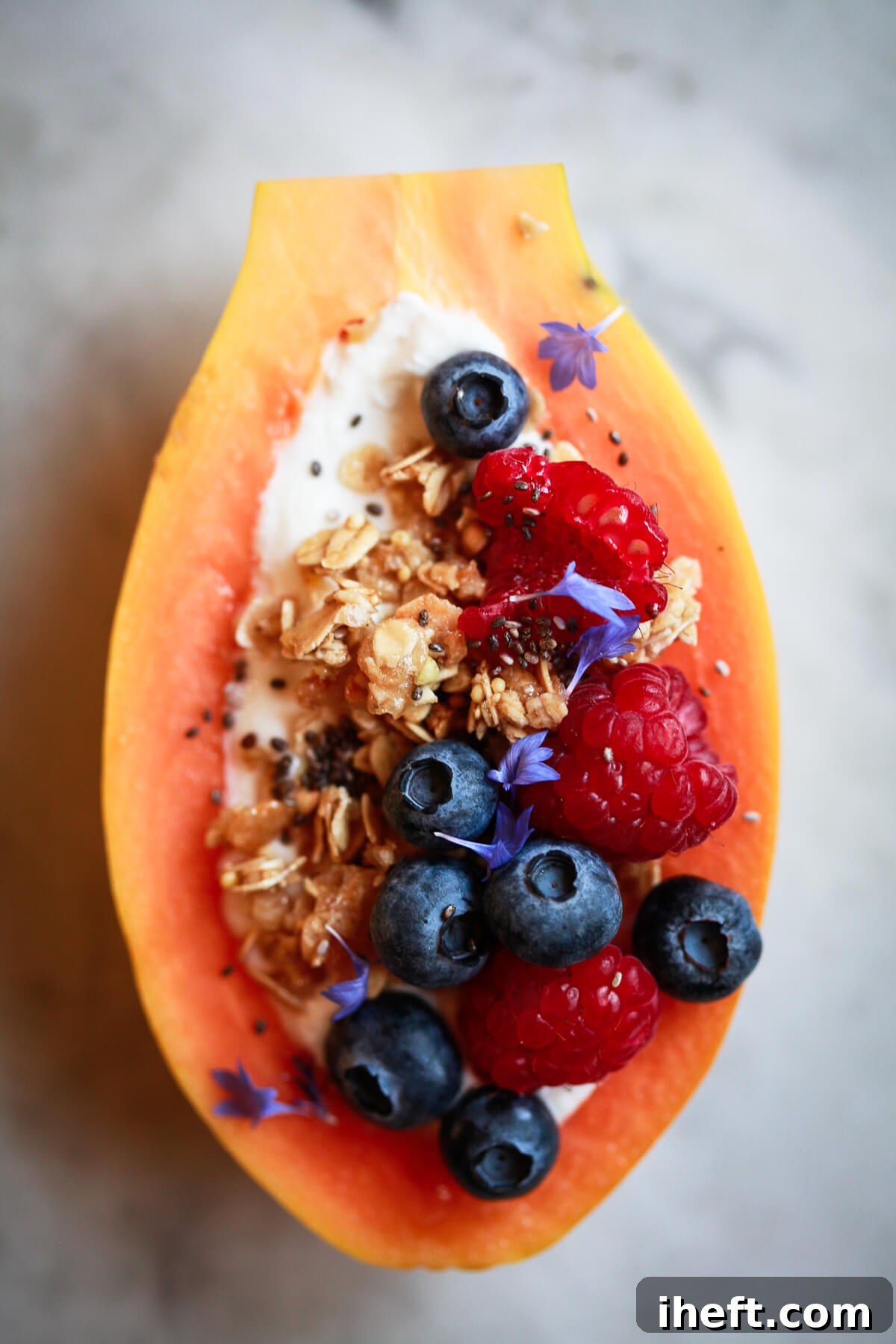
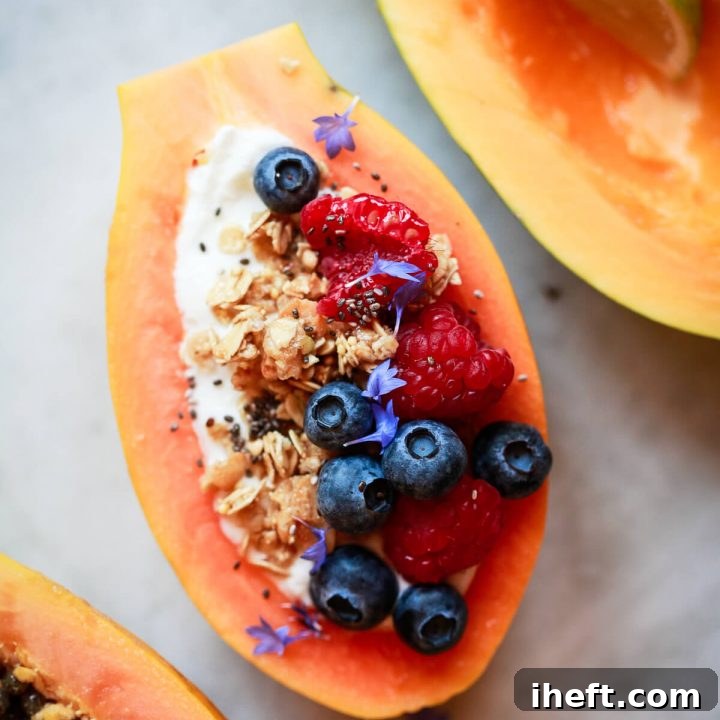
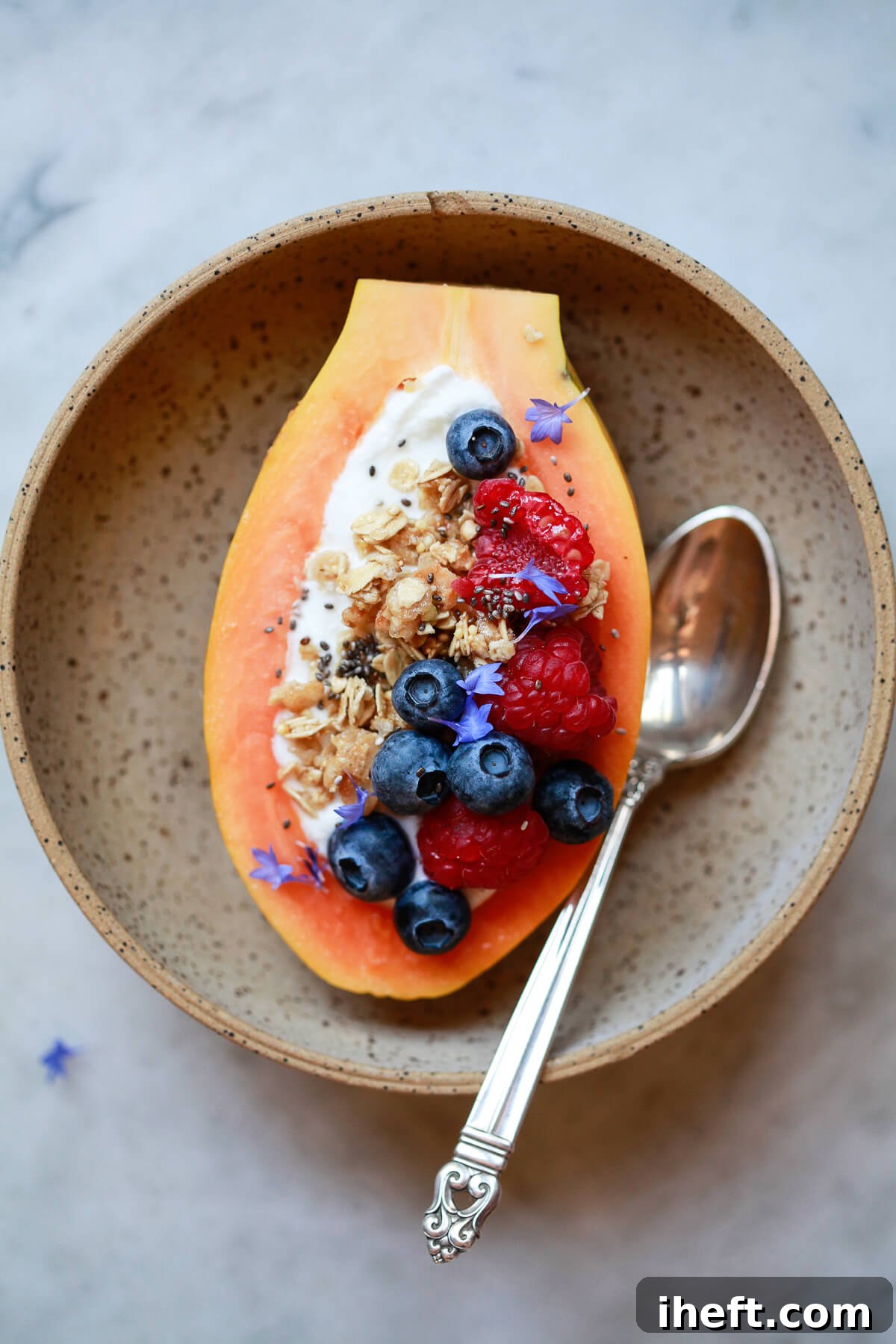
- The Classic Breakfast Boat: This is a quintessential Hawaiian experience! Fill a hollowed-out papaya half with ½ cup of plain Greek yogurt, then top generously with your favorite fresh berries, crunchy granola, and a sprinkle of chia seeds for added texture and nutrition. It’s a healthy, satisfying, and beautiful start to your day.
- Acai Papaya Boat: For a superfood twist, fill a hollowed-out papaya half with your favorite Acai Bowl recipe. The vibrant flavors and textures create an energizing meal.
- Refreshing Papaya Smoothie: Blend chunks of fresh or frozen peeled papaya with other tropical fruits like pineapple, banana, and mango. Add a splash of coconut water or almond milk for a creamy, revitalizing beverage. Papaya’s natural sweetness means you often won’t need added sugar.
- Fresh Papaya Juice: For a pure and invigorating drink, simply pass seeded papaya chunks through a juicer. You can enjoy it as is or combine it with other fruit juices. Explore more juicing recipes here.
- Tropical Fruit Salads: Combine cubed papaya with other colorful fruits such as mango, kiwi, pineapple, and berries. A light dressing of lime juice and a hint of mint can make this salad truly shine.
- Savory Papaya Salads: Unripe (green) papaya is a staple in Southeast Asian cuisine, famously used in Thai Som Tum (Green Papaya Salad). Its crisp texture and mild flavor absorb dressings beautifully, making it perfect for zesty, spicy, or tangy salads.
- Marinades for Meat: The papain enzyme in papaya makes it an excellent natural meat tenderizer. Blend a small amount of unripe papaya into a marinade for chicken, pork, or beef to achieve incredibly tender results.
- Desserts: Papaya can be used in light desserts like sorbets, custards, or even gently grilled and served with a scoop of vanilla ice cream.
- Agua Fresca: For a light and hydrating drink, try this delightful Papaya and Lime Agua Fresca.
- Salsa: Papaya adds a wonderful sweet and tangy counterpoint to spicy salsas. Combine diced papaya with red onion, jalapeño, cilantro, and lime juice for a fresh Papaya Salsa perfect for fish tacos or grilled chicken.
- Exotic Salad: For a unique and flavorful side, try this vibrant Avocado Papaya Salad.
Storage Tips for Papaya
Proper storage ensures you get the most out of your papaya:
- Unripe Papaya: Store green, unripe papayas at room temperature on your kitchen counter. They will gradually ripen over a few days. You can place them in a paper bag to speed up the process.
- Ripe Papaya: Once ripe (mostly yellow with a slight give), whole papayas can be stored in the refrigerator for up to 5-7 days to extend their freshness.
- Cut Papaya: For cut papaya, place the slices, cubes, or halves in an airtight container and refrigerate. It will stay fresh for 3-4 days. A squeeze of lime juice can help maintain its color and flavor.
- Freezing Papaya: Yes, you can freeze papaya! Peel and seed the fruit, then cut it into chunks. Spread the chunks in a single layer on a baking sheet and freeze until solid. Transfer the frozen chunks to a freezer-safe bag or container. Frozen papaya is excellent for smoothies and can last for several months.
Frequently Asked Questions About Papaya
Here are answers to some common questions about this versatile fruit:
- Does papaya taste good? Absolutely! Ripe papaya has a sweet, juicy, and buttery flavor, often described as a cross between a mango and a cantaloupe, with a slightly musky undertone. Its mildness makes it very versatile.
- What is the best way to eat papaya? This largely depends on personal preference! Many enjoy it simply halved with a squeeze of lime juice, while others love it in smoothies, fruit salads, or as a breakfast boat with yogurt and granola.
- Can I eat papaya skin? While papaya skin is generally not harmful to consume, it is typically discarded due to its tough texture and bitter taste. It’s best to peel papaya before eating, especially when fresh.
- What are the benefits of eating papaya daily? Eating papaya daily can provide a consistent intake of Vitamin C, Vitamin A, fiber, and beneficial enzymes like papain, supporting digestion, immune health, skin vitality, and overall well-being.
- What can I substitute for papaya? If you can’t find papaya, fruits like mango, cantaloupe, or honeydew melon can be good substitutes in terms of texture and sweetness for fruit salads and smoothies, though the flavor profile will be different. For the digestive enzyme benefits, pineapple is a good alternative due to its bromelain content.
- Is green papaya different from ripe papaya? Yes, significantly! Green (unripe) papaya is firm, crisp, and less sweet, with a more neutral, almost vegetable-like flavor. It’s used in savory dishes, salads (like Thai green papaya salad), and as a tenderizer. Ripe papaya is soft, sweet, and typically eaten raw.
How to Cut & Eat Papaya
3 minutes
3 minutes
Papaya is a nutritious tropical fruit that’s versatile and delicious. Here’s how to eat and cut papaya three different ways, plus how to make a Hawaiian papaya boat.
Ingredients
Plain Cut Papaya
- 1 ripe papaya
- 1 lime wedge
Hawaiian Papaya Boats
- 5 oz. plain Greek style yogurt
- 1/3 cup fresh berries
- 1/4 cup granola
- 1 teaspoon chia seeds
Instructions
- Wash your papaya and place it on a cutting board. Cut about ½ inch off of the stem end. Then cut the papaya in half lengthwise.

- For halves, use a spoon to scoop the seeds out of the papaya. Discard, or save for later, as they are edible. Squeeze lime over and eat right out of the skin, or use a melon baller to make balls.
- For slices, cut the fruit in half lengthwise and scoop out the seeds. Set cut-side-down on a cutting board. Use a vegetable peeler to peel the fruit.
- Cut the papaya into slices or cubes and squeeze lime over.
- To make Hawaiian Papaya Boats, fill halves with seeds removed with yogurt. Top with granola, berries, and chia seeds and enjoy right away.
Notes
Cut papaya will last in an airtight container in the refrigerator for up to 3-4 days.
Your papaya is ripe when it’s turned from green to golden yellow in some places. It will still have some green patches. It should also give just slightly when squeezed.
Nutrition Information:
Yield: 2 |
Serving Size: 1
Amount Per Serving:
Calories: 212 |
Trans Fat: 0g |
Unsaturated Fat: 4g |
Sodium: 66mg |
Carbohydrates: 36g |
Fiber: 6g |
Sugar: 21g |
Protein: 7g
Nutrition information is automatically calculated by Nutritionix. I am not a nutritionist and cannot guarantee accuracy. If your health depends on nutrition information, please calculate again with your favorite calculator.
Conclusion: Embrace the Papaya Experience
From its vibrant hues to its sweet, delicate flavor and impressive health benefits, papaya is truly a gift from the tropics. Whether you prefer it simply sliced with a squeeze of lime, transformed into a nourishing breakfast boat, or blended into a refreshing smoothie, this versatile fruit offers endless culinary possibilities. We hope this guide empowers you to confidently choose, cut, and enjoy papaya, bringing a taste of paradise and a boost of nutrition to your everyday meals. So, go ahead – grab a papaya, and embark on your own delicious tropical adventure!