
Your Journey into the 7 Chakras Understanding Colors Stones and Healing
As a cornerstone of our comprehensive yoga and mind-body wellness series, we embark on an enlightening journey into the world of chakras. This article serves as an essential guide for beginners, offering a detailed overview of the 7 main chakras – their profound meanings, precise locations within the body, vibrant chakra colors, and effective healing practices. Get ready to unlock a deeper understanding of your energetic self.
If you’ve ever delved into the transformative practice of yoga, you’ve likely encountered terms like “third eye” and “root.” Yogis frequently emphasize grounding down through the root chakra or focusing intent through the third eye. These references, however, merely scratch the surface of a vast and ancient energetic system. A deeper understanding of chakras is not just for advanced practitioners; it’s a powerful tool that can profoundly enrich your yoga practice, cultivate mindfulness, enhance overall health, and foster holistic well-being.
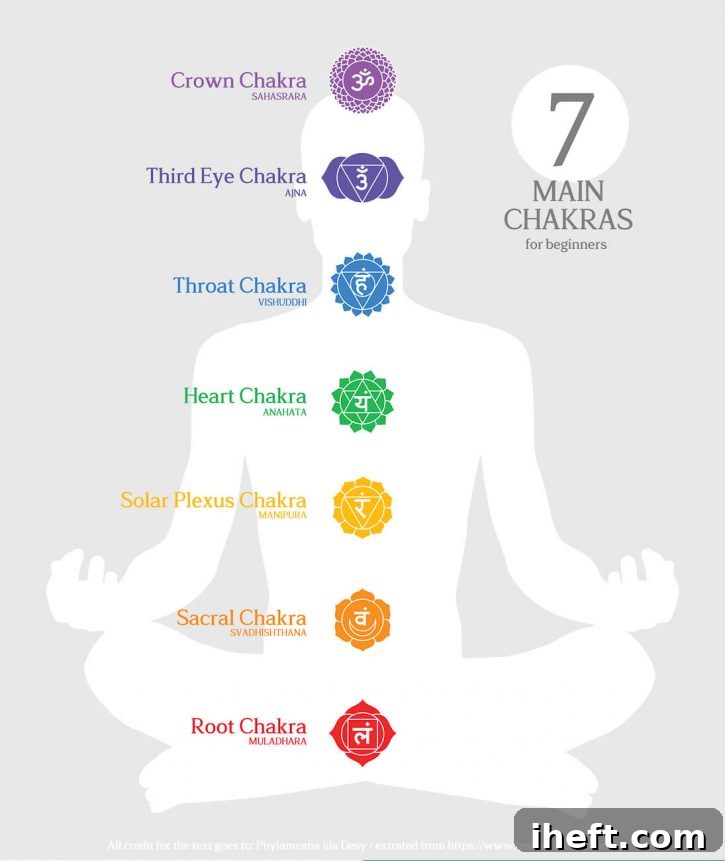
This beginner-friendly guide will illuminate the seven primary chakras, detailing their locations on the body, the powerful symbolism each represents, and their associated vibrant colors. We aim to provide an accessible foundation for grasping these intricate energy centers, paving the way for more in-depth explorations in future articles. Prepare to connect with your inner energy and embark on a path to greater self-awareness and balance.
What is a Chakra? Exploring the Energetic Wheels of Life
The word “Chakra,” often spelled “Cakra,” originates from Sanskrit and translates to “wheel” or “disk.” This ancient term refers to the vital energy points that exist within the subtle body, acting as swirling vortexes of energy. The foundational concepts of the chakra system were first documented in the sacred texts known as the Vedas, an integral part of ancient Indian spiritual wisdom dating back between 1500-500 B.C. These texts describe a complex network of energy channels, known as nadis, through which prana (life force energy) flows, with chakras acting as crucial hubs.
While some traditional yogic texts suggest the existence of as many as 88,000 chakras throughout the body, the system most commonly referenced and studied focuses on seven major chakras. These seven primary energy centers are strategically aligned along the spine, extending from the base (the root chakra) to the crown of the head (the crown chakra). As their name suggests, chakras are envisioned as dynamic, spinning wheels of energy, constantly receiving, assimilating, and transmitting life force. Each of these magnificent seven chakras possesses its own unique symbol, often depicted as a lotus flower with a specific number of petals, along with a distinct associated color, gemstone, element, sound (mantra), and governing principles.
Fundamentally, chakras can be understood as crucial portals through which energy is exchanged between our physical body, our subtle energy body, and the vast universe around us. They act as a bridge, harmonizing the physical and spiritual realms of our existence. By understanding the intricate functions and interconnectedness of these seven chakras, individuals can gain profound insights into their physical health, emotional patterns, mental clarity, and spiritual growth. This ancient concept is deeply interwoven with the practice of yoga, forming an inseparable bond that has guided practitioners toward holistic well-being for millennia.
Are Chakras Real? The Science of Energy and Consciousness
For those new to the concept, the idea of invisible spinning energy wheels might initially seem abstract or “out there.” However, modern science, particularly in fields like quantum physics and neuroscience, is increasingly offering explanations that resonate with these ancient wisdom traditions. The scientific community has extensively studied both energy and the immense power of mindfulness, revealing tangible connections to our overall well-being.
As the visionary physicist Albert Einstein famously asserted, “Everything is energy and that’s all there is to it. Match the frequency of the reality you want, and you cannot help but get that reality. It can be no other way. This is not philosophy. This is physics.” This profound statement underscores the fundamental principle that our entire universe, including ourselves, is composed of energy vibrating at various frequencies. From this perspective, the concept of chakras as energy centers within the body aligns perfectly with a scientific understanding of reality. Our thoughts, emotions, and physical states are all manifestations of energy, influencing and being influenced by these energetic hubs.
Chakra work, applied for physical, emotional, and spiritual healing, has been a cornerstone of many cultures and spiritual practices for centuries. As Margarita Alcantara beautifully articulates in her insightful book, Chakra Healing, “many physical symptoms are expressions of what hasn’t been addressed in the energy body.” This highlights the intimate connection between our subtle energy system and our physical health. Think about instances where you’ve experienced a tension headache induced by stress, the deep ache of emotional heartache, or the unsettling flutter of a nervous stomach. These common experiences vividly illustrate how deeply intertwined our energy and our physical bodies truly are, demonstrating that our emotional and mental states directly impact our physical sensations and well-being. Recognizing this interconnectedness is the first step towards embracing chakra healing.
Understanding Chakra Imbalance: Signs and Symptoms
A common question arises for those exploring chakras: “How do I know if I have a chakra blockage or an imbalance?” The subtle energy system of the chakras is dynamic and can become imbalanced due to stress, trauma, lifestyle choices, or unresolved emotions. Athena Perrakis, in her comprehensive work, The Ultimate Guide to Chakras, notes that common symptoms indicative of a chakra blockage can include persistent sluggishness, feelings of profound sadness, or difficulty maintaining a consistent sleep pattern throughout the night. These general indicators suggest that the vital life force energy may not be flowing freely through one or more of your primary energy centers.
However, an imbalance can manifest in far more specific ways, often corresponding to the particular chakra affected. For instance, a blocked root chakra might manifest as feelings of insecurity, anxiety about financial stability, or issues with the lower body or digestive system. An imbalanced throat chakra could lead to difficulties in expressing oneself authentically, frequent sore throats, or social anxiety. Conversely, an overactive chakra might also present challenges; for example, an overactive solar plexus could lead to an overly dominant or aggressive personality, while a deficient solar plexus might result in a lack of confidence.
Cultivating self-awareness is paramount in identifying these imbalances. Engaging in mindful movement practices, such as a focused walk or a dedicated yoga session, along with regular meditation, are excellent ways to tune into our energy body. These practices allow us to gently assess our internal landscape, noticing any areas that feel stagnant, overactive, or simply “off.” By paying close attention to both our physical sensations and our emotional states, we can begin to pinpoint where our energy might be out of alignment, thereby initiating the journey toward healing and restoration.
Chakra Healing: Restoring Harmony and Flow
In ancient Ayurvedic medicine, a holistic healing system from India, illness is frequently understood not merely as a physical ailment but as a manifestation of an energy blockage or imbalance within one or more of the body’s chakras. This perspective mirrors principles found in other Eastern medicine traditions, such as Traditional Chinese Medicine, where practices like acupuncture are rooted in the belief that blockages in energy pathways (meridians) can lead to profound imbalances across the mind, body, and spirit. We have explored similar concepts related to energy and holistic health in our articles on New Moon Rituals, Moon Water, and Food Combining, underscoring the universal theme of energetic flow.
The very essence of quantum mechanics teaches us that energy is never truly at rest; it is constantly in motion, vibrating, and transforming. The core idea behind the chakra system is that, in an ideal state of health and well-being, energy should flow freely and effortlessly between all seven chakras, ascending and descending, creating a vibrant and balanced energetic field. When this flow is disrupted, blockages occur, leading to the symptoms and imbalances discussed previously.
The journey of healing a chakra blockage inherently begins with cultivating mindfulness and a conscious awareness of the existing imbalance. This means taking time to observe your thoughts, emotions, and physical sensations without judgment. Once awareness is established, various holistic practices can be employed to restore the efficient flow of energy. Yoga and meditation are among the most powerful and time-tested methods for promoting energetic balance. Specific meditations can be tailored to each chakra, focusing on visualization, breathwork (pranayama), and affirmations to stimulate and clear particular energy centers. Similarly, various yoga asanas (poses) are known to directly activate and balance specific chakras, helping to release stagnant energy and encourage a harmonious flow throughout the entire system. Beyond these, other modalities like sound healing, aromatherapy with essential oils, crystal healing, dietary adjustments, and nature immersion can also play significant roles in supporting chakra healing.
The 7 Chakras: Meanings, Colors, and Healing Practices
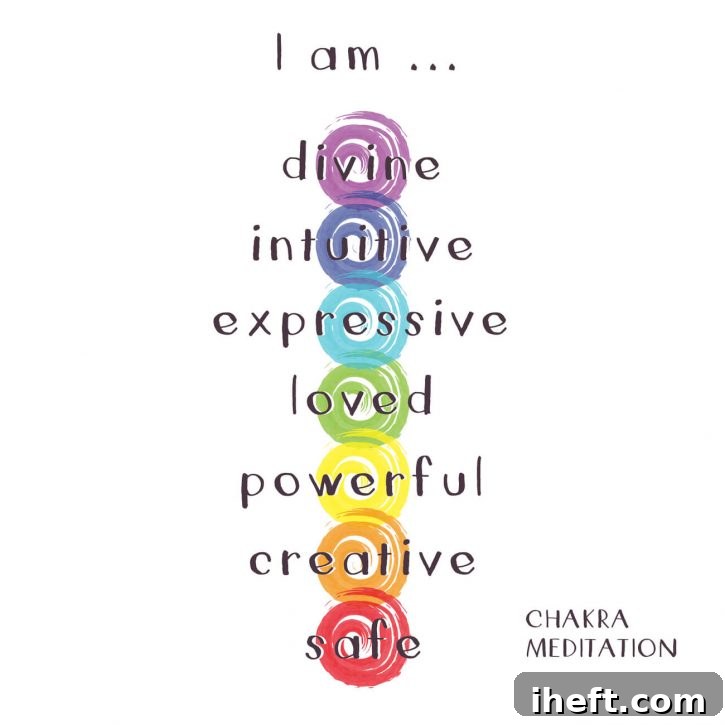
Each of the seven primary chakras holds unique significance, governing different aspects of our physical, emotional, and spiritual well-being. They are distinct yet interconnected, forming a holistic system that influences our entire being. Represented by specific chakra colors and situated at precise locations along the spine, understanding each one is key to achieving balance. In addition to their core characteristics, various tools such as crystals, essential oils, and affirmations can powerfully assist in the healing and harmonization of each individual chakra.
7. Crown Chakra (Sahasrara) – The Seat of Divine Connection
- Location: At the very top of your head, extending upwards.
- Color: Violet or pure white.
- Symbolism: The Crown Chakra, known as Sahasrara (meaning “thousand-petaled lotus”), is our ultimate energetic gateway to the Divine, Universal Consciousness, Spirit, and infinite wisdom. It represents pure consciousness, spiritual connection, enlightenment, and unity.
- When in Balance: You experience profound feelings of interconnectedness, spiritual wisdom, deep inner peace, universal love, and a clear sense of purpose. You feel guided and at one with the cosmos.
- Signs of Imbalance: Can manifest as spiritual cynicism, feelings of disconnection, apathy, a sense of meaninglessness, depression, or an overemphasis on intellectualism without spiritual grounding. Physical symptoms might include chronic fatigue, sensitivity to light/sound, or neurological disorders.
- Healing Practices: Meditation, silent contemplation, spending time in nature, practicing gratitude, selfless service, prayer, and engaging in spiritual studies.
- Crystals/Stones: Amethyst, Selenite, Clear Quartz, Purple Fluorite, Charoite.
- Essential Oils/Herbs: Lavender, Frankincense, Sandalwood, Palo Santo, Pink Lotus, St. John’s Wort.
- Mantra: “I understand and am connected.” or “I am divine.”
6. Third Eye Chakra (Ajna) – The Center of Intuition and Insight
- Location: Directly between the eyebrows, slightly above the physical eyes.
- Color: Indigo (Dark Blue).
- Symbolism: The Third Eye Chakra, or Ajna (meaning “to perceive” or “command”), is the energetic seat of our intuition, inner wisdom, foresight, imagination, and perception beyond the five senses. It governs our ability to see clearly, both outwardly and inwardly.
- When in Balance: You possess strong intuition, mental clarity, vivid imagination, a good memory, and the ability to discern truth. You trust your inner guidance and have a clear vision for your life.
- Signs of Imbalance: Can lead to confusion, lack of clarity, difficulty concentrating, poor memory, nightmares, denial, or living in fantasy. Physically, it might manifest as headaches, sinus issues, vision problems, or neurological imbalances.
- Healing Practices: Meditation with visualization, dream journaling, spending time in darkness (to stimulate melatonin), stargazing, practicing discernment, and trusting your gut feelings.
- Crystals/Stones: Lapis Lazuli, Sodalite, Azurite, Blue Aventurine, Labradorite, Tanzanite.
- Essential Oils/Herbs: Cypress, Juniper, Mugwort, Clary Sage, Blue Lotus, Rosemary.
- Mantra: “I see.” or “I am intuitive.”
5. Throat Chakra (Vishuddha) – The Voice of Truth and Expression
- Location: Centered over your physical throat and neck area.
- Color: Light Blue or turquoise.
- Symbolism: The Throat Chakra, or Vishuddha (meaning “pure” or “purification”), embodies the energy of communication, self-expression, truth, and creativity. It governs our ability to speak our truth, listen effectively, and express our unique voice authentically.
- When in Balance: You communicate openly and honestly, express yourself creatively, listen deeply, and feel confident in sharing your ideas. You are articulate, diplomatic, and authentic in your interactions.
- Signs of Imbalance: May result in fear of speaking up, difficulty expressing thoughts, excessive talking, shyness, gossiping, or a tendency to lie. Physical symptoms can include sore throats, thyroid issues, neck stiffness, jaw pain, or voice problems.
- Healing Practices: Singing, chanting, journaling, public speaking, practicing active listening, honest conversations, creative writing, and breathing exercises for the throat.
- Crystals/Stones: Aquamarine, Turquoise, Blue Lace Agate, Amazonite, Angelite, Kyanite.
- Essential Oils/Herbs: Elderberry, Eucalyptus, Geranium, Lemongrass, Sage, Peppermint, Bay Laurel.
- Mantra: “I speak.” or “I express my truth.”
4. Heart Chakra (Anahata) – The Core of Love and Compassion
- Location: Resting over your physical heart, at the center of the chest.
- Color: Green (also pink for unconditional love).
- Symbolism: The Heart Chakra, or Anahata (meaning “un-struck” or “unhurt”), is the vital core of love, compassion, empathy, forgiveness, and emotional healing. It serves as the bridge between the lower (material) and upper (spiritual) chakras, governing our capacity to give and receive love.
- When in Balance: You experience deep self-love, compassion for others, healthy relationships, empathy, forgiveness, and a sense of emotional warmth and connection. You give and receive love freely.
- Signs of Imbalance: Can manifest as difficulty forming relationships, jealousy, resentment, fear of intimacy, grief, loneliness, or an inability to forgive. Physical symptoms often include heart conditions, lung issues, asthma, or upper back and shoulder problems.
- Healing Practices: Practicing gratitude, acts of kindness, self-love affirmations, spending time with loved ones, connecting with nature, forgiveness exercises, and heart-opening yoga poses like camel pose or cobra.
- Crystals/Stones: Rose Quartz, Green Aventurine, Emerald, Pink Tourmaline, Rhodochrosite, Ruby (for passion).
- Essential Oils/Herbs: Bergamot, Cacao, Cardamom, Cilantro, Jasmine, Lavender, Rose, Thyme, Ylang-Ylang.
- Mantra: “I love.” or “My heart is open.”
3. Solar Plexus Chakra (Manipura) – The Seat of Personal Power
- Location: Upper abdomen, between the navel and the bottom of the rib cage.
- Color: Yellow.
- Symbolism: The powerful Solar Plexus Chakra, or Manipura (meaning “lustrous gem” or “city of jewels”), is intrinsically linked to our sense of personal power, self-esteem, confidence, willpower, and personal identity. It governs our ability to manifest our desires, take action, and assert ourselves in the world.
- When in Balance: You feel confident, empowered, self-disciplined, motivated, and have a strong sense of purpose. You can set healthy boundaries and achieve your goals with conviction.
- Signs of Imbalance: A blockage here can manifest as feelings of powerlessness, low self-esteem, indecisiveness, victimhood, or conversely, an overactive chakra can lead to arrogance, controlling behavior, anger issues, or aggression. Physical symptoms may include digestive problems, stomach ulcers, liver issues, or chronic fatigue.
- Healing Practices: Setting intentions, embracing challenges, healthy risk-taking, practicing self-discipline, engaging in activities that build confidence, sunlight exposure, and core-strengthening yoga poses.
- Crystals/Stones: Citrine, Amber, Yellow Jasper, Golden Calcite, Pyrite, Tiger’s Eye, Yellow Aventurine.
- Essential Oils/Herbs: Anise, Cinnamon, Cumin, Grapefruit, Juniper, Lemon, Peppermint, Tea Tree, Turmeric, Ginger.
- Mantra: “I do.” or “I am powerful.”
2. Sacral Chakra (Svadisthana) – The Wellspring of Creativity and Emotion
- Location: Lower abdomen, approximately two inches below the navel, housing the reproductive organs.
- Color: Orange.
- Symbolism: The Sacral Chakra, or Svadhisthana (meaning “sweetness” or “one’s own dwelling place”), is the vibrant center of creativity, passion, emotions, pleasure, sensuality, and adaptability. It governs our ability to feel, desire, create, and experience joy in life.
- When in Balance: You embrace creativity, express emotions healthily, enjoy healthy relationships, feel passionate, adaptable, and experience pleasure joyfully. You feel emotionally fluid and connected to your desires.
- Signs of Imbalance: Can lead to emotional numbness, creative blocks, sexual dysfunction, addiction, codependency, fear of pleasure, or guilt. Physically, it may manifest as reproductive issues, lower back pain, kidney problems, or urinary tract infections.
- Healing Practices: Engaging in creative arts (painting, dancing, writing), exploring healthy sensuality, connecting with water (baths, swimming), emotional expression, mindful movement, and hip-opening yoga poses.
- Crystals/Stones: Orange Carnelian, Orange Calcite, Sunstone, Peach Moonstone, Goldstone, Amber.
- Essential Oils/Herbs: Blood Orange, Cinnamon Cassia, Fennel, Ginger, Sandalwood, Vanilla, Ylang-Ylang.
- Mantra: “I feel.” or “I am creative.”
1. Root Chakra (Muladhara) – The Foundation of Stability and Security
- Location: At the very base of the spine, near the tailbone.
- Color: Red.
- Symbolism: The Root Chakra, or Muladhara (meaning “root support”), is the foundational chakra, representing our connection to the earth, our sense of security, stability, survival, and belonging. It grounds us to the physical world and governs our basic needs for food, shelter, and safety.
- When in Balance: You feel secure, stable, grounded, safe, and supported. You have a strong sense of belonging, feel financially secure, and have good physical vitality.
- Signs of Imbalance: A blockage here can lead to feelings of fear, anxiety, insecurity, financial instability, homelessness, or a general sense of being ungrounded. Physical manifestations include lower back pain, issues with the legs/feet, colon problems, or autoimmune disorders.
- Healing Practices: Grounding meditations, spending time in nature, walking barefoot, consuming red foods (beets, apples, pomegranates), practicing trust, and grounding yoga poses like Mountain Pose, Warrior II, or tree pose.
- Crystals/Stones: Red Jasper, Black Tourmaline, Hematite, Onyx, Garnet, Red Aventurine.
- Essential Oils/Herbs: Allspice, Cayenne, Cedarwood, Clove, Dandelion, Nutmeg, Rosemary, Myrrh, Patchouli.
- Mantra: “I am.” or “I am safe and secure.”
Understanding and working with your chakras is a continuous journey of self-discovery and holistic healing. By bringing awareness to these energy centers, you empower yourself to live a more balanced, vibrant, and spiritually connected life. Embrace the wisdom of the chakra system and allow it to guide you towards profound well-being.