
Mastering Dragon Fruit A Guide to Cutting and Eating
Welcome to the vibrant world of Pitaya! More commonly known as Dragon Fruit, this enigmatic tropical delight captivates with its stunning appearance and intriguing flavor. Whether you’re a seasoned exotic fruit enthusiast or a curious newcomer, understanding how to select, cut, and enjoy dragon fruit can transform your culinary experience. Join us as we explore everything from its unique taste and diverse varieties to its impressive nutritional benefits and simple preparation methods.
There’s nothing quite like strolling through a local farmers market, encountering a dazzling array of nature’s bounty. On a recent visit, my eyes were immediately drawn to the most spectacular display of tropical fruits, including the unmistakably striking dragon fruit. Along with my usual picks of ripe avocados and fragrant passion fruit, a few dragon fruits found their way into my basket, promising a delightful treat for the family.
If you’re eager to master the art of preparing exotic produce, you might also find our guides on How to Cut a Pineapple, Papaya, How to Eat a Kumquat, and How to Perfectly Cut an Avocado incredibly useful. Dive into our collection of favorite Exotic Fruits here to expand your palate!
What Exactly is Pitaya Fruit? The Enigmatic Dragon Fruit Explained
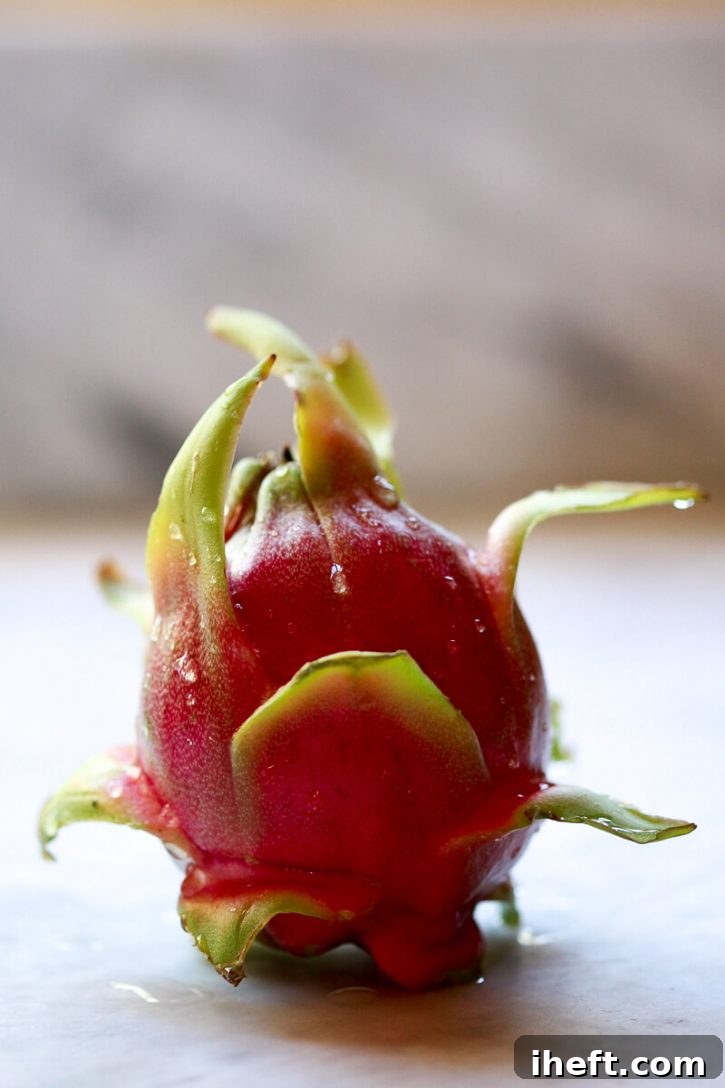
Dragon fruit, or pitaya, is an extraordinary tropical fruit renowned for its striking appearance and delicate flavor. Characterized by its leathery skin adorned with soft, scale-like spikes, it truly earns its “dragon” moniker. Inside, you’ll discover a soft, juicy pulp speckled with tiny, edible black seeds. This unique fruit grows on a climbing cactus species, predominantly from the genus Hylocereus, thriving in warm, tropical climates around the globe.
Originating in Central America, pitaya has been a cherished food source for centuries, deeply embedded in the culinary traditions of indigenous cultures. Today, its popularity has surged worldwide, making it easier than ever to find this captivating fruit in various forms. You can purchase it fresh, often year-round in many regions, or opt for convenient frozen packs perfect for smoothies. For those seeking innovative ways to incorporate it into their diet, pitaya is even available in powdered form, offering a vibrant boost to drinks and dishes. While “dragon fruit” and “pitaya” are the most common names, it’s also sometimes referred to as strawberry pear or pitahaya, reflecting its diverse charm.
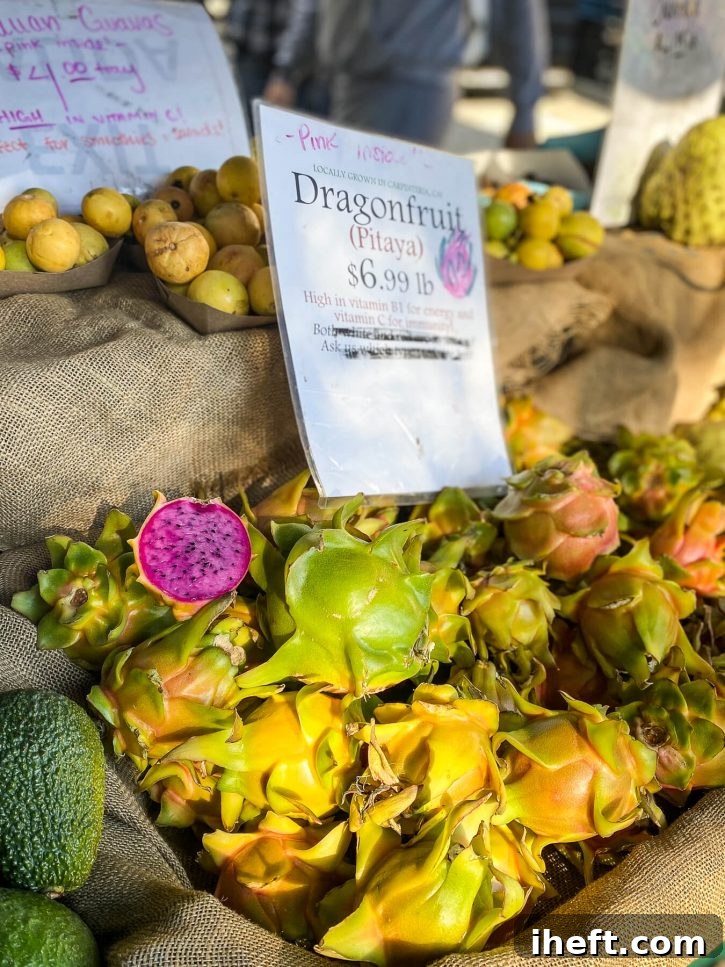
A colorful pitaya (dragon fruit) display at the bustling Santa Barbara Farmers Market, showcasing nature’s artistry.
What Does Dragon Fruit Taste Like? Unlocking its Subtle Flavors
The flavor profile of dragon fruit is often a delightful surprise for first-time tasters. It possesses a wonderfully mild and subtly sweet taste, frequently likened to a tropical pear. The interior boasts a soft, juicy flesh that offers a unique contrast with the pleasant crunch of its tiny, edible seeds, a texture that is remarkably reminiscent of kiwi. Unlike some tropical fruits that overwhelm the palate with intense sweetness or tartness, dragon fruit delivers a refreshing and delicate experience, making it incredibly versatile.
It’s important to note that the taste can vary significantly between different varieties of dragon fruit. Some types are considerably sweeter and more flavorful than others. For instance, many enthusiasts, myself included, find the yellow dragon fruit to be the sweetest and most aromatic, offering a richer, more pronounced tropical essence. The key to truly appreciating dragon fruit lies in understanding its nuanced character and choosing the right variety for your preference. Its subtle nature means it pairs beautifully with bolder flavors or can be enjoyed simply on its own for a light, hydrating treat.
Exploring the Diverse Types of Dragon Fruit
The world of dragon fruit is more diverse than many realize. While the exterior colors might offer a hint, the true surprise often lies within. Let’s delve into the most common varieties you’re likely to encounter, each with its own distinct charm and flavor profile.
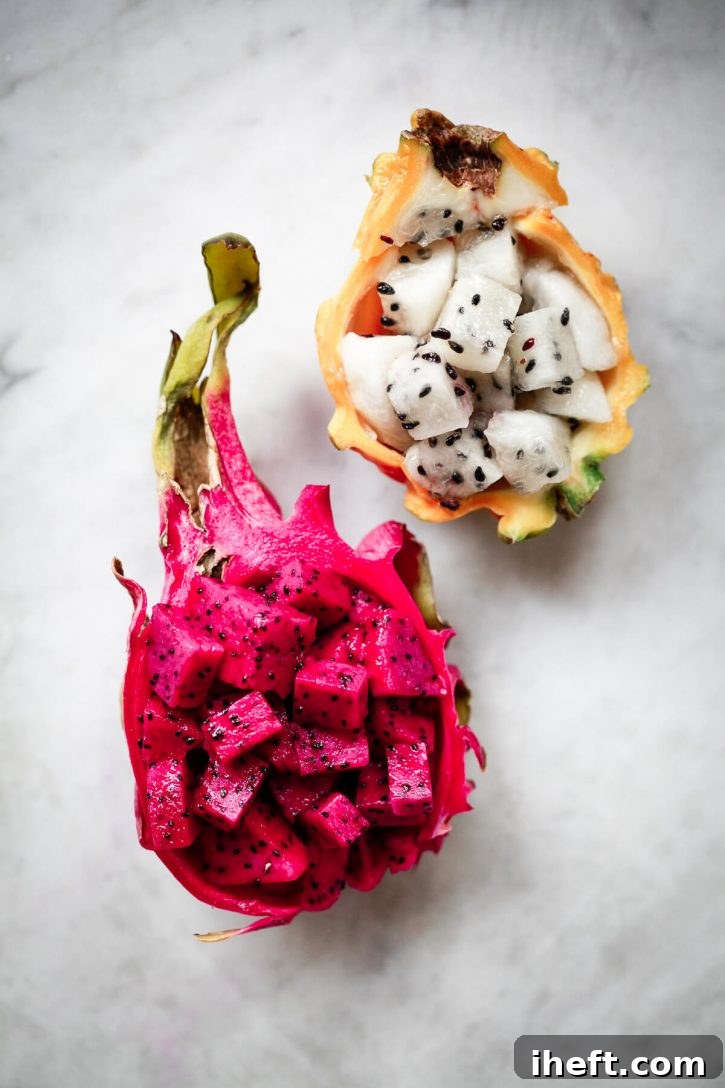
Red Dragon Fruit (White Flesh)
This is perhaps the most ubiquitous type of dragon fruit, instantly recognizable by its vibrant red or pink skin. Despite its fiery exterior, the flesh inside is typically bright white, generously dotted with small black seeds. While visually stunning, this particular variety is known for its exceptionally mild flavor. It’s often described as subtle, with just a hint of sweetness, making it an excellent choice for adding a pop of color to dishes without overpowering other ingredients. It truly shines when incorporated into tropical smoothies, where its delicate taste harmonizes beautifully with more robust flavors like pineapple, mango, or berries. Due to its widespread availability and striking appearance, the white-fleshed, red-skinned variety is often the first introduction many people have to dragon fruit.
Pink Dragon Fruit (Red/Pink Flesh)
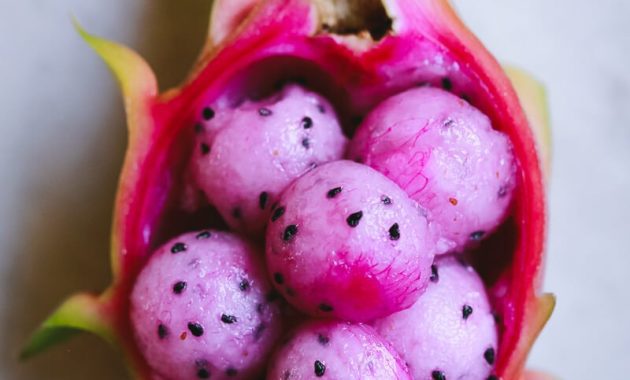
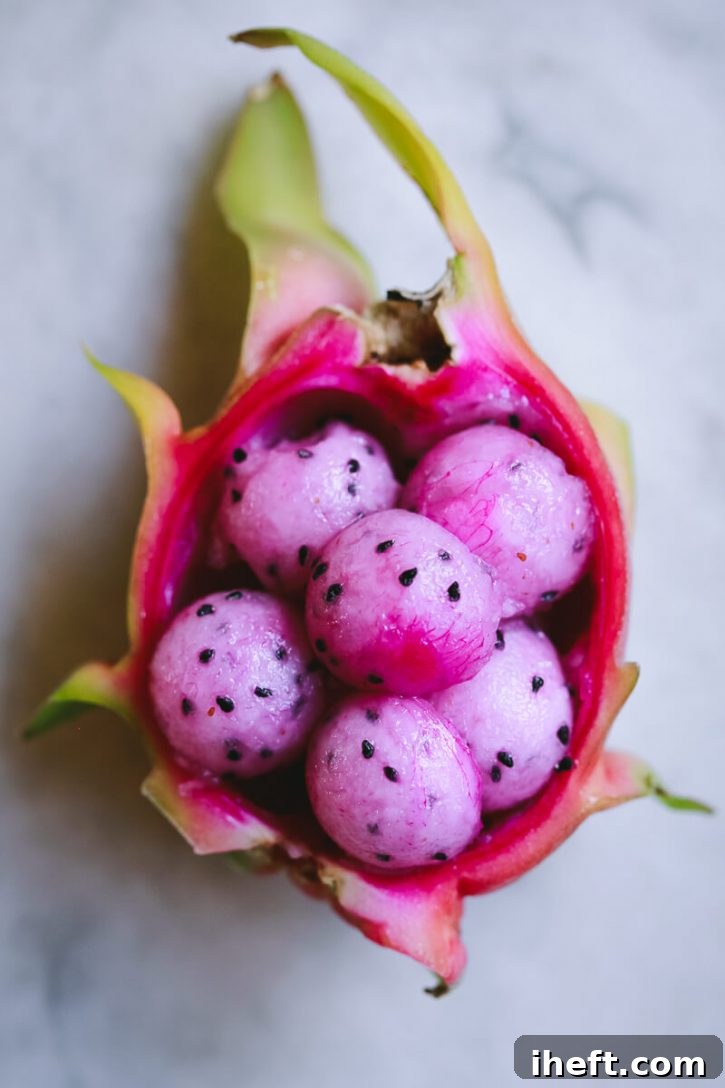
Sometimes marketed under names like “American Beauty,” this variety showcases a beautiful pink skin similar to its white-fleshed cousin, but reveals a stunning, often iridescent light purple or fuchsia flesh (as pictured at the top of this article). This type generally offers a slightly sweeter and more flavorful experience than the white-fleshed red dragon fruit. Its sweetness is still mild, retaining the characteristic refreshing quality of pitaya, but with a more pronounced fruity note. The vibrant color of its flesh also makes it a fantastic natural food coloring and a visually appealing ingredient for desserts, fruit salads, and smoothie bowls, adding both beauty and a gentle tropical taste.
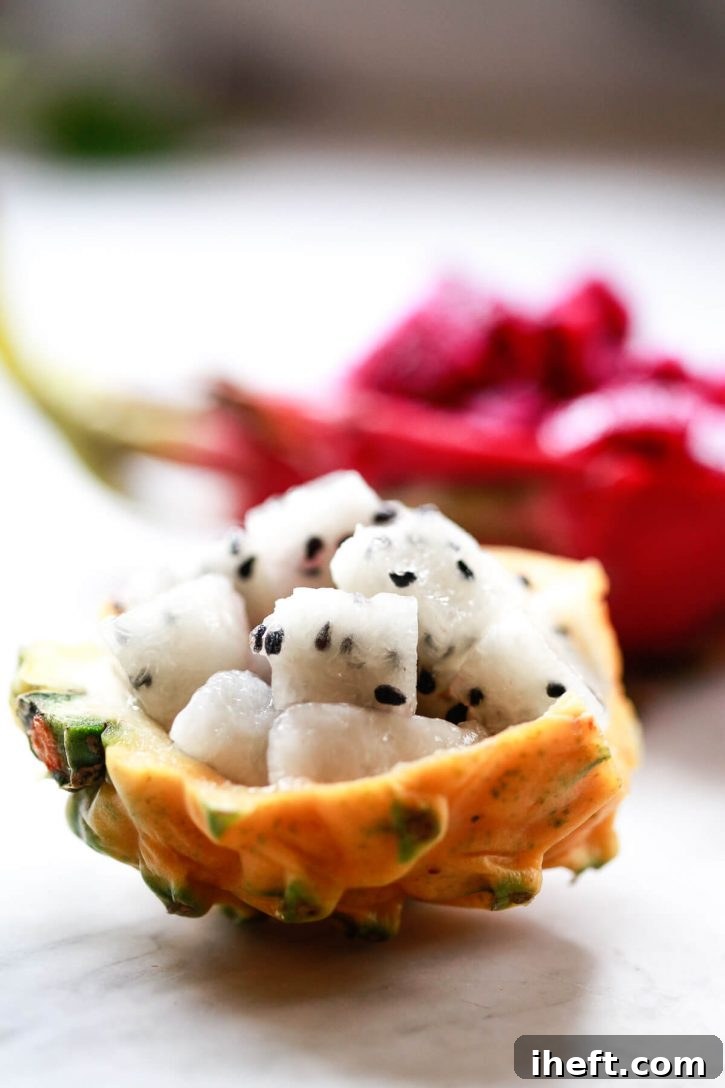
Yellow Dragon Fruit (White Flesh)
Considered by many to be the crème de la crème of dragon fruits, the yellow variety stands out with its bright yellow skin and pristine white interior, studded with slightly larger black seeds. What truly sets it apart is its taste: it is significantly sweeter and often more aromatic than its red-skinned counterparts. Its flavor is more intensely tropical, juicy, and profoundly satisfying. While it may be a bit harder to find in conventional supermarkets and might come with a higher price tag, the superior sweetness and richer flavor make the quest worthwhile. For those seeking the most delicious dragon fruit experience, the yellow variety is undoubtedly the one to seek out.

How to Eat Dragon Fruit: Versatile & Delicious Serving Ideas
Dragon fruit is incredibly versatile and can be enjoyed in a multitude of ways, both simple and sophisticated. Its mild flavor profile makes it an excellent canvas for various culinary creations, or a refreshing treat on its own. While you can certainly eat dragon fruit plain, just like any other fruit, I personally find that a squeeze of fresh lime juice truly elevates its subtle taste, adding a bright, zesty counterpoint.
Here are some popular and creative ways to incorporate dragon fruit into your diet:
- Straight from the Skin: The simplest way to enjoy it! Just slice it in half and scoop out the flesh with a spoon.
- Pitaya Bowls: Learn how to make a beautiful and nutritious Pitaya Bowl, a vibrant breakfast or snack topped with granola, nuts, and other fruits.
- Smoothies: Its mild taste and creamy texture make it an ideal base for a Dragon Fruit Smoothie. Blend it with other tropical fruits, yogurt, or plant-based milk for a refreshing drink.
- Fruit Salads: Dragon fruit cubes or balls add stunning color and a delicate sweetness to any fruit salad. Pair it with mango, kiwi, berries, and melon for a truly tropical mix.
- Tropical Fruit Platters: Arrange sliced or cubed dragon fruit on a Tropical Fruit Platter for an impressive presentation that’s perfect for entertaining.
- Salsas: Finely diced dragon fruit can add a unique sweetness and texture to savory salsas, especially when paired with grilled fish or chicken.
- Desserts: Use dragon fruit as a garnish for tarts, cakes, or puddings. Its vibrant color makes any dessert instantly more appealing.
- Cocktails & Mocktails: Muddle fresh dragon fruit into cocktails or mocktails for a refreshing burst of flavor and a beautiful pink hue.

A vibrant and refreshing Pitaya Bowl, perfect for a healthy start or a delightful snack.
How to Cut Dragon Fruit: A Simple Step-by-Step Guide
Preparing dragon fruit is incredibly straightforward, allowing you to easily access its delicious interior. With just a few simple steps, you can transform this exotic fruit into beautifully cut pieces ready for snacking, salads, or smoothies. Here’s how to perfectly cut a dragon fruit:
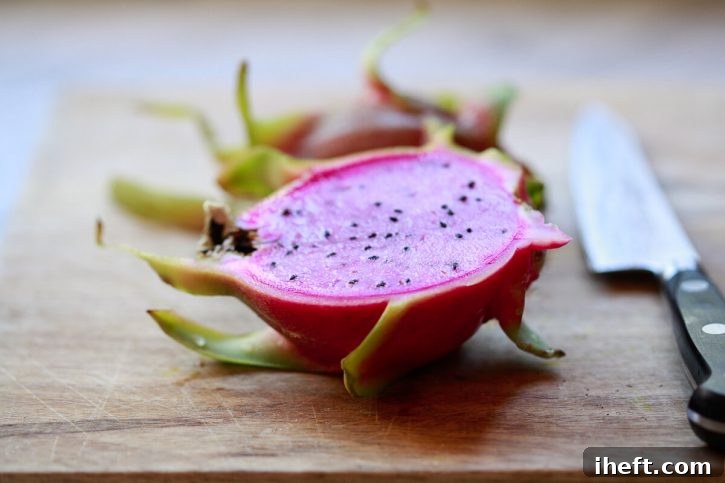
Step 1: Wash and Halve Your Dragon Fruit
Begin by gently washing your dragon fruit under cool running water and then patting it dry with a clean cloth. This removes any surface dirt or residues. Place the fruit on a stable cutting board. Using a sharp knife, carefully cut the dragon fruit in half lengthwise, from the stem end to the bottom. You might notice some tough, dry bits at the very bottom of the fruit; these should be trimmed off before or after cutting for easier handling.
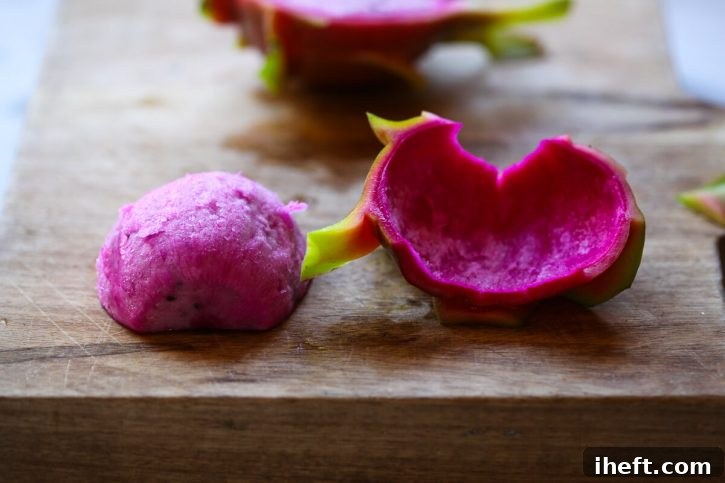
Step 2: Peel or Scoop the Flesh
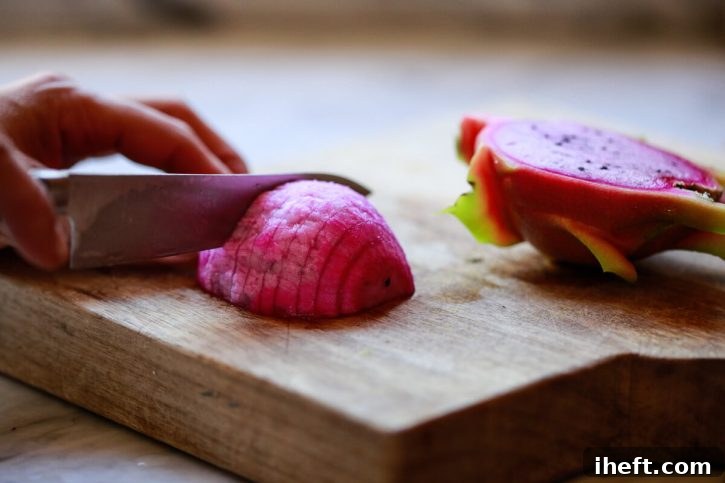
Once your dragon fruit is halved, you have two primary methods for removing the edible flesh. For peeling, simply place the cut-side-down onto your cutting board. The skin of a ripe dragon fruit is surprisingly easy to peel away with your fingers, much like a banana, revealing the soft inner flesh. Alternatively, you can use a large spoon (like a soup spoon or grapefruit spoon) to gently scoop the flesh out of the skin, much like you would an avocado. The skin is quite thick and sturdy, making this a simple and clean process.
Step 3: Slice or Cube for Serving
With the skin removed, you can now cut the dragon fruit flesh into your desired shapes. For simple snacking or decorative platters, slice the peeled fruit into rounds or crescent shapes. For fruit salads, smoothies, or fruit bowls, it’s often more convenient to cut the flesh into uniform cubes. The soft texture allows for easy cutting, so you can quickly prepare a beautiful presentation. For an extra special touch, you can use a melon baller to create perfect spheres of dragon fruit, which look stunning when served back inside the hollowed-out skin or in a tropical fruit salad. Remember to store any leftover cut dragon fruit in an airtight container in the refrigerator for up to 2 days to maintain its freshness.
Dragon Fruit Benefits: A Nutritional Powerhouse
Beyond its mesmerizing appearance and delicate taste, pitaya fruit is a remarkable nutritional powerhouse, offering a wide array of health benefits. It’s an excellent choice for a healthy diet due to its low calorie and fat-free profile, while still providing essential nutrients, vitamins, and minerals. Modern scientific studies have even begun to explore its potential to support gut health, highlighting its status as a functional food.
- Fiber: This high-fiber fruit is an exceptional source for digestive health. A 5-ounce (150g) serving typically provides around 5 grams of dietary fiber, accounting for approximately 18% of the Daily Value (DV). Fiber is crucial for maintaining regular bowel movements, promoting a healthy gut microbiome, and helping you feel full and satisfied, which can aid in weight management.
- Magnesium: Dragon fruit is a good source of magnesium, offering about 42 mg in a 6-ounce (170g) serving, which is roughly 10% of the DV. Magnesium is vital for numerous bodily functions, including muscle and nerve function, blood glucose control, blood pressure regulation, and maintaining strong bones.
- Vitamin C: Boosting your immune system is made delicious with dragon fruit. A 6-ounce serving contains approximately 9 mg of Vitamin C, providing about 10% of the DV. Vitamin C is a powerful antioxidant that protects cells from damage, supports immune function, and is essential for collagen production, contributing to healthy skin.
- Potassium: Essential for heart health and maintaining fluid balance, dragon fruit provides around 290 mg of potassium in a 6-ounce serving, which is 6% of the DV. Potassium helps regulate blood pressure and supports proper nerve and muscle function.
- Iron: While not a primary source, dragon fruit does contribute to your iron intake, with about 1 mg in a 6-ounce serving (6% of the DV). Iron is crucial for the formation of red blood cells, which transport oxygen throughout the body, and for energy production.
- Antioxidants: Beyond Vitamin C, dragon fruit is rich in various antioxidants, including betacyanins (which give red varieties their color) and flavonoids. These compounds help combat free radicals in the body, reducing oxidative stress and inflammation, and potentially lowering the risk of chronic diseases.
- Prebiotics: Some research suggests that dragon fruit contains prebiotics, which are types of fiber that feed beneficial bacteria in your gut. A healthy gut microbiome is linked to improved digestion, enhanced immune function, and even better mood regulation.
- Hydration: With its high water content, dragon fruit is also excellent for staying hydrated, especially in warm climates.
How to Cut Dragon Fruit (Pitaya)
1 minute
2 minutes
3 minutes
Pitaya, or Dragon Fruit, is a beautiful tropical fruit that’s mild and sweet with crunchy seeds. It tastes like a cross between a pear and kiwi. Here is how to cut and eat it.
Ingredients
- 1 dragon fruit
Instructions
- Wash your dragon fruit thoroughly under cool water.
- Cut the dragon fruit in half lengthwise, from the stem to the bottom.
- Place the fruit cut-side-down on your cutting board and carefully peel off the skin with your fingers. Alternatively, use a large spoon to scoop the flesh entirely out of the skin.
- With a sharp knife, cut the peeled dragon fruit flesh into your desired slices or cubes.
- For optimal freshness, store any cut dragon fruit in an airtight container in the refrigerator for up to 2 days. If you wish to preserve it longer, freeze the cubes for up to 3 months, perfect for smoothies!
Notes
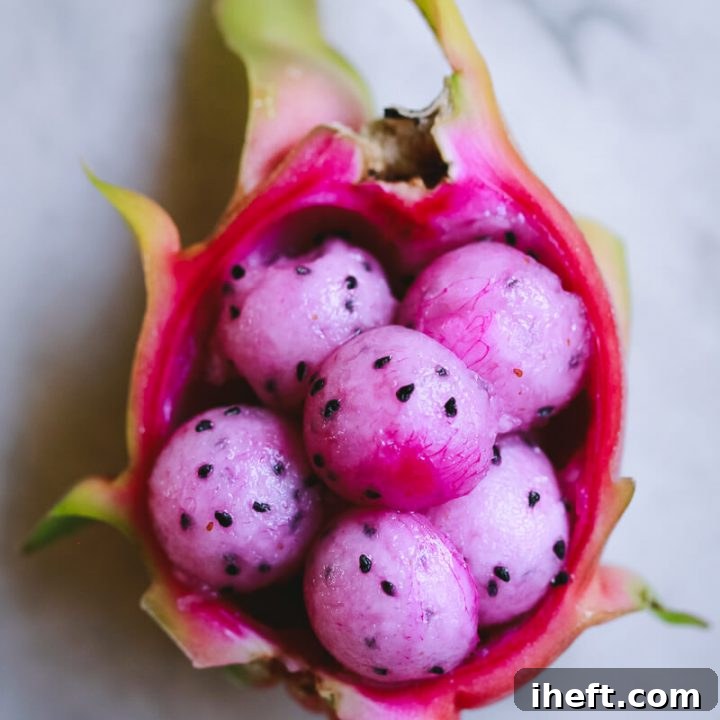
To create elegant dragon fruit balls, first cut the dragon fruit in half lengthwise, but do not remove the skin. Use a melon baller to carefully scoop out spheres of fruit. These beautiful balls are perfect for enhancing a tropical fruit salad, garnishing cocktails, or for simply placing back into the dragon fruit skin for a stunning presentation.
How to Enjoy Dragon Fruit
Dragon fruit flesh can be enjoyed straight from the skin for a refreshing snack. It’s also a fantastic addition to a variety of dishes: incorporate it into vibrant fruit salads, blend it into delicious smoothies, use it as the base for nourishing pitaya bowls, juice it for a hydrating drink, or add a tropical twist to your favorite cocktails and mocktails. Its versatility makes it a delightful ingredient for any meal or occasion.
Nutrition Information:
Yield: 2
Serving Size: 1/2 fruit
Amount Per Serving:
Calories: 31Total Fat: 0gSaturated Fat: 0gTrans Fat: 0gUnsaturated Fat: 0gCholesterol: 0mgSodium: 3mgCarbohydrates: 7gFiber: 2gSugar: 5gProtein: 1g
Nutrition information is automatically calculated by Nutritionix. I am not a nutritionist and cannot guarantee accuracy. If your health depends on nutrition information, please calculate again with your favorite calculator.
Dragon fruit is more than just a beautiful fruit; it’s a tropical treasure that offers a unique culinary experience and a wealth of health benefits. Its subtle sweetness, delightful texture, and vibrant colors make it a versatile ingredient for a variety of dishes, from refreshing smoothies and colorful fruit salads to sophisticated desserts. Whether you’re drawn to the common red variety, the sweeter pink-fleshed options, or the exceptionally flavorful yellow dragon fruit, incorporating pitaya into your diet is a delicious way to boost your nutrient intake and explore the exciting world of exotic fruits. So, next time you spot this magnificent fruit at your local market, don’t hesitate to bring home a dragon – and discover a new favorite!
Sources:
https://www.webmd.com/food-recipes/benefits-dragon-fruit#1