Vibrant Farro Harvest Bowl
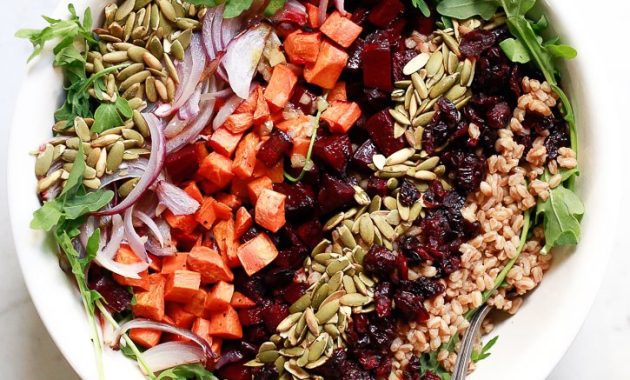
Hearty & Flavorful Autumn Farro Salad with Roasted Sweet Potatoes and Beets
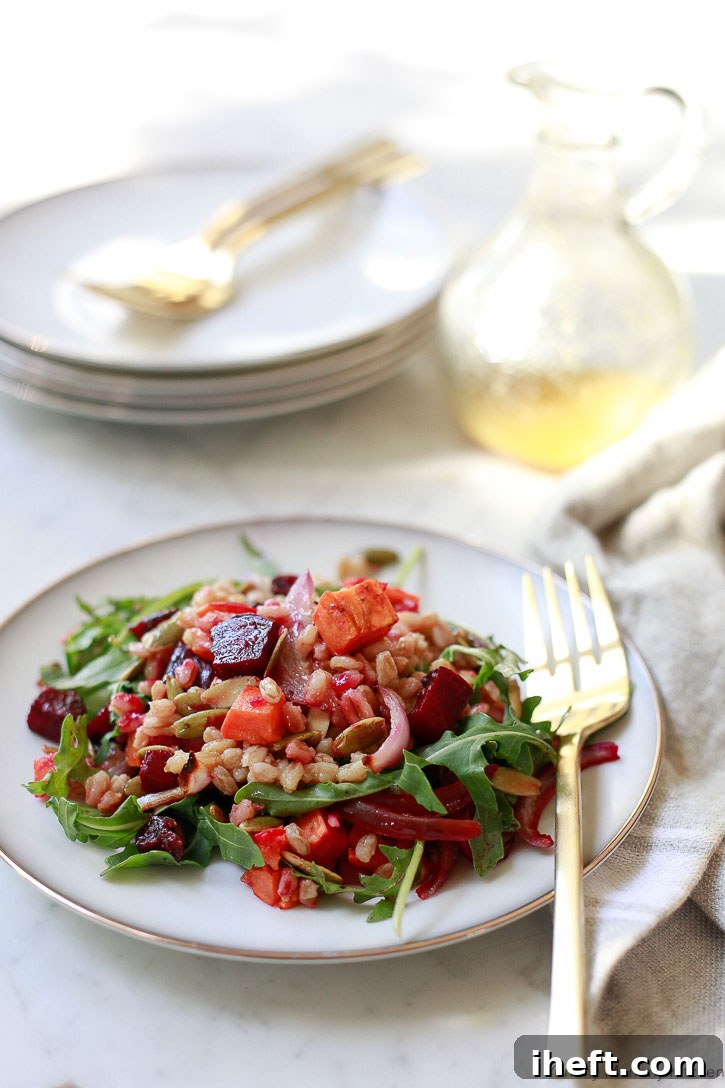
As the crisp air of autumn settles in and winter’s chill approaches, our palates naturally crave warmth, comfort, and nourishing dishes. This delectable farro salad is meticulously crafted to be your perfect companion during these cooler months, when earthy beets and sweet potatoes are at the peak of their season. It’s not just a salad; it’s a vibrant, hearty, and immensely satisfying meal that brings a burst of color and nutrition to your table. For those seeking a gluten-free alternative, simply swap the farro for fluffy quinoa, and you’ll still enjoy a truly magnificent harvest-inspired dish.
Embracing the Ancient Grain: My Farro Journey
My appreciation for farro truly blossomed during a memorable summer trip to Tuscany. In nearly every charming cafe, I found myself drawn to their refreshing summery farro salads, typically adorned with ripe tomatoes and fragrant basil. That culinary inspiration led me to share a recipe for an Italian farro salad here, capturing the essence of Mediterranean flavors. Now, with summer’s warmth a distant memory, I wanted to create a farro salad that perfectly encapsulates the comforting, rich flavors of autumn and winter. This recipe is a celebration of seasonal ingredients, thoughtfully combined to create a truly spectacular and colorful farro salad that’s as pleasing to the eye as it is to the palate.
The Heart of the Salad: Perfectly Roasted Root Vegetables
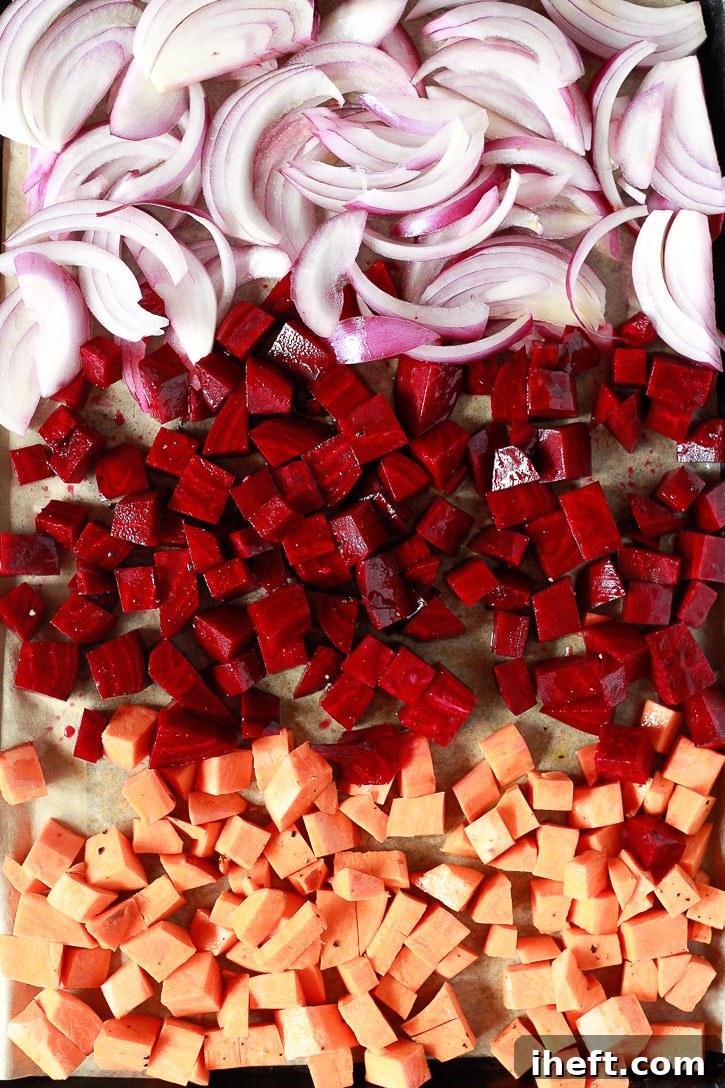
The foundation of this incredible salad lies in its roasted vegetables. Roasting sweet potatoes and beets during the colder months is a culinary revelation, transforming them into naturally sweet, tender delights. The high heat of the oven coaxes out their sugars, caramelizing the edges and intensifying their inherent sweetness and earthy notes. Both of my daughters eagerly devour these sweet root vegetables, a testament to their irresistible flavor. While I included red onion in the roasting pan this time, you have the flexibility to choose. Personally, I often prefer the crisp, pungent bite of raw red onions in my salads, and next time I might opt to add them fresh at the end to contrast with the tender roasted elements. The choice, of course, is entirely yours, depending on your preference for a softer, sweeter onion or a more piquant crunch.
Beyond their delightful flavor, sweet potatoes and beets are nutritional powerhouses. Sweet potatoes are an excellent source of beta-carotene, which the body converts to vitamin A, crucial for vision and immune function. They also provide significant amounts of vitamin C, manganese, and dietary fiber. Beets, with their striking color, are rich in nitrates (which can support healthy blood pressure), powerful antioxidants like betalains, and essential minerals such as folate, manganese, and potassium. Roasting them not only enhances their taste but also makes these vital nutrients more accessible, creating a truly nourishing component for our farro salad. Ensure you cut the vegetables into uniform pieces for even cooking, and give them enough space on the baking sheet to roast rather than steam, leading to those desirable caramelized edges.
Understanding Farro: An Ancient Grain for Modern Tables
While the vegetables are roasting to perfection in the oven, the quick-cooking farro can be simmering on the stovetop. Farro is an ancient whole grain that has been a staple in Mediterranean diets for thousands of years, revered for its robust flavor and impressive nutritional profile. There are several types of farro available – whole, semi-pearled, and pearled. I typically opt for the quick-cooking variety, which is often semi-pearled, meaning some of the bran has been removed, allowing it to cook much faster without sacrificing too much of its whole-grain benefits. You can easily find quick-cooking farro at specialty grocery stores like Trader Joe’s, Whole Foods, and most well-stocked supermarkets. It boasts a cooking time comparable to quinoa, making it a convenient and healthy choice for busy weeknights or meal prep.
Farro is celebrated for its distinctive chewy texture and delightfully nutty flavor, making it a versatile grain that can be used in countless ways. It truly excels as a substitute for rice or quinoa in various dishes. Its hearty nature and rich nutrient content make it a fantastic base for salads, adding substance and satiety. Beyond salads, farro is wonderful in warming soups, offering a satisfying bite that stands up well to broths and vegetables. It can even be used in place of arborio rice to create a unique, wholesome risotto with a delightfully rustic character. Nutritionally, farro is an excellent source of plant-based protein and dietary fiber, which contribute to sustained energy and digestive health, making you feel full and satisfied for longer. It also provides important minerals like magnesium, iron, and B vitamins. However, it’s crucial to remember that farro is a wheat product and therefore contains gluten. If you follow a gluten-free diet, this recipe is still entirely accessible to you; simply substitute the cooked farro with an equal amount of cooked quinoa to enjoy all the other incredible flavors and textures this salad offers.
Assembling Your Harvest Masterpiece: Layers of Flavor and Texture
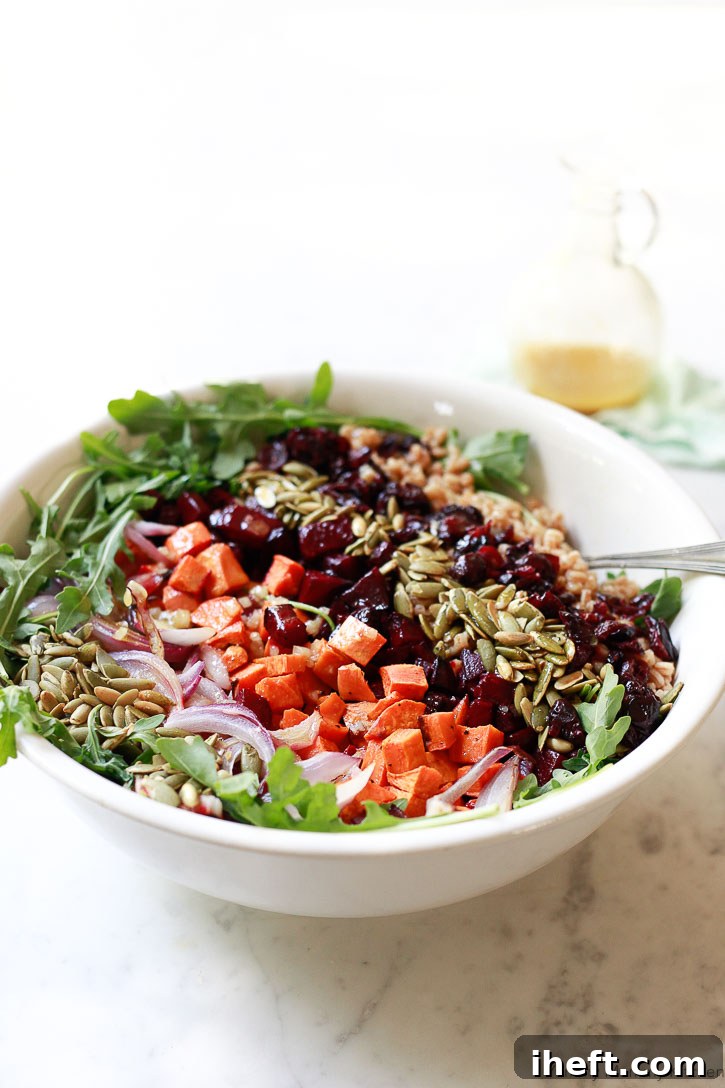
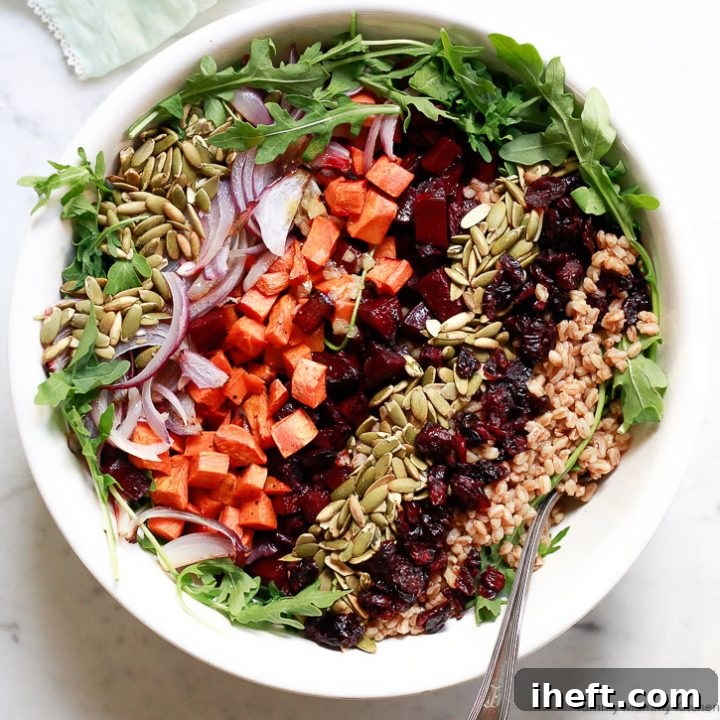
This colorful farro salad is truly a feast for the eyes, a harmonious blend of textures and hues. To further enhance its autumn harvest theme, I love incorporating toasted pepitas (shelled pumpkin seeds) and plump dried cranberries. The pepitas add a wonderful crunch and a subtle nutty flavor, complementing the earthiness of the vegetables. The dried cranberries introduce a delightful tartness and chewiness, providing a perfect counterpoint to the sweetness of the roasted root vegetables. A generous bed of fresh baby arugula forms the vibrant green base of the salad, adding a peppery freshness that brightens the entire dish and contrasts beautifully with the warm, rich components.
A little tip for serving: while I adore beets for their incredible flavor and stunning jewel-toned color, they are notorious for bleeding their beautiful purple juices. To maintain the distinct colors of your other ingredients and prevent the entire salad from turning pink, I recommend adding the roasted beets last and tossing the salad very lightly, or even arranging them on top without fully mixing. If a charming pink hue throughout the salad doesn’t bother you, then feel free to toss everything together with gusto! This salad is designed for visual appeal, so taking a moment to arrange the components thoughtfully will make it even more inviting. The combination of chewy farro, tender roasted vegetables, crisp arugula, crunchy pepitas, and tart cranberries creates a dynamic eating experience with every forkful.
The Perfect Finish: A Zesty Apple Cider Vinaigrette
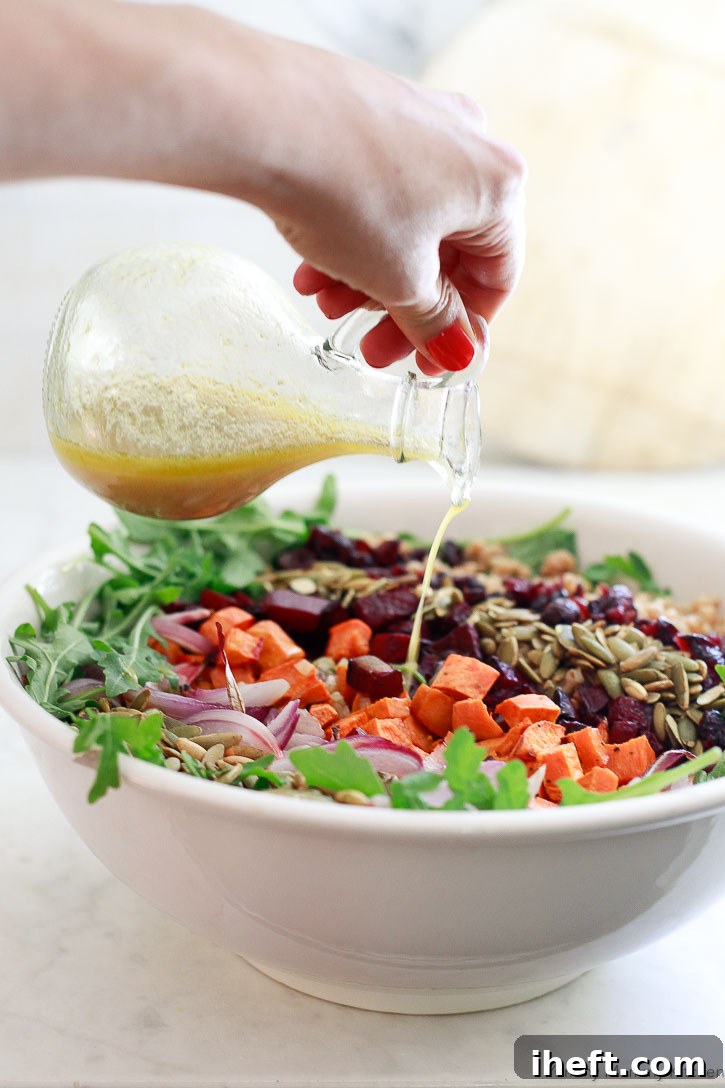
To tie all these wonderful flavors together, I prefer to dress this salad with a simple, bright, and homemade apple cider vinaigrette. The tangy sweetness of apple cider vinegar, combined with a good quality olive oil, a touch of Dijon mustard, and a hint of maple syrup or honey, creates a dressing that perfectly complements the earthy and sweet notes of the roasted vegetables and farro. Its acidity cuts through the richness, enlivening each ingredient. If your preference leans towards a deeper, richer flavor profile, a balsamic vinaigrette would also be an excellent choice, providing a different but equally delicious complement to the harvest components. For an extra layer of flavor, consider infusing your vinaigrette with fresh herbs like thyme or rosemary, which pair wonderfully with the autumnal ingredients.
This salad is incredibly versatile and works beautifully as a satisfying main course for a light lunch or dinner, or as a vibrant side dish to roasted chicken, pork, or a plant-based protein. It’s also an excellent candidate for meal prep; simply store the dressing separately and add it just before serving to keep the arugula fresh and crisp. Embrace the season with this stunning farro salad – it’s a recipe you’ll want to revisit all autumn and winter long!
Farro Salad with Sweet Potatoes and Beets
15 minutes
25 minutes
40 minutes
This farro salad is perfect for autumn and winter months when beets and sweet potatoes are in season. It’s hearty and colorful.
Ingredients
- 2 cups peeled and 1/2″ diced beets
- 2 cups peeled and 1/2″ diced sweet potato
- 1 red onion, peeled, halved, and sliced
- 2 tablespoons extra virgin olive oil
- 1 cup quick cooking farro (or quinoa for a gluten-free version)
- 3 cups water
- 3-5 oz. baby arugula
- 1/3 cup roasted pepitas (shelled pumpkin seeds)
- 1/3 cup dried cranberries
- 1 recipe apple cider vinaigrette
Instructions
- Preheat the oven to 400 degrees F (200 degrees C). Lightly coat the beets, sweet potatoes, and onion slices separately with olive oil. For best results and to prevent discoloration, keep the beets separate from the other veggies during roasting. If you prefer the sharp taste of raw onions, skip roasting them here and add them fresh at the end. Season all the vegetables generously with salt and pepper. Roast until tender; this typically takes about 20-25 minutes. Note that onions tend to cook faster, so you may wish to remove them from the oven after approximately 15 minutes.
- Meanwhile, cook the farro according to the package instructions. This usually involves simmering in water until tender and most of the liquid is absorbed. Once cooked, drain off any excess water and allow the farro to cool slightly.
- To assemble the salad, arrange a beautiful bed of fresh baby arugula in a large salad serving bowl or on a platter. Artfully arrange the cooled roasted vegetables (beets, sweet potatoes, and onions), the cooked farro, roasted pepitas, and dried cranberries on top of the arugula.
- When you are ready to serve and enjoy, very gently toss the salad together, or simply scoop individual portions directly onto plates. Be mindful that tossing too vigorously will cause the beet juices to spread and turn the entire salad pink. Serve immediately with your prepared apple cider vinaigrette on the side or lightly drizzled over the top.
Nutrition Information:
Yield: 6
Serving Size: 1
Amount Per Serving:
Calories: 292Total Fat: 16gSaturated Fat: 3gTrans Fat: 0gUnsaturated Fat: 12gCholesterol: 0mgSodium: 85mgCarbohydrates: 31gFiber: 6gSugar: 13gProtein: 11g