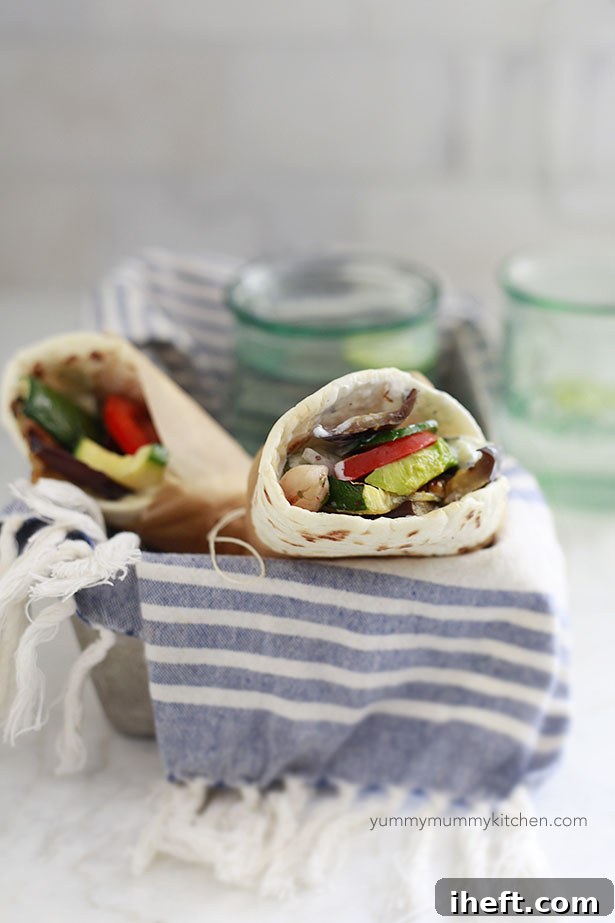
The Easiest Way to Cut and Peel Avocado
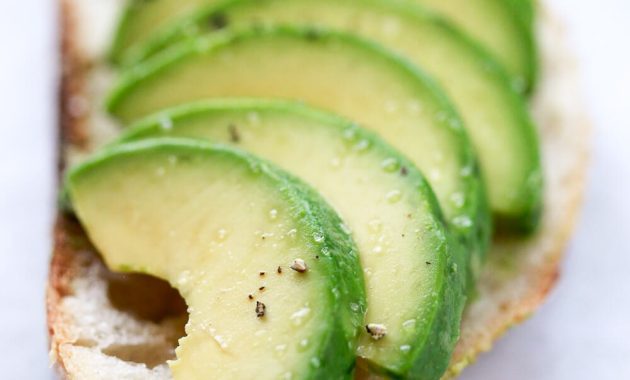
Avocados are a versatile superfood, loved for their creamy texture and rich, healthy fats. Whether you’re aiming for perfectly fanned slices atop your morning toast, chunky pieces for a vibrant guacamole, or neat strips for homemade sushi, knowing how to properly cut, peel, and store an avocado is a kitchen essential. This comprehensive guide will walk you through everything you need to know, ensuring you get the most out of every delicious avocado.
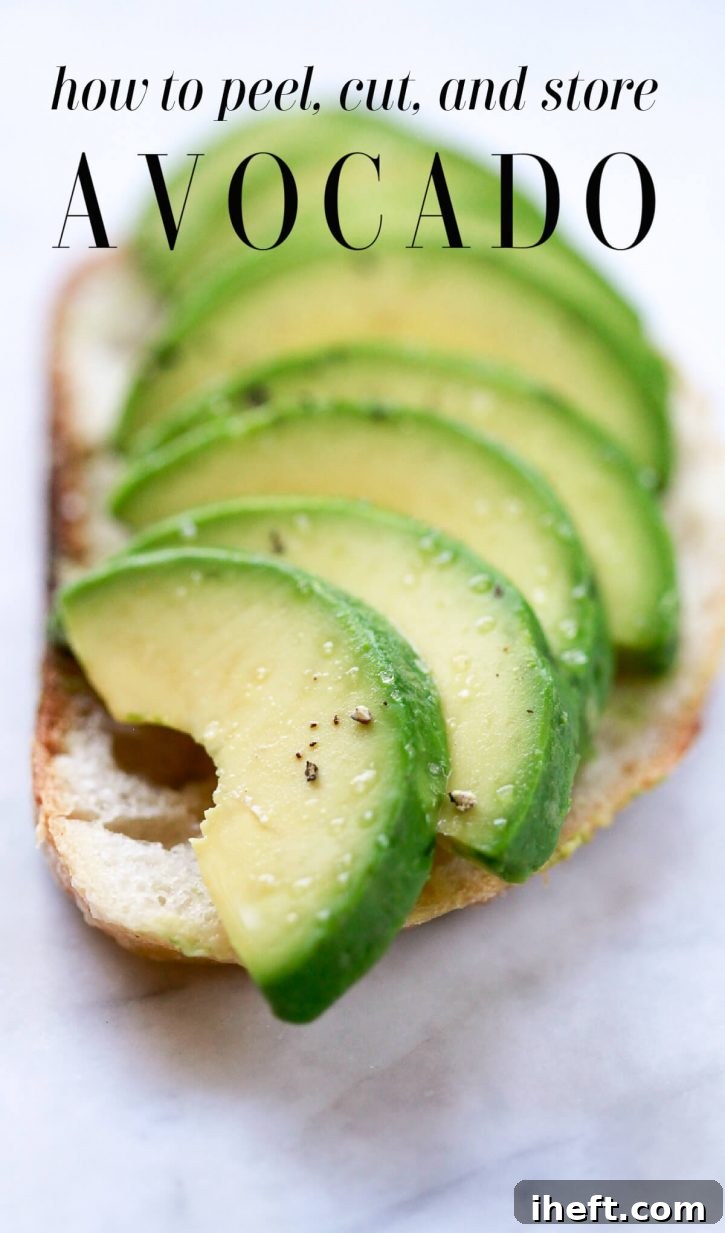
Having spent my entire life in California, avocados have been a constant presence in my diet. We are incredibly fortunate to have three Haas avocado trees flourishing in our backyard, providing a continuous supply of this amazing fruit. Over the years, my approach to preparing avocados has been refined and perfected through countless experiments. For those new to the world of avocados, selecting and cutting them can initially seem daunting. That’s why today, I’m excited to share all my honed tips, tricks, and techniques to help you master avocado preparation with confidence.
Last year, I shared How to Freeze Avocados, a post that has since become quite popular among readers looking to extend the life of their abundant harvest. This guide on how to expertly cut and peel avocados serves as a natural and valuable complement to that earlier post, addressing the immediate steps before preservation or consumption. The “best” way to cut and peel an avocado, however, isn’t a one-size-fits-all answer; it truly depends on the culinary creation you have in mind!
How to Pick a Good Avocado: The Foundation of Flavor
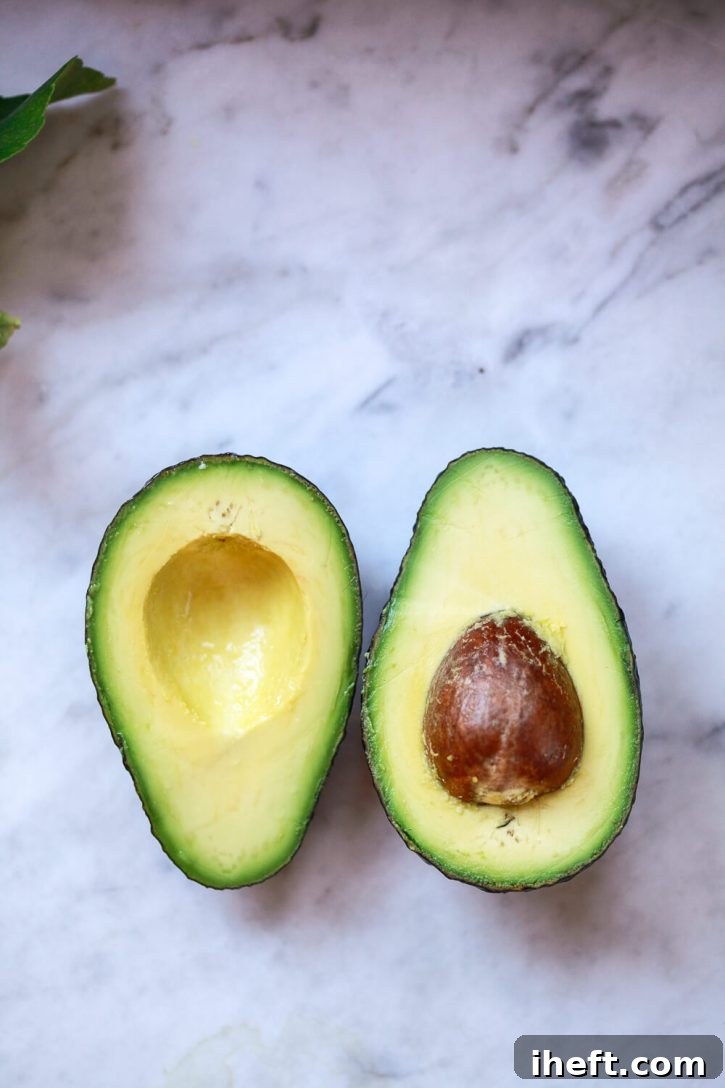
Finding that elusive, perfectly ripe avocado can feel like a quest. The challenge often lies in the mystery of what’s beneath the skin until you actually open it. However, with a few smart techniques, you can significantly increase your chances of selecting a gem.
The primary indicator of ripeness is its texture. Gently cup the avocado in your palm and apply a slight, even pressure with your thumb. A perfectly ripe avocado should yield just a little, feeling slightly soft but not mushy. If it feels rock-hard, it’s not ready yet and will need more time to ripen on your counter. Conversely, if it feels overly soft, spongy, or has large indentations, it’s likely overripe and may have brown spots inside.
For Haas avocados, the most common variety, a change in skin color is another reliable sign. Unripe Haas avocados typically have bright green skin. As they ripen, the skin gradually darkens to a deep purplish-black hue. While color is a good general guide, remember that texture is the ultimate test, as some avocados might ripen differently.
Another simple trick is to check under the stem cap. Gently try to flick off the small woody stem at the top of the avocado. If it comes off easily and reveals green flesh underneath, you’ve found a winner! If it’s hard to remove, the avocado is likely not ripe enough. If it reveals brown flesh, it’s probably past its prime. For a deeper dive into ripening and testing for ripeness, read our full guide on How to Ripen Avocados here.
- Firm Avocados: These are ideal for applications where you want the avocado pieces to maintain their shape and texture. Think perfect slices for sushi, elegant cubes for a refreshing Mango Avocado Salsa, or additions to vibrant salads.
- Slightly Softer Avocados: These are perfect for dishes where the avocado will be mashed or blended. They offer optimal creaminess for a homemade Guacamole, a rich Green Goddess Dressing, or a velvety Smoothie.
- Soft Avocados: Very soft, but not brown, avocados are excellent for introducing solids to babies, as their texture is easy to mash and swallow.
- Overripe Avocados: Avoid avocados that are excessively soft, squishy, or where the skin appears to be detaching from the flesh. These will almost certainly be brown and fibrous inside, making them unsuitable for most recipes.
Essential Tools for Safe and Efficient Avocado Preparation
Before you begin cutting, gather a few basic kitchen tools to ensure a smooth and safe process:
- Sharp Chef’s Knife: A medium to large chef’s knife is essential for safely cutting the avocado in half and removing the pit. A sharp knife is actually safer than a dull one, as it requires less force and is less likely to slip.
- Paring Knife: A smaller paring knife can be useful for finer tasks like cleaning up any stubborn bits of skin after peeling or creating intricate cuts.
- Cutting Board: Always use a sturdy, non-slip cutting board to provide a stable surface and protect your countertops.
- Kitchen Towel: This is a crucial safety item, especially when removing the pit. It provides a protective layer for your hand.
- Spoon: A sturdy spoon is perfect for scooping out avocado flesh, particularly when making guacamole or simply enjoying it straight from the peel.
How to Cut an Avocado in Half: The First Step
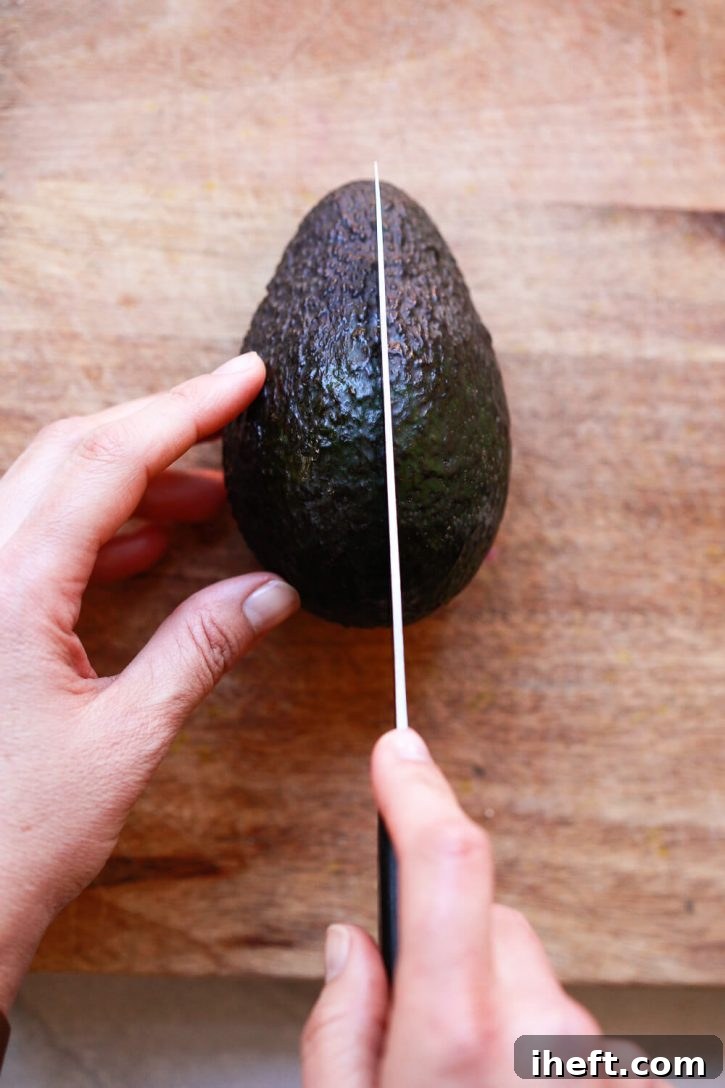
The most common and generally recommended way to begin is by cutting the avocado in half lengthwise. This method provides two large, symmetrical halves, offering ample surface area to work with, whether you’re slicing, dicing, or scooping.
Hold the avocado firmly in one hand on your cutting board. With your sharp chef’s knife, carefully cut down through the skin until you feel the pit. Once you hit the pit, rotate the avocado around the knife, keeping the blade against the pit, until you have cut all the way around the circumference of the fruit.
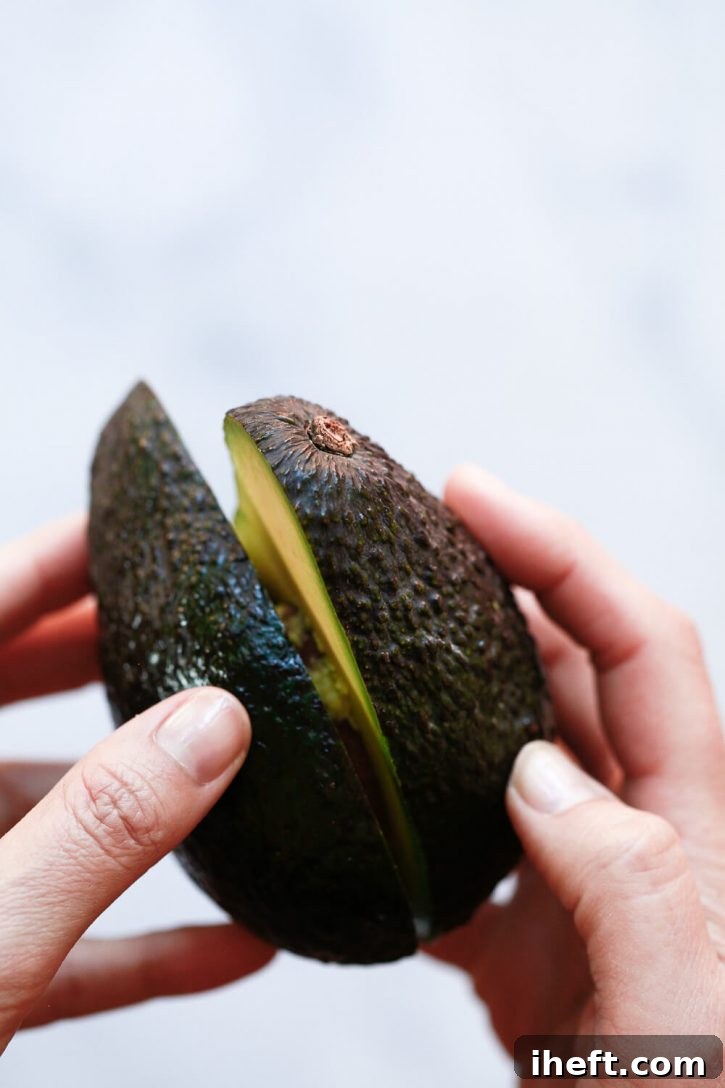
Once the cut is complete, put the knife down. Take each half of the avocado and gently twist them in opposite directions. The avocado halves should separate cleanly, with the large seed almost always remaining firmly embedded in one of the halves.
How to Safely Remove the Avocado Seed
Removing the avocado pit is often where people feel a bit nervous, but with the right technique and safety precautions, it’s quite simple.
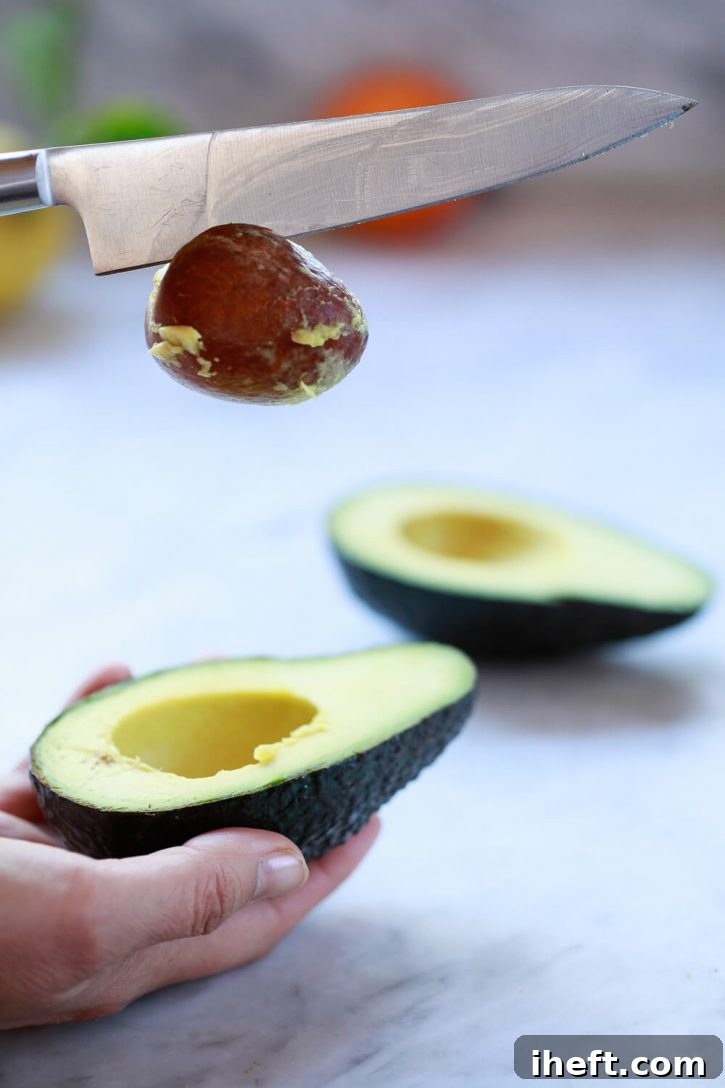
Place the avocado half with the seed on your cutting board, cut-side up. Crucially, protect your bottom hand (the one holding the avocado half) by placing a folded kitchen towel between your hand and the avocado. This provides a barrier in case of a slip.
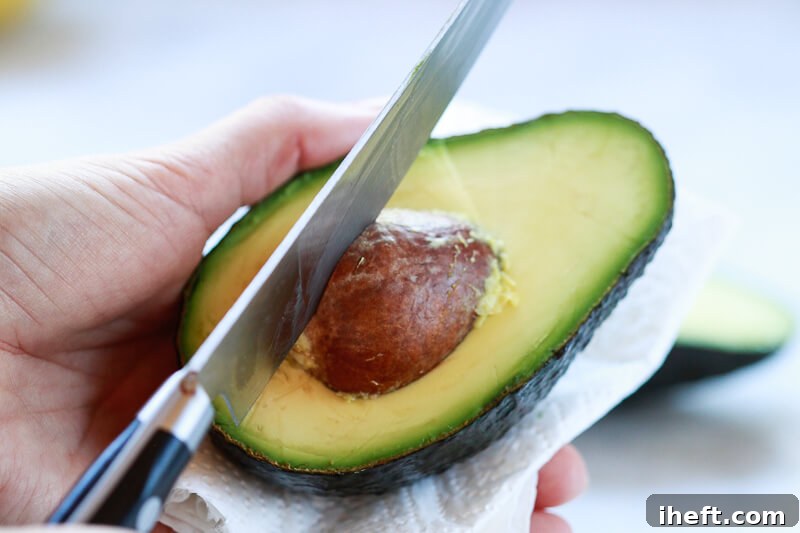
With your chef’s knife, firmly but carefully whack the blade into the seed. The knife should embed itself securely in the pit. Once the knife is lodged, gently twist the knife. The seed should easily lift out, stuck firmly onto the blade. Carefully remove the seed from the knife by pushing it off with your thumb and forefinger, or by gently tapping the knife against the side of a trash can. Discard the seed, or if you’re making guacamole, some people believe leaving the pit in the guacamole can help prevent it from browning, though scientific evidence for this is mixed.
At this stage, with the avocado halved and the pit removed, you have several options. A simple sprinkle of salt and pepper transforms it into a delicious snack, a method my children frequently employed when they were younger. Alternatively, you can fill the hollow with various delicious ingredients to create flavorful Stuffed Avocados.
How to Peel an Avocado for Pristine Slices and Cubes
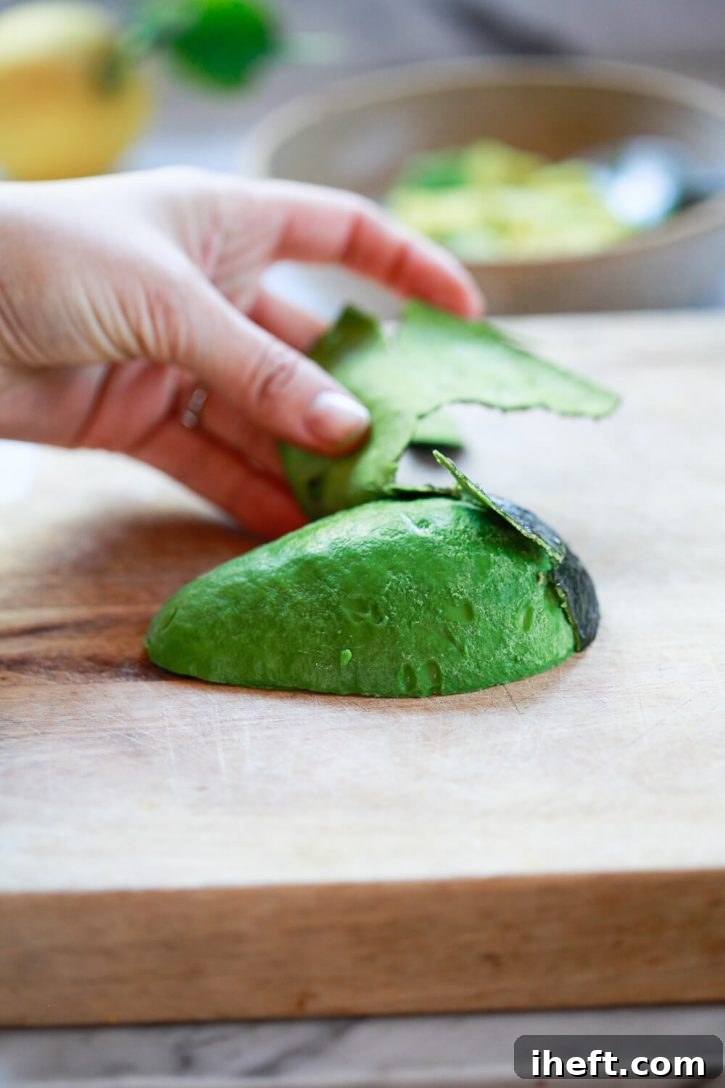
While scooping the flesh directly from the skin is perfectly acceptable for many dishes, peeling an avocado offers significant advantages when you desire clean, beautifully presented slices or cubes. I rarely bother with peeling if I’m preparing something like guacamole, where the texture will be mashed. However, for elegant salads, impressive avocado bruschetta, vibrant tacos, or even crispy avocado fries, peeling is the superior method.
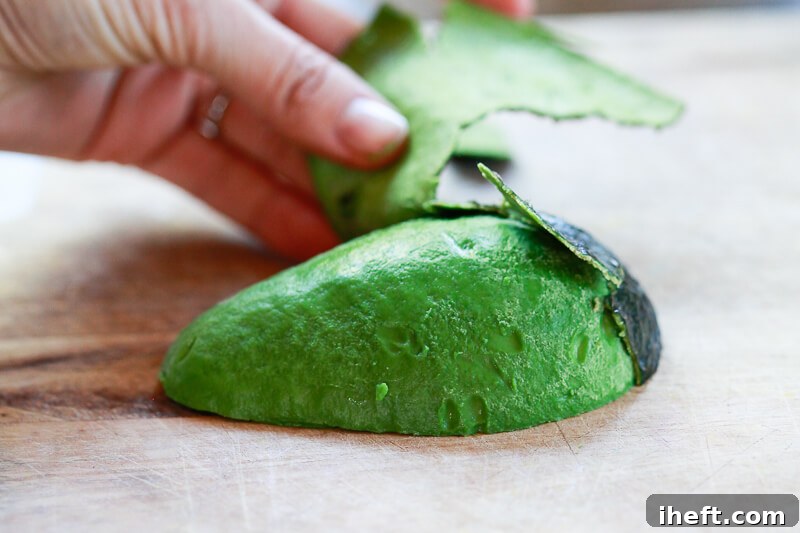
Peeling, as opposed to scooping, results in a much smoother, more defined edge for your avocado pieces, as clearly demonstrated in the image above. Once your avocado is halved and pitted, place each half cut-side-down on your cutting board. This allows for easier handling and a stable base. Starting from the broader end, gently peel the skin away from the flesh. For a perfectly ripe avocado, the skin should come off quite easily in large strips. If you encounter any small, stubborn bits of skin that cling to the flesh, simply use a paring knife to carefully trim them away, ensuring a completely clean surface.
Different Ways to Cut Avocado: Tailoring Your Technique
The beauty of avocado lies not just in its taste but also in its adaptability. Depending on your recipe, you can choose from various cutting methods to achieve the perfect shape and texture.
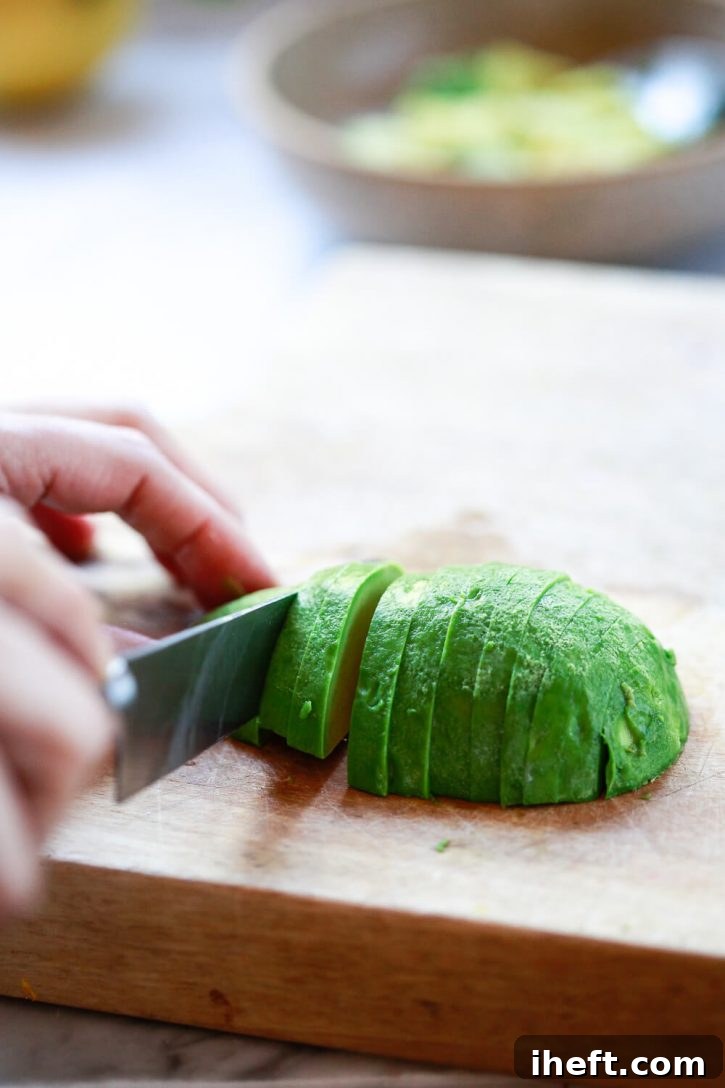
1. How to Cut an Avocado into Perfect Slices
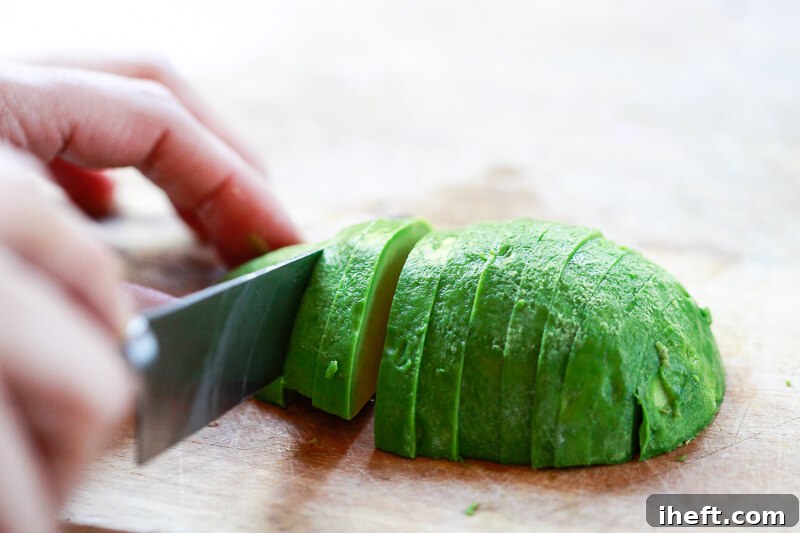
Achieving beautiful, uniform avocado slices is simpler than you might think, especially after peeling. Once you have a peeled avocado half (prepared as described above), place it flat-side down on your cutting board. Using a sharp chef’s knife or a paring knife, slice straight down through the avocado flesh.
The ideal thickness for most uses, such as avocado toast, salads, or garnishes, is typically between 1/4 and 1/2 inch. You have the option to cut crosswise, as depicted in the image above, which yields shorter, crescent-shaped slices. Alternatively, you can cut lengthwise for longer, more elegant strips. For dishes requiring small, neat pieces, you can proceed to dice these slices into cubes if you prefer, offering greater control over the final presentation.
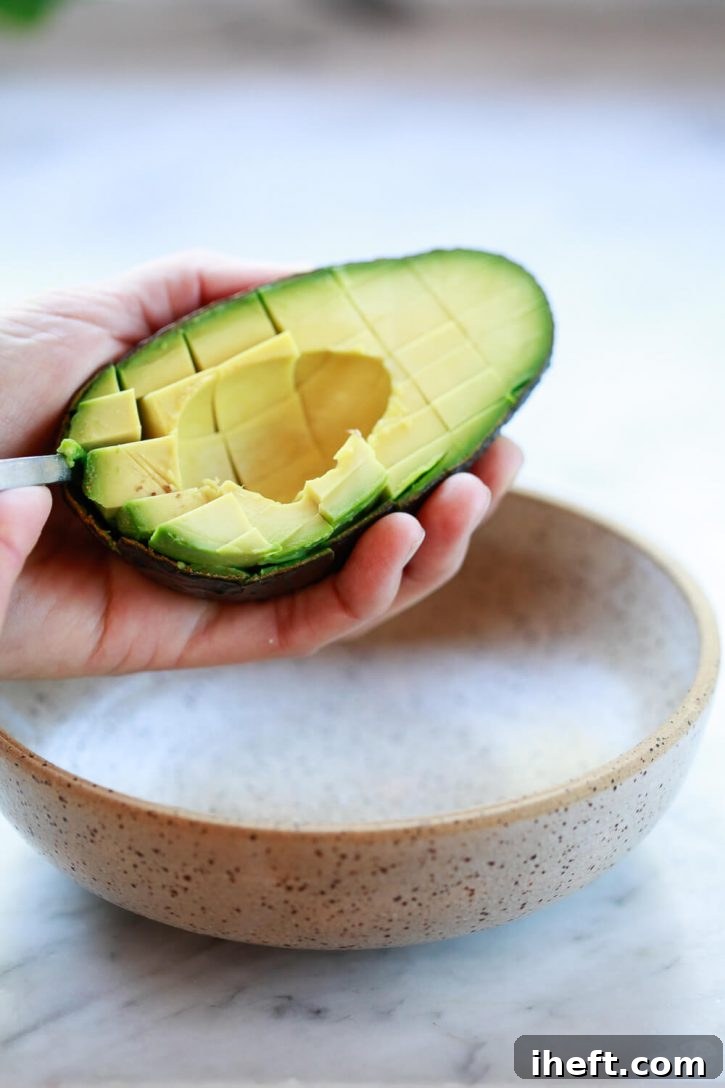
2. How to Cut Avocado for Guacamole and Chunky Salsas
When preparing dishes like guacamole or a robust salsa, perfection in slicing or peeling isn’t usually the goal. Here, convenience and a desirable chunky texture take precedence. As mentioned earlier, I typically wouldn’t go to the extra effort of peeling the avocado for these recipes. The simple spoon scoop method works wonderfully and is far more efficient.
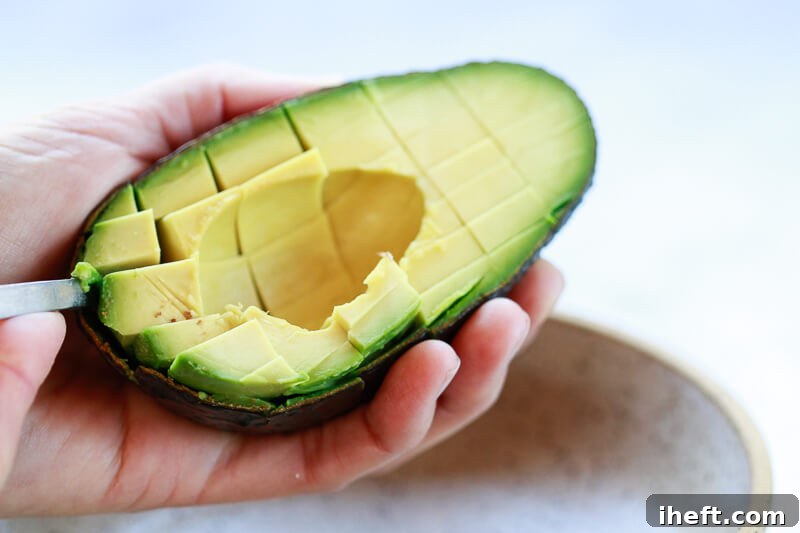
To create a pleasing chunky texture directly within the avocado skin, hold an avocado half securely in your hand or place it on the cutting board. Using a paring knife, carefully score the flesh of the avocado into a grid pattern. Make lengthwise cuts first, ensuring the knife goes through the flesh but stops before piercing the skin. Then, make crosswise cuts to create an array of cubes. Once scored, take a sturdy spoon and scoop out the cubes directly into your bowl. This method not only saves time but also provides excellent textural variety for your guacamole or salsa. This approach is also fantastic for adding a fresh topping to hearty dishes, such as my favorite Instant Pot Chili Recipe.
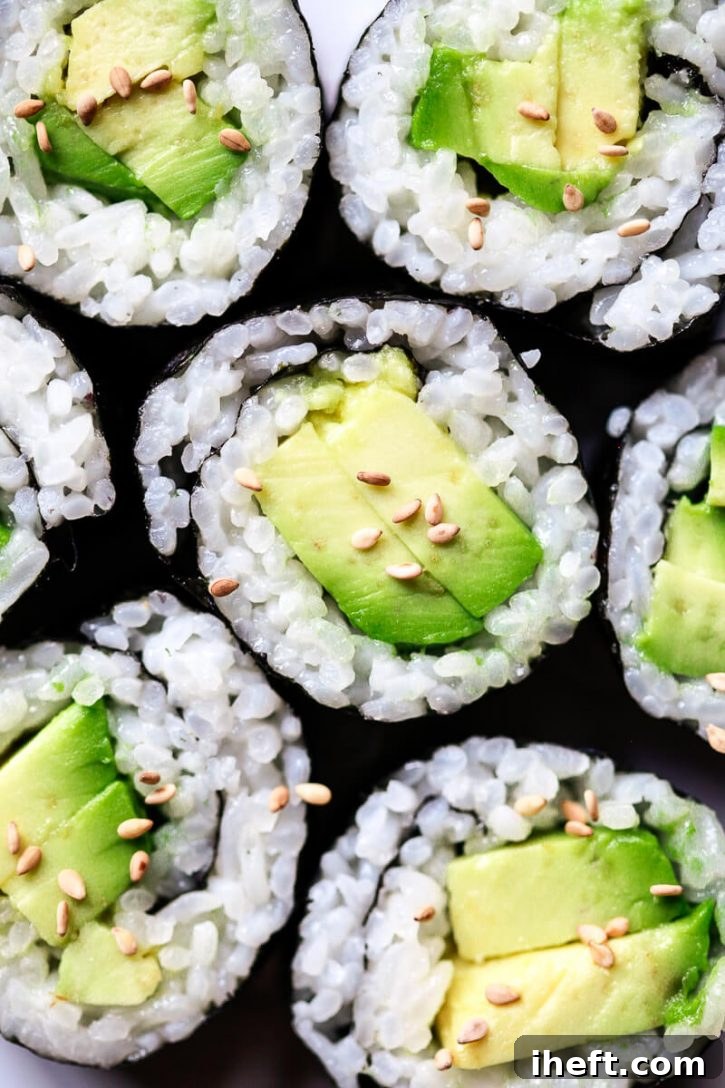
3. How to Cut Avocado for Sushi
Sushi demands a specific kind of avocado preparation to ensure both aesthetic appeal and optimal texture. For sushi, you’ll definitely want to choose a nice, firm, just-ripe avocado – one that yields slightly but isn’t overly soft or mushy. The goal is slices that hold their shape beautifully within the roll.
For sushi, the peel and slice method detailed earlier is paramount. After halving and pitting, carefully peel the avocado halves. Then, place the peeled halves flat-side down on your cutting board. For classic sushi rolls, I recommend cutting long, lengthwise slices, approximately 1/2 inch thick. These longer strips are ideal for running along the length of your sushi roll, providing a continuous ribbon of creamy avocado that contrasts perfectly with the rice and other fillings. A slightly firmer avocado will prevent the slices from breaking apart as you roll, ensuring a professional-looking and delicious result.
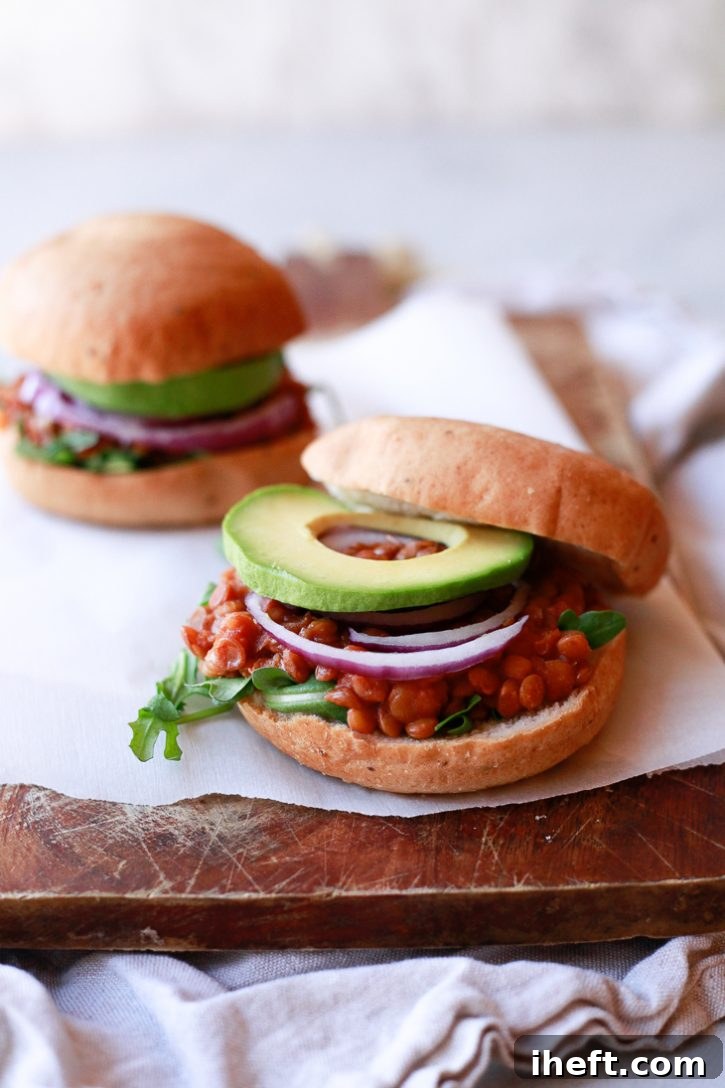
4. How to Cut an Avocado into Rings
Cutting an avocado into rings is a surprisingly delightful and visually appealing method, particularly fantastic for enhancing sandwiches, burgers, or even as a unique garnish for salads. I remember when I first shared this Lentil Sloppy Joe recipe, the most frequent question I received was, “How did you get the avocado to look like that?”
The key to creating these distinctive rings lies in a slight alteration to the initial cut. Instead of cutting the avocado in half lengthwise, you will cut it crosswise. Hold the avocado firmly and slice through its equator, creating two shorter, wider halves. Once cut, proceed to remove the seed from each half using the same safe method described earlier. Next, carefully peel the skin away from these crosswise halves. With the peeled halves flat on your cutting board, slice crosswise again into rings of your desired thickness, typically between 1/4 to 1/2 inch. The result is beautiful, perfectly round avocado rings that add both texture and visual interest to your dishes.
5. Creating Avocado Balls with a Melon Baller
For an extra touch of culinary finesse, consider using a melon baller to create perfectly spherical avocado balls. This unique presentation is fantastic for adding a gourmet touch to salads, grain bowls, or as a sophisticated garnish for appetizers. Simply halve and pit your avocado, then use a small melon baller to scoop out neat, round portions of the flesh.
How to Store Cut Avocado: Preventing Oxidation and Browning
Avocados, while delicious, have a notorious tendency to turn brown rapidly once their flesh is exposed to air. This discoloration is due to oxidation, a natural enzymatic reaction. Fortunately, there are several effective methods to slow down this process and keep your cut avocado fresh for longer.
-
Water Submersion: This is one of the most effective and simplest methods. The water acts as a barrier, preventing air from reaching the avocado flesh.
- For slices or chunks: Place your avocado slices or chunks in a small bowl. Cover them completely with filtered water, ensuring all pieces are submerged. Cover the bowl with plastic wrap or a lid and refrigerate for up to 2 days. When ready to use, simply drain the water and pat the avocado dry.
- For avocado halves: If you have half an avocado left, place it cut-side-down in a shallow dish containing about half an inch of water. The water will protect the exposed surface. Cover the dish and refrigerate for up to 2 days.
- Acidic Barrier (Lemon/Lime Juice): A thin layer of acid, such as lemon or lime juice, can also help inhibit oxidation. Lightly brush or spray the cut surface of the avocado with citrus juice. This method can slightly alter the flavor, so use it judiciously depending on your recipe. Store in an airtight container in the refrigerator.
- Airtight Storage: Simply wrapping cut avocado tightly in plastic wrap, pressing the wrap directly onto the exposed flesh, or placing it in an airtight container can help reduce air exposure. While less effective than water submersion, it can work for shorter periods.
It’s always best practice to cut your avocado just before you plan to use it to enjoy its freshest taste and vibrant color. However, if you find yourself with extra, these storage techniques will help minimize waste and keep your avocado delicious for later use.
Beyond the Basics: Creative Ways to Enjoy Avocado
Avocado’s creamy texture and mild flavor make it incredibly versatile, extending far beyond toast and guacamole. Here are a few more inspiring ways to incorporate this nutritious fruit into your diet:
- Creamy Dressings: Blend avocado into salad dressings for a rich, dairy-free alternative.
- Smoothies: Add a quarter or half an avocado to your morning smoothie for extra creaminess and healthy fats. It won’t overpower the flavor but will make it incredibly smooth.
- Baked Goods & Desserts: Believe it or not, avocado can be a secret ingredient in desserts! It can replace butter or oil in brownies, cookies, or even in a decadent chocolate avocado mousse, providing richness and a silky texture without a strong avocado taste.
- Avocado Fries: Slice avocado into wedges, bread them, and bake or air-fry for a unique and delicious side dish.
- Soups: Garnish your favorite soups and chilis with fresh avocado chunks for a cooling, creamy contrast.
Master the Avocado for Endless Culinary Delights
With these comprehensive tips and techniques, you are now equipped to confidently select, cut, peel, and store avocados like a seasoned pro. From understanding the subtle cues of ripeness to mastering various cutting styles for different culinary applications, you’ll be able to unlock the full potential of this incredible fruit. Whether you’re preparing a simple snack or an elaborate meal, perfectly prepared avocado adds a touch of creamy luxury and vibrant health. So go ahead, experiment with these methods, and enjoy the endless possibilities that avocados bring to your kitchen!
How to Cut and Peel Avocado Perfectly
1 minute
3 minutes
4 minutes
Wondering how to cut avocado into slices or chunks for toast, guacamole, or sushi? Here are the best ways to cut, peel, and store avocado.
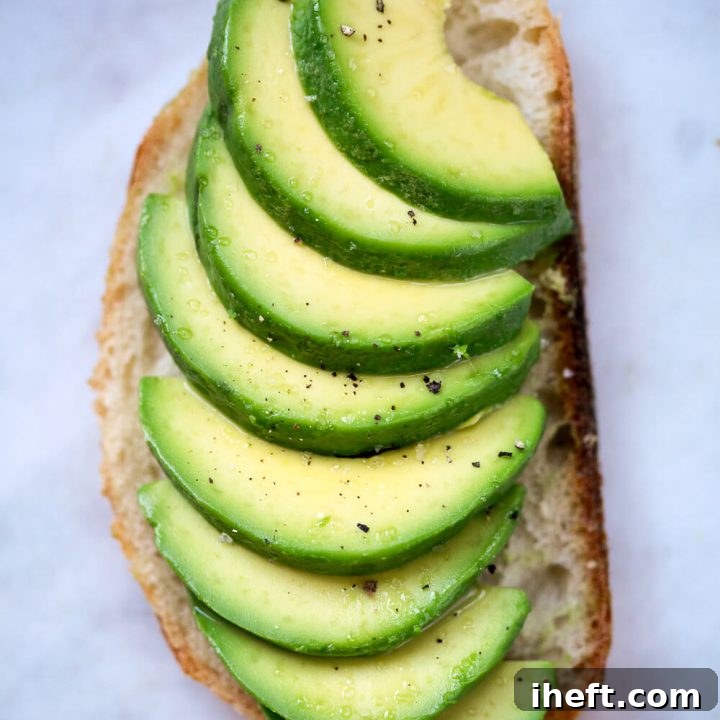
Ingredients
- 1 ripe avocado
Instructions
- Choose an avocado that gives just slightly when pressed. If it’s rock hard it’s not ready yet, and if it’s squishy or the skin isn’t firmly attached to the flesh, it’s overripe.
- Using a sharp medium to large knife, cut lengthwise straight down to the pit and all the way around, cutting the avocado in half.
- Gently twist the halves apart. The seed will almost always remain in one side.
- To remove the seed, protect your hand by placing a napkin between your hand and the avocado. Carefully and firmly whack the knife into the seed. Gently pull the seed out with the knife. Carefully remove the seed from the knife.

- To cut perfect avocado slices, place the avocado halves cut-side-down and peel the skin away. Cut into slices or chunks.
- To make easy chunks or slices, hold an avocado half in your hand. Use a paring knife to cut through the flesh just until you hit the skin, but without piercing the skin. Cut slices, or cut slices one way then the opposite way, to make cubes. Use a spoon to scoop out the slices or chunks. This a great method for guacamole, though the pieces don’t come out as cleanly as when the skin is peeled first.
Notes
To make avocado rings, cut the avocado in half crosswise and remove the seed and peel the halves. Then cut crosswise into ¼ to ½ inch rings. This is a fantastic method for burgers.
Another fun and unique way to cut avocado is with a melon baller. Add the balls to salads and grain bowls.
It’s best to cut avocado just before using, however if you find yourself with extra, you can prevent it from oxidizing by storing it in water. Cover cut avocado chunks or slices in a bowl of filtered water in the refrigerator for up to 2 days. Or place a cut avocado half cut-side-down in a shallow dish of water in the fridge.
Nutrition Information:
Yield: 2
Serving Size: 1/2 avocado
Amount Per Serving:
Calories: 161Total Fat: 15gSaturated Fat: 2gTrans Fat: 0gUnsaturated Fat: 12gCholesterol: 0mgSodium: 7mgCarbohydrates: 9gFiber: 7gSugar: 1gProtein: 2g
Nutrition information is automatically calculated by Nutritionix. I am not a nutritionist and cannot guarantee accuracy. If your health depends on nutrition information, please calculate again with your favorite calculator.