Sweet Tanghulu Skewers
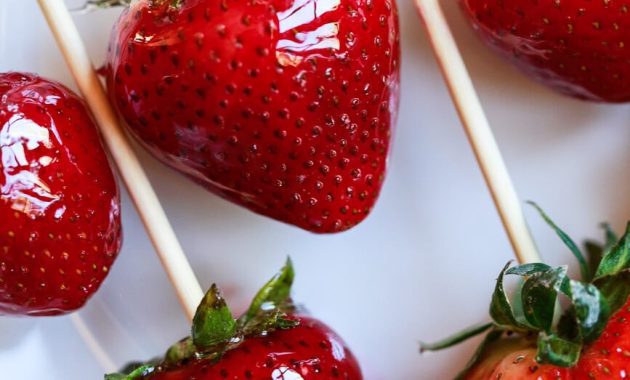
Homemade Tanghulu Candied Fruit: A Sweet and Viral Sensation
Embark on a delightful culinary adventure with this easy-to-follow recipe for Tanghulu candied strawberries. This enchanting treat, beloved by children and adults alike, promises a symphony of crisp candy coating and juicy fruit.
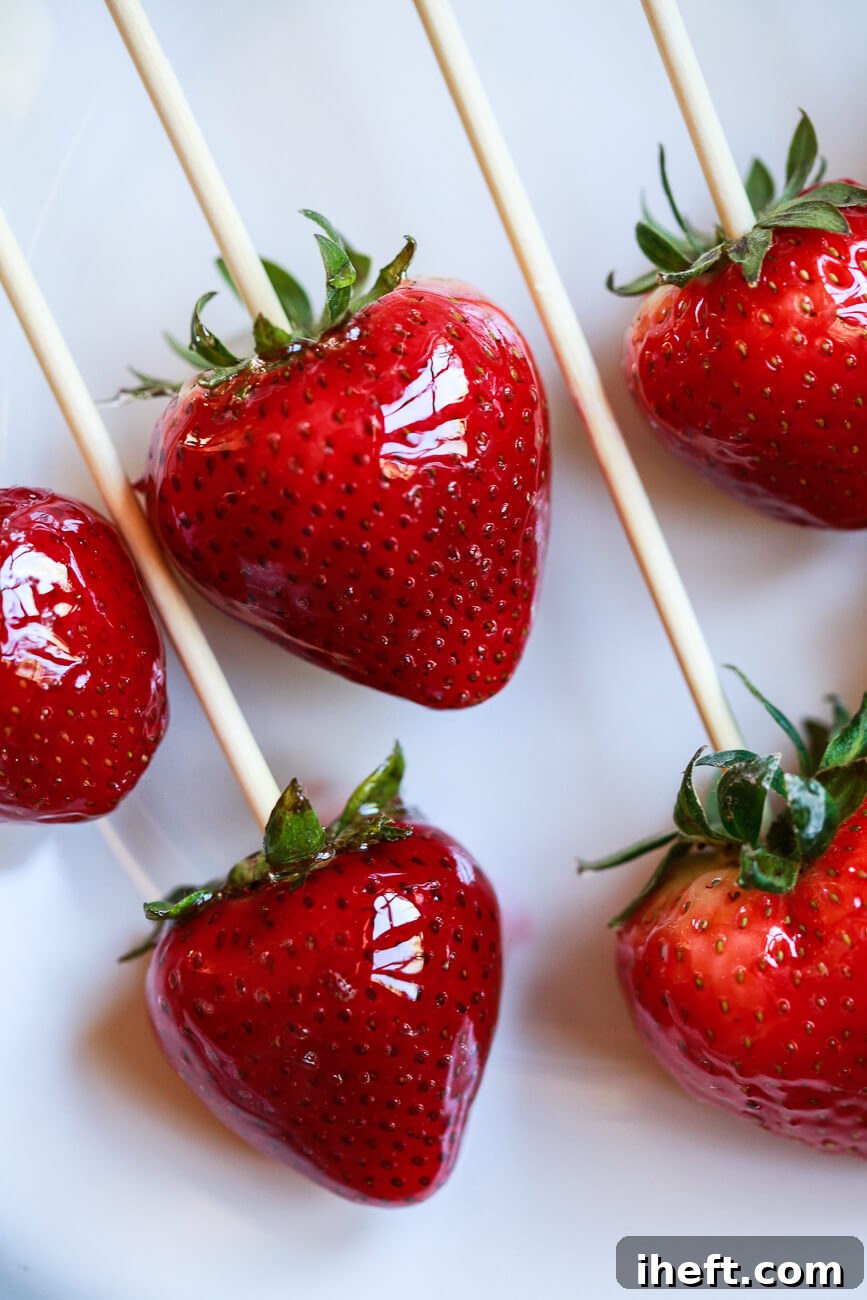
If your social media feeds are brimming with captivating cooking videos, or if you have curious tweens and teens in your household, chances are you’ve already stumbled upon the vibrant world of Tanghulu. This ancient Chinese street food has recently taken the internet by storm, captivating audiences worldwide with its simple elegance and irresistible crunch. My own journey into Tanghulu began when my 11-year-old daughter introduced me to a viral recipe, and since then, crafting these delightful candied fruits has become a cherished family activity. Join us as we explore the origins of Tanghulu and uncover the secrets to making your own perfect batch at home.
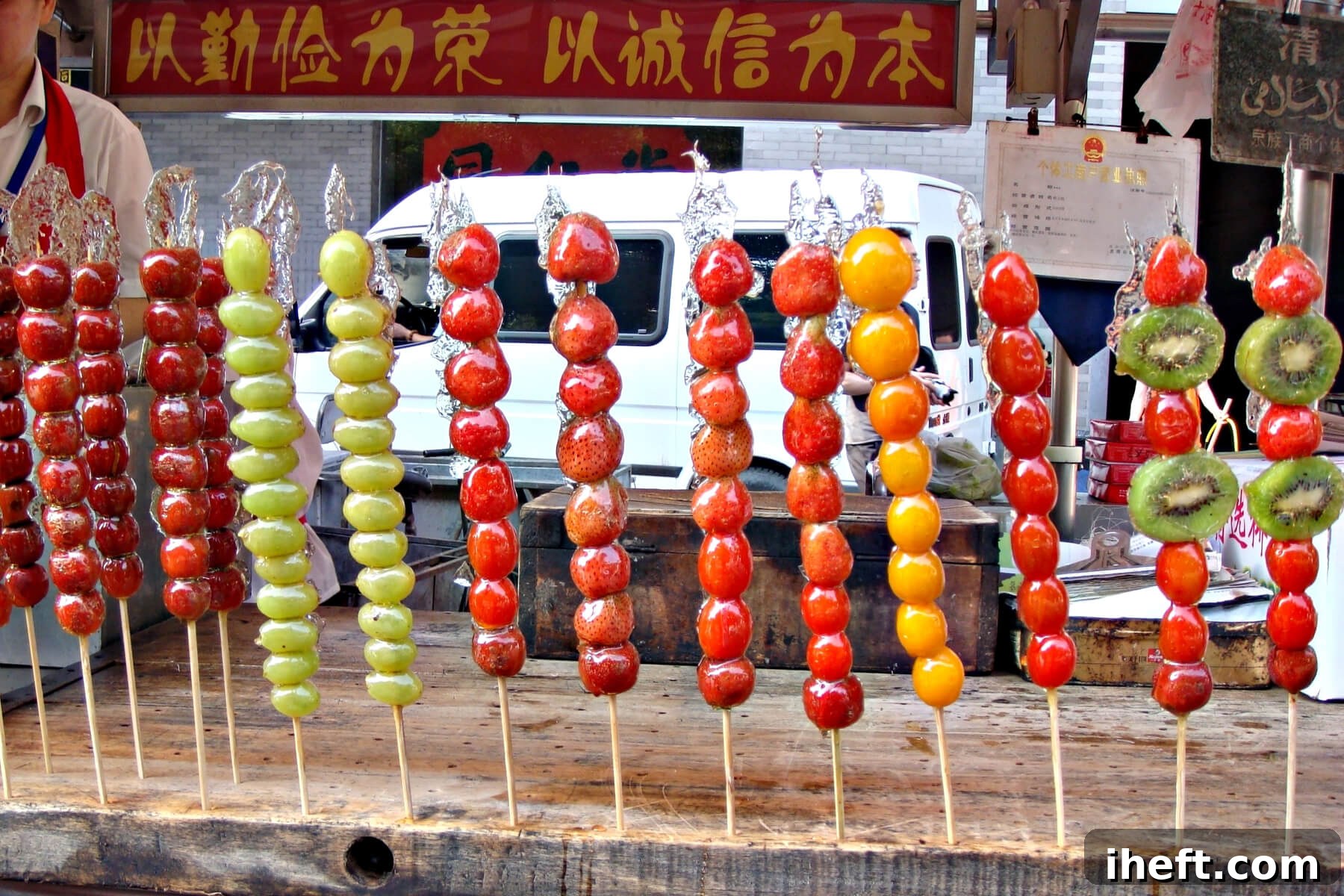
Image: Shutterstock. Hawthorn Tanghulu in Beijing, China.
What is Tanghulu? A Glimpse into Chinese Culinary History
Tanghulu (糖葫芦) is a traditional Chinese snack consisting of various fruits, typically hawthorn berries, skewered on bamboo sticks and then dipped in a hardened sugar syrup. The result is a glistening, intensely crunchy candy shell that encases the fresh, juicy fruit within. While it might feel like a trendy new discovery in Western cultures, particularly due to its recent surge in popularity on platforms like TikTok, Tanghulu boasts a rich history spanning hundreds of years in China, dating back to the Song Dynasty. It originated as a popular street food, often sold by vendors during the winter months, offering a delightful combination of sweet, tart, and crisp textures.
Traditionally, Tanghulu is made with Hawthorn berries (山楂, shānzhā), a tart, reddish fruit often used in traditional Chinese medicine for its digestive properties. Hawthorn berries, similar in appearance and tartness to a small crab apple, perfectly complement the sweet candy coating. However, the adaptability of Tanghulu means it can be made with a wide array of other fruits, allowing for endless variations and personalized creations. This versatility has undoubtedly contributed to its widespread global appeal, making it accessible and enjoyable for everyone.
Essential Tools and Ingredients for Tanghulu Success
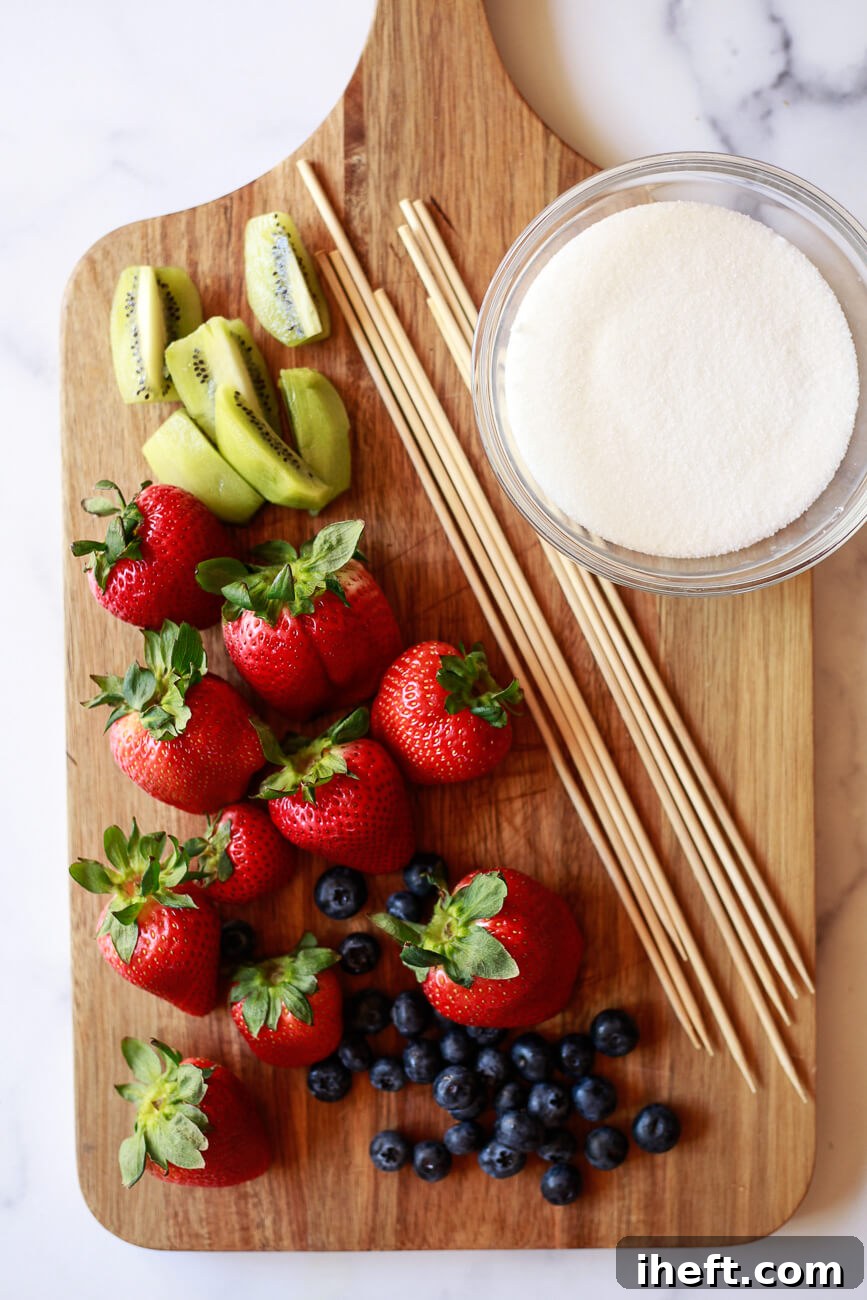
Crafting perfect Tanghulu might seem intimidating at first, but with the right tools and precise measurements, it’s a remarkably straightforward process. Here’s what you’ll need to gather:
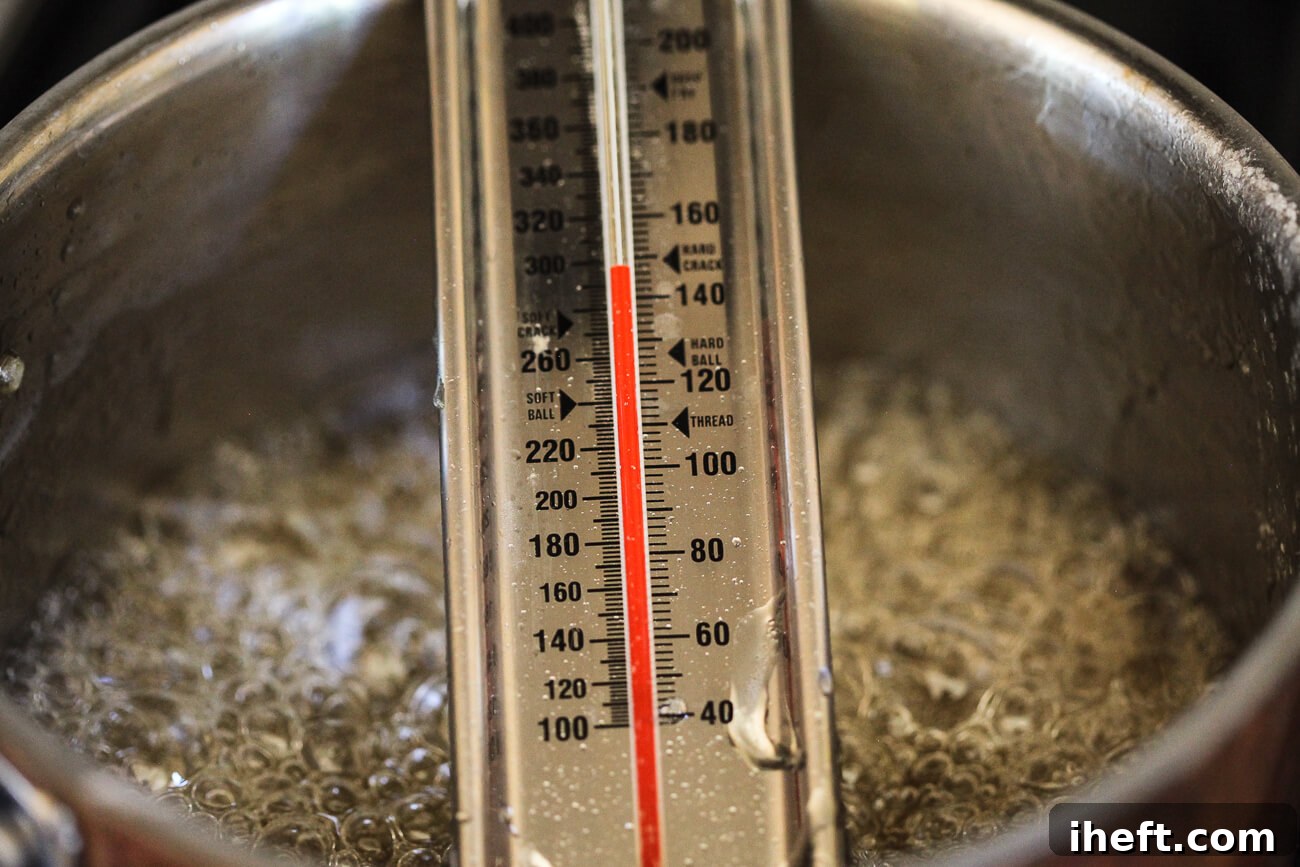
- Candy Thermometer: This is arguably the most crucial tool. Achieving the exact “hard crack” stage (300°F or 149°C) is key to a perfectly crisp candy shell. While experienced candy makers might attempt it by eye, a thermometer guarantees accuracy and greatly reduces the chance of failure for beginners.
- Skewers: Traditional bamboo skewers work wonderfully. Lollipop sticks or even sturdy wooden skewers are also excellent alternatives. Ensure they are long enough to hold a few pieces of fruit comfortably.
- Small Saucepan: A heavy-bottomed saucepan is ideal for even heat distribution, preventing the sugar syrup from burning.
- White Granulated Sugar: The foundation of our candy coating. Use standard granulated sugar for best results.
- Water: Combined with sugar, this creates the syrup. The ratio is critical.
- Fresh Fruit: The star of the show! We’ll focus on strawberries, but many other fruits can be used.
- Parchment Paper or Silicone Mat: Essential for cooling the dipped fruit without sticking. Never use wax paper, as the hot syrup will melt it.
Selecting the Best Fruits for Tanghulu
While hawthorn berries are traditional, the beauty of modern Tanghulu lies in its adaptability to various fruits. The key is to choose fruits that are firm, not overly ripe, and have relatively low moisture content to prevent them from “bleeding” into the candy shell too quickly. Strawberries are a fantastic choice due to their delightful balance of sweetness and tartness, and their firm texture holds up well to the hot syrup.
Here are some top fruit contenders for your Tanghulu creations:
- Hawthorn Berries: The classic choice, offering a unique tangy flavor.
- Strawberries: Sweet, juicy, and visually appealing. Select firm, medium-sized berries.
- Grapes: Seedless varieties work best. Their small size makes them perfect for single-bite treats.
- Peeled Kiwi: Slice thickly into rounds or half-moons. Ensure they are firm.
- Kumquats: These small citrus fruits offer a wonderful sweet and sour punch.
- Mandarin Orange Segments: Make sure they are peeled thoroughly and free of pith.
- Blueberries: Smaller, more delicate, but offer a burst of flavor.
- Pineapple Chunks: Small, firm pieces work well.
No matter which fruit you choose, remember that proper preparation is paramount. All fruits must be thoroughly washed and, most importantly, completely dried. Any residual water on the fruit can cause the sugar syrup to crystallize prematurely, resulting in a grainy or sticky coating instead of a smooth, glassy one.
Mastering the Hard Crack Stage: The Secret to Crispy Tanghulu
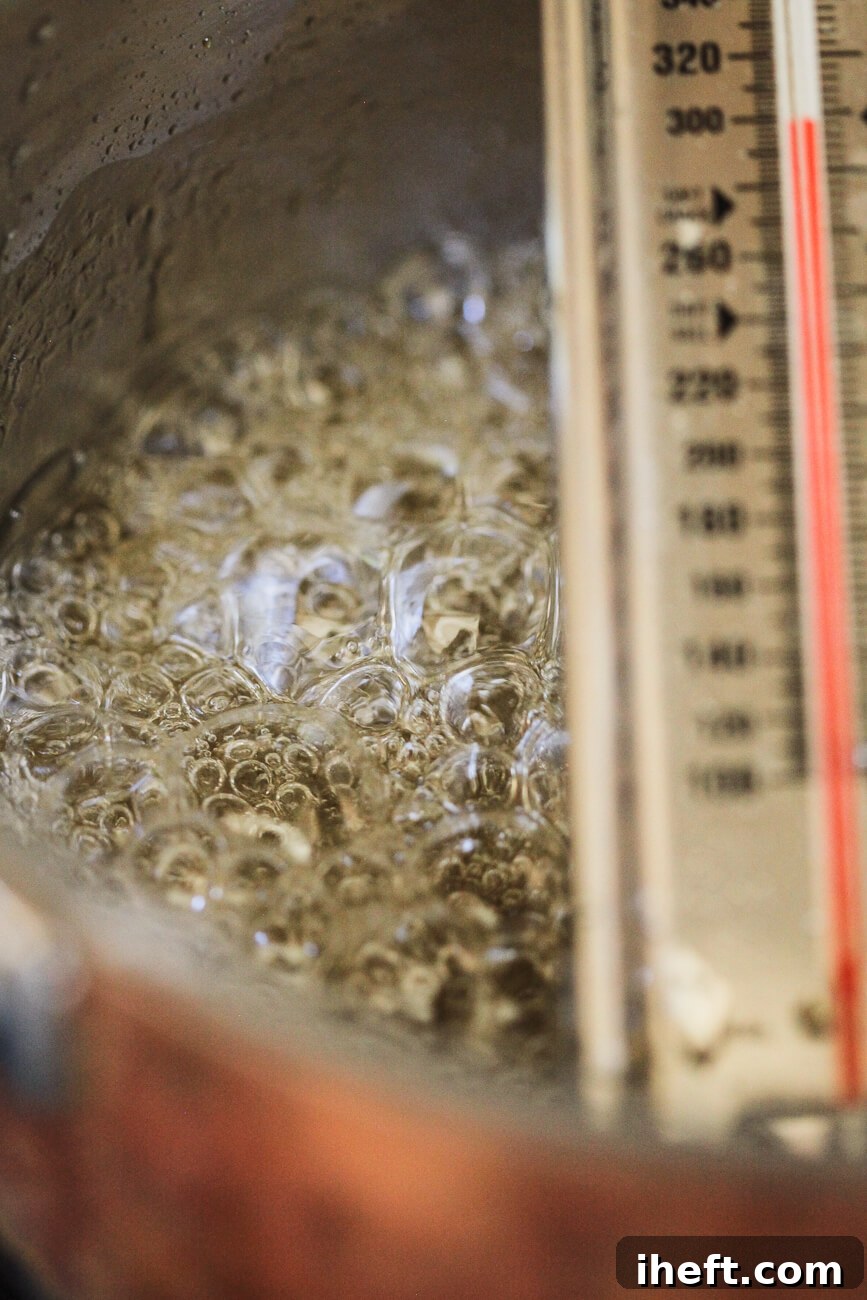
The magic of Tanghulu lies in its incredibly thin, glassy candy shell that shatters with a satisfying crunch. This perfect texture is achieved by bringing your sugar syrup to precisely the “hard crack” stage, which is 300°F (149°C). Understanding this stage is fundamental to your success.
At the hard crack stage, the sugar syrup has reached its highest concentration of sugar, with very little water remaining. When cooled rapidly, this highly concentrated syrup solidifies into a brittle, glass-like candy that cracks easily when bitten. If the syrup doesn’t reach this temperature, it will remain soft and sticky, leading to a chewy or gummy coating rather than a crisp one. Conversely, if it goes much beyond 300°F, the sugar will caramelize too much, resulting in a dark, potentially burnt flavor.
This is where your candy thermometer becomes indispensable. While some seasoned candy makers can gauge the stage by observing the syrup’s color and consistency, a thermometer provides an objective, accurate reading. The syrup will typically be a light amber color at this stage. You can also perform a quick cold water test: drop a small amount of the hot syrup into a glass of ice water. If it immediately forms hard, brittle threads that snap when bent, it’s ready.
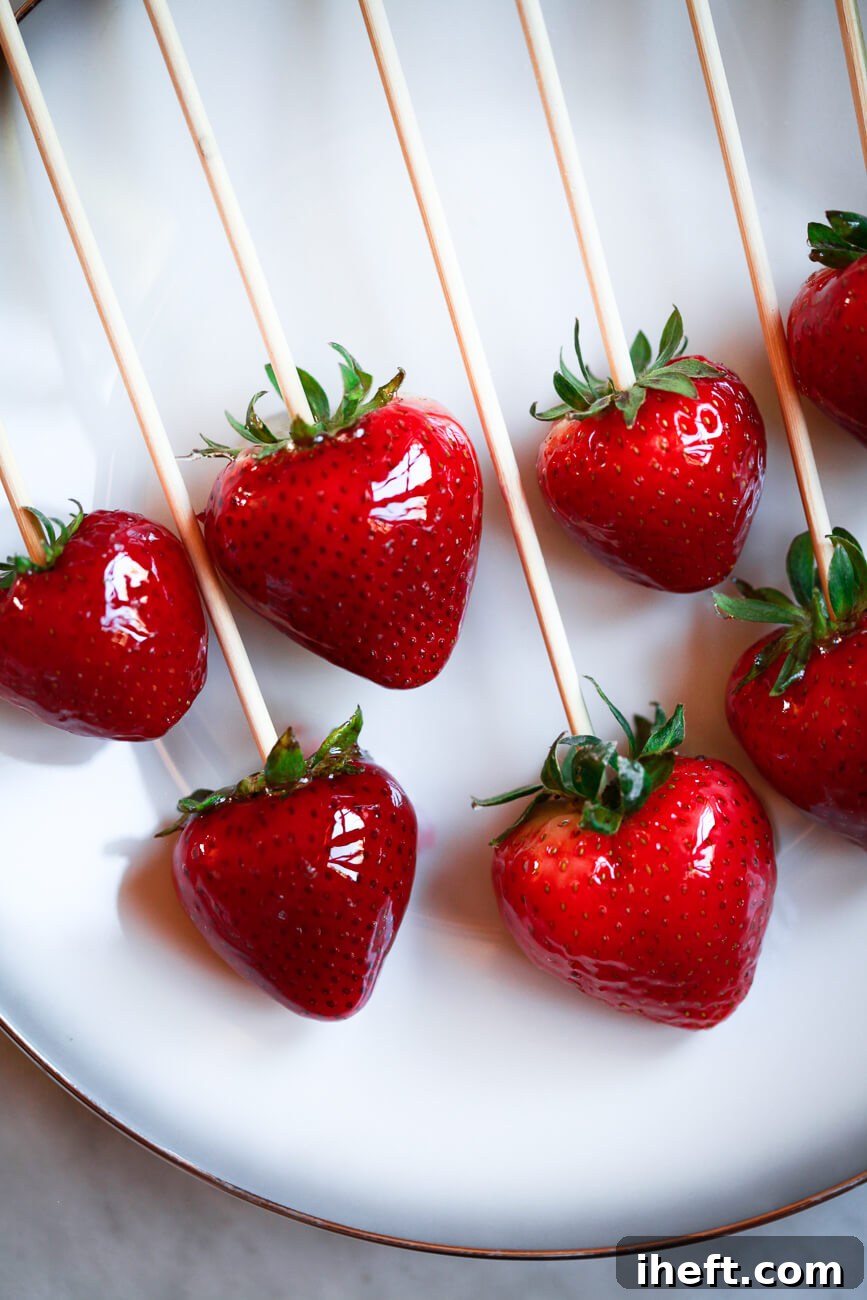
Tanghulu Candied Strawberries Recipe
This recipe focuses on creating beautiful, crisp candied strawberries, a crowd-pleasing favorite!
Tanghulu Candied Strawberries
Prep Time: 5 minutes
Cook Time: 15 minutes
Total Time: 20 minutes
Learn how to make Tanghulu candied strawberries, the popular Chinese street food, with this fun and easy recipe. All you need is sugar, water, and your favorite fresh fruit!
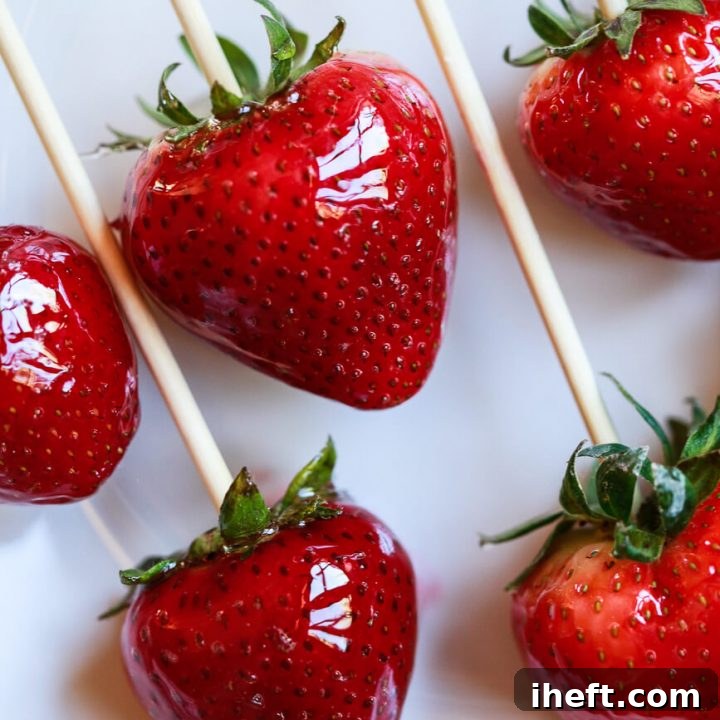
Ingredients
- 1 lb. fresh strawberries
- 2 cups granulated sugar
- 1 cup water
- Bamboo skewers (or lollipop sticks)
Instructions
-
Prepare the Strawberries:
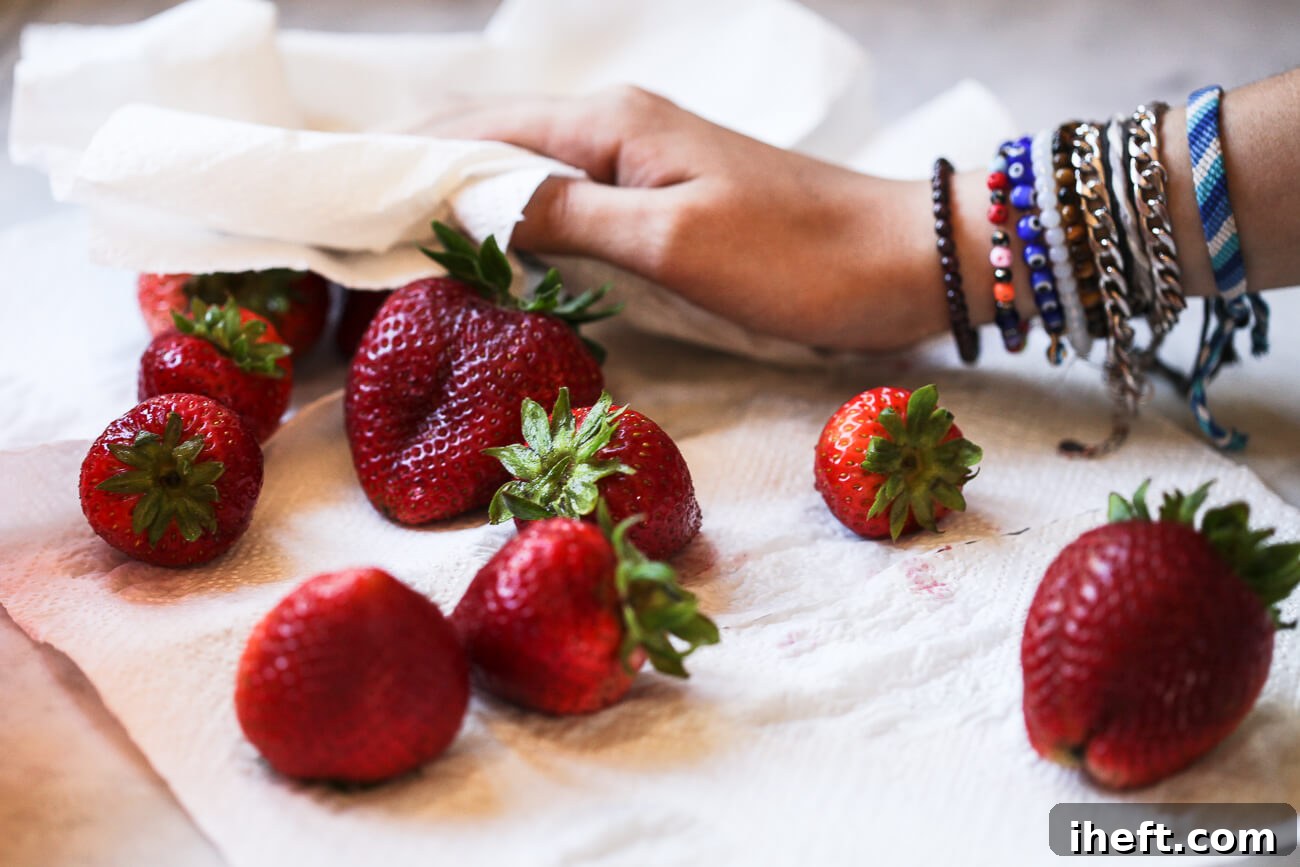
Rinse the strawberries thoroughly under cold water. Gently pat them completely dry with a paper towel. This step is crucial, as any moisture can cause the sugar to crystallize. Carefully skewer one to three strawberries onto each bamboo skewer, ensuring they are securely fastened and not prone to slipping.

-
Prepare the Syrup:
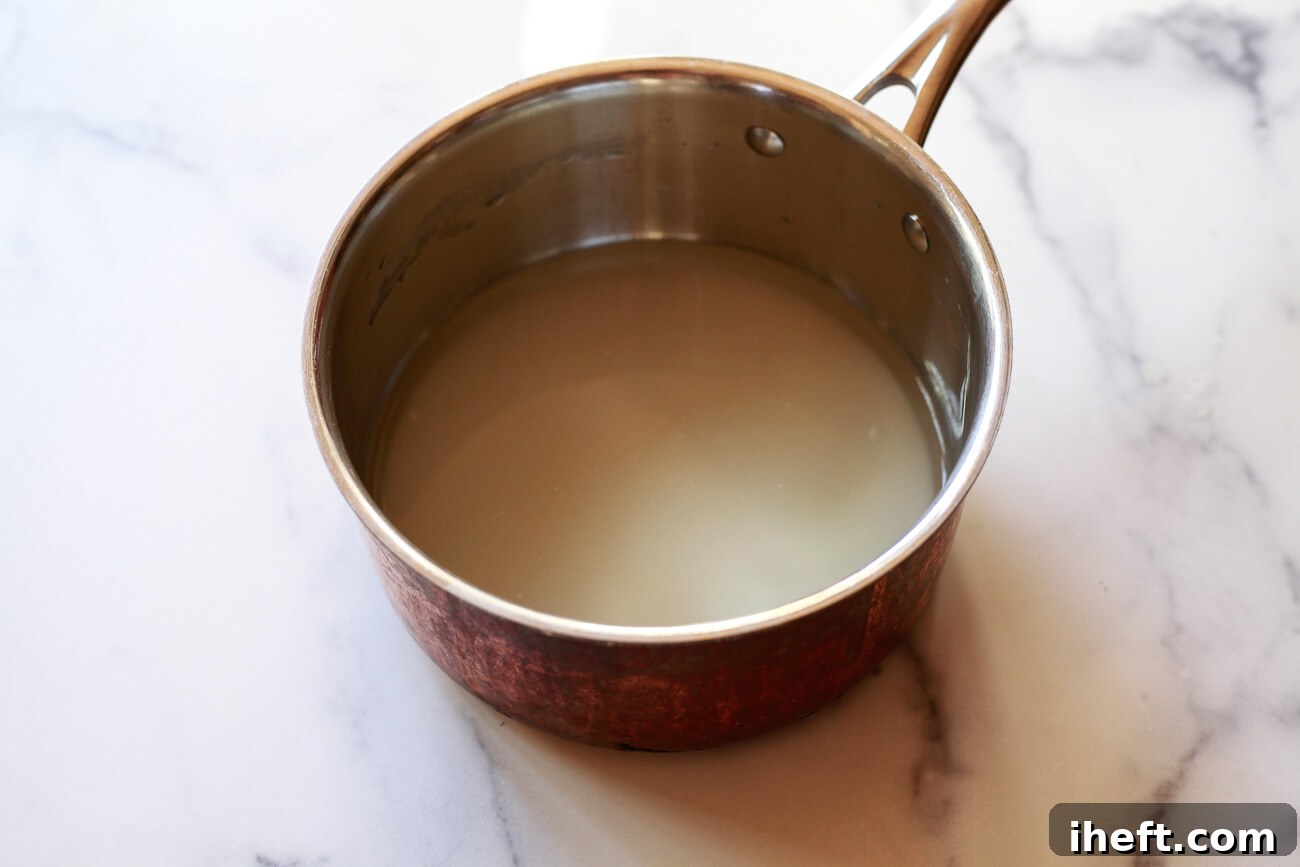
In a small, heavy-bottomed saucepan, combine the granulated sugar and water. Avoid stirring the mixture at this stage, as stirring can encourage sugar crystallization.
-
Cook to Hard Crack Stage:
Place the saucepan over high heat. Insert your candy thermometer into the syrup, ensuring it doesn’t touch the bottom of the pan. Bring the mixture to a rolling boil. Continue boiling, without stirring, until the syrup reaches precisely 300°F (149°C), the hard crack stage. The syrup will transform into a light amber color. You can confirm its readiness by dropping a few drops into a glass of ice-cold water; it should solidify immediately into brittle threads.
-
Dip the Fruit:
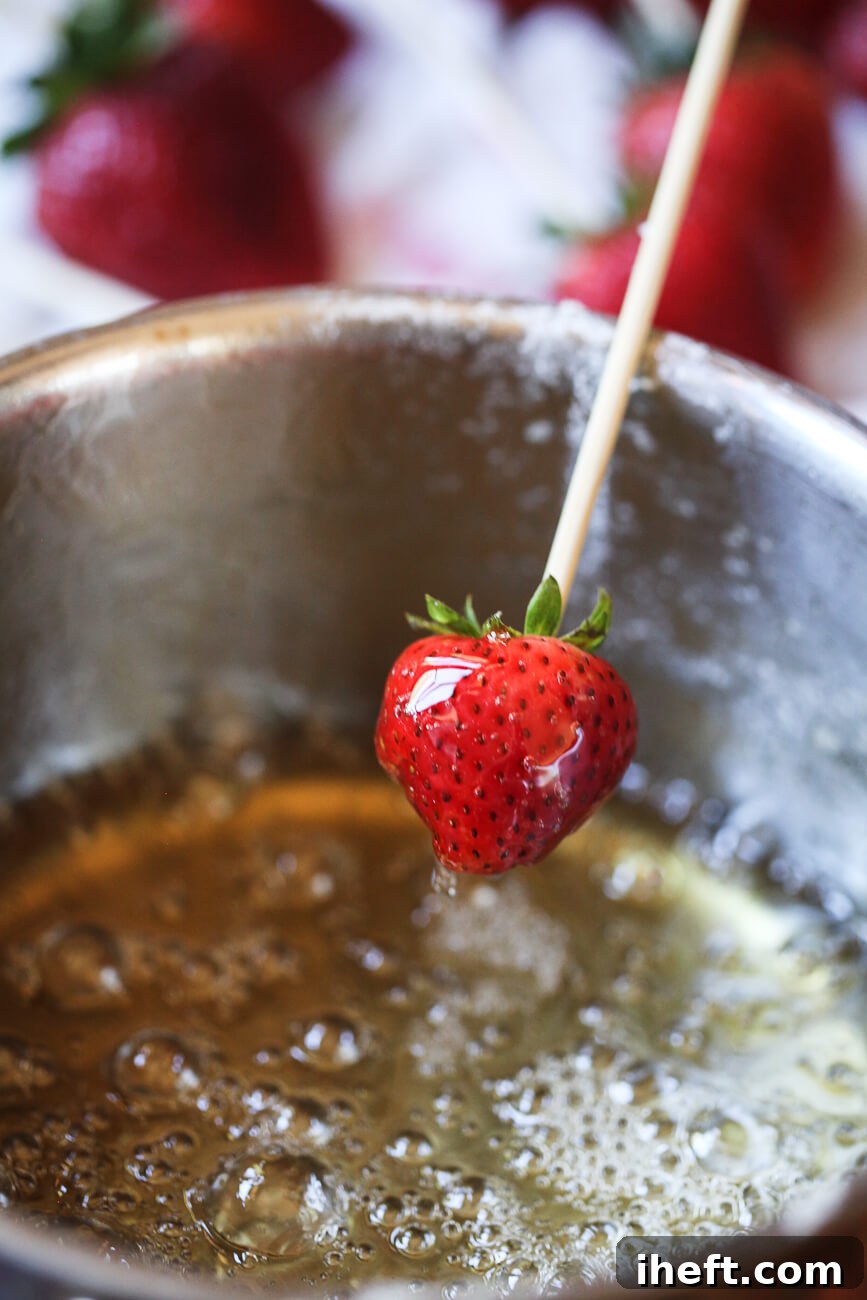
Immediately turn off the heat once the syrup reaches 300°F. Working quickly but carefully, dip each skewered strawberry into the hot sugar mixture. Rotate the skewer to ensure each berry is evenly coated in a thin layer of syrup. If needed, use a spoon to help pour syrup over any uncoated spots.
-
Cool and Harden:
Transfer the dipped strawberries to a plate lined with parchment paper or a silicone mat to dry. The Tanghulu will harden very quickly, typically within a minute or two.
-
Serve Immediately:
Tanghulu strawberries are best enjoyed as soon as they have cooled and hardened. The longer they sit, especially in humid environments, the more likely the fruit is to “bleed” and cause the candy coating to become sticky.
Chef’s Notes & Tips
Other Fruit Options: While strawberries are fantastic, feel free to experiment with other firm, low-moisture fruits like grapes (seedless), thick slices of peeled kiwi, or hawthorn berries. Ensure all fruits are thoroughly dry before dipping.
Preventing Crystallization: To avoid a grainy syrup, resist the urge to stir once the sugar and water are boiling. If sugar crystals form on the sides of the pan, you can gently brush them down with a wet pastry brush.
Safety First: The sugar syrup is extremely hot. Exercise extreme caution when working with it. Keep children at a safe distance during the cooking and dipping process. Have a bowl of ice water nearby in case of accidental burns.
Troubleshooting Sticky Tanghulu: If your Tanghulu turns out sticky, it usually means the sugar syrup did not reach the full 300°F (hard crack stage). For your next attempt, double-check your thermometer and ensure you hold the temperature precisely.
Nutrition Information:
Yield: 20 servings
Serving Size: 1 (approx. 1 strawberry)
Amount Per Serving:
Calories: 85
Total Fat: 0g
Saturated Fat: 0g
Trans Fat: 0g
Unsaturated Fat: 0g
Cholesterol: 0mg
Sodium: 1mg
Carbohydrates: 22g
Fiber: 0g
Sugar: 21g
Protein: 0g
Nutrition information is an estimate calculated automatically. I am not a nutritionist and cannot guarantee accuracy. If your health depends on nutrition information, please calculate again with your favorite calculator.
Serving and Storage Tips for Freshness
Tanghulu is truly best enjoyed within an hour or two of being made. The crisp candy shell is at its peak freshness when it’s newly hardened. Over time, especially if exposed to humidity or stored incorrectly, the candy can start to absorb moisture from the air and the fruit itself, leading to stickiness or a melted appearance. This phenomenon, known as “sugar weeping,” is common with hard candies.
If you must store Tanghulu, place it in an airtight container in a cool, dry place. Avoid the refrigerator, as the moisture inside can cause the candy to become sticky faster. For optimal crunch and visual appeal, plan to make and serve your Tanghulu on the same day.
Conclusion: Your Sweet Tanghulu Adventure Awaits!
Making Tanghulu at home is more than just a recipe; it’s an experience that connects you to a rich culinary tradition while offering a fun, creative outlet. From the careful preparation of the fruit to the precise temperature control of the sugar syrup, each step builds towards the delightful moment when you bite into that perfectly crisp, sweet-and-tart candied strawberry. Whether you’re a seasoned chef or a curious beginner, this recipe provides all the guidance you need to create a batch of stunning Tanghulu that will impress your family and friends. So gather your ingredients, follow these steps, and prepare to enjoy the magic of homemade Tanghulu!