Sourdough, Reimagined Gluten-Free
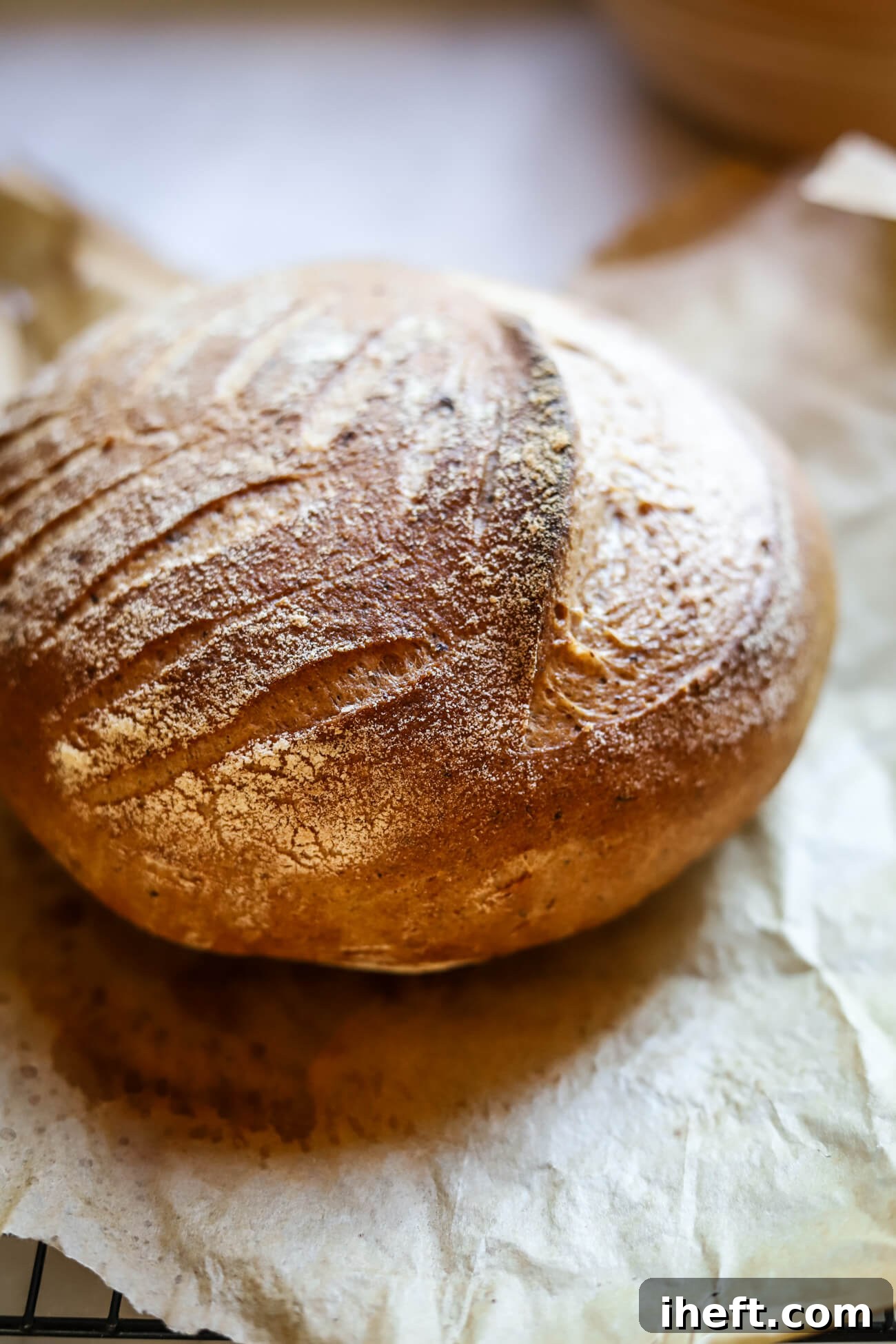
This recipe will guide you through creating an extraordinary, crusty gluten-free sourdough bread that rivals its traditional counterpart. It yields one beautiful boule, characterized by a perfectly crisp exterior and a wonderfully tender, airy interior. Designed for flexibility, this recipe can be completed within a single day or with an overnight proof, fitting seamlessly into your schedule. What truly sets it apart is its nutritious blend of carefully selected gluten-free flours, starches, flax, and psyllium – thoughtfully formulated to achieve amazing results without the need for xanthan gum or other artificial binders. This post contains affiliate links, which means I may earn a commission when you shop through them.
My journey into gluten-free sourdough baking began somewhat unexpectedly. At the peak of my sourdough obsession, happily experimenting with various wheat-based loaves, my doctor advised me to eliminate gluten from my diet. This presented a significant challenge: how could I continue to enjoy the wholesome, tangy goodness of homemade sourdough without gluten? While I still cherish making traditional sourdough for my family and friends, I embarked on a mission to master the art of gluten-free baking, determined not to let dietary restrictions diminish my love for freshly baked bread.
The path was not without its trials. I experimented with many, many gluten-free sourdough bread recipes, often encountering dense, gummy, or crumbly results that simply didn’t live up to the standard of a truly satisfying loaf. However, through persistent testing and refinement, I finally perfected this recipe. It consistently produces a loaf that offers the same satisfying crunch, chew, and open crumb that makes traditional sourdough so beloved. Even without gluten, we can still indulge in the simple pleasures of hearty sandwiches, a vibrant avocado toast, or a warm slice slathered with butter. Keep reading for a comprehensive, detailed, step-by-step guide, complete with abundant photos, to help you master this artisan gluten-free boule in your own kitchen. Prepare to transform your gluten-free baking experience!
Is Sourdough Bread Gluten-Free? Understanding the Difference
This is a common question, and the answer is crucial for anyone with celiac disease or gluten sensitivity. While sourdough bread often gets a reputation for being easier to digest than other types of bread due to its long fermentation process, traditional sourdough bread is NOT gluten-free. The fermentation of wheat flour by lactic acid bacteria and yeast does break down some of the gluten proteins, which is why many individuals with mild gluten sensitivity might find it more tolerable. However, it does not eliminate gluten entirely. For those who must strictly avoid gluten, traditional sourdough made with wheat flour is still off-limits. This is precisely why this recipe is a game-changer! By utilizing a carefully crafted blend of alternative flours and starches, you can now enjoy the distinct flavor and texture of artisan sourdough bread while adhering to a completely gluten-free diet. This recipe provides a safe and delicious option, ensuring everyone can experience the joy of homemade sourdough.
Why You’ll Absolutely Love This Gluten-Free Sourdough Recipe
This isn’t just another gluten-free bread recipe; it’s a meticulously developed method that brings the authentic joy of sourdough baking to a gluten-free diet. Here’s why this particular recipe will become your new favorite:
- Efficient One-Day Baking: Unlike many sourdough recipes that demand multiple days of preparation, this gluten-free boule can be ready to enjoy in a single day. Its relatively quick ferment time, typically around one hour, makes it much more accessible for busy schedules. You can even choose an overnight cold proof for added convenience and deeper flavor development.
- Wholesome, Gum-Free Ingredients: Say goodbye to xanthan gum, guar gum, and other ultra-processed binders often found in gluten-free baking. This recipe relies on natural, nutrient-dense ingredients to create structure and elasticity. We believe in real food, and this bread embodies that philosophy.
- Nutrient-Dense Profile: We prioritize health without compromising on taste. This bread is crafted with beneficial ingredients such as gluten-free oat flour, known for its fiber content, psyllium husks for essential binding and digestive health, and flax meal, packed with omega-3s and additional binding properties. Each slice offers more than just deliciousness; it provides valuable nutrition.
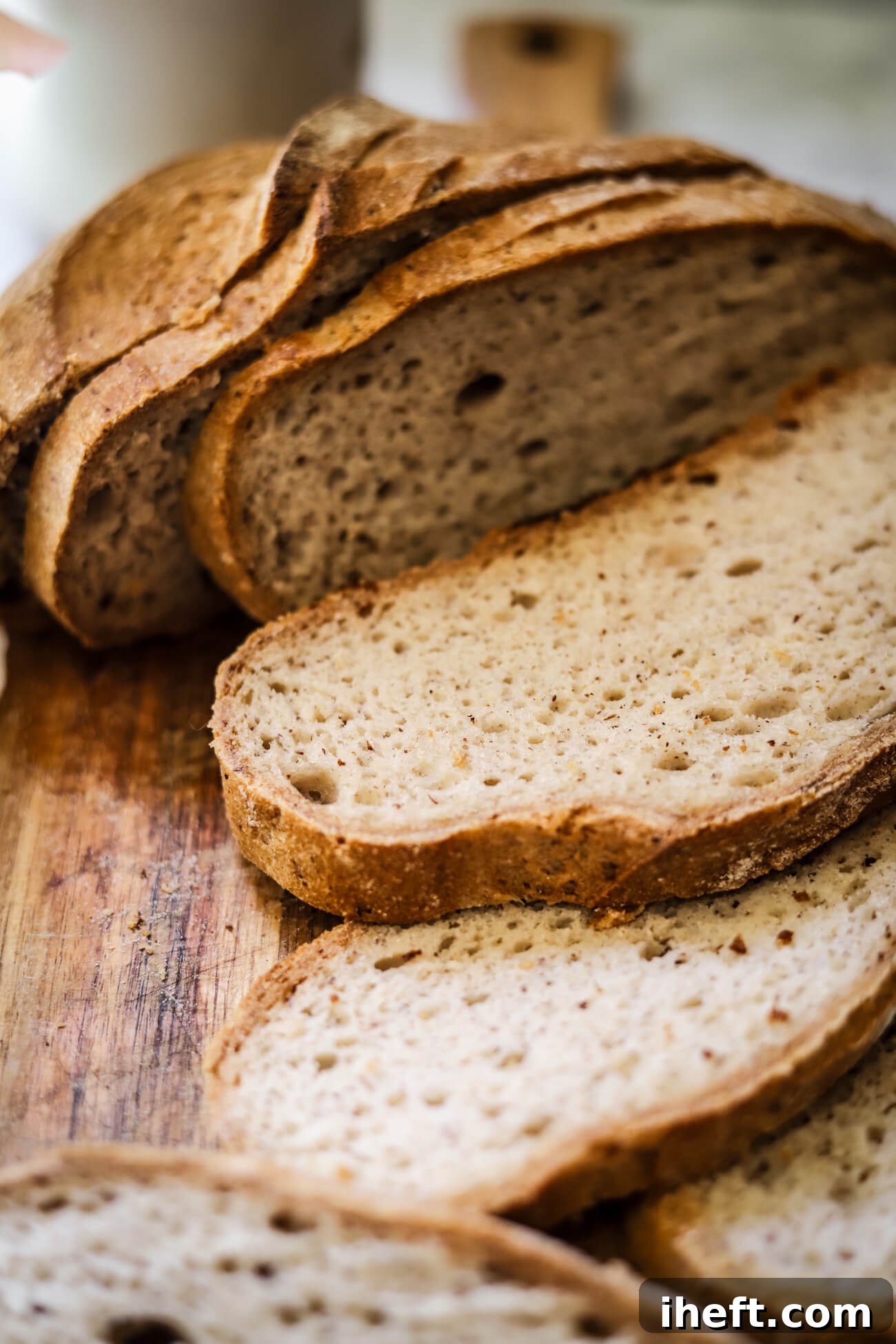
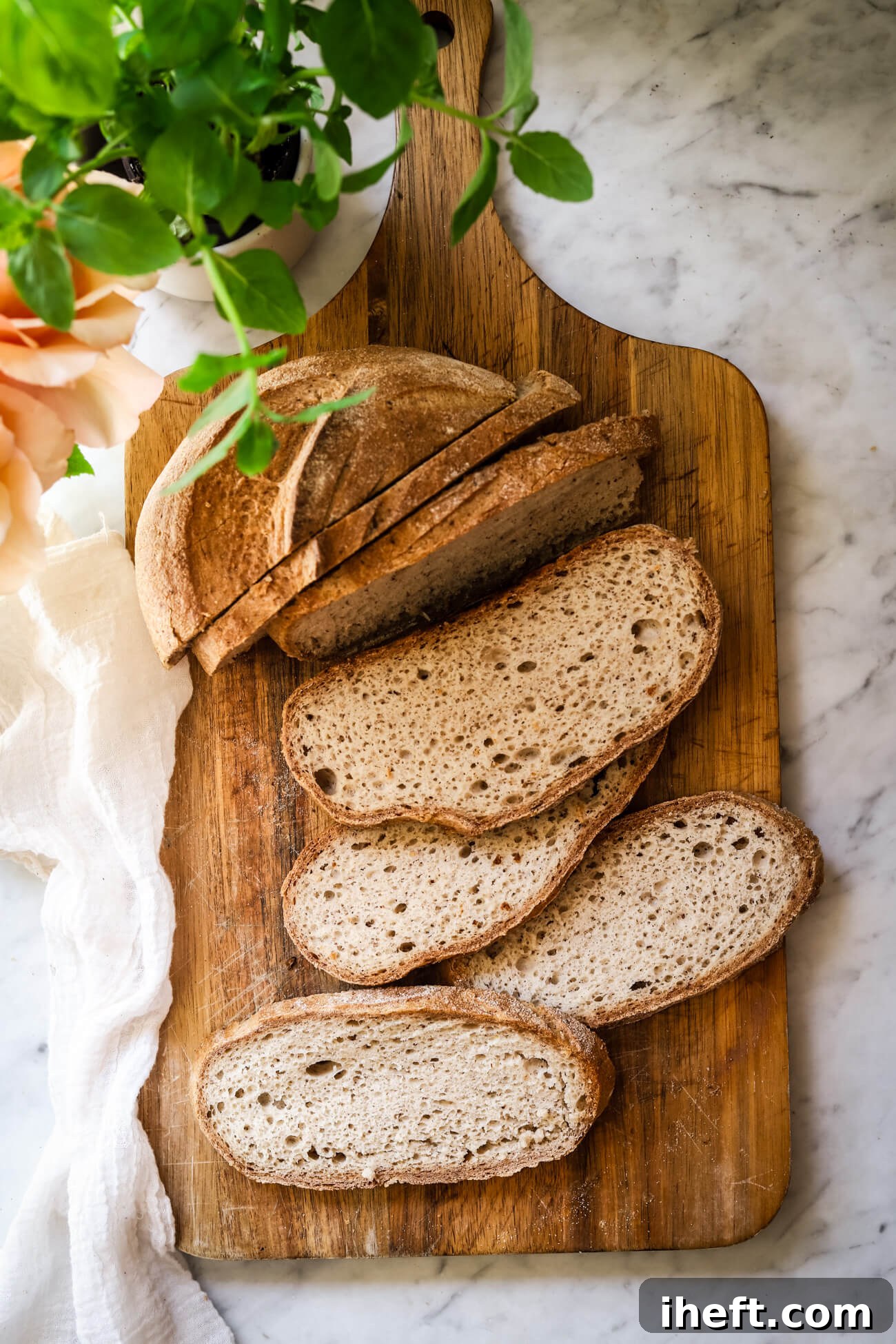
- Achieves the Perfect Texture: Prepare for a truly satisfying sensory experience. This recipe consistently delivers a deeply crunchy crust that gives way to a light, airy, and beautifully open crumb. The texture is designed to mimic traditional sourdough, making it incredibly enjoyable.
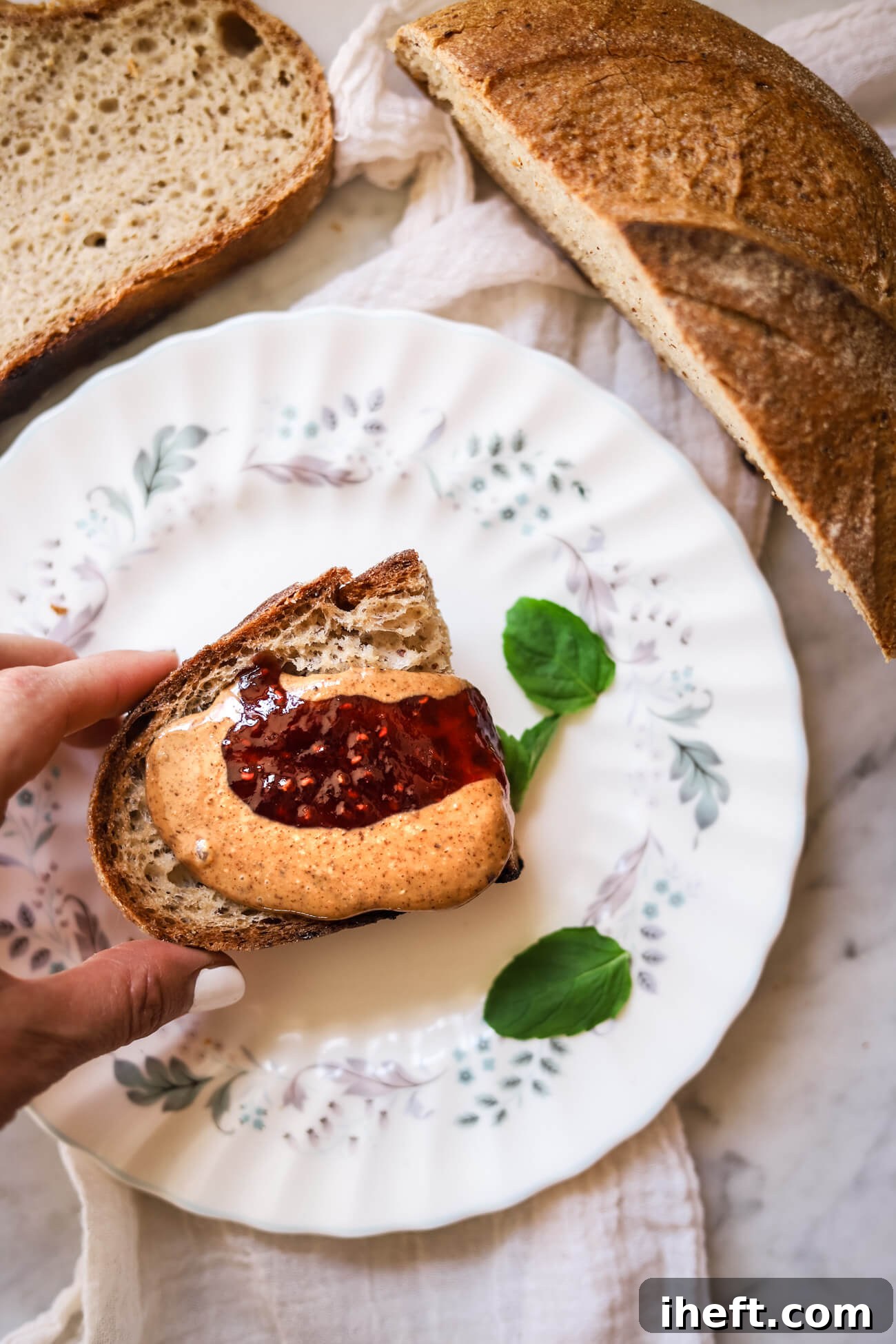
- Versatile and Perfectly Slicable: The robust structure of this gluten-free sourdough makes it perfectly slicable, ideal for a variety of culinary uses. Whether you’re crafting hearty sandwiches, preparing delectable avocado toast, or simply enjoying it with your favorite spread, this bread holds its shape beautifully and performs wonderfully.
The Art of Blending: Best Flours for Gluten-Free Sourdough Bread
The secret to achieving gluten-free bread that closely mimics the texture and integrity of traditional wheat sourdough lies in a thoughtful combination of various gluten-free flours and starches. While many convenient 1:1 gluten-free flour blends are available on the market, my extensive testing of numerous gluten-free sourdough bread recipes has led me to conclude that a custom blend, like the one used in this recipe, consistently produces superior results. These commercial blends often contain gums like xanthan gum to provide structure, but by creating your own blend, you gain control over the ingredients, resulting in a more nutrient-dense bread free from added gums.
This recipe specifically utilizes a synergistic mix of gluten-free oat flour, sorghum flour, tapioca starch, and potato starch. Each component plays a vital role: oat flour contributes a mild, wholesome flavor and some chewiness; sorghum flour adds a subtle earthiness and protein; tapioca starch provides elasticity and a desirable crispness to the crust; and potato starch ensures a tender crumb and helps with moisture retention. The precise ratios of these ingredients are crucial for balance and optimal texture. I’ve linked the exact finely ground gluten-free flours and starches I recommend for this recipe below in the recipe card. A critical point to remember: using finely ground ingredients is absolutely key. This is not the time to attempt making your own oat flour in a blender; finely milled flours absorb liquids differently and contribute significantly to the final structure and crumb of your gluten-free sourdough, preventing a gritty or dense texture.
Mastering the Method: How to Make Gluten-Free Sourdough Bread
If you’re accustomed to traditional wheat sourdough baking, you’ll find the process for this gluten-free boule has some key differences, though it retains the essence of natural leavening. As with any sourdough journey, starting with a strong, active gluten-free starter is the non-negotiable first step to success. Think of it as the vibrant heart of your bread, ready to give it life and flavor.
- Make a Levain: A levain is essentially an offshoot of your main sourdough starter, fed with fresh flour and water to create a highly active preferment. For this specific recipe, you’ll prepare a high-hydration levain. This mixture is then allowed to ferment until it reaches its peak activity, typically indicated by a puffed-up, bubbly, and mousse-like texture, usually within 3-6 hours after feeding. Using a levain at its peak ensures maximum leavening power for your gluten-free dough.
- Create a Gel Binder: This is a crucial step for gluten-free sourdough. Unlike wheat dough that relies on gluten for structure and elasticity, we use a natural gel binder made from psyllium husk powder and flax meal. When combined with water, these ingredients form a viscous gel that brilliantly replicates the strength, elasticity, and binding properties of gluten, all without the use of artificial gums. These are also wonderful, high-fiber ingredients that contribute to the bread’s nutritional value. We even harness the power of psyllium in our popular Adventure Seed Bread for similar structural benefits.
- Make the Dough: Begin by combining all your chosen gluten-free flours and starches in the bowl of a stand mixer. A whisk ensures they are thoroughly incorporated. Next, add your perfectly proofed levain and the prepared psyllium gel mixture. Using a kitchen scale to weigh all ingredients directly into one bowl makes this process incredibly quick, precise, and significantly less messy than traditional measuring cups. Mix until everything is evenly combined and a cohesive dough forms.
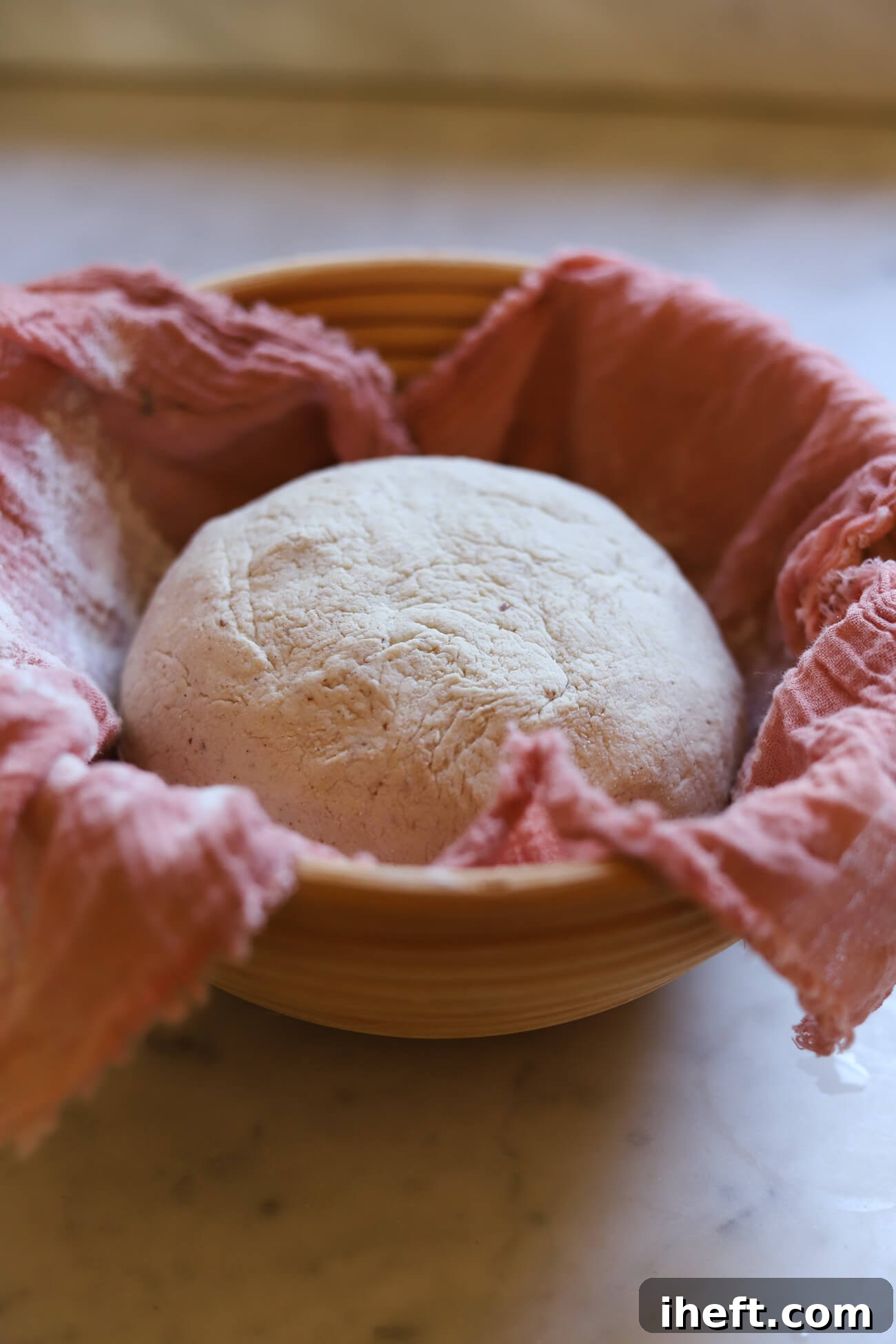
- Proof the Dough: This gluten-free dough requires a relatively short proofing period, typically one to two hours. The ideal timing is highly dependent on your kitchen’s temperature; in a warm environment (around 75-80 degrees F), one hour might be perfect. In cooler conditions, it could take up to two hours. Unlike wheat dough, you likely won’t observe a significant doubling in size, so trust the process and learn to read the dough’s subtle cues. It may take a couple of attempts to dial in the precise timing for your specific kitchen environment.
- Bake to Perfection: The baking process for this gluten-free boule mirrors that of traditional artisan sourdough. It’s baked in a preheated Dutch oven, initially with the lid on to trap steam and promote oven spring and crust development, then with the lid off to allow the crust to beautifully brown and crisp up. This method creates the signature crunchy exterior and tender interior.
- Cool Completely: This step is absolutely non-negotiable for gluten-free sourdough. Once baked, you must allow the boule to cool completely to room temperature on a wire rack. This critical period allows the internal structure of the bread to fully set and solidify. Slicing too early will result in a gummy interior and can cause the loaf to collapse, compromising its texture and integrity. Patience at this stage will be richly rewarded with a perfectly textured crumb.
Key Differences: How Gluten-Free Sourdough Varies from Traditional
If you, like me, began your sourdough journey with traditional wheat flour bread, you’ll notice several fundamental differences when transitioning to gluten-free baking. Understanding these variations will help manage your expectations and guide you to success:
- No Need for Stretch-and-Folds: A cornerstone of traditional sourdough baking, stretch-and-folds are performed to develop the gluten network, creating strength and elasticity. Since gluten-free flours lack this protein, performing stretch-and-folds serves no purpose and can actually harm the delicate structure of gluten-free dough. You can simply mix and shape.
- Minimal Proofing Expansion: Don’t expect your gluten-free dough to double in size during proofing. Due to the absence of gluten, which typically traps gas and allows for significant expansion, gluten-free dough will show very little, if any, noticeable increase in volume. You’ll primarily be looking for subtle signs of activity rather than dramatic growth.
- Less Pronounced Oven Spring: While you will still achieve some lovely oven spring (the final burst of rise in the oven), it will generally be less dramatic compared to a wheat-based loaf. This is a normal characteristic of gluten-free doughs, which don’t have the same elastic potential as their gluten-containing counterparts.
- More Ingredients for Structure: To compensate for the lack of gluten, gluten-free sourdough typically requires a blend of several flours and starches, along with binders like psyllium husk or flax meal. These additional ingredients work in synergy to mimic the structural integrity, elasticity, and moisture retention that gluten naturally provides.
Cultivating a Healthy Gluten-Free Sourdough Starter
Just like its traditional counterpart, a vibrant and active gluten-free sourdough starter is the foundation of exceptional gluten-free bread. You can acquire a gluten-free starter in several ways: obtain a portion from a generous friend who maintains one, cultivate your own from scratch using gluten-free flours, or conveniently order a fresh or dehydrated starter online. Personally, I’ve had great success with a starter I received from a local gluten-free bakery, as well as one I successfully revived from a dried variety.
Gluten-free sourdough starters are most commonly fed with finely ground rice flour, or a combination of rice and gluten-free oat flour. When active, your gluten-free starter will typically develop into a mousse-like, aerated substance, full of bubbles and activity. However, it’s important to note that its texture will not be as smooth or stretchy as a traditional wheat flour sourdough starter due to the absence of gluten. This is perfectly normal and expected. Consistent feeding, proper hydration, and maintaining a favorable temperature are key to keeping your gluten-free starter vigorous and ready to leaven your delicious bread.
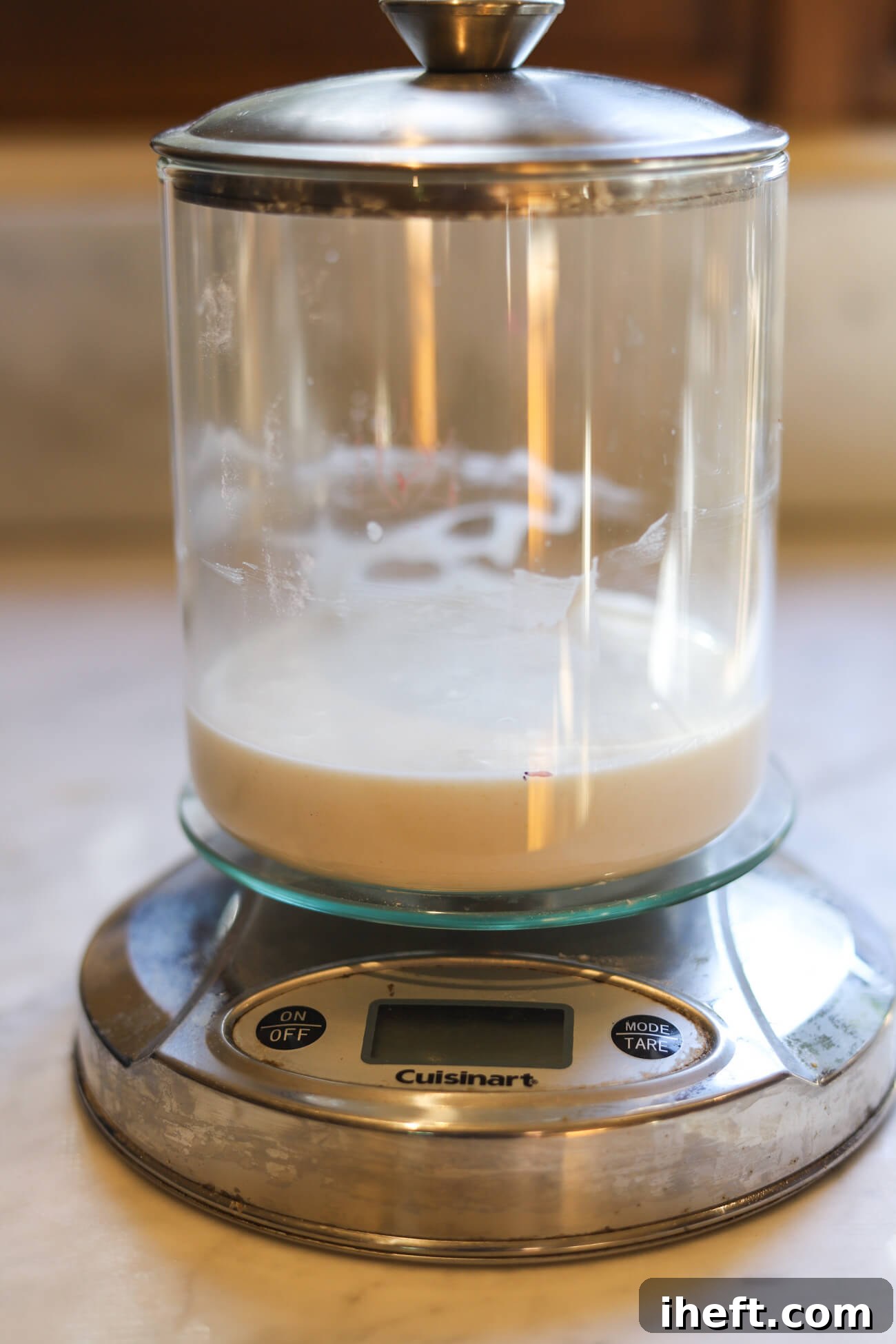
Sourdough levain is made by combining starter, rice flour, and water on a kitchen scale.
Essential Equipment for Gluten-Free Sourdough Success
While the process of making gluten-free sourdough has its unique characteristics, some fundamental tools remain essential for achieving a perfect artisan loaf. Investing in a few key pieces of equipment will greatly enhance your baking accuracy and ease, leading to consistently excellent results:
- Digital Kitchen Scale: If you’re accustomed to volumetric measurements like measuring cups, switching to a kitchen scale might feel new, but it’s an absolute game-changer for sourdough baking, especially with gluten-free flours. Using a kitchen scale provides far greater accuracy, which is critical for the precise ratios needed in gluten-free recipes. It also streamlines your workflow: you can simply place your mixing bowl on the scale, add each ingredient, and zero out the scale between additions, making the measuring process quicker, easier, and significantly less messy than juggling multiple measuring cups!
- Heavy-Duty Dutch Oven: The simplest and most effective way to bake sourdough, whether gluten-free or traditional, with that coveted crusty exterior and tender, airy interior, is by baking it in a covered Dutch oven. This heavy pot creates a mini-oven environment, trapping steam released from the dough during the initial baking phase. This steam prevents the crust from forming too quickly, allowing the bread to fully expand and achieve a beautiful oven spring before the crust crisps up to perfection. A 5-quart or larger Dutch oven is ideal for a standard boule.
- Parchment Paper or Silicone Bread Sling: Once your dough has proofed, you’ll need to carefully transfer it into a very hot Dutch oven. Parchment paper is an invaluable tool for this step, allowing you to gently lower the delicate dough into the searing hot pot without risking burns or deflating your loaf. Alternatively, a reusable silicone bread sling offers similar ease and safety for transferring your dough. Both options ensure a smooth and safe transition from proofing basket to Dutch oven.
Gluten-Free Sourdough: Baker’s Timeline Options
This versatile gluten-free sourdough recipe offers two convenient timelines to fit your baking preferences and schedule. Whether you prefer fresh bread by dinner or a warm loaf for breakfast, we’ve got you covered.
Option 1: Same-Day Bake for Freshness
- Morning (around 7 a.m.) – Begin your day by mixing your levain. This active preferment will need time to ferment until it’s visibly puffed and bubbly, indicating it’s at its peak activity for leavening.
- Midday (around 11-12 p.m.) – Once your levain is ready, proceed to mix the main dough. After mixing, gently shape it into a boule and place it into a floured proofing basket (banneton).
- Noon/Early Afternoon – Allow your shaped dough to proof at room temperature for the recommended time. During this period, preheat your oven to the specified temperature with the Dutch oven inside, ensuring it’s thoroughly hot for baking.
- Late Afternoon – Bake your gluten-free sourdough boule according to the instructions. Once baked, allow it to cool completely on a wire rack – this crucial step ensures the crumb sets perfectly – then enjoy with your dinner!
Option 2: Overnight Cold Proof for Convenience
For those who prefer to split the baking process or desire a deeper flavor development, the overnight cold proof option is ideal.
- Evening (around 6 p.m.) – Start by preparing your levain and letting it activate. This gives it ample time to become vigorous and bubbly.
- Night (around 10 p.m.) – After your levain is at its peak, mix and shape the dough. Once shaped, transfer it directly into your proofing basket, cover it securely, and place it in the fridge for a slow, overnight cold proof.
- Morning (around 6 a.m.) – The next morning, you can bake your sourdough boule straight from the fridge. After baking, remember to cool it completely on a wire rack before slicing.
- Late Morning (by 10 a.m.) – By late morning, your delicious gluten-free sourdough bread will be fully cooled, its crumb perfectly set, and ready to be enjoyed for breakfast, brunch, or a late morning snack.
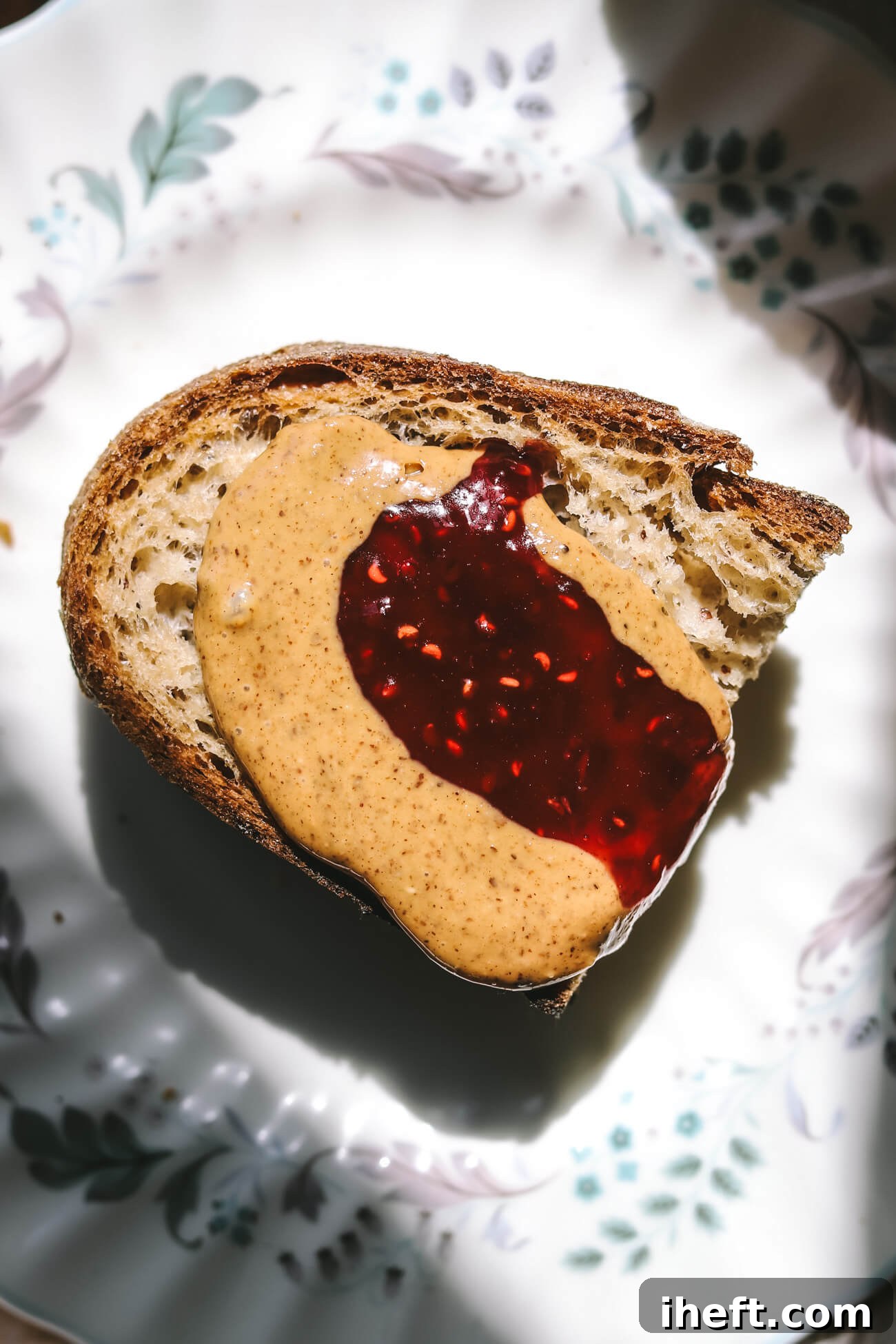
Can I Freeze Gluten-Free Sourdough Bread? Absolutely!
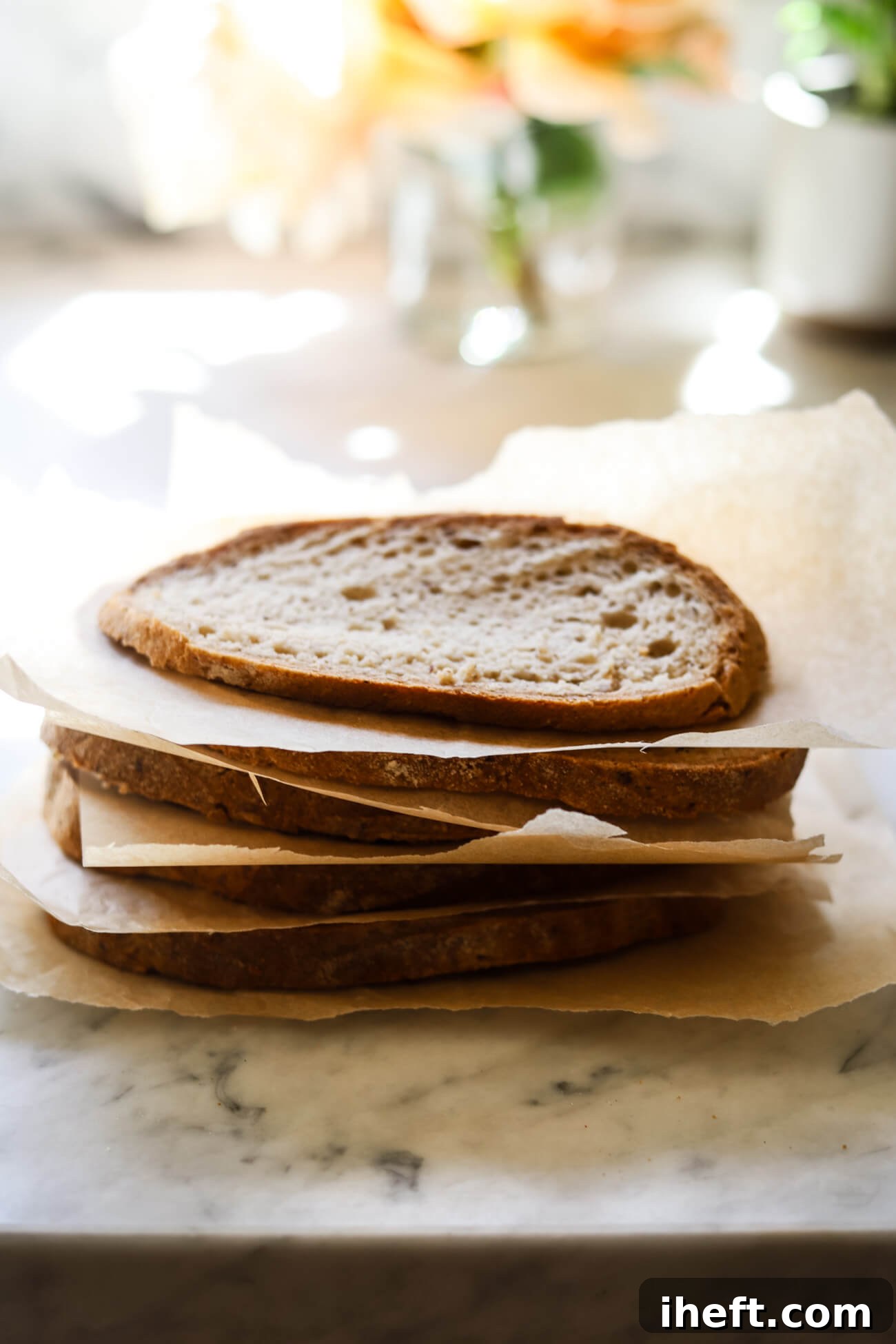
One of the many benefits of baking your own sourdough, especially a gluten-free loaf, is the ability to preserve its freshness for future enjoyment. While homemade sourdough is undeniably at its best within a few days of baking, you don’t have to consume the entire boule immediately. You can easily extend its life and savor fresh sourdough bread anytime you desire by freezing portions of your loaf.
To freeze your gluten-free sourdough effectively, first ensure the bread has completely cooled to room temperature. Then, slice the boule into your desired thickness – whether you prefer thin slices for toast or thicker cuts for sandwiches. To prevent the slices from sticking together in the freezer, simply separate them with small pieces of parchment paper. Stack the parchment-separated slices, then place them into a high-quality, freezer-safe bag or an airtight container. Be sure to remove as much air as possible before sealing to minimize freezer burn. When you’re ready to enjoy a slice, there’s no need to thaw! You can conveniently take individual slices directly from the freezer and pop them into your toaster, toaster oven, or even a preheated oven until they are warmed through and perfectly crispy. This method allows you to have delicious, fresh-tasting gluten-free sourdough on demand, reducing waste and ensuring a delightful experience every time.
Gluten Free Sourdough Bread
15 minutes
1 hour 35 minutes
7 hours
8 hours 50 minutes
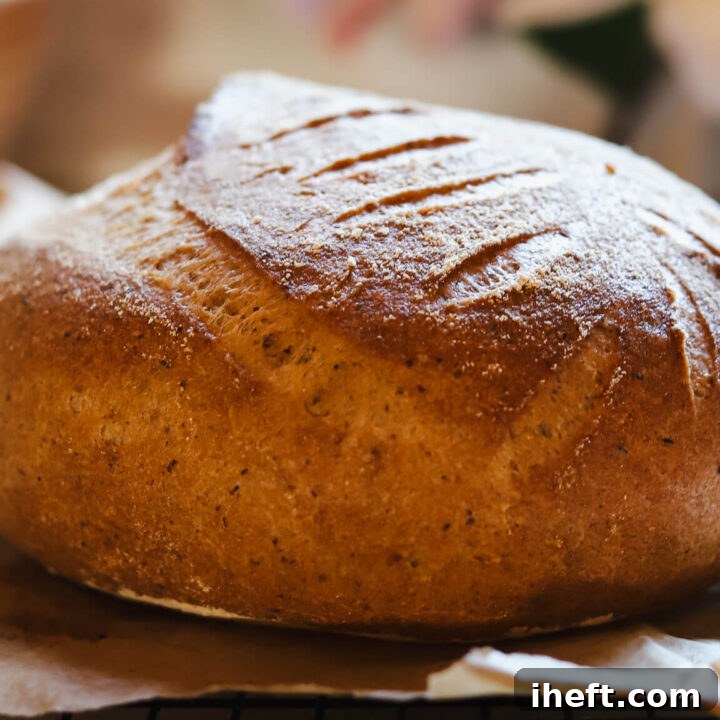
This naturally leavened gluten-free sourdough bread is made with simple, wholesome ingredients—no gums, no commercial yeast, just real food. It uses a gluten-free sourdough starter, whole grain flours, and a psyllium husk gel to create a beautifully crusty loaf with a moist, airy crumb. This recipe makes one boule and can be baked the same day or cold-proofed overnight for added flexibility. Perfect for slicing into hearty sandwiches or toasting with your favorite toppings.
Ingredients
Levain
- 123 grams gluten-free sourdough starter (active and bubbly)
- 110 grams lukewarm filtered water
- 80 grams superfine white or brown rice flour (for feeding the levain)
Psyllium Gel
- 350 grams lukewarm filtered water (for the gel)
- 20 grams psyllium husk powder (preferably light/blonde and finely ground)
- 10 grams flaxseed meal
Dough
- 105 grams gluten-free oat flour (finely ground)
- 60 grams sorghum flour (finely ground)
- 60 grams tapioca starch
- 60 grams potato starch
- 6 grams fine sea salt
Instructions
- Build the Levain. In a larger jar or a medium bowl, combine your active sourdough starter, lukewarm water, and rice flour. Stir thoroughly until all ingredients are fully incorporated and there are no dry spots. Cover the container loosely with a clean towel or lid and allow it to sit at room temperature for 3 to 6 hours. The levain is ready when it appears visibly puffed up, has numerous bubbles on the surface and sides, and takes on a light, mousse-like texture.
- Mix the Psyllium Gel. In a separate medium bowl, whisk together the lukewarm water, psyllium husk powder, and flaxseed meal. Continue whisking for about 30 seconds to ensure everything is well combined. The mixture will rapidly thicken into a cohesive, gel-like consistency. Set this psyllium gel aside; it will continue to set as you prepare the other components of the dough.
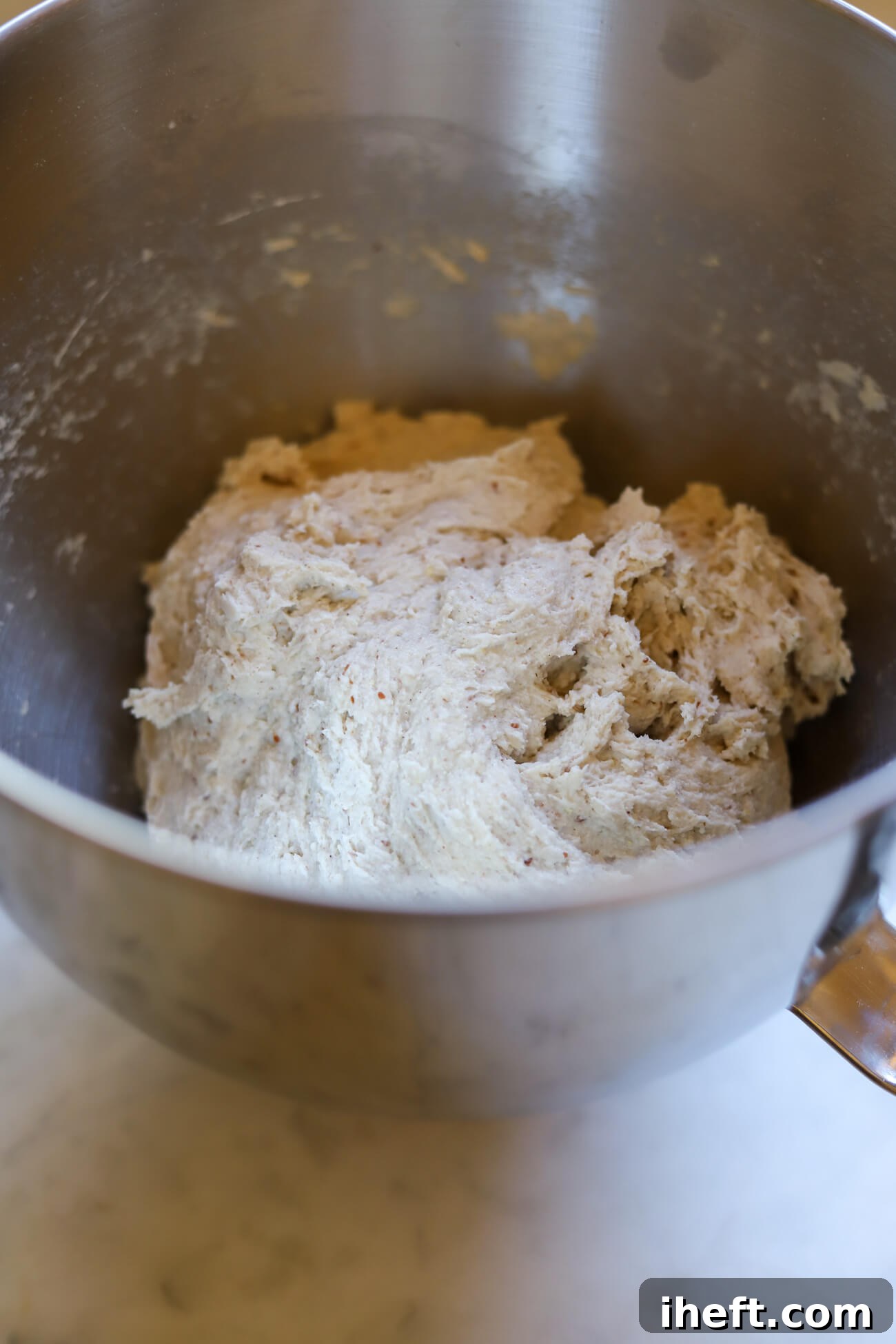
- Prepare the Dough. Add the oat flour, sorghum flour, tapioca starch, potato starch, and fine sea salt into the bowl of a stand mixer fitted with a dough hook attachment. Whisk these dry ingredients together to ensure they are evenly distributed. Next, add the prepared psyllium gel and the entire quantity of your active levain into the mixer bowl.
- Mix the Dough. Begin mixing on medium speed for approximately 3 minutes, or until all the ingredients are thoroughly and evenly incorporated, forming a cohesive dough. The dough should come together and detach from the sides of the bowl. (If you prefer to mix by hand, ensure you stir vigorously with a sturdy spatula or spoon to eliminate any dry pockets of flour and achieve a smooth, uniform consistency.)

- Shape the Dough. Lightly dust your work surface with a small amount of rice flour to prevent sticking. Scrape the dough out of the mixing bowl onto the prepared surface. Gently knead the dough a few times, just enough to bring it together and form a smooth, round ball. The dough should have a moist and slightly elastic feel, holding its shape without spreading excessively.
- Proof the Loaf. Generously dust an 8-inch proofing basket (banneton) or a similar-sized medium bowl with rice flour, ensuring no part of the dough will stick. Carefully place the shaped dough into the basket, with the seam-side facing upwards. Loosely cover the basket with a clean kitchen towel. Allow the dough to proof at room temperature for 1 to 2 hours. Alternatively, for an overnight option, you can refrigerate it for 8 to 10 hours; if refrigerating, cover the banneton tightly with plastic wrap to prevent the dough from drying out. Remember, this gluten-free dough does not expand significantly during proofing, so don’t expect a dramatic increase in size. Trust the process and use your final baked loaf to guide adjustments for future batches. A proofing time of 1 hour and 5 minutes is often ideal in a warmer kitchen (75-80°F), but a cooler kitchen might require closer to 2 hours.
- Preheat the Oven and Dutch Oven. Approximately 30 minutes before you plan to bake, place your 5-quart Dutch oven (with its lid securely on) into your oven. Preheat the oven to a high temperature of 500°F (260°C). Allow the Dutch oven to heat for at least 20 minutes once the oven reaches temperature, ensuring it is thoroughly hot throughout.
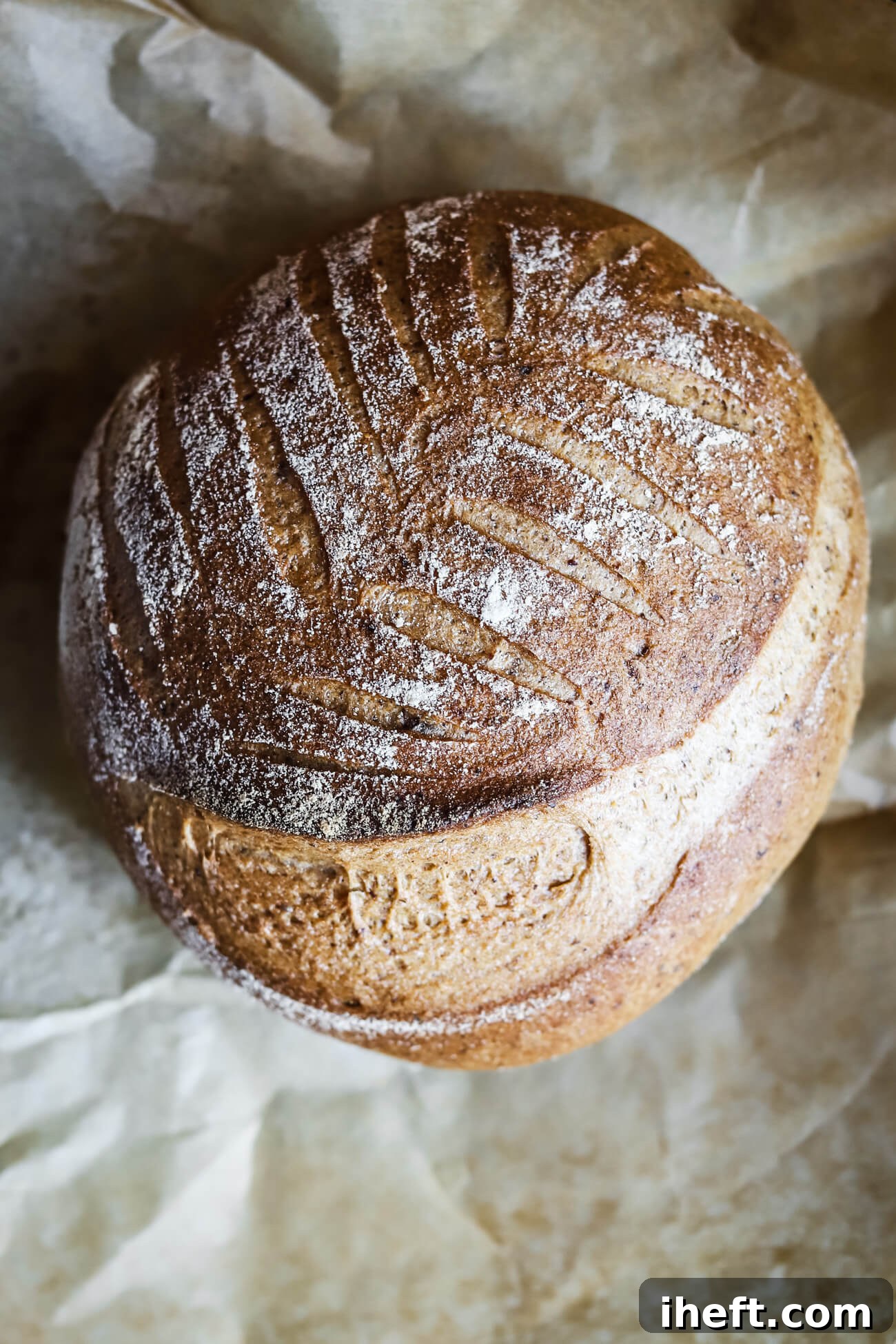
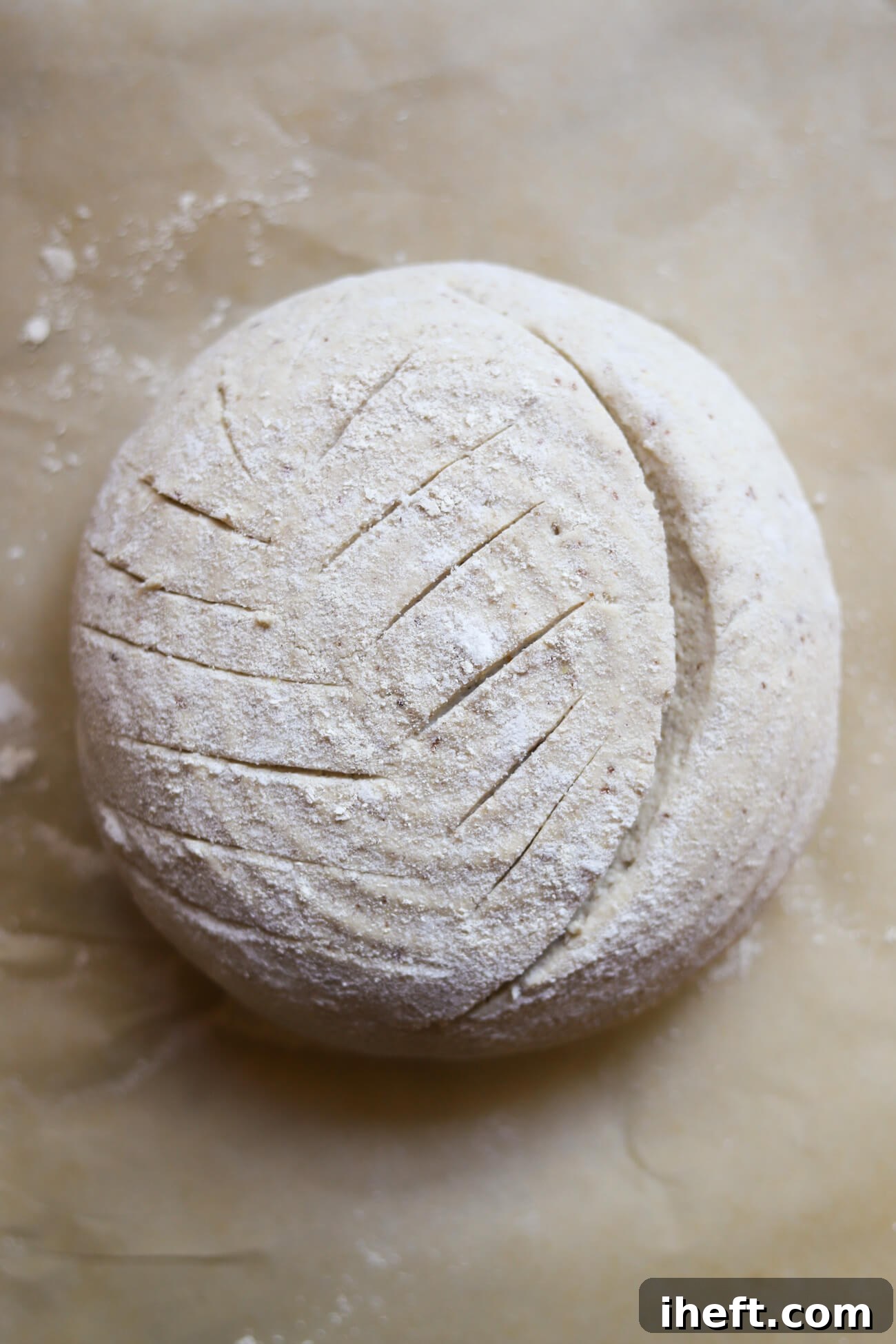
- Score the Bread. When you are ready to bake, carefully invert the proofed dough onto a piece of parchment paper held in your hand, then place it on the counter. Lightly dust the top of the dough with a small amount of oat flour. Using a sharp blade or a bread lame, score the top surface of the boule. For best oven spring and a visually appealing loaf, make one deep slash (about ¾-inch deep) off to one side, and then create a few superficial decorative cuts on the other side. This allows for controlled expansion during baking.
- Bake the Boule (Covered). Carefully transfer the dough, still on the parchment paper, into the preheated hot Dutch oven. For an extra burst of steam, you can carefully place a couple of ice cubes between the bottom of the pot and the parchment paper (or directly onto the pot floor if using a sling and no parchment underneath). Immediately cover the Dutch oven with its lid and place it back into the oven.
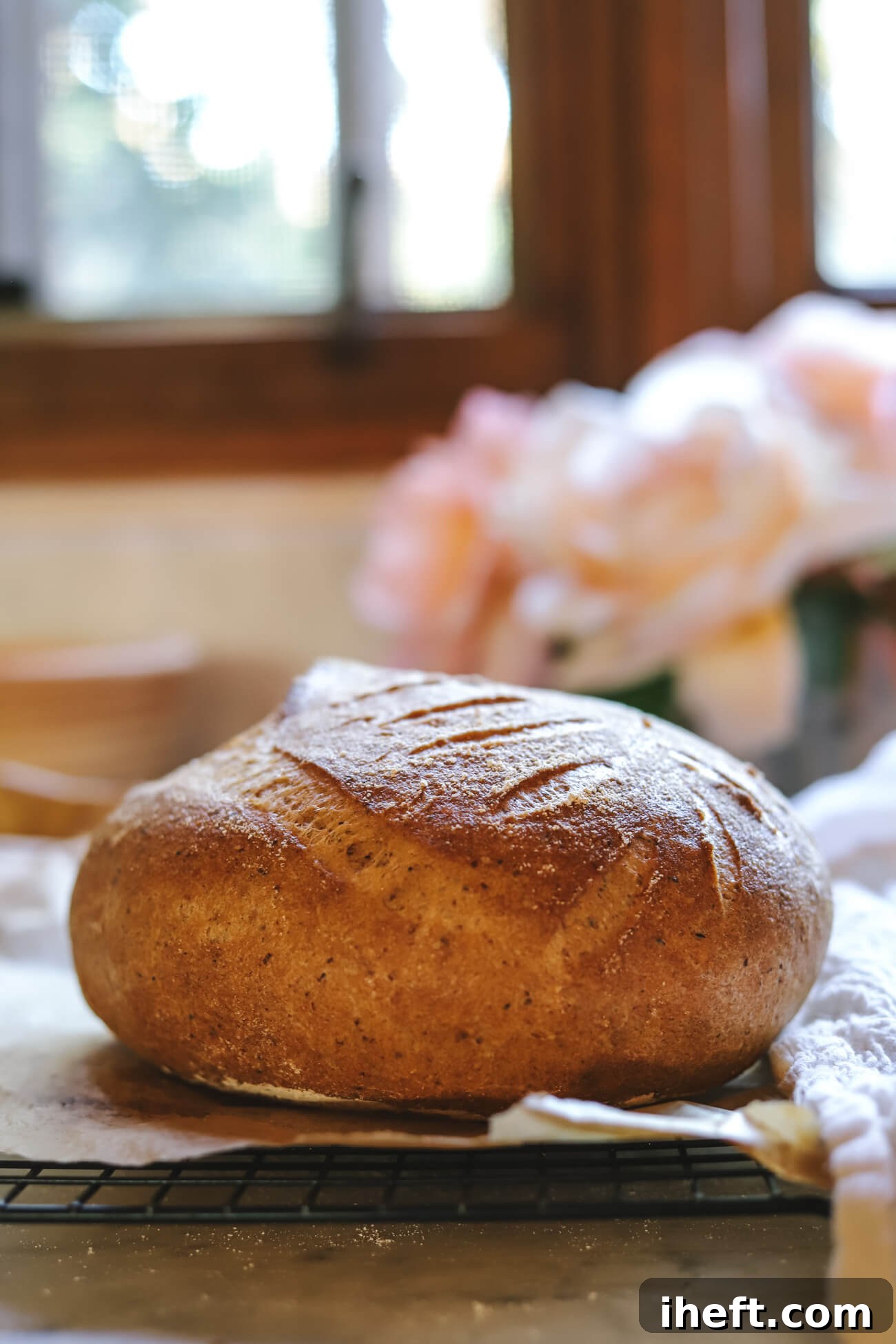
- Continue Baking (Uncovered). Bake the covered boule for 45 minutes. After this initial period, carefully remove the lid from the Dutch oven. Reduce the oven temperature to 450°F (232°C) and continue baking for another 50 minutes. During this stage, the crust will develop a rich, deep brown color and become wonderfully crisp. When fully baked, the loaf should sound hollow when tapped on the bottom, and an instant-read thermometer inserted into the center should register an internal temperature of around 210°F (99°C).
- Let It Cool Completely. This is perhaps the most critical step for gluten-free sourdough. Once baked, carefully lift the hot loaf out of the Dutch oven using the parchment paper and transfer it to a wire rack. Allow the bread to cool completely to room temperature, which can take several hours, before attempting to slice it. This prolonged cooling period is essential for the internal structure to fully set, ensuring a light, airy crumb and preventing a gummy, dense interior. Cutting the loaf too soon will disrupt its structure and can cause it to collapse. Patience is key to enjoying a perfectly textured gluten-free sourdough.
Notes and Expert Tips
Ingredients Quality: For the best gluten-free sourdough, the quality and fineness of your flours are paramount. It is essential to use finely ground flours and starches. Coarsely ground ingredients will absorb liquid differently and can result in a gritty texture or a gummy crumb. This isn’t the time to make your own flours in a standard blender, as they often won’t achieve the necessary fineness. Invest in high-quality, superfine gluten-free flours for optimal results.
Storage Best Practices: To maintain the freshness of your cooled bread, store it in a brown paper bag at room temperature for up to 2 days. For longer storage, after cooling completely, slice the bread and freeze individual slices separated by parchment paper in an airtight freezer bag or container. This allows you to toast slices directly from frozen, ensuring fresh bread whenever you desire.
Psyllium Husk Powder: The type of psyllium husk powder you use can affect the internal color of your bread. If you prefer your bread to have a lighter interior color, opt for light or “blonde” psyllium husk powder. Most standard psyllium powders can create a darker, sometimes grayish hue in the crumb. The lighter variety I have linked is also often more finely ground, which is crucial for seamless incorporation and superior texture in baking.
This exceptional recipe was inspired by and adapted from the Canelle et Vanille Simple Bakes cookbook, an invaluable resource that I highly recommend for all gluten-free baking enthusiasts.
Troubleshooting Common Gluten-Free Sourdough Issues:
- 💡 Not Getting a Good Rise? If your loaf turns out flat or dense, the first thing to check is your sourdough starter. It needs to be recently fed, highly active, and full of robust bubbles to provide sufficient lift. Try discarding a portion of your starter and feeding it fresh, high-quality gluten-free flour and water, then wait for it to reach its peak before making your levain. Additionally, ensure your boule is shaped tightly with the seams meticulously sealed and placed seam-side up in the proofing basket. Using a deep, narrow proofing basket (ideally around 8″ wide) will encourage your loaf to rise upwards rather than spreading out, contributing to a better final shape and volume.
- ⏱ Dealing with Overproofing? Gluten-free dough is more delicate and has a less robust structure than wheat-based dough, making it more susceptible to overproofing. If your loaf collapses during baking, develops a gummy crumb, or if the crust noticeably pulls away from the interior (known as “tunneling”), overproofing might be the culprit. To mitigate this, consider:
- Slightly reducing the amount of sourdough starter used (start by decreasing it by about 10% in your levain build).
- Shortening the fermentation or proofing time, especially if your kitchen environment is particularly warm or humid. Observe your dough closely and adjust based on its activity.
- 🍞 Gummy or Underbaked Crumb? A moist crumb is normal initially, but if it remains overly gummy, sticky, or clearly feels underdone, consider these adjustments:
- Always use finely ground psyllium husk powder and flaxseed meal. Coarser grinds can absorb water inconsistently, leading to textural issues.
- Strictly avoid coarse flours. Superfine gluten-free flours absorb moisture more effectively and bake more evenly, contributing to a better crumb structure.
- Adjust hydration: If your specific flours are not superfine or absorb less liquid, you might need to reduce the total water content by approximately 5-10% in your next batch.
- Ensure a full proof: An underproofed loaf will remain dense and wet. While gluten-free dough doesn’t double, it needs enough time to develop flavor and slight aeration.
- Conversely, overproofing can also lead to a collapsed, sticky crumb as the structure weakens. Balance is key.
- 🔥 Crust Too Dark or Burnt? A bold, crisp crust is desired, but if it’s becoming excessively dark or even burning, particularly on the bottom, try these solutions:
- Move your Dutch oven up one rack level in the oven to distance it from the direct heat source below.
- Place an extra sheet of parchment paper directly under the dough within the Dutch oven for added insulation.
- Re-evaluate your psyllium husk powder. Darker varieties of psyllium can impart a deeper, sometimes overly brown or grayish color to both the crumb and crust. For a noticeably lighter-colored interior and exterior, switch to light (blonde) psyllium husk powder.
- 🌬️ Cracked or Dry Crust? If you notice cracks forming on your crust or if it appears unusually dry, especially when cold-proofing in the fridge, proper covering is essential. Ensure your proofing basket (banneton) is entirely enclosed within a large plastic bag or tightly covered with plastic wrap to prevent the dough surface from drying out. Cracks can also sometimes be an indicator of slight overproofing, where the surface dries out and tears as the dough attempts a final expansion. Try trimming the proof time slightly for your next batch if this is a recurring issue.
Recommended Products for Gluten-Free Sourdough
As an Amazon Associate and member of other affiliate programs, I earn from qualifying purchases.
- Bread Bags for Homemade Sourdough Bread
- Le Creuset Enameled Cast Iron Signature Round Dutch Oven
- Cuisinart KML-KO3B Precision Chef Bowl Electronic Kitchen Scale, Silver
- Terrasoul Superfoods Organic Psyllium Husk Powder (Light)
- Bob’s Red Mill Gluten Free Oat Flour, 18 Oz
- Bob’s Red Mill Sorghum Flour
- Bob’s Red Mill Potato Starch
Nutrition Information:
Yield: 10
Serving Size: 1 slice
Amount Per Serving:
Calories: 163Total Fat: 1gSaturated Fat: 0gTrans Fat: 0gUnsaturated Fat: 1gCholesterol: 0mgCarbohydrates: 35gFiber: 3gSugar: 1gProtein: 4g
Nutrition information is automatically calculated by Nutritionix. I am not a nutritionist and cannot guarantee accuracy. If your health depends on nutrition information, please calculate again with your favorite calculator.