Perfect Homemade Canned Salsa
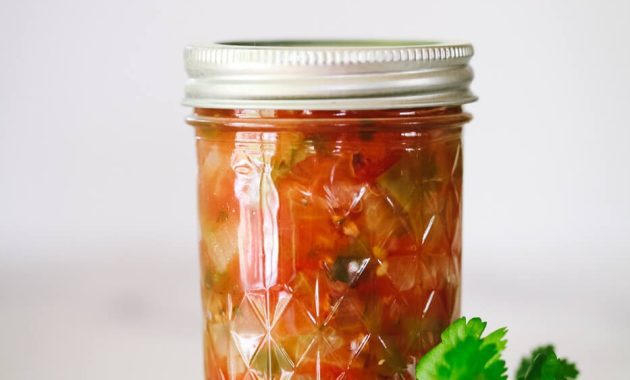
Imagine the vibrant taste of sun-ripened tomatoes, sweet bell peppers, and zesty onions, perfectly spiced and ready to enjoy any time of year. Canning your own salsa is a wonderfully rewarding culinary endeavor, transforming a summer bounty into a pantry staple. This comprehensive guide will walk you through crafting a delicious, chunky Mexican salsa designed specifically for safe home canning, adapted from the trusted Ball recipe. Whether you prefer a mild salsa with just a hint of warmth or a fiery kick that truly awakens the palate, this versatile recipe allows for easy customization to suit your taste.
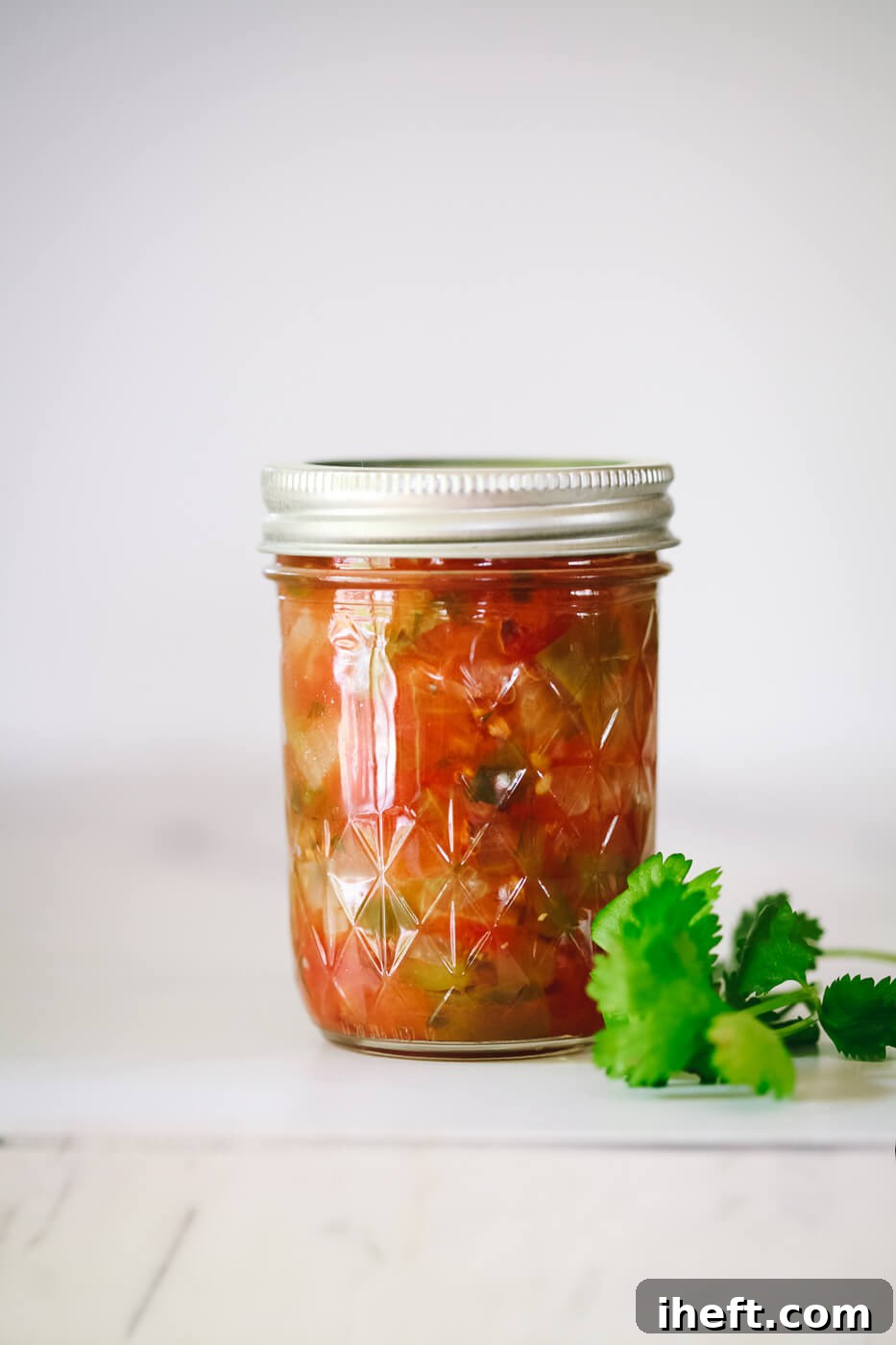
As the warm days of summer transition into the crisp air of early fall, our kitchens become a hub for fresh tomato creations. There’s nothing quite like the flavor of vine-ripened tomatoes, whether transformed into authentic Bruschetta, rich Marinara with Fresh Tomatoes, comforting Roasted Tomato Soup, or a bright Fresh Tomato Salsa. These culinary delights often begin with an abundant harvest from our gardens, and inevitably, with such bounty comes the desire to preserve it. Each year, I receive countless requests for a reliable salsa recipe for canning, and today, we’re diving into precisely that – a recipe that brings the taste of summer to your table all year long.
Preserving tomatoes, whether whole, as passata, pasta sauce, or salsa, is an age-old tradition that ensures their vibrant goodness can be enjoyed throughout the colder months. While fresh tomato salsa boasts an immediate burst of flavor, the canning process gently mellows and melds the ingredients, creating a deeply satisfying condiment. This particular recipe offers incredible flexibility; you can easily adjust the heat level by simply varying the amount of chili peppers or a dash of hot sauce. Once canned, your homemade salsa becomes incredibly versatile: serve it as a classic dip for tortilla chips, incorporate it into burritos and tacos, or even puree it later to use as a flavorful marinade for grilled dishes. The possibilities are endless, and the sense of accomplishment from preserving your own food is truly unparalleled.
The Art and Science of Canning Salsa
It’s crucial to understand that salsa recipes intended for canning differ significantly from fresh salsa preparations. Unlike a quick fresh salsa that can be made with any combination of ingredients, canning recipes, especially those involving tomatoes, demand precise acidity levels and proper processing techniques to ensure food safety. You cannot simply can any salsa; specific recipes are formulated to meet safety standards for home preservation, and this recipe is a prime example. My journey into canning began with trusted resources, and this recipe is expertly adapted from the gold standard in home preservation, the Ball Complete Book of Home Preserving. For those eager to delve deeper into the world of canning, the Ball site offers a wealth of information and guidance.
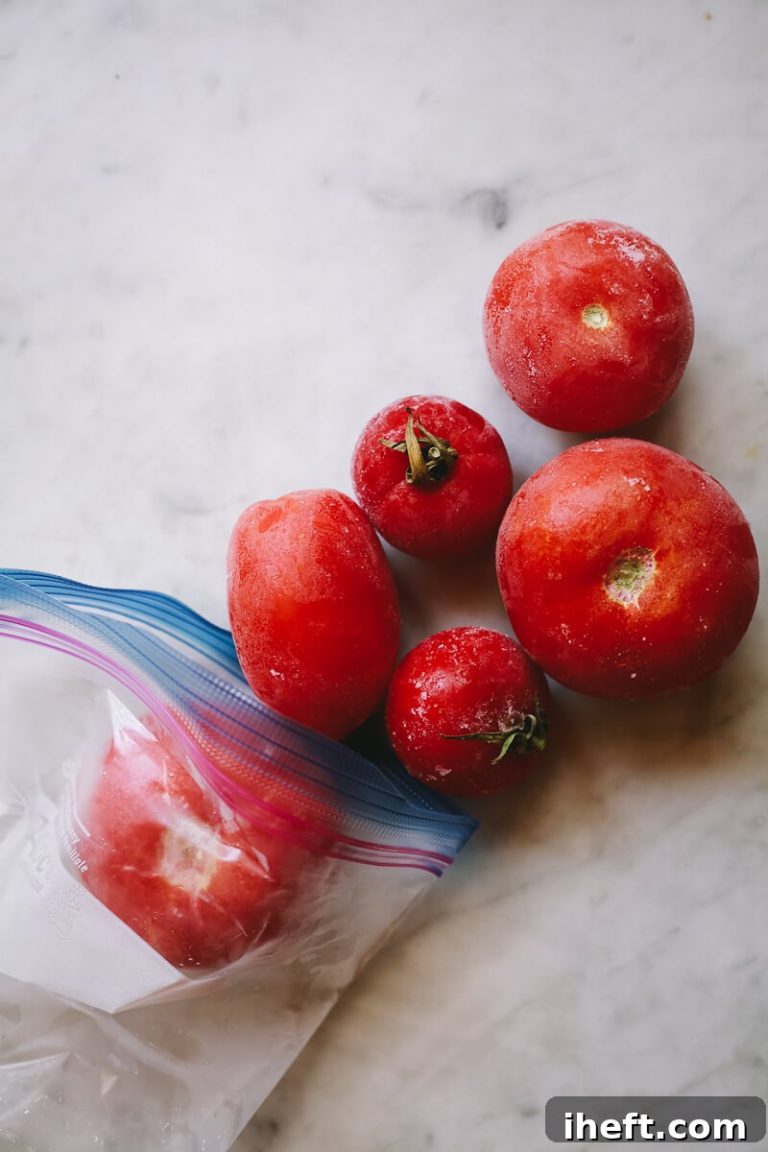
Canning salsa is indeed a multi-step project, so I highly recommend setting aside a dedicated weekend or a day when you have ample time to enjoy the process. It’s a culinary marathon, not a sprint, but the rewards are well worth the effort. If, however, you’re not yet ready to commit to a full boiling water canner setup or are simply working with a smaller batch of tomatoes, you have alternatives. This same delicious salsa recipe can be prepared and then frozen in jars, just be sure to leave adequate headspace for expansion. Refrigerator canning is another fantastic, less intensive method for quick preserves, perfect for exploring other favorites like my beloved Refrigerator Dill Pickles, tangy Pickled Beets, and delightful Chia Jam. These methods offer a taste of preservation without the full commitment of traditional canning.
Why Choose Homemade Canned Salsa?
Beyond the simple act of preserving, making and canning your own salsa offers a myriad of benefits that elevate it far above store-bought varieties.
- Unmatched Flavor and Freshness: There’s simply no comparison to the vibrant, robust flavors of salsa made with freshly picked, ripe tomatoes and vegetables. Commercial salsas often rely on preservatives and sometimes lack the depth of flavor found in homemade versions.
- Control Over Ingredients: When you make your own salsa, you control every single ingredient. This means you can choose organic produce, avoid artificial additives, high-fructose corn syrup, or excessive sodium, tailoring it to your family’s dietary needs and preferences.
- Customizable Heat and Texture: Do you love a mild, family-friendly salsa, or a scorching hot one? With this recipe, you’re the master of the heat. You can also dictate the chunkiness, ensuring every spoonful is exactly to your liking.
- Cost-Effective: Especially if you grow your own tomatoes and peppers, or purchase them in bulk during peak season, making salsa from scratch and canning it can be significantly more economical than buying multiple jars of gourmet salsa throughout the year.
- Sustainable and Eco-Friendly: Reduce waste by utilizing your garden’s abundance or local farm produce. Canning also reduces reliance on plastic packaging often associated with store-bought condiments.
- Sense of Accomplishment: There’s immense satisfaction in seeing your pantry shelves lined with beautiful jars of homemade salsa, knowing you’ve created a delicious, healthy product with your own hands.
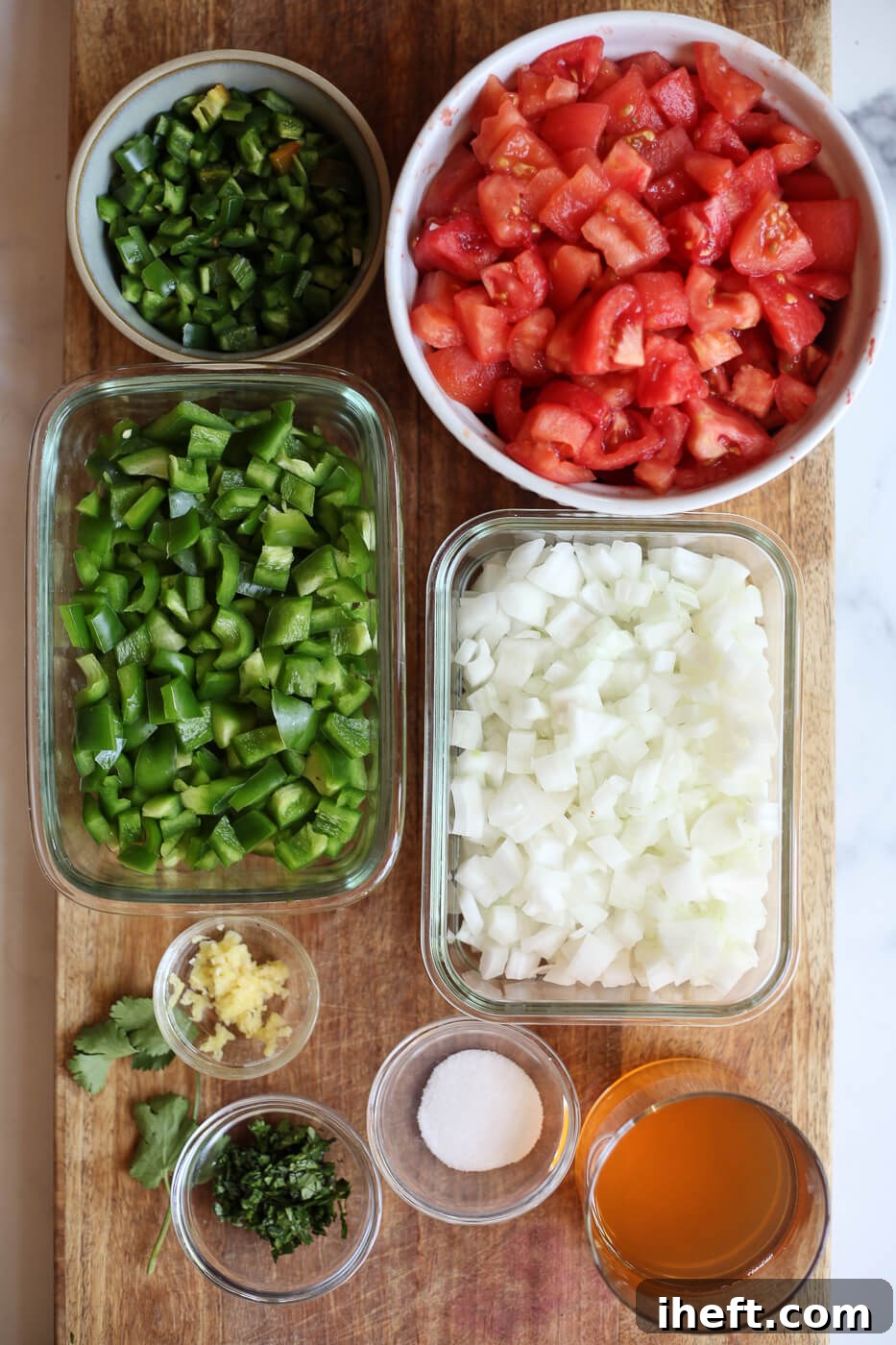
Essential Tools and Ingredients for Perfect Canning Salsa
Before you begin, gather all your equipment and ingredients. Having everything prepped and ready will make the canning process smoother and more enjoyable.
What You’ll Need (Equipment):
- Water Bath Canner: This is a large, deep pot specifically designed for canning. It comes with a lid and a rack that sits at the bottom, keeping jars off the direct heat and allowing water to circulate around them. If you don’t have a dedicated canner, a very large stockpot with a tight-fitting lid and a round cooling rack or steamer insert at the bottom can serve as an effective substitute. The key is that jars must be fully submerged in boiling water.
- Glass Canning Jars: Quality canning jars, such as Ball or Mason jars, are essential. For this recipe, you’ll need approximately 12 8-ounce (half-pint) jars or 6 pint-sized jars. Always use jars specifically designed for canning, as they are tempered to withstand the heat and pressure of the canning process. Ensure they are clean and free from chips or cracks. You will also need new lids and bands for each jar.
- Basic Canning Tools: While not strictly required, a few specialized tools will make your life much easier: a jar lifter (for safely moving hot jars), a canning funnel (for neat filling), a headspace tool (to measure the crucial space at the top of the jar), and a bubble remover (to release trapped air).
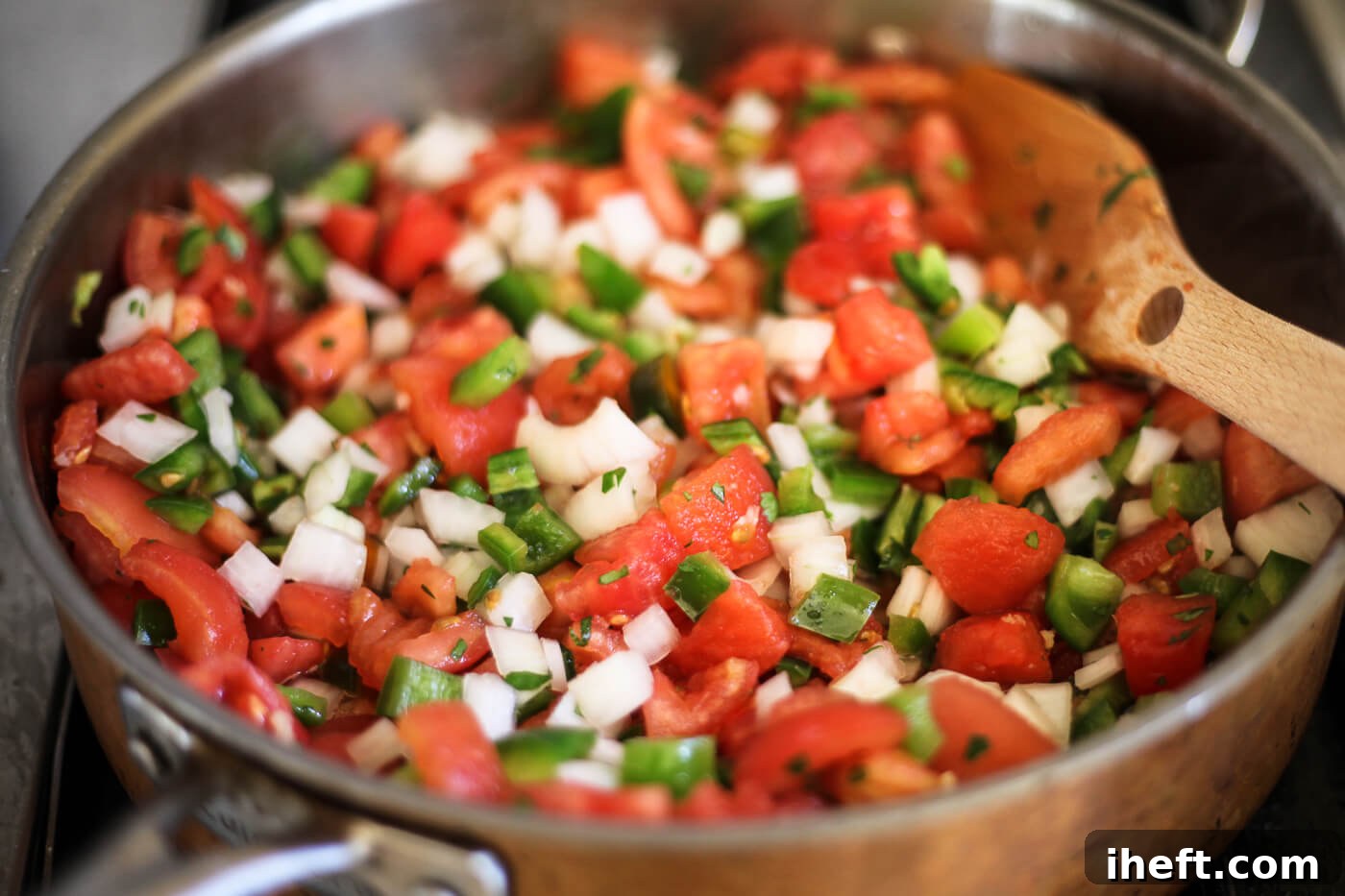
- Large Stainless Steel Saucepan: This is critical for cooking your salsa. As tomatoes are highly acidic, it’s imperative to use only stainless steel pans and utensils. Other common cooking materials like copper, aluminum, and cast iron can react with the acid, leading to off-flavors, discoloration, or even unsafe chemical leaching.
Key Ingredients:
- Tomatoes: The heart of your salsa! Opt for medium to large, meaty, firm but not hard, red tomatoes. Varieties like Roma, Beefsteak, or Early Girl are excellent choices due to their lower water content and rich flavor. They will need to be peeled and cored, so avoid tiny varieties like cherry tomatoes, which are too tedious to peel. Vine-ripened tomatoes will always yield the most superior flavor.
- Onions: White onions are my preferred choice for salsa due to their crisp texture and balanced pungency, which mellows beautifully during cooking. Yellow onions can also be used.
- Green Bell Peppers: These add a lovely crunch, mild sweetness, and vibrant color. Ensure they are fresh and firm.
- Jalapenos: Here’s where you control the heat! Jalapenos provide a moderate level of spice. Feel free to use your favorite chili peppers, such as milder hot banana peppers, spicier serranos, or Hungarian wax peppers. For a mild salsa, remove all seeds and membranes; for a hotter salsa, leave some or all of them in.
- Garlic: Minced garlic adds a subtle depth of savory flavor that complements the tomatoes and peppers. While its intensity will mellow during canning, you can always stir in a little extra fresh garlic just before serving if you desire a stronger garlic presence.
- Cilantro: Fresh cilantro provides a bright, herbaceous note. Like garlic, its flavor will soften during the canning process. For a truly fresh taste, stir in additional chopped fresh cilantro or use it as a garnish right before serving.
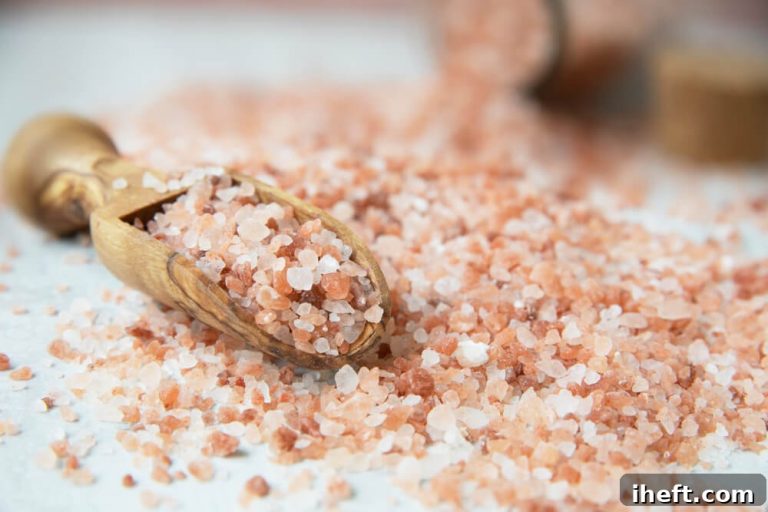
- Salt: I typically use sea salt or kosher salt for seasoning. In this recipe, salt primarily enhances the flavor rather than acting as a preservative. Any plain salt (non-iodized, without anti-caking agents, if possible, for clarity) will work.
- Apple Cider Vinegar: This is perhaps the most crucial ingredient for safe canning. While fresh salsa recipes often rely on fresh lime juice for acidity, for water bath canning, you *must* use vinegar in the specified amount. Its consistent acidity (typically 5%) is essential for creating an environment where harmful bacteria cannot thrive. Do not reduce the amount of vinegar or substitute it with less acidic alternatives like lemon juice in a canning recipe unless explicitly stated by a tested, reputable canning guide.
Step-by-Step Guide to Canning Your Best Salsa
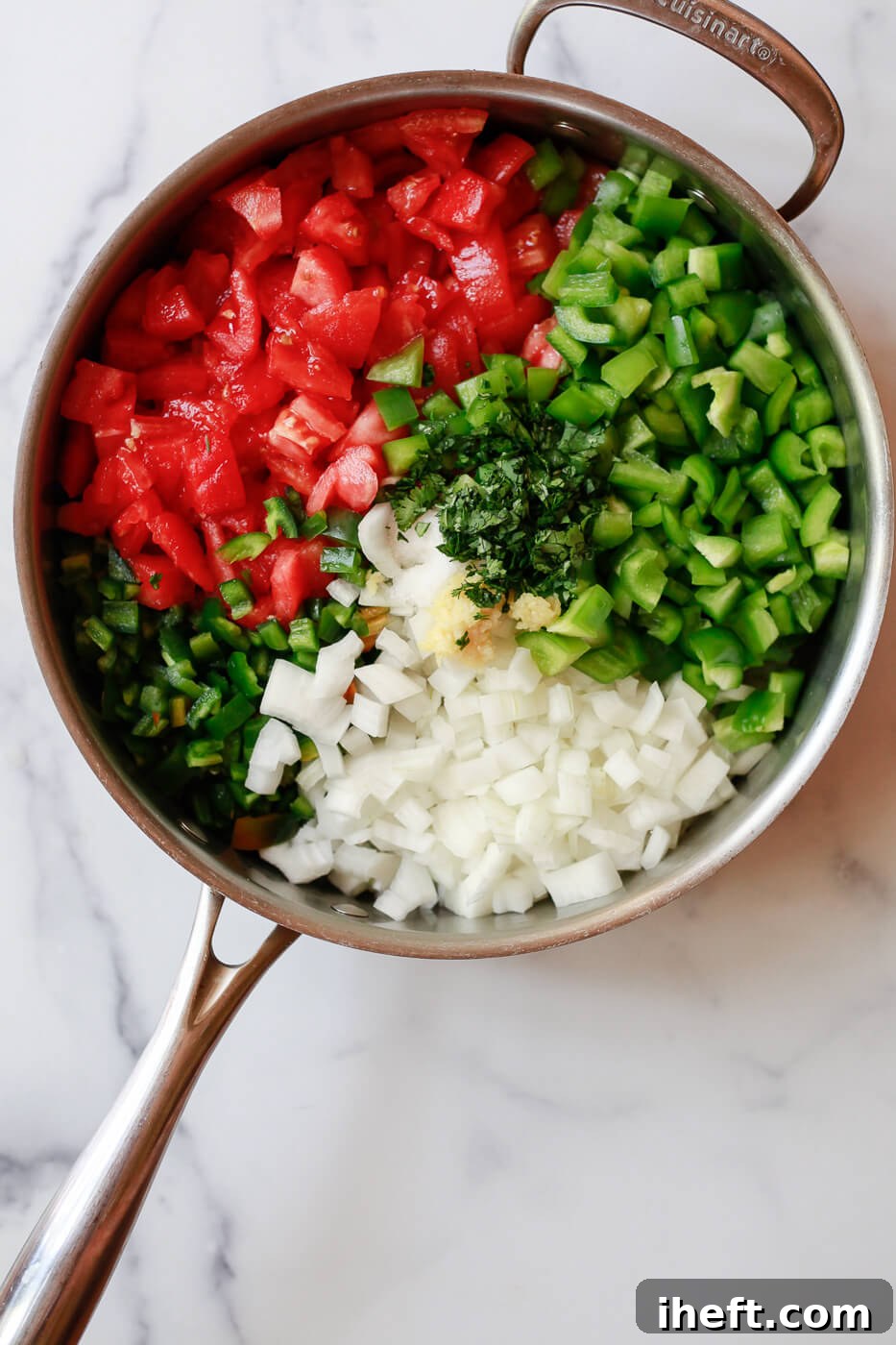
Making this easy chunky Mexican salsa is a straightforward process, especially once all your ingredients are prepped and diced. The beauty of this recipe lies in its simplicity: all ingredients are combined in a large stainless steel saucepan and gently simmered until they reach the perfect thickened consistency.
As previously mentioned, using only stainless steel pans and utensils is paramount. The natural acidity in tomatoes can react adversely with metals such as copper, aluminum, and iron, potentially causing undesirable flavors, discoloration, or even making the salsa unsafe.
It’s also vital to reiterate the role of acidity. Although tomatoes are considered acidic, their pH level isn’t consistently low enough across all varieties to guarantee safe water bath canning without additional acid. This is precisely why vinegar, with its reliable and consistent acidity, is included in recipes for canning homemade salsa. It’s the safety net that makes home preservation possible.
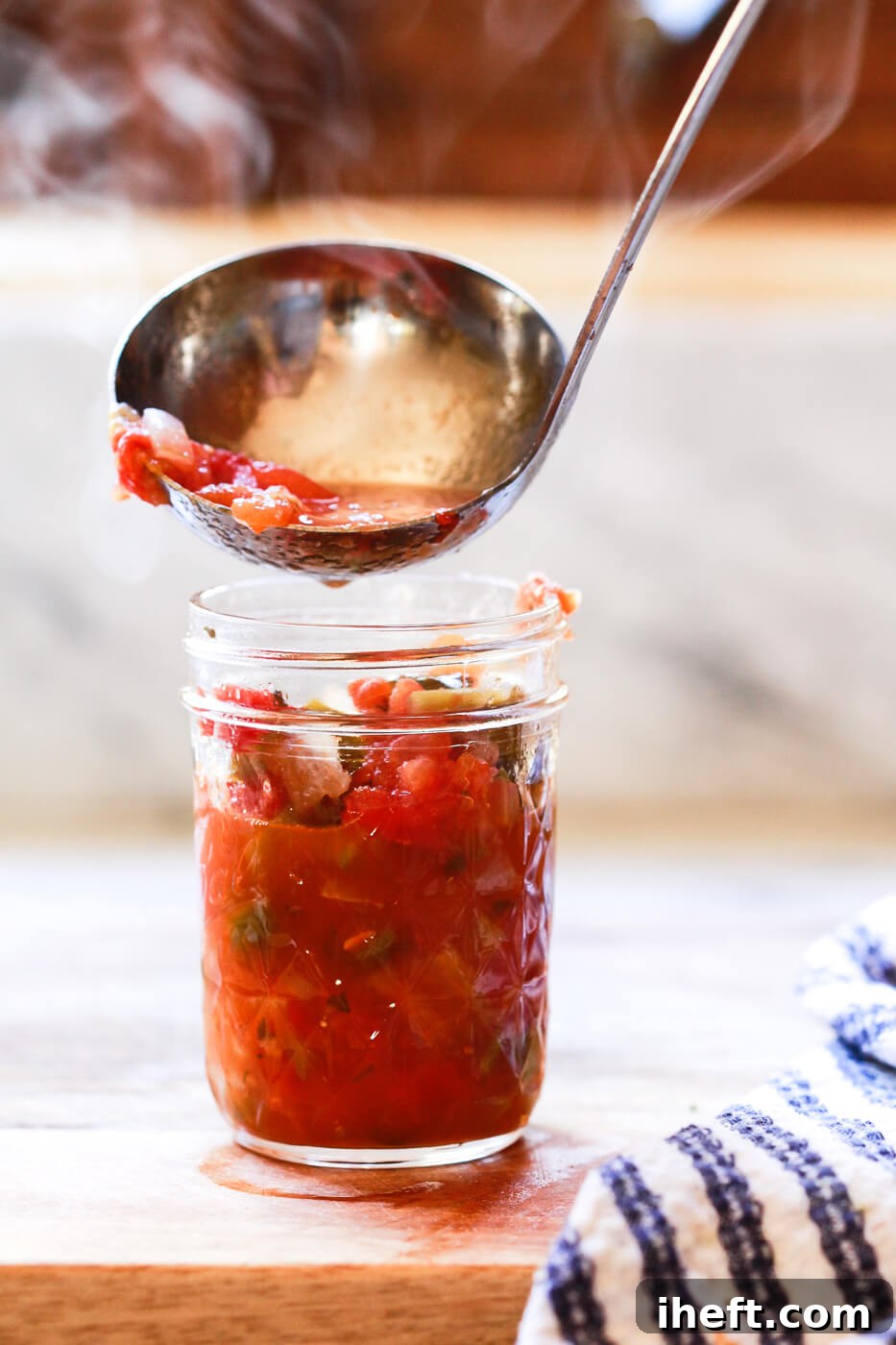
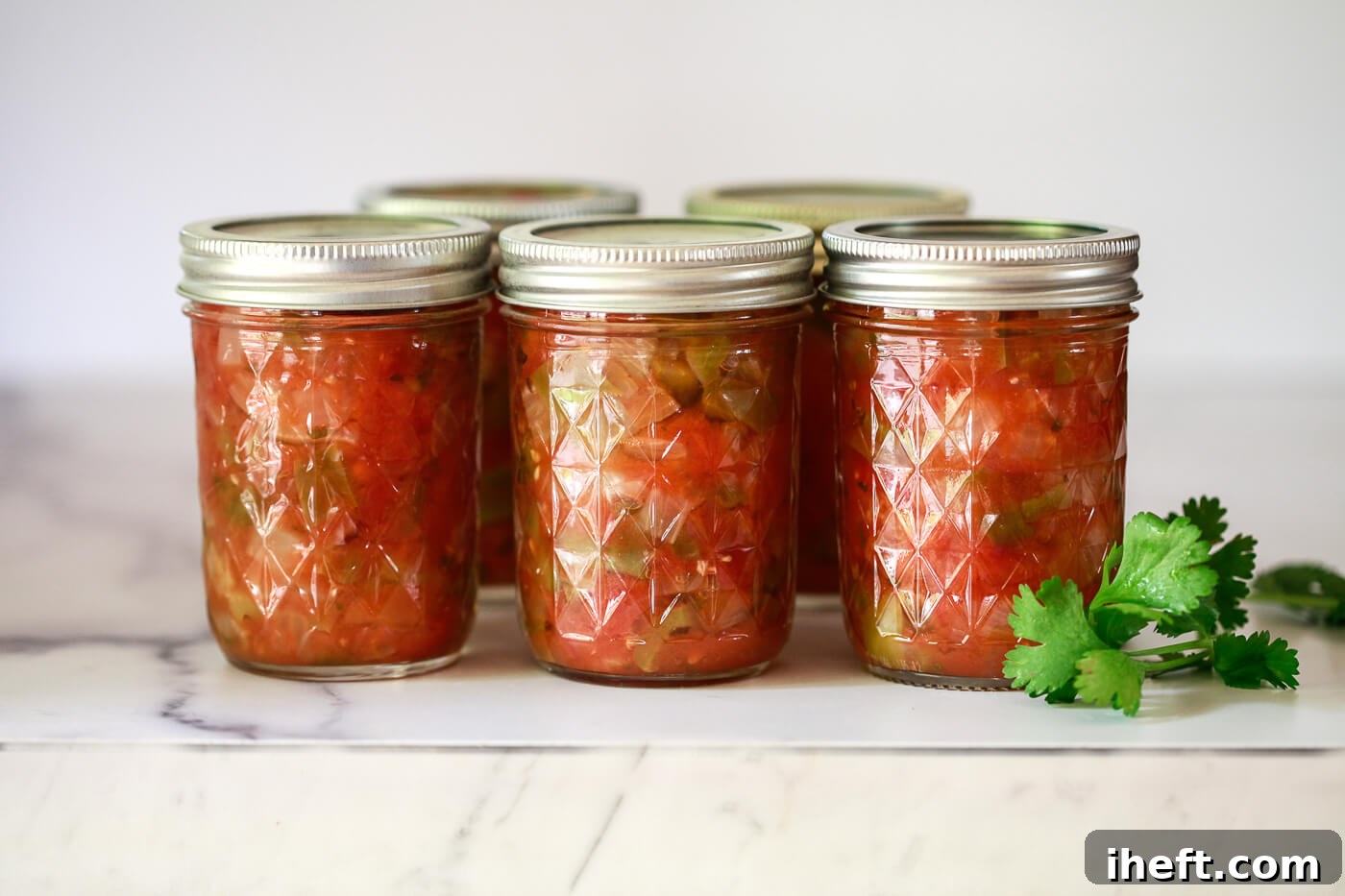
Once your salsa has achieved its ideal consistency and flavor on the stovetop, it’s time to ladle the hot mixture into prepared, hot, and clean canning jars. The jars are then placed into a boiling water canner for processing. This heat treatment is what creates a vacuum seal, preserving your salsa safely for long-term storage.
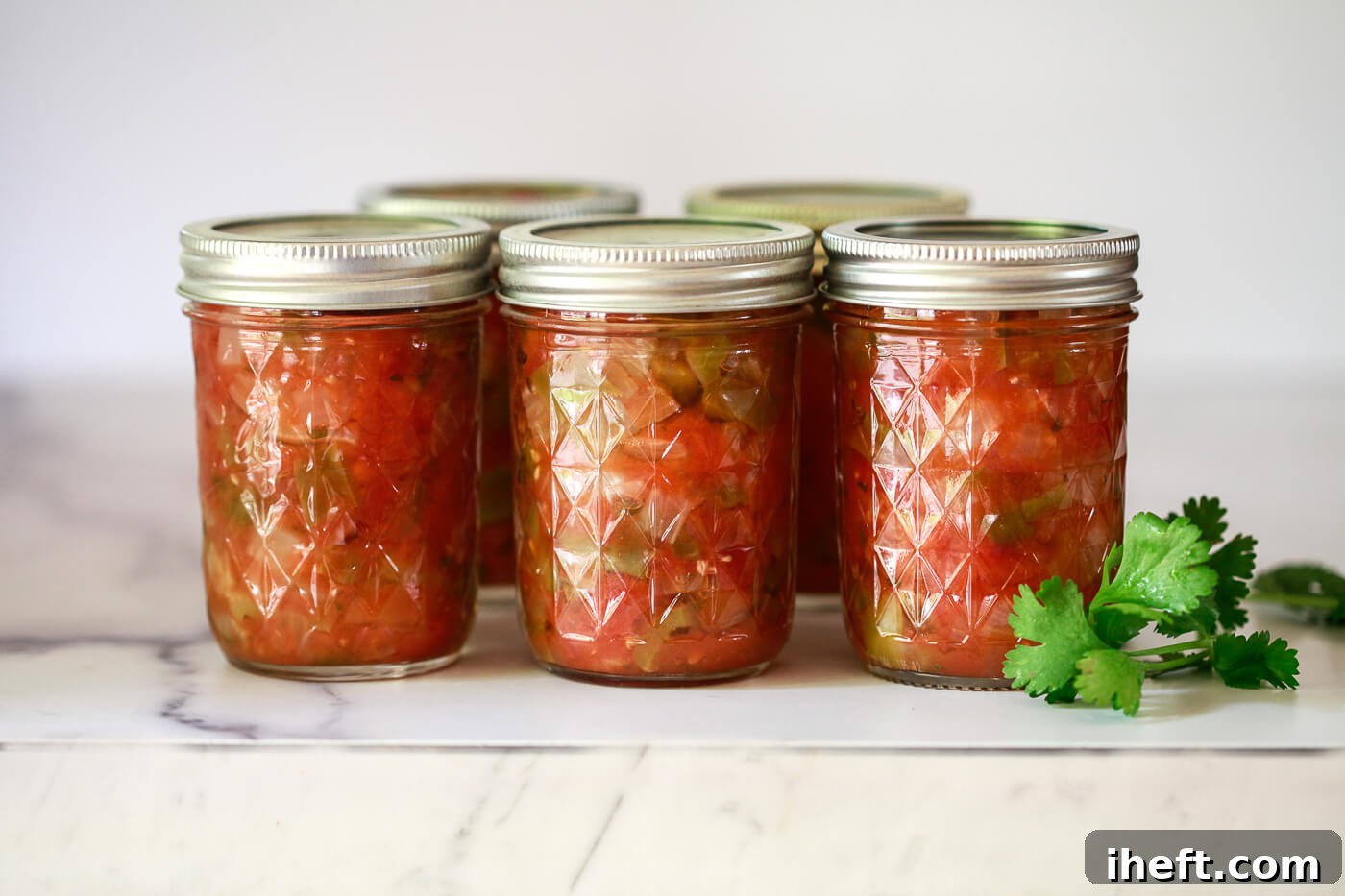
Storing Your Canned Salsa & Creative Serving Ideas
Proper storage is key to enjoying your homemade canned salsa throughout the year. Once sealed and stored correctly, it offers incredible convenience and flavor.
- Storage: Store your perfectly sealed jars of homemade canned salsa in a cool, dark, and dry pantry. They will maintain their quality for up to one year. Once a jar has been opened, transfer any unused salsa to the refrigerator and consume it within one week for optimal freshness and safety.
- Enhancing Flavor Before Serving: While canned salsa is delicious on its own, you can easily “freshen it up” just before serving. For a burst of bright flavor, stir in a generous amount of freshly chopped cilantro. If you prefer more heat, a dash of your favorite hot sauce or a pinch of red pepper flakes can be incorporated to taste. A squeeze of fresh lime juice can also add a lively, acidic zing that complements the other flavors beautifully.
-
Versatile Serving Suggestions: Beyond the classic chip and dip scenario, your homemade canned salsa can elevate countless dishes.
- Breakfast: Spoon it over scrambled eggs, omelets, or breakfast burritos.
- Lunch & Dinner: Use it as a topping for tacos, enchiladas, fajitas, or nachos. Mix it into ground meat for an instant taco filling. It also makes a fantastic base for chili or a flavorful addition to rice dishes.
- Marinade: Puree some of the chunky salsa and use it as a zesty marinade for chicken, fish, or pork before grilling or baking.
- Soups & Stews: Stir a few spoonfuls into your favorite soups or stews for an extra layer of flavor and a touch of warmth.
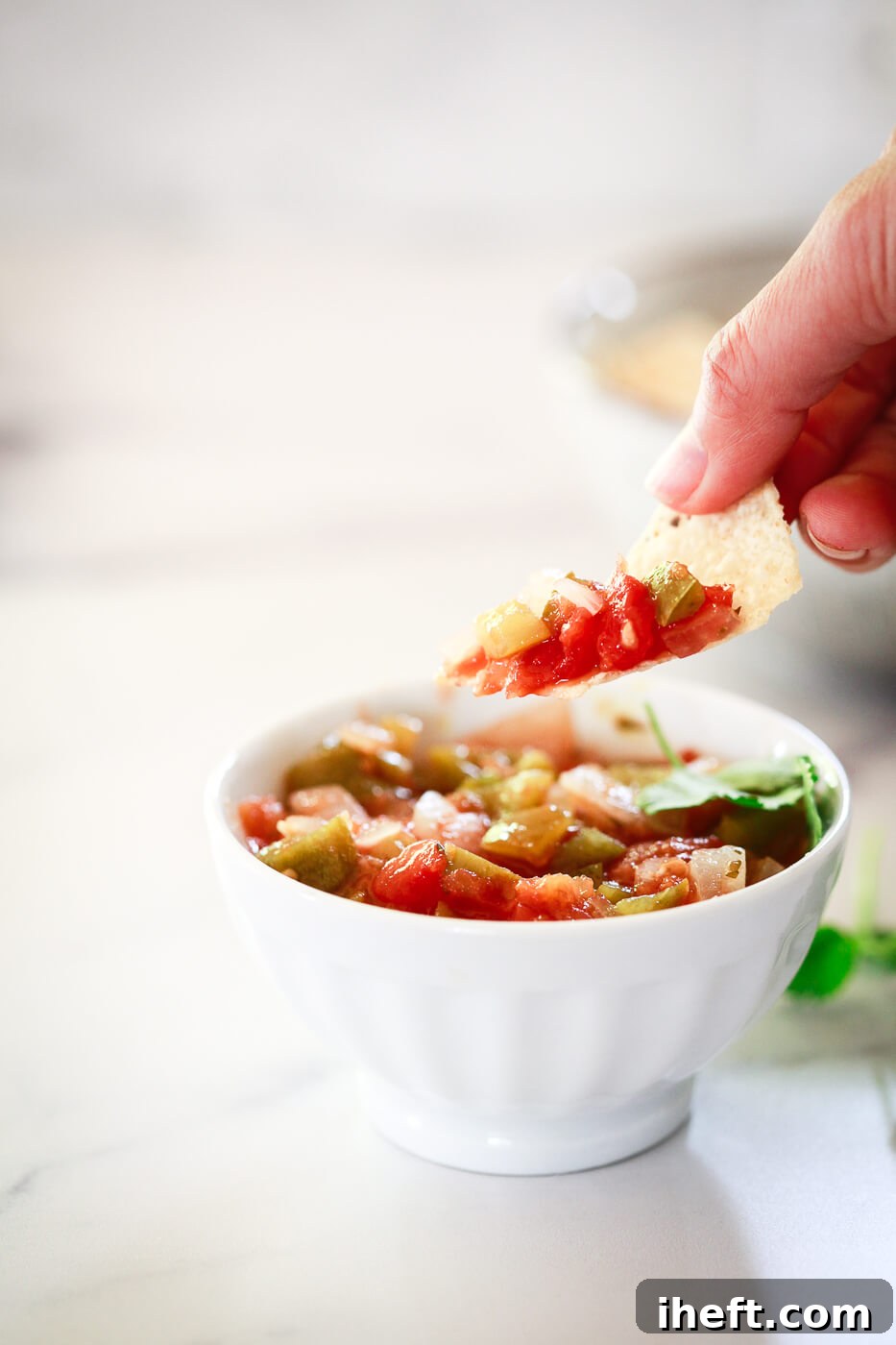
Discover More Salsa Creations
If you’ve fallen in love with homemade salsa, there’s a world of flavors to explore. Here are a few other beloved salsa recipes to inspire your culinary adventures, both for fresh enjoyment and further preservation:
- Fresh Tomato Salsa
- Tomatillo Salsa Verde
- Salsa Roja
Best Salsa Recipe for Canning
30 minutes
35 minutes
5 minutes
1 hour 10 minutes
Canning salsa is a great way to preserve tomatoes. This is a Mexican-style chunky salsa recipe for canning in a boiling water canner, that can be made mild or hot. Feel free to double the recipe when you have an abundance of tomatoes.
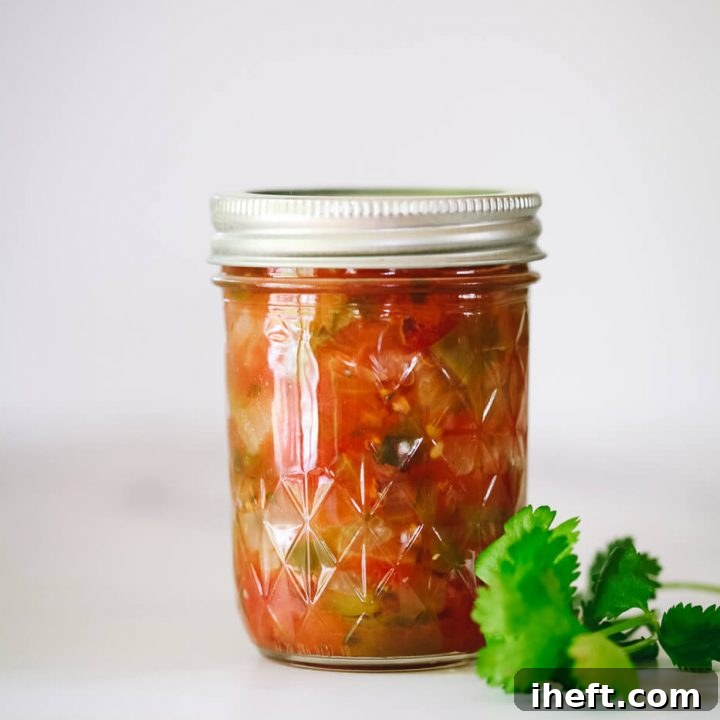
Ingredients
- 5 cups diced, cored peeled tomatoes (about 11 medium)
- 2 1/2 cups diced seeded green bell peppers (about 3)
- 2 1/2 cups diced white onion (1-2 large)
- 1 1/4 cups diced seeded jalapenos (about 3)
- 2 cloves garlic, minced
- 2 tablespoons chopped fresh cilantro
- 1/2 tablespoon salt (I use kosher or sea salt)
- 3/4 cup apple cider vinegar
- 1/2 teaspoon hot pepper sauce (optional for added heat)
Instructions
- Prepare the water bath canner, jars, and lids and keep them warm. I run mine through a hot dishwasher rinse as I prepare the salsa. As this is a high-acid recipe that is processed in a water canner, the jars don’t need to be completely sterilized as they would with a low acid recipe. The heat from the water canner will destroy any bacteria.
- Stir together the diced tomatoes, peppers, onions, jalapenos, garlic, cilantro, salt, and vinegar in a large stainless steel saucepan.

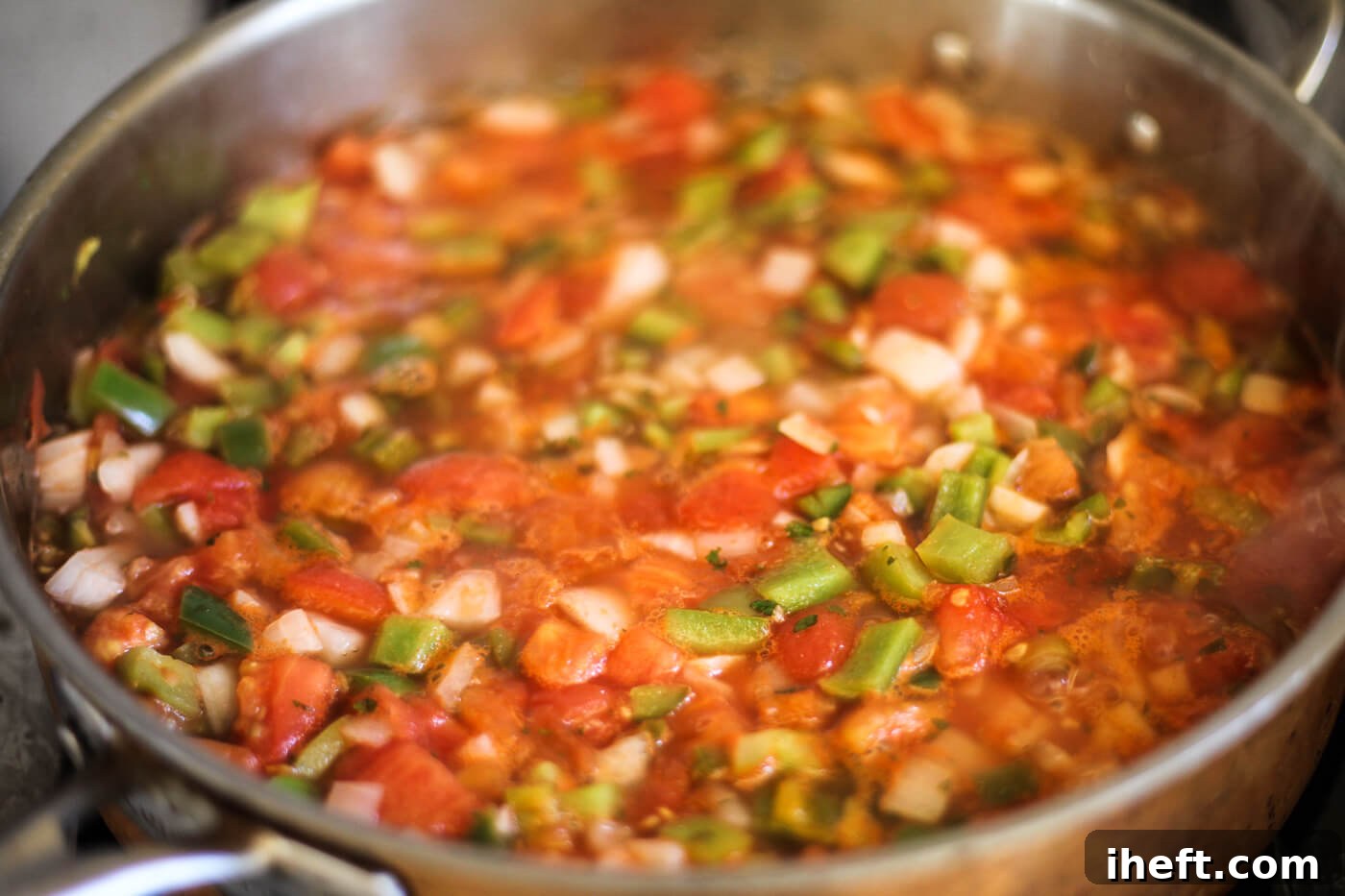
- Set over high heat and stir until the tomatoes begin to release some juices and the salsa comes to a boil. Reduce the heat and simmer until slightly thickened, about 10 minutes. Taste the salsa and add hot sauce if you’d like to add more heat.
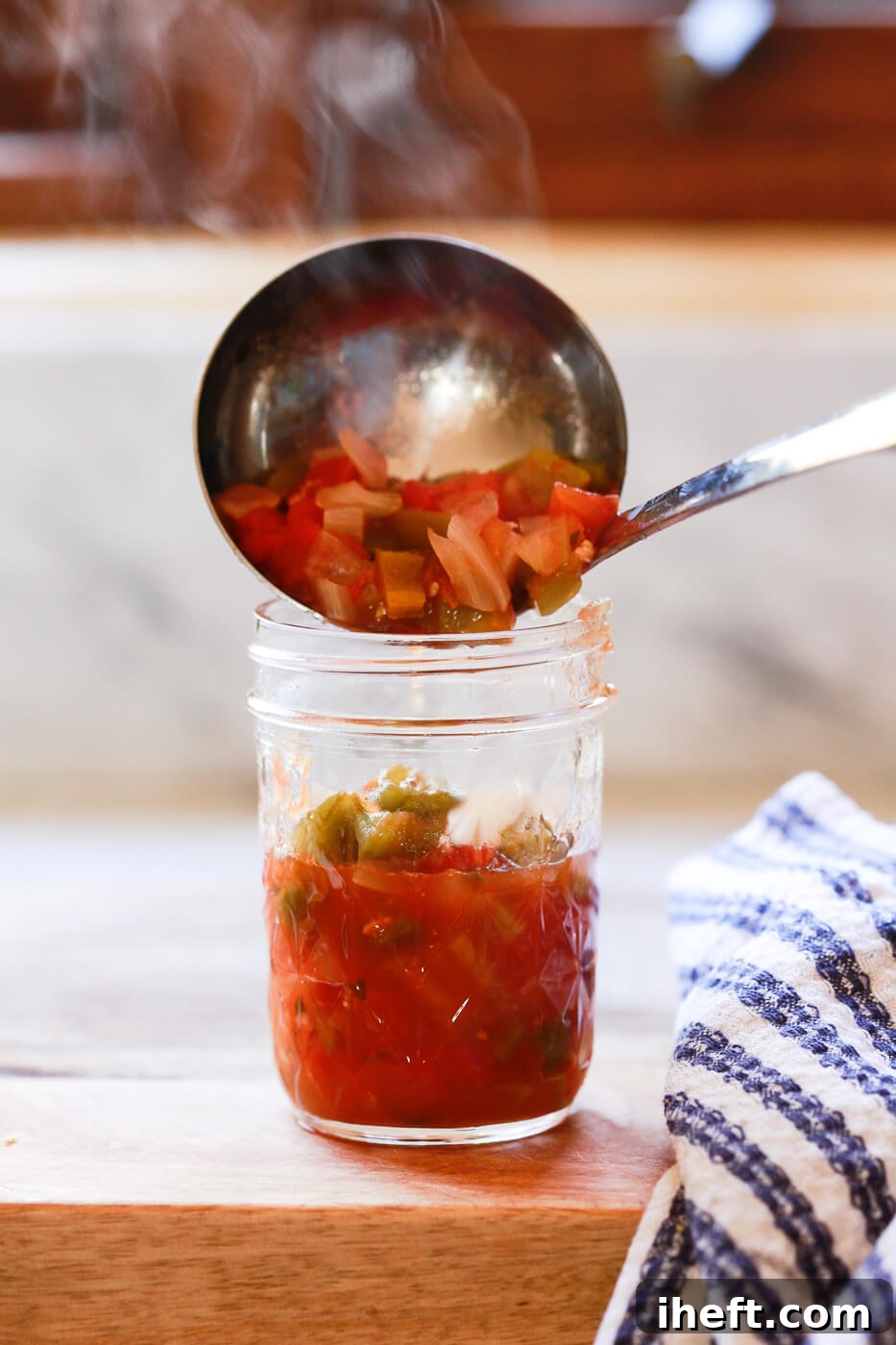
- Remove from the heat or turn down to very low just to keep warm. Spoon the hot salsa into the hot jars, leaving ½ inch headspace. Wipe the rim clean.
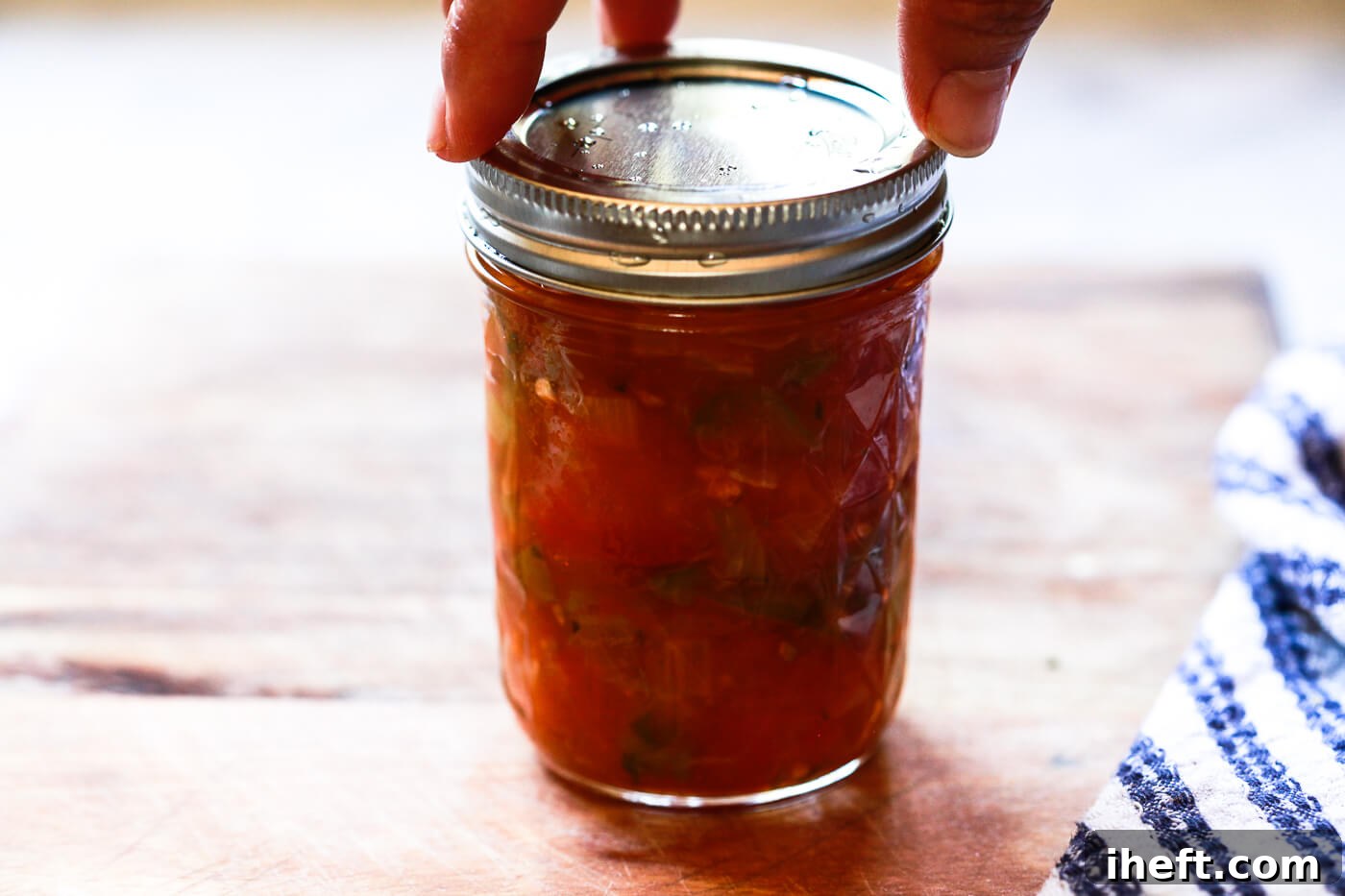
- Place the lid on the jar and screw the band down until just tight.
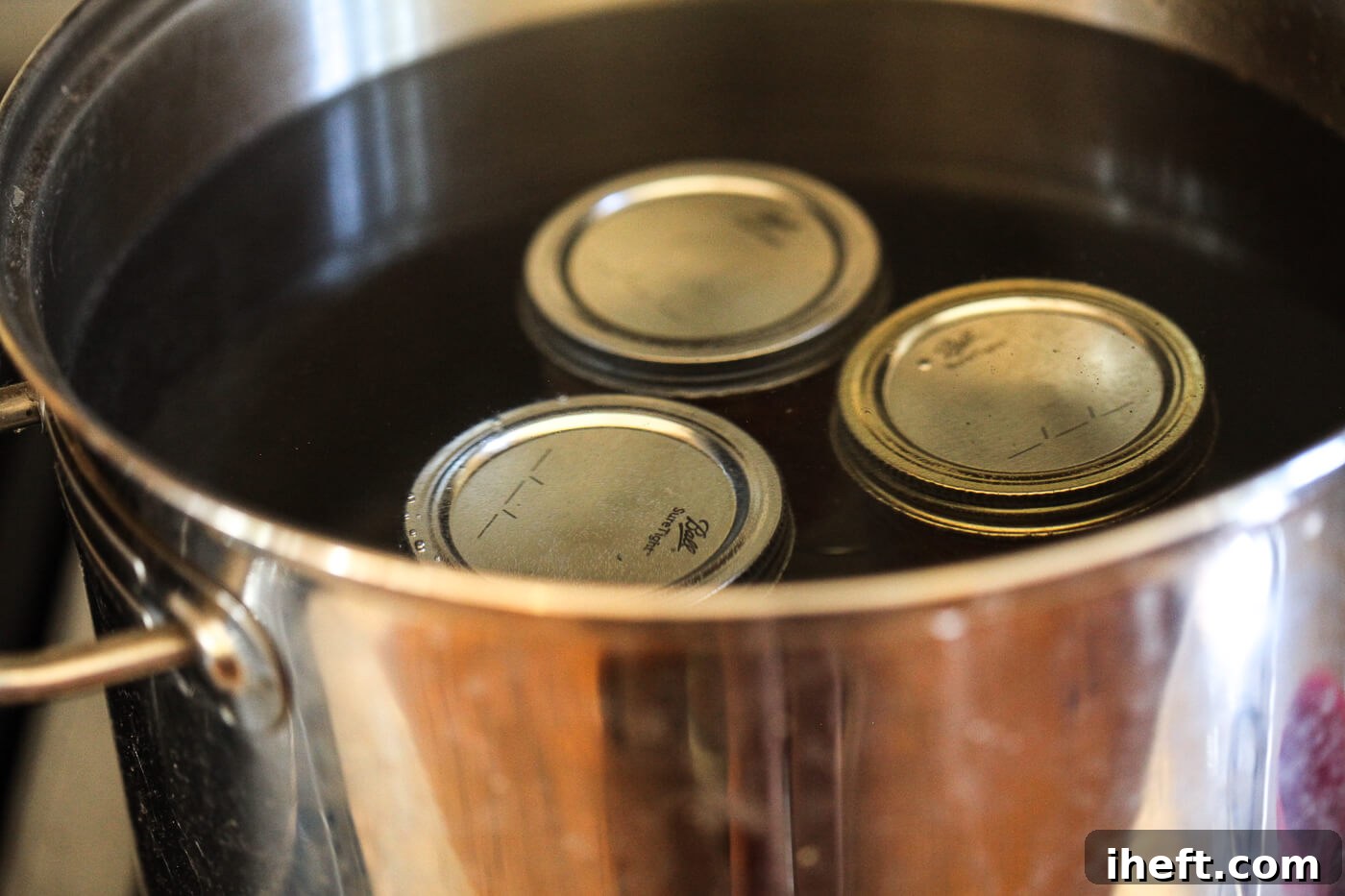
- Place the jars into the canner, covering by at least one inch of water. Bring to a boil, covered with a lid, and process for 15 minutes.
- Remove the lid and let the jars rest in the hot water for 5 minutes to allow the pressure to stabilize. Carefully remove the jars and let rest, undisturbed, for 24 hours at room temperature.
- Ensure all jars have a vacuum seal by removing the rings and pressing down on the lids. They should be concave and not move at all. If the center of a lid bounces back there is not a vacuum seal and the jar of salsa will need to be refrigerated immediately.
Notes
To ensure safe canning, this recipe was based on the Ball salsa recipe for canning from the Ball Complete Book of Home Preserving cookbook.
When you’re ready to serve your canned salsa, you can add more heat by stirring in a few drops of hot sauce. I also like to freshen up canned salsa by stirring in some fresh cilantro just before serving.
Nutrition Information:
Yield: 6
Serving Size: 1
Amount Per Serving:
Calories: 95Total Fat: 1gSaturated Fat: 0gTrans Fat: 0gUnsaturated Fat: 0gCholesterol: 0mgSodium: 552mgCarbohydrates: 20gFiber: 4gSugar: 11gProtein: 3g
Nutrition information is automatically calculated by Nutritionix. I am not a nutritionist and cannot guarantee accuracy. If your health depends on nutrition information, please calculate again with your favorite calculator.