Irresistible English Tea Scones
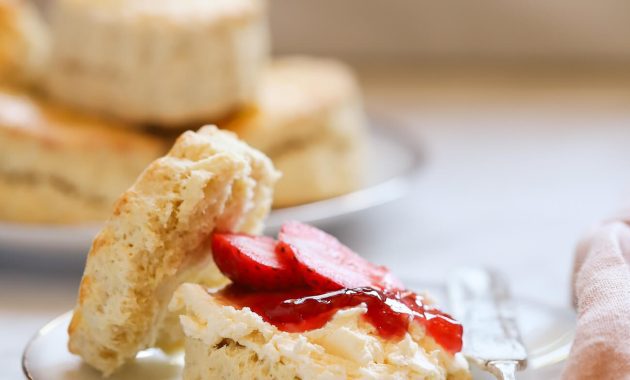
Discover the secrets to baking and serving classic English scones, a cornerstone of traditional British afternoon tea. This authentic recipe, meticulously adapted from the prestigious Buckingham Palace collection, promises light, fluffy scones perfect for any tea party.
My recent journey to England was, in many ways, a pilgrimage in pursuit of the perfect English scone. From the bustling elegance of Fortnum & Mason, where I sampled their exquisite offerings, to the refined calm of The Goring Hotel during their renowned afternoon tea, I immersed myself in the rich tradition of British baking. My quest extended to acquiring authentic afternoon tea cookbooks, including one from the esteemed Buckingham Palace. After rigorous testing and delightful experimentation in my own kitchen, I am thrilled to share what I believe is the ultimate recipe for classic English scones, ensuring you can recreate this quintessential British experience at home.
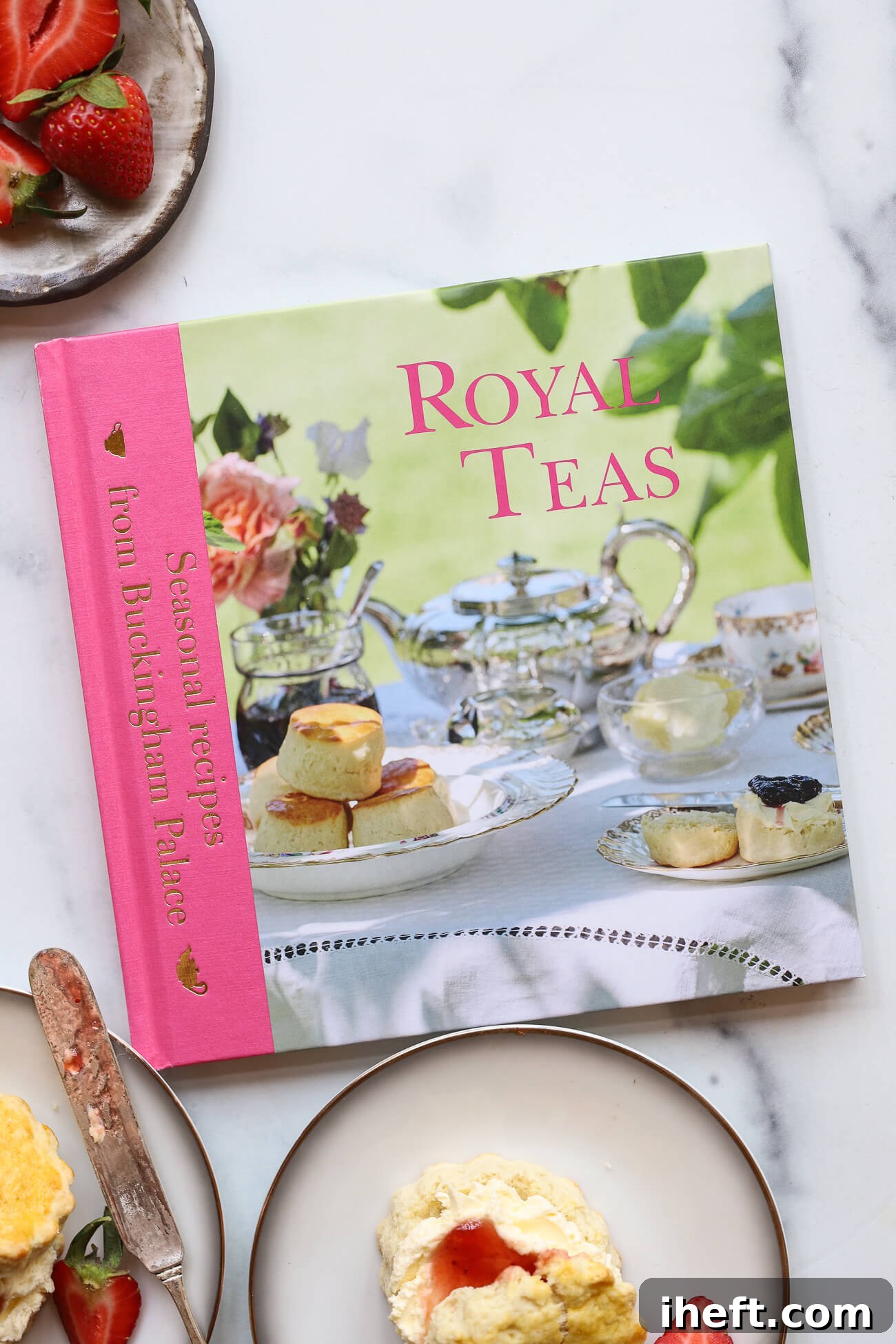
The inspiring Buckingham Palace Royal Teas cookbook, a source of authentic British recipes.
The Quintessential English Scone: A Taste of British Tradition
Unlike their often sweeter, larger American counterparts, authentic British scones are typically smaller, plainer, and designed to be the perfect vehicle for rich clotted cream and fruity jam. These humble yet elegant baked goods are an English culinary cornerstone, an indispensable element of any traditional afternoon tea. Despite their special occasion status, classic scones are surprisingly simple to master, requiring only a handful of everyday ingredients and a little love. While this recipe focuses on the traditional plain scone, for those who enjoy variations, my Blueberry Oat Scones offer a delicious “drop scone” style alternative.
Why English Scones Are a Must-Try for Afternoon Tea
English scones embody a timeless elegance and comfort. Their subtly sweet flavor and light, crumbly texture make them irresistible. They represent more than just a baked good; they are an invitation to slow down, savor a moment, and partake in a cherished British ritual. Learning to bake these authentic British scones allows you to bring a piece of that charming tradition into your own home, perfect for entertaining guests or simply treating yourself to a delightful afternoon indulgence. They are the heart of any true afternoon tea spread, offering a delightful contrast to savory sandwiches and delicate pastries.
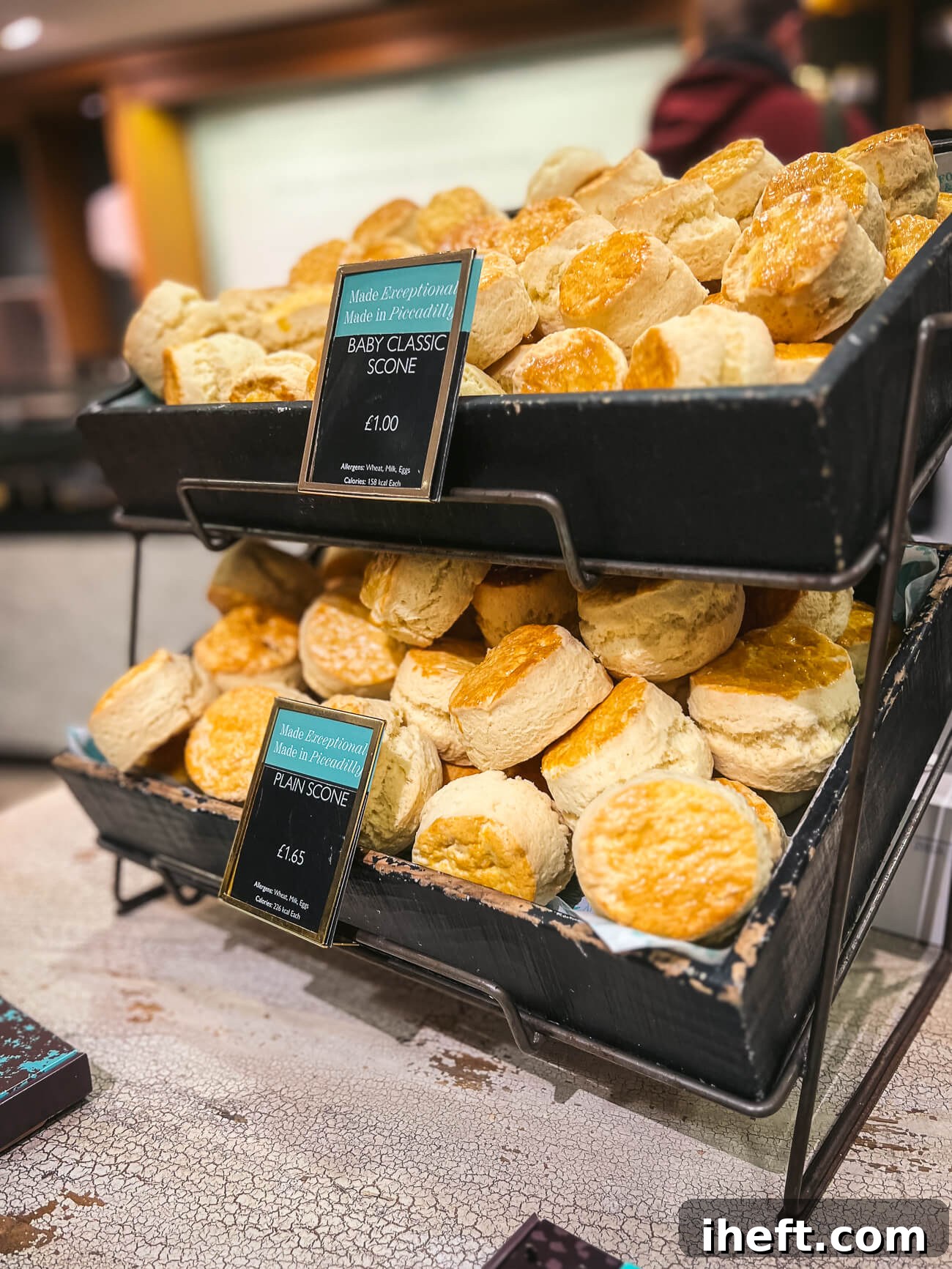
A display of exquisite plain scones at Fortnum & Mason in London, ready for afternoon tea.
Mastering the Ingredients for Authentic English Scones
The beauty of these classic English scones lies in their simplicity, relying on a few high-quality ingredients to achieve their signature light and airy texture. Selecting and preparing these components correctly is crucial for baking perfect British scones that rival those found in London’s finest tea rooms. Always start with fresh, quality ingredients for the best results in your traditional scone recipe.
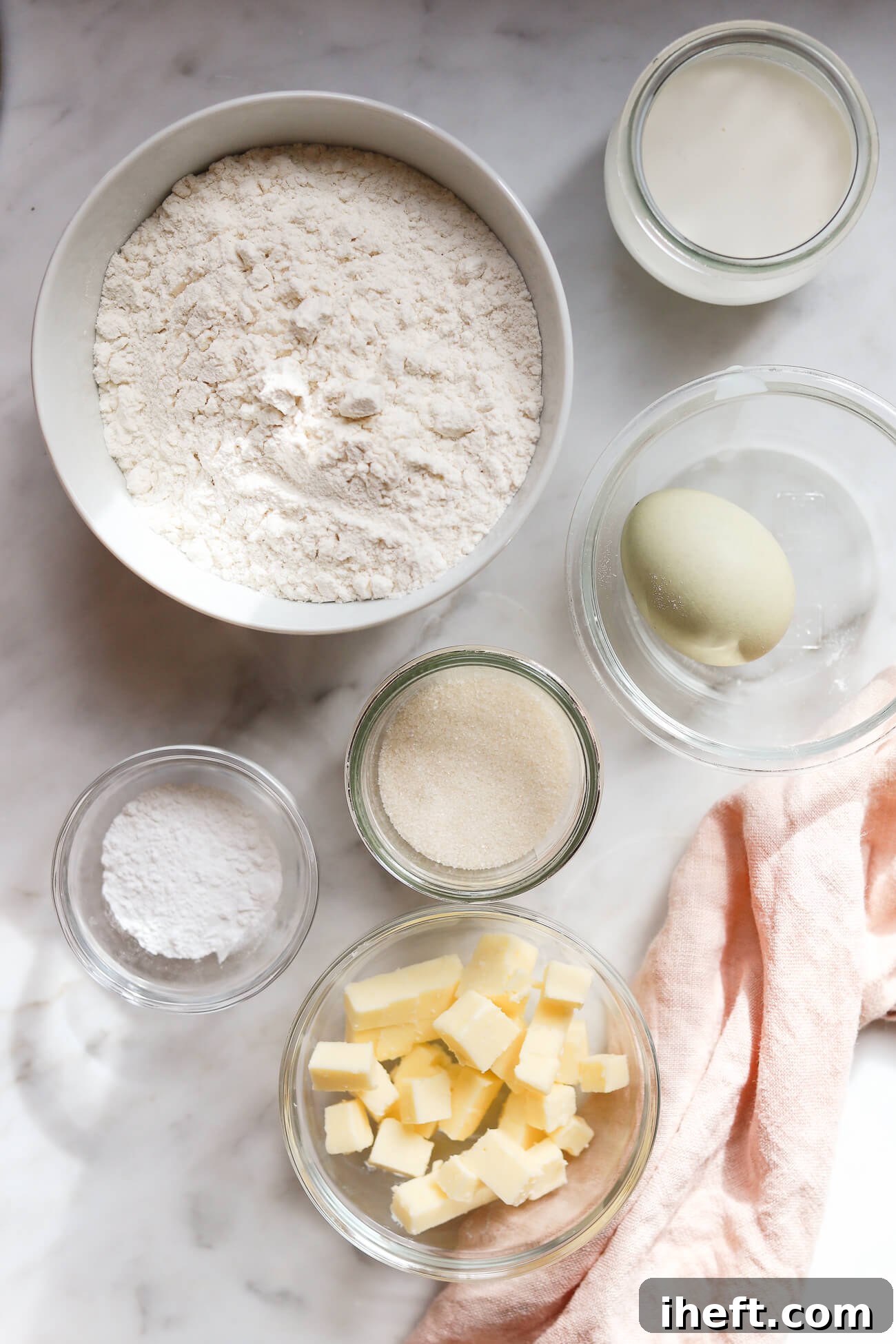
- All-Purpose Flour: This forms the structural base of your scones. Using a good quality, unbleached all-purpose flour works exceptionally well. Sifting the flour before incorporating it into the dry mixture is a crucial step; it aerates the flour, removes any lumps, and ensures even distribution of the leavening agents, resulting in a significantly lighter and more tender scone.
- Baking Powder: As the primary leavening agent, baking powder is absolutely essential for creating those coveted tall, fluffy scones with a beautiful “lift.” Always ensure your baking powder is fresh and active for maximum effectiveness. A simple test is to mix a teaspoon with a bit of hot water; if it bubbles vigorously, it’s good to go.
- Granulated Sugar: Superfine sugar (known as caster sugar in the UK) is traditionally preferred as its finer crystals dissolve more easily, contributing to a wonderfully tender crumb. However, regular organic granulated cane sugar is a perfectly acceptable and widely used alternative that yields excellent results. The amount of sugar in this recipe is intentionally modest, ensuring the scones are not overly sweet and allow the flavors of the clotted cream and jam to truly shine.
- Unsalted Butter: The secret to flaky scones lies in very cold, diced unsalted butter. Keeping the butter cold is paramount. When it bakes, the cold butter melts and releases steam, creating tiny pockets within the dough that contribute to the scones’ desirable flakiness and impressive rise. If you only have salted butter available, simply omit the pinch of salt specified in the recipe. Work quickly when incorporating the butter to prevent it from warming up too much.
- Eggs: This recipe utilizes two eggs: one for the scone dough itself and one yolk designated for an egg wash. While many traditional scone recipes, particularly those focused on a “plain” style, may omit eggs from the dough, their inclusion here can lend a richer flavor and a slightly more tender texture to the final product. The egg yolk wash, applied just before baking, is key to achieving that beautiful, glossy golden-brown finish on your scones. For those preferring an egg-free wash, a brush of heavy cream or whole milk makes an excellent substitute.
- Milk: Whole milk or buttermilk are both excellent choices for this recipe. The original Buckingham Palace recipe often features buttermilk, which, due to its acidity, reacts wonderfully with the baking powder to create an exceptionally tender crumb and a subtle tang. However, regular whole milk is a fantastic and widely available alternative that consistently produces delicious scones. Some recipes even advocate for heavy cream, resulting in an even richer scone. The crucial technique here is to add the milk gradually, exercising your judgment to achieve a soft, cohesive, and slightly sticky dough. The dough should just come together without being overly wet or too dry.
Essential Equipment for Perfect Scone Making
Having the right tools at hand will make your scone-making process smooth, efficient, and enjoyable. Most items are standard kitchen equipment, but investing in a good round cutter is particularly important for uniform, perfectly shaped scones. Precision in cutting helps ensure even baking and that classic, elegant appearance characteristic of authentic British scones.
- Rolling Pin: An indispensable tool for evenly flattening your scone dough to the ideal thickness. A French-style rolling pin (with tapered ends) offers excellent control, but any standard rolling pin will suffice.
- Round Cutter: A 5-6 centimeter (approximately 2 to 2.5 inches) round cutter is the perfect size for traditional English scones. Both smooth-edged and fluted (scalloped) cutters are suitable; the latter adds a lovely decorative touch to your baked goods.
- Parchment Paper or Silicone Baking Mat: These are essential for lining your baking sheet, preventing the scones from sticking, and ensuring effortless cleanup after baking.
- Baking Sheet: A sturdy, light-colored baking sheet is recommended to ensure even heat distribution and prevent the bottoms of your scones from browning too quickly.
- Pastry Brush: Absolutely essential for applying the egg wash evenly and delicately to the tops of your scones, guaranteeing that beautiful golden, glossy finish.
- Kitchen Scale (Optional but Highly Recommended): While cup measurements are provided, a digital kitchen scale offers unparalleled precision, especially for measuring flour. This can significantly improve consistency in your baking results.
Step-by-Step Guide: How to Make Classic English Scones
Crafting these delectable English scones is a rewarding experience, and following these steps will ensure a batch of perfectly risen, tender treats every time. Remember, gentle handling is key to achieving that desirable light texture and avoiding tough scones. Each stage is designed to contribute to the ultimate classic British scone.
- Prepare Your Dry Ingredients: The foundation of excellent scones begins here. In a large mixing bowl, meticulously sift together the all-purpose flour, baking powder, a pinch of salt (unless you’re using salted butter), and granulated sugar. Sifting is crucial as it thoroughly aerates the flour, eliminates any lumps, and ensures that all the leavening agents are uniformly distributed throughout the mixture, directly contributing to a lighter and fluffier scone. If you don’t possess a sieve, a thorough whisking will achieve a similar effect. For the utmost precision in baking, utilizing a kitchen scale for flour measurement is highly recommended, as volume measurements can vary.
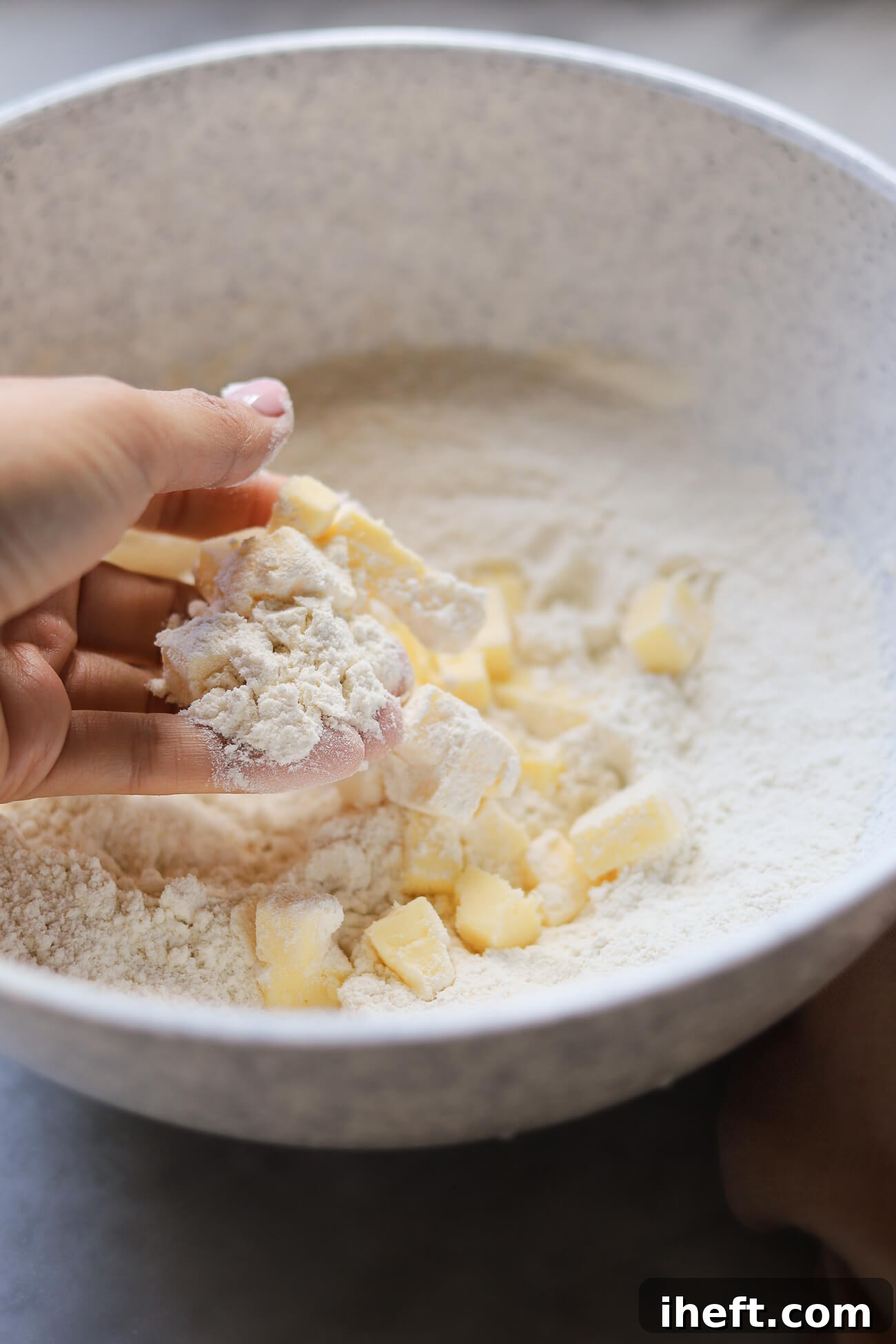
- Incorporate the Cold Butter: Add the very cold, precisely diced butter to your combined dry ingredients. Using only your fingertips, gently rub the butter into the flour mixture. The objective is to break down the butter into pea-sized pieces or until the mixture resembles coarse breadcrumbs or a crumble topping. It is vital to avoid overworking the dough at this stage, as the warmth from your hands can melt the butter too quickly. Cold butter is essential because it creates pockets of steam during baking, which in turn contributes to the scones’ characteristic flakiness and impressive rise. As an alternative, a food processor can perform this step efficiently with short, quick pulses, ensuring the butter remains perfectly chilled.
- Add the Liquid Ingredients Gradually: Create a shallow well in the center of your butter-flour mixture. Into this well, add the lightly beaten egg and most of the milk. With a spoon or, preferably, your hands, gently bring all the ingredients together, mixing just until a soft, slightly sticky dough begins to form. The consistency should be reminiscent of a pie crust dough – cohesive enough but not overly wet. Avoid the temptation to add all the milk at once; instead, add it slowly and gauge the dough’s texture. If you notice any stubborn dry patches, incorporate a tiny bit more milk, adding it a teaspoon at a time. Conversely, if the dough feels excessively wet, sprinkle in a small amount of flour. Crucially, avoid overworking the dough at this stage, as excessive mixing develops gluten, which can result in tough, rubbery scones. Mix minimally for a tender result.
- Shape and Cut Your Scones: Lightly flour a clean work surface to prevent sticking. Carefully turn the scone dough out onto the prepared surface and gently pat or roll it out to an approximate thickness of ¾ inch (roughly 2 cm). Resist the urge to knead the dough excessively; gentle handling is paramount. Dip your 5cm (2-inch) round cutter into flour to prevent any sticking, then press it straight down into the dough to cut out as many scones as possible. A critical tip: Do NOT twist the cutter, as this action can seal the edges of the scone, thereby inhibiting a proper rise. Gather any dough scraps, gently re-pat them together (again, without kneading!), and cut out any remaining scones until all the dough is utilized. Carefully place the cut scones onto your prepared baking sheet, ensuring a small space is left between each one to allow for even baking and rising.
- Apply the Egg Wash and Bake: In a small bowl, whisk the remaining egg yolk together with a tiny splash of milk or water to create a smooth and uniform egg wash. Using a pastry brush, gently and evenly brush only the tops of the scones with this egg wash. Be meticulously careful to avoid letting the wash drip down the sides of the scones, as this can impede their ability to rise effectively. Preheat your oven to a hot 425°F (220°C). Bake the scones in the preheated oven for approximately 10-12 minutes, or until they have achieved a beautiful golden brown color on top and have risen impressively to their classic height.
- Cool and Serve: Once baked to perfection, carefully transfer the hot scones to a wire cooling rack. Allow them a minimum of 5 minutes to cool before serving. This brief cooling period is important as it allows the scones to set properly and makes them much easier to handle without crumbling. While still warm from the oven is when they are truly at their peak, they remain wonderfully enjoyable even when cooled to room temperature.
The Art of Serving English Scones: Clotted Cream and Jam
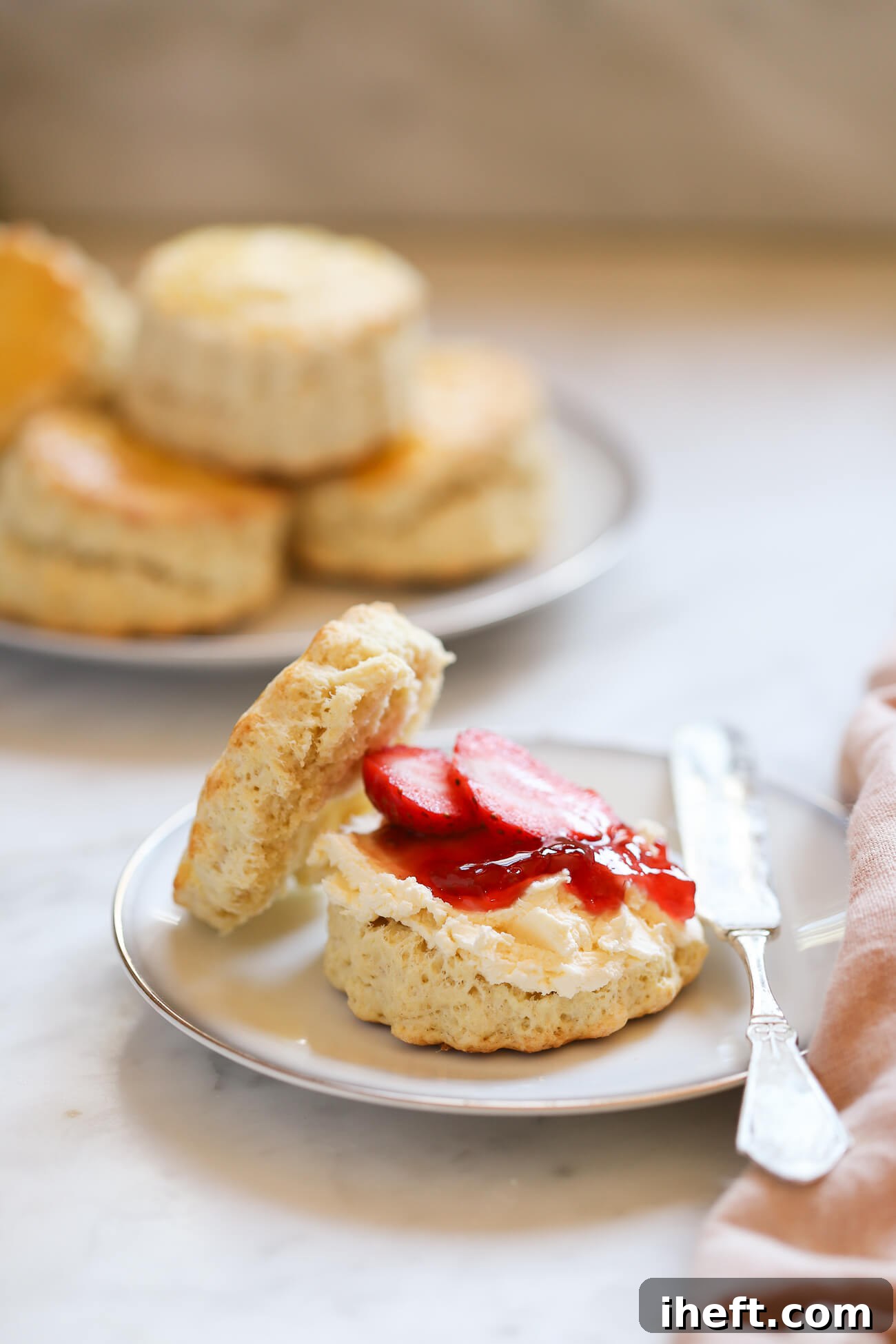
The true essence of an English scone is revealed in how it’s served. Forget the heavy glazes, excessive sugars, and additional ingredients often found on American scones; the British tradition champions simplicity and elegance, focusing on two crucial accompaniments: authentic English clotted cream and a high-quality fruit jam. This delightful combination is what transforms a plain scone into a sublime “cream tea” experience, making it an absolute highlight of British cuisine.
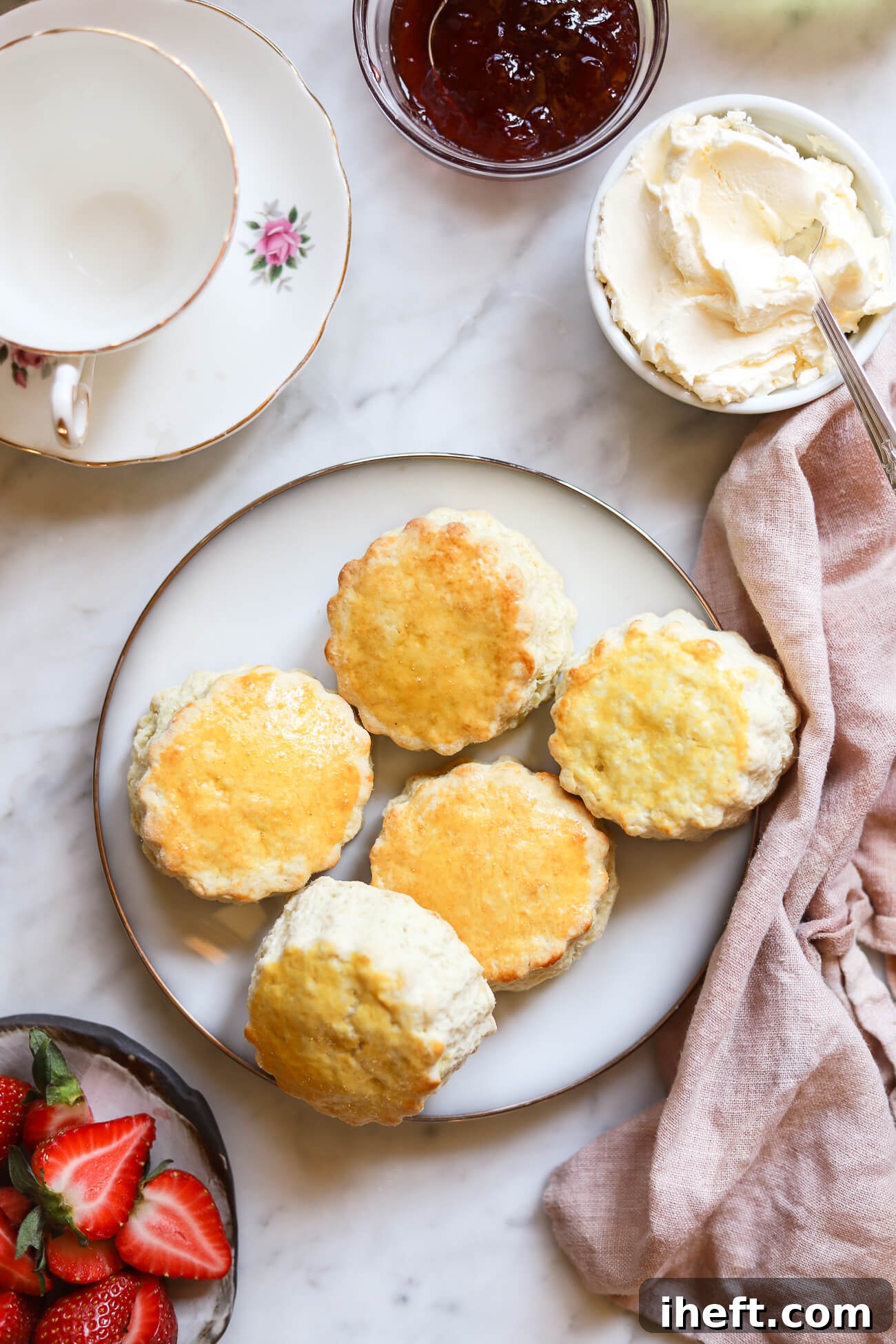
For the jam, while homemade is always a wonderful choice and adds a personal touch, a premium store-bought strawberry or raspberry jam works perfectly. The bright, sometimes tart, fruitiness of the jam provides a lovely and essential contrast to the richness of the clotted cream and the subtle sweetness of the scone. It’s this balance of flavors that makes the combination so irresistible and iconic.
What Exactly is Clotted Cream? The Heart of a Cream Tea
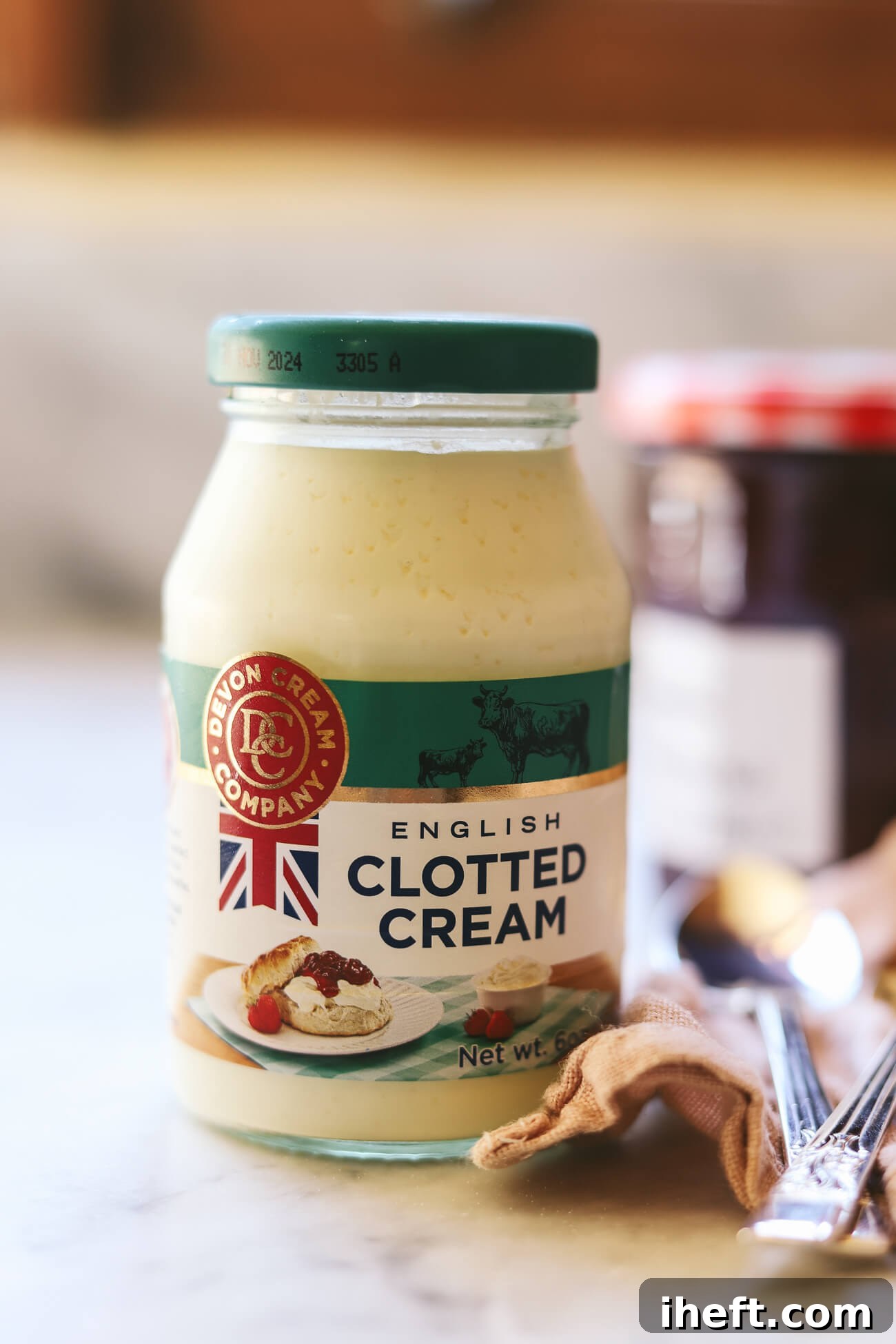
Understanding clotted cream, also reverently known as Devonshire cream, is absolutely key to appreciating its pivotal role in a proper cream tea. This traditional British dairy product is renowned for its incredibly rich, thick, and velvety texture, which is distinctly different from whipped cream or even butter. Its unique consistency and flavor are achieved through a specific and time-honored process: high-fat cow’s milk is gently heated indirectly in shallow pans for several hours, then allowed to cool very slowly. During this prolonged cooling period, the cream rises to the surface and naturally forms “clots” or a thick, dense, yellowish layer. The result is a delightfully spoonable cream with a luxurious mouthfeel and a rich, slightly nutty, and undeniably buttery flavor that is simply unparalleled as a topping for warm, freshly baked scones. It’s an indulgence that perfectly complements the simplicity of the scone.
The Great Debate: Jam or Cream First?
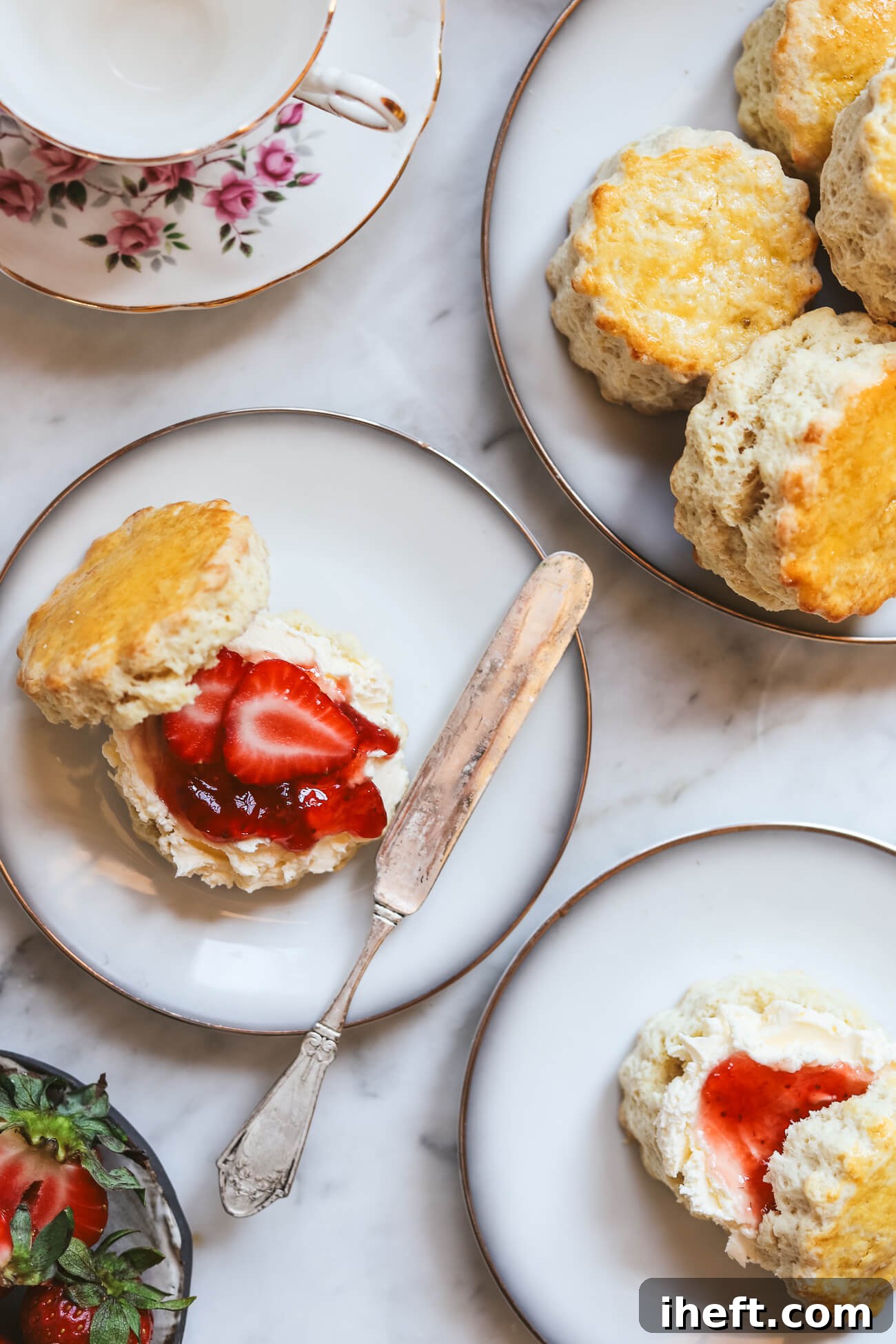
Ah, the age-old question that has sparked friendly (and sometimes not-so-friendly) debates across England for generations: when preparing your split scone, should you apply the jam or the clotted cream first? According to the discerning connoisseurs at Fortnum & Mason, the answer largely hinges on your geographical allegiance within Britain. The traditional Devonian method dictates “cream first, then jam” – signifying the cream as the foundational layer, much like butter on toast. Conversely, the Cornish tradition firmly advocates for “jam first, then cream” – treating the jam as the primary spread, which is then sumptuously topped with the luxurious clotted cream. Ultimately, there’s no absolute right or wrong answer when it comes to personal preference, but being aware of the charming origins of these delightful customs certainly adds to the cultural richness of your cream tea experience. Whichever way you choose to assemble your scone, ensure you generously layer both the cream and the jam for the ultimate taste sensation.
Frequently Asked Questions about Baking and Serving Scones
Can traditional English scones be made vegan?
Absolutely! Traditional English scones can be adapted to be entirely vegan-friendly with excellent results. To achieve this, simply substitute dairy butter with a good quality, solid plant-based vegan butter (ensure it’s cold and firm) and replace cow’s milk with an unsweetened plant-based milk, such as almond milk, oat milk, or soy milk. When it comes to eggs, it’s worth noting that many authentic English scone recipes, including some from esteemed establishments like Fortnum & Mason, do not traditionally include eggs in the dough itself, making their omission a straightforward option. If you decide to omit the egg from this specific recipe, ensure you slightly increase the amount of plant-based milk to maintain the dough’s correct moisture and consistency; typically, increasing the milk to approximately 90ml should suffice to achieve the desired dough texture.
Can scones be made gluten-free while maintaining their classic texture?
Yes, gluten-free scones are certainly achievable, allowing more people to enjoy this beloved treat! The simplest and often most successful method is to use a high-quality, cup-for-cup gluten-free baking mix as a direct substitute for regular all-purpose flour. These specialized blends are formulated to mimic the texture and baking properties of wheat flour, often containing a combination of starches and gums. However, please be aware that every gluten-free flour blend behaves slightly differently, so results may vary in terms of texture, rise, and moisture absorption. While this particular recipe has not been rigorously tested with gluten-free flour, many bakers report great success with such substitutions. You might need to adjust the liquid content slightly, adding a little more milk or a bit less, to achieve the desired dough consistency typical for scones.
How should scones be stored to keep them fresh, and what is their shelf life?
Scones are at their absolute best when enjoyed freshly baked, ideally on the very same day they are made. Their light, airy texture and delicate crumb are most pronounced when warm from the oven. If you find yourself with delightful leftovers, you can store them in an airtight container at room temperature for 1-2 days. To refresh them, a quick warm-up in a toaster oven or a microwave can bring back some of their initial charm. For longer storage, scones freeze remarkably well. Once completely cooled, place them in a freezer-safe bag or container and freeze for up to one month. To enjoy frozen scones, simply thaw them at room temperature for a few hours, then warm them gently in a low oven (around 300°F/150°C) for 5-10 minutes until heated through and refreshed.
What else should I serve with English scones to create a complete afternoon tea experience?
To truly embrace and honor English tradition, serving your freshly baked scones as part of a classic “cream tea” is paramount. This delightful offering typically includes a pot of hot, freshly brewed tea (Earl Grey, Darjeeling, or English Breakfast are popular choices), generous servings of rich clotted cream, and your choice of high-quality fruit jam (strawberry or raspberry are traditional favorites). For a more elaborate “afternoon tea,” you can elegantly expand the menu to include delicate finger sandwiches (such as cucumber, smoked salmon with cream cheese, or classic egg mayonnaise with cress), and/or a light, savory quiche or mini sausage rolls. Small, exquisite pastries, fruit tarts, or delicate petit fours can also be added for a truly grand and comprehensive spread. Remember, the focus is on light, elegant bites that complement the star of the show – your perfect, homemade English scones.
What are the key tips for achieving consistently light and fluffy scones?
- Keep Ingredients Cold: This is arguably the most crucial tip. Always use very cold butter and milk. The cold butter creates steam during baking, which gives scones their characteristic lift and flakiness.
- Minimal Handling of Dough: Avoid overworking the dough at all costs. Excessive kneading or mixing develops gluten, which invariably leads to tough, dense scones. Mix just until the ingredients barely come together, and handle the dough gently when shaping.
- Don’t Twist the Cutter: When cutting out your scones, press the cutter straight down firmly and lift it straight up. Twisting the cutter can seal the edges of the dough, which prevents the scones from rising properly and achieving their full height.
- Ensure Fresh Leavening Agents: Always check that your baking powder is fresh and active. Old or expired baking powder will simply not provide the necessary lift, resulting in flat, heavy scones.
- Bake in a Hot Oven: Bake scones in a preheated hot oven (425°F/220°C). The initial blast of high heat helps them rise quickly and create a beautiful, golden crust while remaining tender inside.
English Scones Recipe
5 minutes
10 minutes
5 minutes
20 minutes
This authentic English scone recipe, inspired by the Buckingham Palace cookbook, yields perfectly light and plain scones. Designed to be served with rich clotted cream and luscious jam, these are ideal for a traditional afternoon tea or a charming cream tea.
Ingredients
- 250g (approximately 1⅞ cups) all-purpose flour
- 3 teaspoons baking powder
- Pinch of salt (omit if using salted butter)
- 45g (¼ cup) granulated sugar
- 50g (¼ cup) unsalted butter, very cold and cut into small cubes
- 1 large pasture-raised egg (for the dough)
- 70ml (¼ cup) whole milk or buttermilk, plus a little extra if needed
- 1 egg yolk (for egg wash)
- Strawberry jam, for serving
- Clotted cream, for serving
Instructions
- Preheat your oven to 425°F (220°C). Line a baking sheet with parchment paper or a silicone baking mat.
- In a medium-sized mixing bowl, sift or whisk together the flour, baking powder, salt, and sugar until well combined.
- Add the chilled, diced butter to the dry ingredients. Using your fingertips, rub the butter into the flour mixture until it resembles coarse breadcrumbs. Ensure the butter remains cold.
- Make a well in the center of the mixture. Add the egg and most of the milk. Gently stir with a spoon until the mixture just comes together to form a soft, slightly sticky dough. If there are still dry bits, add a tiny amount more milk very slowly. Avoid overworking the dough.
- Lightly flour a clean work surface. Turn the dough out and gently pat or roll it to a thickness of about ¾ inch. Dip a 5cm (2-inch) round cutter in flour and cut out scones, pressing straight down without twisting. Place the cut scones onto the prepared baking sheet.
- In a small bowl, whisk the extra egg yolk until smooth. Lightly brush only the tops of the scones with the egg wash, being careful not to let it drip down the sides.
- Bake in the preheated oven for 10-12 minutes, or until the scones are beautifully risen and golden brown on top. Transfer to a wire cooling rack and let cool for at least 5 minutes before serving.
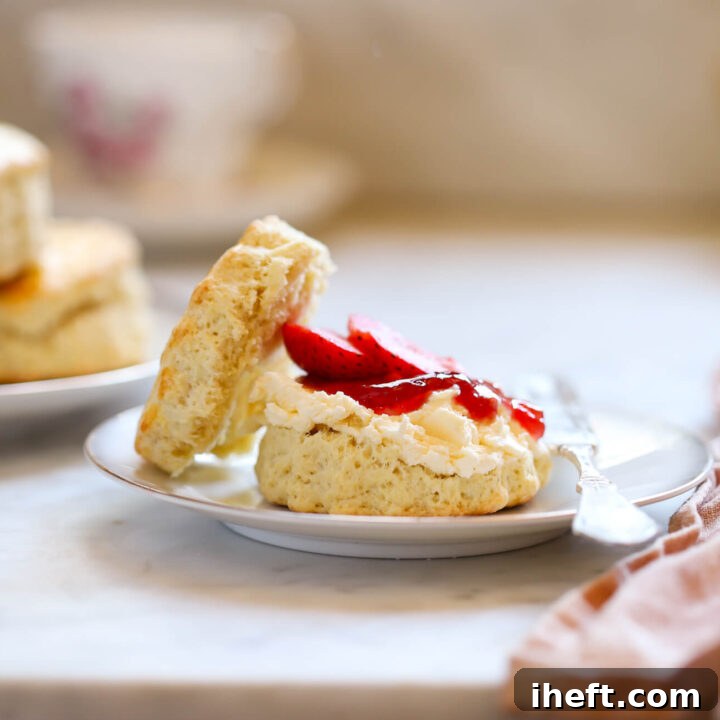
- To serve, carefully cut each warm scone in half horizontally. Generously top with clotted cream and your favorite strawberry or raspberry jam.
Notes & Tips
- Flour Measurement: 1⅞ cups is approximately 1¾ cups plus 2 tablespoons. Using a kitchen scale (250g) is the most accurate method for consistent results.
- Flavor Variations: For a delightful twist, consider adding the scraped seeds from half a vanilla bean, a teaspoon of lemon zest, or a handful of dried currants to the dry ingredients.
- Storage: Scones are best enjoyed fresh. Store any leftovers in an airtight container at room temperature for 1-2 days. They can also be frozen for up to one month; thaw at room temperature before gently reheating in a low oven.
- Scone Cutter Size: A 5-6cm (2 to 2.5 inch) round cutter is recommended for traditional English scone size and yield.
- Avoid Twisting: This is a crucial tip for a good rise! When cutting the scones, press the cutter straight down and lift it straight up without twisting. Twisting can seal the edges and inhibit rising.
Recommended Baking Tools
As an Amazon Associate and member of other affiliate programs, I earn from qualifying purchases.
- Muso Wood Wooden French Rolling Pin for Baking
- Cuisinart GreenGourmet Bamboo Basting Brush 15″ x 3″ x 0.5″
- 3Pcs Fluted Round Cookie Cutters 2″ 2.6″ 3″
Nutrition Information:
Yields: Approximately 5 scones
Amount Per Serving (1 scone):
Calories: 175
Conclusion: Embrace the Tradition of English Scones
Baking authentic English scones is a delightful journey into a cherished culinary tradition. This recipe, inspired by the royal kitchens of Buckingham Palace, offers a straightforward path to creating light, fluffy, and utterly delicious scones that are perfect for any occasion. Whether you’re hosting an elaborate afternoon tea or simply enjoying a quiet moment with a cup of your favorite brew, these classic British treats, adorned with generous dollops of clotted cream and sweet jam, promise to transport you to the heart of England. Enjoy the process, savor the flavors, and share the joy of these timeless baked goods with friends and family. Happy baking!