Horiatiki: The Authentic Greek Village Salad
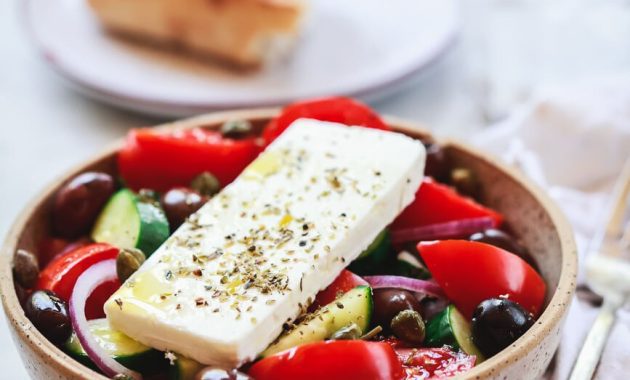
In the realm of refreshing and healthy cuisine, few dishes can rival the timeless appeal of Horiatiki Salata, famously known as Traditional Greek Salad. It’s more than just a simple mix of vegetables; it’s a vibrant celebration of Mediterranean flavors, embodying the essence of Greek culinary philosophy. This authentic Greek salad recipe is an absolute staple, promising to bring a burst of sunshine and simplicity to your table, becoming a cherished dish in your home for years to come.
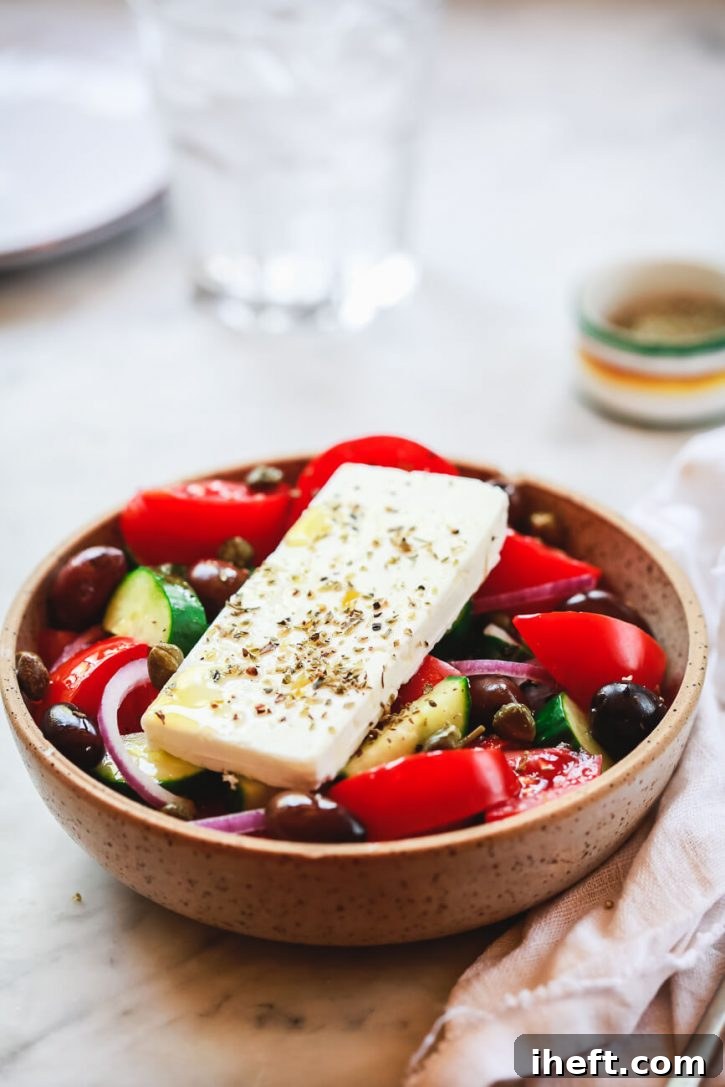
My first culinary encounter in Greece was with this very salad, and from that moment, its fresh, unpretentious charm captured my heart. Found on virtually every menu across Greece, from bustling city tavernas to quaint island eateries, Horiatiki is a classic that truly deserves a place in your recipe repertoire. It’s wonderfully light, incredibly refreshing, bursting with natural flavors, and remarkably straightforward to prepare. This makes it an ideal choice for a quick weeknight dinner, a vibrant side dish for a gathering, or a healthful addition to any meal plan.
While my site features other delightful Greek-inspired creations, such as the Chopped Greek Chickpea Salad, the hearty Mediterranean Lentil Salad, and the inventive Greek Pasta Salad – all perfect for meal prepping or sharing at potlucks – this particular recipe returns to the roots. It celebrates the simplicity and purity of the traditional Greek village salad. It’s not about complexity; it’s about quality ingredients speaking for themselves. This authentic Horiatiki would be an exquisite companion to any Mediterranean Diet dish, pairing especially well with comforting Greek Lentil Soup (Fakes) and crispy Homemade Pita Chips for a perfectly balanced spring or summer dinner.
Horiatiki Salata: The Storied Past of a Village Salad
The name “Horiatiki Salata” literally translates to “village salad,” a fitting moniker that hints at its humble yet profound origins. The captivating history of this traditional Greek recipe, according to the cookbook The Greek Feast by the Santa Barbara Greek Orthodox Church, traces back to a small, idyllic country village in Greece. This anecdotal origin story not only adds to the charm of the dish but also perfectly illustrates its essence: simplicity, resourcefulness, and the bounty of local produce.
The tale recounts how a priest’s wife, faced with an unexpected visit from her in-laws, found herself needing to prepare a meal with very short notice. With admirable ingenuity, she rushed to her garden, gathering the freshest vegetables and aromatic herbs. Her quest continued to the shepherd’s home for some authentic, creamy cheese, and then to a nearby olive grove for plump, cured olives. Upon returning home, she combined these readily available, wholesome ingredients into a single, effortless dish. And just like that, Horiatiki Salata – the traditional Greek village salad – was born, a testament to the beauty of using what nature provides.
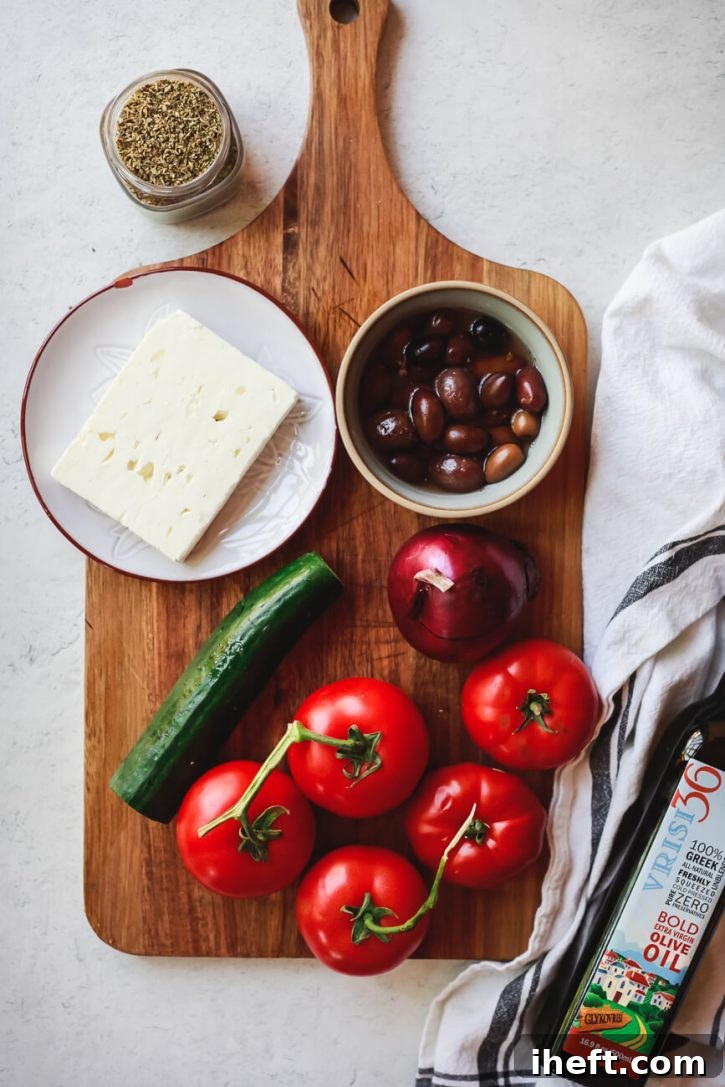
The Essential Ingredients of an Authentic Greek Salad
The true magic of a traditional Greek salad lies not in a long list of exotic components, but in the deliberate selection and superior quality of its few, perfect ingredients. This philosophy underscores the importance of seeking out the freshest seasonal produce and investing in the finest olive oil, potent Greek oregano, and authentic feta cheese you can possibly find. Each element plays a crucial role, contributing to a harmonious and deeply satisfying flavor profile.
- Tomatoes: The heart of any Horiatiki, ripe, juicy tomatoes are non-negotiable. While you can elevate the visual appeal with colorful heirloom varieties, classic Early Girl, robust beefsteak, or intensely red Roma tomatoes, especially when perfectly ripe, deliver exceptional flavor. Look for firm, heavy tomatoes with a rich aroma. Cut them into generous wedges, allowing their natural sweetness and acidity to shine.
- Cucumber: Offering a crisp counterpoint to the tomatoes, cucumber adds essential freshness. For standard varieties, peeling is recommended to avoid bitterness and tough skin. However, if you opt for a thin-skinned hothouse (English) cucumber, peeling is entirely optional, and many prefer to leave the skin on for added texture and nutrients. Cut them into thick half-rounds or chunks to match the substantial size of the tomato wedges.
- Onion: Red onion is the traditional choice, lending a pungent yet sweet sharpness that cuts through the richness of the other ingredients. It’s crucial to slice the red onion very thinly, ideally into delicate half-moons. This minimizes its intensity while allowing its distinct flavor to meld beautifully with the salad. For those sensitive to raw onion, a quick soak in ice water for 10-15 minutes can mellow its bite.
- Olives: Only Kalamata olives will do for an authentic Greek salad. These distinctive, almond-shaped olives, with their deep purple hue and rich, fruity, briny flavor, are quintessential. You can choose pitted for convenience or unpitted for a slightly more robust flavor (and often a firmer texture), just be mindful of the pits! Their robust taste is a cornerstone of the Horiatiki experience.
- Feta Cheese: The crowning glory of Horiatiki Salata is authentic Greek feta, typically made from sheep’s milk or a mixture of sheep’s and goat’s milk. It’s crumbly yet creamy, salty, and tangy, providing a luxurious counterpoint to the fresh vegetables. Look for feta sold in brine, as this preserves its moisture and distinctive flavor. Trader Joe’s, for example, often carries excellent creamy Greek feta. For those seeking a dairy-free or vegan option, brands like Violife’sJust Like Feta offer a commendable alternative. Some creative cooks also craft homemade vegan feta using tofu, seasoned to replicate the classic tang.
The Pure Essence of Greek Salad Dressing
One of the most frequently misunderstood aspects of Horiatiki Salata is its dressing. Many assume a complex blend of ingredients is required, perhaps even reaching for a bottle of store-bought concoction. However, the traditional Greek salad dressing is a testament to the country’s culinary philosophy: highlight the natural flavors of high-quality ingredients with minimal intervention.
While many Greek dressings for other salads commonly feature a simple emulsion of olive oil and an acid (such as fresh lemon juice or red wine vinegar) in roughly a 2:1 ratio, seasoned with salt, pepper, and various fresh or dried herbs like oregano, thyme, dill, or marjoram, Horiatiki takes simplicity to an even purer level.
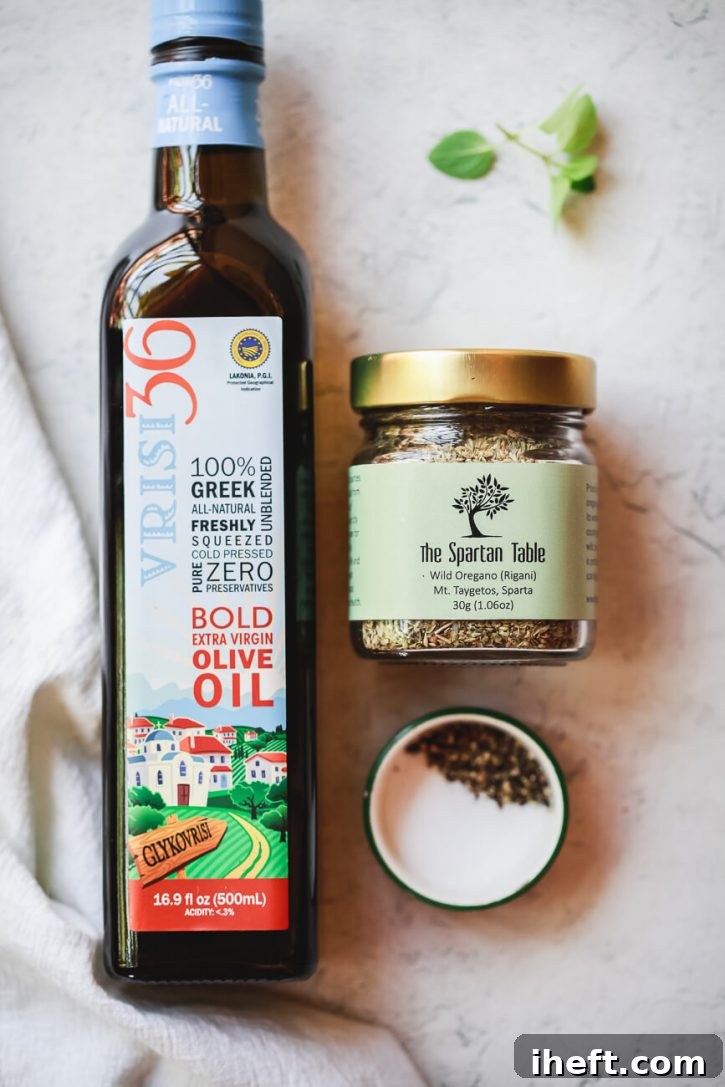
For an absolutely authentic Traditional Greek Salad, the dressing is astonishingly simple: just a generous drizzle of the finest extra virgin olive oil. That’s it! Horiatiki is traditionally seasoned only with this liquid gold and a sprinkle of salt. Some individuals, by personal preference, might add a slight splash of red wine vinegar for an extra tang, but it’s entirely optional and not strictly traditional. The emphasis here is on the robust, fruity, and peppery notes of a high-quality Greek olive oil, which acts as both a flavor enhancer and a binding agent, allowing the vegetables’ natural juices to create a light, exquisite “sauce.” Fortunately, exceptional Greek olive oils are increasingly accessible and can be found in most well-stocked grocery stores, including popular retailers like Trader Joe’s.
Greek Oregano vs. Common Oregano: Unveiling the Aromatic Distinction
Given the profound simplicity of the ingredients in a traditional Greek salad, you might rightly wonder if there’s a significant difference between “regular” oregano and its Greek counterpart, and which one truly delivers the most authentic flavor for this iconic village salad. The answer is a resounding yes, there is a notable difference, and selecting the right oregano can elevate your Horiatiki from good to extraordinary.
Oregano, belonging to the expansive mint family (Lamiaceae), boasts numerous varieties cultivated globally, each with its unique characteristics. From the mild, sweet notes of Italian oregano to the sharper, spicier profiles of Turkish or Mexican varieties, the herb’s flavor can vary significantly. However, it is Greek oregano (Origanum vulgare hirtum) that stands out for its exceptionally strong, pungent, and earthy flavor. It possesses a peppery warmth with hints of mint and citrus that are distinctively Mediterranean. This potent flavor profile makes Greek oregano indispensable for authentic Greek cuisine.
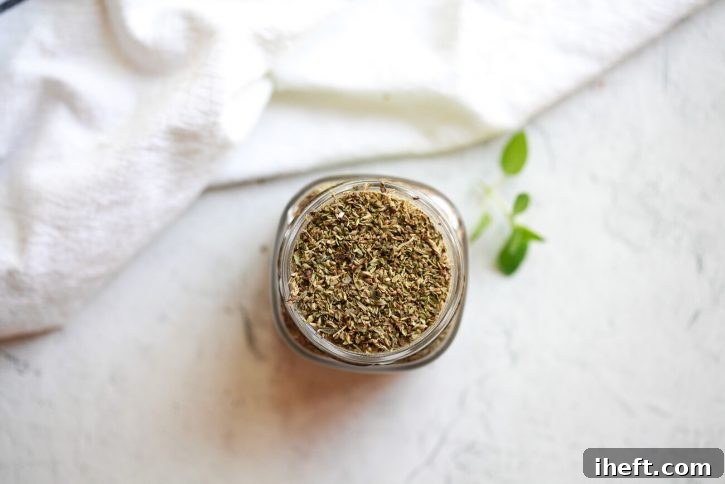
The difference lies in the concentration of its essential oils, particularly carvacrol, which is more abundant in Greek varieties, especially wild-harvested ones. Using Greek oregano in Horiatiki Salata isn’t just a preference; it’s a key component that contributes to the salad’s signature taste. The depth and aromatic complexity it brings can’t be fully replicated by other types of oregano. I personally seek out and recommend wild Greek oregano, often hand-collected from mountainous regions of Greece, for its unparalleled intensity and authenticity. This herb truly acts as the aromatic soul of the Horiatiki, binding the fresh vegetables with its warm, savory embrace.
Crafting Your Own Traditional Greek Village Salad (Horiatiki)
The beauty of Traditional Greek Salad is its sheer simplicity. Once you’ve prepared it a single time, the method will likely be etched into your memory, eliminating the need for a recipe ever again. The core principle is to embrace generous, rustic cuts and allow the quality of the ingredients to speak for themselves. Here’s how to assemble this iconic dish:
- Begin by preparing your fresh vegetables. Cut the ripe tomatoes into substantial wedges, ensuring each piece is robust enough to hold its own. Slice the cucumber into thick half-rounds or hearty chunks. Thinly slice the red onion into delicate half-moons, separating the rings to distribute them evenly.
- In a large salad bowl, gently combine the prepared tomatoes, cucumber, and onion. The goal is to mix them without bruising, allowing their vibrant colors and textures to mingle.
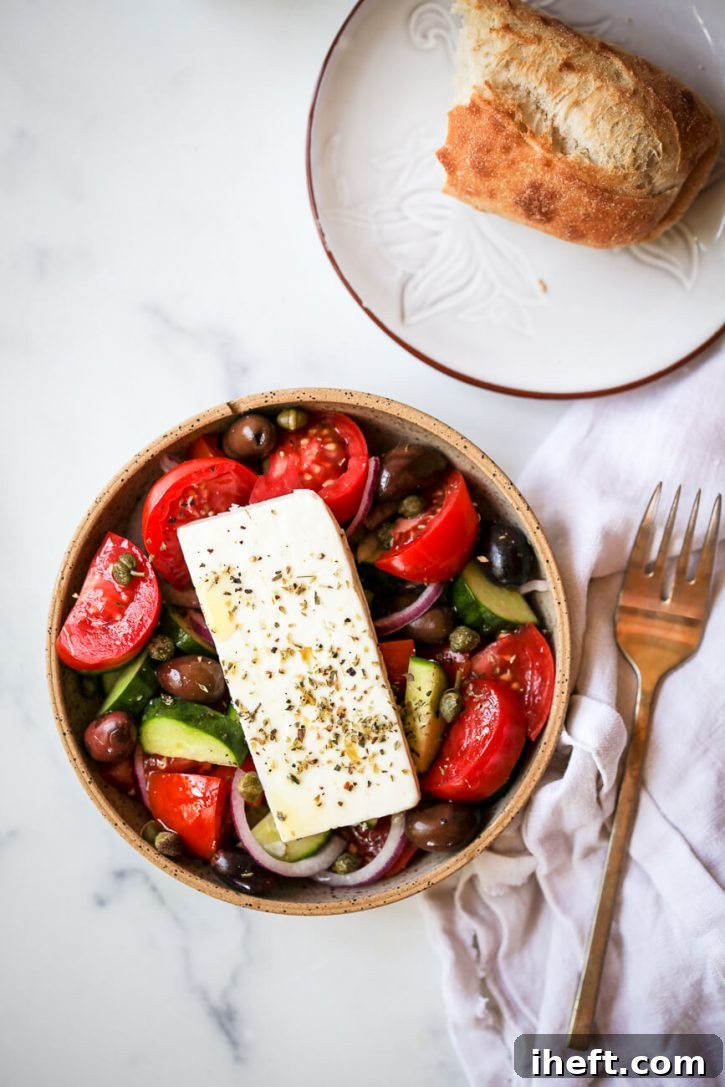
- Artfully arrange the Kalamata olives and the magnificent slab(s) of feta cheese on top of the vegetables. The feta often takes center stage, uncut, allowing diners to break off pieces as they desire, ensuring its creaminess is preserved until serving.
- Finally, and most crucially, dress the salad generously. Drizzle a substantial amount of high-quality Greek extra virgin olive oil over all the ingredients. Season with flaky sea salt to taste, and then sprinkle liberally with authentic dried Greek oregano.
- Serve immediately at the table, allowing everyone to toss their own portion. The act of tossing just before eating ensures the freshest possible taste and prevents the vegetables from becoming watery. Enjoy this simple masterpiece with rustic bread or warm pita bread, perfect for soaking up the delicious olive oil and natural juices. If you opt for unpitted olives, remind your guests to be mindful of the pits – the flavor is often superior, but they require careful eating!
Enhancing Your Horiatiki: Tips & Creative Variations
While the essence of Horiatiki lies in its adherence to tradition, there are practical tips and subtle variations that can personalize your experience, ensuring maximum enjoyment and versatility:
- Bell Pepper Addition: While not strictly traditional, some contemporary versions of Greek salad, especially outside of Greece, include green or red bell pepper. If you enjoy its crisp texture and mild sweetness, feel free to add thinly sliced bell pepper for an extra layer of flavor and color.
- Coastal Flair: For a taste reminiscent of the Greek islands, consider incorporating pickled sea fennel (kritamo) or capers. These briny additions introduce a wonderfully sharp, salty note that complements the fresh vegetables and olives, evoking the maritime spirit of the Aegean.
- Make-Ahead & Storage: You can prepare the vegetable base (tomatoes, cucumber, onion) a few hours in advance and store it covered in the refrigerator. However, always add the feta cheese, olives, olive oil, salt, and oregano just before serving. This prevents the feta from becoming too soft or dissolving into the salad, and ensures the vegetables remain crisp and vibrant, rather than soggy from the dressing. Leftovers, if any, are best consumed within a day.
- Serving Temperature: Horiatiki Salata is best enjoyed slightly chilled, but not ice-cold. Allowing it to sit at room temperature for 10-15 minutes before serving can help the flavors meld beautifully and allow the olive oil to flow more freely.
- Accompaniments: Don’t forget the rustic bread! A crusty loaf or warm pita is essential for “papara” – the delightful act of dipping the bread into the flavorful juices and olive oil at the bottom of the bowl.
- Vegan Adaptation: As mentioned, for a delicious vegan Greek salad, simply omit the traditional feta or substitute it with a high-quality plant-based feta alternative like Violife’s “Just Like Feta.” The salad remains incredibly flavorful and satisfying even without dairy.
Traditional Greek Salad (Horiatiki)
10 minutes
10 minutes
This traditional Greek village salad (or Horiatiki Salata in Greek) is bright, fresh, flavorful, and easy to make. With such simple ingredients, it’s important to use the best quality seasonal ingredients you can find. Greek salad makes a great lunch or dinner alongside Greek Lentil Soup and pita.
Ingredients
- 4 large tomatoes, cut into wedges
- 1 large cucumber, peeled and cut into 1/4″ half-rounds
- 1 red onion, halved and thinly sliced
- 20 Kalamata olives (pitted or not)
- 5 oz. Greek feta cheese, cut into 4 slabs
- 1/3 cup Greek extra virgin olive oil
- 1 teaspoon flaky sea salt
- 2-3 teaspoons dried Greek oregano
Instructions
- In a large salad bowl, gently combine the tomatoes, cucumber, and onion.
- Arrange the olives and feta on top.
- Dress with olive oil, salt to taste, and oregano.
- Toss at the table and enjoy with rustic bread or pita bread. Be careful of pits if you use unpitted olives! I prefer the flavor, but they are not quite as easy to eat.
Notes
Variations:
- Add 1/3 cup capers, drained
- Green or red bell pepper is sometimes added to Greek salad, but not traditionally.
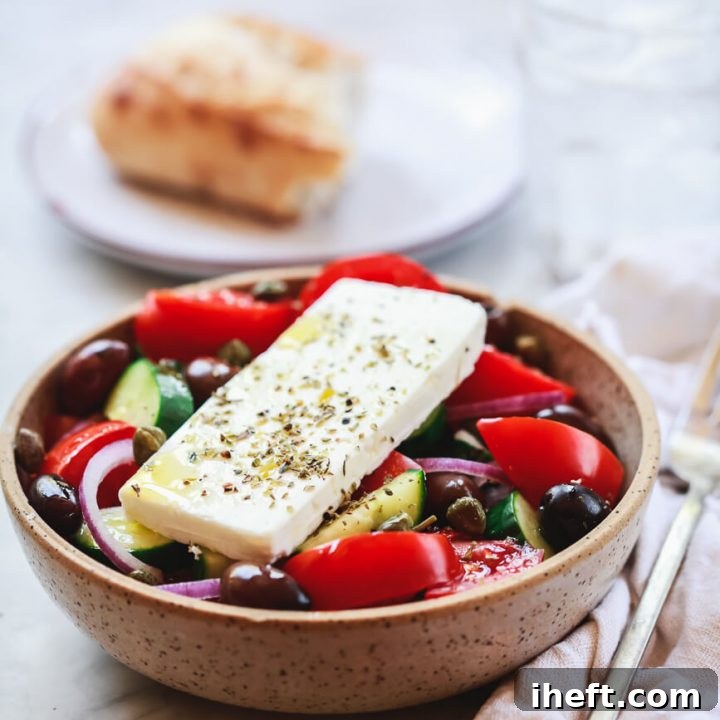
- Feta can be served crumbled or in a slab on top, as pictured here. I prefer the slab, as it allows people to enjoy as much or little as they’d like.
- For a vegan option, try Violife’s “Just Like Feta” or simply omit the cheese.
Nutrition Information:
Yield: 4
Serving Size: 1 bowl
Amount Per Serving:
Calories: 338Total Fat: 29gSaturated Fat: 8gTrans Fat: 0gUnsaturated Fat: 20gCarbohydrates: 15gFiber: 4gSugar: 9gProtein: 8g
Nutrition information is automatically calculated by Nutritionix. I am not a nutritionist and cannot guarantee accuracy. If your health depends on nutrition information, please calculate again with your favorite calculator.