Grandma’s Secret Persimmon Loaf
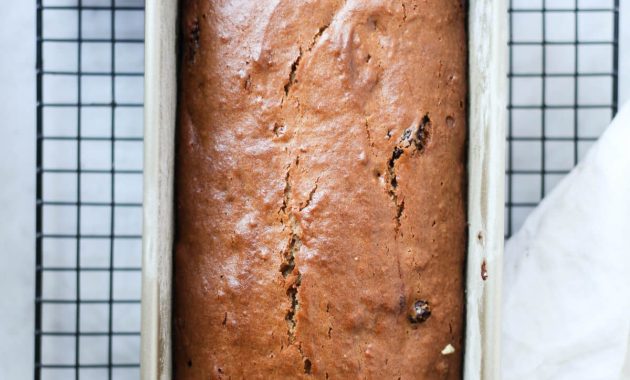
If you’re seeking the quintessential autumn baking experience, look no further than the timeless charm of homemade persimmon bread. This classic spiced quick bread, featuring the unique sweetness of ripe Hachiya persimmons, is a comforting treat that captures the essence of the cooler months. Whether you’re a seasoned baker or just starting, this recipe for Grandma’s Persimmon Bread promises a moist, flavorful loaf that will become a cherished tradition in your home.
As fall transitions into winter, our gardens and markets burst with an abundance of persimmons – both the crisp Fuyu and the softer Hachiya varieties. While Fuyu persimmons are delightful for fresh snacking or adding a sweet crunch to salads, it’s the exceptionally soft, almost jam-like Hachiyas that truly shine in baked goods. Their tender texture and delicate sweetness make them the perfect star for comforting recipes like Persimmon Cookies and, of course, this incredible quick bread.
This particular recipe holds a special place in my heart, passed down from my grandmother who adored baking with these seasonal fruits. She often enjoyed very ripe persimmons straight from their skins, savoring their natural sweetness. It was in her treasured recipe box that I rediscovered this gem, originally featured in the 1979 cookbook, San Francisco a la Carte, by the Junior League of San Francisco. It’s a testament to its enduring appeal that this recipe continues to delight generations.
Persimmon bread is more than just a baked good; it’s an aromatic embrace of autumn. It harmonizes the natural sugars of ripe persimmons with a symphony of warm, inviting spices like cinnamon, nutmeg, and ginger. The result is a wonderfully moist, exquisitely flavorful bread that serves as an ideal accompaniment to your morning coffee, a delightful afternoon tea snack, or a surprisingly light yet satisfying dessert. Its rustic elegance and comforting taste make it a true highlight of the fall and winter baking season.
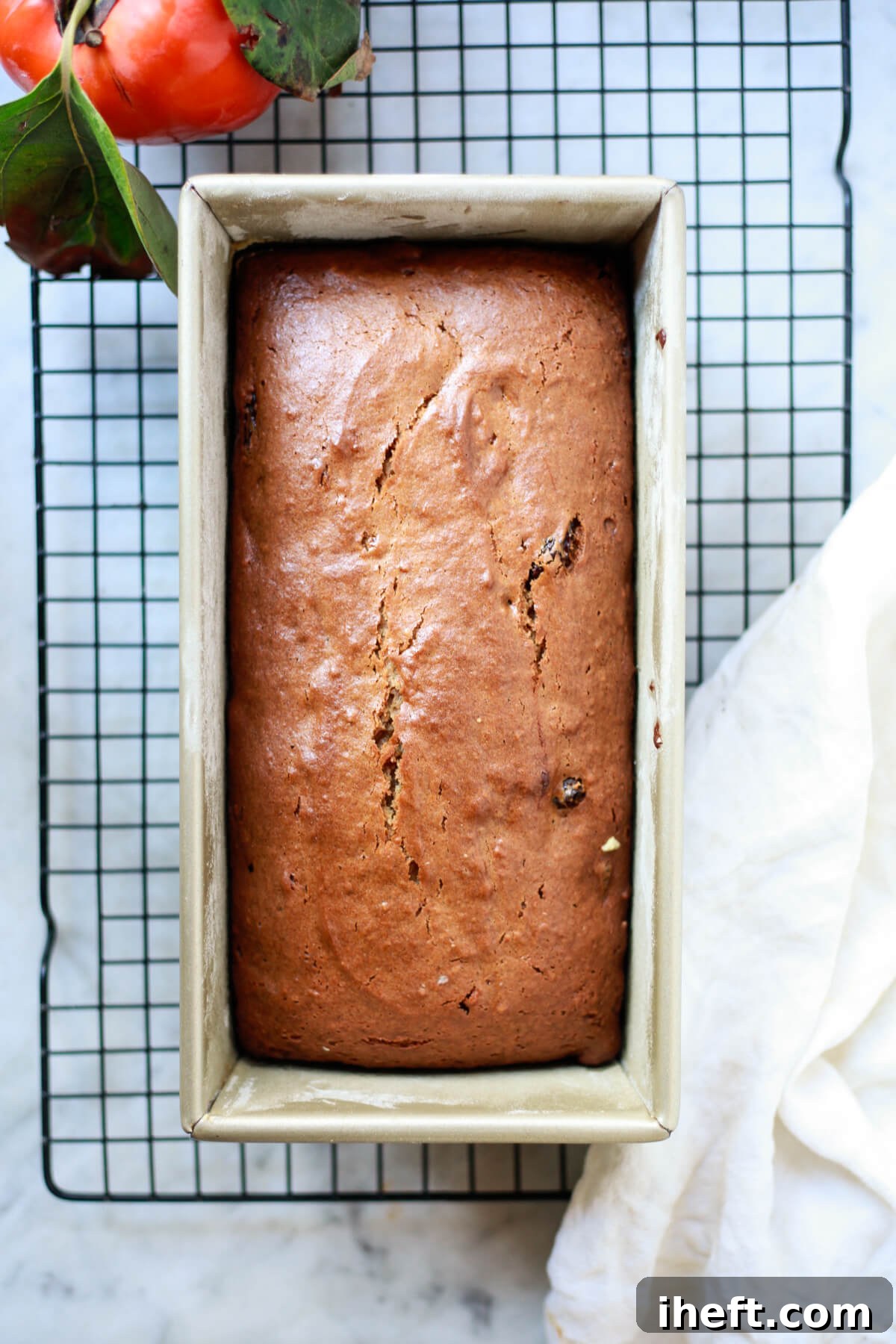
Choosing the Perfect Persimmons for Your Bread
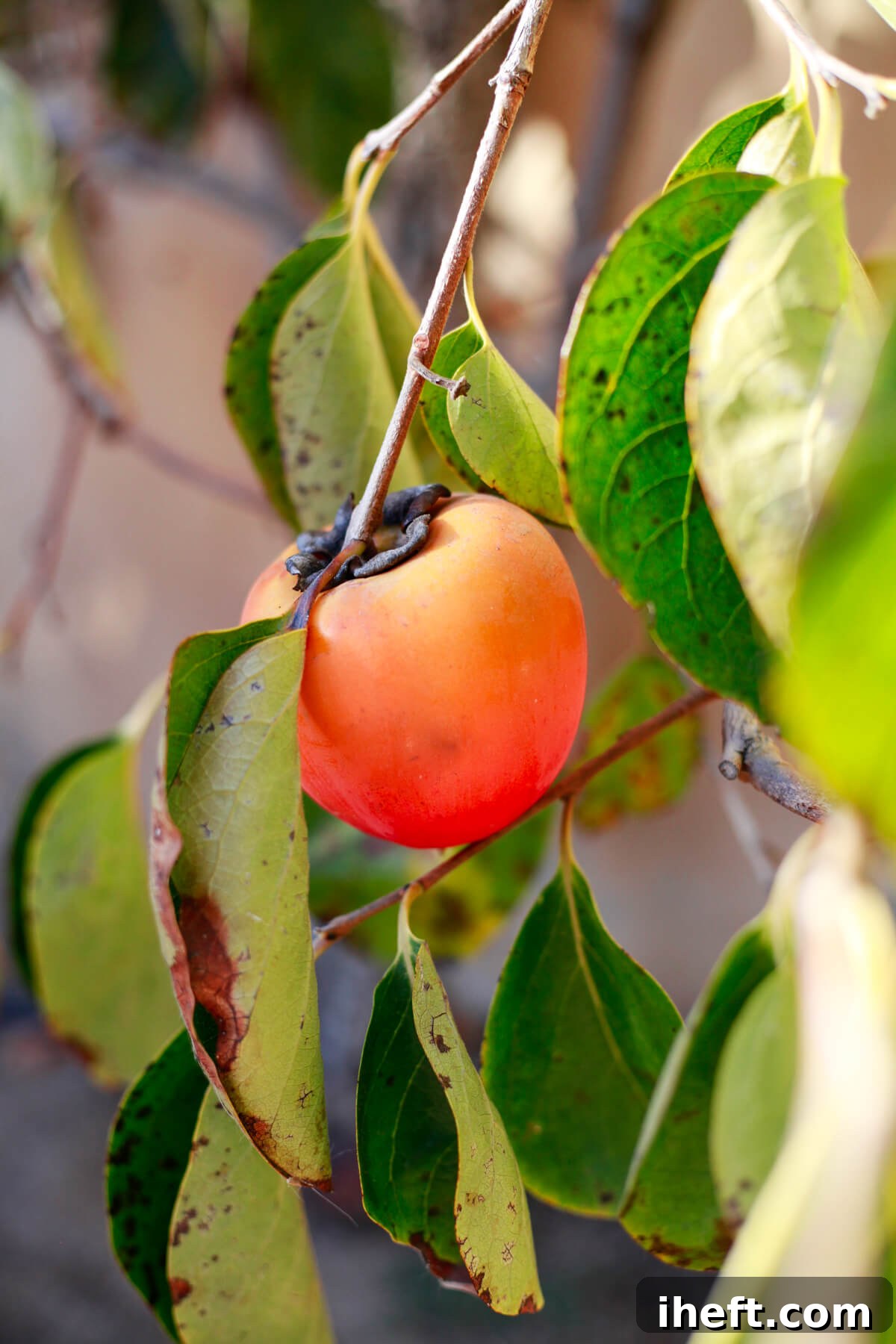
Persimmons are a truly delightful fruit, offering a unique flavor profile that brightens up many dishes. While some varieties can be found year-round in certain regions, they truly come into their own during the cooler autumn and winter months. Their versatility allows them to be enjoyed raw, cooked, or incorporated into a vast array of sweet and savory recipes. If you find yourself fortunate enough to have an abundant harvest of Hachiya persimmons, turning them into this delectable bread is an absolute must. For those looking for other traditional uses, consider trying Hoshigaki, a traditional Japanese method of drying persimmons that yields a wonderfully chewy, sweet treat.
When it comes to baking persimmon bread, the choice of persimmon variety and its ripeness level are paramount. This recipe specifically calls for very ripe Hachiya persimmons. Hachiyas are among the most recognized and cultivated types of persimmons, distinguishable by their large, acorn-like, somewhat pointed shape. Unlike their Fuyu counterparts, Hachiyas contain high levels of tannins when firm and unripe, making them highly astringent and unpalatable. However, once fully ripened, their astringency disappears, leaving behind a wonderfully moist texture and an exquisitely sweet, delicate flavor – qualities that make them ideal for baking and cooking.
Knowing when a Hachiya persimmon is truly ripe is crucial for this recipe’s success. A perfectly ripe Hachiya will boast a deep, rich orange color, almost reddish-orange, and, most importantly, will feel incredibly soft and squishy to the touch. Think of the consistency of a water balloon or a very ripe tomato; it should yield significantly with even gentle pressure. This extreme softness indicates that the fruit’s tannins have fully broken down, allowing its natural sugars and delightful flavor to shine through. Using anything less than perfectly ripe Hachiyas will result in a bread with an unpleasant, chalky taste, so patience is key!
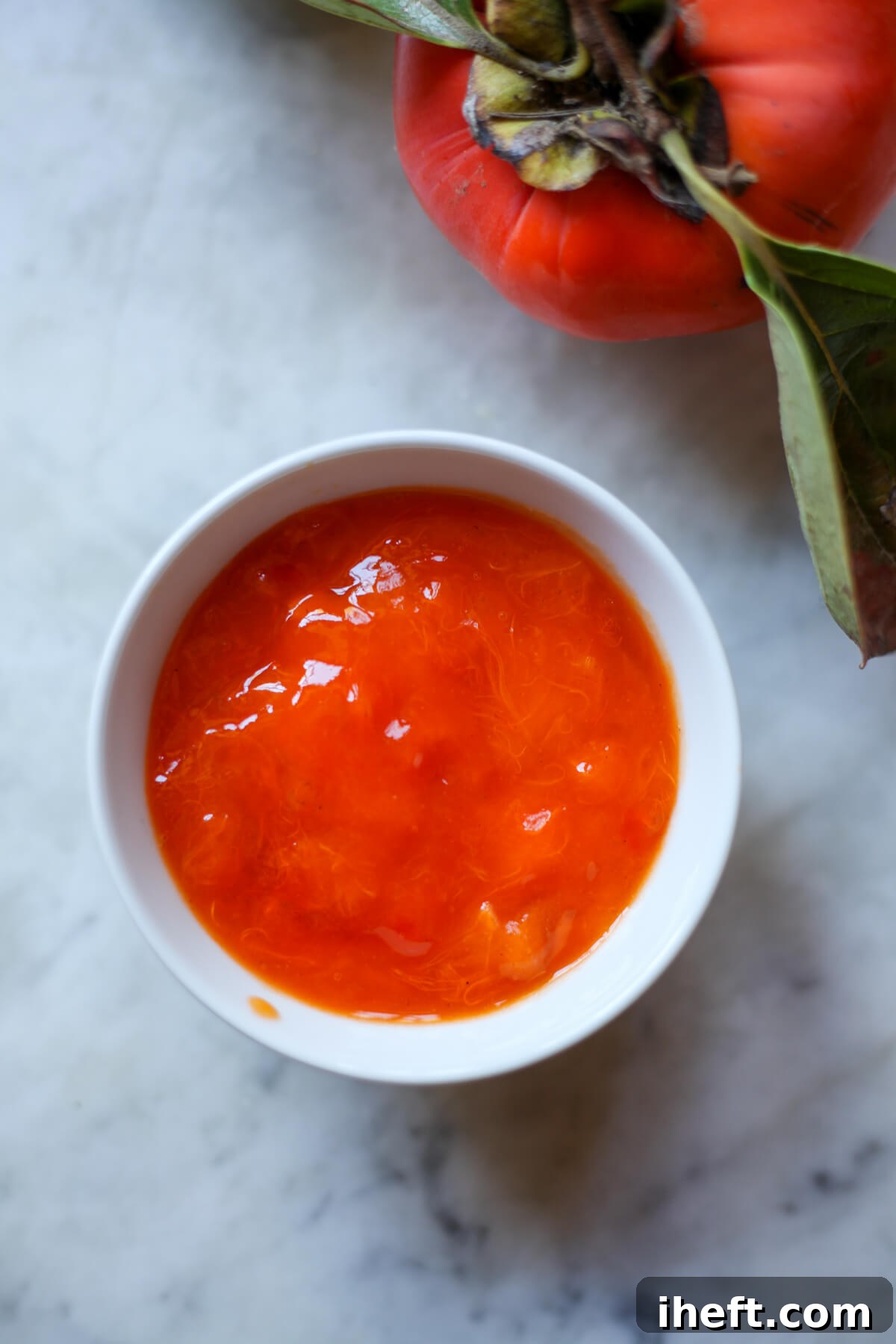
The beauty of using perfectly ripe Hachiya persimmons is that their pulp requires minimal preparation. It’s naturally so soft and smooth that it doesn’t need any blending or mashing; a simple scoop is often enough. The consistency will be almost like a thick applesauce or jam. Should you find yourself with an abundance of this fragrant Hachiya persimmon pulp, don’t let it go to waste! It’s delicious simply eaten plain, stirred into creamy yogurts for a healthy breakfast, or blended into your favorite smoothie for an extra boost of natural sweetness and nutrients.
To extract the glorious pulp from a Hachiya persimmon, first and foremost, ensure the fruit is exceptionally soft and squishy. If it’s firm, leave it on the counter for a few more days until it reaches the desired consistency. Once perfectly ripe, simply cut the persimmon in half lengthwise. Then, with a spoon, scoop out the vibrant orange flesh, discarding the outer skin and any seeds you might encounter. The entire process is quick, easy, and incredibly satisfying, as you’ll be left with the fragrant foundation for your delicious persimmon bread.
Essential Ingredients for the Best Persimmon Bread
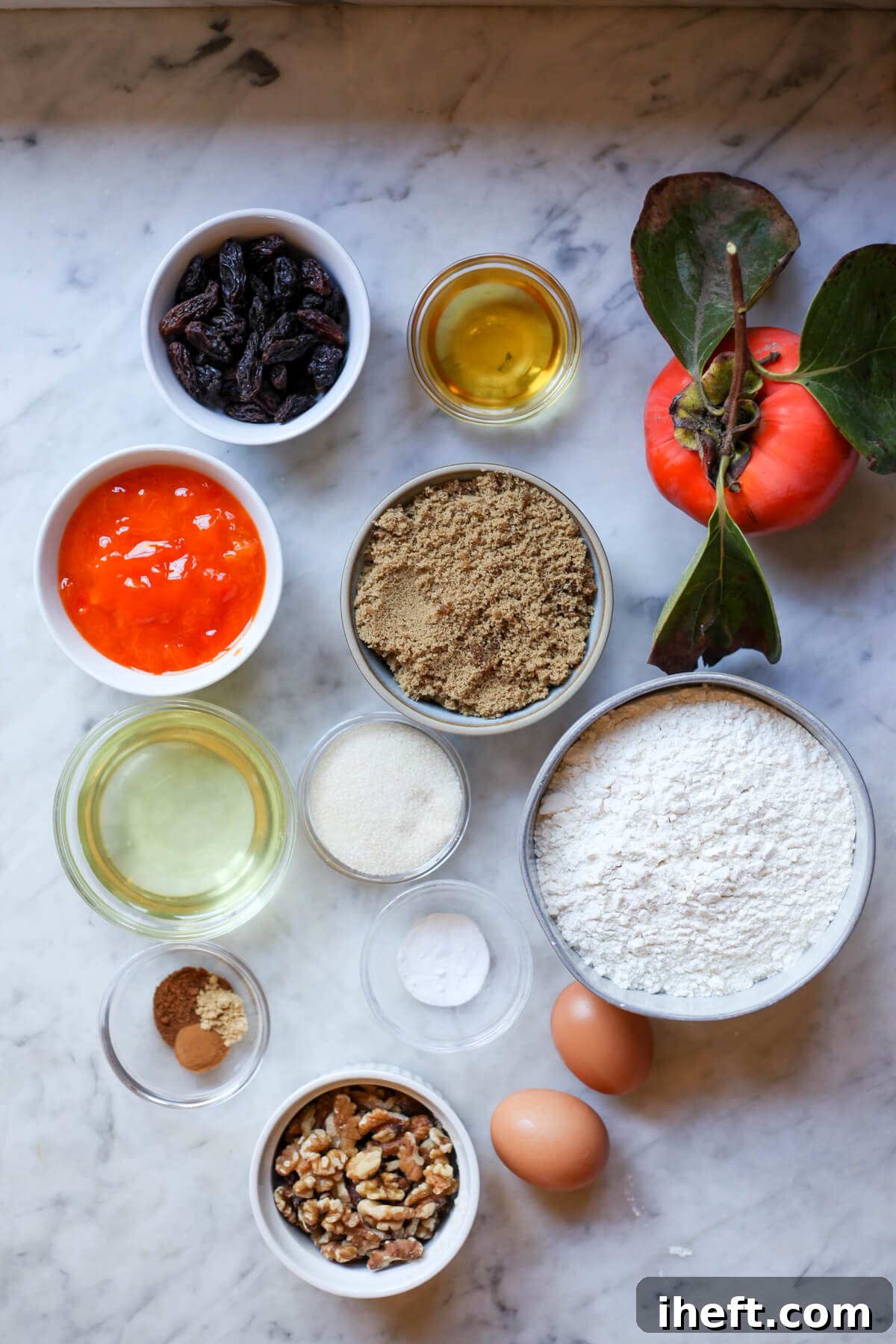
This particular persimmon bread recipe is a classic for a reason, relying on traditional ingredients that come together to create a deeply flavorful and wonderfully moist loaf. Each component plays a crucial role in achieving the perfect balance of sweetness, spice, and texture. Let’s take a closer look at what makes this recipe truly special:
- Persimmon Pulp: Without a doubt, the star of this quick bread. The moist, naturally sweet pulp from very ripe Hachiya persimmons provides the primary flavor and contributes significantly to the bread’s incredible moisture and tender crumb. Ensure your persimmons are perfectly soft for the best results.
- Raisins & Brandy: A classic pairing! Soaking the raisins in brandy (or cognac or bourbon) isn’t just for flavor; it’s a clever technique to rehydrate and plump them up. This ensures they remain juicy and tender throughout the baking process, preventing them from becoming dry and hard. The subtle hint of brandy also adds a sophisticated layer of flavor.
- Dark Brown Sugar: While any brown sugar works, dark brown sugar is traditionally preferred here. Its higher molasses content imparts a richer, deeper caramel-like flavor and contributes to the bread’s beautiful golden-brown hue and moist texture. It adds complexity that white sugar alone cannot.
- White Sugar: A touch of granulated white sugar complements the brown sugar, contributing additional sweetness and helping to achieve the perfect crumb structure. It works in conjunction with brown sugar to ensure the bread is sweet without being cloying.
- Oil: Vegetable oil is specified in the original recipe and is a fantastic choice for quick breads as it provides consistent moisture and a tender crumb. It keeps the bread moist for days. You can certainly substitute with other neutral-flavored oils like canola or grapeseed. For a slight variation, melted and cooled coconut oil can be used, or even melted unsalted butter if you prefer a richer, dairy-forward flavor, though this will slightly alter the classic profile.
- Eggs: Essential for structure and binding, eggs act as an emulsifier, bringing together the wet and dry ingredients. They also add richness and contribute to the bread’s light, airy texture, preventing it from becoming dense. While I haven’t personally tested a vegan adaptation for this specific recipe to honor its traditional roots, rest assured that our Vegan Banana Bread and Vegan Pumpkin Bread recipes are excellent alternatives if you’re looking for plant-based quick bread options.
- All-Purpose Flour: The foundational dry ingredient, all-purpose flour provides the necessary structure for the bread. I recommend sticking to all-purpose flour for this traditional recipe, as its gluten content is crucial for the desired texture. While gluten-free flour blends have come a long way, I haven’t extensively tested this particular recipe with them to guarantee consistent results.
- Baking Soda: This is our primary leavening agent, responsible for the bread’s rise and light texture. When combined with the acidic elements in the persimmon pulp and brown sugar, baking soda creates carbon dioxide bubbles, lifting the batter and resulting in a beautifully airy crumb.
- Spices: The warm, aromatic trio of cinnamon, nutmeg, and ground ginger is absolutely essential. These spices are the perfect complement to the persimmon’s earthy sweetness, creating that signature cozy, autumnal flavor profile that makes this bread so irresistible. Feel free to adjust the quantities slightly to suit your personal preference.
- Salt: A small amount of salt is critical not just for seasoning but also for balancing the sweetness and enhancing the overall depth of flavor. It brings all the individual flavors into harmony.
- Walnuts: Nuts add a wonderful textural contrast to the soft, moist bread. Chopped walnuts introduce a satisfying crunch and a slightly earthy, buttery note. If walnuts aren’t your preference, pecans make an equally delicious substitute, offering a similar crunch and flavor.
Step-by-Step Guide: How to Make Irresistible Persimmon Bread
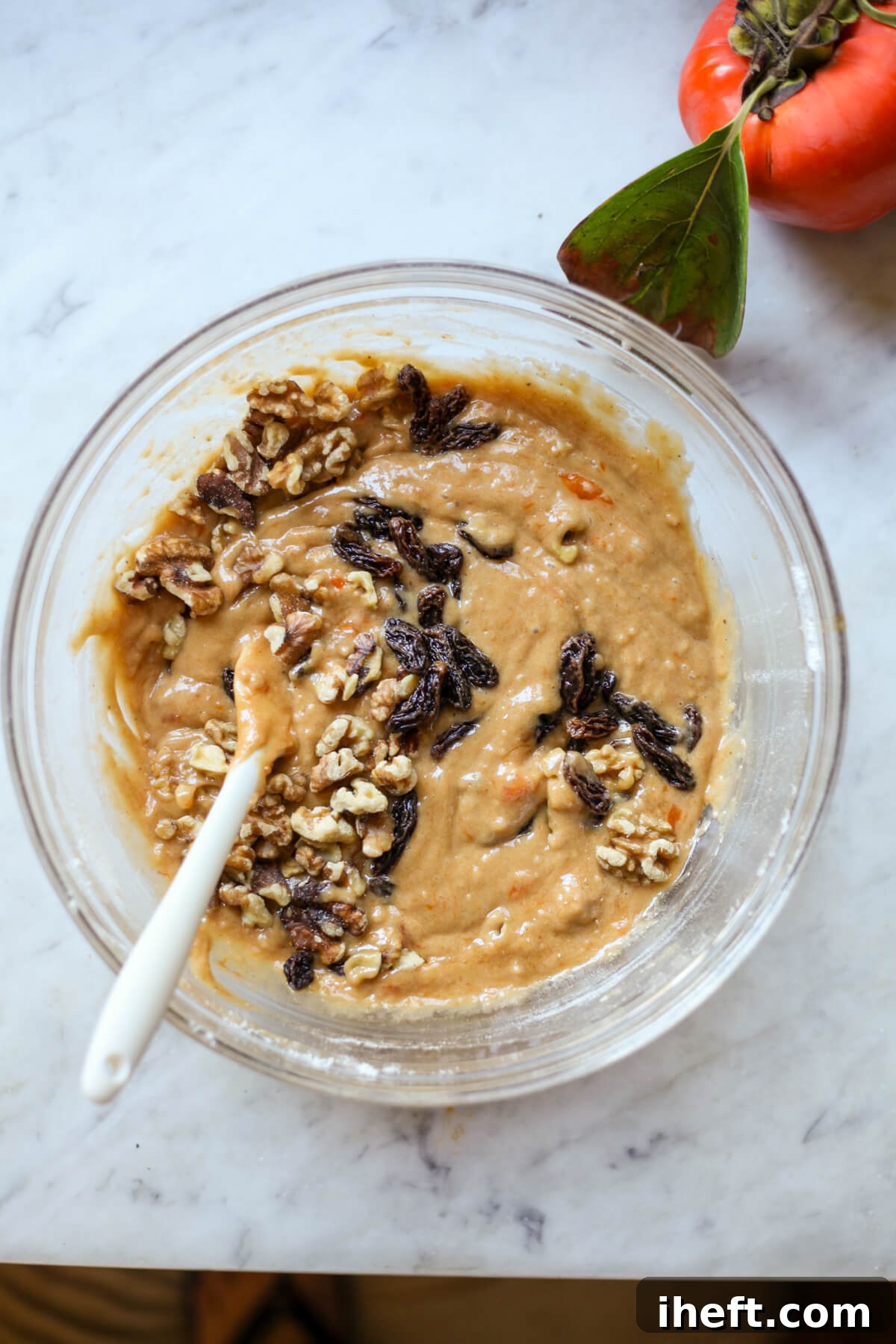
This recipe is designed to produce one generous 8½-inch loaf of truly exceptional persimmon bread. However, it’s worth noting that the original recipe from my grandmother’s cookbook suggested using two smaller 7-inch loaves, which is a fantastic option if you prefer smaller portions or wish to give one away. For those who enjoy sharing edible gifts, using mini loaf pans is another delightful alternative. For context, I often use a reliable Goldtouch Pro loaf pan from Williams-Sonoma, which consistently delivers excellent results.
- The journey to perfect persimmon bread begins with proper preparation. First, preheat your oven to 350°F (175°C) to ensure it reaches the correct temperature before the batter goes in, guaranteeing an even bake. Simultaneously, prepare your loaf pan (or pans) by thoroughly coating the interior with baking spray, or by greasing it generously with butter and then dusting it lightly with flour. This crucial step prevents the bread from sticking and ensures a clean release once baked.
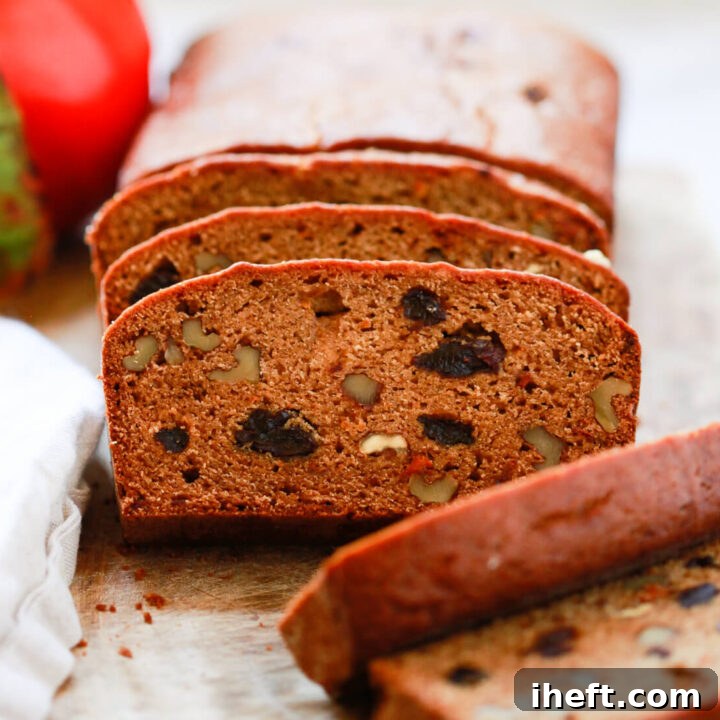
- Next, gather your raisins and place them in a small bowl. Pour the brandy (or cognac/bourbon) over them. This simple act allows the raisins to rehydrate and plump up, becoming wonderfully juicy and flavorful, rather than dry and hard in the finished bread. Set them aside to soak while you prepare the other ingredients.
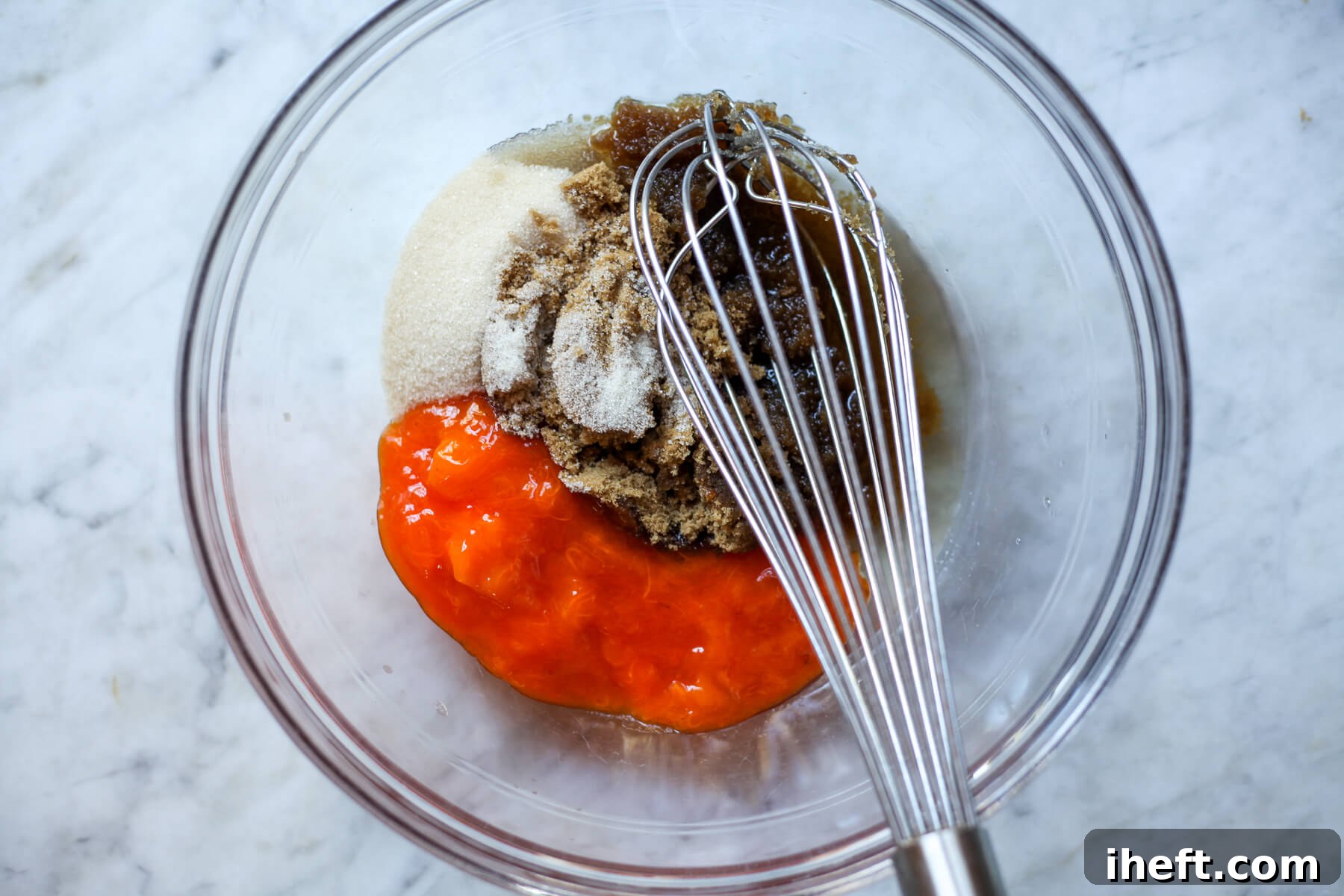
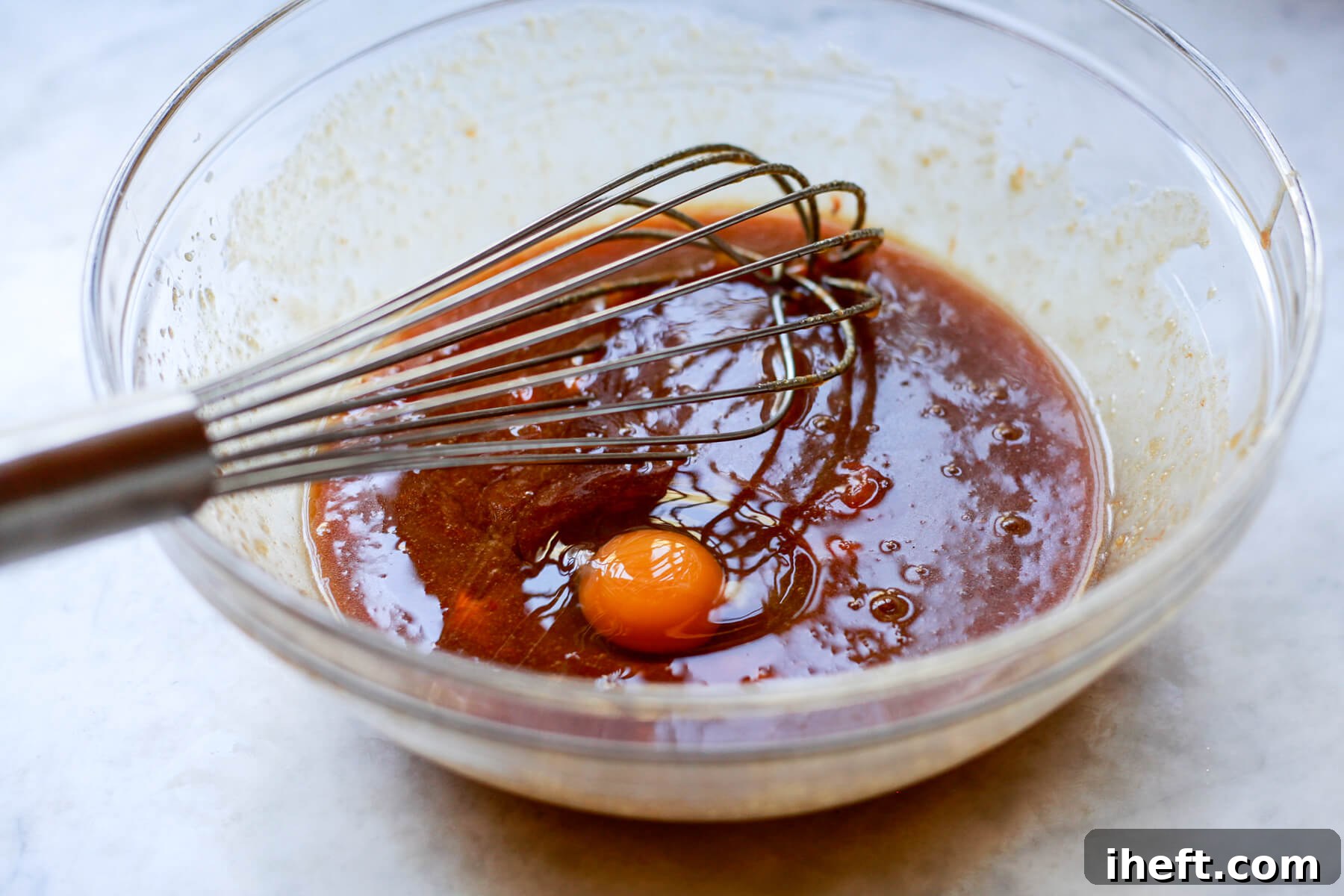
- In a spacious mixing bowl, combine your wet ingredients. Whisk together the fragrant persimmon pulp (puree), vegetable oil, both dark brown sugar and white sugar, and the large eggs. Beat them until they are thoroughly combined and the mixture appears smooth and well emulsified. This forms the flavorful liquid base of your bread.
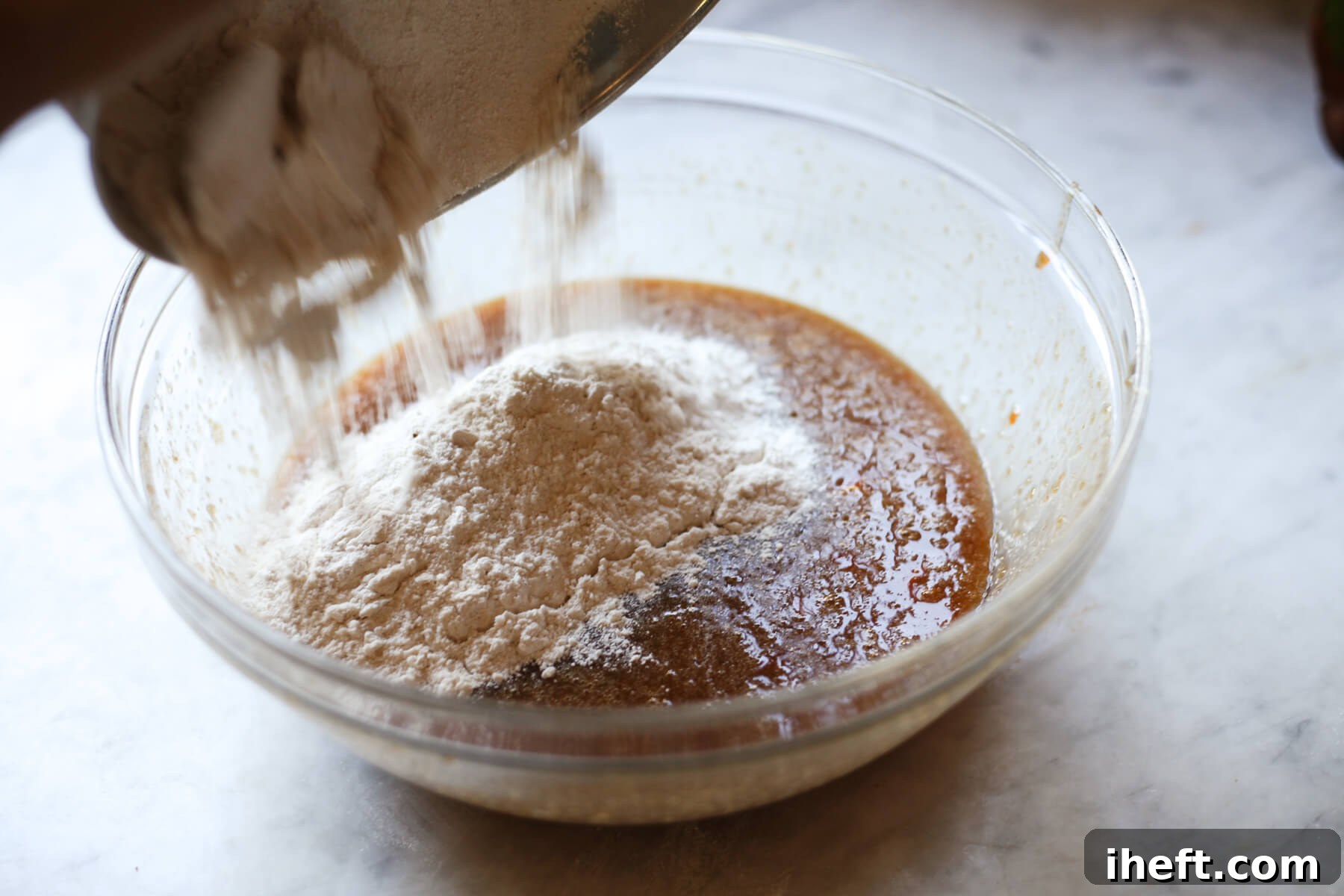
- To ensure the dry ingredients are uniformly distributed and lump-free, it’s best practice to sift them together in a separate bowl. Combine the all-purpose flour, baking soda, salt, cinnamon, nutmeg, and ground ginger. While sifting is ideal, I often find that a thorough whisking with a balloon whisk achieves a similar level of blending, saving a step without compromising the outcome.
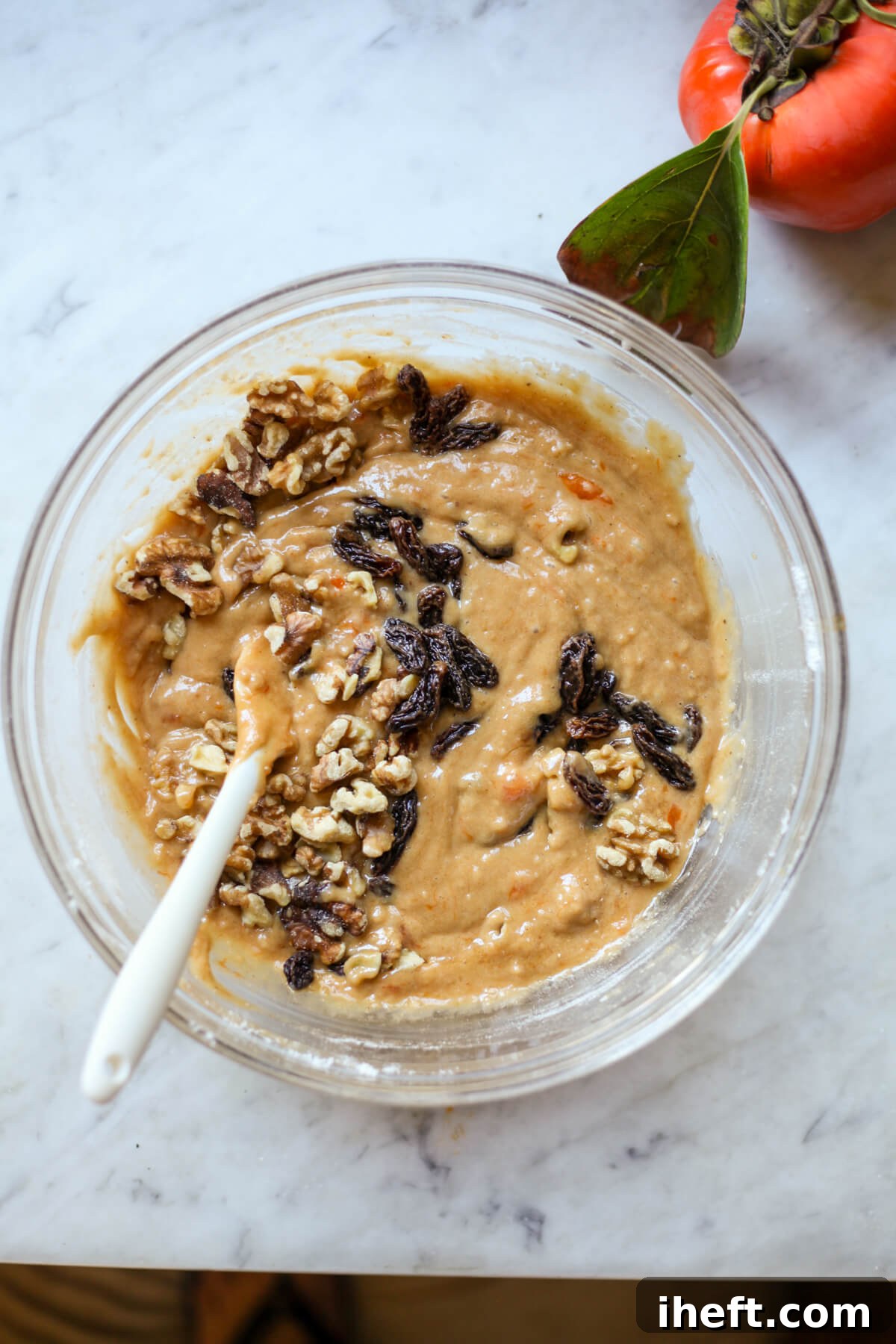
- Following the classic quick bread method, gently add the dry ingredient mixture to the wet ingredients. Mix just until combined; be careful not to overmix, as this can develop the gluten too much, leading to a tough bread. Once the dry ingredients are just incorporated, fold in the plumped raisins (drained of any excess brandy) and the chopped walnuts.
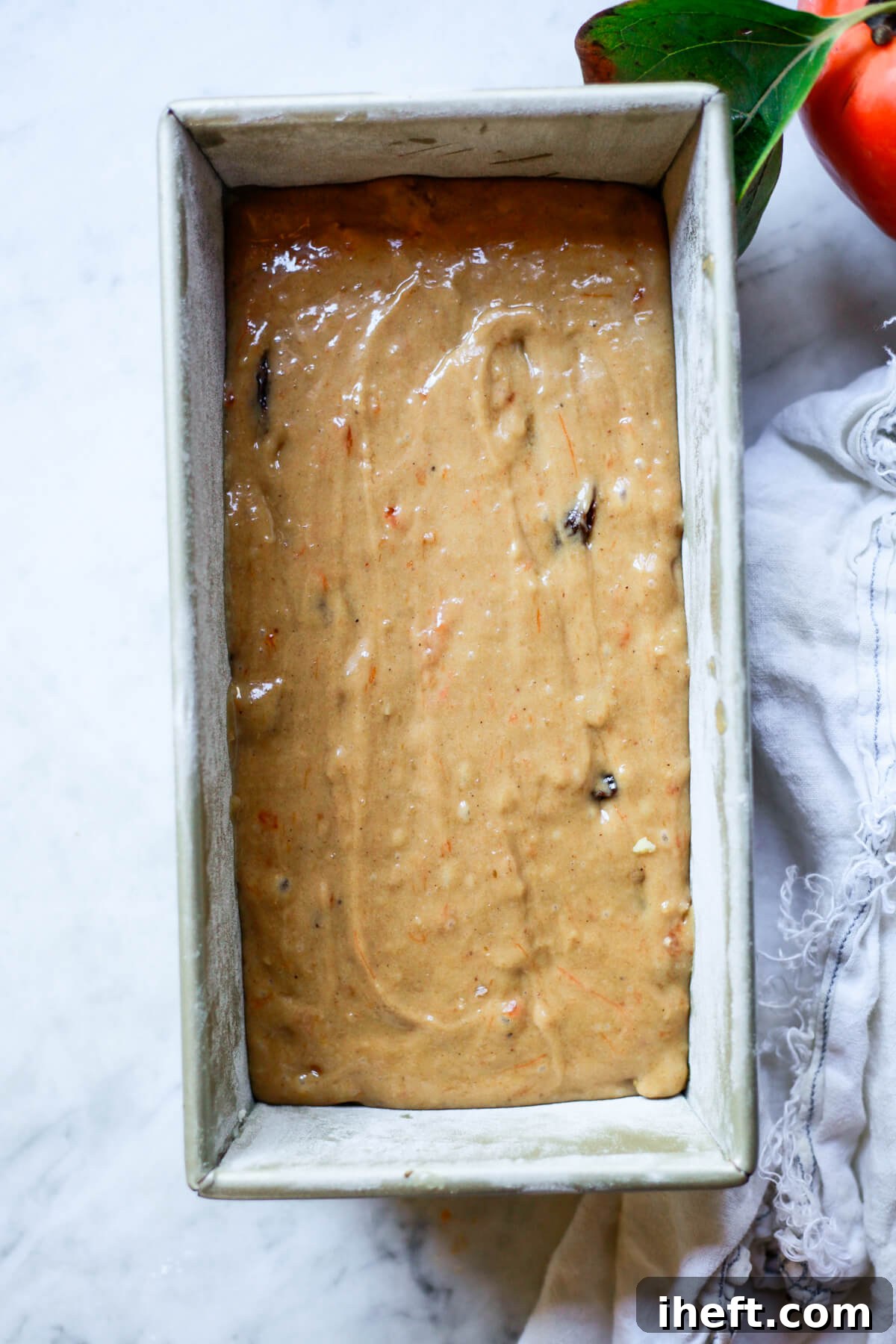
- Now your luscious persimmon bread batter is ready! Carefully pour it into your prepared loaf pan. If you’re using smaller pans, divide the batter evenly among them. Smooth the top gently with a spatula.
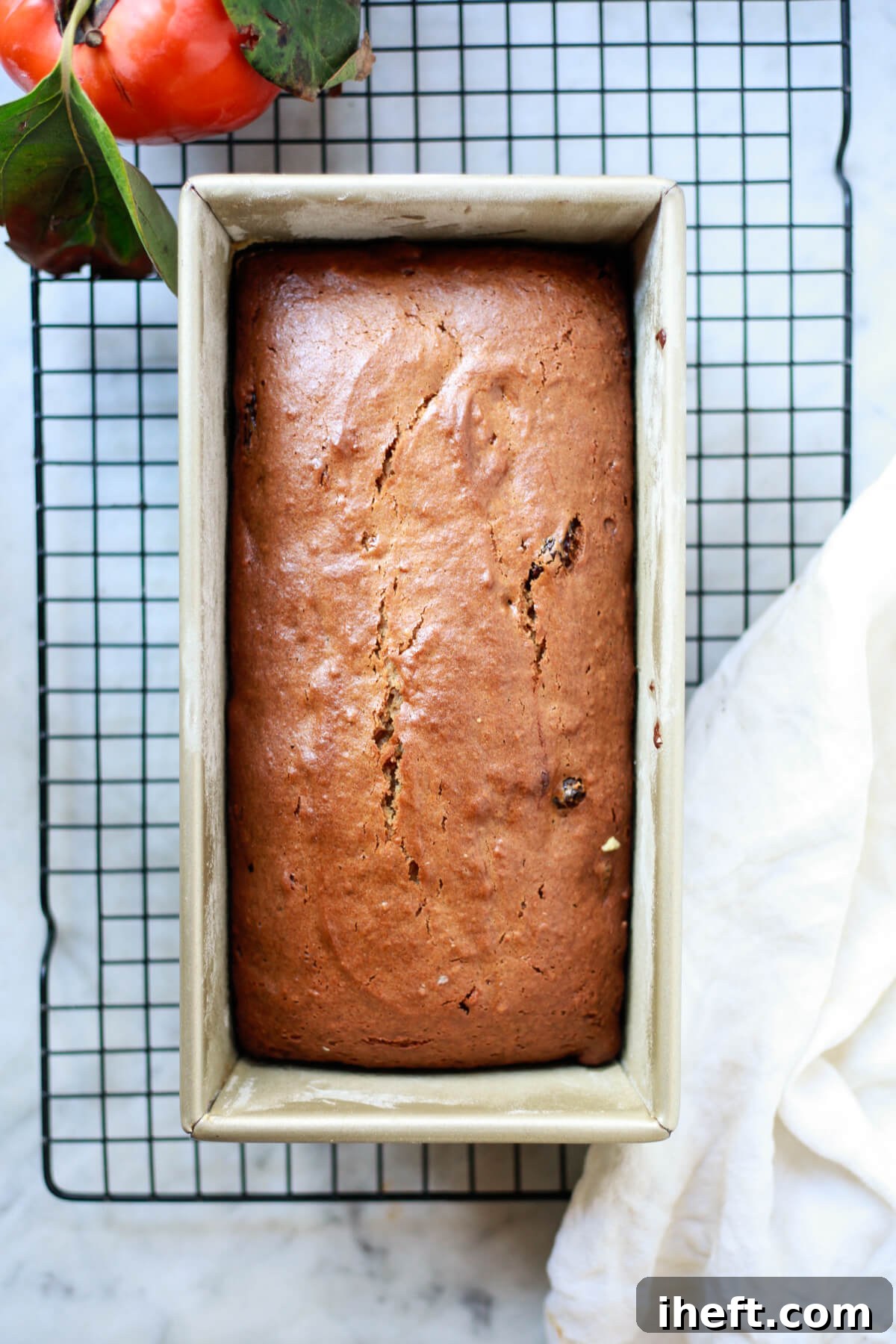
- Place the loaf pan in your preheated oven and bake for approximately 1 hour. Baking times can vary slightly depending on your oven, so keep an eye on it. The bread is perfectly baked when a wooden skewer or toothpick inserted into the very center comes out clean, with no wet batter clinging to it. The crust should be a beautiful golden brown.
- Once baked, carefully remove the loaf pan from the oven. Allow the bread to cool in the pan for about 10-15 minutes before carefully inverting it onto a wire cooling rack. This allows the bread to set properly and prevents it from becoming soggy.
- Allow the persimmon bread to cool completely on the wire rack before slicing. Patience is key here, as slicing hot quick bread can result in a crumbly texture.
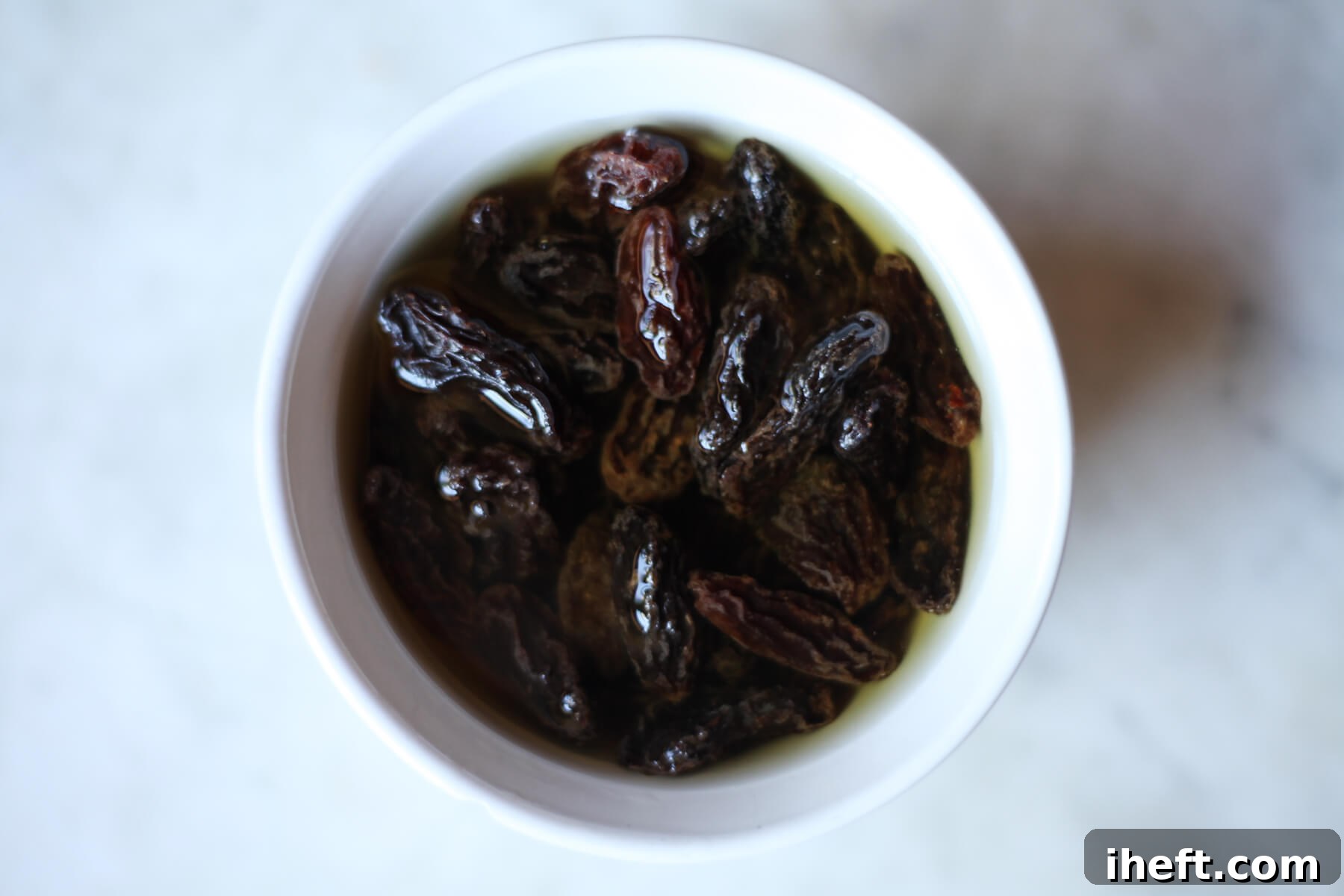
- Once completely cool, slice your magnificent persimmon bread and serve it as a comforting breakfast alongside your favorite hot beverage, a delightful tea-time snack, or a simple yet satisfying dessert. It’s truly a versatile treat for any time of day.
Frequently Asked Questions & Expert Tips for Persimmon Bread
What does persimmon bread taste like?
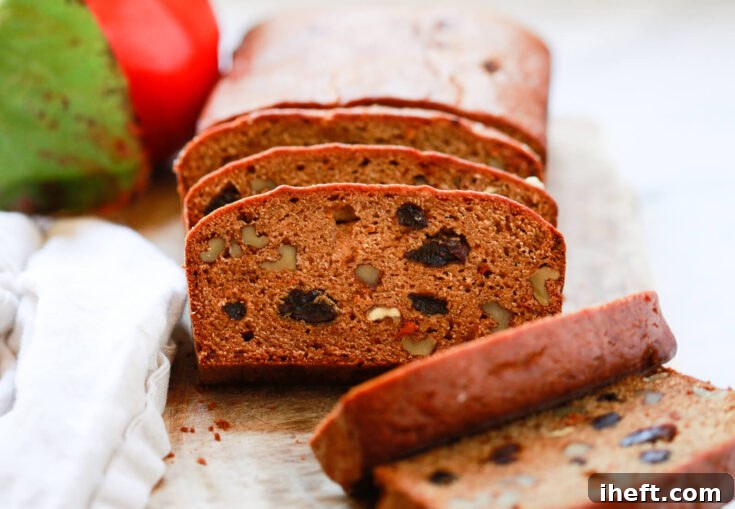
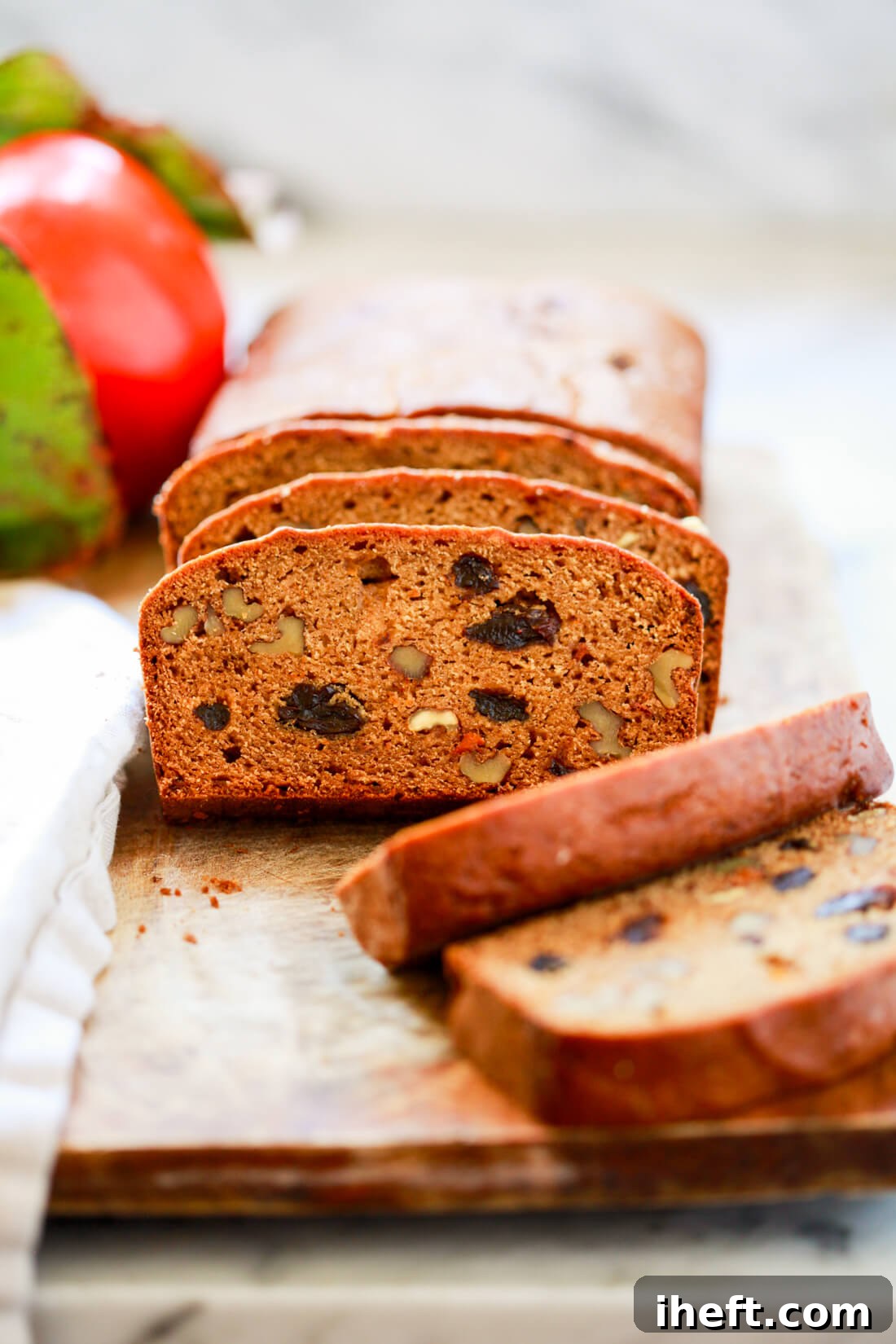
Persimmon bread offers a unique and delightful flavor profile. The persimmons themselves contribute an earthy sweetness, reminiscent of mild pumpkin or sweet potato, but with their own distinct fruity undertone. This natural sweetness is beautifully complemented by a medley of warm spices like cinnamon, nutmeg, and ginger, which infuse the bread with a comforting, autumnal aroma. The texture is incredibly moist and tender, much like a well-made pumpkin or banana nut bread. Each bite is a textural adventure, with juicy, plumped raisins providing bursts of sweetness and crunchy walnuts (or pecans) adding a satisfying counterpoint. It’s sweet, but never overly so, making it a perfectly balanced treat.
How do I store persimmon bread to keep it fresh?
Proper storage is key to maintaining the delightful moisture and flavor of your homemade persimmon bread. Quick breads, like this one, can be stored at room temperature for up to 3-4 days. To do so, simply wrap the cooled loaf tightly in plastic wrap or place it in an airtight container to prevent it from drying out. If you wish to extend its freshness, you can store persimmon bread in the refrigerator for up to 5-7 days. Again, ensure it’s well-wrapped in plastic wrap or kept in an airtight container to protect it from absorbing refrigerator odors and to retain its moisture.
Can you freeze persimmon bread?
Absolutely! Persimmon bread freezes beautifully, making it an excellent candidate for meal prep or enjoying a taste of fall long after the season ends. For the best flavor and texture, you can freeze persimmon bread for up to two months. To freeze, ensure your bread has cooled completely to room temperature. Then, wrap the entire loaf (or individual slices for convenient thawing) tightly in a layer of plastic wrap, followed by a second layer of aluminum foil or placed into a freezer-safe bag. This double layer helps prevent freezer burn.
To thaw, simply remove the frozen persimmon bread from the freezer and leave it wrapped at room temperature overnight. By morning, it should be perfectly thawed and ready to enjoy, tasting almost as fresh as the day it was baked! You can also gently warm individual slices in the microwave or a toaster oven for a “freshly baked” experience.
Are there any variations I can try with this persimmon bread recipe?
While this persimmon bread recipe is a classic and wonderful as is, there are several ways to customize it to your liking. The traditional ingredients include walnuts and raisins, but feel free to experiment!
- Nuts: Instead of walnuts, consider using chopped pecans for a slightly different flavor profile. Almonds or even a mix of nuts would also be delicious.
- Dried Fruits: Beyond raisins, you could incorporate other dried fruits like chopped dried cranberries, golden raisins, or even finely diced dried apricots for varying sweetness and chewiness.
- Fresh Add-ins: For a burst of tartness, fresh cranberries would be a fantastic addition, especially around the holidays. Grated orange or lemon zest could also brighten the flavor.
- Spices: If you enjoy a stronger spice presence, a pinch of allspice or cloves could be added to the existing cinnamon, nutmeg, and ginger blend.
- Chocolate: For a truly decadent twist, stir in a handful of chocolate chips (milk, semi-sweet, or dark) with the nuts and raisins.
- Toppings/Glazes: A simple dusting of powdered sugar, a drizzle of lemon glaze (powdered sugar mixed with lemon juice), or even a cream cheese frosting would elevate this bread to dessert status.
It’s important to note that I have not extensively tested gluten-free or vegan versions of this specific recipe, as my intention was to honor my grandmother’s traditional method. However, based on my experience with similar quick bread recipes, it should work quite well with a cup-for-cup gluten-free all-purpose baking flour blend if you need a gluten-free option. For vegan adaptations, you would likely need to explore egg substitutes (like flax eggs) and potentially use a plant-based oil if butter were to be considered. Remember that any substitutions may alter the final texture and flavor slightly.
Grandma’s Persimmon Bread
This cherished recipe from my grandmother features traditional persimmon bread, crafted with ripe Hachiya persimmon pulp, rich brown sugar, and a blend of warm spices. It yields one generous loaf, but feel free to double the recipe to make two large loaves or four smaller ones, perfect for sharing.
Ingredients
- 1/2 cup seedless raisins
- 1/3 cup brandy, cognac, or bourbon
- 1 cup dark brown sugar, packed
- 1/4 cup white sugar
- 1 cup ripe persimmon pulp (from about 2 large, very squishy Hachiya persimmons)
- 1/2 cup vegetable oil
- 2 large eggs
- 2 cups all-purpose flour
- 1 teaspoon baking soda
- 1/4 teaspoon salt
- 1/2 teaspoon cinnamon
- 1/2 teaspoon nutmeg
- 1/4 teaspoon ground ginger
- 1/2 cup chopped walnuts
- Butter and flour for the pan
Instructions
- Preheat the oven to 350°F (175°C). Lightly butter and flour an 8½-inch loaf pan, ensuring all surfaces are covered.
- In a small bowl, pour the brandy over the raisins and set aside to plump for at least 15 minutes.

- In a large mixing bowl, whisk together both the dark brown sugar and white sugar with the ripe persimmon pulp and vegetable oil until well combined.
- Beat in the eggs, adding them one at a time and mixing well after each addition, until fully incorporated into the wet mixture.
- In a separate bowl, sift together the all-purpose flour, baking soda, salt, cinnamon, nutmeg, and ground ginger. Add this dry mixture gradually to the wet mixture, stirring gently until just combined. Be careful not to overmix.
- Fold in the plumped raisins (drained) and the chopped walnuts until evenly distributed throughout the batter.
- Pour the persimmon bread batter into the prepared loaf pan, spreading it evenly.
- Bake for 1 hour, or until a toothpick inserted into the center of the loaf comes out clean. The top should be golden brown and the edges set.
- Allow the bread to cool in the pan on a wire rack for 10-15 minutes before carefully removing it and letting it cool completely on the rack.
- Once fully cooled, slice and serve this delicious persimmon bread for breakfast, with tea, as a snack, or as a comforting dessert.
Nutrition Information:
Amount Per Serving:
Serving Size: 1 slice
Calories: 210
© Marina Delio
Category: Quick Bread