Golden Daikon Roll
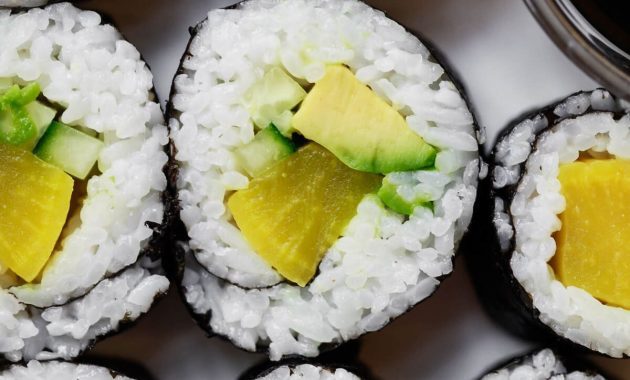
Have you ever glanced at a sushi menu and found yourself intrigued by the “Oshinko Roll,” wondering about this distinct Japanese delicacy? You’re not alone! This comprehensive guide will unveil everything you need to know about oshinko, a beloved ingredient in Japanese cuisine, and provide a simple, step-by-step method to create your very own authentic oshinko maki right in your kitchen.
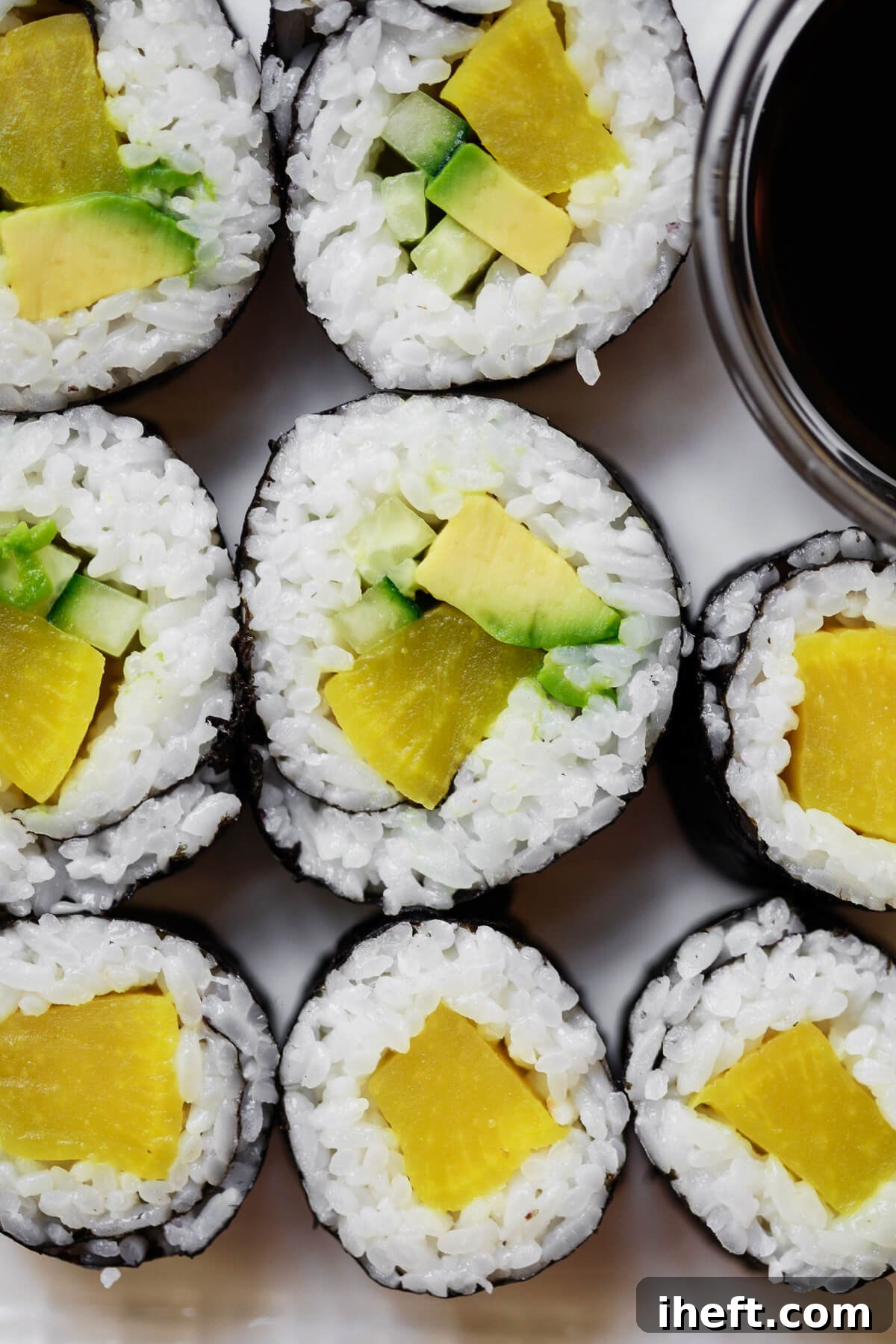
Our own fascination with oshinko began during a memorable trip to Hawaii, where we stumbled upon a charming sushi spot called Hawaii Sushi. We often gravitate towards fresh, vibrant veggie rolls like avocado and cucumber maki. It was there that we encountered the Oshinko Roll, a vegetarian option less familiar to us, yet utterly captivating. Its unique flavor and delightful crunch immediately sparked our curiosity.
Realizing that many fellow food enthusiasts might share this curiosity about oshinko and its role in Japanese cuisine, we embarked on a culinary quest. Our journey led us to local Asian markets, where we delved deep into understanding this ingredient, from its origins to its preparation. Now, we’re excited to share all our findings with you, ensuring you can confidently explore and enjoy this wonderful component of Japanese gastronomy.
What is Oshinko? Unveiling the Delight of Pickled Daikon Radish
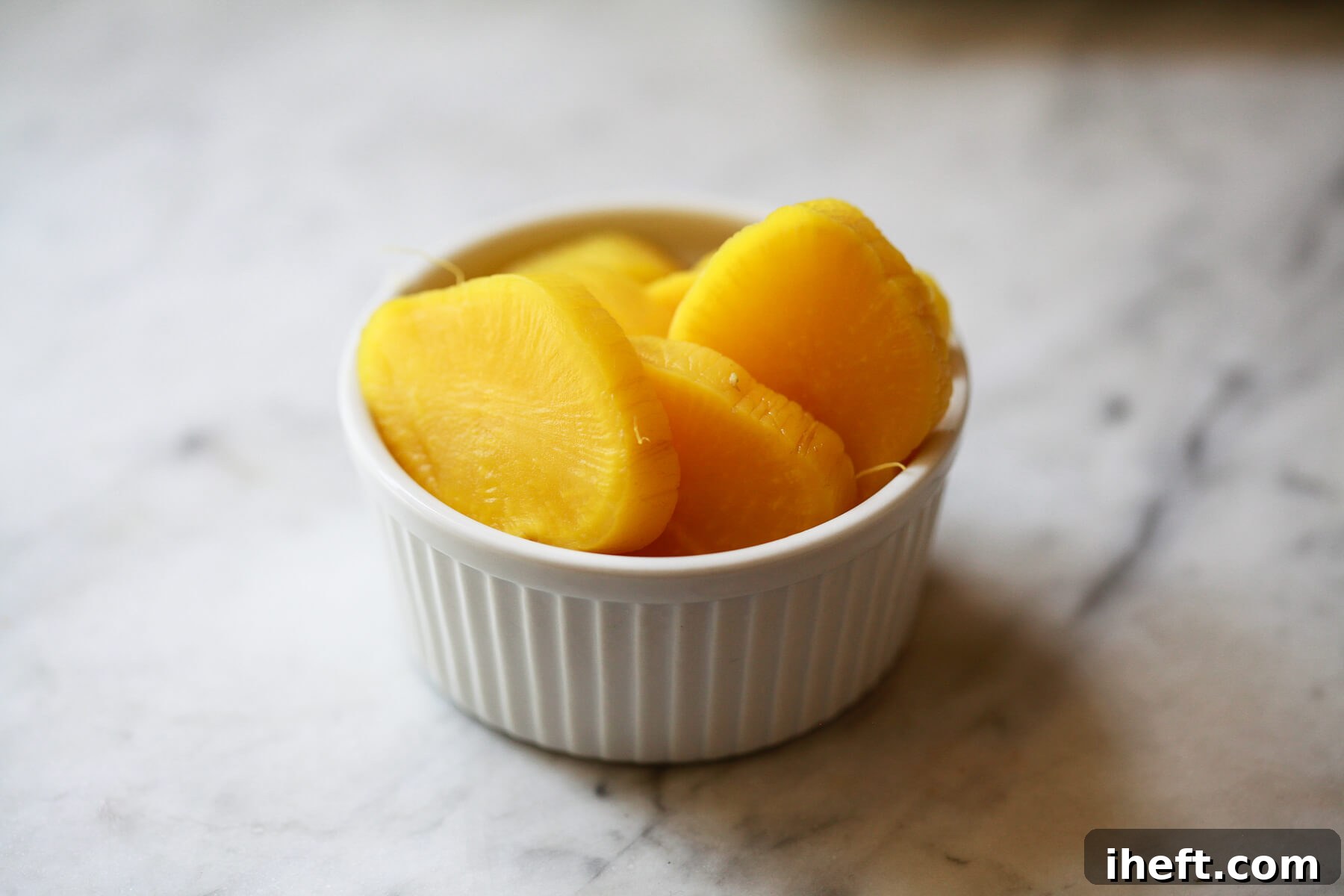
Oshinko, often referred to as takuan in Japanese and Korean cuisine, is a variety of Japanese pickled vegetables, most famously made from Daikon radish. Daikon, also known as white radish or Japanese radish, is a root vegetable that typically resembles a large, elongated white carrot. It is a staple in various Asian culinary traditions, celebrated for its crisp texture and mild flavor profile.
The Daikon Radish: A Closer Look
Daikon radish is a remarkably versatile vegetable. Unlike its peppery European counterparts, Daikon offers a subtly sweet and mildly pungent taste, making it an excellent candidate for pickling. There are several varieties of Daikon, but the most common one used for oshinko is the long, white ‘Aokubi Daikon’. Beyond its culinary uses, Daikon is also known for its nutritional benefits, being rich in Vitamin C, digestive enzymes, and fiber, contributing to a healthy diet.
The Art of Pickling: How Oshinko Gets Its Signature Flavor and Color
While the Daikon radish itself is white, traditional oshinko boasts a distinctive bright yellow color. This vibrant hue is typically achieved by adding yellow food coloring to the pickling brine. However, many modern and homemade versions increasingly opt for natural alternatives like turmeric, which imparts a beautiful golden color along with its own subtle earthy notes and health benefits. The pickling process involves salt, sugar, vinegar, and sometimes other seasonings, which transform the fresh radish into a sweet, tangy, and crunchy treat. This process not only preserves the radish but also imbues it with its characteristic juicy and mild flavor, making it an ideal palate cleanser or an exciting addition to various dishes.
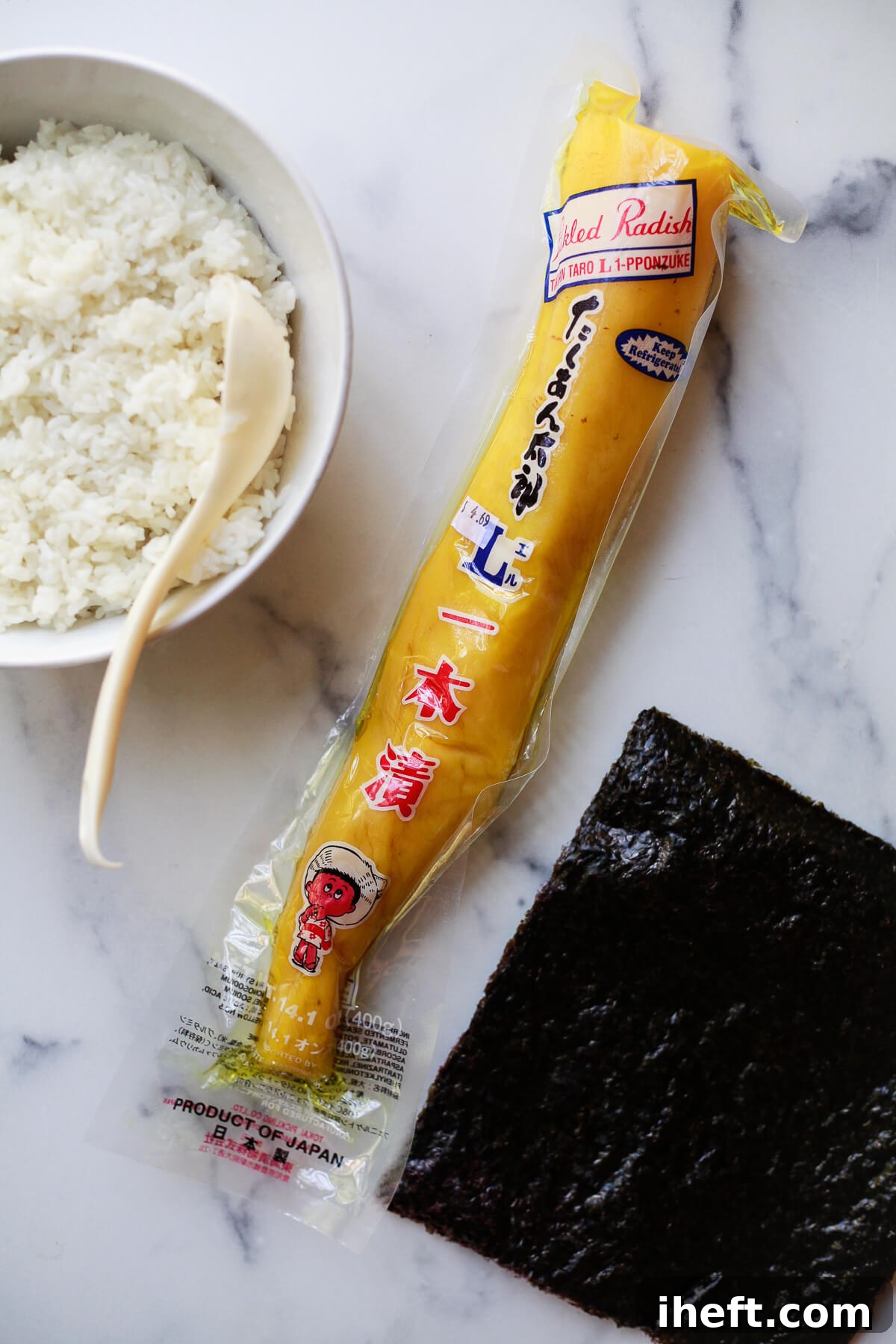
You’ll typically find oshinko packaged individually in plastic, usually in the refrigerated section of Asian grocery stores. It may be explicitly labeled as “oshinko,” “takuan,” or simply “pickled radish.” No matter the name, its bright yellow appearance and satisfying crunch are unmistakable. The taste is a harmonious blend of sweet, mild tang, and a juicy crispness that makes it incredibly addictive. It’s significantly milder and less peppery than many other radish varieties, appealing to a broad range of palates.
Where to Buy Oshinko: Sourcing Your Pickled Daikon
For those in the United States, your best bet for finding oshinko is usually in well-stocked Asian markets. These stores often carry a variety of brands and sizes, sometimes even offering whole pickled Daikon radishes that you can slice yourself. Look for it in the refrigerated aisles, often near other pickled vegetables, tofu, or fresh sushi ingredients.
However, the availability of oshinko is expanding beyond specialty stores. In certain regions, you might be pleasantly surprised to find it in the refrigerated sections of mainstream grocery stores, particularly those with a diverse international food selection. For example, while it might be harder to spot in a general grocery store in Santa Barbara, CA, we’ve noticed its ready availability in many larger supermarkets on Oahu, reflecting local demand and culinary diversity.
Making Your Own Oshinko: A Healthier and Customizable Option
If pickled Daikon remains elusive in your local stores, or if you prefer to have complete control over your ingredients, making oshinko at home is an excellent alternative. Not only can it be healthier – allowing you to regulate sugar and salt content – but it often results in a fresher, more personalized flavor. The process typically involves thinly slicing fresh Daikon radish, then brining it in a mixture of rice vinegar, sugar, salt, and water. For that characteristic yellow hue, we highly recommend using natural alternatives like turmeric powder instead of artificial food dyes. Turmeric offers a beautiful golden color and adds a subtle, earthy depth of flavor. There are many simple recipes available online that guide you through this rewarding process, ensuring you can enjoy homemade oshinko tailored to your taste.
Oshinko Maki (Sushi Roll): Crafting the Perfect Vegetarian Sushi
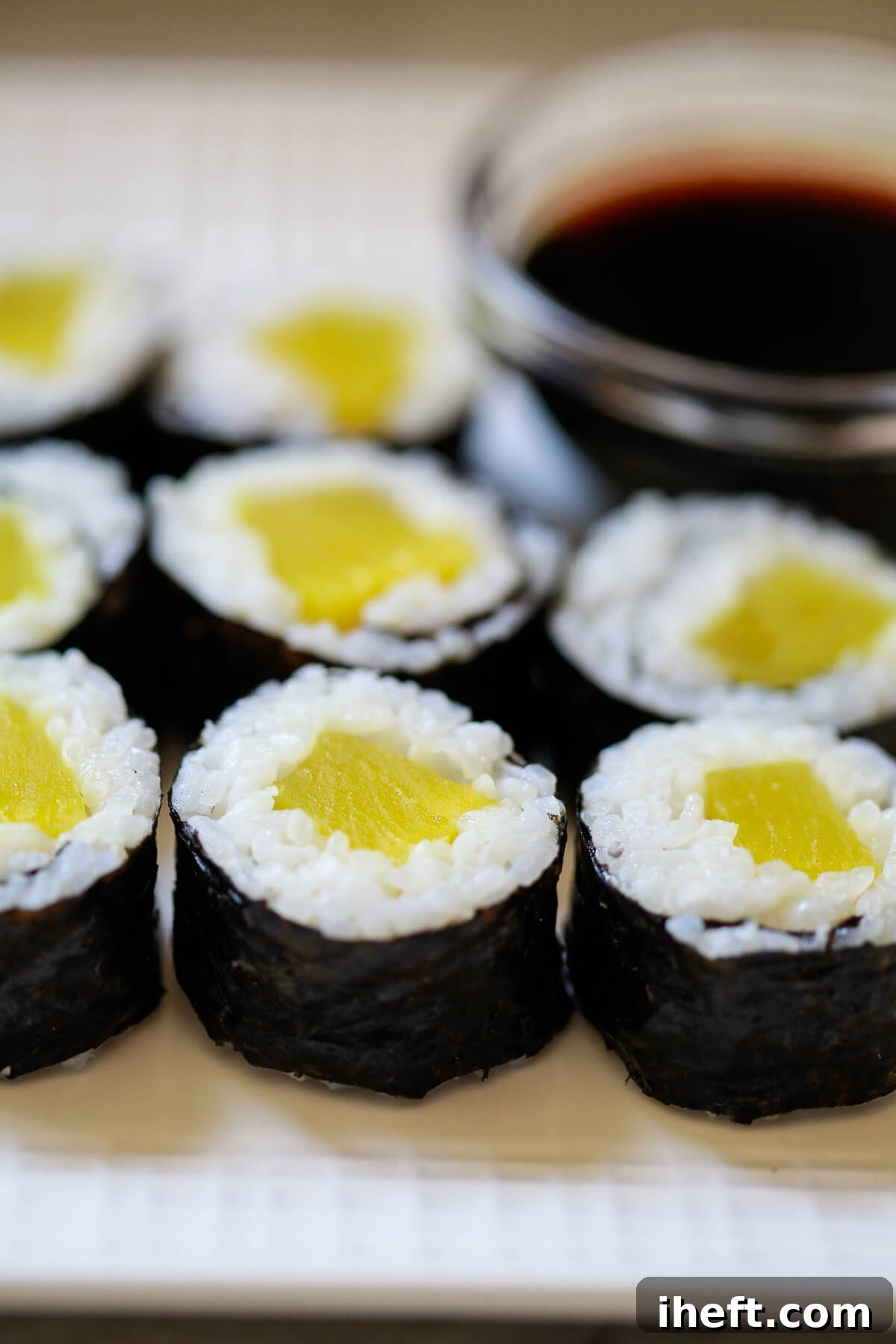
Pickled Daikon is incredibly versatile. It can be enjoyed simply as a snack on its own, adding a refreshing crunch to salads, or serving as a delightful side dish alongside traditional Japanese meals. However, one of its most popular and beloved applications is as a filling in sushi rolls, known as oshinko maki. This makes for a wonderfully fun and straightforward vegetarian sushi option that requires just a few key ingredients and minimal effort.
The Simplicity and Appeal of Oshinko Maki
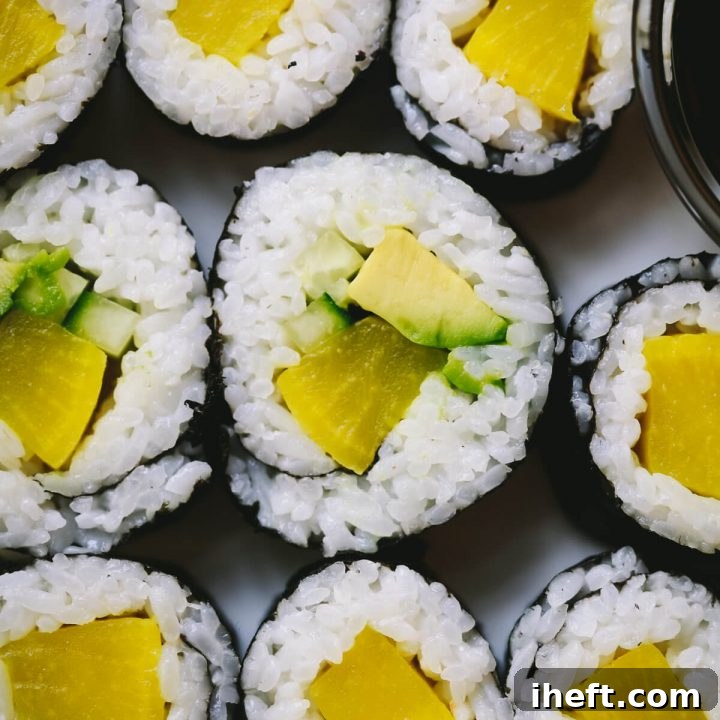
To create a classic oshinko roll, you’ll primarily need three components: perfectly seasoned sushi rice, sheets of nori (dried seaweed), and, of course, the star ingredient—oshinko. The crisp, tangy, and sweet profile of the pickled radish provides a fantastic contrast to the soft, slightly vinegared sushi rice, making each bite an experience in texture and flavor. Its simplicity is part of its charm, allowing the unique taste of the oshinko to shine through. You could even adapt oshinko to make vegan Nigiri, placing a thin slice atop a small bed of rice.
Elevating Your Oshinko Roll: Wonderful Additions
While many sushi restaurants offer oshinko rolls with pickled radish as the sole filling, don’t hesitate to experiment with additional vegetables to enhance the experience. Our absolute favorite versions often incorporate other fresh, complementary ingredients. Finely shredded carrots add a touch of sweetness and another layer of crunch. Creamy avocado provides a rich, buttery counterpoint, while crisp cucumber offers a cooling and refreshing element. These additions not only elevate the flavor profile but also contribute to a more visually appealing and nutritionally robust roll.
If you’re a fan of veggie sushi, explore beyond oshinko! Consider our comprehensive Vegan Sushi Recipe for a broader range of plant-based options, or try this generously filled Veggie Sushi Burrito, often paired deliciously with a side of Yum Yum Sauce. Other fantastic vegetarian sushi fillings include delicate Enoki Mushrooms, offering a unique texture. And for those who enjoy seafood, traditional options like masago can also be incorporated into various rolls, though they wouldn’t be part of a vegetarian oshinko maki.
Making sushi at home, especially a straightforward roll like oshinko maki, is a rewarding experience. It allows for creative freedom and ensures you’re enjoying fresh, high-quality ingredients. With a little practice, you’ll be rolling perfect sushi in no time, impressing your friends and family with your culinary skills.
Oshinko Roll Recipe
Yield: about 5 servings
Prep Time: 15 minutes
Total Time: 15 minutes
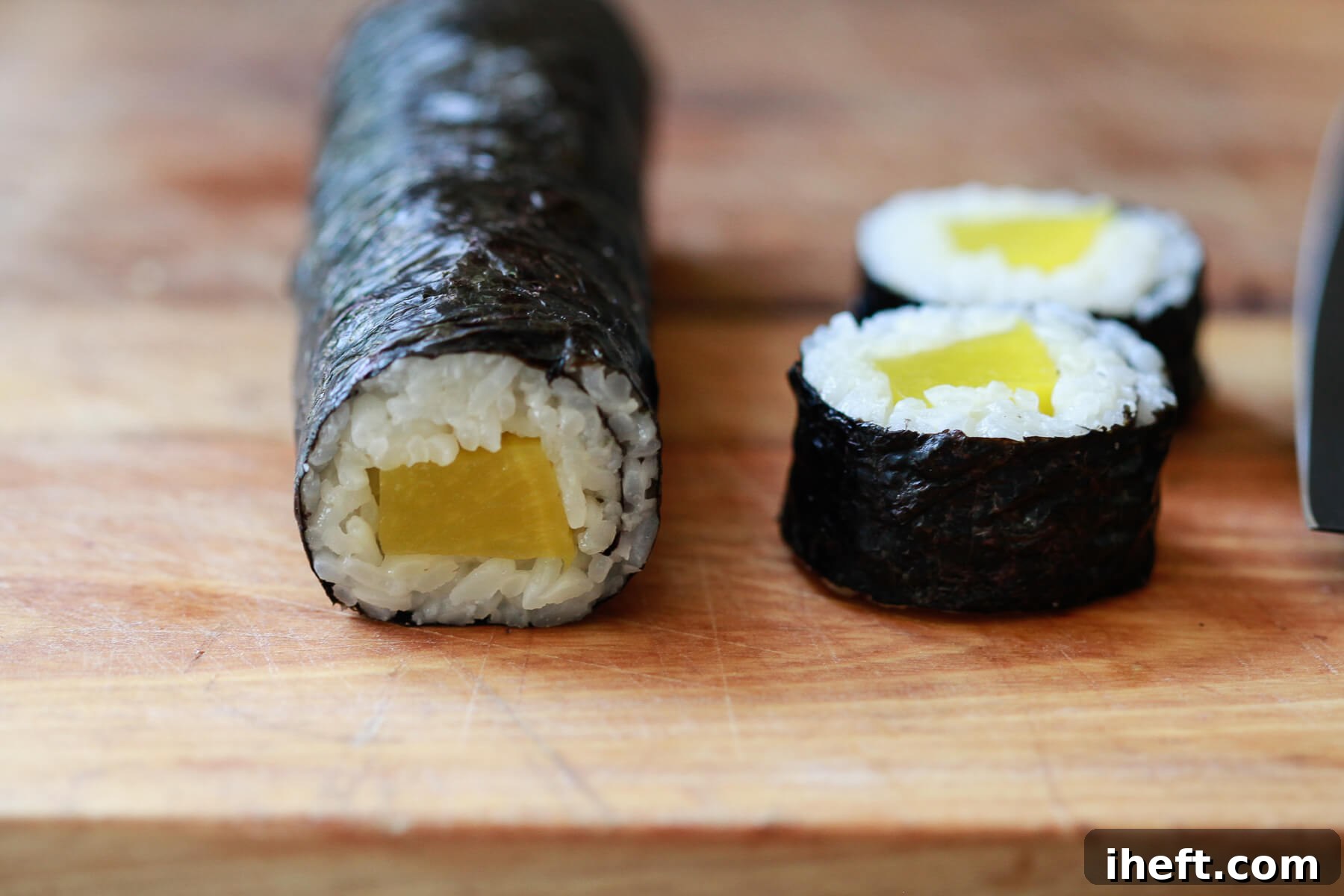
Learn how to make Oshinko Roll at home! This easy maki is a great vegetarian sushi roll option made with Japanese pickled daikon radish, offering a delightful crunch and tangy-sweet flavor.
Ingredients
- 1 batch Sushi Rice (approximately 2 cups cooked)
- 1 piece Oshinko (Japanese pickled radish), typically a whole stalk, to be sliced
- 1 package nori (seaweed for sushi), containing 5-10 sheets
- Optional additions: ½ avocado, ½ cucumber, ¼ cup shredded carrots
Instructions
-
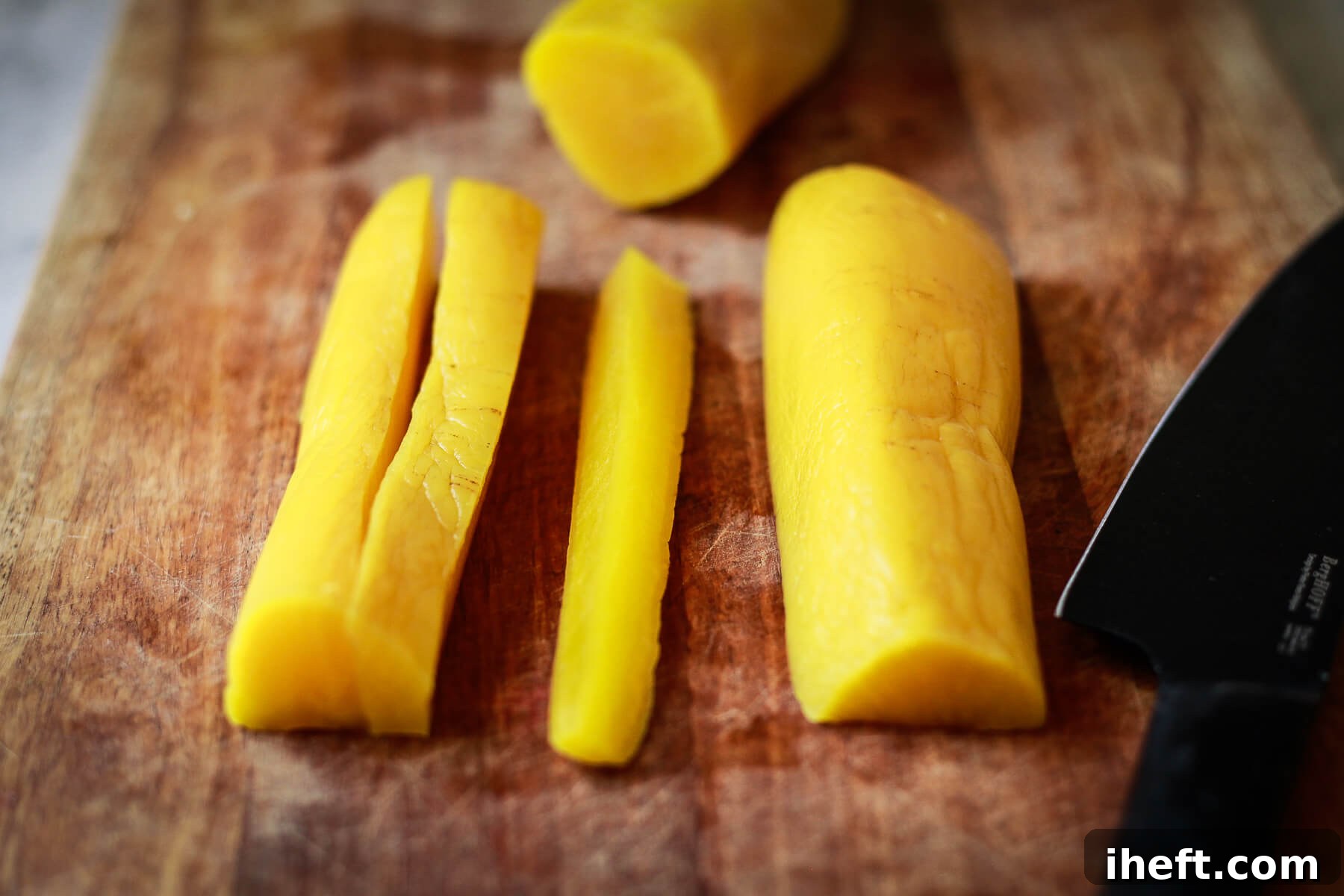
Prepare the Oshinko: Cut the oshinko into lengthwise strips, aiming for about ½-inch wide and just as long as one side of your nori sheet. This ensures an even filling throughout the roll.

-
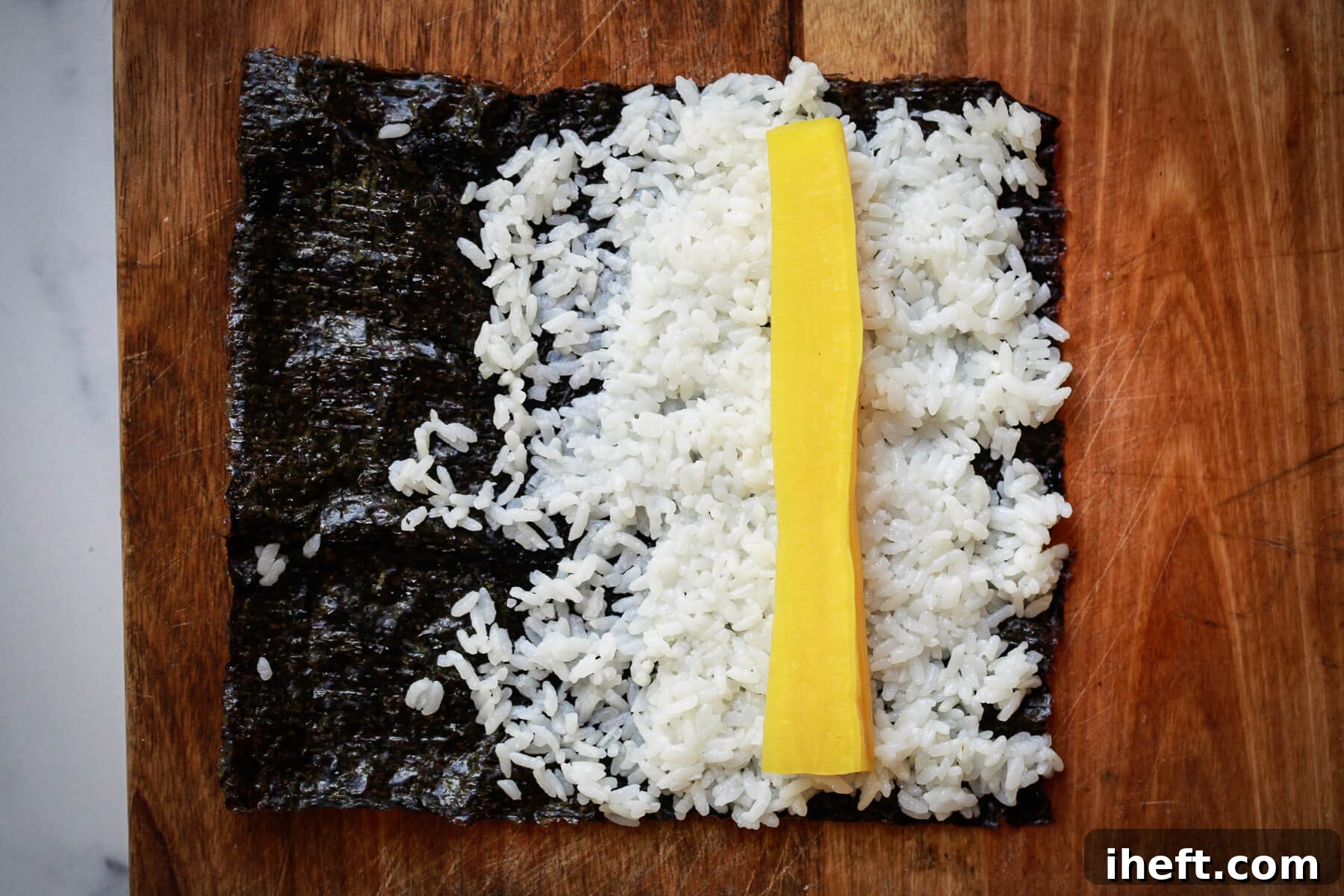
Lay Out Nori and Rice: Place a piece of nori on a bamboo sushi mat or directly on a clean cutting board. For single-ingredient sushi rolls like this, spread just enough sushi rice to surround the filling, typically covering about ⅔ of the nori sheet across. If you plan to use multiple fillings (like avocado, cucumber, and carrots), cover the entire piece of nori, leaving a 1-inch edge at one end uncovered. This uncovered edge will be used to seal the roll. Position one strip of oshinko (and any other desired fillings) onto the rice, on the side opposite to the uncovered nori edge.
-
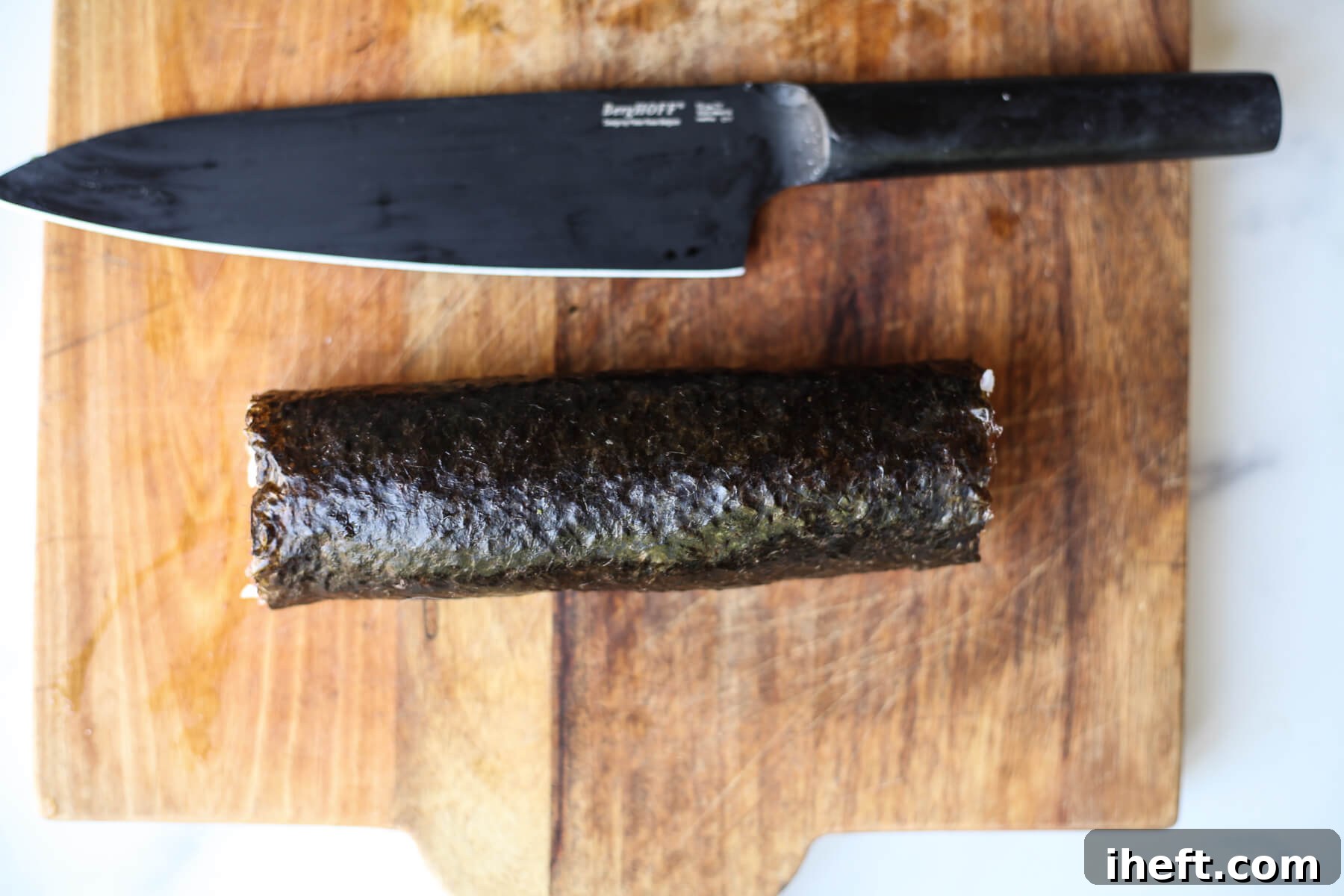
Roll the Sushi: Dampen the 1-inch uncovered edge of the nori with a little water. Using the bamboo mat (or carefully by hand if on a cutting board), tightly roll the sushi over the fillings from the side closest to you, pressing gently but firmly to create a compact cylinder. Continue rolling until the moistened edge seals the roll securely.
-
Slice the Roll: With a very sharp, slightly moistened knife, carefully cut the sushi roll crosswise into approximately 6 even slices. Wiping the knife with a damp cloth between cuts helps prevent the rice from sticking.
-
Serve and Enjoy: Your homemade oshinko rolls are best enjoyed immediately for optimal freshness and texture. If not serving right away, store them in an airtight container in the refrigerator for up to one day. Serve with traditional accompaniments such as soy sauce for dipping, a dab of pungent wasabi, and a side of pickled ginger to cleanse the palate.
Notes
1. Japanese pickled Daikon radish (oshinko or takuan) is readily available in the refrigerated sections of most Asian markets, typically packaged in plastic.
2. To add more flavor and texture to your rolls, consider incorporating other vegetables. Shredded carrots, creamy avocado, and crisp cucumber are highly recommended additions that pair beautifully with the tangy oshinko.
Nutrition Information:
Yield: 5 servings
Serving Size: 6 pieces
Amount Per Serving:
Calories: 160
Conclusion: Embrace the Simplicity and Flavor of Oshinko
Oshinko, the vibrant Japanese pickled Daikon radish, offers a unique blend of sweet, tangy, and crunchy textures that makes it an indispensable ingredient in Asian cuisine. Whether enjoyed on its own, as a component in a bento box, or most famously as the star of an Oshinko Roll, its distinctive character adds a refreshing dimension to any meal.
From its humble origins as a preserved vegetable to its prominent place on sushi menus around the world, oshinko embodies the balance and artistry of Japanese culinary traditions. Learning to identify, source, and prepare this delightful ingredient opens up a world of simple yet sophisticated flavors for home cooks and sushi lovers alike. So, next time you’re craving a light, flavorful, and satisfying vegetarian sushi option, remember the humble yet extraordinary oshinko. Dive into the experience of making your own oshinko maki, and savor the refreshing taste of this Japanese classic. It’s a rewarding culinary adventure that promises both flavor and ease.