Ancient Grain Farro Medley
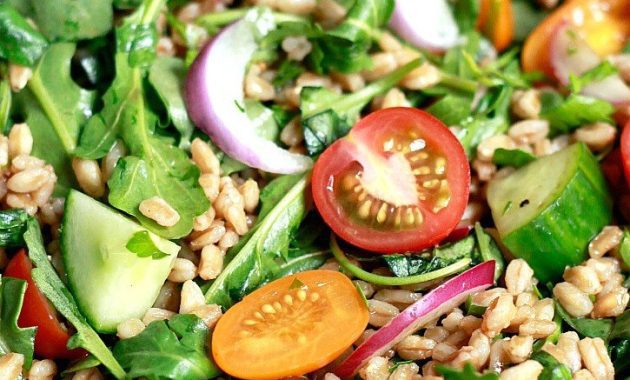
Welcome the season of vibrant flavors and effortless dining with this exceptional Italian Farro and Arugula Salad. It’s more than just a side dish; it’s a celebration of fresh ingredients, robust textures, and the simple elegance of Mediterranean cuisine. Get ready to discover your new go-to recipe for healthy, satisfying meals that bring a taste of Italy right to your table.
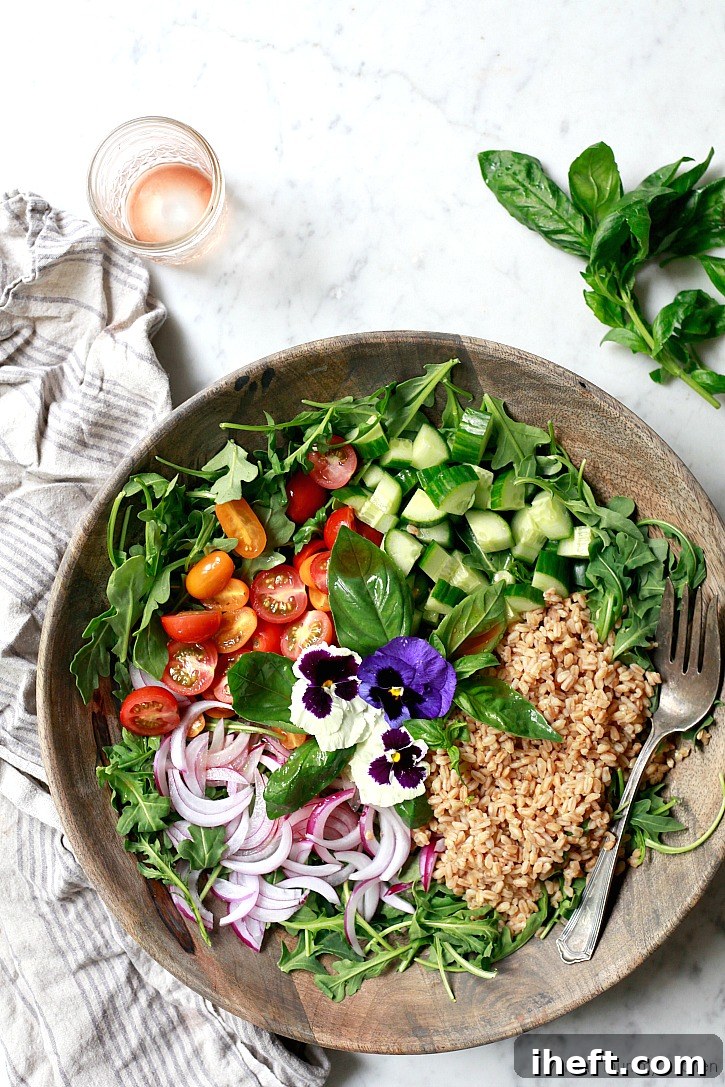
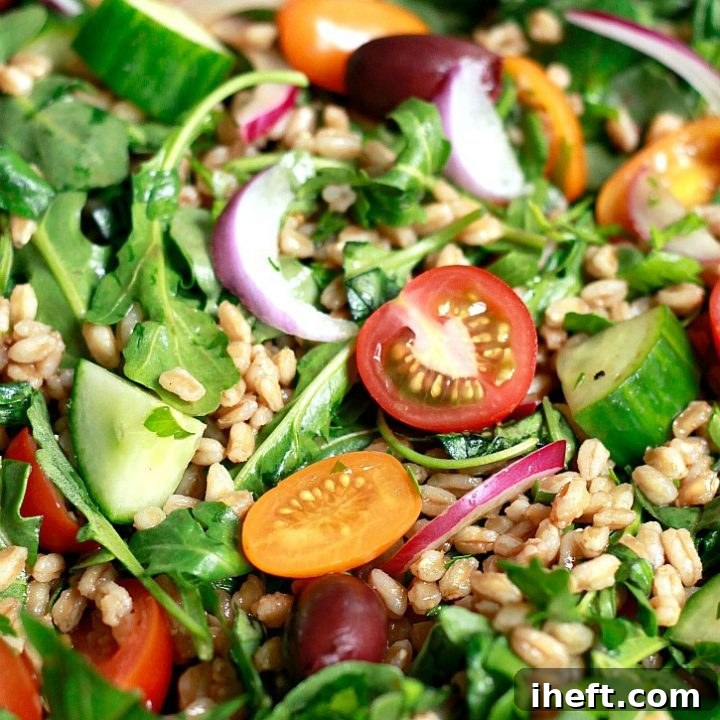
Imagine a salad that perfectly balances hearty ancient grains with an explosion of fresh, seasonal vegetables. This Italian-inspired farro salad does just that. It combines earthy farro with the sweet burst of juicy tomatoes, the refreshing crunch of crisp cucumbers, the sharp zing of thinly sliced red onions, the briny punch of Kalamata olives, and the peppery bite of fresh arugula. The result is a dream salad: flavorful, satisfying, and incredibly versatile.
Whether you’re planning a quick and nourishing lunch, a light yet filling dinner alongside a piece of crusty artisan bread and creamy hummus, or looking for the ideal dish to share at your next summer potluck, this recipe fits the bill. Its vibrant colors and refreshing taste also make it a fantastic option for meal-prep, ensuring you have healthy and delicious options ready to go throughout your busy week. This salad captures the essence of wholesome Italian cooking, making it a staple you’ll turn to again and again.
My inspiration for this particular recipe comes directly from the heart of Italy. During a recent trip to the picturesque Chianti region of Tuscany, farro salads graced nearly every menu. While many local versions were refreshingly simple—often just farro tossed with chopped tomatoes, fresh mozzarella, and aromatic basil—they showcased the incredible versatility and appeal of this ancient grain. It was common to find pre-cooked farro in the refrigerated sections of local grocery stores, making it incredibly convenient to whip up a quick and healthy meal. I found myself adding scoops of farro to my salads daily and even incorporating it into comforting minestrone soup when the cooler evenings called for something warm.
Discovering Farro: An Ancient Grain for Modern Tables
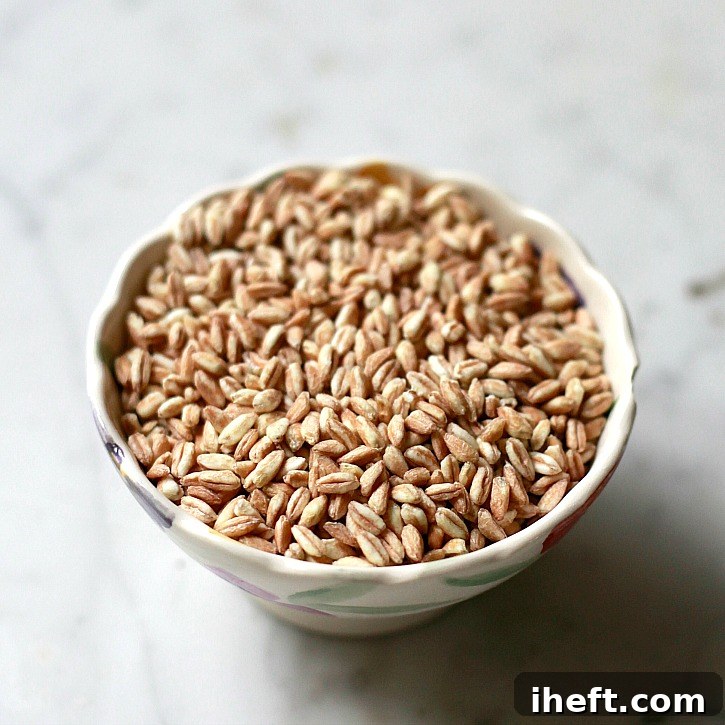
Like many, I once wondered, “What exactly is farro, and how do I cook it?” My first encounter with this remarkable grain was in a hearty winter salad, beautifully complemented by roasted butternut squash. I was instantly captivated by its substantial texture and nutty flavor, which reminded me of barley – another grain I deeply appreciate, especially in hearty vegetable soups. Farro offers a delightful chewiness that’s incredibly satisfying, making it a welcome change from quinoa, which is a common staple in many households, including mine. While quinoa has its place, farro brings a distinct character and depth to dishes that truly elevates them.
A Glimpse into Farro’s Rich History and Nutritional Power
Farro is an ancient grain, steeped in history, that has been a cherished part of Italian cuisine for centuries. Despite its long legacy in Europe, it has only recently garnered widespread popularity in the United States, delighting health-conscious foodies and home cooks alike. This versatile grain excels as a robust base for colorful grain bowls, lends a delightful heartiness to soups and stews, and can even be used as a flavorful alternative to rice in traditional risotto recipes, offering a unique twist on classic dishes.
While farro does contain gluten, its levels are significantly lower than those found in modern wheat varieties, making it potentially more digestible for some individuals with mild sensitivities. Beyond its intriguing flavor and texture, farro is a nutritional powerhouse. It stands out as an excellent source of plant-based protein, making it particularly valuable for vegetarian and vegan diets. It’s also exceptionally rich in dietary fiber, which is crucial for digestive health and can help promote a feeling of fullness, aiding in weight management. Furthermore, farro provides a bounty of essential nutrients, including magnesium, zinc, and B vitamins.
According to experts, incorporating whole grains like farro into your diet offers a myriad of health benefits. These include supporting healthy weight control, boosting immune system function, and significantly contributing to cardiovascular health. Its low glycemic index helps stabilize blood sugar levels, providing sustained energy throughout the day. Choosing farro is not just a culinary decision; it’s an investment in your overall well-being.
Navigating the World of Farro: Cooking Tips and Varieties
When you head to the grocery store, shopping for farro can sometimes be a little confusing due to the different varieties available. It’s essential to check the package instructions carefully, as cooking times vary significantly based on the type of farro you purchase:
- Whole Farro: This is the least processed form, retaining all of its bran, germ, and endosperm. It boasts the most nutrients and fiber but requires a longer cooking time. Typically, whole farro needs to be soaked overnight before cooking for approximately 30-40 minutes until tender but still chewy.
- Semi-Pearled Farro: In this variety, a portion of the outer bran layer has been removed. This reduces cooking time without significantly sacrificing nutritional value. Semi-pearled farro usually doesn’t require soaking and cooks in about 20-25 minutes.
- Pearled Farro: This is the most processed type, with most or all of the bran removed. It cooks the fastest, often in just 10-15 minutes, similar to the quick-cooking farro commonly found at specialty grocers like Trader Joe’s or Whole Foods. While convenient, it has slightly less fiber and nutrients compared to its whole or semi-pearled counterparts.
Regardless of the type, the key to perfectly cooked farro is to aim for an al dente texture – firm to the bite but not hard. Once cooked, spread it out on a baking sheet to cool slightly before adding it to salads to prevent it from clumping together and to ensure it absorbs the dressing beautifully.
The Art of Dressing: Elevating Your Farro Salad
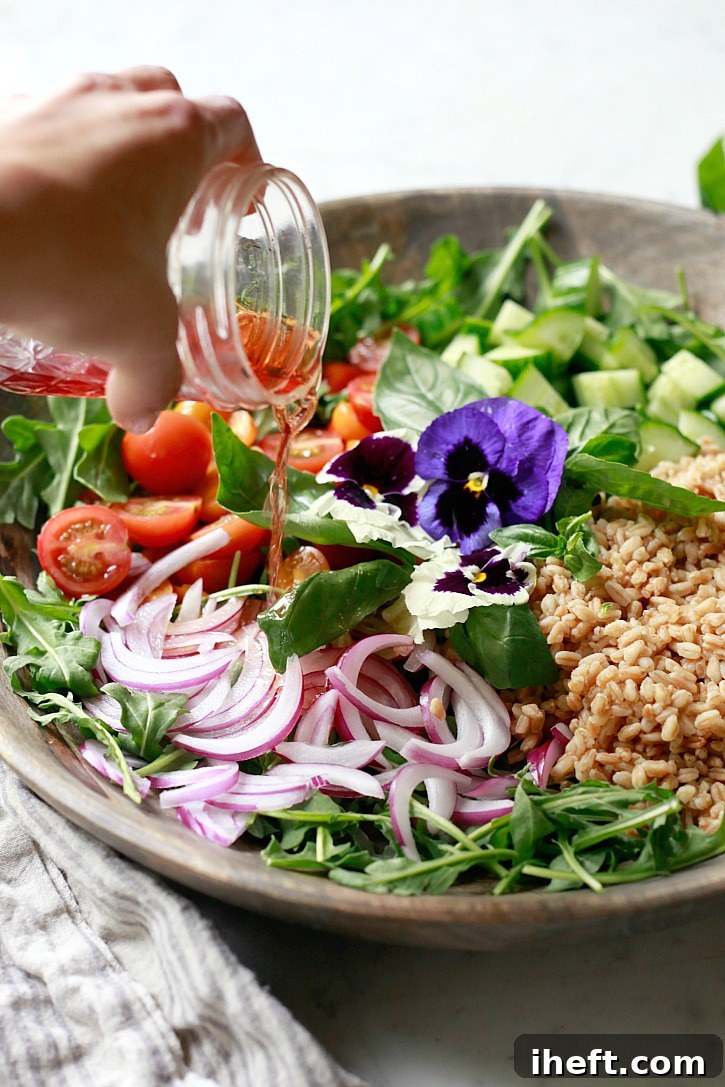
The dressing for this farro salad is intentionally simple, allowing the fresh flavors of the ingredients to shine through. A classic vinaigrette made with extra virgin olive oil and your choice of vinegar is all you need. I’ve experimented with both balsamic and red wine vinegar, and honestly, it’s hard to pick a favorite, as each offers a distinct and delightful character:
- Red Wine Vinegar: Opting for red wine vinegar results in a lighter, brighter, and tangier flavor profile. It imparts a crispness that beautifully complements the freshness of the vegetables and the earthiness of the farro. This choice keeps the salad’s color vibrant and offers a refreshing zest.
- Balsamic Vinegar: If you prefer a deeper, sweeter, and more complex flavor, balsamic vinegar is an excellent choice. It lends a rich, slightly syrupy note that coats the ingredients beautifully, creating a more profound taste experience. Be aware that balsamic will naturally give the salad a slightly darker hue, but the flavor payoff is well worth it.
No matter your vinegar preference, always choose a high-quality extra virgin olive oil. Its fruity notes and smooth texture are crucial for a truly authentic Mediterranean dressing. A simple pinch of salt and freshly ground black pepper will tie all the flavors together, creating a harmonious and irresistible salad.
Customizing Your Italian Farro Salad
This recipe provides a fantastic base, but don’t hesitate to make it your own! The beauty of a grain salad lies in its adaptability. Here are some ideas to inspire your culinary creativity:
- Add Cheeses: For a non-vegan option, crumbled feta cheese, fresh mozzarella balls (bocconcini), or shaved Parmesan would be delightful additions, adding a creamy or salty element.
- Boost the Protein: To make it a more substantial main course, consider adding grilled chicken, flaked salmon, canned tuna, chickpeas, or white beans.
- Incorporate More Vegetables: Sun-dried tomatoes, roasted bell peppers, zucchini ribbons, artichoke hearts, or even steamed green beans can add extra layers of flavor and texture.
- Enhance with Herbs and Nuts: Fresh parsley, oregano, or mint can introduce different aromatic notes. Toasted pine nuts, chopped walnuts, or slivered almonds would provide a lovely crunch and healthy fats.
- Spicy Kick: A pinch of red pepper flakes can add a subtle warmth if you enjoy a touch of heat.
Experimentation is key! Tailor the ingredients to your personal taste and what’s fresh and available in your kitchen.
Italian Farro Salad
5 minutes
15 minutes
20 minutes
This hearty Italian farro salad with arugula makes a delicious and nourishing lunch or side dish for dinner.
Ingredients
- 1 cup dry farro
- 2 cups vegetable broth
- 1 pint cherry tomatoes, halved
- 1/2 red onion, thinly sliced
- 2 Persian cucumbers, diced
- 1/2 cup pitted kalamata olives
- 5 oz. arugula
- 1 cup fresh basil, sliced
- 2 tablespoons extra virgin olive oil
- 1/4 cup red wine or balsamic vinegar
Instructions
- Cook farro in vegetable broth in a medium pot according to package directions. Cool completely.
- In a large salad bowl, combine the halved cherry tomatoes, thinly sliced red onion, diced cucumbers, pitted Kalamata olives, fresh arugula, sliced basil, and the cooled farro.
- Drizzle generously with extra virgin olive oil and your chosen vinegar (red wine or balsamic). Toss gently to ensure all ingredients are well combined and coated with the dressing. Serve immediately or chill for enhanced flavor.
Nutrition Information:
Yield: 6
Serving Size: 1
Amount Per Serving:
Calories: 242
Total Fat: 8g
Saturated Fat: 1g
Trans Fat: 0g
Unsaturated Fat: 6g
Cholesterol: 0mg
Sodium: 305mg
Carbohydrates: 36g
Fiber: 6g
Sugar: 7g
Protein: 8g
Tips for Perfect Farro Salad and Storage
To ensure your Italian Farro Salad is always at its best, consider these helpful tips:
- Cool Completely: After cooking, it’s crucial to let the farro cool down to room temperature before mixing it with the fresh vegetables. This prevents the vegetables from wilting and helps the farro absorb the dressing more effectively without becoming mushy.
- Dress Just Before Serving (Optional): While the salad tastes great when dressed and allowed to marinate, if you’re making it for meal prep or want the arugula to stay extra crisp, you can store the dressing separately and toss it in just before serving.
- Quality Ingredients: The simplicity of this salad means that the quality of your ingredients truly shines. Opt for ripe, seasonal tomatoes, fresh, crisp cucumbers, and a good quality extra virgin olive oil.
- Storage: This farro salad keeps beautifully in an airtight container in the refrigerator for up to 3-4 days. It’s an excellent option for healthy lunches throughout the week. The flavors tend to meld and deepen over time, often tasting even better the next day!
- Serving Temperature: While delicious chilled, this salad often tastes best when brought to room temperature for about 15-20 minutes before serving, allowing its full range of flavors to awaken.
This Italian Farro Salad is a testament to the fact that healthy eating can be incredibly flavorful and enjoyable. Its combination of nourishing grains and vibrant vegetables, all tossed in a simple yet effective dressing, makes it a truly satisfying meal. Whether you’re a long-time fan of farro or just discovering this ancient grain, this recipe is sure to become a beloved addition to your culinary repertoire. Enjoy the fresh tastes of Italy, simplified and perfected for your modern kitchen.
Don’t forget to save this incredible recipe for later! Pin it to your favorite recipe boards and share it with friends and family who appreciate healthy, delicious, and easy-to-make meals.