Tablespoons per Cup
Mastering kitchen measurements is the secret ingredient for culinary success, particularly in baking. Whether you’re a seasoned home chef or just beginning your journey in the kitchen, understanding essential conversions is non-negotiable. Among the most frequent inquiries, “How many tablespoons in a cup?” stands out. This seemingly straightforward question can evolve into more complex scenarios, such as determining quantities for half a cup, a quarter of a cup, or specialized ingredients like butter. This comprehensive guide aims to demystify these common kitchen conundrums, providing you with the knowledge to confidently approach any recipe.
The recent global health crisis spurred a significant movement towards home cooking, transforming kitchens worldwide. A notable 71% of individuals in the U.S. express intentions to maintain this habit. The appeal is clear: home cooking often proves more economical and healthier than dining out or relying on pre-packaged meals. Beyond practicality, it offers a wonderful creative outlet and a profound sense of accomplishment.
However, the culinary path isn’t always smooth. Challenges often arise when attempting to scale a recipe or when your go-to measuring spoons are out of commission. These moments spark questions like, “Precisely how many tablespoons are in a cup?” or “What’s the best way to accurately halve a tablespoon measurement?” Even if arithmetic and precise measurements aren’t your strong suits, we’re here to provide clarity. Continue reading to unlock the essential cooking measurements and baking conversions that will significantly simplify your time in the kitchen, making every cooking adventure a confident and enjoyable experience.
Demystifying Kitchen Conversions: Tablespoons, Teaspoons, and Cups Explained
The Core Conversion: How Many Tablespoons Are in a Cup?
For anyone following U.S. recipes, a foundational piece of knowledge is the exact conversion of tablespoons to cups. There are 16 tablespoons in one dry US cup. This standard applies universally to dry ingredients such as flour, granulated sugar, cocoa powder, and cornstarch. It’s crucial to note that while a tablespoon can measure both wet and dry ingredients, the volumetric “cup” for dry and liquid substances often employs distinct measuring tools. Understanding How Many Ounces Are in a Cup can further clarify these differences, as the answer can vary depending on the ingredient type and state.
When working with U.S. recipes, adhering to the imperial system measurements is paramount for optimal results. The U.S. imperial system differs from metric, Australian, or British measurement standards. Utilizing the same tools and units as the recipe creator ensures that your dish achieves the intended flavor profile and consistency. For instance, a “cup” of flour in a U.S. recipe will have a different weight than a “cup” in an Australian recipe, due to variations in standard cup size and common measuring techniques.
Essential Tablespoon to Cup Conversions for Your Kitchen
A simple mental shortcut is remembering that a 1/4 cup equates to 4 tablespoons. From this benchmark, you can easily extrapolate or reduce quantities. Below is a comprehensive list of tablespoon to cup conversions, designed to be a quick reference:
- 1 US cup = 16 tablespoons
- 3/4 US cup = 12 tablespoons
- 2/3 US cup = 10 tablespoons + 2 teaspoons (This is an approximation for practical kitchen use, as 2/3 cup is exactly 10.66 tablespoons)
- 1/2 US cup = 8 tablespoons
- 1/3 US cup = 5 tablespoons + 1 teaspoon (Again, an approximation, as 1/3 cup is exactly 5.33 tablespoons)
- 1/4 US cup = 4 tablespoons
- 1/8 US cup = 2 tablespoons
These conversions prove incredibly useful when an equivalent measuring cup isn’t available, but you have a trusty tablespoon at hand. They also offer a rapid alternative to filling multiple smaller spoons. For example, knowing that 1/8 cup is simply 2 tablespoons can save time and streamline your workflow. This knowledge is particularly empowering when you need to scale recipes. Thinking of each cup in terms of tablespoons ensures precise adjustments, guaranteeing the accuracy crucial for baking and delicate recipes. Documenting the total tablespoons used and converting them back to cups later can also aid in recipe development or modification. This skill is invaluable for individuals cooking for smaller groups, allowing for easy halving or quartering of recipes to prevent waste and ensure perfect portion sizes.
Breaking Down Smaller Units: How Many Teaspoons in a Tablespoon?
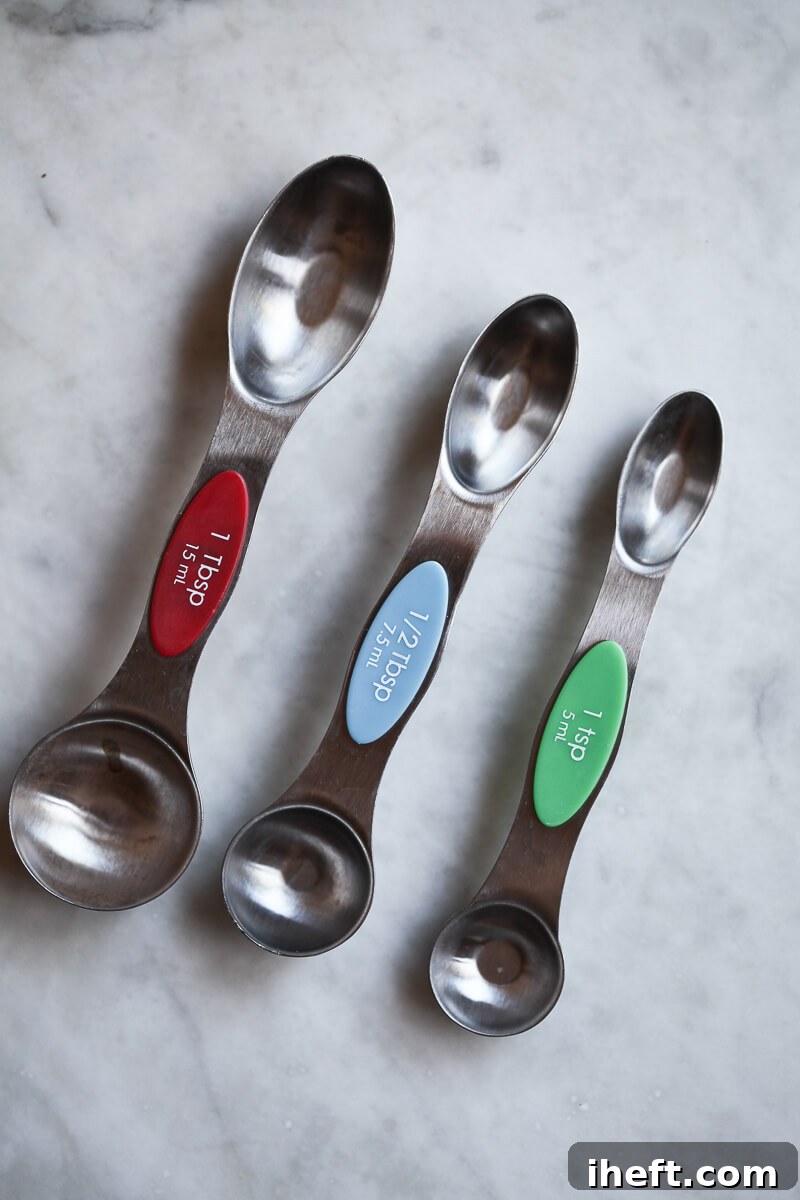
Equally important for precise cooking, particularly when dealing with smaller quantities like spices, extracts, or leavening agents, is understanding the relationship between teaspoons and tablespoons. In the U.S. standard, there are 3 teaspoons in one tablespoon. This ratio is fundamental when adjusting recipes, especially when halving small measurements. For instance, if a recipe calls for one tablespoon of an ingredient and you need to halve it, you would accurately measure 1 1/2 teaspoons. This precise conversion prevents guesswork and ensures the integrity of your dish.
Teaspoon to Tablespoon Conversions for Everyday Cooking
Here’s a concise guide for quick reference:
- 1 tablespoon = 3 teaspoons
- 1/2 tablespoon = 1 1/2 teaspoons
- 1/3 tablespoon = 1 teaspoon
These measurements are indispensable when you’re halving a recipe and need to maintain the delicate balance of flavors. They also offer a practical solution if you’re in the middle of a cooking or baking spree and prefer not to wash your single tablespoon repeatedly. Beyond convenience, these precise conversions are critical for recipes where even minor deviations can significantly impact the outcome, such as in delicate pastry work or spice-heavy curries.
The Nuance of Measuring: Liquid vs. Dry Ingredients in a Tablespoon and Beyond
While a measuring spoon is versatile enough to measure both wet and dry ingredients accurately, the technique for achieving precision differs, especially when scaling up to cup measurements. For liquid ingredients, the process is straightforward: simply pour the liquid until it levels with the top edge of the spoon. The surface tension of liquids usually creates a slight dome, but aiming for a level surface provides a consistent measure.
Measuring dry ingredients, however, requires a specific approach for exactness. Scoop the dry ingredient into the measuring spoon, allowing it to mound above the rim. Then, take a straight edge—such as the back of a knife or a dedicated leveling tool—and sweep off the excess, ensuring the ingredient is perfectly level with the spoon’s top. This “sweep and level” method is vital for consistent results. It prevents over-packing (common with flour) or under-filling, which can drastically alter a recipe’s outcome.
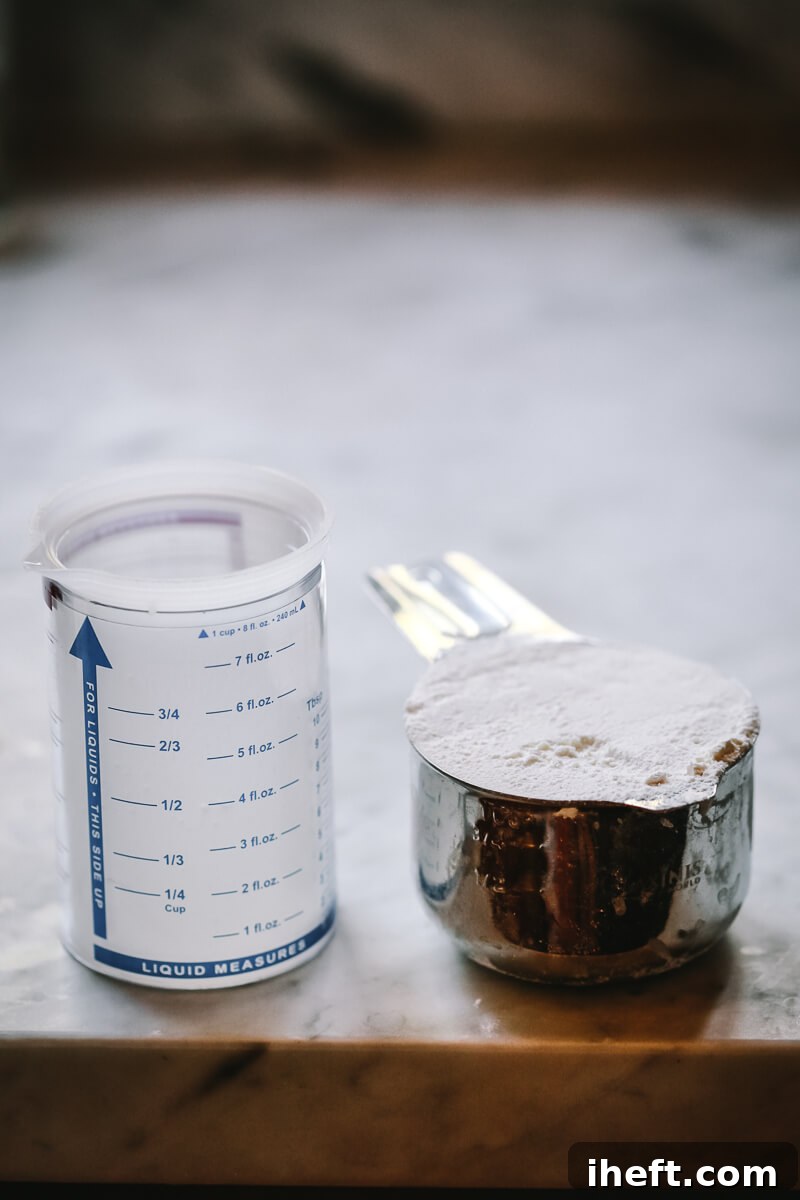
It’s equally important to differentiate between dry and liquid measuring cups. Dry measuring cups are designed for the “scoop and level” method, typically featuring a rim that’s flush with the measurement marking. Liquid measuring cups, usually made of transparent glass or plastic, have a spout for pouring and graduated markings that allow for reading at eye level to account for the meniscus (the curve of the liquid’s surface). Using a liquid measuring cup for dry ingredients makes leveling difficult due to the spout, while using a dry cup for liquids can lead to spills and inaccurate readings.
The importance of precision varies with the type of cooking. When preparing a vegan soup, slight variations in ingredient amounts might not significantly impact the final taste or texture. However, in baking, precision is not merely a suggestion—it’s the law. Baking is a science, where chemical reactions dictate the rise, texture, and flavor. An imbalance, such as too much baking powder or baking soda, can easily cause a recipe to fail, resulting in dense, heavy baked goods or an unpleasant aftertaste.
The Unique Challenge of Measuring Butter and Other Solid Fats
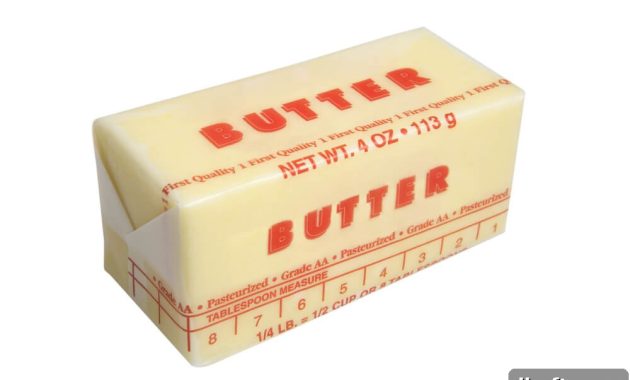
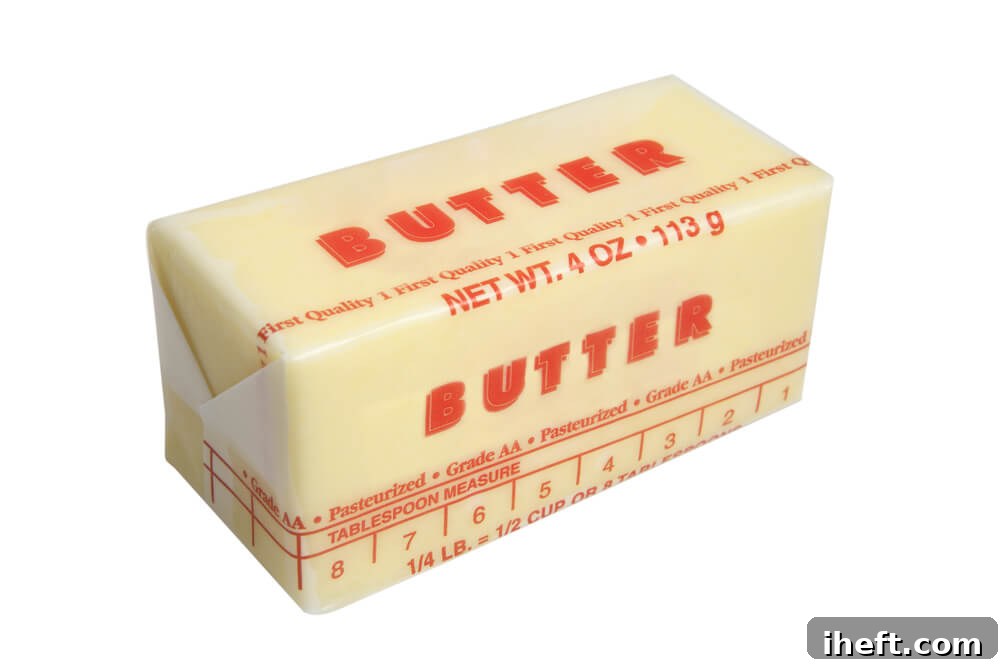
Butter presents a slightly different scenario in the realm of kitchen measurements due to its solid state. Fortunately, its common packaging in the U.S. simplifies the process considerably. Butter is typically sold in “sticks,” with four sticks making up one pound. Each standard stick of butter is conveniently pre-marked on its wrapper, clearly indicating tablespoon increments. This thoughtful packaging makes measuring solid butter incredibly straightforward—simply cut along the desired marking.
Each stick of butter contains 8 tablespoons, which is equivalent to 1/2 cup. Consequently, to obtain one full cup of butter, you will need two sticks. These measurements are consistent and apply not only to dairy butter but also to other solid fats commonly found in stick form, such as margarine, various vegan butters (like Earth Balance or Miyoko’s, which are excellent for creamy recipes such as Vegan Chocolate Frosting), and solid shortening.
Quick Conversion for Butter and Solid Fats
- 16 tablespoons butter = 2 sticks = 1 cup
- 8 tablespoons butter = 1 stick = 1/2 cup
- 4 tablespoons butter = 1/2 stick = 1/4 cup
These conversions are indispensable for a wide array of recipes, from baking cookies and cakes to enriching savory sauces and soups. They demystify the process of how to measure butter, ensuring consistency and success in your culinary creations. Should you ever be unsure, the product packaging often provides explicit measurement guidelines.
For solid fats that come in tubs or jars, such as coconut oil or shortening, the “sweep and level” method, similar to that used for dry ingredients, is highly effective. Scoop the solid fat into a dry measuring cup, ensuring to press it down firmly to eliminate any air pockets, then level off the top with a straight edge. This method guarantees an accurate volumetric measurement for your recipe, essential for achieving the right texture and consistency.
Why Accurate Measurements Are the Cornerstone of Culinary Excellence
Beyond simply following a recipe, understanding and applying accurate measurements is fundamental to mastering the culinary arts. In baking, precision is not just a recommendation; it’s a scientific requirement. The precise ratios of ingredients—flour, sugar, leavening agents, and fats—dictate the chemical reactions that determine a baked good’s rise, texture, and overall flavor. Even slight deviations can lead to significant differences, transforming a light, airy cake into a dense, unappetizing one, or a perfectly chewy cookie into a dry, brittle disc.
While cooking often allows for more flexibility and improvisation than baking, accurate measurements still play a crucial role. Consistency in seasoning, the desired thickness of sauces, or the overall balance of flavors in a dish ensures reproducible results and elevates the quality of your meals. When you grasp the underlying conversions and principles of measurement, you gain the confidence to adapt recipes, troubleshoot potential issues, and ultimately, unleash your creativity to develop your own signature dishes with unwavering assurance.
Pro Tips for Flawless Kitchen Measurements Every Time
Beyond knowing the conversions, adopting meticulous measuring habits can significantly enhance your cooking and baking outcomes:
- Leveling Dry Ingredients Precisely: Always use the “spoon and sweep” method for dry ingredients like flour. Spoon the flour into your measuring cup until it overflows, then level it off with a straight edge. Never scoop directly from the bag, as this compacts the flour, adding up to 25% more than intended.
- Read Liquids at Eye Level: When measuring liquids, place your liquid measuring cup on a flat surface and bend down to eye level to read the markings. This eliminates parallax error, ensuring an accurate reading of the meniscus.
- Embrace a Kitchen Scale for Baking: For ultimate precision in baking, a digital kitchen scale is invaluable. Weighing ingredients, especially flour, is far more accurate than volumetric measurements, as density can vary significantly.
- Understand Ingredient Temperatures: Recipes often specify “room temperature butter” or “cold eggs” for a reason. Temperature affects how ingredients emulsify, mix, and react, directly impacting the final texture and consistency of your dish.
- Grease for Sticky Ingredients: For sticky substances like honey, molasses, or peanut butter, lightly coat your measuring spoon or cup with cooking spray or a neutral oil. This ensures easy release and accurate measurement.
- Keep Tools Clean: Regularly clean your measuring spoons and cups. Residue from previous ingredients can affect the accuracy of subsequent measurements and introduce unwanted flavors.
Common Measurement Mistakes to Actively Avoid in the Kitchen
Even seasoned culinary enthusiasts can fall prey to common measurement errors. Awareness of these pitfalls can save you from countless kitchen disappointments:
- Over-packing Flour (The Cardinal Sin): As mentioned, scooping flour directly from its container with the measuring cup is a frequent culprit for dry, dense baked goods. Always spoon it in gently before leveling.
- Confusing Dry and Liquid Measuring Cups: These tools are specifically designed for their respective purposes. Using a liquid measuring cup for dry ingredients or vice-versa will invariably lead to inaccuracies due to their distinct designs.
- Neglecting to Level Off: Failing to use a straight edge to level dry ingredients means you’re adding an inconsistent and often excessive amount, disrupting the ingredient balance.
- Ignoring Specified Ingredient Temperatures: The temperature of ingredients significantly impacts how they interact. Using cold butter when softened butter is required can result in a vastly different texture or even a failed emulsion.
- Improperly Measuring Sticky Ingredients: Not greasing tools for sticky ingredients leads to frustrating residue and, more importantly, a less-than-accurate amount of the ingredient making it into your mixture.
Elevate Your Culinary Confidence with Mastered Measurements
Armed with a profound understanding of kitchen measurements, from the precise number of tablespoons in a cup to the nuances of measuring various forms of butter, you are now poised to approach any recipe with enhanced confidence and unwavering precision. Gone are the days of frantically Googling ‘how many tablespoons in a cup’ while your simmering pot threatens to boil over, or your perfectly prepped cake batter patiently awaits its final ingredients! This newfound mastery translates directly into a calmer, significantly more enjoyable, and ultimately far more successful cooking and baking journey.
Once you’ve internalized key conversions like 16 tablespoons per cup and 3 teaspoons per tablespoon, a vast and exciting world of culinary possibilities unfolds before you. You’ll gain the invaluable ability to effortlessly scale recipes up or down, adeptly adapt to different measuring tools, and consistently produce delectable results that will delight both yourself and your loved ones. Cook and bake to your heart’s content, knowing every measurement is perfectly accurate.
Eager to put your refined measurement skills to the ultimate test? I invite you to explore my extensive recipe index. Here, you can conveniently discover a diverse array of dishes, thoughtfully categorized by ingredient or specific recipe type. Whether your palate craves wholesome, health-conscious meals or indulgent, comforting treats, you are sure to find abundant inspiration and a plethora of delicious ideas waiting to be created on my blog.