Earthy Mushroom Farrotto
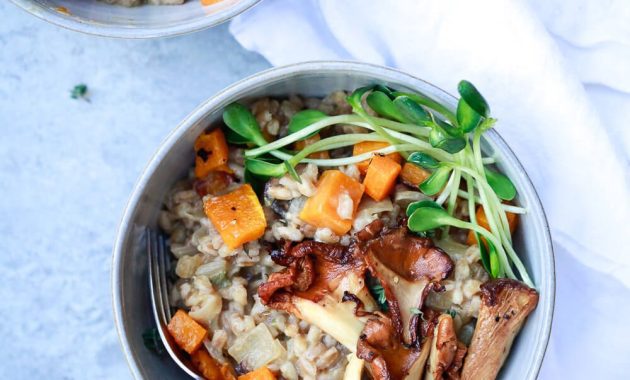
Welcome to the delightful world of Farrotto! Imagine the comforting creaminess of a classic Italian risotto, but with an earthier, heartier, and chewier texture derived from the ancient grain, farro. This versatile dish transforms into a luxurious meal, perfect for any occasion, especially when paired with savory mushrooms and sweet, roasted butternut squash. Whether you’re planning a special vegetarian or vegan dinner, or simply seeking a wholesome and satisfying weeknight meal, our creamy mushroom farrotto recipe, also known as farro risotto, promises to impress. We’ve meticulously tested this recipe for both stovetop and Instant Pot pressure cooker methods, ensuring an accessible and enjoyable cooking experience for everyone.
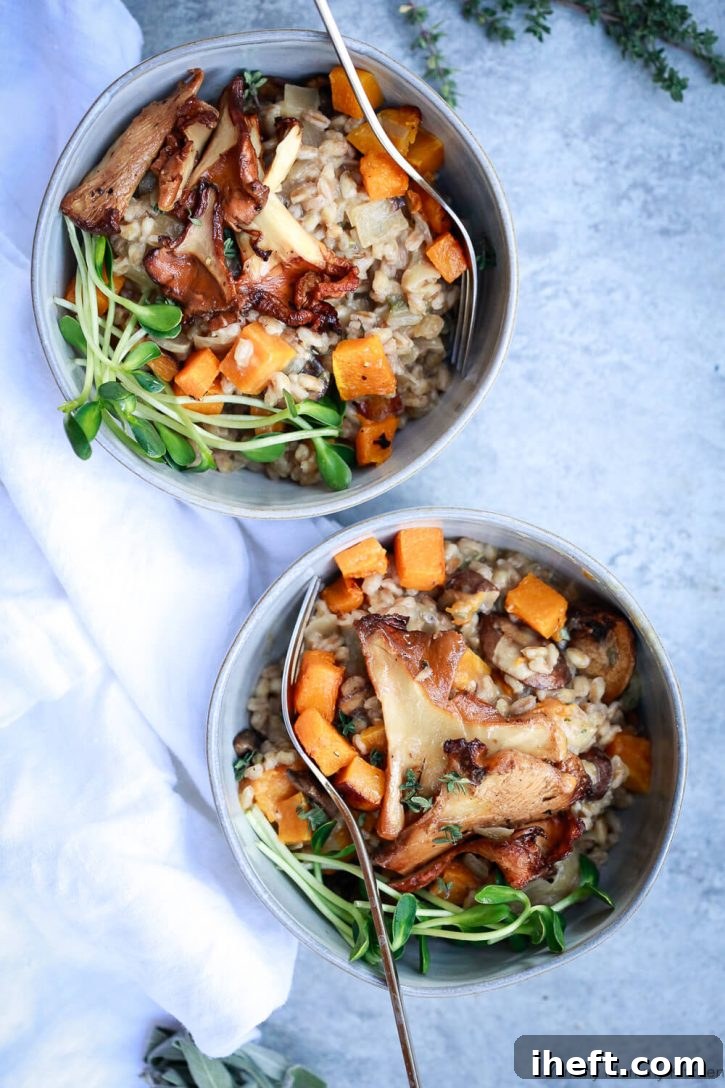
Farro is a grain that has captivated hearts and palates for centuries, tracing its roots back to ancient Roman times. Its distinctive nutty flavor and satisfying chewiness make it a fantastic alternative to rice in many dishes. Many of you adored the Italian Vegetable Soup with Farro we shared previously, which prompted us to explore another exquisite way to incorporate this fantastic grain into your culinary repertoire. During the warmer months, farro often finds its way into vibrant farro salads, a common preparation observed across Italy. However, as autumn leaves begin to fall and winter’s chill sets in, farro truly shines in warm, cozy, and profoundly hearty meals like comforting soups and, of course, farrotto.
This exquisite farrotto, enriched with a medley of wild mushrooms and tender roasted butternut squash, is an ideal centerpiece for a festive vegetarian or vegan holiday spread. Its rich flavors and elegant presentation make it a superb choice for occasions like Thanksgiving or Christmas. Should you be exploring other plant-based holiday options, we highly recommend trying our Portobello Wellington, a hearty and impressive dish; our wholesome Lentil Loaf, a savory classic; or the delightful Mushroom Quinoa Stuffed Acorn Squash, a perfect blend of sweetness and savoriness. For those with a penchant for specialty fungi, our incredible Lion’s Mane Crab Cakes offer a unique and utterly delicious experience.
Understanding Farrotto: A Heartier Take on Risotto
At its core, farrotto is an innovative twist on traditional risotto, substituting Arborio rice with farro. This simple swap results in a dish that is distinctly earthier, more satisfyingly hearty, and boasts a delightful chewiness that sets it apart. It’s important to note that farro is not gluten-free. If you have a gluten allergy or sensitivity, sticking to classic Arborio rice risotto would be advisable. However, for everyone else, farrotto offers a wonderful culinary adventure. While I adore traditional Arborio rice risotto and have shared numerous recipes here, such as Instant Pot Risotto with Roasted Veggies, Instant Pot Risotto with Peas, Mushroom Risotto with Spinach, and Peas & Carrots Risotto, farrotto offers a refreshing and robust alternative.
My first encounter with farrotto, or farro risotto, was at Oliver’s in Montecito, one of my absolute favorite restaurants renowned for its exquisite plant-based creations. Their seasonal farrotto variations are always a highlight. In the summer, their farrotto often features fresh, vibrant ingredients like sweet corn, delicate summer squash, and crisp radishes, showcasing the grain’s incredible adaptability to various seasonal produce. This autumnal version, with its rich mushrooms and sweet squash, is a perfect example of farrotto’s seasonal versatility.
Essential Ingredients for a Perfect Farro Risotto
Crafting a truly exceptional farrotto begins with selecting the right ingredients. Each component plays a crucial role in building the layers of flavor and achieving that desirable creamy texture.
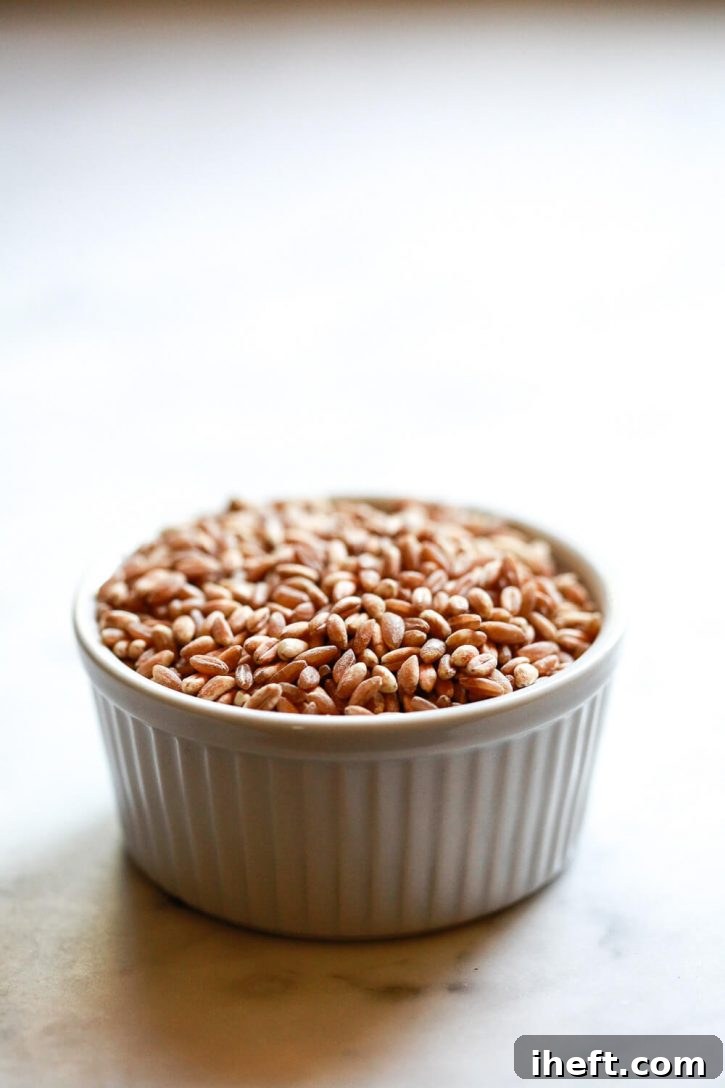
- Farro: The star of our dish. For this recipe, you’ll need semi-pearled (or pearled) farro. This variety has had some or all of its outer bran layer removed, which significantly reduces cooking time compared to whole farro. It results in a tender yet pleasantly chewy texture ideal for farrotto. Many grocery stores, including Trader Joe’s and Whole Foods, offer “quick cooking” or “10-minute” farro in the rice or grain aisle, which works wonderfully. Whole farro, with its intact bran, requires a longer soaking and cooking time, producing an even chewier result, but for speed and creaminess, pearled or semi-pearled is best.
- White Wine: A splash of dry white wine, such as an Italian Pinot Grigio, adds a depth of flavor and is essential for deglazing the pan, releasing all those delicious browned bits from the bottom. This process adds a layer of complexity to the dish. If you prefer to cook without alcohol, an equivalent amount of extra vegetable broth works perfectly well, maintaining moisture and flavor.
- Vegetable Broth: Just like with traditional Arborio rice risotto, warm vegetable broth is gradually ladled into the farro, allowing it to be slowly absorbed while releasing its starches to create the creamy consistency. Using warm broth prevents shocking the farro and ensures even cooking. Opt for a high-quality vegetable broth for the best flavor, or even better, a homemade one.
- Aromatics (Onion or Shallots & Garlic): These form the foundational flavor base. A finely diced onion provides a robust aromatic presence. For a more refined and delicate flavor and texture, consider using two shallots instead. Shallots are milder and slightly sweeter than regular onions, lending a subtle elegance. Freshly minced garlic is indispensable for its pungent, savory notes.
- Fresh Herbs: Herbs elevate the dish with their fresh, aromatic qualities. Thyme and sage are classic companions for mushrooms and butternut squash, infusing the farrotto with their earthy and slightly peppery flavors. Rosemary or marjoram could also be delightful additions, depending on your preference.
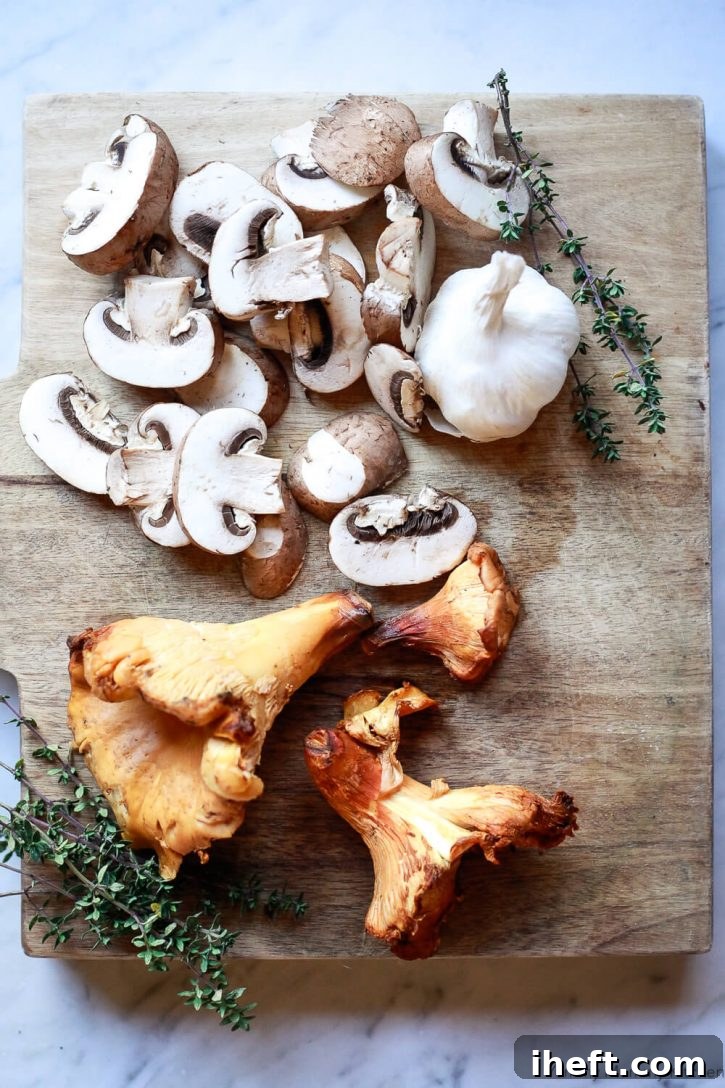
- Mushrooms: The choice of mushrooms significantly impacts the final flavor and texture. If you have access to wild mushrooms like maitake (hen of the woods), oyster mushrooms, or chanterelles, they will impart an extraordinary depth and umami. Chanterelles, known for their delicate, fruity aroma, can be more expensive and harder to find, but are a true delicacy. Maitake mushrooms offer a lovely earthy flavor and unique texture. More readily available and equally delicious options include sliced Baby Bellas (cremini) or portobellos, which are excellent for their robust flavor and meaty texture.
- Butternut Squash: Roasted butternut squash adds a wonderful sweetness and vibrant color, complementing the earthy mushrooms and farro. Its creamy texture, once roasted, melds beautifully into the dish.
Mastering the Art of Farrotto: Step-by-Step Guide
Creating this creamy mushroom farrotto is a rewarding culinary journey. Follow these steps for a perfect result:
Step 1: Roast the Butternut Squash to Perfection
Begin by preheating your oven to 400 degrees F (200 degrees C). Peel the butternut squash using a sturdy vegetable peeler, then carefully cut it into 1/2- to 1-inch cubes. Toss the squash cubes with about 1 tablespoon of olive oil, ensuring each piece is lightly coated, and season generously with salt and pepper. Spread the seasoned squash in a single layer on a baking sheet. Roasting caramelizes the natural sugars in the squash, intensifying its sweetness and creating tender edges with a slight crispness. Roast for approximately 25-30 minutes, flipping the squash halfway through to ensure even cooking and browning. Set aside once tender and slightly caramelized.
Step 2: Sauté the Mushrooms for Rich Umami
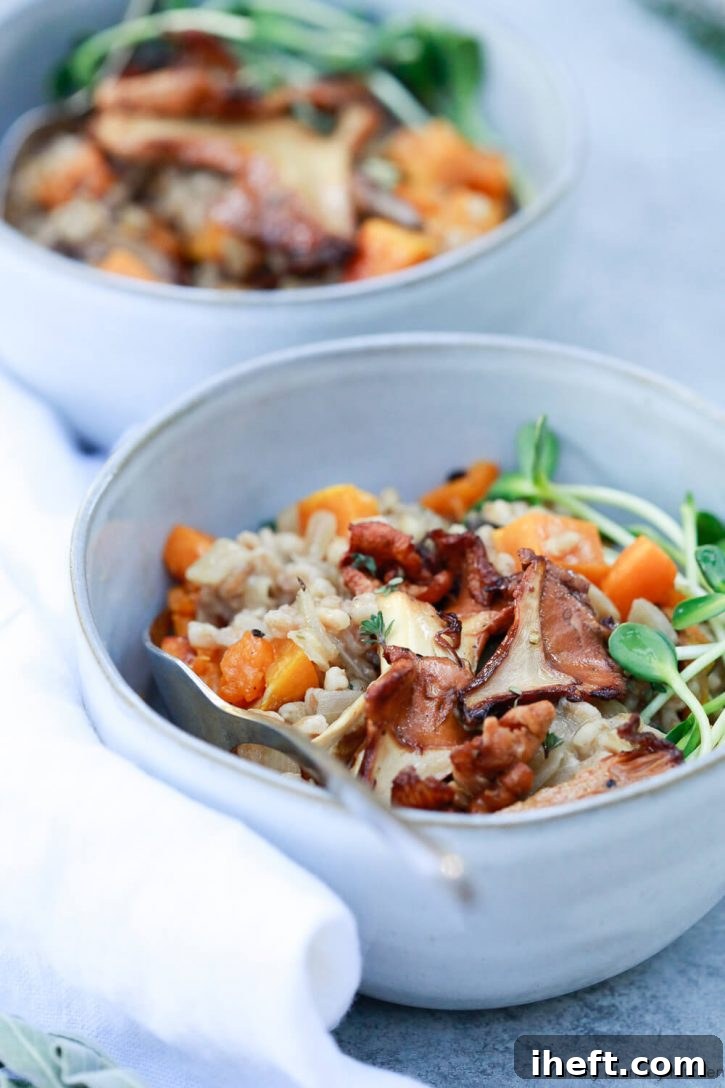
While the squash roasts, heat one tablespoon of olive oil in a large saucepan or Dutch oven over medium heat. Add your chosen mushrooms along with a pinch of salt and pepper. Sauté until they are tender and have released their moisture, typically about 5 minutes. Avoid overcrowding the pan; if you have a large quantity, cook the mushrooms in batches to ensure they brown rather than steam. This step is crucial for developing deep umami flavors. If using specialty mushrooms like chanterelles, which can be more expensive and have a unique texture, you might choose to sauté them separately and reserve them to serve on top as a garnish. For this recipe, I used a combination of common baby Bellas and exquisite chanterelles. The chanterelles, priced around $20 a pound at my local Whole Foods, were kept separate to highlight their distinctiveness. Maitake mushrooms, being less expensive and readily available in Asian grocery stores, are also a fantastic option. Once cooked, remove the mushrooms from the pan and set them aside.
Step 3: Build the Aromatic Base and Toast the Farro
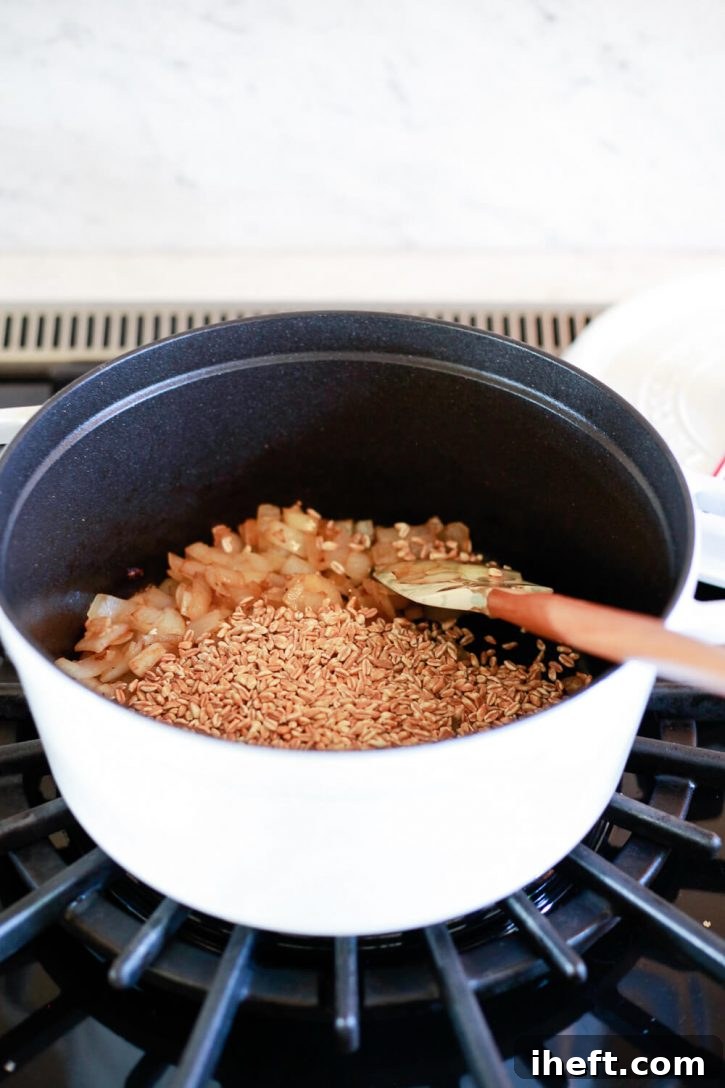
Using the same pan, add the remaining tablespoon of olive oil. Add the diced shallots (or onion) and sauté over medium heat until they become translucent and fragrant, which usually takes about 2 minutes. Then, add the minced garlic and continue to sauté for another minute, being careful not to burn it, as burnt garlic can taste bitter. Next, stir in the pearled farro. Sauté the farro for about one minute, toasting the grains. This brief toasting step, known as “tostatura,” helps to bring out the nutty flavor of the farro and creates a barrier around each grain, preventing it from becoming mushy and ensuring a pleasing al dente texture in the final dish.
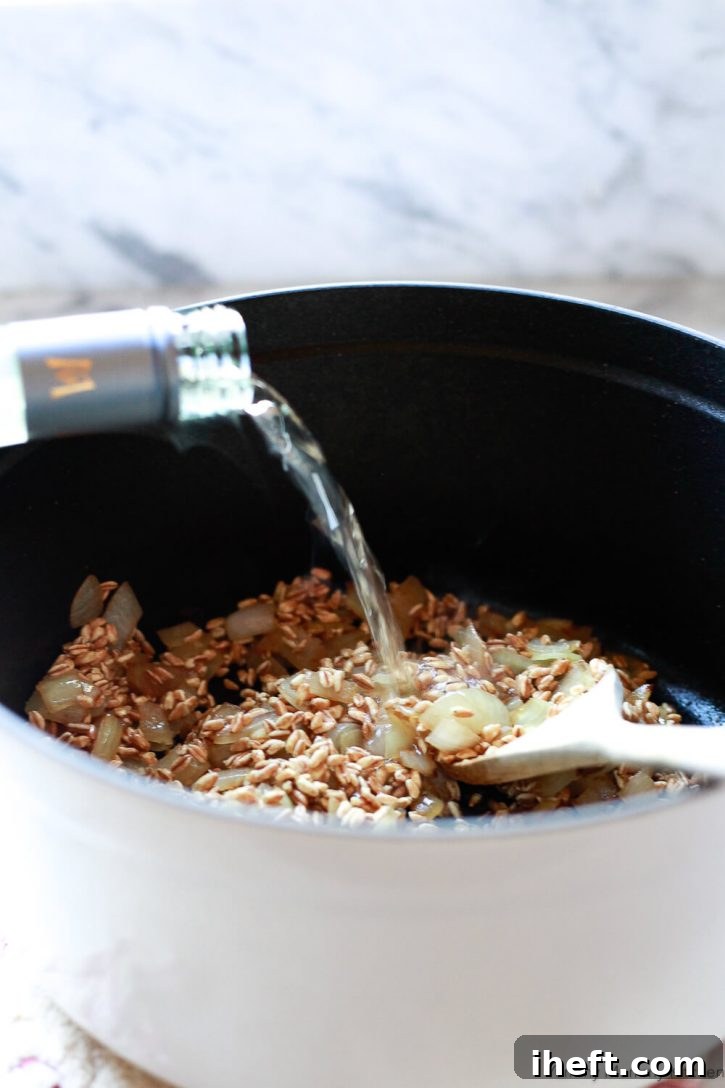
Step 4: Deglaze with Wine (or Broth)
Pour in approximately 1/4 cup of dry white wine (or an equivalent amount of vegetable broth if omitting alcohol). Allow the wine to simmer vigorously, stirring occasionally, until it has almost completely absorbed or evaporated. This process, known as deglazing, lifts all the flavorful browned bits from the bottom of the pan, integrating them into the farro and adding a crucial layer of complexity to the dish. The alcohol evaporates, leaving behind only the rich flavors.
Step 5: Gradually Add Broth for Creaminess
Keep a saucepan of vegetable broth simmering gently on a low heat on a separate burner. Having the broth warm is essential, as adding cold broth would lower the temperature of the farro and interrupt the cooking process. Begin by ladling about 1/2 to 1 cup of warm broth into the farro pot. Stir almost continuously until this first addition of broth has been fully absorbed by the farro. Then, add another ladleful and repeat the process. Continue adding broth, half a cup at a time, and stirring until the farro becomes tender with a pleasant chew, which typically takes about 30-40 minutes for pearled farro. While traditional risotto recipes often emphasize constant stirring, with farrotto, you actually don’t need to stir constantly. You can put a lid on the pot and step away for a minute or two between additions, returning to stir periodically. The key is to ensure the farro slowly absorbs the liquid, releasing its starches and developing that characteristic creamy consistency. Taste the farro periodically to check for doneness; it should be tender but still have a slight bite in the center.
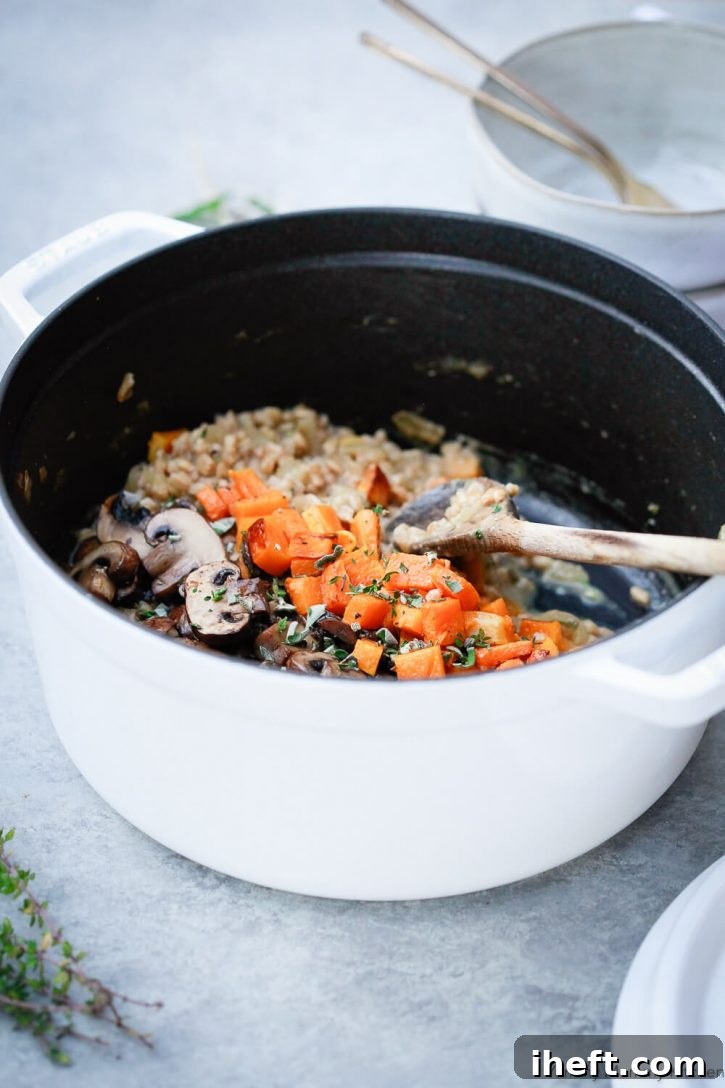
Step 6: Finishing Touches and Presentation
Once the farro is tender and the farrotto has reached your desired creamy consistency, stir in the fresh herbs (thyme and sage), optional butter (dairy or dairy-free like Miyoko’s for vegan versions), and Parmesan cheese (dairy or dairy-free). Season the farrotto generously with salt and pepper to taste. Gently fold in most of the sautéed mushrooms and roasted butternut squash, reserving some for garnish. This ensures the flavors are integrated throughout, while the reserved toppings add visual appeal and a fresh texture contrast. For an extra touch of elegance, consider garnishing with vibrant pomegranate arils, similar to how we adorned our Roasted Vegetable Risotto. Serve warm, enjoying the harmony of earthy, sweet, and savory flavors.
Effortless Farro Risotto in the Instant Pot
For those seeking a quicker, more hands-off approach, the Instant Pot pressure cooker is a game-changer for farrotto, just as it is for our other Instant Pot risotto recipes. This method allows you to achieve perfect results with minimal stirring, essentially enabling you to “set it and forget it” after the initial sautéing. It significantly reduces the active cooking time and makes this hearty dish accessible even on busy weeknights.
To make farro risotto in the Instant Pot, follow the same initial steps as the stovetop method up to Step 3 (sautéing aromatics and toasting farro). The key difference lies in the liquid amount and cooking time. Instead of gradually adding the full 32 oz. box of vegetable broth, you’ll need only about 3 cups of broth, as there’s very little evaporation in a pressure cooker. Add all 3 cups of broth to the pot at once after the wine has evaporated (or after toasting if omitting wine). Give it a good stir, making sure to scrape up any bits that might be stuck to the bottom of the pot to prevent a “BURN” error. Lock the lid into place, ensuring the valve is set to the sealing position. Select the “Pressure Cook” (or Manual) function and set the cooking time to 8 minutes on high pressure. Once the cooking time is complete, allow the pressure to naturally release for 5 minutes. This natural release helps to ensure the farro is perfectly tender and absorbs more liquid. After 5 minutes, carefully manually release any remaining pressure before removing the lid. Stir in the herbs, butter (if using), and cheese, and gently fold in the mushrooms and roasted butternut squash. Season to taste and serve immediately. This method drastically cuts down on monitoring and stirring, delivering a wonderfully creamy farrotto with minimal effort.
Serving Farrotto: Tips for a Complete Meal
Once your creamy farrotto is ready, it’s time to enjoy! Here are some suggestions for serving and enhancing your meal:
- Garnish and Flavor Enhancers: Serve farrotto warm, garnished with a sprinkle of fresh herbs like chopped parsley or chives. For an extra layer of decadence, a dollop of creamy soft cheese (such as goat cheese or a vegan cashew cream), additional grated Parmesan (dairy or dairy-free), or a pinch of truffle salt can be transformative. If you have truffle oil, a few drops drizzled over the top just before serving will add an exquisite earthy aroma.
- Main Dish Accompaniments: Farro risotto is hearty enough to be served as a satisfying main course. Pair it with a fresh, crisp side salad to balance the richness. A vibrant kale Caesar salad with Vegan Caesar Dressing makes an excellent choice. Other delightful options include a bright and earthy Beet Salad or an elegant Pear Salad with Maple Dijon Vinaigrette. These salads offer a refreshing contrast in texture and flavor.
- Leftovers and Reheating: Leftover farrotto can be refrigerated in an airtight container for up to 3-4 days. To reheat, gently warm it on the stovetop over low heat, adding a splash or two of extra vegetable broth or water to restore its creamy consistency. Avoid overheating, which can dry out the farro.
This mushroom and butternut squash farrotto is not just a meal; it’s an experience. Its depth of flavor, satisfying texture, and adaptability make it a dish you’ll want to revisit time and again. Enjoy the process of creating this delicious, wholesome, and comforting Italian-inspired masterpiece!
Mushroom Farro Risotto (Farrotto) with Butternut Squash
10 minutes
40 minutes
50 minutes
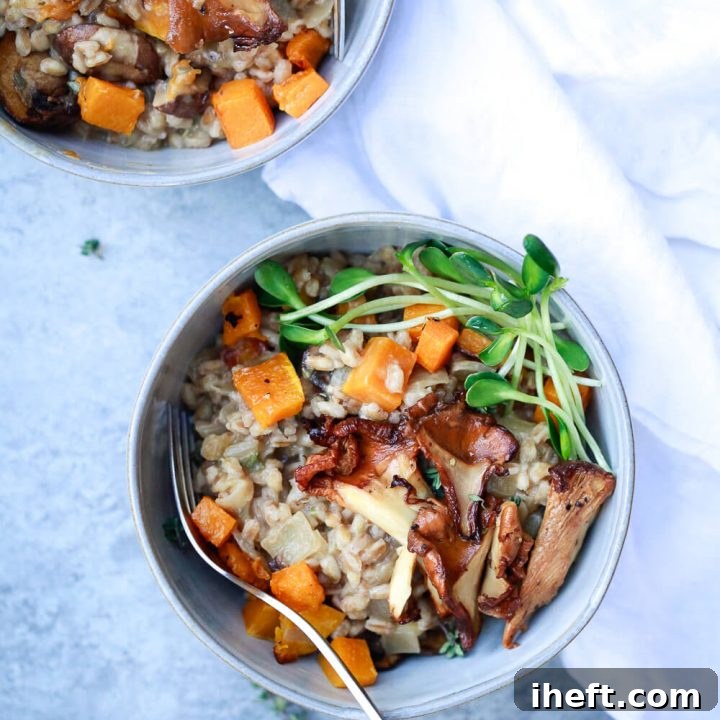
Farrotto! It’s risotto, but made with farro. Creamy mushroom farrotto, or farro risotto, with roasted butternut squash makes a beautiful vegetarian or vegan dinner that’s special enough for holidays like Thanksgiving. Make this farro risotto on the stovetop or in the Instant Pot pressure cooker.
Ingredients
- 3 tablespoons extra virgin olive oil, divided
- 1 small butternut squash, peeled and cubed
- 2 cups sliced mushrooms (Baby Bella, or wild varieties like maitake)
- 2 shallots, finely diced (or 1 small onion)
- 3 cloves garlic, minced
- 1 ½ cups pearled (quick-cooking) farro
- ½ cup dry white wine such as Pinot Grigio (or substitute with more vegetable broth)
- 32 oz. vegetable broth (for stovetop) OR 3 cups (for Instant Pot)
- 2 tablespoons fresh thyme leaves, chopped
- 5 fresh sage leaves, chopped
- 2 tablespoons butter, optional (use plant-based butter for vegan)
- 1 cup shredded or grated Parmesan cheese (use dairy-free for vegan)
- Salt and freshly ground black pepper, to taste
Instructions (Stovetop Method)
- Preheat your oven to 400°F (200°C). Peel the butternut squash, cut it into ½- to 1-inch cubes. Toss the cubes with 1 tablespoon of olive oil and season with salt and pepper. Spread in a single layer on a baking sheet and roast for 25-30 minutes, flipping halfway, until tender and lightly caramelized. Set aside.
- Meanwhile, heat one tablespoon of olive oil in a large saucepan or Dutch oven over medium heat. Add the sliced mushrooms and a pinch of salt and pepper. Sauté until the mushrooms are tender and have released their moisture, about 5 minutes. Remove from the pan and set aside, reserving some for garnish if desired.
- Add the remaining tablespoon of olive oil to the same pan. Add the diced shallots (or onion) and sauté until translucent, about 2 minutes. Stir in the minced garlic and cook for an additional minute until fragrant. Add the farro and sauté for about one minute to lightly toast the grains. Pour in the white wine (or broth substitute) and simmer until it has fully absorbed or evaporated.
- Keep the vegetable broth warm in a separate medium saucepan over low heat. Begin adding the warm broth to the farro, about ½ to 1 cup at a time. Stir frequently (though not necessarily continuously) until each addition of broth has been absorbed by the farro before adding more. Continue this process for 30-40 minutes, until the farro is tender and the risotto is creamy.
- Once the farro is tender, stir in the fresh thyme and sage, optional butter, and Parmesan cheese. Season generously with salt and pepper to taste. Gently stir in the cooked mushrooms and most of the roasted butternut squash. Serve warm, topping individual portions with any reserved mushrooms and squash.
Instant Pot Farro Risotto Instructions
- To prepare farro risotto in the Instant Pot, follow steps 1, 2, and 3 from the stovetop method above using the sauté function on your Instant Pot. Ensure you sauté the mushrooms, shallots, garlic, and farro, and deglaze with wine (or broth).
- After deglazing, add only 3 cups of vegetable broth to the Instant Pot. Stir well, making sure to scrape any bits from the bottom of the pot to prevent scorching.
- Secure the lid on the Instant Pot and set the steam release valve to the sealing position. Select the “Pressure Cook” (or Manual) setting on high pressure and set the timer for 8 minutes. Once the cooking cycle is complete, allow a natural pressure release for 5 minutes. After 5 minutes, carefully quick-release any remaining pressure before opening the lid.
- Stir in the fresh herbs, optional butter, and Parmesan cheese. Season with salt and pepper to your preference. Gently fold in the cooked mushrooms and most of the roasted butternut squash. Serve warm, garnished with any remaining toppings.
Notes
For an elevated flavor, a sprinkle of truffle salt or a few drops of truffle oil at the end can add a luxurious, earthy dimension to this farrotto.
Nutrition Information:
Yield: 4 servings
Serving Size: 1 (approx. 1.5 cups)
Amount Per Serving (estimated):
Calories: 276Total Fat: 17gSaturated Fat: 5gTrans Fat: 0gUnsaturated Fat: 10gCholesterol: 16mgSodium: 839mgCarbohydrates: 18gFiber: 4gSugar: 6gProtein: 4g
Nutrition information is an estimate calculated by Nutritionix for general guidance. I am not a nutritionist and cannot guarantee absolute accuracy. If your health depends on precise nutrition information, please calculate with your preferred tool.