The Art of Wet Dough Sourdough
The Ultimate High-Hydration Sourdough Bread: Achieve a Perfect Open Crumb
Welcome to your new favorite sourdough recipe! This high-hydration sourdough bread is remarkably easy to make, even for beginners, and requires virtually no kneading. Prepare to bake a masterpiece with a wonderfully crisp crust and a delightfully soft, airy, and chewy interior. It’s perfect for dipping in olive oil, crafting gourmet sandwiches, or simply enjoying with butter. Say goodbye to dense loaves and hello to the light, lacy texture you’ve always dreamed of!
My Journey to the Perfect Homemade Sourdough
For years, I sought the ideal homemade sourdough bread recipe. My initial foray into sourdough baking began with traditional classes, which, while educational, often led to finicky recipes demanding extensive kneading and incredibly precise timing. The outcome was often dense, whole wheat loaves that, while rustic, lacked the light and airy texture I truly desired.
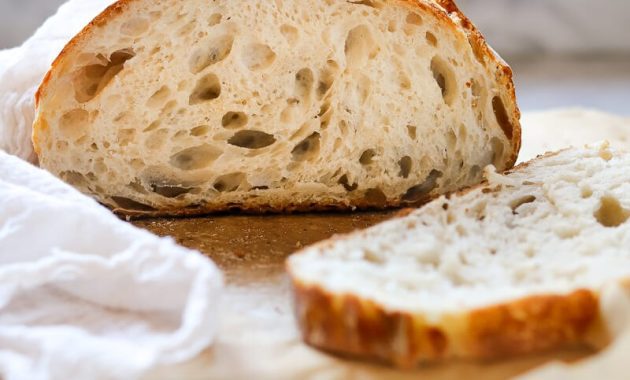
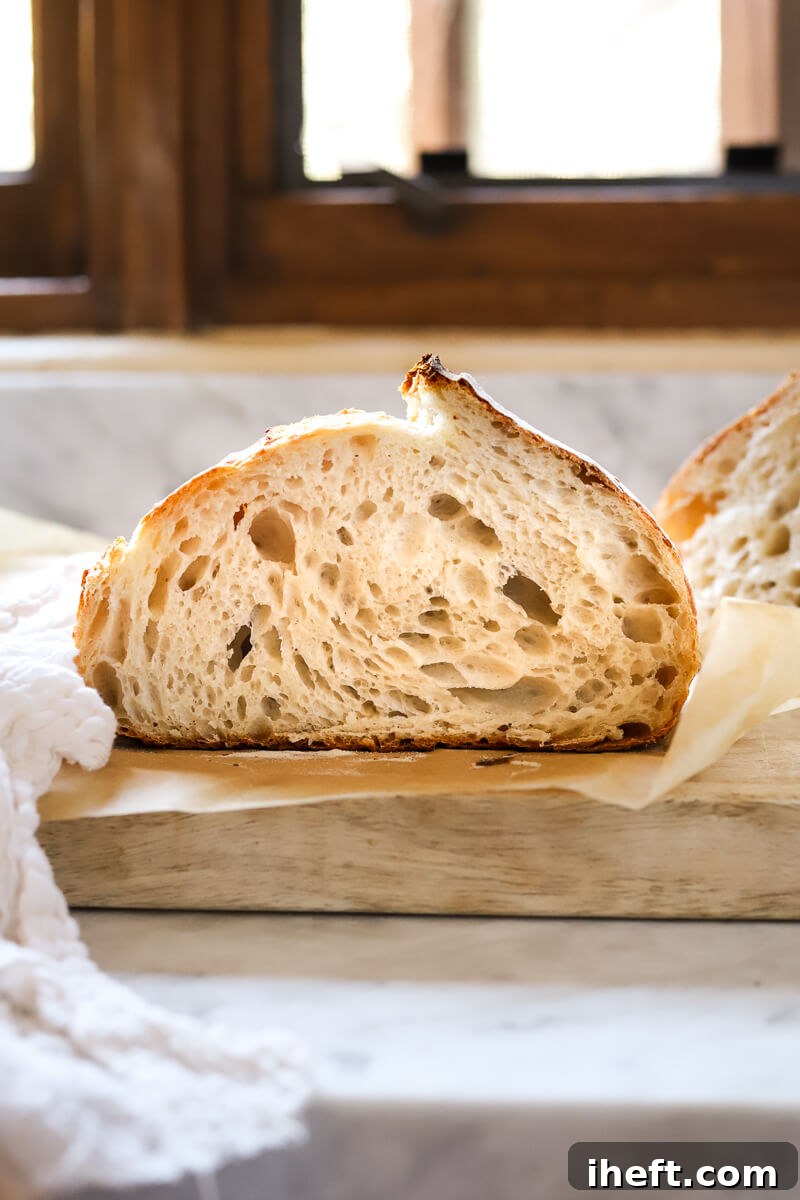
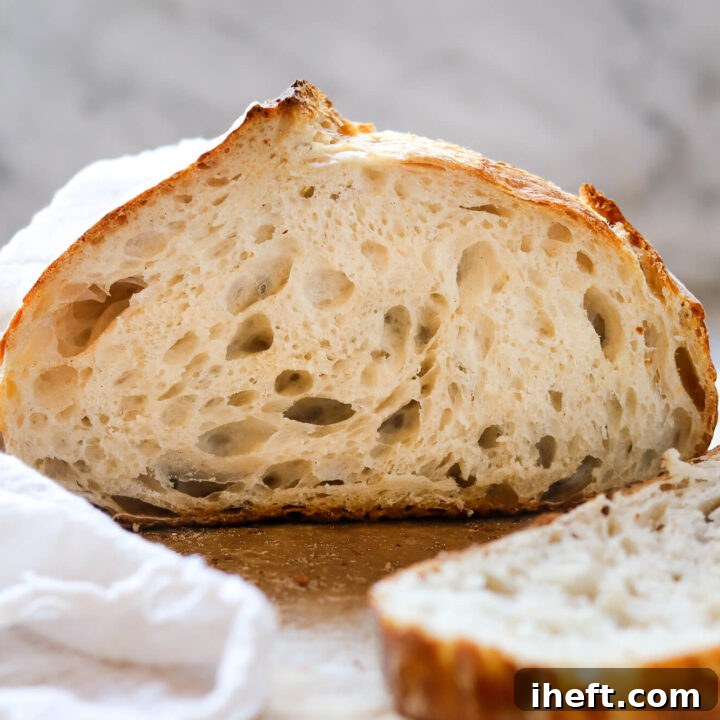
After countless attempts and experimenting with numerous sourdough recipes, I finally perfected this simple, non-finicky, and utterly delicious method. This recipe consistently yields a loaf with a beautifully soft and chewy interior, characterized by an abundance of large holes, a delicate lacy texture, and a truly open crumb. The exterior boasts a perfectly golden, crispy crust that crackles with every slice.
What makes this particular recipe so exceptional is its incredible flexibility. It’s practically a no-knead process, freeing you from intensive labor. Moreover, the timing is wonderfully forgiving – if life calls, simply pop the dough into the fridge, and it will patiently wait for you. This adaptability and consistently delicious result mean I happily bake this homemade sourdough bread at least once a week.
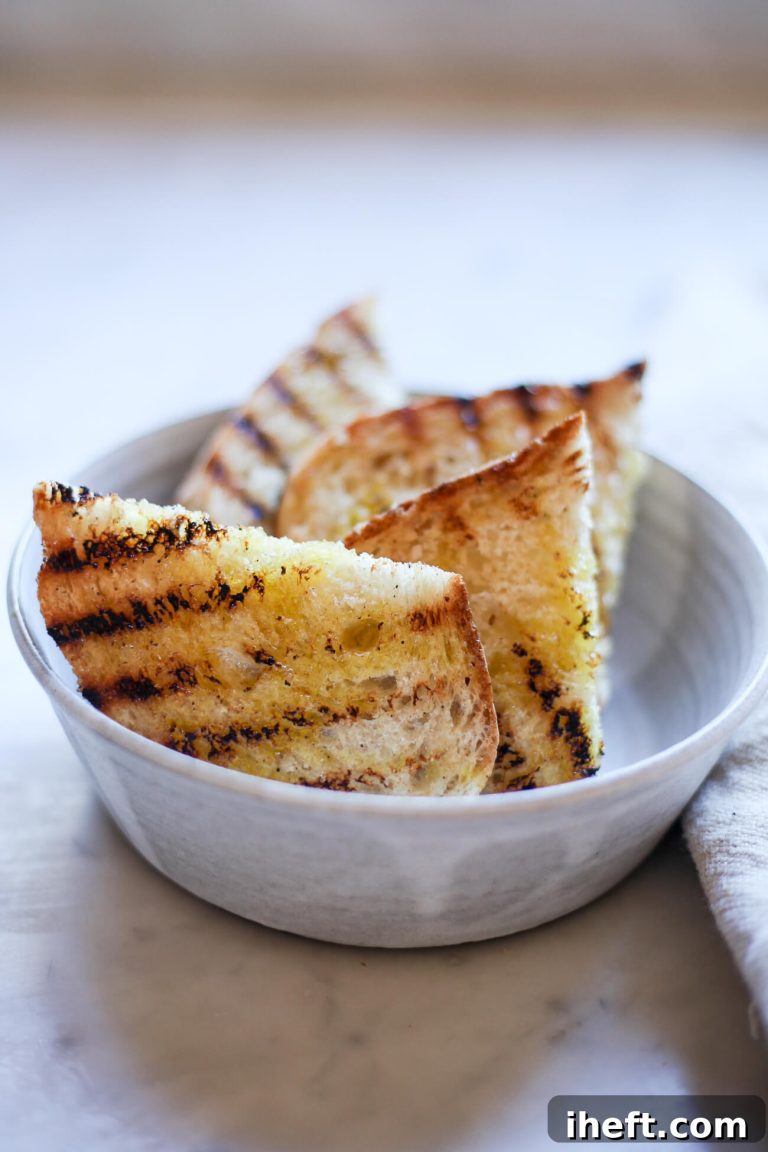
This versatile loaf is the perfect accompaniment for so many meals. Imagine pairing a slice with a hearty bowl of soup, topping it with creamy avocado toast, or using it as the base for vibrant bruschetta. Its robust flavor and satisfying texture elevate any dish.
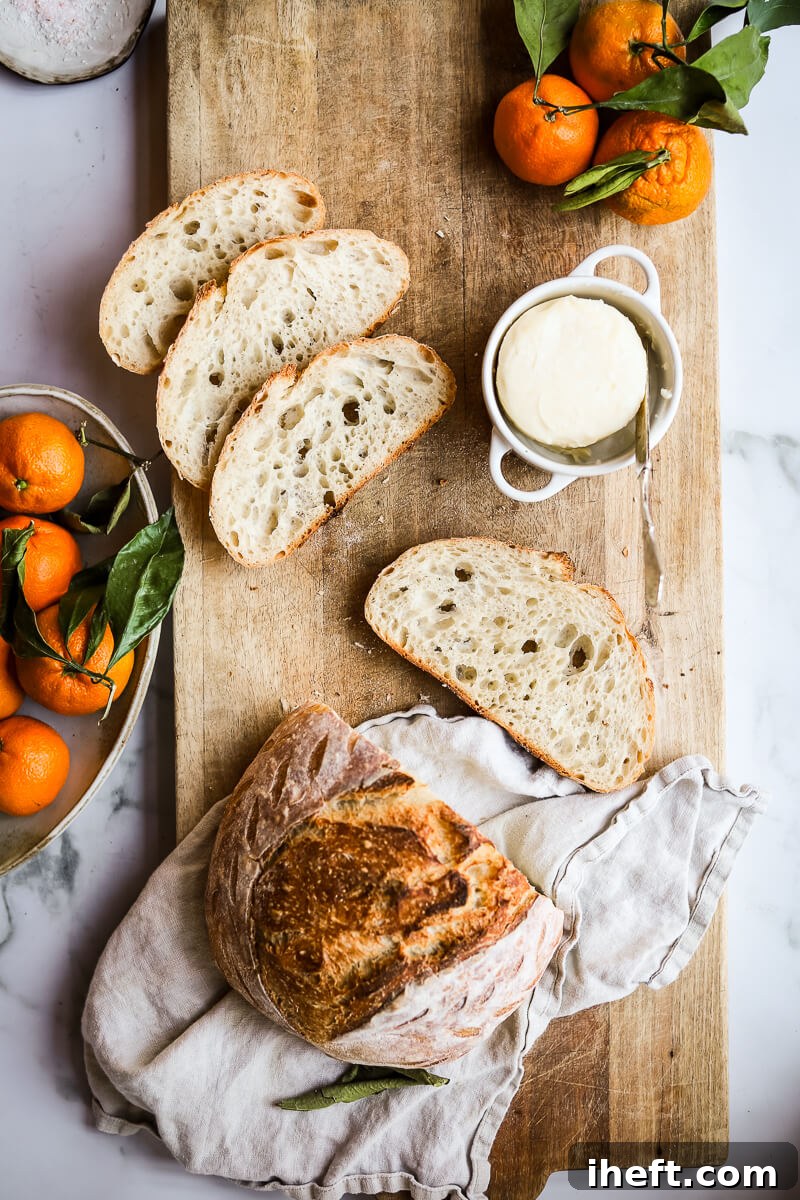
What Exactly is Sourdough Bread?
Sourdough bread is a truly ancient and artisanal craft, relying on a natural fermentation process rather than commercial yeast. At its heart lies a “sourdough starter” – a living culture of wild yeast and beneficial bacteria cultivated from flour and water. This starter is the magical ingredient that leavens the bread, giving it its distinctive rise and characteristic tangy flavor.
Unlike conventional bread, sourdough undergoes a slow fermentation, which not only develops a more complex, nuanced taste but also contributes to its wonderfully chewy and airy texture. Once you cultivate a strong, vibrant sourdough starter, it can be maintained and used indefinitely, becoming a perpetual source for countless delicious creations. Beyond this simple boule or batard, your active starter can transform into everything from indulgent Sourdough Cinnamon Rolls to fluffy pancakes and crispy crackers.
Sourdough may even offer additional health benefits compared to other baked goods. The live cultures present in the starter and the prolonged natural fermentation process are believed to break down complex carbohydrates and gluten, potentially making the bread easier to digest and reducing its glycemic index. This means a slower release of sugars into the bloodstream, which can be beneficial for overall health.
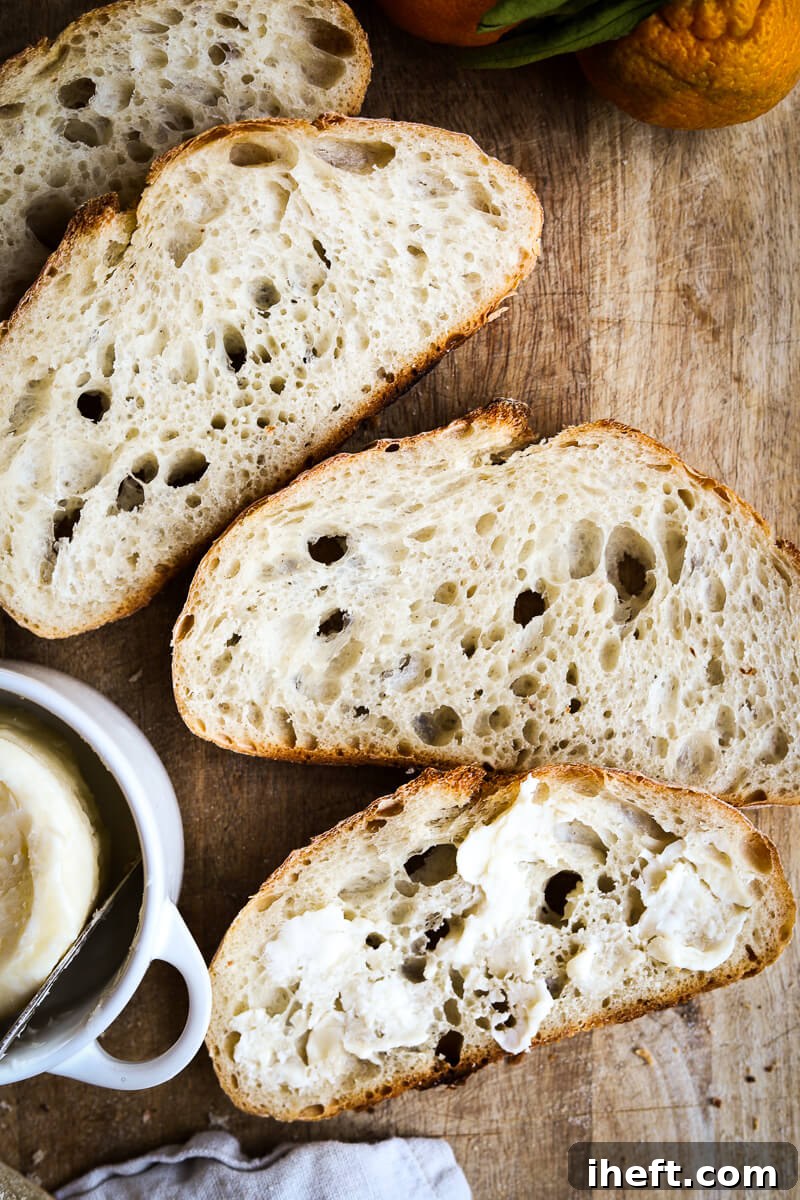
Unlocking the Secrets to an Open Crumb in Sourdough Bread
While some bakers appreciate a denser sourdough, many aspire to achieve that coveted crusty loaf with a soft, airy interior, boasting numerous large holes and a delicate, open crumb structure. If this is your ideal sourdough, then you’ve found the right recipe! Mastering the open crumb is within your reach with these key insights:
Essential Tips for a Beautiful Open Crumb:
- Embrace High Hydration: A dough hydration level of around 75% is often the sweet spot for encouraging an open crumb. This wetter dough provides more moisture for steam production during baking, which helps create those characteristic air pockets.
- Cultivate a Strong Starter: Your sourdough starter is the engine of your bread. An active, vigorous starter is paramount for optimal fermentation, robust gas production, and maximum oven spring – all critical factors for an open crumb. Ensure your starter is consistently fed and active before use.
- Choose the Right Proofing Basket: While round bannetons are common, opting for an oval banneton (proofing basket) for a batard shape can sometimes lead to a slightly more open structure due to the way the dough’s tension is developed during shaping and proofing.
- Prioritize Bread Flour: Always use high-quality bread flour over all-purpose flour. Bread flour has a higher protein content (typically 12-14%), which translates to stronger gluten development. Stronger gluten creates an elastic network capable of trapping more gas, resulting in a better rise and a wonderfully chewy, airy texture.
- Avoid Over-Proofing: This is a common pitfall! An over-proofed dough can collapse in the oven, leading to a dense, gummy crumb. The dough needs to be just right – sufficiently fermented to develop flavor and strength, but not so much that its structure weakens. Pay close attention to visual cues like bubbles and overall volume, rather than solely relying on time.
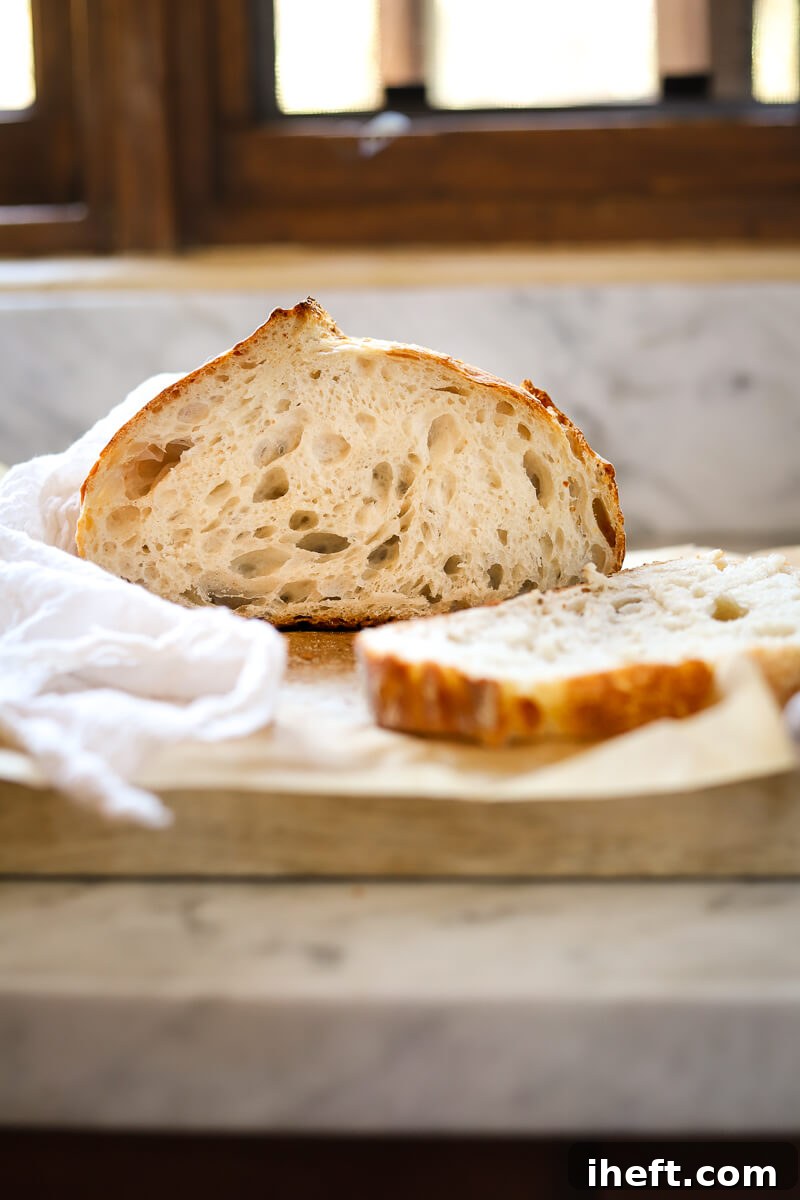
Understanding High Hydration Sourdough
In sourdough baking, “hydration” refers to the ratio of water to flour in your dough. High-hydration sourdough typically means a dough with a 70% or higher water content relative to the flour weight. This percentage plays a crucial role in the final texture and structure of your bread. Let’s break down hydration levels:
- Low Hydration (50-65%): These doughs are stiffer, firmer, and generally easier to handle. They produce denser bread types, ideal for sandwich loaves, bagels, or pretzels.
- Moderate Hydration (66-70%): Offering a good balance, these doughs are more elastic and tend to yield airier breads with a decent open crumb. They strike a balance between manageability and desirable texture.
- High Hydration (71-85%): These doughs are noticeably wetter and stickier, requiring a bit more confidence and specific handling techniques. However, they reward the baker with a more significantly open crumb, a thinner and crispier crust, and a delightfully chewier texture. Examples include artisan country-style loaves and ciabatta.
- Very High Hydration (86%+): Extremely wet and challenging, these doughs often necessitate advanced techniques like coil folds and lamination. They are used for ultra-open crumb specialty breads and can be quite a messy but rewarding endeavor.
This recipe meticulously balances 500 grams of bread flour with 375 grams of water, resulting in a 75% hydration sourdough. This precise ratio is truly the sweet spot for achieving an exceptionally light and airy interior without making the dough overly challenging or unmanageable for the home baker. It provides enough moisture to encourage a gorgeous open crumb while remaining forgiving enough for those new to the high-hydration world.
Gather Your Essentials: Sourdough Ingredients & Equipment
Baking exceptional sourdough starts with quality ingredients and the right tools. Here’s a detailed look at what you’ll need for this high-hydration recipe:
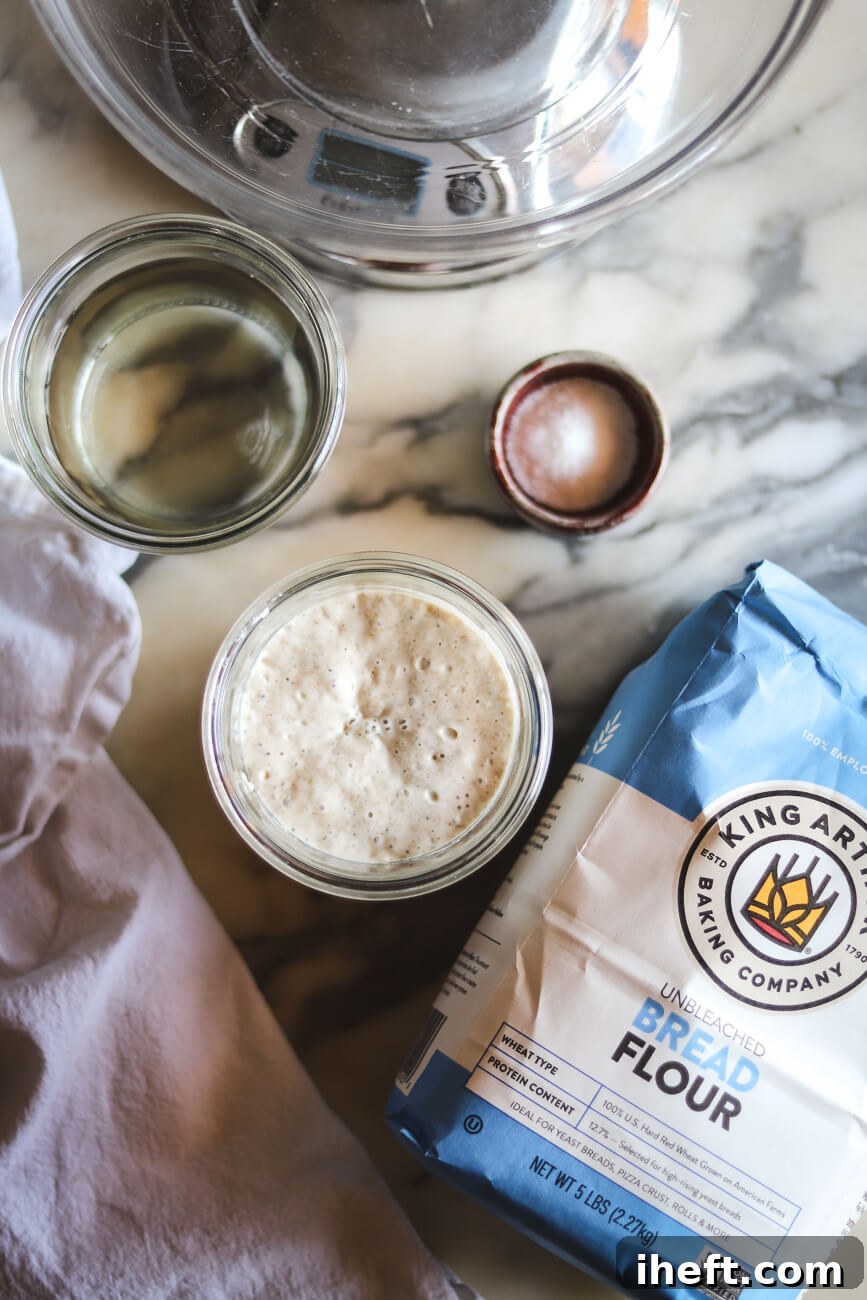
Key Sourdough Ingredients:
- Active Sourdough Starter: This is the heart of your bread. Ensure your starter is robust and active, fed sufficiently for the recipe, at its peak (doubled in size and just beginning to recede), and bubbling vigorously. A healthy starter is crucial for a strong rise and rich flavor.
- Water: Use good quality, room temperature or lukewarm water. Water that is too hot can kill the delicate wild yeast in your starter, while cold water will significantly slow down the fermentation process, impacting your baking timeline. Filtered water is often recommended to avoid chlorine, which can harm your starter.
- Bread Flour: As discussed, bread flour is superior for high-hydration sourdough. Its higher protein content (typically 12-14%) is essential for developing strong gluten, which traps gases produced during fermentation, leading to that desirable open crumb and chewy texture.
- Fine Sea Salt: Salt isn’t just for flavor; it also helps regulate fermentation and strengthens the gluten structure. Fine sea salt dissolves easily and distributes evenly throughout the dough. Avoid iodized table salt, which can sometimes interfere with fermentation.
- White Rice Flour (Optional, but Recommended): This is ideal for dusting your proofing basket and the top of your loaf before scoring and baking. Unlike wheat flour, rice flour doesn’t burn as easily at high temperatures in the oven, helping your scoring patterns stand out beautifully. It also prevents the dough from sticking to your banneton.
Essential Sourdough Equipment:
Having the right tools makes the sourdough process much smoother and more enjoyable:
- Kitchen Scale: Precision is key in sourdough baking. A digital kitchen scale allows you to accurately weigh your ingredients (flour, water, starter, salt) for consistent and reliable results. Volume measurements (cups) can be highly inaccurate, especially with flour.
- Proofing Basket (Banneton): This basket, often made from rattan, provides support for your dough during its final rise (cold fermentation), helping it hold its shape and develop a beautiful pattern on its surface. An oval banneton is preferred for batard shapes.
- Parchment Paper: Indispensable for transferring your delicate dough into a hot Dutch oven without sticking, and for easy cleanup.
- Bread Lame: A specialized razor blade on a handle, a bread lame allows you to make precise, clean scores on your dough. These scores guide the oven spring and create stunning patterns on your finished loaf.
- Dutch Oven: This heavy, lidded pot is the secret to achieving a professional-quality crust and maximum oven spring in a home oven. It traps steam released by the dough, mimicking a commercial baker’s oven, which keeps the crust soft initially, allowing the bread to expand fully before it sets.
The exact products I use and recommend are often linked within the recipe card details at the end of this guide.
Mastering Artisan Sourdough Bread: A Step-by-Step Guide
Embark on your journey to baking incredible artisan sourdough with this detailed, easy-to-follow guide. Each step is crucial for developing flavor, texture, and that gorgeous open crumb.
Step 1: Build a Strong Levain
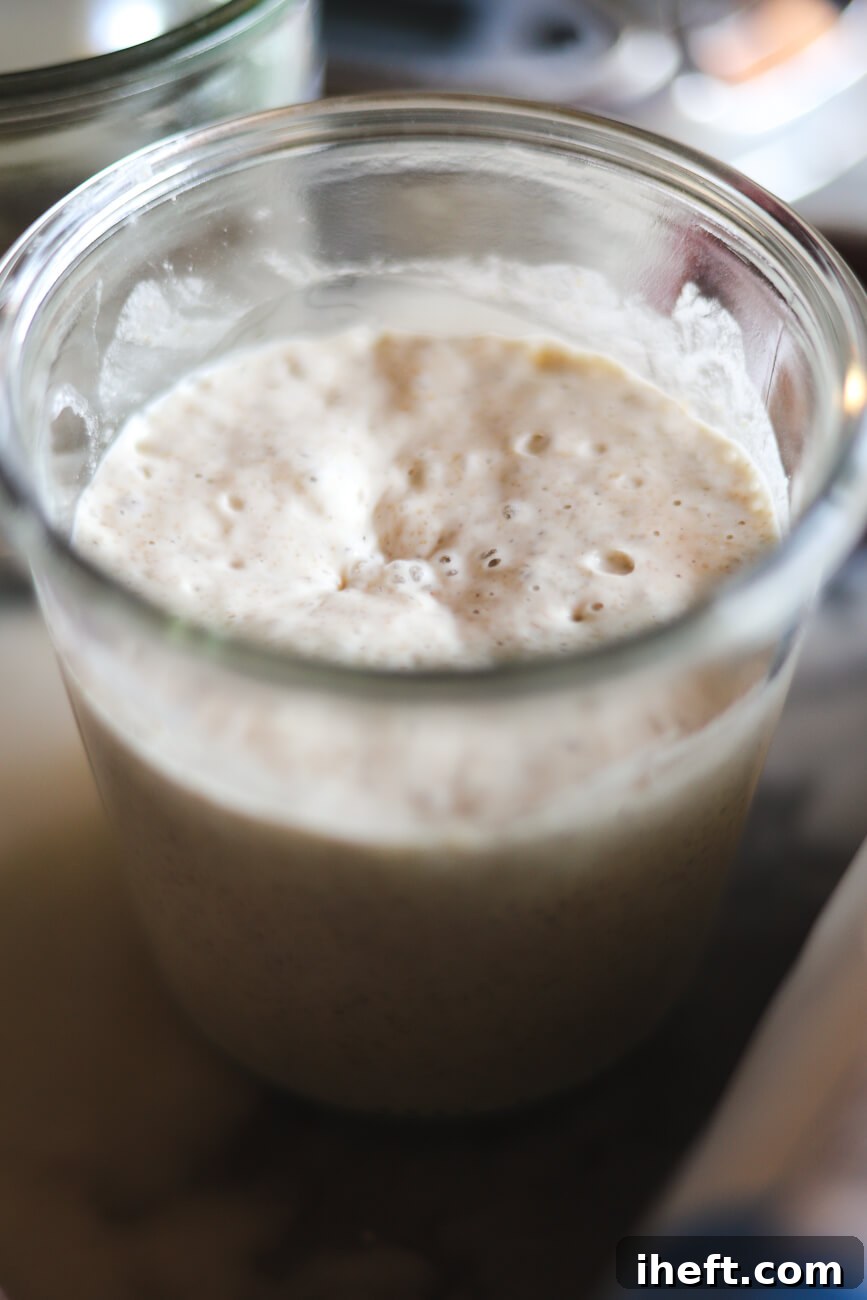
The foundation of a great sourdough loaf is a robust, active starter. Approximately 4-12 hours before you plan to mix your dough, you’ll “build a levain.” This essentially means feeding a small portion of your sourdough starter with fresh flour and water to create a larger, highly active culture specifically for baking. For this recipe, I typically combine 40 grams of existing starter with 80 grams of water and 80 grams of flour. This yields enough levain for the recipe with a little extra to continue feeding your main starter.
Your levain is ready when it has at least doubled in size, is visibly filled with numerous bubbles on the surface and sides, and has just begun to show signs of falling (a slight concave dip on top). This indicates it has reached its peak activity and is bursting with wild yeast, ready to leaven your bread beautifully.
Step 2: Gently Mix the Dough
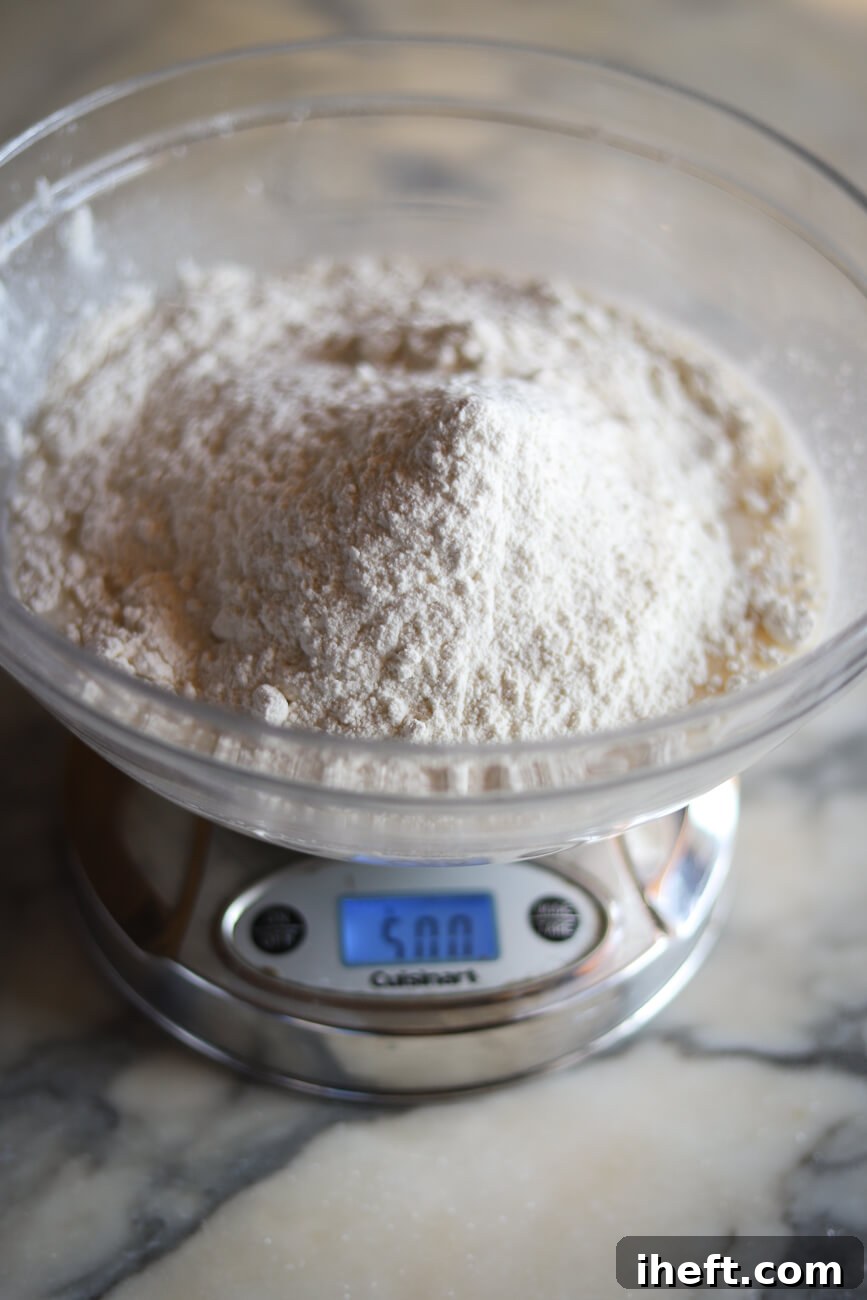
This easy sourdough recipe champions simplicity – no electric mixer is required. I prefer to combine all ingredients in a single bowl placed directly on my kitchen scale for maximum accuracy. Begin by mixing your active levain with the lukewarm water until well combined. Then, add the bread flour and fine sea salt. Use a sturdy rubber spatula or wooden spoon to stir everything together until a sticky, shaggy dough forms. At this initial stage, the dough will feel quite rough and difficult to handle – this is perfectly normal and expected for a high-hydration dough. Resist the urge to add more flour!
Once mixed, cover the bowl with a damp kitchen towel and let the dough rest for about 30 minutes to an hour. This resting period, known as “autolyze,” is crucial. It allows the flour to fully hydrate and enzyme activity to begin, which naturally starts the gluten development process. You’ll notice the dough becomes significantly smoother, more pliable, and much easier to work with after this rest, setting the stage for a higher-quality sourdough.
Step 3: Perform Stretch-and-Folds (Optional but Recommended)
After the autolyze, you can perform a series of gentle stretch-and-folds. This technique helps to develop gluten structure without the need for intensive kneading. With wet hands, gently grab one side of the dough from the bottom, stretch it upwards, and fold it over to the center. Rotate the bowl a quarter turn and repeat this process three more times, working your way around the dough. This constitutes one “set” of stretch-and-folds.
Cover the bowl again with the damp towel and let it rest for another 30 minutes. Ideally, perform 2-3 more sets of stretch-and-folds, spaced every half hour, if your schedule permits. While this step significantly enhances gluten development and contributes to a beautiful open crumb, it’s not strictly mandatory. Don’t stress if you can only manage one or two sets; the autolyze and long fermentation will still do much of the work.
Step 4: Bulk Rise (First Fermentation)
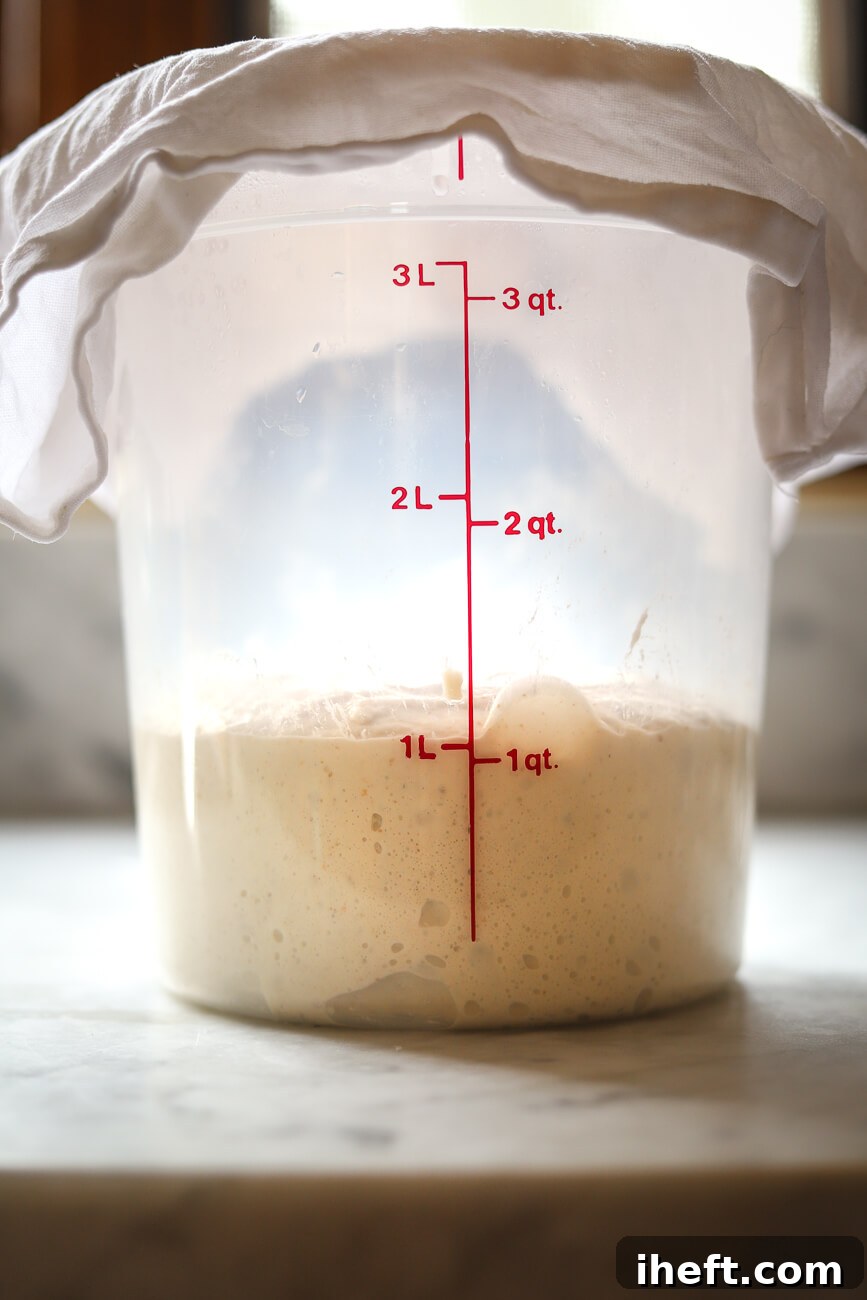
This stage, also known as the bulk fermentation, is where the magic of yeast activity truly takes hold. After your stretch-and-folds, the dough needs to rest and ferment for several hours at room temperature. For easy monitoring, I highly recommend placing your dough into a straight-sided container (like a clear food storage container). This makes it incredibly simple to observe when your dough has doubled in volume, which is the primary indicator of a successful bulk rise. If you don’t have one, a regular bowl is fine, though judging the rise will be more challenging.
During this period, the dough will expand, become bubbly, and feel light and aerated. The time required for bulk fermentation varies significantly based on several factors: the ambient temperature of your kitchen, the strength of your starter, and the specific amount of starter used in the recipe. In a home environment around 70°F (21°C), this recipe typically takes anywhere from 5 to 8 hours, with the most significant rise often occurring towards the end of the period. Once your dough has doubled (or nearly doubled) and exhibits plenty of visible bubbles on the sides and underneath, it’s ready for the next step. If your bulk rise is complete but you’re not ready to proceed, simply cover the container and refrigerate the dough to slow down fermentation until you are.
Step 5: Shape Your Loaf
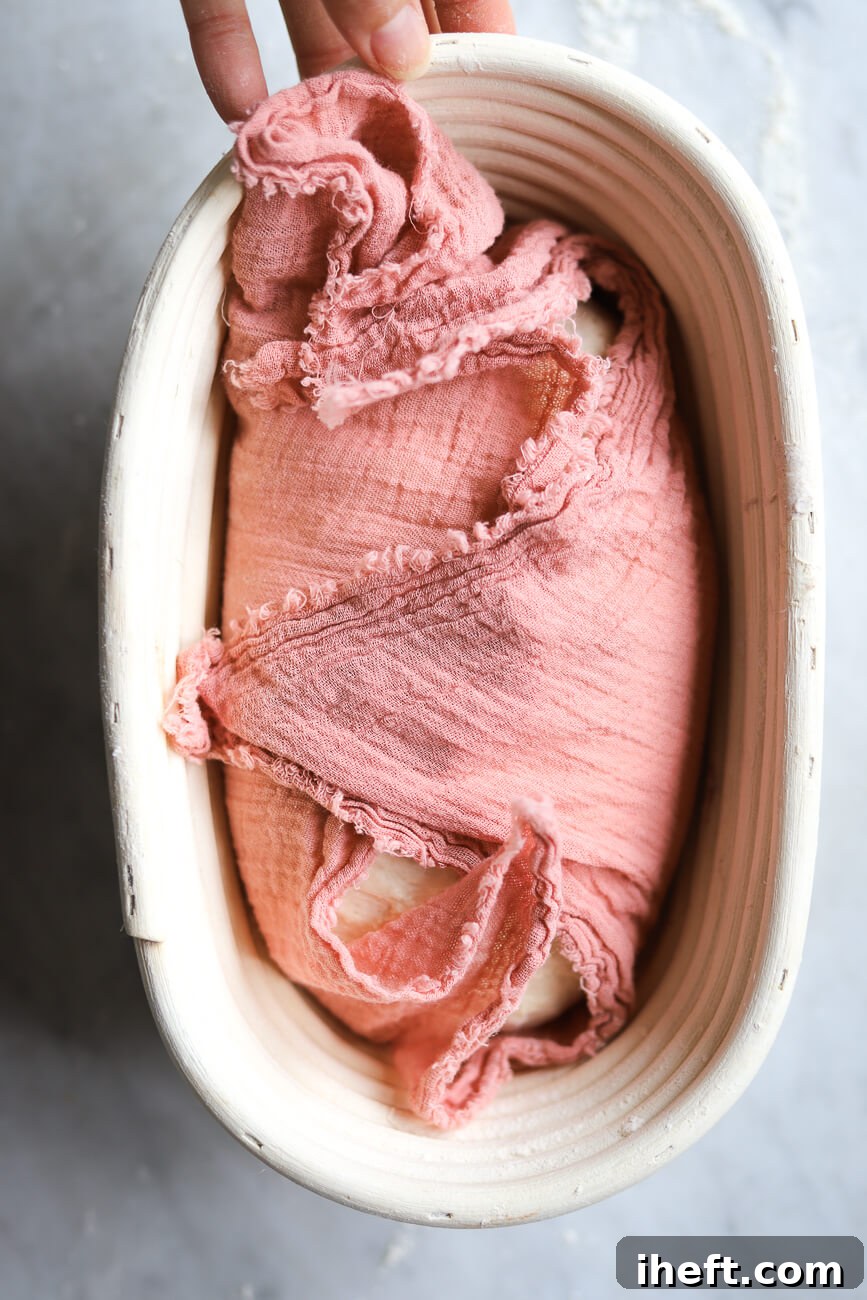
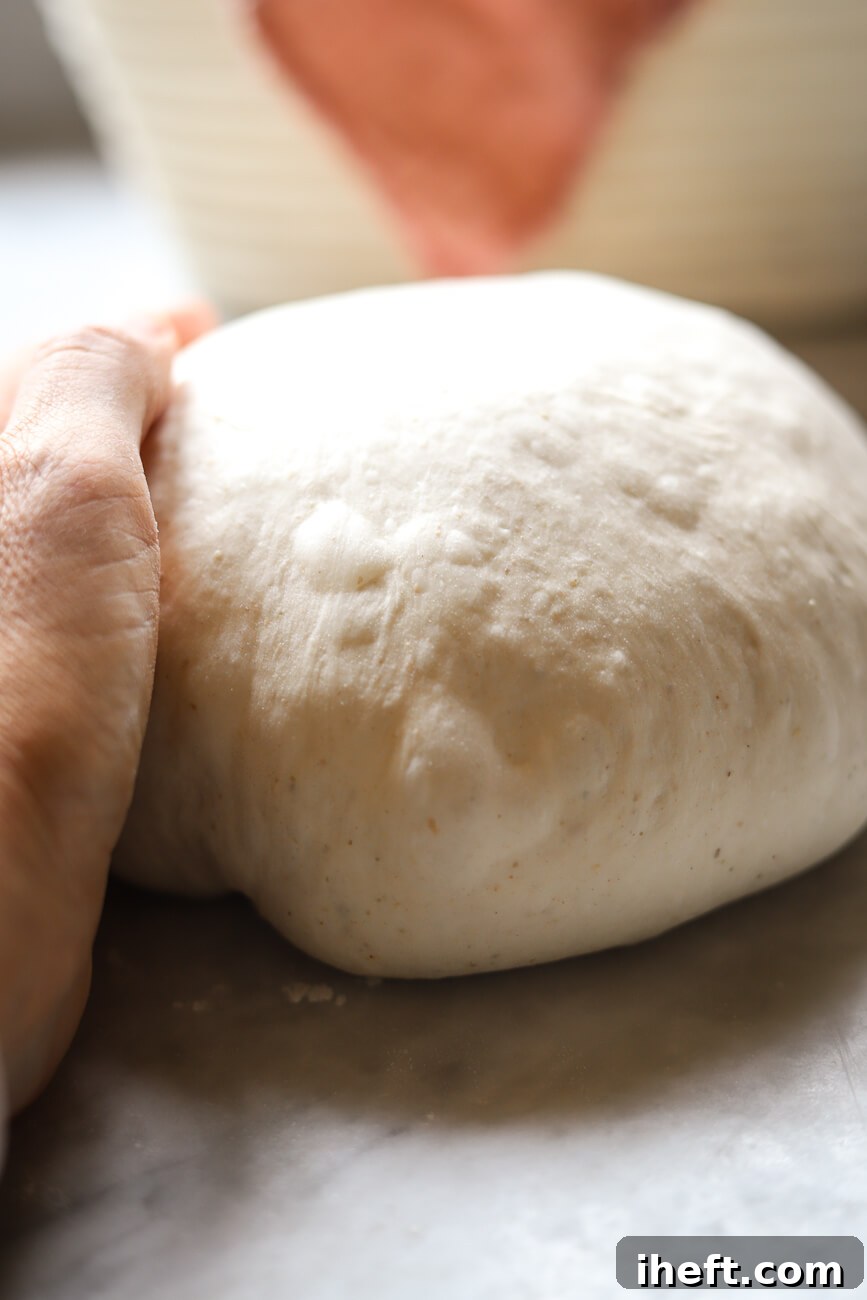
Once the bulk rise is complete, it’s time to transform your aerated dough into a beautifully structured loaf. Gently turn the dough out onto a lightly floured work surface. The goal here is to handle the dough as minimally and gently as possible to avoid degassing it too much. Gently shape your sourdough into either a round boule or an oval batard, depending on your preference and proofing basket. If you need visual guidance, many online tutorials demonstrate effective shaping techniques. The key is to build sufficient surface tension without tearing the dough or pushing out all the precious gas developed during fermentation. Gently cupping the dough and pulling it towards you across the work surface can help create this tension.
Step 6: Second Rise (Cold Fermentation)
The second rise, often called the final proof or cold fermentation, takes place in the refrigerator. This crucial step serves multiple purposes: it further develops the complex flavors of sourdough, helps the dough firm up and become easier to handle, and allows its shape and structure to set. After shaping, gently place your dough, seam-side up, into a well-floured proofing basket (banneton). If using a linen-lined banneton, ensure the linen is also floured to prevent sticking. Cover the basket loosely with a plastic bag or plastic wrap to prevent the dough from drying out.
You can refrigerate your shaped dough for as little as an hour, or for an extended period of up to 3 days. I find the optimal balance of flavor development, manageability, and oven spring occurs after a cold fermentation of 12-24 hours. The longer the cold proof, the more pronounced the tangy flavor will be.
Step 7: Score Your Loaf
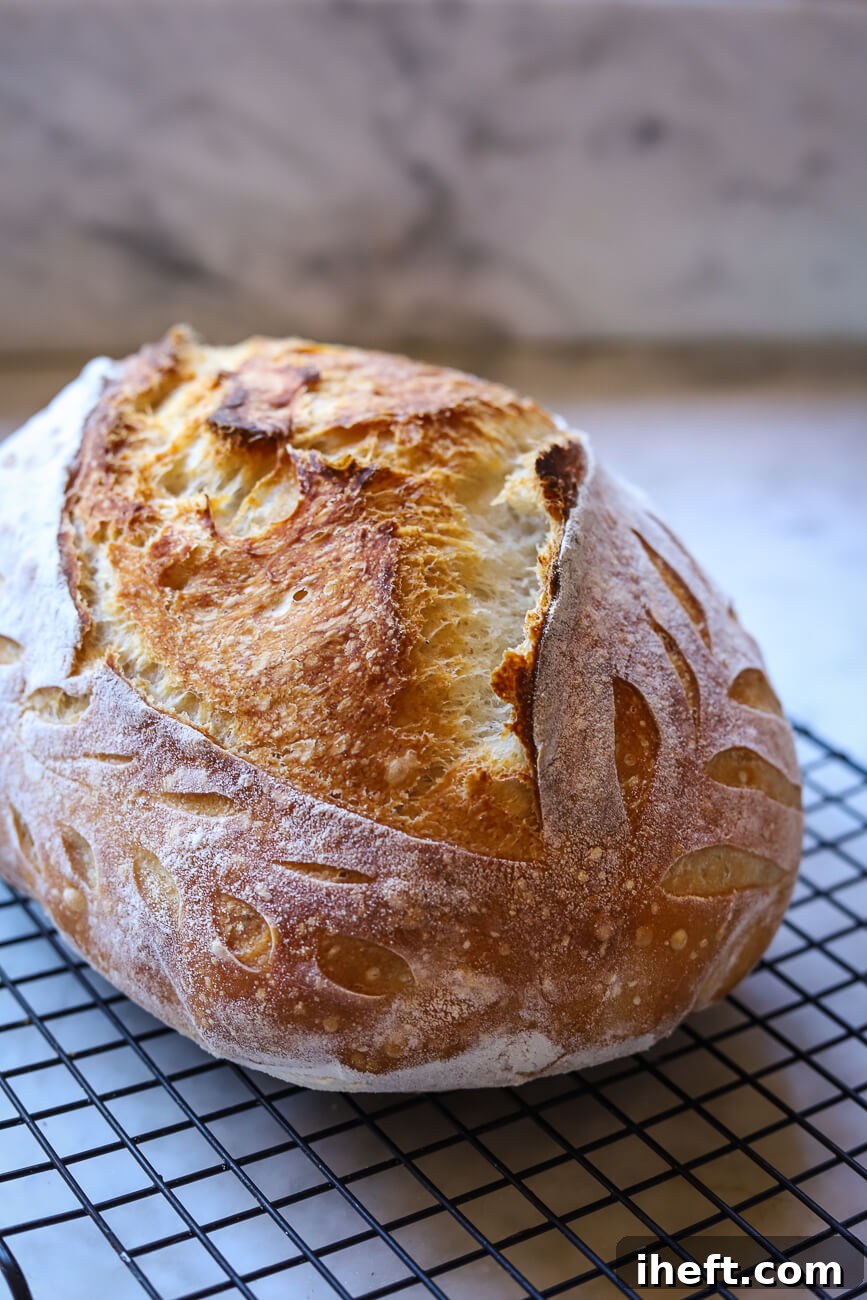
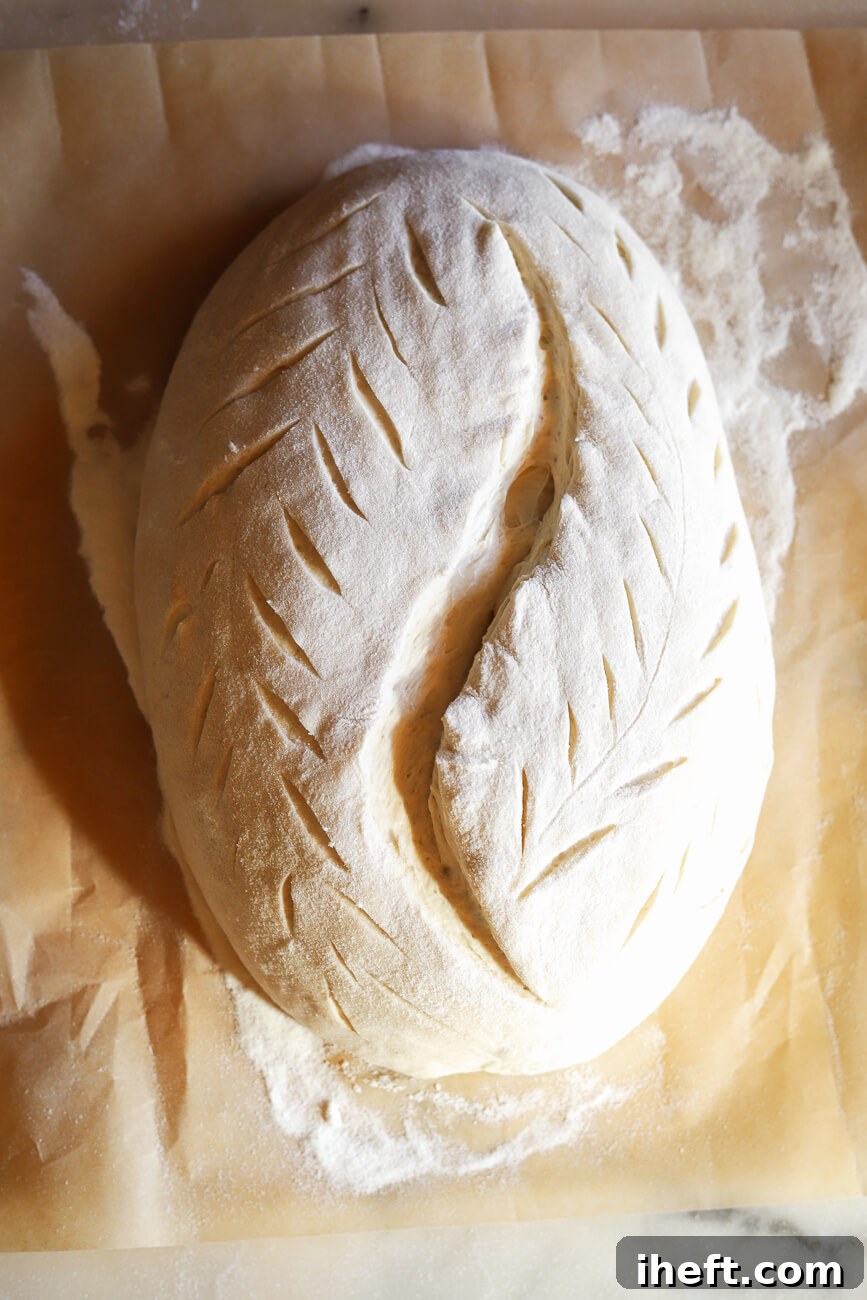
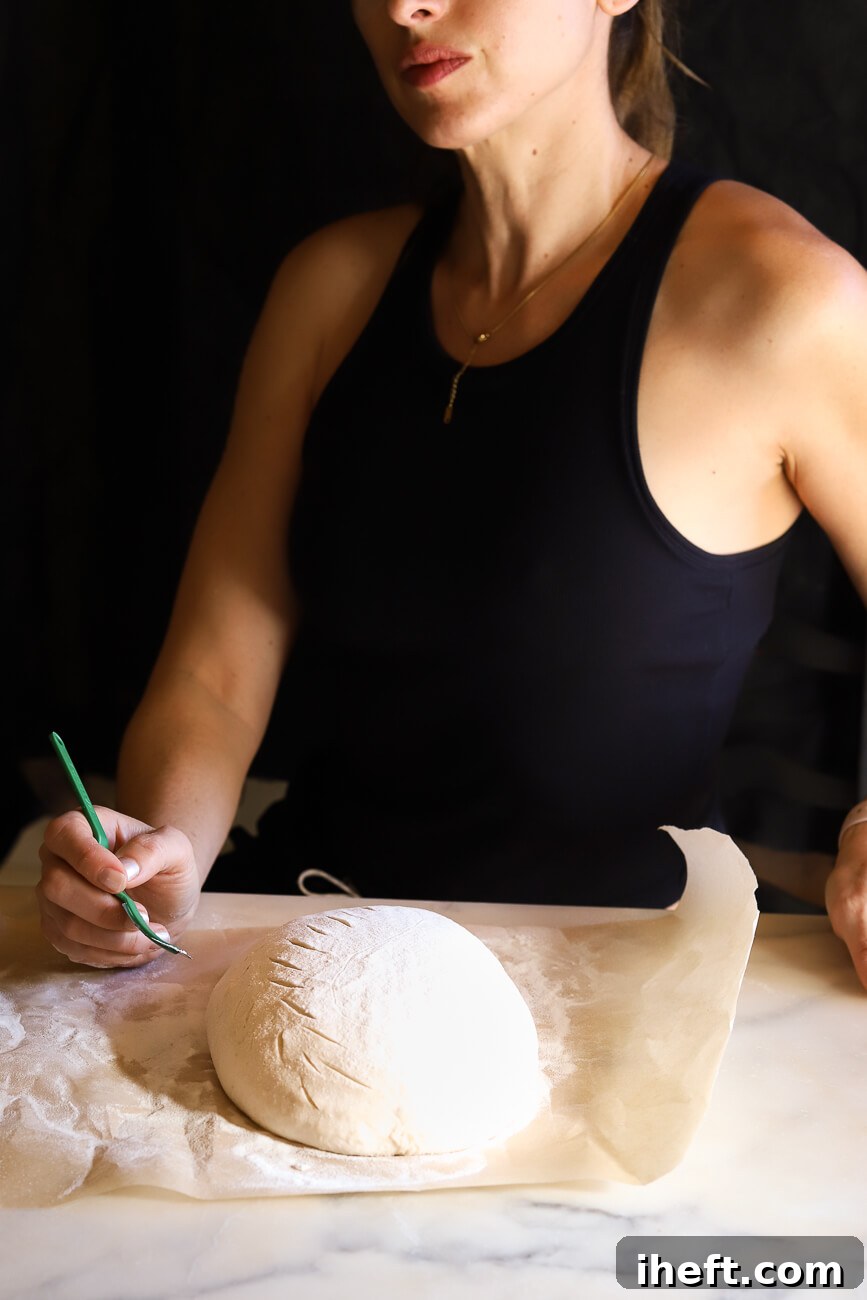
Scoring your sourdough loaf before baking is both an art and a science. Decorative, shallow scores (like wheat stalks or simple designs) add visual appeal but have minimal impact on the final rise. However, it is essential to make at least one deep, functional score. This deep cut acts as a “vent” that allows the dough to expand freely and dramatically during oven spring, preventing uncontrolled tearing and helping achieve maximum volume. Common functional scores include a single deep slash down the middle, along the side (for a batard), or an “X” shape (for a boule).
When scoring, make any decorative shallow cuts first, just piercing the surface “skin” of the dough. Then, immediately before placing the dough into the oven, make your crucial deeper slash, aiming for approximately ¾ inch deep. A sharp bread lame is indispensable for clean, precise cuts.
Step 8: Bake to Perfection
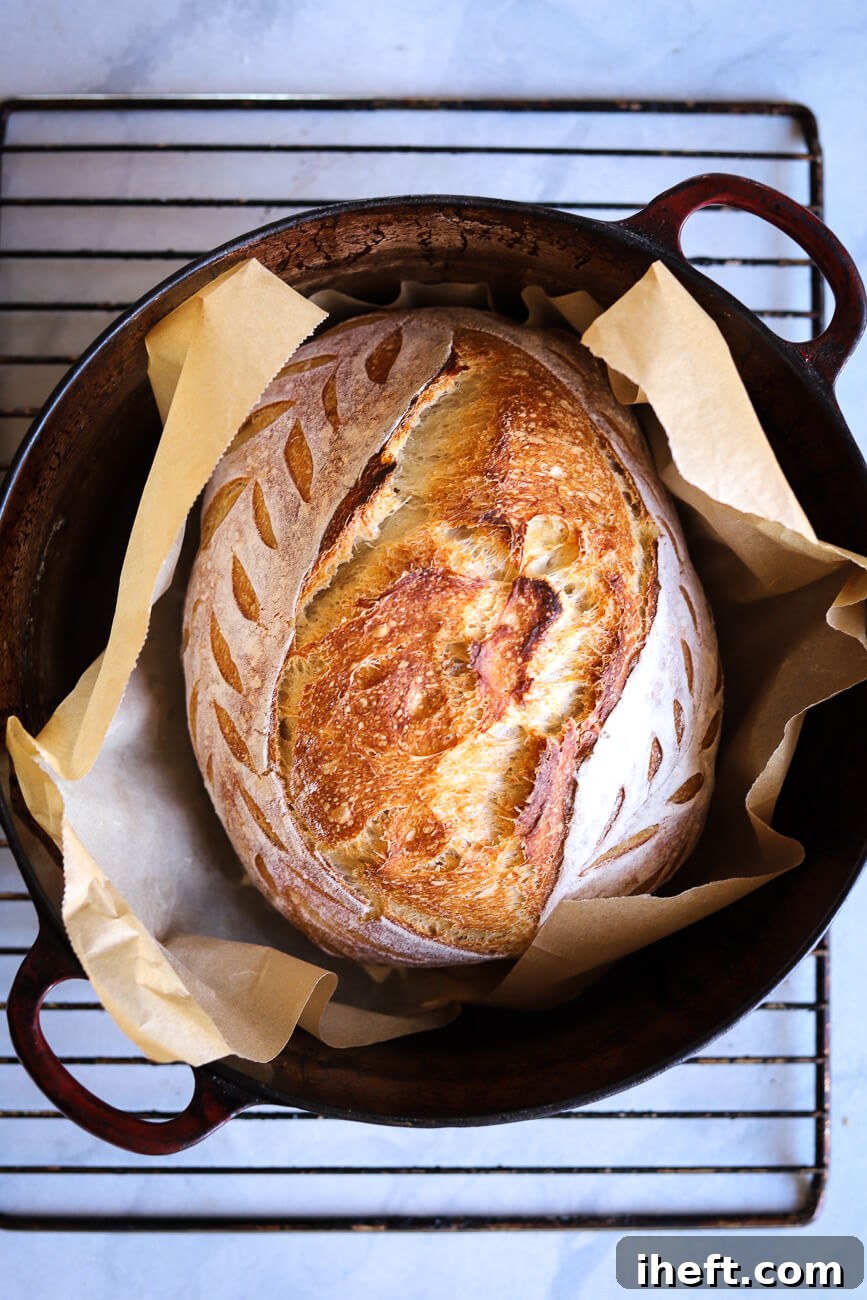
The Dutch oven is the home baker’s secret weapon for achieving truly artisanal sourdough boules and batards. It creates a perfectly controlled, intensely hot, and steamy environment that is crucial for a fantastic crust and incredible oven spring. Begin by placing your empty Dutch oven with its lid into your oven and preheating it to a scorching 500°F (260°C) for at least 40 minutes. This ensures the pot is uniformly hot, delivering an initial burst of heat that triggers powerful oven spring and helps develop that signature crust.
Carefully remove the blazing hot Dutch oven from the oven. Gently lower your scored dough (still on its parchment paper) into the pot. Immediately cover it with the lid and return it to the oven. Reduce the temperature to 450°F (232°C) and bake, covered, for 20 minutes. This covered period traps the steam, keeping the crust pliable and allowing maximum expansion. After 20 minutes, remove the lid and continue baking for another 30-35 minutes, or until the top of the bread achieves a deep golden-brown color and sounds hollow when tapped on the bottom. If you’re unsure, an instant-read meat thermometer inserted into the center of the loaf should register between 205-210°F (96-99°C) for a fully baked sourdough.
Step 9: Cool Completely
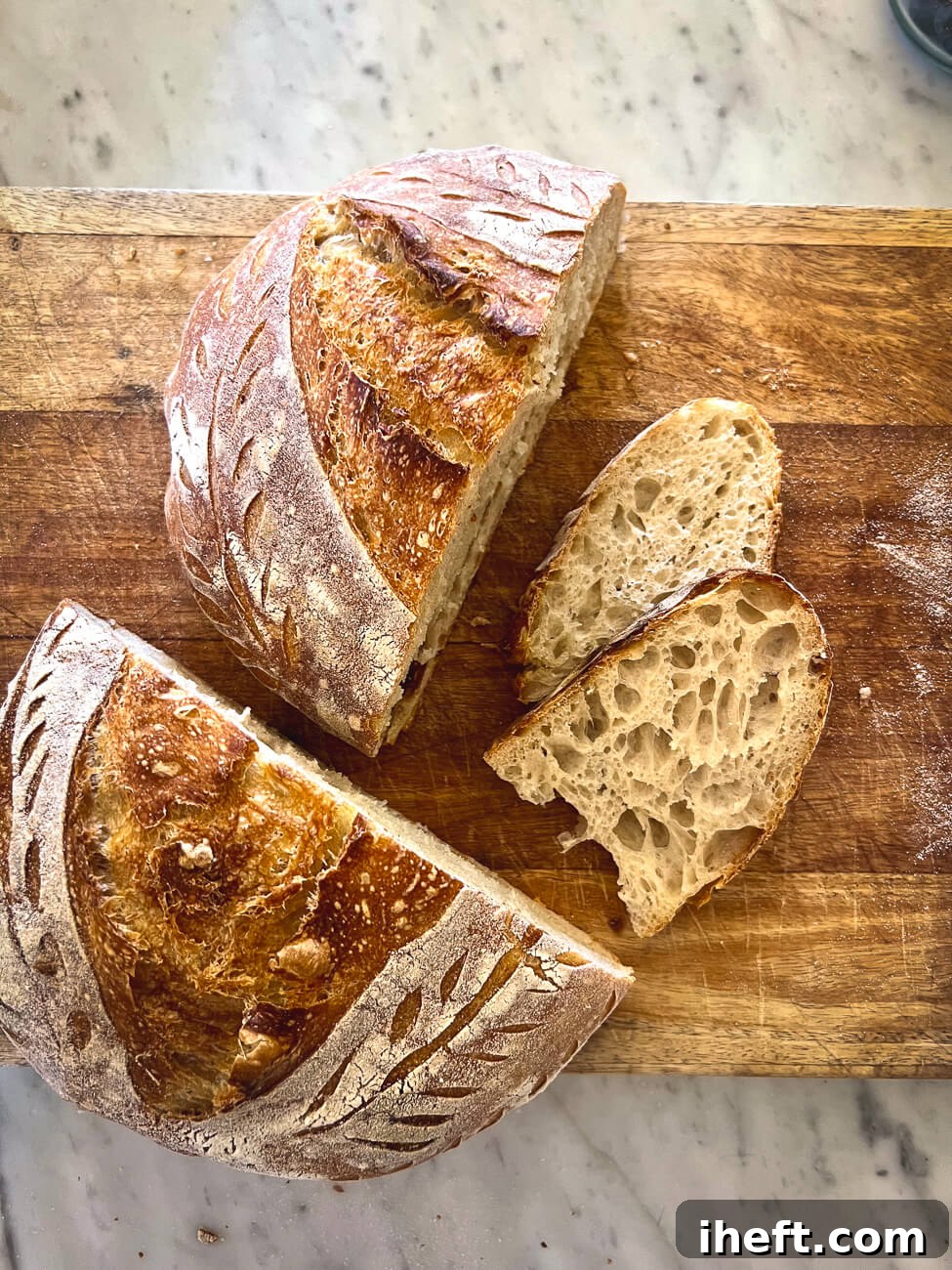
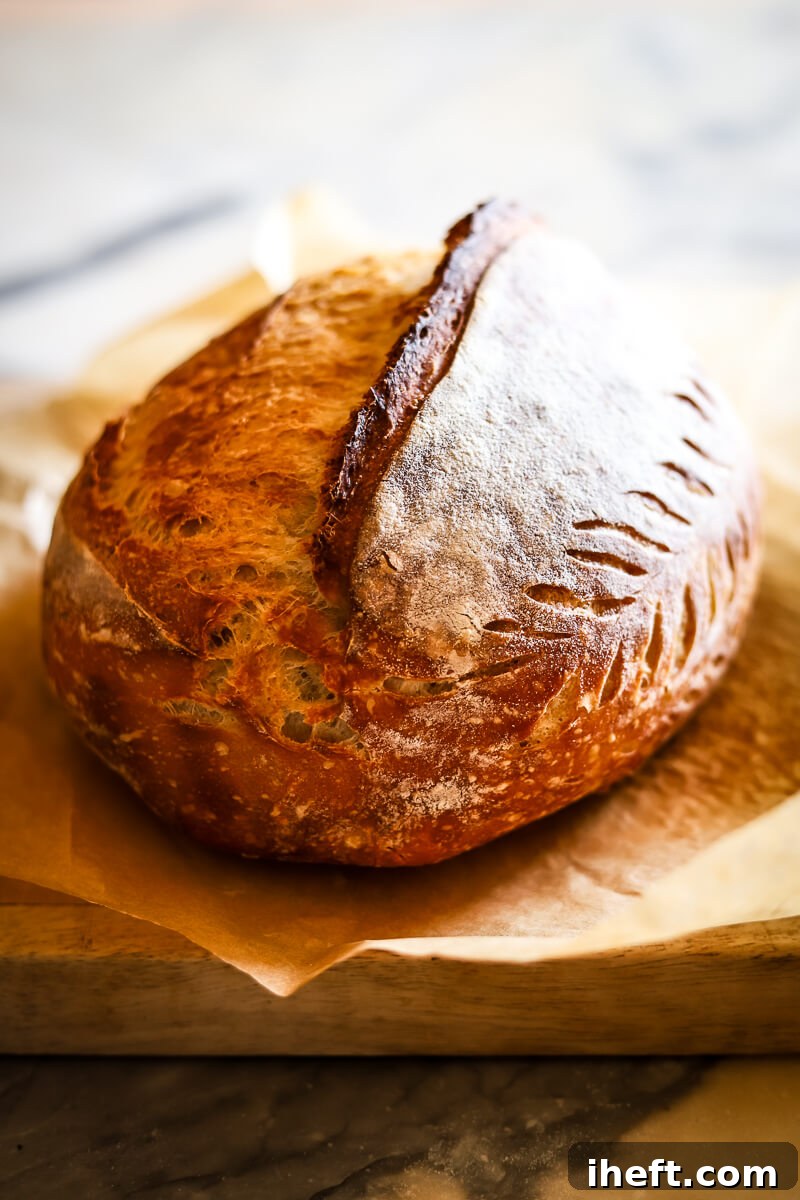
The aroma of freshly baked sourdough is incredibly tempting, and it’s natural to want to slice into it immediately. However, resisting this urge is critical for the final quality of your bread. After removing the loaf from the Dutch oven, transfer it to a wire cooling rack and allow it to cool completely for at least one hour, ideally longer. During this cooling period, the internal structure of the bread continues to set, and moisture is redistributed throughout the crumb. Slicing too early can result in a gummy interior and a less satisfying texture. Patience is a virtue, and it will be rewarded with the perfect slice!
Frequently Asked Questions About High-Hydration Sourdough
Baking sourdough, especially high-hydration varieties, can bring up several questions. Here are answers to some of the most common inquiries:
1. Can I use all-purpose flour instead of bread flour?
While you can use all-purpose flour, it is not recommended for achieving the best results with this high-hydration recipe. All-purpose flour has a lower protein content, which means the dough will be less elastic and have weaker gluten development. This often results in a denser crumb and less impressive oven spring. For that truly airy, open crumb and chewy texture, bread flour is the superior choice.
2. How do I know if my sourdough starter is active enough?
An active and ready-to-use sourdough starter will exhibit several key characteristics: it will have at least doubled in size (or even tripled), be full of visible bubbles on the surface and throughout, and typically reach its peak height before beginning to fall back down slightly. The optimal time to use your starter is when it’s at its peak, or just as it starts to recede. While every starter is unique, most perform best when fed 4-6 hours before you plan to mix your dough. For an overnight activation, especially with a strong, established starter, you can use colder water during feeding to slow down the fermentation process, ensuring it’s at its peak in the morning.
3. How should I handle this sticky, high-hydration dough?
High-hydration dough is naturally wetter and stickier, which can be intimidating at first. The key is to embrace the stickiness rather than fighting it with excess flour. Keep your hands slightly wet when handling the dough, and use a bench scraper to help manage it on your work surface. During bulk fermentation, perform gentle stretch-and-folds, as this technique is ideal for developing gluten in wet doughs. When shaping, a light dusting of flour on your hands and work surface is acceptable, but avoid adding more flour directly into the dough itself, as this will alter the hydration ratio.
4. How do I properly store my baked sourdough bread?
To keep your sourdough fresh, store it at room temperature. A simple paper bag or a clean kitchen towel wrapped around the loaf will allow the crust to remain crisp for up to 2-3 days. Avoid airtight plastic bags or containers, as these can soften the crust. For longer storage, slicing the cooled loaf and freezing the slices in an airtight freezer bag is an excellent option. When ready to enjoy, you can toast slices directly from frozen.
5. What if my schedule doesn’t allow me to bake on the same day?
One of the beauties of sourdough is its flexibility! You can significantly extend the fermentation process by refrigerating your dough. This can be done during either the bulk fermentation stage or the final proof (second rise). Cold fermentation not only slows down yeast activity but also enhances the flavor development of your bread, resulting in a more complex and tangy loaf. Simply bake the dough directly from the fridge when you are ready; there’s no need to bring it back to room temperature first.
6. Why didn’t my sourdough bread rise properly?
Several factors can contribute to a poor rise:
- Underactive Starter: The most common culprit. Ensure your starter is vibrant, bubbly, and at its peak activity before using.
- Insufficient Gluten Development: If your dough hasn’t developed enough strength (e.g., too few stretch-and-folds, or using low-protein flour), it won’t be able to trap the gases effectively.
- Over-Proofing: A dough that ferments for too long can exhaust the yeast and lose its structural integrity, leading to collapse in the oven.
- Under-Proofing: Conversely, dough that hasn’t fermented enough won’t have developed sufficient gas, leading to a dense crumb.
- Incorrect Baking Temperature/Steam: Not preheating your Dutch oven enough or insufficient steam can also hinder oven spring.
7. What temperature should a sourdough boule be when fully baked?
For artisan sourdough bread, you can use an instant-read meat thermometer inserted into the very center of the loaf to check for doneness. A perfectly baked sourdough loaf will register an internal temperature between 205-210°F (96-99°C). This ensures the crumb is fully cooked through and has the ideal texture.
Sourdough Baker’s Timelines: Planning Your Bake
One of the most appealing aspects of sourdough is its flexibility. You can adapt the schedule to fit your lifestyle. Here are three common timelines to help you plan your perfect bake:
Option 1: Feed Starter Before Bed (Overnight Levain)
This timeline is ideal for those with a strong, well-established starter and who prefer to get an early start on their baking day without waking up extra early to feed their starter.
- Evening (Day 1): Feed your sourdough starter before bed. To slow down fermentation so it peaks overnight, use cold water (e.g., from the fridge). This allows your levain to activate overnight and be ready first thing in the morning. This option is best suited for robust, mature starters.
- Morning (Day 2): Use your active levain to mix the dough. Perform any initial stretch-and-folds, then let the dough undergo bulk fermentation throughout the morning and into the afternoon.
- Afternoon (Day 2): Once bulk fermentation is complete, gently shape the dough and transfer it to a floured proofing basket. Place the shaped dough in the refrigerator for its cold fermentation, which can last anywhere from one hour up to 3 days.
- Baking Day (Evening of Day 2 or up to Day 5): Bake your loaf directly from the fridge whenever it suits your schedule.
Option 2: Feed Starter in the Morning (Same-Day Levain)
This is a great timeline for bakers who like to see their starter become active on the same day they plan to mix the dough, offering good control over the levain’s peak activity.
- Morning (Day 1): Feed your starter (build your levain) and let it sit at room temperature to activate for 4-6 hours. It should be bubbly and at its peak within this timeframe.
- Afternoon (Day 1): Once your levain is active, mix the dough. Proceed with stretch-and-folds if desired, then let the dough ferment until it doubles in size during the bulk rise.
- Evening (Day 1): After bulk fermentation, shape the dough and place it into a floured proofing basket. Transfer the shaped dough to the refrigerator for cold fermentation overnight.
- Baking Day (Day 2 or up to Day 4): Bake your loaf directly from the fridge at your convenience.
Option 3: Overnight Bulk Ferment
This option is excellent for fitting a bake into a busy schedule, allowing the longest fermentation stage (bulk rise) to happen while you sleep. To manage the extended fermentation, you’ll reduce the amount of starter used.
- Afternoon (Day 1): Feed your starter and allow it to activate at room temperature for 4-6 hours, ensuring it’s robust for the overnight ferment.
- Evening (Day 1): In this specific timeline, reduce the amount of active starter in the main dough recipe to approximately 50 grams (instead of the usual 90 grams). This smaller quantity will slow down the overall fermentation rate, making it suitable for a longer overnight period. Mix your dough, perform a rest and perhaps one or two stretch-and-folds if you have time. Then, cover the dough with a damp towel and let it bulk ferment overnight at a cool room temperature (around 70°F / 21°C) until it has doubled in size by morning.
- Morning (Day 2): Once the dough has doubled, shape it and immediately place it in the refrigerator for cold fermentation.
- Baking Day (Day 2 or up to Day 5): Bake the dough directly from the fridge whenever you are ready.
High-Hydration Homemade Sourdough Bread Recipe
This recipe consistently yields one magnificent loaf of sourdough bread, perfectly crusty on the outside and wonderfully tender and airy on the inside. It’s an easy, high-hydration method that results in that sought-after lacy open crumb with abundant holes. With practically no kneading required, this beginner-friendly recipe turns out perfect every single time. It’s truly my weekly go-to sourdough.
Yield: 1 Loaf
Prep Time: 15 minutes | Cook Time: 50 minutes | Additional Time: 10 hours | Total Time: 11 hours 5 minutes
Ingredients
- 90 grams (⅓ cup) active sourdough starter (see note)
- 375 grams (1½ cups plus 1 tablespoon) lukewarm water
- 500 grams (4 cups plus 2 tablespoons) bread flour
- 11 grams (1¾ teaspoons) fine sea salt
Instructions
- Mix the dough: In a medium bowl, add the active sourdough starter and stir in the water until combined. Add the bread flour and fine sea salt, then stir with a rubber spatula or wooden spoon until the ingredients come together. Use your hands to thoroughly mix the dough until no dry streaks of flour remain. At this point, the dough will be very shaggy, sticky, and somewhat difficult to work with – this is completely normal for a high-hydration dough! Do NOT add any additional flour.
- Autolyze: Cover the bowl with a damp kitchen towel and let the dough rest at room temperature for 30 minutes to 1 hour. During this autolyze period, the flour will fully hydrate, and gluten development will naturally begin, making the dough much smoother, more elastic, and significantly easier to handle. This step is crucial for creating a higher-quality sourdough.
- Stretch-and-Fold: With wet hands, gently grab one side of the dough from the bottom, pull it up, and fold it into the center. Rotate the bowl a quarter turn and repeat this action three more times, working your way around the dough. This completes one set of stretch-and-folds. Cover the bowl with the damp towel again and allow the dough to rest for 30 minutes. If possible, repeat these stretch-and-folds 2-3 more times, spaced every half hour. This technique helps build gluten strength and creates a beautiful open crumb, but don’t worry if you can only manage one fold; the long fermentation will still contribute significantly to gluten development.
- Bulk Rise: For best monitoring, transfer the dough to a straight-sided, clear container so you can accurately observe its rise. If unavailable, a medium-large bowl will suffice. Cover the container with a damp kitchen towel and let the dough rest at room temperature until it has doubled (or nearly doubled) in volume. You should see numerous bubbles visible on the sides and underneath the dough (especially in a clear container). The bulk rise duration depends on factors like room temperature and starter strength, typically ranging from 5 to 8 hours in a 70°F (21°C) environment. If your dough finishes its bulk rise but you’re not ready for the next step, simply place it, covered, in the refrigerator until needed.
- Shape: Lightly flour a clean work surface. Gently coax the dough out of its container onto the floured surface. Form the dough into a loose ball and allow it to rest for 5-10 minutes while you prepare your proofing basket.
- Prepare Proofing Basket: Line your proofing basket (a banneton is highly recommended for this recipe) with a thin kitchen towel (if not already lined) and liberally dust it with rice flour (or bread flour). Ensure thorough coverage to prevent sticking.
- Final Shape: Gently flip the dough over so the sticky side is facing up. Shape the dough into your desired boule (round) or batard (oval) form. If you require assistance, refer to shaping videos for visual guidance. The goal is to gently cup the dough and pull it towards you, creating surface tension on the underside without tearing the dough or deflating it excessively.
- Final Rise (Cold Fermentation): Carefully place the shaped dough into the prepared proofing basket, smooth side down (seam side up). If desired, perform a final “stitch” by gently pulling a few pieces of dough from the sides up into the center to create additional surface tension. Cover the basket with a plastic bag or plastic wrap to prevent the dough from drying out, and refrigerate for at least 1 hour and up to 3 days. A cold fermentation of 12-24 hours often yields the best flavor development and dough structure.
- Preheat the Oven: Approximately 40 minutes before you plan to bake, place your empty Dutch oven with its lid into your oven and preheat to 500°F (260°C). This ensures the Dutch oven is scorching hot, which is crucial for maximum oven spring and crust development.
- Score: Carefully remove the dough from the refrigerator. Place a piece of parchment paper over the top of the proofing basket and invert the dough onto a work surface, so it rests on the parchment. Lightly dust the top of the dough with a little white rice flour (or bread flour). Using a sharp bread lame or a very sharp knife, score your dough. Make any shallow, decorative cuts first. Then, make one deeper, decisive cut (about ¾ inch deep) to allow for optimal expansion during baking. This deep score directs the oven spring.
- Bake: Carefully remove the preheated, blazing hot Dutch oven from the oven. Using the parchment paper as a sling, gently lower the scored dough into the Dutch oven. Place the lid back on. Return the covered Dutch oven to the oven and immediately lower the temperature to 450°F (232°C). Bake covered for 20 minutes. After 20 minutes, carefully remove the lid and continue baking for another 30-35 minutes, or until the top of the bread is deeply golden brown and crusty. If you’re unsure about doneness, use an instant-read thermometer; fully baked sourdough should register an internal temperature of 205-210°F (96-99°C).
- Cool: Carefully remove your baked sourdough loaf from the Dutch oven and transfer it to a wire cooling rack. Allow the bread to cool completely for at least one hour (ideally longer) before slicing. This essential cooling period allows the internal structure of the bread to fully set and ensures optimal moisture retention within the crumb.
Notes
- Starter: The success of your sourdough hinges on an active and robust starter. It is at its peak when it has significantly doubled in size and has just begun to recede. I recommend feeding your main starter (to create a levain for baking) with 40 grams of starter, 80 grams of water, and 80 grams of flour (I personally use a mix of 80% all-purpose and 20% rye for feeding). This will yield enough levain for this recipe, plus extra to continue feeding your main culture.
- Measurements: For consistent and accurate results, strongly recommend using a kitchen scale to weigh all ingredients. This recipe has been developed and tested primarily using precise weight measurements.
- This recipe was inspired by and adapted from the excellent cookbook Artisan Sourdough Made Simple.
Recommended Products
As an Amazon Associate and member of other affiliate programs, I earn from qualifying purchases.
- Cuisinart Electronic Kitchen Scale
- King Arthur Flour, Organic Bread Flour
- Cambro 4 qt Round Food Storage Container
- (10 x 6 x 3.5 inch) Oval Bread Banneton Proofing Basket
- Le Creuset Enameled Cast Iron Signature Round Dutch Oven, 5.5 qt.
- Bob’s Red Mill, Gluten Free Rice Flour, 1.5 lb
- Hand Crafted Bread Lame
Nutrition Information:
Amount Per Serving:
- Yield: 12 servings (per loaf)
- Serving Size: 1 slice
- Calories: 164
- Total Fat: 1g
- Saturated Fat: 0g
- Trans Fat: 0g
- Unsaturated Fat: 0g
- Cholesterol: 0mg
- Sodium: 358mg
- Carbohydrates: 33g
- Fiber: 1g
- Sugar: 0g
- Protein: 5g
Nutrition information is automatically calculated by Nutritionix. I am not a nutritionist and cannot guarantee accuracy. If your health depends on nutrition information, please calculate again with your favorite calculator.