Blanching for Perfectly Peeled Tomatoes
Transform your home cooking with perfectly peeled tomatoes! Whether you’re aiming for silky-smooth sauces, vibrant homemade salsa, or preserving the summer harvest through canning, knowing how to peel tomatoes is an invaluable culinary skill. This guide will walk you through the most efficient and straightforward methods, including the classic blanching technique and several brilliant ways to peel tomatoes without blanching. Get ready to elevate your tomato-based dishes!
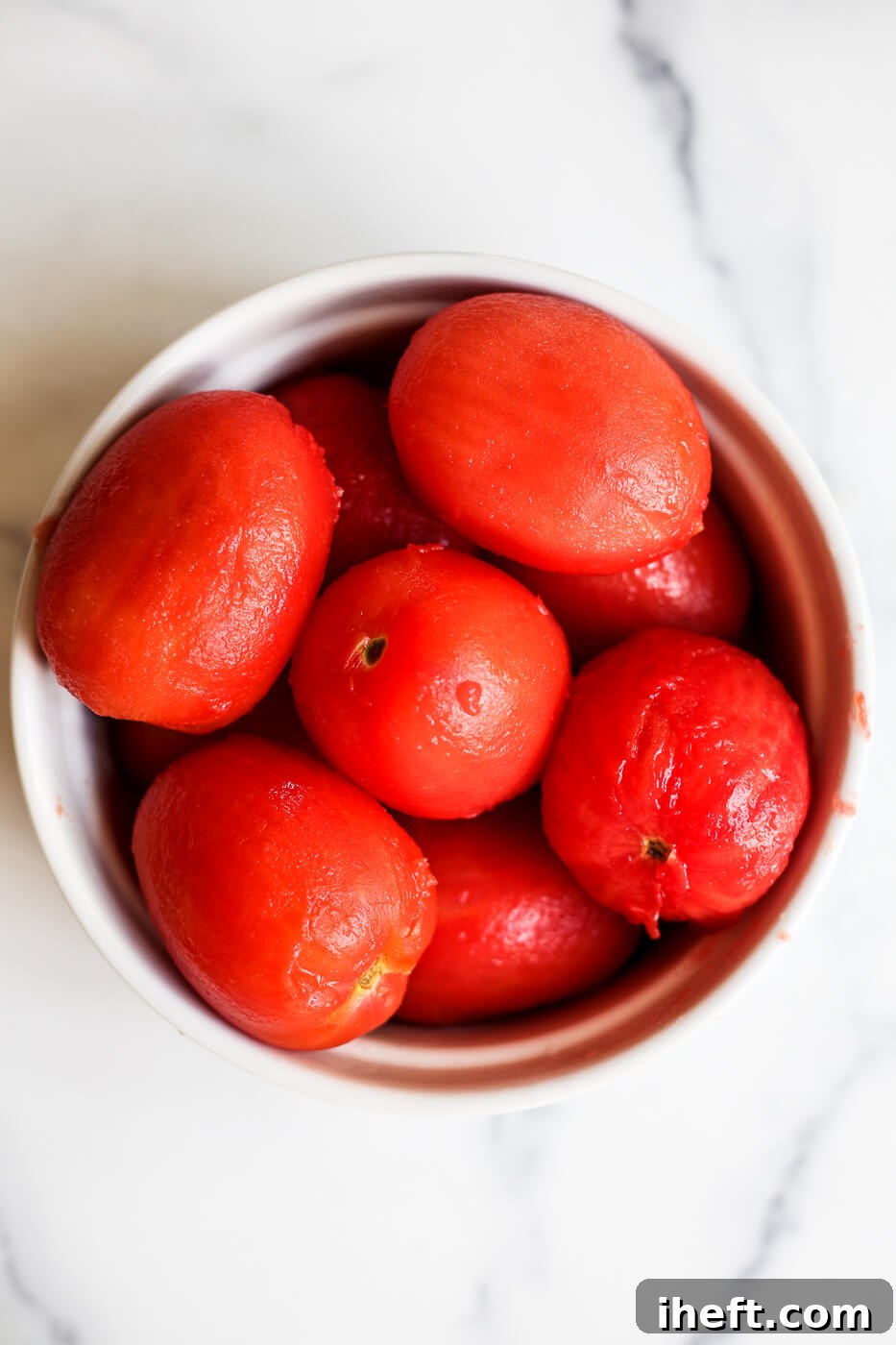
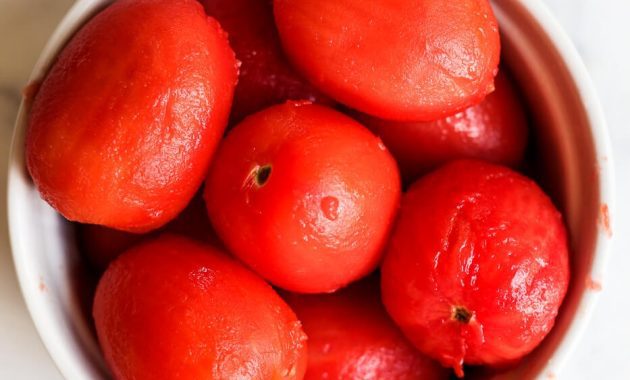
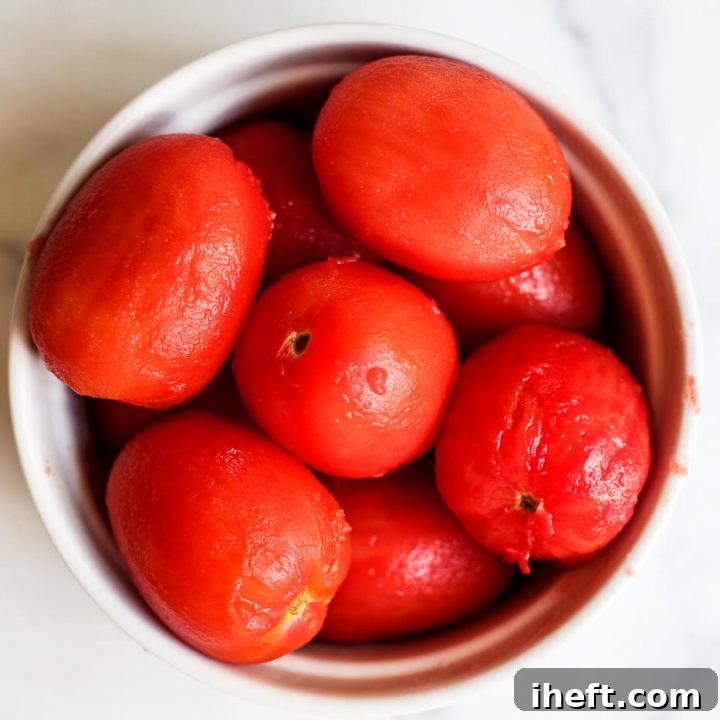
Blanched, peeled Roma tomatoes ready for your next recipe.
Why Peel Tomatoes? The Secret to Superior Taste and Texture
For years, we’ve cultivated a variety of tomatoes in our garden, experimenting with countless recipes. While many dishes, like fresh salads or rustic bruschetta, benefit from the skin, there are crucial instances where peeled tomatoes are not just preferred, but essential. The skin of a tomato can be tough, chewy, and somewhat bitter, often separating from the flesh during cooking. Removing it ensures a consistently smooth texture, a purer flavor, and a more refined dining experience, especially vital for:
- Velvety Sauces: Imagine a classic Pomodoro sauce or a rich Marinara without any annoying skin fragments. Peeling guarantees a silky consistency that adheres beautifully to pasta.
- Perfect Salsas: For a restaurant-quality salsa, a smooth base is key. Peeled tomatoes blend seamlessly, creating a delightful mouthfeel.
- Canning and Preserving: When canning whole or crushed tomatoes, removing the skin prevents a tough texture after processing and ensures better preservation quality.
- Soups and Purées: For creamy tomato soups or smooth purées, skins can disrupt the desired consistency and leave an undesirable texture.
- Digestibility: Some individuals find tomato skins difficult to digest. Peeling them can make tomato-rich dishes more stomach-friendly.
While premium canned San Marzano tomatoes are readily available in grocery stores, nothing quite compares to the flavor and satisfaction of using your own garden-fresh, hand-peeled tomatoes. When your harvest is bountiful, taking a few extra minutes to peel them will pay off immensely in the quality of your culinary creations. This summer, due to popular demand, we’re diving deep into more tomato canning recipes, and the foundational step for many of these is mastering the art of tomato peeling.
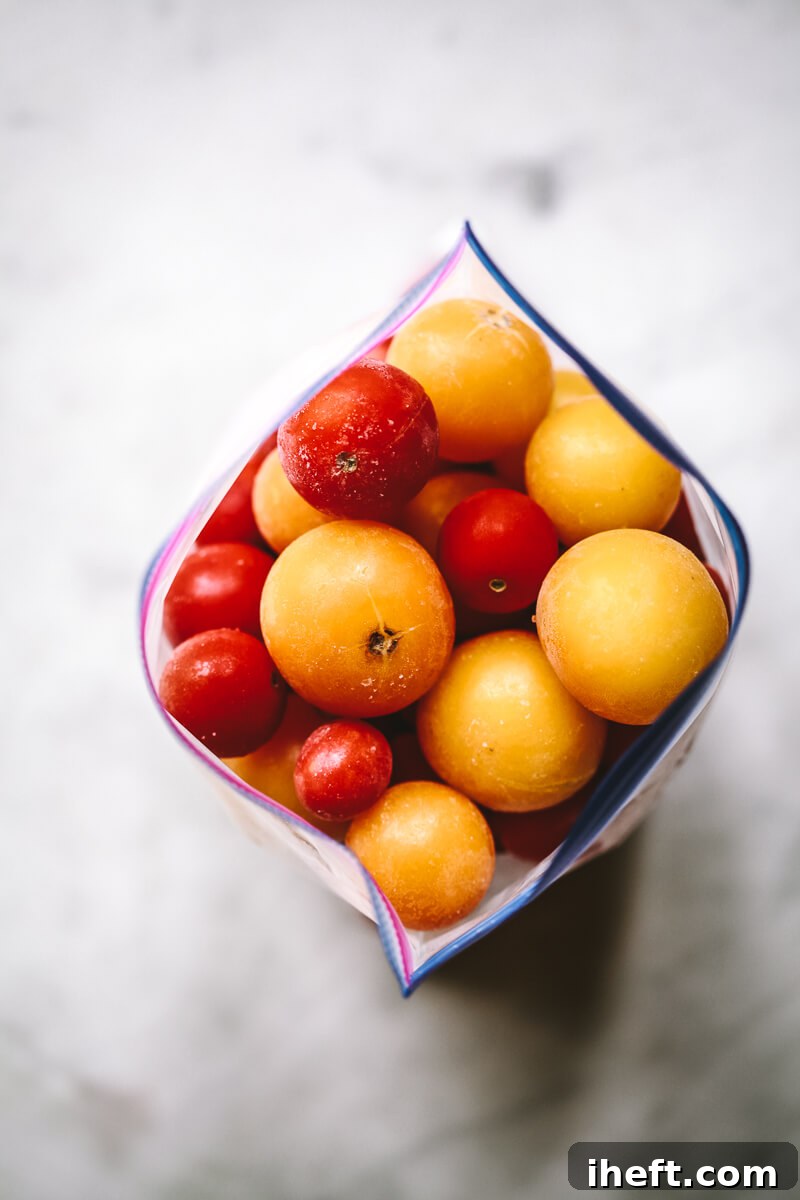
Frozen tomatoes naturally loosen their skins upon thawing.
Effective Ways to Peel Tomatoes Without Blanching
While blanching is often cited as the quickest method, it’s not the only route. Sometimes you might not have access to boiling water, or you might prefer a different approach that integrates with your recipe’s cooking process. Here are several ingenious ways to remove tomato skins without the blanch-and-chill routine:
-
Freeze Them for Effortless Peeling: This is a fantastic method, especially when dealing with a large batch of tomatoes or if you plan to use them later.
- Process: Simply wash and dry your firm, ripe tomatoes (Romas work exceptionally well due to their meaty texture). Place them whole on a baking sheet to freeze solid, then transfer them to freezer bags. When you’re ready to use them, remove them from the freezer and allow them to thaw slightly at room temperature. The skin will wrinkle and easily slip off as they begin to soften, often before they are completely thawed.
- Best For: Tomatoes destined for sauces, soups, or stews where a slightly softer texture after thawing is acceptable.
- Tip: Don’t let them thaw completely before peeling, as they can become too mushy.
-
Roast Whole or Halved for Dual Purpose Peeling and Flavor: If your recipe calls for roasted tomatoes, this method cleverly combines peeling with a flavor-enhancing step.
- Process: Preheat your oven to a high temperature (around 400-425°F or 200-220°C). Arrange whole or halved tomatoes on a baking sheet, drizzle with a little olive oil, and roast until the skins begin to shrivel, crack, and char slightly – typically 10-15 minutes, depending on size. Once cool enough to handle, the skins will peel away easily.
- Best For: Recipes like roasted tomato sauce, bruschetta toppings, or adding depth to stews where a smoky, caramelized tomato flavor is desired.
- Consideration: Keep in mind that this method also cooks the tomatoes, altering their fresh taste and firm texture. This is delicious for many applications but not suitable for every recipe that requires peeled tomatoes.
-
Stovetop Flame Searing for Quick, Individual Peeling: This technique is perfect for peeling just a few tomatoes quickly, often favored by professional chefs for its speed and minimal equipment.
- Process: Using tongs or a fork, carefully hold a whole tomato directly over a stovetop gas flame (or even a high-powered torch). Rotate the tomato slowly and steadily, much like roasting a marshmallow, until the skin visibly blisters, chars, and peels back in sections. Once charred, remove from the flame, let it cool for a moment, and peel away the loosened skin.
- Best For: Peeling a small quantity of tomatoes on demand for immediate use, such as for a fresh topping or a quick sauce base.
- Caution: Exercise extreme caution when working with open flames. Ensure good ventilation.
How to Blanch Tomatoes: The Classic, Quick Method
Blanching remains the undisputed champion for its speed, simplicity, and ability to remove skins while preserving the tomato’s vibrant color and firm texture. This method involves a brief dip in boiling water followed by an immediate plunge into an ice bath, a process known as thermal shock that causes the skin to loosen effortlessly.
Equipment You’ll Need:
- Large saucepan or pot
- Large bowl for ice water bath
- Slotted spoon or spider strainer
- Sharp knife
Step-by-Step Blanching Instructions:
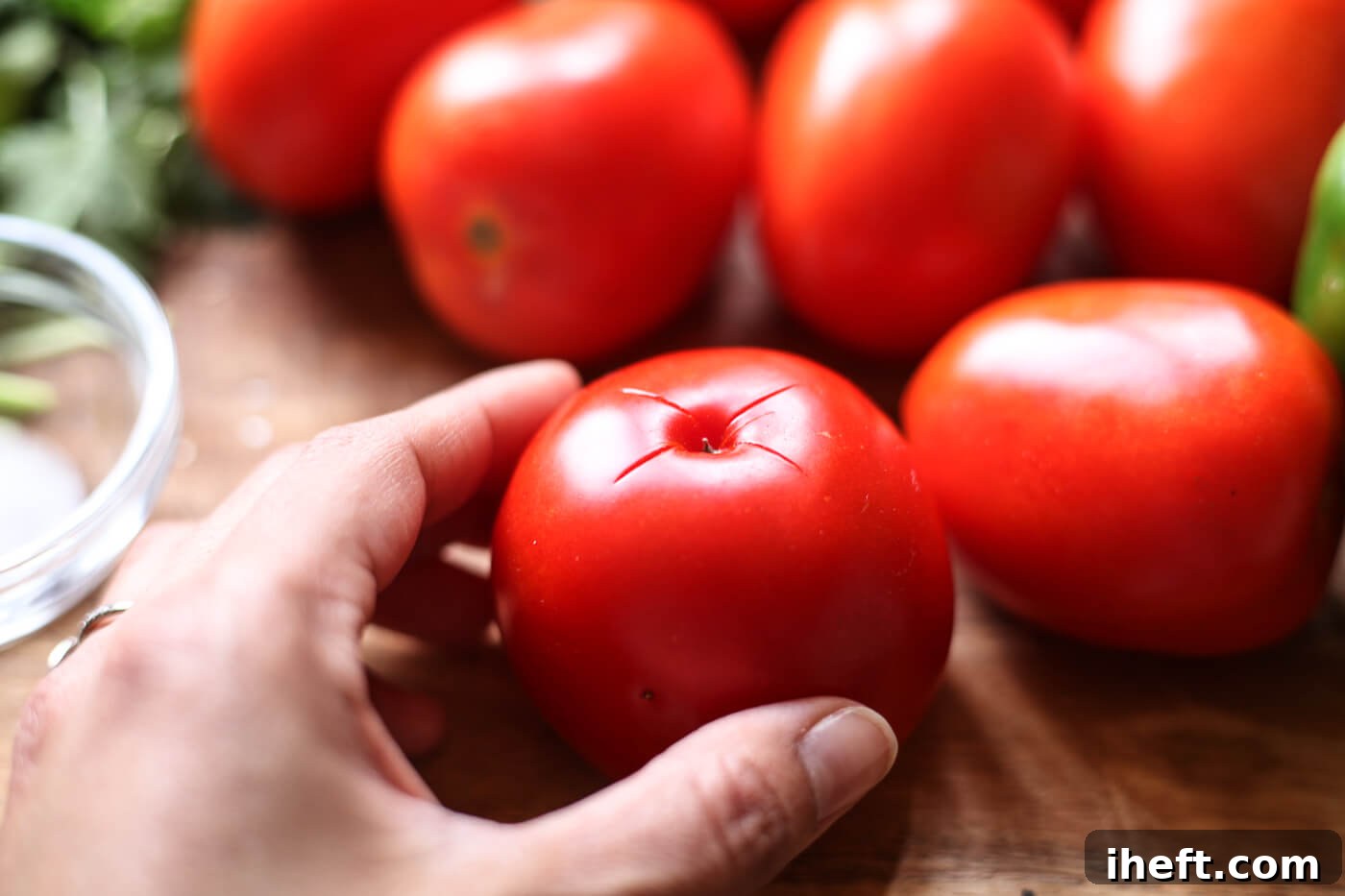
- Prepare the Tomatoes: Begin by thoroughly washing your ripe but firm tomatoes. Roma tomatoes are ideal due to their dense flesh and fewer seeds, but larger varieties like Beefsteak or Early Girl also work beautifully. Even small cherry tomatoes can be blanched if you’re patient! Using a sharp knife, carefully cut a shallow “X” into the bottom (blossom end) of each tomato. This “X” acts as a starting point, helping the skin to peel back easily once blanched.
- Set Up Your Stations: Fill a large saucepan with water and bring it to a rolling boil over high heat. While the water heats, prepare an ice-water bath by filling a large bowl with plenty of cold water and ice cubes. This crucial step immediately stops the cooking process after blanching.
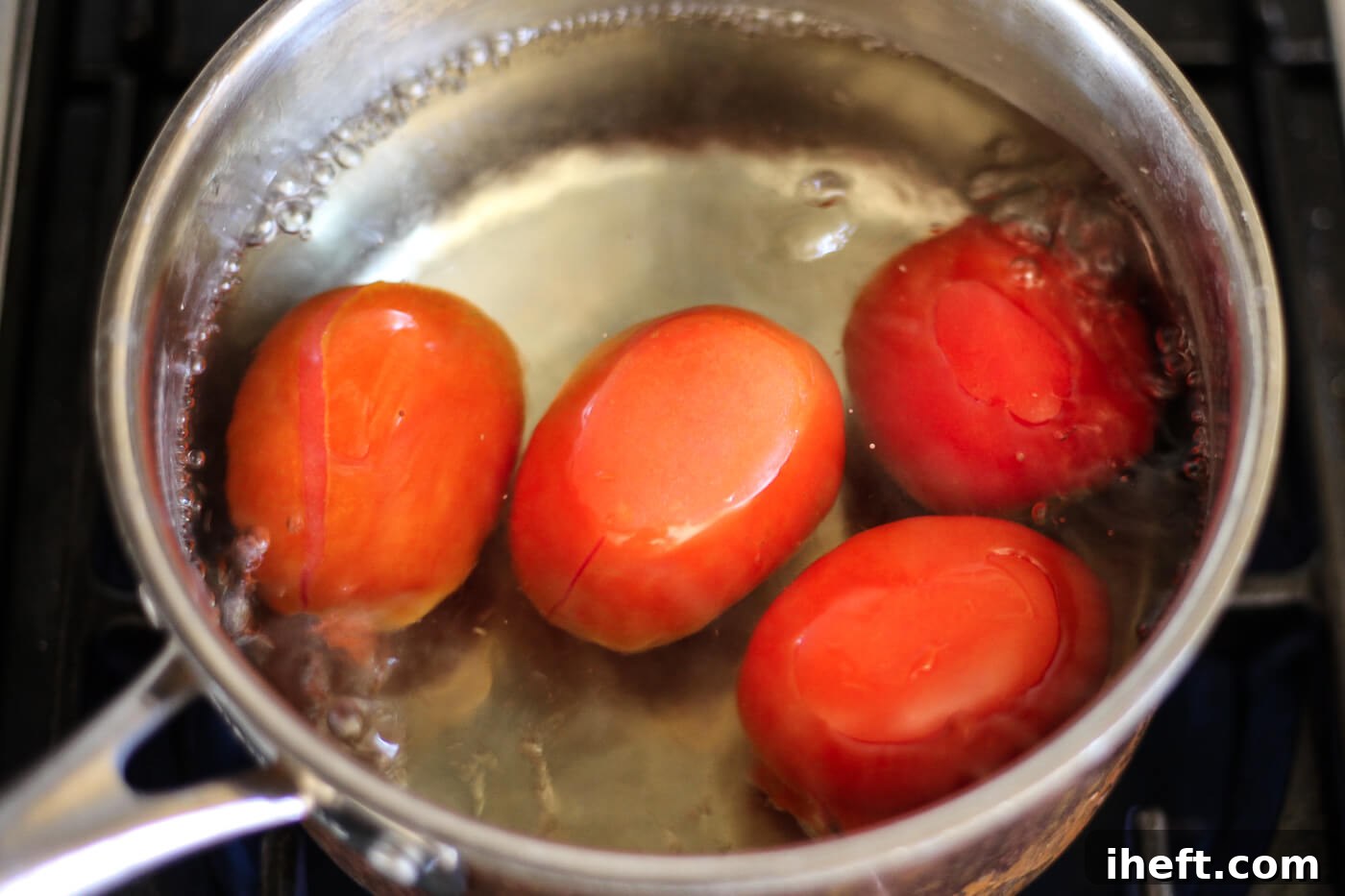
- Blanch the Tomatoes: Working in small batches (to avoid overcrowding the pot and lowering the water temperature), carefully lower the “X”-marked tomatoes into the boiling water using your slotted spoon. Allow them to boil for just 30-60 seconds. You’ll observe the skin around the “X” beginning to pucker, crack open, and peel back slightly. This is your visual cue that they are ready! The goal is to loosen the skin, not to cook the tomato through, which would make them mushy and difficult to handle.
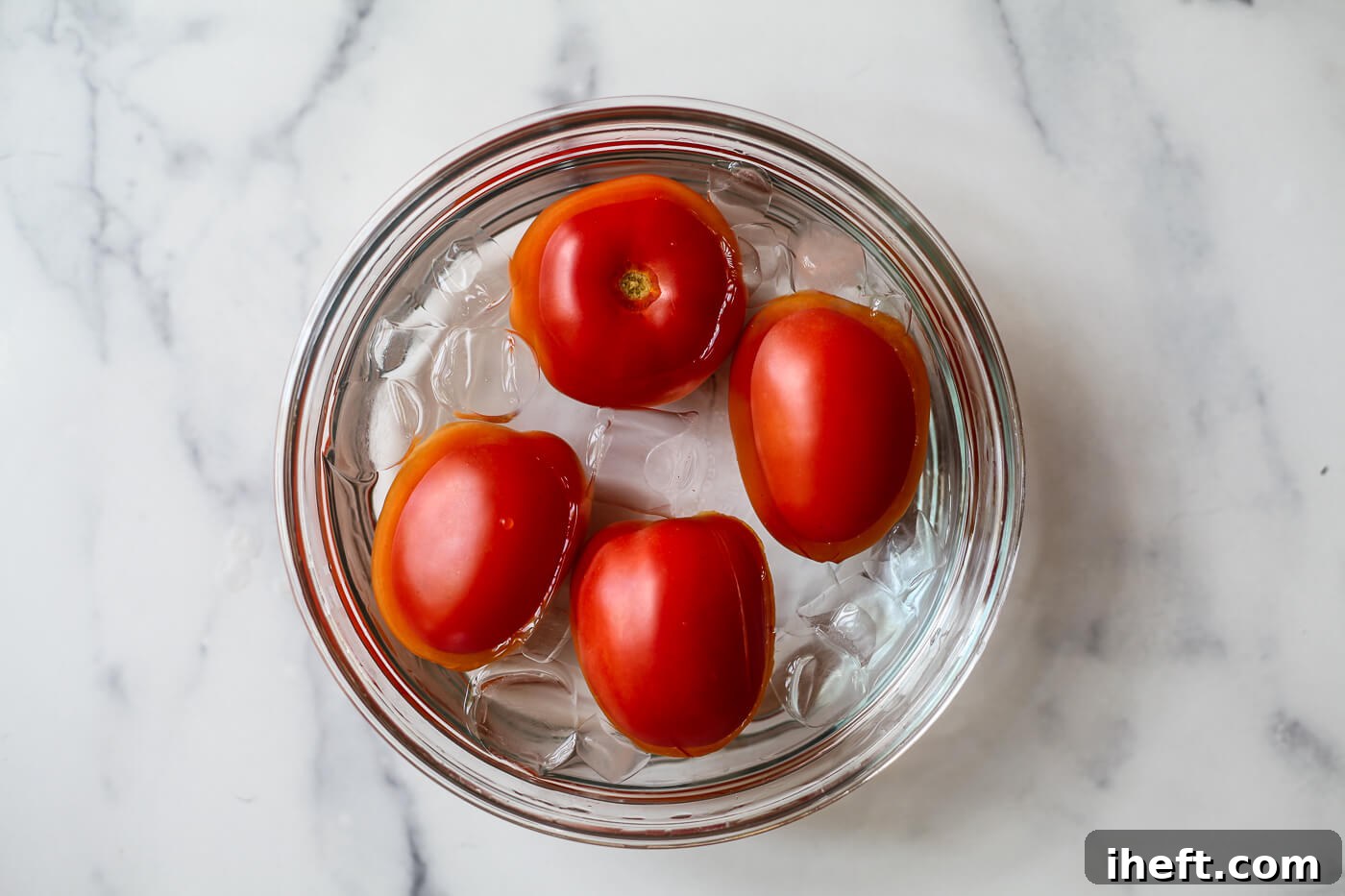
- Shock in Ice Water: As soon as the skins begin to crack, swiftly remove the tomatoes from the boiling water with your slotted spoon and immediately transfer them into the prepared ice bath. Let them sit in the ice water for about 1-2 minutes, or until they are cool enough to handle. The sudden temperature change effectively halts the cooking and further aids in loosening the skin.
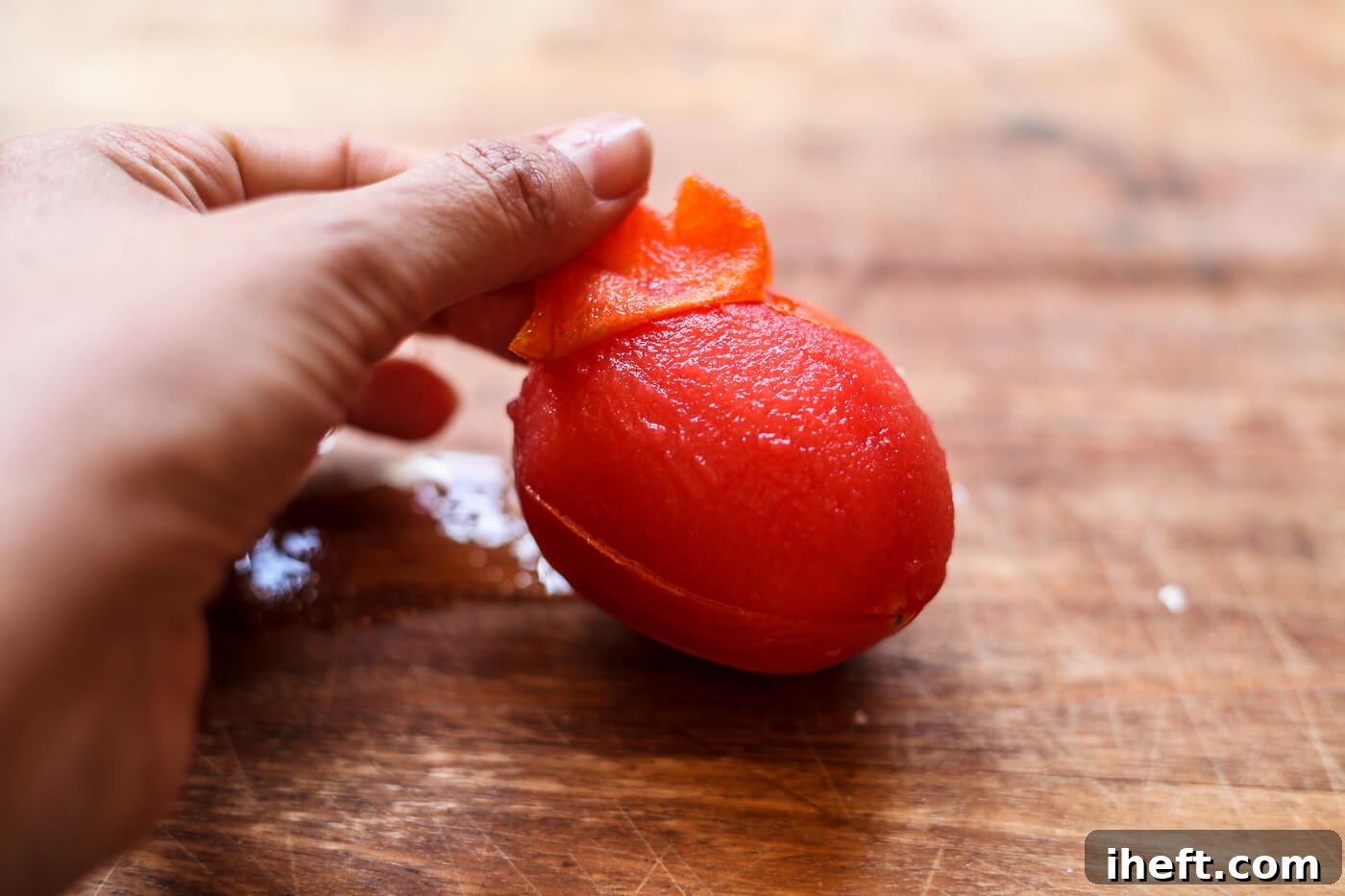
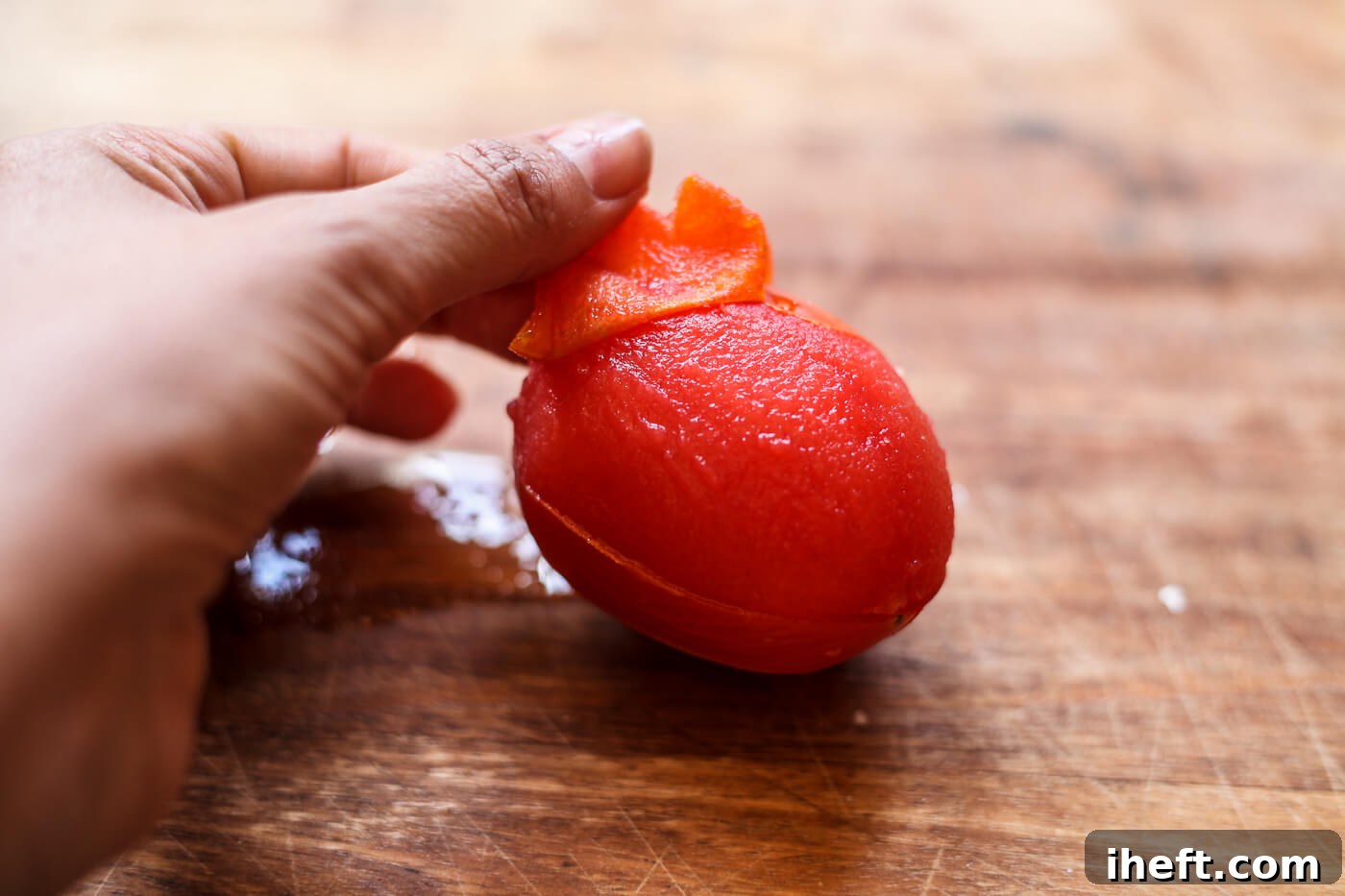
- Peel with Ease: Once cooled, remove the tomatoes from the ice bath. You’ll find that the skins now slip off effortlessly. Start peeling from the “X” you cut, gently pulling the skin away with your fingers. If any stubborn bits remain, a small paring knife can help.
- Ready for Use: Your perfectly peeled tomatoes are now ready for your favorite recipes!
Choosing the Best Tomatoes for Peeling
Not all tomatoes are created equal when it comes to peeling. For the best results, select tomatoes that are:
- Ripe but Firm: Overly ripe tomatoes can become mushy during blanching, while under-ripe ones may not peel easily. Look for tomatoes that are brightly colored and yield slightly to gentle pressure.
- Meaty Varieties: Roma (plum) tomatoes are the gold standard for peeling due to their thick walls, fewer seeds, and low water content. San Marzano, Beefsteak, and Early Girl varieties also work very well.
- Uniform in Size: For blanching, try to use tomatoes of similar size so they cook evenly.
Making the Most of Your Peeled Tomatoes
Once you’ve mastered the art of peeling, a world of culinary possibilities opens up. Peeled fresh tomatoes are a superior replacement for their canned counterparts in many recipes, offering unparalleled freshness and flavor. Here are some incredible uses for your freshly peeled bounty:
- Classic Pomodoro Sauce: The foundation of many Italian dishes, a smooth Pomodoro sauce truly shines when made with peeled tomatoes.
- Homemade Marinara with Fresh Tomatoes: Elevate your pasta nights with a rich, flavorful Marinara that boasts the pure essence of summer tomatoes.
- Creamy Tomato Soup: For a luxurious and velvety tomato soup, peeled tomatoes are non-negotiable, ensuring a silky-smooth texture without any fibrous bits.
- Fresh Salsa for Canning: Create vibrant, chunky, or smooth salsas that are perfect for canning or immediate enjoyment. Peeled tomatoes make for a more palatable and professional-looking salsa.
- Various Canning Recipes: From whole peeled tomatoes in jars to crushed tomatoes and passata, peeling is often the first step in safely preserving your harvest for year-round enjoyment.
- Bruschetta and Appetizers: Diced peeled tomatoes make for exquisite bruschetta toppings, adding freshness without the chewiness of skins.
- Stews and Curries: For dishes where tomatoes are meant to melt into the sauce, providing a smooth base, peeling ensures the best outcome.
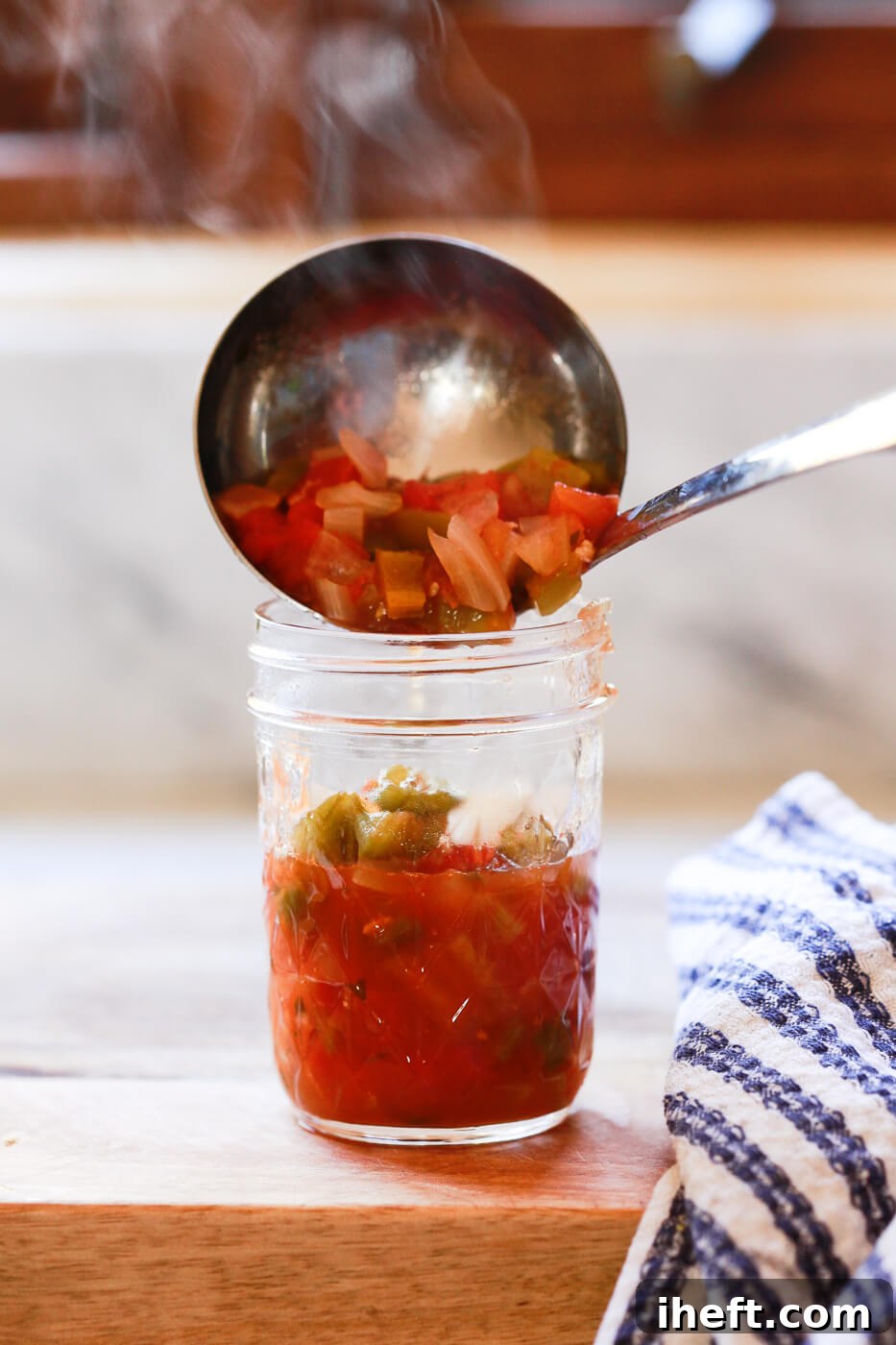
Peeled tomatoes are ideal for making and canning delicious homemade salsa.
Storing Peeled Tomatoes
Once peeled, fresh tomatoes can be used immediately or stored for later. You can keep them in an airtight container in the refrigerator for up to 3-4 days. For longer storage, consider freezing them in freezer-safe bags or containers. They can also be canned whole or processed into sauces, allowing you to enjoy the taste of summer long after the season ends. Always refer to reputable canning guidelines for safe preservation.
How to Peel Tomatoes Easily (Quick Reference)
2 minutes
1 minute
1 minute
4 minutes
The most effective and simple method for peeling tomatoes for sauces, salsas, and canning is blanching. However, it’s not the only option. This quick guide provides step-by-step instructions for blanching and other convenient ways to peel tomatoes without boiling water.
Ingredients
- 6 medium to large ripe, firm tomatoes
- Large pot of water
- Large bowl of ice water
Instructions
Blanching Tomatoes (The Fastest Method)
- Wash your tomatoes thoroughly. With a sharp knife, carefully cut a shallow “X” into the bottom (blossom end) of each tomato. This helps the skin to loosen.

- Bring a medium-sized saucepan filled with water to a rolling boil over high heat. Simultaneously, prepare an ice-water bath by filling a large bowl with cold water and plenty of ice cubes.
- Working in small batches, gently add the tomatoes to the boiling water. Boil for a very short time, typically just 30-60 seconds. You will notice the skins starting to pucker, burst open, and peel back near the “X” cut. This indicates they are ready. Boil for the minimum time required to loosen the skin to prevent overcooking, which can make the tomatoes lose their shape.
- Using a slotted spoon, quickly transfer the blanched tomatoes from the boiling water directly into the ice bath. Let them cool for about 1-2 minutes until they are comfortable to handle.
- Once cooled, the skins should now peel off very easily, starting from the “X” cut.
- Your peeled tomatoes are now ready to be used in your favorite sauces, salsas, or canning recipes.
Peeling Tomatoes without Blanching (Alternative Methods)
- Freezing Method: Wash and freeze whole, firm tomatoes until solid. Thaw them partially at room temperature; the skins will crinkle and slip right off as they soften.
- Stovetop Flame Method: Carefully hold a tomato with a fork or tongs over a direct stovetop gas flame. Rotate it steadily until the skin blisters, chars, and peels back. Let it cool slightly, then peel.
- Roasting Method: Roast whole or halved tomatoes at 425°F (220°C) for 10-15 minutes until the skins shrivel and crack. Once cooled, the skins will easily detach. Note: This method will cook the tomatoes, which suits some recipes but not all.
Notes
Always choose ripe but firm, meaty tomatoes for peeling. This ensures they maintain their shape and integrity even after the skins are removed, which is crucial for attractive presentation and desired texture in your final dish.
Nutrition Information:
Yield: 6
Serving Size: 1
Amount Per Serving:
Calories: 22Total Fat: 0gSaturated Fat: 0gTrans Fat: 0gUnsaturated Fat: 0gCholesterol: 0mgSodium: 6mgCarbohydrates: 5gFiber: 1gSugar: 3gProtein: 1g
Nutrition information is automatically calculated by Nutritionix for a raw tomato. I am not a nutritionist and cannot guarantee absolute accuracy. If your health depends on precise nutrition information, please calculate again with your preferred calculator.
Conclusion: Embrace the Art of Peeled Tomatoes
Peeling tomatoes might seem like an extra step, but the difference it makes in the texture and quality of your dishes is undeniable. Whether you opt for the rapid blanching method, the clever freezing technique, the flavor-enhancing roasting, or the quick stovetop sear, you now have a full arsenal of ways to achieve perfectly peeled tomatoes. This fundamental skill will empower you to create smoother sauces, exquisite salsas, and superior canned goods, truly elevating your home cooking to a new level. So, grab those fresh tomatoes and start peeling – your taste buds will thank you!